
- Buy Crypto
- Markets
- Futures
- Spot
- Copy Trade
 WE-Launch
Market Timing is Hard: Less than 10% will actually make it to the end of the year

Original Article Title: "Only 10% of Prediction Markets Can Survive to the End of the Year, Not an Exaggeration"
Original Article Author: Azuma, Odaily Planet Daily
Over the past two days, there has been a lot of discussion on X about the prediction market's Yes + No = 1 formula. It all started with the influential figure DFarm (@DFarm_club) writing an article dissecting Polymarket's shared order book mechanism, triggering a collective emotional resonance with the power of mathematics. The original article link titled "Explaining Polymarket: Why MUST YES + NO Equal 1?" is highly recommended for reading.
In the subsequent discussions, many influencers, including Blue Fox (@lanhubiji), mentioned that Yes + No = 1 is another simple yet powerful formula innovation after x * y = k, with the potential to unlock a trillion-scale information trading market. I fully agree with this point, but at the same time, I also find some of the discussions overly optimistic.
The key lies in the issue of liquidity formation. While many may think that Yes + No = 1 resolves the barrier to entry for the common man to provide liquidity, leading to the liquidity of the prediction market skyrocketing like in the AMM with x * y = k, the reality is far from that.
The Inherent Higher Difficulty of Market Making in Prediction Markets
In practical terms, the ability to enter the market as a liquidity provider and build liquidity is not just a matter of participation barriers but also an economic issue of profitability. When compared with AMM markets based on the x * y = k formula, the market-making difficulty in prediction markets is actually much higher.
For example, in a classic AMM market that fully follows the x * y = k formula (such as Uniswap V2), if I want to provide liquidity for the ETH/USDC pair, I need to simultaneously deposit ETH and USDC into the pool at a specific ratio based on the real-time price relationship of the two assets in the pool. When the price relationship fluctuates, the amount of ETH and USDC I can withdraw will change accordingly (known as impermanent loss), but I can also earn transaction fees. Of course, the industry has since innovated around this basic formula, such as Uniswap V3 allowing LPs to concentrate liquidity within a specified price range to pursue a higher risk-return profile, but the fundamental model remains unchanged.
In this kind of automated market maker (AMM) model, if transaction fees over a certain time range can cover impermanent loss (often requiring a longer time to accumulate fees), then it is profitable—as long as the price range is not too volatile, I can just lazily provide liquidity, check on it sporadically. However, in a prediction market, if you try to provide liquidity with a similar hands-off approach, you'll likely end up losing.
For example, let's take another scenario around Polymarket. Let's say we start with a basic binary market where I want to provide liquidity in a market where the "YES" real-time market price is $0.58. I can place a buy order for YES at $0.56 and a sell order for YES at $0.60—DFarm explained in the article that this is essentially placing a buy order for NO at $0.4 and a sell order for NO at $0.44—using the market price as a reference to offer orders at slightly wider specific price points.
Now that the orders are placed, can I just leave them there? When I check back next time, I might see one of the following four scenarios:
· Both orders on both sides remain unmatched;
· Both orders on both sides have been filled;
· One side's orders have been filled, but the market price is still within the original order range;
· One side's orders have been filled, but the market price has moved further away from the remaining order—e.g., buying YES at $0.56 while the $0.60 sell order is still there, but the market price has dropped to $0.5.
So, when can you make money? What I can tell you is that in low-frequency attempts, different scenarios may lead to different results, but if you operate with such laziness in a real environment in the long run, the end result will most likely be a loss. Why is that?
The reason is that the prediction market is not based on the AMM liquidity pool model but is closer to a centralized exchange (CEX) order book liquidity provision model, where the operational mechanisms, requirements, and risk-reward structures are completely different.
· In terms of operational mechanism, AMM liquidity provision involves pooling funds into a liquidity pool to provide liquidity together, and the pool spreads liquidity across different price ranges based on the x * y = k formula and its variations; order book liquidity provision requires placing buy and sell orders at specific price points, requiring orders for liquidity support, and trades must be achieved through order matching.
· In terms of requirements, AMM liquidity provision only requires providing both tokens into the pool within a specific price range, and the liquidity provision remains effective as long as the price stays within the range; order book liquidity provision requires active and continuous order management, constantly adjusting quotes to respond to market changes.
· In terms of risk-reward composition, AMM market making mainly faces impermanent loss risk, earning from the liquidity pool's fees; order book market making, on the other hand, needs to deal with inventory risk in a one-sided market, with returns coming from the bid/ask spread and platform incentives.
Building upon the assumptions in the previous text, assuming that the main risk I face in providing liquidity on Polymarket is inventory risk, with returns primarily generated from the bid/ask spread and platform incentives (Polymarket provides liquidity incentives for orders close to market price, see official website for details), the potential profit and loss scenarios for the four conditions are as follows:
· The first scenario involves not capturing the bid/ask spread but benefiting from liquidity incentives;
· The second scenario involves profiting from the bid/ask spread but no longer receiving liquidity incentives;
· The third scenario involves taking a YES or NO position, transitioning into a directional exposure (i.e., inventory risk), but still being able to receive some liquidity incentives in certain situations;
· The fourth scenario also entails a directional exposure, experiencing unrealized losses, and no longer benefiting from liquidity incentives.
Two points need to be noted here. Firstly, the second scenario typically evolves from the third or fourth scenario because usually only one side of the order will be executed first, leading to a temporary directional exposure. The risk, however, does not materialize as the market price swings in the opposite direction triggering the order on the other side. Secondly, compared to the relatively limited market making returns (spread income and incentives are often fixed), directional exposure risk is often unlimited (the maximum risk being a total loss if holding all YES or NO tokens).
Therefore, if I aim to consistently make profits as a liquidity provider, I need to actively capture profit opportunities and mitigate inventory risk—thus, I must strive to maintain the first scenario through proactive optimization strategies or swiftly adjust order ranges after one side's execution to transition towards the second scenario, avoiding prolonged exposure to the third or fourth scenarios.
Achieving long-term success in this aspect is not easy. Market makers must first understand the structural differences of various markets, comparing incentives, volatility, settlement times, arbitration rules, etc. They then need to track or even predict price changes more accurately and quickly based on external events and internal fund flows. Subsequently, they must promptly adjust orders based on these changes, proactively manage inventory risk through pre-designed strategies and execution... Clearly, this goes beyond the capabilities of an average user.
A Wilder, Jumpier, and Less Merciful Market
If that were the only issue, it would still be acceptable. After all, the order book mechanism is not a new invention. On CEXs and Perp DEXs, the order book is still the mainstream market-making mechanism. Liquidity providers active in these markets can easily migrate their strategies to prediction markets to continue profiting while providing liquidity to the latter. However, the reality is not that simple.
Let's think about this issue together. What is the worst-case scenario for a liquidity provider? The answer is very simple — a one-sided market. A one-sided market often exacerbates inventory risk, leading to a breakdown of the allocation balance and resulting in huge losses.
However, compared to the traditional cryptocurrency trading market, the prediction market is inherently a more wild, more erratic, and more ruthless place. One-sided markets are always more exaggerated, abrupt, and frequent in this market.
Being more wild means that in the regular cryptocurrency trading market, if you extend the timeline, mainstream assets still tend to exhibit a certain oscillating trend, with price movements often rotating on a cyclical basis. On the other hand, the trading targets in the prediction market are essentially event contracts. Each contract has a clear settlement time, and the formula Yes + No = 1 determines that ultimately only one contract's value will become $1, with all other options going to zero — this means that bets in the prediction market will eventually end in a one-sided market fashion from a certain point in time. Therefore, liquidity providers need to more rigorously design and implement inventory risk management.
Being more erratic means that the fluctuation in the regular trading market is determined by the continuous game between emotions and funds. Even if the volatility is intense, the price change is continuous, providing market makers with space to adjust inventory, control spreads, and dynamically hedge. But the volatility in the prediction market is often driven by discrete real-world events, and price changes are often abrupt — the price could be at 0.5 one second, then a real-world update can directly move it to 0.1 or 0.9 the next second. Many times, it's very difficult to predict at which time and due to which event the order book will drastically change, leaving minimal reaction time for liquidity providers.
Being more ruthless means that there are many insider players in the prediction market who are close to the information source or are the information source itself. They are not there to play against counterparties with their market predictions but to harvest gains with a clear outcome in mind — in the face of these players, liquidity providers are inherently at an information disadvantage, and the liquidity they provide becomes a channel for them to cash out. You may ask, don't liquidity providers have any insider information? This is also a typical paradox. If I already have insider information, why would I bother providing liquidity? I would just directly bet on the direction to earn more.
It is precisely because of these characteristics that I have long been more inclined to agree with the statement that "the design of prediction markets is not very friendly to liquidity providers," and I strongly discourage ordinary users from easily participating in liquidity provision.
So, is providing liquidity in prediction markets unprofitable? Not exactly. Buzzing founder Luke (@DeFiGuyLuke) once revealed that, based on market experience, a relatively conservative estimate is that a Polymarket liquidity provider can earn about 0.2% of the trading volume in revenue.
In short, this is not an easy money-making opportunity. Only professional players who can accurately track market changes, timely adjust order status, and effectively implement risk management can sustainably operate over a longer period of time and make money based on their skills.
The Prediction Market Track May Not Easily Allow Diverse Development
The liquidity provision challenge in prediction markets not only places higher demands on liquidity providers' capabilities but also poses a liquidity building challenge for platforms.
The difficulty of liquidity provision implies restricted liquidity building, which directly affects users' trading experience. To address this issue, leading platforms such as Polymarket and Kalshi choose to allocate substantial funds to subsidize liquidity to attract more liquidity providers.
Specializing in the prediction market track, analyst Nick Ruzicka cited a Delphi Digital research report in November 2025, stating that Polymarket has invested approximately $10 million in liquidity subsidies and once paid over $50,000 per day to attract liquidity. With its leading position and brand effect consolidation, Polymarket has significantly reduced its subsidy intensity, but on average, it still needs to subsidize $0.025 for every $100 of trading volume.
Kalshi also has a similar liquidity subsidy program and has allocated at least $9 million for this purpose. In addition, Kalshi leveraged its regulatory advantage in 2024 (Kalshi was the first prediction market platform to obtain CFTC regulatory approval; in November 2025, Polymarket also received approval) and signed a market-making agreement with Wall Street's top market-making service provider, Susquehanna International Group (SIG), significantly improving the platform's liquidity situation.
Whether for treasury reserves or compliance thresholds, these are all solid moats for flagship platforms like Polymarket and Kalshi — just a few months ago, Polymarket received a $2 billion investment from ICE, the parent company of the NYSE, at an $8 billion valuation, and there are reports that they are planning another funding round at a valuation above $10 billion. On the other hand, Kalshi has also completed a $300 million funding round at a $5 billion valuation, and both key players now have quite substantial war chests.
The prediction market has become a hot spot in the entire market lately, with various new projects emerging one after another, but I am not very optimistic. The reason is that the network effect of the prediction market is actually stronger than many people imagine. Faced with the substantial subsidies from flagship platforms like Polymarket and Kalshi, as well as partners coming from the compliance world, what do new projects have to directly compete? How much capital do they have to compete? While some new projects may have a big backer who can make them successful, clearly not every one of them does.
A few days ago, Haseeb Qureshi, the bald head of Dragonfly, posted his prediction for 2026, writing, "The prediction market is growing rapidly, but 90% of prediction market products will be completely ignored and gradually disappear by the end of the year." I don't know what his reasoning is, but I agree that this is not an exaggeration.
Many people are looking forward to a flourishing prediction market arena and dreaming of profiting from past experiences, but this scenario may be hard to come by. Instead of spreading bets, it is better to focus directly on the key players.
You may also like

Is the New Year Pump FOMO Back, or Is It Alt Season Again?

Jupiter Token Buyback Controversy, Vitalik's 2026 Vision, What's the Overseas Crypto Community Talking About Today?
Header Fund 2025 Postmortem: What were the successful and unsuccessful trades made?

Arkstream Capital: When Cryptocurrency Returns to 'Financial Logic' by 2025

UNI Burn Arbitrage Opportunity, Ondo Tokenized Stock Liquidity Debate, What’s the Overseas Crypto Community Talking About Today?
Key Takeaways The crypto market is buzzing with multi-threaded discussions, from macro trends to specific protocols and scams.…

Unstable Stablecoins: Understanding the Market’s Concerns and Dynamics
Key Takeaways Recent financial reports indicate concerns and instability in the stablecoin market. Circle, a leading stablecoin issuer,…
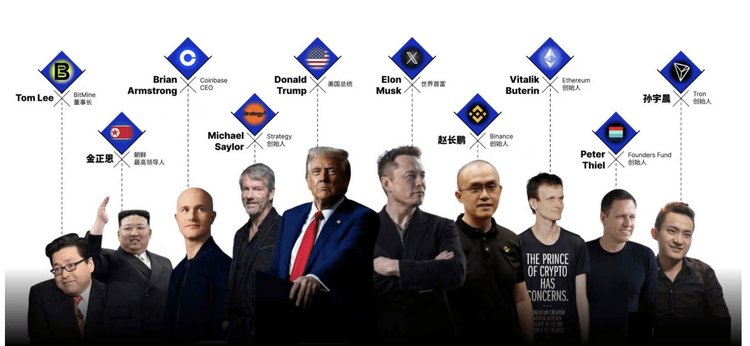
Ten People Redefining the Power Boundaries of Crypto in 2025
From Wall Street to the White House, from Silicon Valley to Shenzhen, a new power network is taking shape.

Top US Journalist Minting on Base, Attention Completes Monetization Loop

Whale Trader Reaps Significant Profits from Ethereum Sales
Key Takeaways A whale, identified as address “0xa339”, has executed a large sale of 50,623 ETH. The total…

ZEROBASE Surges Dramatically as High-Yield Ecosystem and Institutional Confidence Drive Growth
Key Takeaways ZEROBASE (ZBT) experienced a significant 58.95% price increase in the past 24 hours, reaching a peak…

Uniswap’s Proposal Drives UNI Price Surge Over 4%
Key Takeaways Uniswap’s UNI token saw a price spike of 4.35% in the last 24 hours, now priced…

Whale Executes Major Position with $1.8 Million USDC on HyperLiquid
Key Takeaways A significant crypto whale has deposited $1.8 million USDC into HyperLiquid. The whale used the funds…

Whale Deposits 1.81 Million USDC in HyperLiquid for Leveraged LIT Position
Key Takeaways A significant investor has deposited 1.81 million USDC into HyperLiquid. The investor utilized a 3x leverage…

Coinbase Recognized as a Top Fintech Pick for 2026 by Clear Street
Key Takeaways: Coinbase has been identified as one of the top three fintech stock picks for 2026 by…

Uniswap’s Token Burn and Protocol Fee Initiative Gains Overwhelming Support
Key Takeaways Uniswap’s transformative proposal, known as “UNIfication,” aims to burn UNI tokens and activate protocol fees, establishing…

Circle Platform Promising Tokenized Gold, Silver Swaps Is a ‘Fake,’ Company Says
Key Takeaways: A fraudulent press release claimed that Circle had introduced a platform called CircleMetals for trading tokenized…

Uniswap Executes 100M UNI Burn After Fee Switch Approval
Key Takeaways Uniswap executed a significant token burn of 100 million UNI worth approximately $596 million following governance…

133 Transactions, $8.6 Billion: Who Bought the Crypto Industry in 2025
Is the New Year Pump FOMO Back, or Is It Alt Season Again?
Jupiter Token Buyback Controversy, Vitalik's 2026 Vision, What's the Overseas Crypto Community Talking About Today?
Header Fund 2025 Postmortem: What were the successful and unsuccessful trades made?
Arkstream Capital: When Cryptocurrency Returns to 'Financial Logic' by 2025
UNI Burn Arbitrage Opportunity, Ondo Tokenized Stock Liquidity Debate, What’s the Overseas Crypto Community Talking About Today?
Key Takeaways The crypto market is buzzing with multi-threaded discussions, from macro trends to specific protocols and scams.…
Unstable Stablecoins: Understanding the Market’s Concerns and Dynamics
Key Takeaways Recent financial reports indicate concerns and instability in the stablecoin market. Circle, a leading stablecoin issuer,…


 App
App