
- Buy Crypto
- Markets
- Futures
- Spot
- Copy Trade
 WE-Launch
Wall Street's Abacus: $500 Million to Buy Ripple, What Gives?

Original Article Title: "Wall Street's Abacus: $5 Billion to Buy Ripple What?"
Original Article Author: Seed.eth, BitpushNews
In November 2025, Ripple Labs announced a $5 billion new round of strategic financing, raising the company's valuation to $400 billion. This is the first public fundraising for this cryptocurrency financial company in six years and the largest capital injection since the Series C funding in 2019.
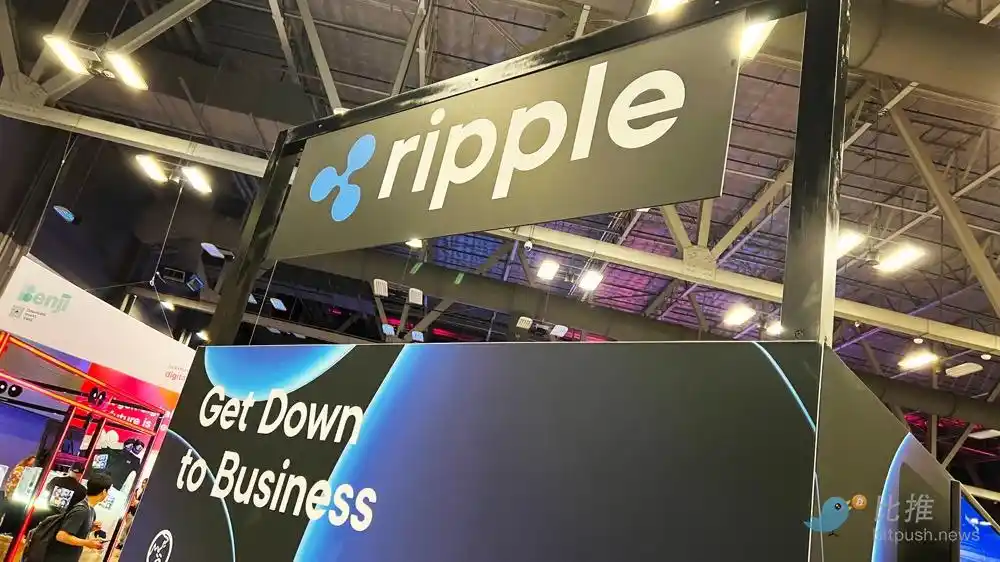
More importantly, the capital faction behind this round of financing is extraordinary: Wall Street's two giants, Fortress Investment Group and Citadel Securities, led the investment, joined by renowned institutions such as Pantera Capital, Galaxy Digital, Brevan Howard, Marshall Wace, and others.
For those familiar with Ripple, this can be considered a "comeback"—is this still the Ripple that was once deeply mired in the mud due to an SEC lawsuit, and even at one point considered a "zombie company"?
From "Master Storyteller" to "Compliance Heavyweight"
Ripple was founded in 2012 and is one of the oldest projects in the crypto community. Its core technology is the XRP Ledger, a decentralized ledger designed for cross-border payments. Ripple Labs has developed payment and settlement systems based on this ledger, and the XRP token was once popular globally from 2017 to 2018, ranking in the top three by market cap, following only Bitcoin and Ethereum.
However, as the token price plummeted and the truth about "pumped" partnerships emerged, Ripple's narrative of "bank-grade partnerships" began to crumble.
During this period, Forbes published an article directly pointing out that Ripple's core business model might be a "pump-and-dump" scheme: Ripple used its massive XRP holdings to spend money on partnerships, creating a false prosperity, and used vague language to evade regulation. Its ultimate goal was not to truly promote the technology but to inflate the value of its freely obtained tokens through marketing and hype, so that insiders could eventually cash out and profit.
In December 2020, the regulatory hammer came down.
The U.S. Securities and Exchange Commission (SEC) sued Ripple for "unregistered securities offering," alleging that it illegally raised over $1.3 billion through XRP.
This marked one of the most significant regulatory battles in the crypto industry.
The ripple effects of the lawsuit were devastating: Mainstream exchanges like Coinbase and Kraken swiftly delisted XRP; longtime partner MoneyGram terminated its relationship; XRP's price plummeted over 60% in the following month. Ripple not only suffered business-wise but was also completely blacklisted from compliance.
Strategic Transformation
While this years-long legal battle cost Ripple nearly $200 million in legal fees, it also granted the company crucial breathing room and some favorable court rulings, buying them valuable time for a strategic transformation.
In 2024, Ripple officially launched RLUSD, a USD-pegged stablecoin, focusing on compliance and targeting financial institution payments and settlements. Unlike USDT and USDC, RLUSD is not meant for inter-exchange "stablecoin" trading but aims to enter traditional credit card and cross-border settlement systems.
In 2025, Ripple announced partnerships with Mastercard, WebBank, Gemini, among others, to use RLUSD for real-time credit card settlements, becoming the world's first blockchain-based stablecoin to enter card networks.
This not only opened up the B2B channel for stablecoin applications but also paved the way for Ripple's integration with the real-world financial system.
To build a comprehensive on-chain financial capability, Ripple carried out a series of targeted acquisitions between 2023-2025:
· Acquired Metaco: Gained institutional-grade digital asset custody technology, laying the foundation to serve large financial institutions.
· Acquired Rail: Obtained stablecoin issuance and management systems, accelerating the launch of RLUSD.
· Secured Hidden Road: Completed the puzzle of institutional credit networks and cross-border settlement capabilities.
Through these acquisitions, Ripple's system capabilities have evolved from a single cross-border payment system to a full-stack financial infrastructure encompassing "stablecoin issuance + institutional custody + cross-chain settlement."
The Truth Behind the $40 Billion Valuation
On the surface, Ripple's transformation path seems to be getting wider.
However, the old players in the capital market see a different picture.
To understand the true logic behind this funding, one must see Ripple's essence: a massive "digital asset treasury."
At XRP's inception, 80% of the 100 billion tokens were placed under Ripple's custody. As of now, the company still holds 34.76 billion tokens, with a nominal value of over $80 billion based on market price—twice its funding valuation.
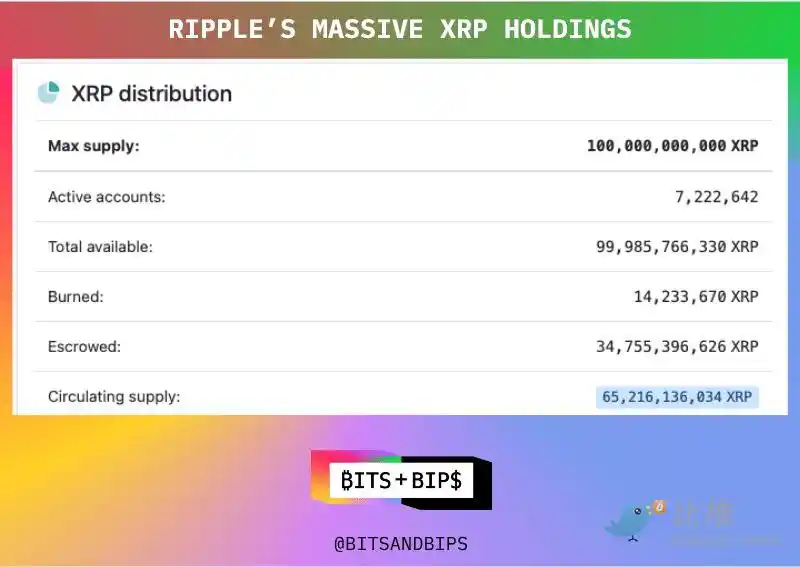
According to multiple venture capitalists, the $500 million transaction is closely tied to purchasing Ripple's XRP holdings and likely at a price far below the spot price.
From an investment perspective, investors effectively acquired an asset at 0.5x mNAV (Market Value to Net Asset Value ratio). Even with a 50% liquidity discount on XRP holdings, the value of these assets still matches the company's valuation.
An insider familiar with the situation told Unchained, "Even if they can't successfully build their own business, they can just buy another company outright."
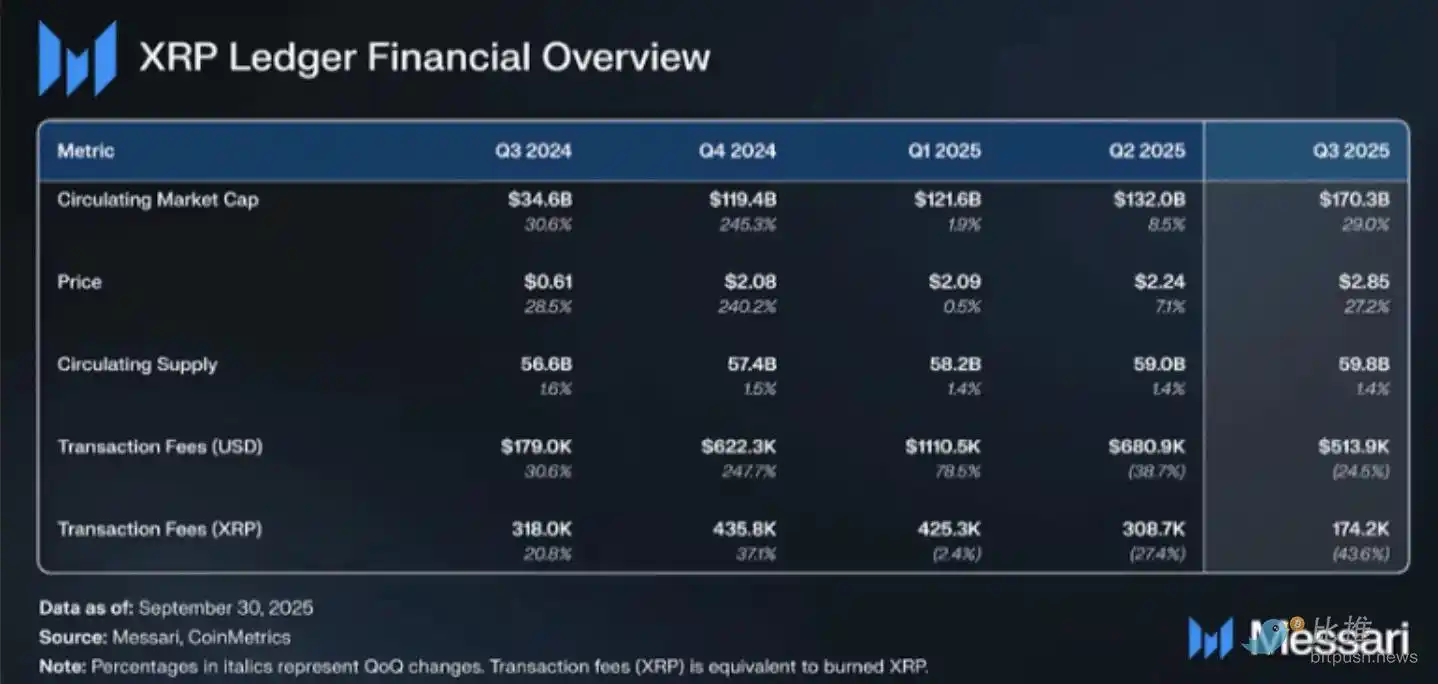
A venture capitalist stated, "This company has no value other than holding XRP. No one is using their tech, and there is no interest in their network/blockchain."
Another community member stated, "Ripple's equity itself may not be worth much, certainly not $40 billion."
A participant revealed the true logic, "The payments track is too hot right now, and investors need to bet on multiple horses on the track."
Ripple is just one horse—a horse that may have average technology but an extremely well-fed (XRP reserve) horse.
And for Ripple, this is a win-win situation:
· Solidify Valuation: Officializing the $40 billion valuation from the private market to provide a pricing benchmark for early investors to exit.
· Avoiding Dumping: Using funding cash for acquisitions to avoid selling XRP and causing market impact.
Ripple co-founder Chris Larsen's personal wealth has also surged to around $15 billion.
From this perspective, Ripple's story has turned into one of the most classical financial tales: about assets, about valuation, about liquidity management.
From the defendant's seat of the SEC to Wall Street's boardrooms, Ripple's journey is a microcosm of the entire crypto industry's transition from idealism to realism. If the past Ripple was the pinnacle of "narrative economics," today's Ripple demonstrates how, as the tide recedes, project teams rely on the most primitive capital strength to achieve a "soft landing."
You may also like

Lido DAO’s Increased Development and Market Dynamics Elevate LDO Price
Key Takeaways Lido DAO’s development activities have surged by 690%, signifying substantial growth. The Lido DAO token (LDO)…

Hyperliquid Whales Shift Strategies: BTC Longs Decline, ETH Shorts Dominate
Key Takeaways A significant reduction in Bitcoin long positions has been observed on Hyperliquid, with large holders decreasing…

December 26th Market Key Intelligence, How Much Did You Miss?

Crypto Christmas Heist: Over $6 Million Lost, Trust Wallet Chrome Extension Wallet Hacked Analysis
Bitcoin Surges Toward $90,000 as $27 Billion Crypto Options Expire
Key Takeaways Bitcoin’s price is nearing the $90,000 mark amid increased market activity following the holiday lull. The…

Bitcoin Options Set to Expire, Potentially Altering Price Beyond $87,000 Range
Key Takeaways A historic Bitcoin options expiry event, valued at $236 billion, is set to occur, potentially impacting…
Ethereum Price Prediction: Whales Accumulate as Market Awaits Key Break
Key Takeaways Ethereum’s price remains in a “no-trade zone” between $2,800 and $3,000 amid low market activity. Whale…

Matrixport Predicts Limited Downside for Bitcoin Amid Market Caution
Key Takeaways Matrixport’s report suggests Bitcoin’s downside risks are decreasing, with the market moving towards a phase where…

Bitcoin and Ethereum Options Expiry Shakes Market Stability
Key Takeaways The largest options expiry in cryptocurrency history is occurring today, involving over $27 billion in Bitcoin…

Trust Wallet Hack Results in $3.5 Million Loss for Major Wallet Holder
Key Takeaways A significant Trust Wallet hack led to the theft of $3.5 million from an inactive wallet.…

PancakeSwap Launches LP Rewards on Base Network
Key Takeaways PancakeSwap has introduced liquidity provider (LP) rewards for 12 v3 pools on the Base network, facilitated…

Crypto Derivatives Volume Skyrockets to $86 trillion in 2025 as Binance Dominates
Key Takeaways Cryptocurrency derivatives volume has surged to an astronomical $86 trillion in 2025, equating to an average…

Ethereum in 2026: Glamsterdam and Hegota Forks, Layer 1 Scaling, and More
Key Takeaways Ethereum is poised for crucial developments in 2026, particularly with the Glamsterdam and Hegota forks. Glamsterdam…

Kraken IPO to Rekindle Crypto’s ‘Mid-Stage’ Cycle: A Comprehensive Analysis
Key Takeaways: Kraken’s anticipated IPO in 2026 could significantly attract fresh capital from traditional financial investors, marking a…
Fed Q1 2026 Outlook: Potential Impact on Bitcoin and Crypto Markets
Key Takeaways: Federal Reserve’s policies could exert significant pressure on cryptocurrencies if rate cuts halt in early 2026.…

Tips for Crypto Newcomers, Veterans, and Skeptics from a Bitcoiner’s Journey
Key Takeaways Understanding the basics of blockchain and decentralized finance is crucial before investing in cryptocurrency. Newcomers should…
Quantum Computing in 2026: No Crypto Doomsday, Time to Prepare
Key Takeaways: Quantum computing still poses a theoretical risk to cryptocurrency security, but immediate threats are minimal due…
El Salvador’s Bitcoin Aspirations Brought Closer to Earth in 2025
Key Takeaways: Early Ambitions vs. Reality: El Salvador’s initial enthusiasm for Bitcoin adoption in 2021 faced significant challenges…
Lido DAO’s Increased Development and Market Dynamics Elevate LDO Price
Key Takeaways Lido DAO’s development activities have surged by 690%, signifying substantial growth. The Lido DAO token (LDO)…
Hyperliquid Whales Shift Strategies: BTC Longs Decline, ETH Shorts Dominate
Key Takeaways A significant reduction in Bitcoin long positions has been observed on Hyperliquid, with large holders decreasing…
December 26th Market Key Intelligence, How Much Did You Miss?
Crypto Christmas Heist: Over $6 Million Lost, Trust Wallet Chrome Extension Wallet Hacked Analysis
Bitcoin Surges Toward $90,000 as $27 Billion Crypto Options Expire
Key Takeaways Bitcoin’s price is nearing the $90,000 mark amid increased market activity following the holiday lull. The…
Bitcoin Options Set to Expire, Potentially Altering Price Beyond $87,000 Range
Key Takeaways A historic Bitcoin options expiry event, valued at $236 billion, is set to occur, potentially impacting…
Popular coins
Latest Crypto News


Customer Support:@weikecs
Business Cooperation:@weikecs
Quant Trading & MM:[email protected]
VIP Services:[email protected]
 App
App