
- Buy Crypto
- Markets
- Futures
- Spot
- Copy Trade
 Earn
Earn- More
Dalio's Year-End Review: Currency, US Stocks, and Global Wealth Redistribution

Original Title: 2025
Original Author: Ray Dalio, Founder of Bridgewater Associates
Original Translation: Bitpush News
As a systemic global macro investor, as we bid farewell to 2025, I naturally reflect on the intrinsic workings of the events that have transpired, particularly in terms of market performance. That is the subject of today's reflection.
While the facts and returns are undeniable, my perspective on the issue is different from most.
Despite the fact that the US stock market, particularly US AI stocks, is widely considered the best investment of 2025 and the core story of the year, the irrefutable fact is that the most substantial returns (and the real headline story) came from:
(1) Currency value movements (most notably the US Dollar, other fiat currencies, and gold)
(2) US stocks significantly underperforming non-US stock markets and gold (gold being the best-performing major market).
This was primarily driven by fiscal and monetary stimulus, productivity improvements, and a large-scale shift in asset allocation away from the US markets.
In these reflections, I take a step back to examine how last year's currency/debt/market/economic dynamics operated and briefly touch on the other four major drivers—politics, geopolitics, natural behavior, and technology—and how they are impacting the global macro picture within the evolving "Big Cycle" backdrop.
1. Currency Value Movements
Regarding Currency Value: The US Dollar fell 0.3% against the Japanese Yen, 4% against the Chinese Yuan, 12% against the Euro, 13% against the Swiss Franc, and plummeted 39% against gold (gold being the second-largest reserve currency and the only major non-credit currency).
As a result, all fiat currencies depreciated. The biggest story and market swings of the year came from the weakest fiat currencies experiencing the largest declines, while the strongest/hardest currencies experienced the biggest gains. The most outstanding major investment of the year was, therefore, being long in gold (with a USD return of 65%), outperforming the S&P 500 Index (with a USD return of 18%) by as much as 47 percentage points. In other words, measured in gold currency terms, the S&P index actually experienced a 28% decline.
Let us remember some key principles relevant to the current state:
When a domestic currency depreciates, it makes things priced in that currency appear to rise. In other words, viewing investment returns through the lens of a weak currency can make them seem stronger than they actually are. In this scenario, the S&P Index had an 18% return for a USD investor, a 17% return for a JPY investor, a 13% return for a CNY investor, but only a 4% return for a EUR investor, and a 3% return for a CHF investor. Meanwhile, for a gold-standard investor, the return was -28%.
Currency movements are crucial for wealth transfer and economic trends. When a currency depreciates, it erodes an individual's wealth and purchasing power, making their goods and services cheaper in other currencies but more expensive in their own. This process affects inflation rates and trade relationships, although with a lag.
Whether you have engaged in Currency Hedging is critical. If you have not and do not want to express a view on currency, what should you do? You should always hedge to your least risky currency mix and tactically adjust from there when you believe you can do well. I'll explain later how I do this.
About bonds (i.e., debt assets): Because bonds are a promise to deliver currency, when the currency's value drops, the real value of the bond decreases even if the nominal price rises. Last year, the 10-year US bond had a USD-denominated return of 9% (roughly half from yield and half from price), a JPY-denominated return of 9%, a CNY-denominated return of 5%, but EUR and CHF-denominated returns were both -4%, and the gold-denominated return was -34%—with cash being an even worse investment.
You can understand why foreign investors do not like USD bonds and cash (unless hedged).
Thus far, the bond supply-demand imbalance is not a severe issue, but there will be a large amount of debt (nearly $10 trillion) needing to be rolled over in the future. Meanwhile, the Fed seems inclined to cut rates to depress real rates. Therefore, debt assets lack allure, especially on the long end of the curve, and a steeper yield curve seems inevitable, though I doubt the extent of Fed accommodation is as much as priced in currently.
2. US Stocks Significantly Underperform Non-US Stocks and Gold
As previously mentioned, while US stocks perform strongly when priced in USD, they lag significantly in a strong currency and notably trail stocks in other countries. Evidently, investors prefer holding non-US stocks, bonds, and assets over US ones.
Specifically, European stocks outperformed US stocks by 23%, Chinese stocks by 21%, UK stocks by 19%, and Japanese stocks by 10%. Emerging market stocks performed even better, with a return of 34%, Emerging Market USD bonds returning 14%, and Emerging Market Local Currency Bonds (USD terms) providing an overall return of 18%. In other words, wealth is undergoing a significant shift and value transfer from the US outward, which could lead to more rebalancing and diversified allocations.
Regarding last year's US stocks, the strong results were attributed to earnings growth and Price/Earnings (P/E) expansion.
Specifically, earnings grew by 12% in USD terms, P/E expanded by around 5%, plus about 1% dividend yield, leading to a total S&P return of around 18%. The "Tech Seven Giants," representing about one-third of the market cap, saw earnings growth of 22% in 2025, while the remaining 493 stocks also achieved an earnings growth of 9%.
Within earnings growth, 57% was attributed to revenue growth (increasing by 7%) and 43% to margin improvement (growing by 5.3%). Much of the margin improvement may be due to technological efficiency, but this is still inconclusive due to data limitations.
Nevertheless, earnings improvement is primarily due to the "economic pie" getting bigger, with capitalists reaping most of the benefits, and workers sharing relatively less. Monitoring profit margins in the future is crucial, as the market currently expects this growth to continue, while left-wing political forces are attempting to reclaim a greater share.
3. Valuation and Future Expectations
Although the past is known and the future is uncertain, understanding causality can help us anticipate the future. Currently, with high P/E ratios and extremely low credit spreads, valuations appear stretched. History has shown that this portends lower future stock market returns. Based on current yield levels and productivity, my long-term stock return expectation is only 4.7% (at a historically low percentile), which is very low compared to a 4.9% bond yield, resulting in an extremely low stock risk premium.
This implies that there isn't much more return to squeeze out from risk premiums, credit spreads, and liquidity premiums. If currency devaluation leads to increased supply-demand pressures and subsequently rising rates, this will have significant negative effects on credit and equity markets.
The two major uncertainties are the Fed's policy and productivity growth. The new Fed Chair and committee seem inclined to keep nominal and real rates low, which will support prices and inflate bubbles. Productivity is expected to rise in 2026, but it's uncertain how much of this will translate into profits rather than being used for taxation or wage expenses (a classic left-right issue).
In 2025, the Fed's rate cuts and loose credit reduced the discount rate, supporting assets such as stocks and gold. These markets are no longer cheap. It is worth noting that these reflation measures did not benefit illiquid markets such as Venture Capital (VC), Private Equity (PE), and real estate. If the debt of these entities is forced to finance at higher rates, liquidity pressure will cause a significant drop in these assets relative to liquid assets.
4. Political Order Revolution
In 2025, politics played a core role in driving the markets:
Trump Administration Domestic Policy: A leveraged bet on capitalism revitalizing American manufacturing and AI technology.
Foreign Policy: Scared off some foreign investors, concerns about sanctions and conflicts supported investment diversification and gold purchases.
Wealth Disparity: The top 10% of capitalists own more stocks and experience faster income growth; they do not see inflation as an issue, while the bottom 60% of the population feels overwhelmed by it.
The "Currency Value/Purchasing Power Issue" will be the top political agenda next year, which could lead to the Republican Party losing the House and trigger turmoil in 2027. On January 1, Zohran Mamdani, Bernie Sanders, and AOC converged under the banner of "Democratic Socialism," heralding a battle over wealth and money.
5. Global Order and Technology
In 2025, the global order shifted clearly from multilateralism to unilateralism (power supremacy). This led to increased military spending, expanded debt, intensified protectionism, and deglobalization. Gold demand strengthened, while demand for U.S. debt and dollar assets decreased.
On the technology front, the AI wave is currently in the early stages of a bubble. I will soon be releasing my Bubble Indicator Report.
Summary
In conclusion, I believe that: Debt/Money/Market/Economic Power, Domestic Political Power, Geopolitical Power (Military Spending), Natural Power (Climate), and New Technology Power (AI) will continue to be the primary drivers reshaping the global landscape. These forces will broadly follow the "Long Wave" template outlined in my book.
Regarding portfolio positioning, I do not want to be your investment advisor, but I do want to help you invest better. The most important thing is to have the ability to make independent decisions. You can infer my position direction from my logic. If you want to learn how to do better, I recommend taking the "Dalio Market Principles" course offered by the Wealth Management Institute (WMI) in Singapore.
You may also like
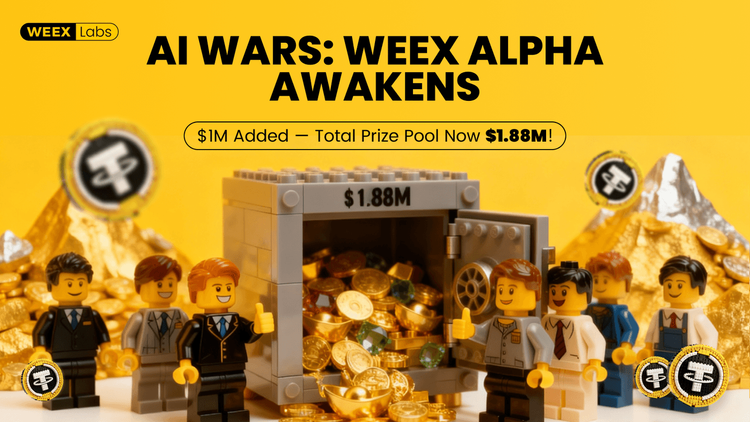
WEEX Global AI Trading Hackathon Kicks Off: $1.88M Prize Pool Powers the Next Generation of AI Trading Champions
WEEX Labs, the innovation arm of WEEX, a leading global crypto exchange serving over 6.2 million users across 150+ countries, is set to kick off the preliminary round of its flagship global AI trading hackathon, AI Wars: WEEX Alpha Awakens, on January 12, 2026. Backed by the strong support of world-class sponsors including Amazon Web Services (AWS), the total prize pool has surged from $880,000 to an unprecedented $1,880,000, positioning AI Wars among the largest AI trading hackathons in the crypto industry. At the top of the leaderboard awaits an extraordinary champion prize — a Bentley Bentayga S, already on standby in Dubai, ready to be claimed by the ultimate AI trading victor.

2025 Market Prediction Retrospective: Total Transaction Volume Exceeds $50 Billion, Duopoly Market Share Exceeds 97.5%

Pentagon Pizza Index Soars 1250%: Who Will Be the Next Venezuela?

From Theory to Live Markets: AOT Matrix’s Dual-Brain System in WEEX AI Trading Hackathon
In crypto markets — one of the most unforgiving non-stationary systems — strategy failure is rarely caused by models being too simple. It happens because most strategies are never truly exposed to live-market pressure. This is exactly the problem WEEX AI Trading Hackathon is designed to surface — shifting the focus from theoretical innovation to real deployability, real execution, and real performance. Among the participating teams, AOT Matrix stood out with advanced AI-driven quantitative capabilities. Through its V4.4 dual-brain architecture, the system achieved end-to-end optimization — from core logic to execution — reflecting the platform’s dual emphasis on innovation and real-world performance.

Predicting Contrarian Buy Pressure in the Market: Who is Taking the Other Side of Your Trade?

$250 Billion, 6723 Rounds of Funding: Where Did Crypto VCs Invest in 2025?

Visa Crypto Lead: Eight Key Evolutions of Crypto and AI by 2026

Metplanet Reaches Three-Month High Following MSCI Index Decision
Key Takeaways Metplanet’s value has achieved a three-month high relative to its bitcoin holdings, reaching a multiple to…

Stores of Value: Gold and Silver Once Again Lead Global Asset Charts
Key Takeaways: Gold and silver have retaken their positions as the top assets by market capitalization, highlighting their…
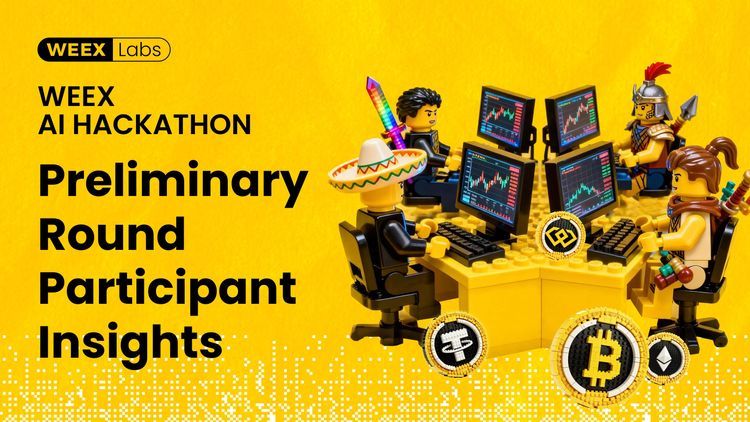
Preliminary Round Participant Insights — AOT Matrix: Left-Brain Analysis, Right-Brain Decisions in AI Trading
In the WEEX AI Trading Hackathon, AOT Matrix chose a more cautious path in system design — one that’s actually harder to pull off in a live trading environment. From the very start, they made clear choices about what role AI should and shouldn’t play in the trading system. We interviewed AOT Matrix about their decision-making logic, the multiple iterations of their system architecture, and what it’s like to implement it under WEEX’s real trading environment and engineering constraints.

Why AI Tokens Are Rising Faster Than the Broader Crypto Market
AI tokens are outperforming — and not quietly. Bitcoin is moving. Ethereum is holding ground. Yet some of the strongest relative gains are coming from AI-labeled tokens, not majors, not memes. At first glance, this feels intuitive. AI is real technology. It’s shaping industries far beyond crypto. But markets rarely move on intuition alone — especially not this fast. When prices accelerate ahead of adoption, the more useful question isn’t “Is AI important?” It’s which version of the AI story the market is buying — right now.

Doubling in a single day won't make up for a 98% crash - Did Parcl's 'Polymarket Story' Hold Up?

Key Market Intelligence on January 6th, how much did you miss out on?

Dogecoin Price Prediction: DOGE Enters Its Most Significant Buy Zone – Is This the Beginning of a 2026 Breakout?
Key Takeaways Dogecoin has seen a dramatic price increase of nearly 20% in just seven days as of…

How to Flip Real Estate in the Prediction Market

Tether, which has "enriched" itself through stablecoins, is now heavily investing in AI
Built on Compliance and Security, AI Empowering Users, KuCoin is Redefining the Crypto Partner
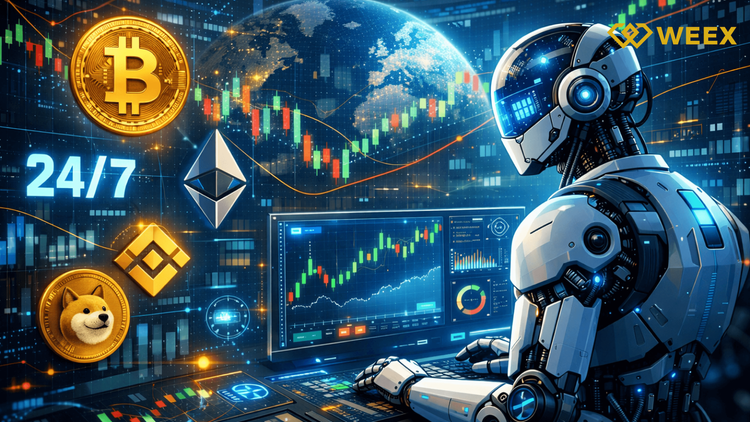
Why AI Trading Bots Are Becoming Essential in 24/7 Crypto Markets
Cryptocurrency markets operate continuously and move faster than human attention can reliably sustain. Prices react instantly to global events, liquidity shifts across regions, and tradeable opportunities often exist for minutes rather than hours. For many traders, the core challenge is no longer generating ideas, but executing decisions consistently without constant monitoring or emotional interference. This is where AI trading bots are increasingly being adopted — not as profit guarantees, but as tools designed to translate predefined strategies into reliable, repeatable execution.
WEEX Global AI Trading Hackathon Kicks Off: $1.88M Prize Pool Powers the Next Generation of AI Trading Champions
WEEX Labs, the innovation arm of WEEX, a leading global crypto exchange serving over 6.2 million users across 150+ countries, is set to kick off the preliminary round of its flagship global AI trading hackathon, AI Wars: WEEX Alpha Awakens, on January 12, 2026. Backed by the strong support of world-class sponsors including Amazon Web Services (AWS), the total prize pool has surged from $880,000 to an unprecedented $1,880,000, positioning AI Wars among the largest AI trading hackathons in the crypto industry. At the top of the leaderboard awaits an extraordinary champion prize — a Bentley Bentayga S, already on standby in Dubai, ready to be claimed by the ultimate AI trading victor.
2025 Market Prediction Retrospective: Total Transaction Volume Exceeds $50 Billion, Duopoly Market Share Exceeds 97.5%
Pentagon Pizza Index Soars 1250%: Who Will Be the Next Venezuela?
From Theory to Live Markets: AOT Matrix’s Dual-Brain System in WEEX AI Trading Hackathon
In crypto markets — one of the most unforgiving non-stationary systems — strategy failure is rarely caused by models being too simple. It happens because most strategies are never truly exposed to live-market pressure. This is exactly the problem WEEX AI Trading Hackathon is designed to surface — shifting the focus from theoretical innovation to real deployability, real execution, and real performance. Among the participating teams, AOT Matrix stood out with advanced AI-driven quantitative capabilities. Through its V4.4 dual-brain architecture, the system achieved end-to-end optimization — from core logic to execution — reflecting the platform’s dual emphasis on innovation and real-world performance.


 App
App