
- Buy Crypto
- Markets
- Futures
- Spot
- Copy Trade
 Earn
Earn- More
Pacifica Transaction Tutorial: Weekly 10 Million Point Reward, How Beginners Can Seize Early Bird Bonus

The rise of Perp DEX is unstoppable. Following Hyperliquid's lead in seizing the market, a group of emerging decentralized exchanges have also begun to make their mark. This year, Aster, backed by CZ and Yzi Labs, went live and started a trading competition, with its trading volume surpassing Hyperliquid at one point. Equally noteworthy is Pacifica, founded in January by three founders including former FTX COO Constance Wang—the project has made rapid progress, launching its testnet in just two months and officially mainnet on June 10th.
Currently, Pacifica has 30,000 active users, with a seven-day trading volume reaching as high as 59 billion USD. While Pacifica has developed rapidly, there is still significant room for growth in trading volume compared to current leaders like Lighter and Hyperliquid. Furthermore, since October 30th, the platform's standard points issuance has increased twentyfold, with the current total supply of points exceeding 135 million. For Pacifica, which has not yet issued coins, the attractiveness of the points activity to users is self-evident.
This article has compiled a registration and trading tutorial for Pacifica. The points activity was launched less than six months ago and is still in its early stages. If you also wish to participate in this points feast, please continue reading below.
1. Open the Pacifica website and complete registration and wallet linking
Pacifica Website: https://app.pacifica.fi/ 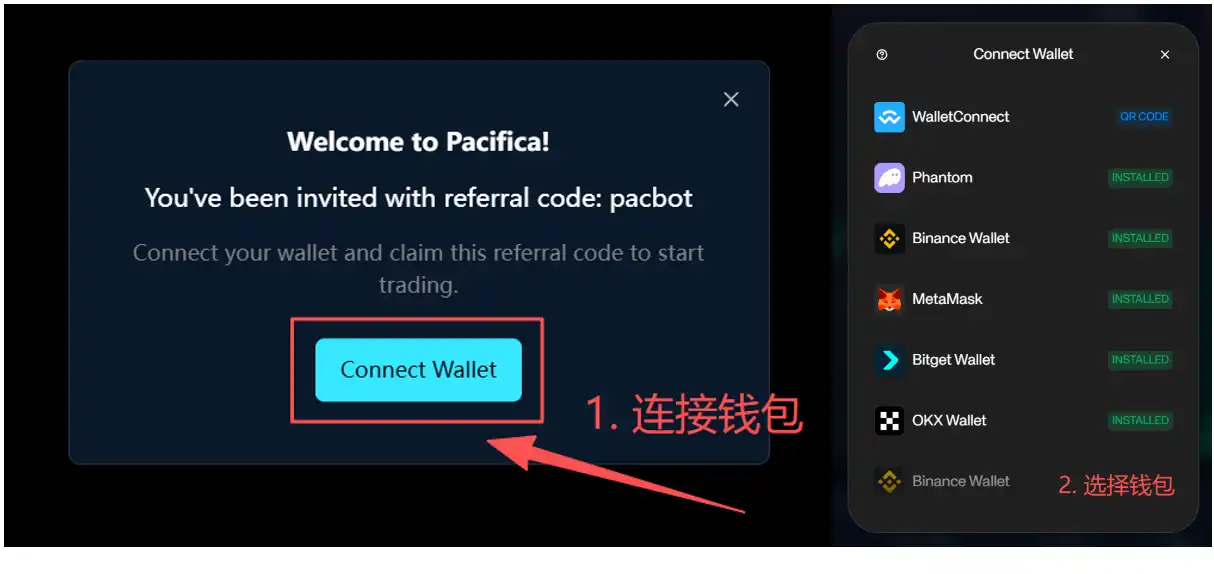
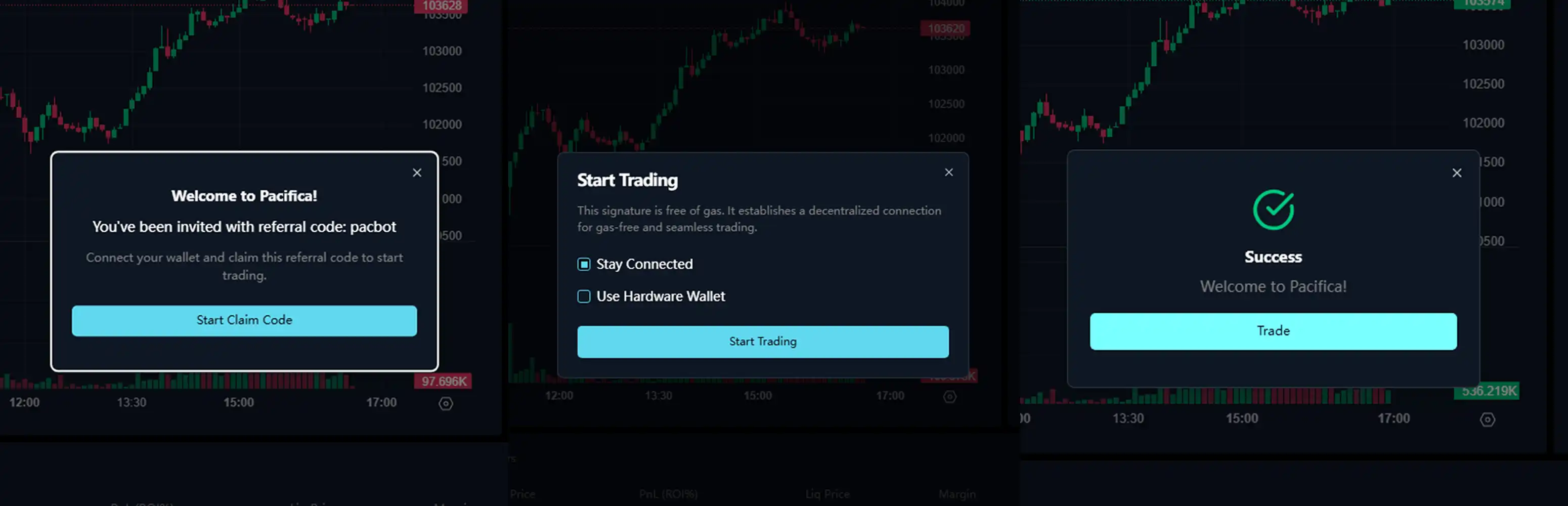
After linking your wallet, there will be 2-3 confirmations, follow the prompts to confirm.
2. Set Language
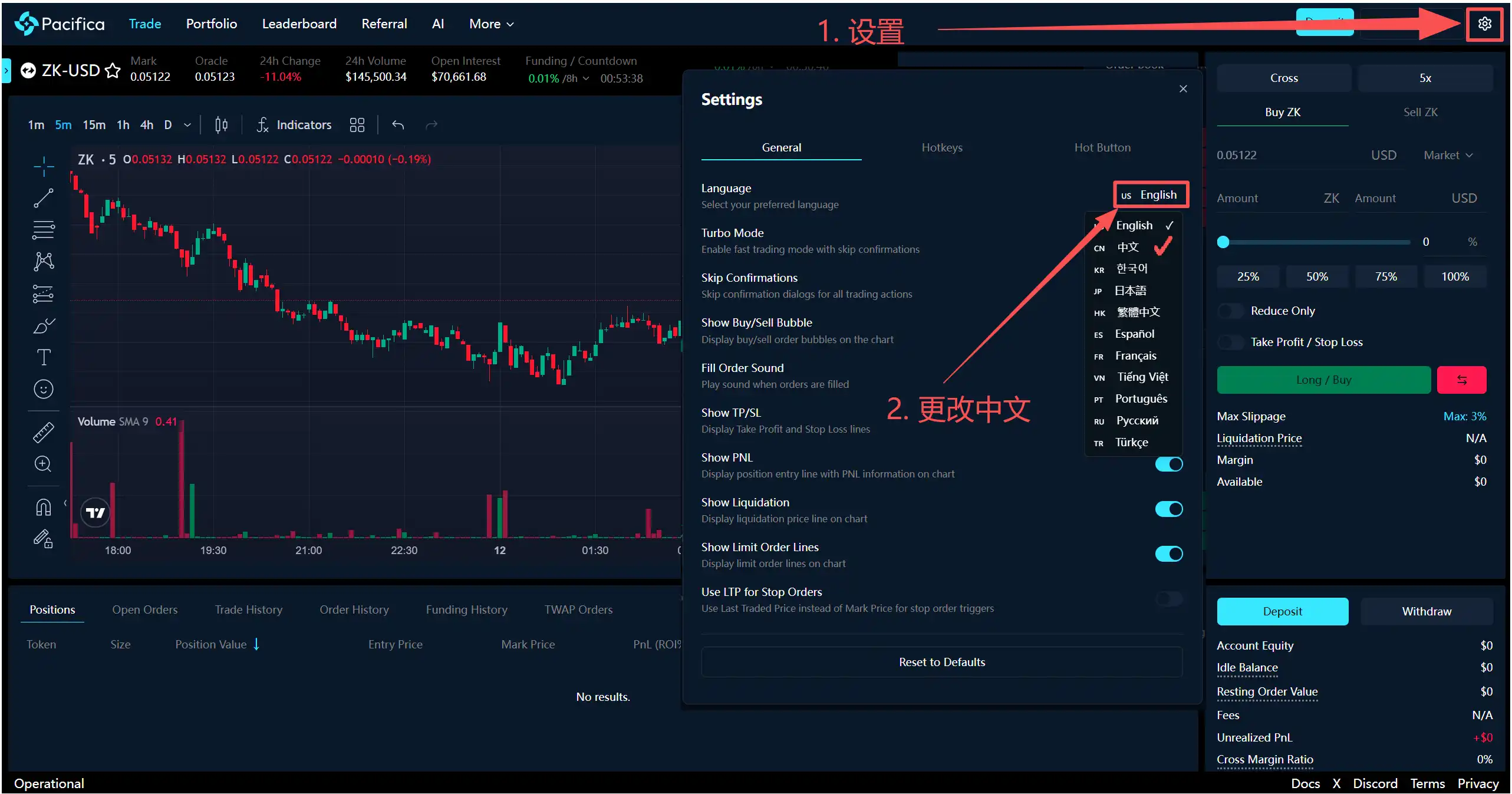
The website currently supports multiple languages. If you are a Chinese user, click on "Chinese" or "Traditional Chinese"
If you prefer an English page, you can skip this step.
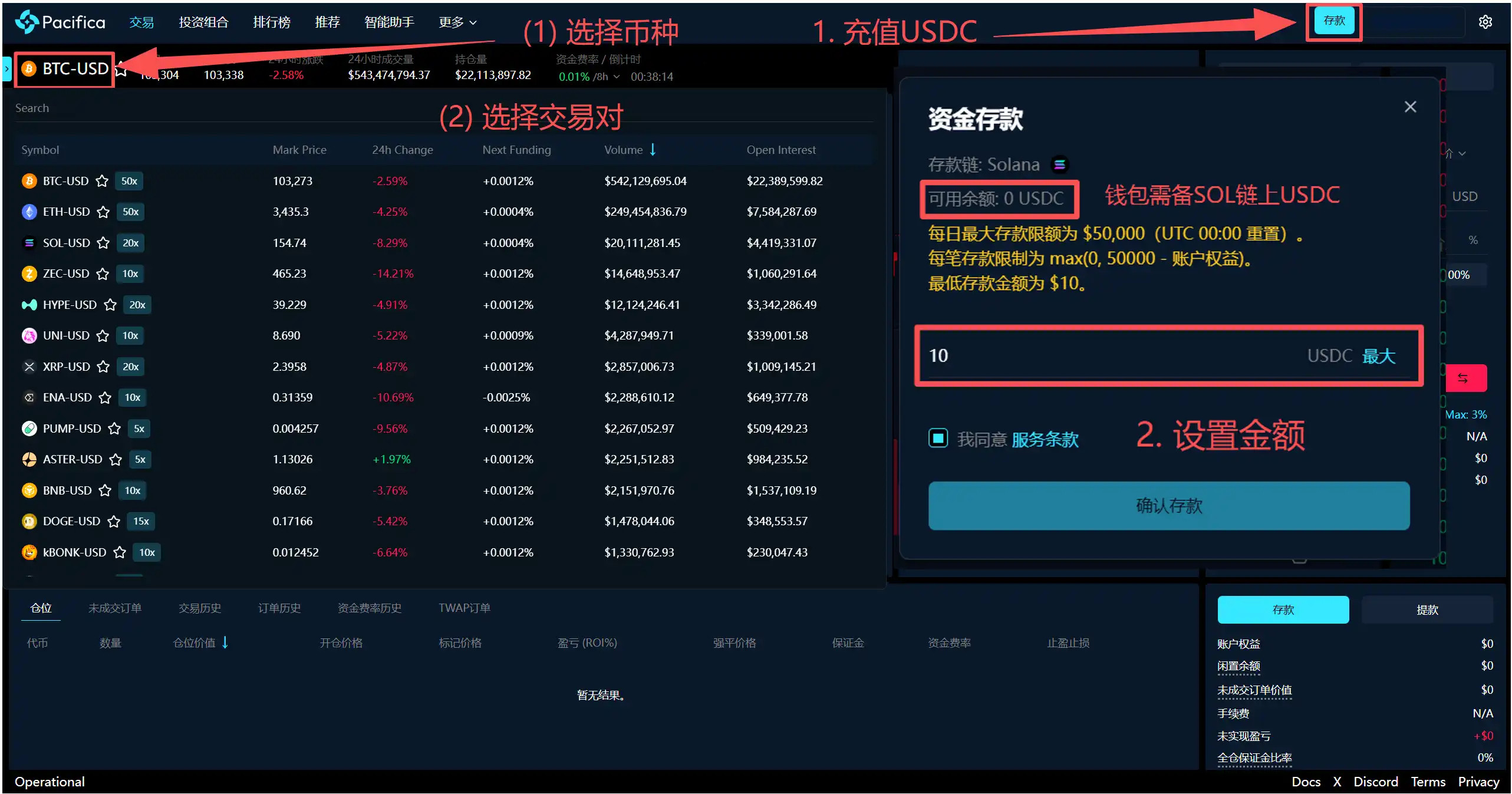
3. Deposit USDC and Select the Currency for Trading
Pacifica is built on Solana, so when depositing funds, you need to choose Solana's USDC on-chain and double-check the wallet address for on-chain transfers.
4. Initiate Your First Trade (Using BTC as an Example)
After completing the deposit, you can choose the cryptocurrency you want to trade in the top left corner. Currently, Pacifica supports most mainstream tokens and is continuously listing new tokens.
Based on the example in the image:
- Set the leverage multiplier (beginners are advised to use low leverage, avoid high leverage)
- Trading direction: Long/Short
- Opening amount/Market order
- Quantity of the trading asset
- Click "Confirm" to place the order
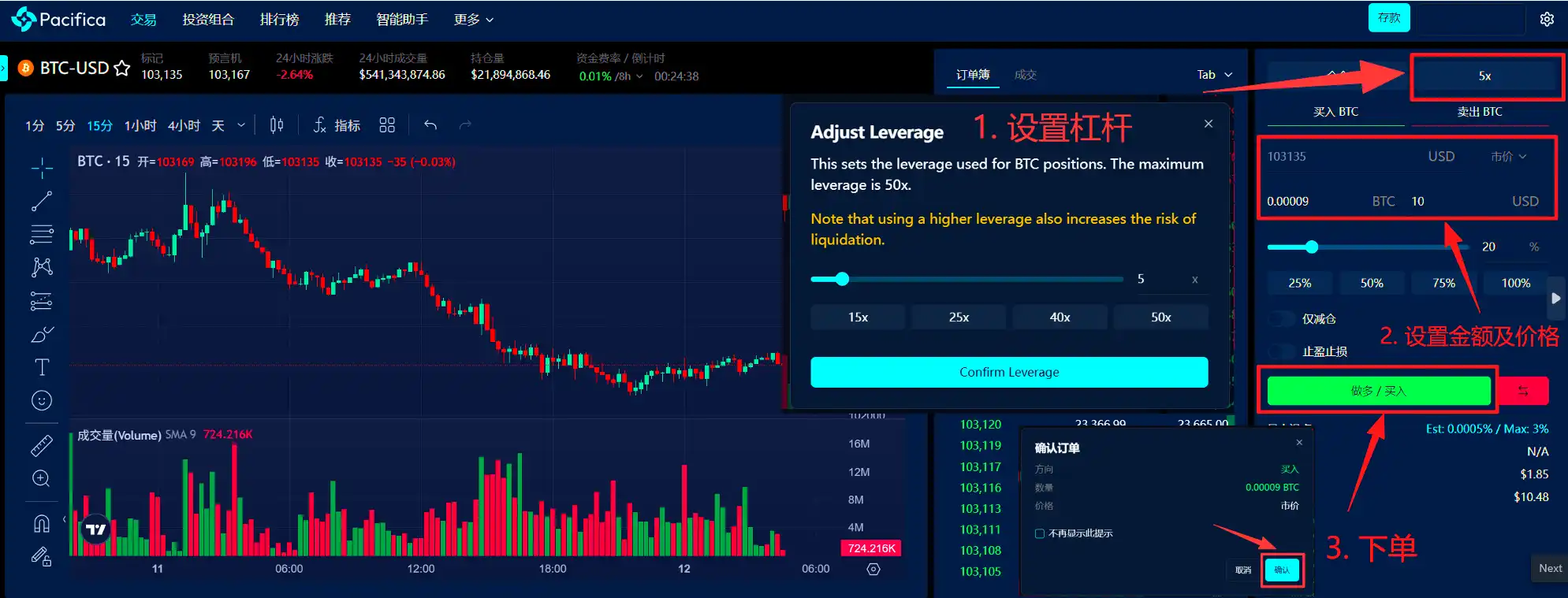
5. After placing an order, if you want to close the position or set a limit order to close, please refer to the following steps.
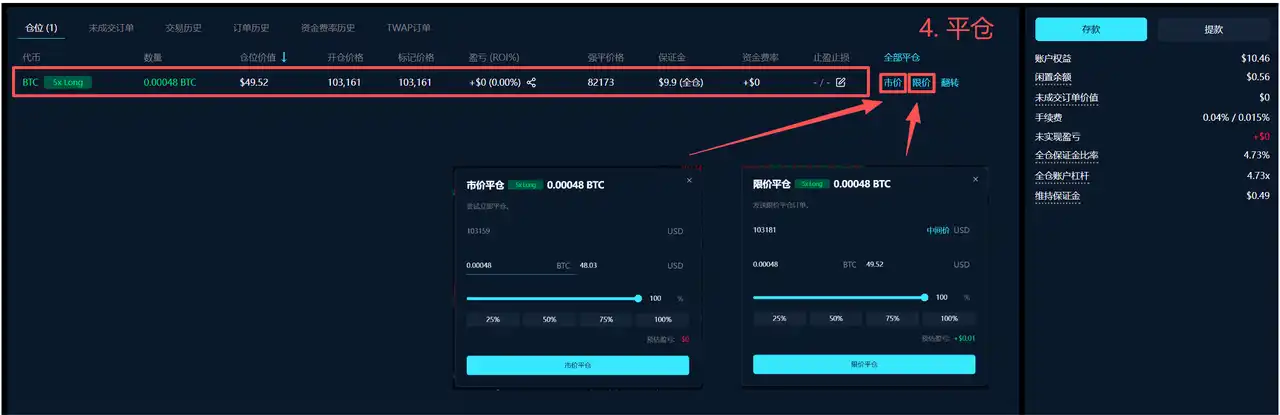
Finally, a reminder to everyone, this tutorial is designed to earn points through multiple means, contract trading can be addictive, so resist FOMO.
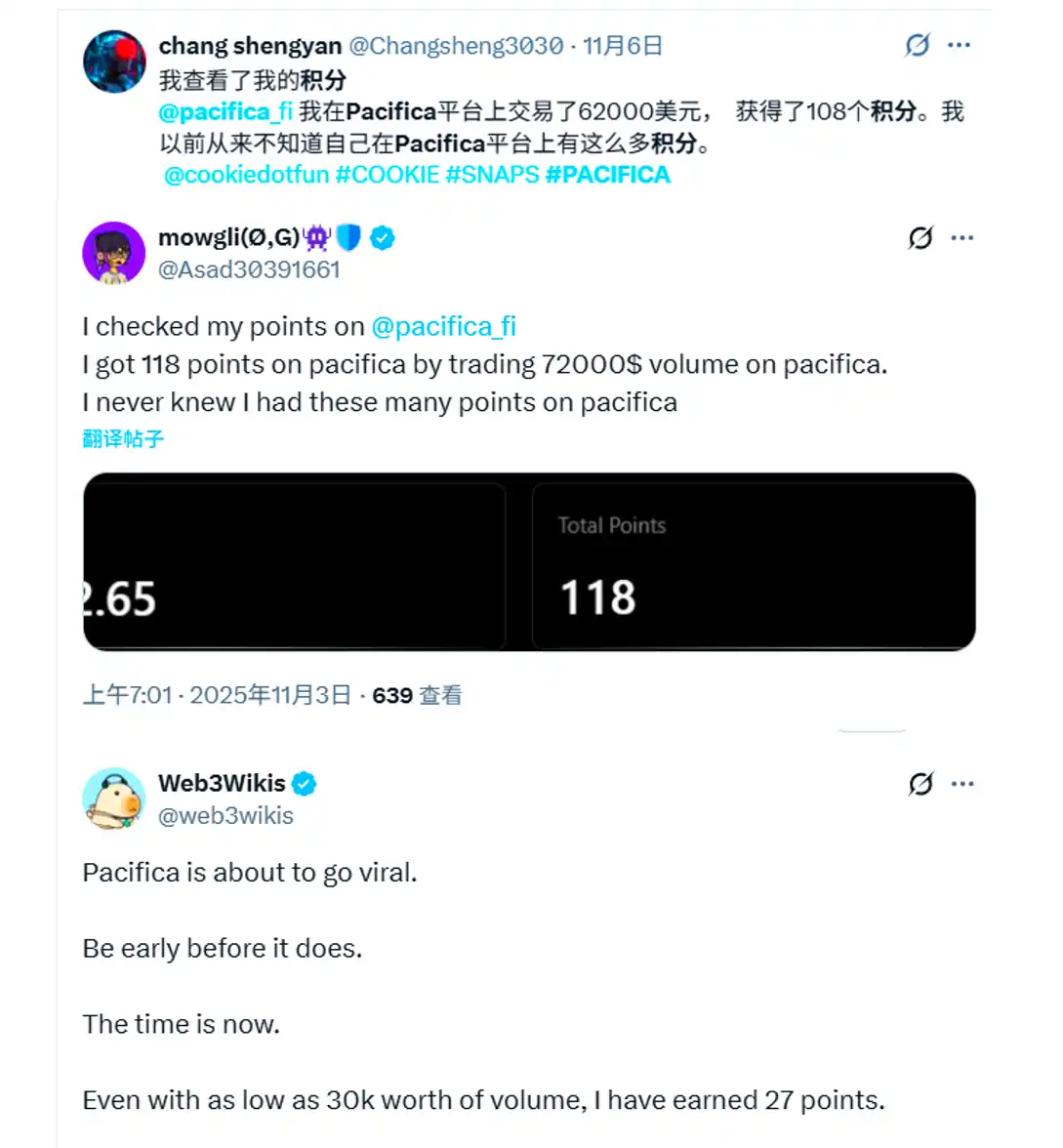
Pacifica's points program will launch on September 4, 2025, with a weekly snapshot every Thursday at 00:00 UTC. Distribution will be completed within 24 hours and will be allocated to eligible active users. The specific distribution formula is not yet public, mostly based on the total platform trading volume. Currently, 10,000,000 points are distributed weekly to trading users (previously 500,000 points, increased 20 times on October 30), distributed based on the total number of users and trading volume for the week, making point acquisition dynamic.
Based on data feedback from multiple traders online from November to the present month, an average trading volume of approximately $600 to $1000 can earn 1 point. Similarly, to reduce wear and tear, in terms of trading pairs, you can choose some low-volatility coins with low funding rates.
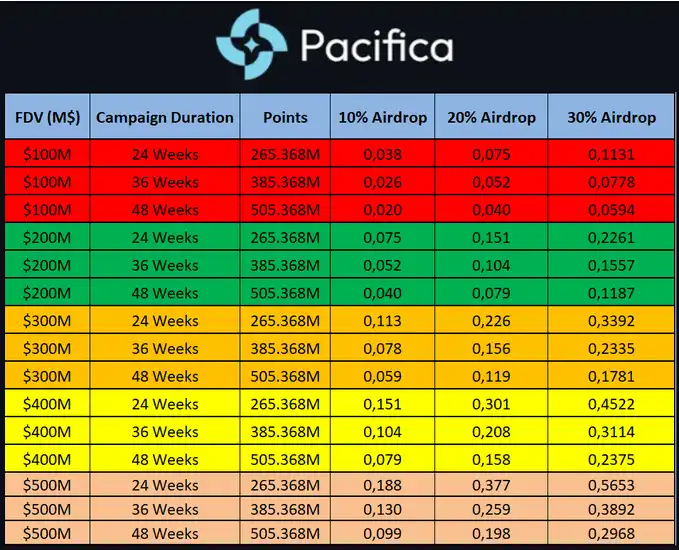
It is important to note that associating Pacifica points with token value is still a community speculation based on industry experience, and no official rules have been provided. However, based on the usual practices of past projects and community speculations, the community generally associates points with tokens. Under this speculative premise, the community has derived a widely circulated valuation logic, with the core formula being: Individual point price = (Fully Diluted Valuation FDV of the project × Token Airdrop Ratio) / Total Points Issued in the Point Program.
Application of this formula relies on several core variables: firstly, an estimate of the project's FDV; secondly, an assumption about the airdrop's proportion of total supply; and thirdly, the most variable factor—an estimate of the total period for point issuance (usually assumed to be 24, 36, or 48 months). The table below will show different scenarios of point price estimation based on these variables for reference:
You may also like

North Korean Hackers Enjoy 'Fat Years': Stole Record Amount in 2025, With Money Laundering Cycle of About 45 Days

Why Is On-Chain Fixed-Rate Lending Hard to Come By? "Basis Swap" Trading Is the Way Out

What’s Driving Crypto Markets in Early 2026: Market Swings, AI Trading, and ETF Flows?
Imagine checking Bitcoin and Ethereum prices in a day — one minute up 5%, the next down 4%. Sharp moves, quick reversals, and sensitivity to macro signals marked the first week of 2026. After an early-year rally, both assets pulled back as markets recalibrated expectations around U.S. monetary policy and institutional flows. For traders — including those relying on AI or automated systems — this period offered a vivid reminder: abundant signals do not guarantee clarity. Staying disciplined in execution is often the real challenge.

America's First State-Backed Stablecoin FRNT: Can It Save Wyoming Amid Energy Slump?

Kinetiq Exclusive Interview: From Hyperliquid's Largest LST Protocol to the "Exchange Factory"

ZCash Team Split, Bank of America Upgrades Coinbase Rating, What's the Overseas Crypto Community Talking About Today?

Key Market Info Discrepancy on January 9th - A Must-Read! | Alpha Morning Report

Aster Coin: A Deep Dive into Its Price, Potential, and Why It’s Catching Eyes in 2026
Have you ever stumbled upon a crypto project that seems poised for growth amid market volatility, only to…

Wyoming’s FRNT Stablecoin Launches — First State-Backed Stablecoin Hits Market
Key Takeaways Wyoming leads innovation in the U.S. by launching the first state-backed stablecoin, FRNT, representing a pivotal…

Solana Price Prediction: Morgan Stanley Just Filed for a SOL ETF – Is This the Beginning of Wall Street’s Next Crypto Obsession?
Key Takeaways Morgan Stanley’s filing for a SOL-based ETF signifies growing institutional interest in cryptocurrencies beyond Bitcoin, boosting…

Key Market Insights for January 8th, how much did you miss out on?
All these uncommon things in the crypto world are listed on Idle Fish
USD 1 Billion Surge in Market Cap: Behind the Scenes with Trump Family Bet and CEX Shilling

Ranger Fund Takes a New Approach to Public Offering: Can a Grassroots Team Earn Market Trust?
Wyoming Stablecoin FRNT Goes Live on Solana, Polycule Bot Hacked, What's the Overseas Crypto Community Talking About Today?

Key Market Information Discrepancy on January 8th - A Must-See! | Alpha Morning Report

Start-of-the-Year Crypto Rally Stalls: What’s Next?
Key Takeaways The initial crypto market boost at the start of 2026 has lost momentum, primarily due to…

Morgan Stanley Files for Ether Trust after Bitcoin and Solana ETF Proposals
Key Takeaways Morgan Stanley has made a significant move by filing for an Ethereum Trust with the SEC,…
North Korean Hackers Enjoy 'Fat Years': Stole Record Amount in 2025, With Money Laundering Cycle of About 45 Days
Why Is On-Chain Fixed-Rate Lending Hard to Come By? "Basis Swap" Trading Is the Way Out
What’s Driving Crypto Markets in Early 2026: Market Swings, AI Trading, and ETF Flows?
Imagine checking Bitcoin and Ethereum prices in a day — one minute up 5%, the next down 4%. Sharp moves, quick reversals, and sensitivity to macro signals marked the first week of 2026. After an early-year rally, both assets pulled back as markets recalibrated expectations around U.S. monetary policy and institutional flows. For traders — including those relying on AI or automated systems — this period offered a vivid reminder: abundant signals do not guarantee clarity. Staying disciplined in execution is often the real challenge.


 App
App