
- Buy Crypto
- Markets
- Futures
- Spot
- Copy Trade
 WE-Launch
Understanding the Dynamics of Cryptocurrency Market Movements

Key Takeaways
- Cryptocurrency markets are known for their volatility, largely driven by market sentiment, regulatory news, and technological developments.
- External factors, such as government regulations and major technological advancements, significantly impact cryptocurrency valuations.
- The decentralized nature of cryptocurrencies presents unique challenges and opportunities, setting them apart from traditional financial markets.
- WEEX and other exchanges play a critical role in providing liquidity and facilitating market participation for a wide range of investors.
WEEX Crypto News, 2025-12-17 15:07:16
Introduction to Cryptocurrency Market Movements
The cryptocurrency market operates on a different rhythm compared to traditional financial markets. It thrives on its decentralized nature, which gives power back to users but also introduces a degree of unpredictability not typically seen in conventional markets. This article delves deep into the unique properties of cryptocurrency movements, their driving factors, and the resulting impact on the market’s stability and investor behavior.
The Nature of Volatility
Cryptocurrency markets are notorious for their volatility. Unlike conventional stocks or commodities, cryptocurrencies can experience double-digit percentage swings within hours. Bitcoin, the grandfather of all cryptocurrencies, has shown how a digital asset can go from relative obscurity to being a household name while experiencing extreme fluctuations. This volatility is not merely a byproduct of supply and demand; it’s intricately linked with the underlying sentiment and speculative nature that currently defines the market.
Why do Cryptocurrencies Experience Such Volatility?
A key factor contributing to the intense volatility is market sentiment, which in the crypto world can change rapidly with news headlines. The positive announcement, such as a major company adopting blockchain technology or a country accepting cryptocurrencies as legal tender, can send prices soaring. Conversely, news of security breaches or announcements of regulatory crackdowns can cause steep declines almost instantaneously.
Cryptocurrencies do not have intrinsic value like commodities, nor do they have earnings reports and dividends like stocks. They’re valued on a complex interplay of perceived utility, innovation potential, scarcity, and emotional market responses.
The Impact of Regulatory News
Regulation is a double-edged sword in the cryptocurrency space. On one hand, clear regulations can provide legitimacy and security to investors, fostering broader adoption and investment. On the other hand, unfavorable regulatory news, such as bans or heavy restrictions, can lead to panic selling and steep declines.
Notable Regulatory Events
Governments and financial authorities worldwide have been grappling with how to handle cryptocurrencies. For instance, while some countries have moved to ban them entirely, others have embraced them, integrating blockchain technology into their financial systems. The announcements from major economies often lead to ripple effects across global markets.
In recent years, there have been movements towards more comprehensive regulatory frameworks aimed at preventing fraud and ensuring consumer protection, which has been viewed positively by the market when such measures strike a balance between innovation and security.
Technological Developments and Their Influence
The underlying technology of cryptocurrencies, blockchain, is constantly evolving. Technological upgrades and advancements, such as Bitcoin’s Lightning Network or Ethereum’s transition to a proof-of-stake model, have significant impacts on market dynamics.
The Blockchain Revolution
Blockchain technology presents endless possibilities beyond just making digital currencies. It facilitates decentralized applications, smart contracts, and a new way of conducting secure transactions across borders. Each advancement in blockchain technology, whether it pertains to scalability, security, or functionality, can affect cryptocurrency values by altering user perceptions of a coin’s long-term viability.
For instance, the successful implementation of Ethereum’s long-awaited consensus mechanism shift not only illustrated the network’s capability to adapt but also influenced Ether’s market valuation positively.
Role of Exchanges
Cryptocurrency exchanges like WEEX serve as the life-blood of the crypto economy. They provide a marketplace where buyers and sellers meet, enabling the fluid exchange of various cryptocurrencies. The design and security of these exchanges can have profound impacts on investor confidence and market liquidity.
Security and User Trust
Exchanges must maintain robust security protocols to protect user assets. High-profile exchange breaches have previously led to significant market downturns, shaking the confidence of even the most steadfast crypto enthusiasts. As the sector matures, exchanges are implementing stronger security measures, such as two-factor authentication and cold storage, to enhance user trust.
Likewise, the ease of use, the variety of coin offerings, and the transaction fees structured by exchanges like WEEX influence user choice, driving liquidity and broad-based participation in the market.
Market Predictions and the Psychology of Trading
Predicting market movements in cryptocurrencies involves understanding both fundamental and technical indicators. However, due to the unique nature of cryptocurrencies, psychological factors also play a crucial role.
The Herd Mentality
The so-called “herd mentality” is prevalent in cryptocurrencies, often amplified by social media. A single tweet or pronouncement by an influential figure can initiate chain reactions, leading to widespread buying or selling.
Savvy traders often leverage these psychological tendencies, recognizing that human emotion can drive markets as much as, if not more than, traditional valuation metrics.
Technical Analysis in Crypto Trading
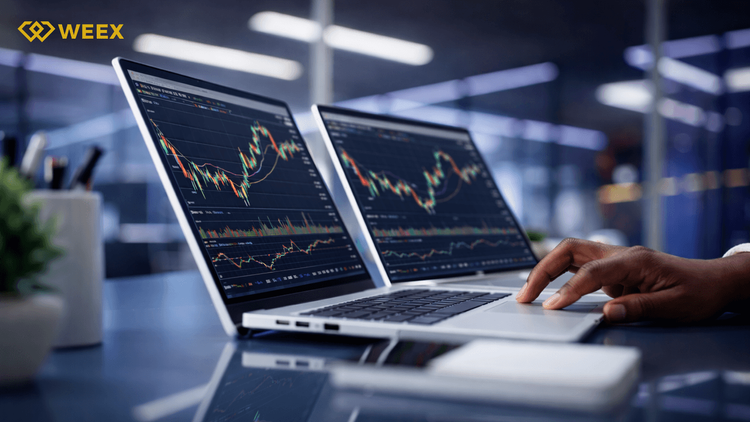
While traditional markets rely on established technical indicators, in the cryptocurrency world, these need to be adapted to account for higher volatility and unique trading conditions. Traders utilize tools such as moving averages, relative strength index (RSI), and candlestick patterns, but these are used in conjunction with strategies specifically tailored to the crypto market’s dynamics.
Conclusion
The cryptocurrency market continues to rapidly evolve, buoyed by technological innovation and beleaguered by regulatory uncertainty. Despite these challenges, the potential for cryptocurrencies to redefine financial transactions and digital ownership remains vast, making this an exciting frontier for investors and technologists alike.
Understanding the key factors that drive cryptocurrency market movements is crucial for any participant. Being keenly aware of the external influences that affect these volatile assets can inform smarter trading decisions and fuel user engagement with innovative platforms like WEEX that aim to provide safe and accessible trading experiences.
FAQ
What factors contribute most to cryptocurrency price changes?
Cryptocurrency prices are influenced by a variety of factors, including market sentiment, regulatory news, technological advancements, and macroeconomic trends. The market’s reaction to these factors is often swift due to the speculative nature of the market.
How do technology upgrades impact the value of cryptocurrencies?
Technological upgrades can enhance a cryptocurrency’s functionality, security, or scalability, which in turn can improve user adoption and investor confidence, leading to changes in market valuation.
Are cryptocurrencies regulated, and how does this affect their prices?
Regulations vary by country, with some governments embracing cryptocurrencies and others restricting their use. Regulatory news can have a significant impact on prices, as favorable regulations can boost confidence, while adverse regulations may lead to sell-offs.
How do cryptocurrency exchanges like WEEX influence the market?
Exchanges facilitate cryptocurrency trading by providing a secure and trustworthy platform for market transactions. Their policies, technological robustness, and user interfaces can influence investor participation and market liquidity.
What role does emotional behavior play in cryptocurrency trading?
Emotional behavior, driven by factors such as fear of missing out (FOMO) or panic selling, is significant in cryptocurrency trading. The market’s speculative nature makes it susceptible to psychological influences, often leading to erratic price movements.
You may also like
How AI Helps Crypto Traders Analyze Markets, Manage Risk, and Trade Smarter
Crypto trading is no longer just about having a good idea—it is about executing consistently in a market that never stops. As data volumes and market speed increase, traditional manual analysis reaches its limits. AI helps traders move beyond these limits by transforming how markets are analyzed, how sentiment is interpreted, and how risk is controlled. This article explores how AI is reshaping crypto trading — and what that means for traders today.

The Year Trump Embraced Cryptocurrency

IOSG: Port and New City, Two Cryptoverse Views of BNB Chain and Base

WEEX Partners with LALIGA to Expand Global Reach and Integrate Crypto into Mainstream Sports Culture
Hong Kong, Jan. 1, 2026. WEEX has entered into a new partnership with LALIGA, as an official regional partner of LALIGA in Taiwan and Hong Kong. The agreement brings WEEX into LALIGA’s network of regional collaborators and opens the door to new ways of engaging both fans and traders during the season.

Perpetual Contract Genesis: Pricing Liquidity with a Magic Formula, Transparency Prevents it from Reaching its Full Potential

Key Market Intelligence as of December 31st, how much did you miss out on?

Hong Kong Virtual Asset Trading Platform New Regulations (Part 2): New Circular Issued, Has the Boundary of Virtual Asset Business Been Redefined?

AI Trading in Crypto: How Traders Actually Apply AI in Real Crypto Markets
Artificial intelligence has moved beyond experimentation in crypto markets. In 2025, AI-driven trading tools are increasingly used by traders who want better discipline, faster execution, and more structured decision-making in volatile markets. This guide explains how AI is actually used in crypto trading, step by step — with a focus on how these strategies are executed in real trading environments.

Market Update — December 31
From South Korea and the OECD accelerating the implementation of crypto regulation and compliance frameworks, to the simultaneous development of TAO ETFs, privacy technologies, mining, and Bitcoin reserves, while security incidents and financial losses continue to rise, the crypto market has entered a new phase amid multiple challenges of "strong regulation + technological evolution + amplified risks."

Lighter Token Distribution Sparks Controversy, Zama Launches USDT Private Transfers, What is the Overseas Crypto Community Talking About Today?

4 Years of Web3 Entrepreneurship: 7 Key Takeaways
Can't Beat the Stock Market, Can't Outdo Precious Metals, Is Crypto Really Becoming the Bull Market for "Outsiders"?

Why Did the Prediction Market Take Nearly 40 Years to Explode?

Key Market Intelligence on December 30th, how much did you miss out on?

Matrixdock 2025: The Practical Path to Sovereign-Grade RWA of Gold Tokenization
Paradigm's Tempo Project Launches Testnet, Is It Worth Checking Out?

Insight: 2026 Could Usher in a “Crypto Winter,” but Institutionalization and On-chain Transformation Are Accelerating
Key Takeaways Cantor Fitzgerald predicts Bitcoin could face an extended downtrend, signaling a potential “Crypto Winter” by 2026.…
Caixin: Digital RMB Wallet Balances to Begin Earning Interest in 2026
Key Takeaways: Starting January 1, 2026, digital RMB wallets will earn interest on balances. The operational structure will…
How AI Helps Crypto Traders Analyze Markets, Manage Risk, and Trade Smarter
Crypto trading is no longer just about having a good idea—it is about executing consistently in a market that never stops. As data volumes and market speed increase, traditional manual analysis reaches its limits. AI helps traders move beyond these limits by transforming how markets are analyzed, how sentiment is interpreted, and how risk is controlled. This article explores how AI is reshaping crypto trading — and what that means for traders today.
The Year Trump Embraced Cryptocurrency
IOSG: Port and New City, Two Cryptoverse Views of BNB Chain and Base
WEEX Partners with LALIGA to Expand Global Reach and Integrate Crypto into Mainstream Sports Culture
Hong Kong, Jan. 1, 2026. WEEX has entered into a new partnership with LALIGA, as an official regional partner of LALIGA in Taiwan and Hong Kong. The agreement brings WEEX into LALIGA’s network of regional collaborators and opens the door to new ways of engaging both fans and traders during the season.


 App
App