
 Buy Crypto
- Markets
 Futures
- Spot
- Copy Trade
- Earn
- More
Oil Tokenization: Models, Risks, and Real Market Use Cases in 2026

Oil Tokenization has become one of the more serious branches of the real-world asset market. The reason is simple: oil is already a standardized, globally traded commodity with deep financial markets, well-known benchmarks, and massive cross-border settlement needs. That makes it a much better fit for tokenization than many experimental asset classes that sound modern but still lack real liquidity.
The real promise of Oil Tokenization is not that it makes oil “crypto.” The better reading is that it gives oil-related claims a faster, more programmable financial wrapper. In the best-case version, tokenization lowers entry barriers, shortens settlement cycles, improves collateral mobility, and connects commodity finance to onchain liquidity. In the weaker version, it just creates a new label for opaque or highly speculative products that still depend on trust, poor disclosure, or fragile market structure.
That distinction matters because the Oil Tokenization market in 2026 is not one clean category. It includes physically backed oil tokens, energy royalty or revenue tokens, synthetic crude exposure, and narrative-driven projects that use oil branding without offering a serious legal claim. Investors who do not separate those models are likely to misread both the opportunity and the risk.
What Oil Tokenization Actually Means
At the simplest level, Oil Tokenization means representing oil-linked value as a blockchain-based digital asset. But that value can come from different sources, and that is where the market gets complicated.
Some tokens are designed to represent a direct claim on physical crude or storage-backed inventory. Others represent cash flow from oil-producing assets. Others only mirror the price of oil through derivatives or oracle feeds, which means they are closer to synthetic exposure than to commodity ownership. For readers starting from the basics, Oil Tokenization is best understood as an umbrella term, not a single product type.
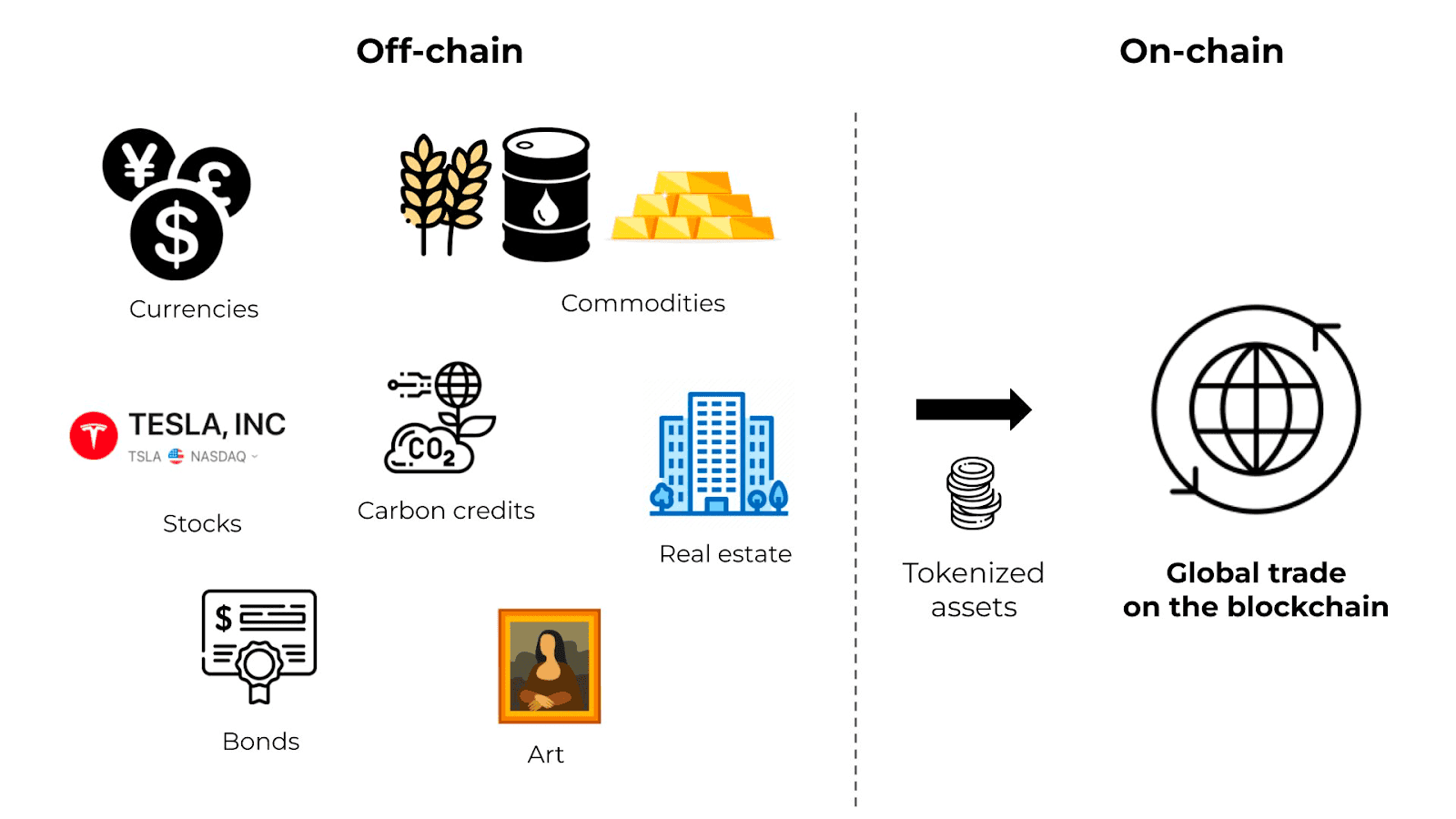
The wider RWA trend helps explain why the category matters now. Tokenization is moving from government debt and private credit into commodities because commodities already have strong market logic: they are measurable, tradeable, financeable, and globally priced. Oil stands out because it combines all of those traits with enormous geopolitical and financial relevance.
Why Oil Is a Better Tokenization Candidate Than Most Commodities
Not every commodity is equally suited to tokenization. Oil is unusually strong for three reasons.
First, oil already trades through globally recognized benchmarks such as WTI and Brent. That means tokenized products can anchor themselves to known pricing systems rather than inventing a valuation framework from scratch.
Second, oil markets already depend on financing, hedging, and settlement infrastructure. Tokenization does not need to invent a use case. It only needs to improve parts of an existing system that is still slower and more fragmented than it should be.

Third, oil is capital-intensive. Traditional access often requires large ticket sizes, futures expertise, institutional relationships, or indirect exposure through ETFs and producer stocks. Tokenization can lower those barriers by making claims smaller, faster to transfer, and easier to integrate into digital finance systems.
That is the real reason this category has substance. The market does not need more “story assets.” It needs cleaner financial rails for assets that already matter.
The Four Main Oil Tokenization Models in 2026
The most useful way to understand the market is to split it into four categories.
Commodity-backed tokens
These are the most intuitive products. They claim that each token is backed by a physical unit of oil or a verified reserve-linked claim.Security-style oil tokens
These do not necessarily represent a barrel. Instead, they represent income rights, royalty streams, working interests, or financing exposure tied to oil assets.Synthetic oil tokens
These provide price exposure, not physical ownership. They depend on oracle feeds, collateral systems, or derivatives infrastructure.Narrative or pseudo-backed tokens
These use oil branding, political symbolism, or commodity language, but the actual reserve claim is weak, unverifiable, or nonexistent.
This framework matters because people often hear “oil-backed token” and assume the product is safer or more real than a normal crypto asset. In practice, many so-called oil tokens sit much closer to a derivative or even a meme-driven narrative than to commodity title.
Key Oil Tokenization Projects and What They Represent
The easiest way to make the market concrete is to compare the best-known oil-linked projects by structure.
| Token / Project | Core Model | Underlying Exposure | 2026 Reading |
|---|---|---|---|
| OIL1 | Commodity-backed token | Reported 1:1 Gulf crude reserves plus dollar-linked liquidity support | Most institutionally ambitious oil token structure |
| LITRO | Commodity-backed token | Reported 1 liter of audited light crude per token | More granular unit design, but still niche |
| ZiyenCoin | Security-style token | US oil asset royalties and working-interest exposure | Better read as tokenized energy cash flow |
| sWTI | Synthetic asset | WTI price exposure through protocol mechanics | Useful for traders, not a physical barrel claim |
| mUSO | Synthetic mirrored asset | US oil ETF-linked synthetic exposure | Much weaker relevance in 2026 |
| Petro (PTR) | Sovereign oil token experiment | Venezuelan oil narrative and state support claims | Historic failure and a warning case |
| USOR | Narrative token | Oil reserve-style branding without credible asset verification | Example of why structure matters more than theme |
This table is where the market becomes easier to read. OIL1 and LITRO belong to the “credible-if-verifiable” bucket, where reserve proof, custody, regulation, and redemption matter most. ZiyenCoin belongs to the “tokenized energy finance” bucket, where cash flow rights matter more than commodity settlement. sWTI and mUSO are closer to synthetic price products. Petro and USOR are mostly useful today as lessons in what happens when commodity branding outruns legal and operational credibility.
OIL1 and the Institutional Version of Oil Tokenization
If one project captures the institutional ambition of this market, it is OIL1. Public descriptions in early 2026 positioned it as a digitally native oil-linked asset tied to Gulf crude reserves, built with a dual logic: physical commodity linkage on one side and stablecoin-style liquidity support on the other. That makes it more than a simple “barrel token.” It is trying to become a settlement instrument for energy-linked finance.
That approach is important because physically backed oil alone does not solve volatility, redemption friction, or cross-border settlement. By combining commodity exposure with more stable digital-liquidity mechanics, OIL1 points toward a model where tokenized oil is not only held, but actually used.
The stronger interpretation is that OIL1 is less about retail speculation and more about whether energy exporters and institutional capital want programmable commodity settlement tools. If that thesis works, the token is not just an asset wrapper. It becomes infrastructure.
LITRO and Why Unit Design Matters
LITRO is less talked about than OIL1, but it reveals something important about market design. Instead of linking one token to a full barrel, it reportedly uses a one-liter structure for audited crude. That may sound like a minor detail, but it actually matters a lot.
Smaller unit design improves accessibility and makes retail-sized participation easier. It also makes the token easier to think about as a digitally divisible commodity claim. The tradeoff, of course, is that small-unit design does not solve the hard part. The hard part is still the same: audit quality, reserve verification, legal recourse, and redemption integrity.
This is a recurring theme in Oil Tokenization. Good token mechanics help, but they do not replace trust architecture.
ZiyenCoin and the Better Financing Model
ZiyenCoin is one of the clearest examples of why oil tokenization should not be reduced to “digitized barrels.” It is better understood as tokenized oil finance. Public descriptions frame it as a security-style token tied to working interests and royalty streams from oil assets in the United States.
That matters because a lot of commodity finance is really about future cash flows, not spot ownership. In that sense, ZiyenCoin may actually be closer to how traditional energy capital works than many barrel-linked tokens. Instead of pretending every investor wants direct crude redemption, it focuses on income participation.
The more interesting takeaway is that this model may be easier to scale than true physical-oil redemption systems. Investors often want exposure, yield, or financing rights more than they want delivery logistics. That makes security-style oil tokenization one of the more credible long-term branches of the market.
Synthetic Oil Tokens Still Matter, but for a Different Reason
Synthetic products such as sWTI play a different role. They are not trying to solve oil custody or warehouse verification. They are trying to give traders easier, onchain price exposure.
That is still useful. In some cases, it is exactly what the market wants. For traders who only care about directional oil moves, a tokenized or synthetic route can be faster and simpler than dealing with legacy futures infrastructure. For readers comparing digital crude exposure, XTI is a practical example of how oil-linked trading products can be packaged in a more accessible format.
The problem is that synthetic oil should never be confused with commodity ownership. Synthetic value depends on collateral systems, oracle integrity, liquidity, and market design. If those fail, the exposure can break even when the underlying oil market itself is functioning normally.
That is why the smart way to view synthetic oil products is as trading tools, not reserve claims.
Petro and USOR Explain the Failure Mode
The market also has obvious warning cases. Petro is the historical one. It showed what happens when a government uses oil backing as political language without delivering the trust infrastructure investors actually need. Reserve clarity, redemption credibility, and governance transparency all matter more than state rhetoric.
USOR is the modern crypto-native version of the same lesson. It used oil-reserve-style branding and narrative heat, but without credible proof of backing. That is the danger zone for this category. Oil is such a powerful story asset that weak projects can borrow its legitimacy without building the legal and operational foundations required for real value.
The best judgment here is simple: in Oil Tokenization, branding is cheap and proof is expensive. Serious investors should price projects accordingly.
The Infrastructure Layer Is the Real Story
A lot of people focus on the token and miss the infrastructure. That is a mistake. Platforms such as VAKT and Komgo matter because they attack the underlying friction of commodity trade itself. VAKT helps digitize and standardize post-trade workflow in oil markets. Komgo speeds up trade-finance processes that historically moved far too slowly for a market of this size.
This is where Oil Tokenization becomes more than a crypto niche. Once trade documents, financing flows, collateral management, and settlement become machine-readable and digitally portable, the market starts to move from token wrappers toward full financial system redesign.
In practice, this infrastructure layer may matter more than any individual token symbol. Tokens can come and go. Workflow rails, compliance rails, and financing rails are harder to replace.
What Investors Should Actually Watch
If you are trying to evaluate this market seriously, focus on five questions.
Is the token physically backed, cash-flow linked, or synthetic?
Is there independent reserve verification or just marketing language?
Does the project offer real redemption rights or only market trading?
What legal regime governs the product?
Is there enough real liquidity to exit without taking a major discount?
Those questions matter more than the token story, the website, or the “backed by oil” slogan.
The sharper judgment is that the Oil Tokenization market will probably not be won by the loudest project. It will be won by the one that solves trust, liquidity, and legal structure well enough that institutions actually use it.
Conclusion
Oil Tokenization is one of the few RWA sectors where the long-term logic is genuinely strong. Oil already has deep financial markets, standardized units, and global demand. Blockchain does not need to invent relevance here. It only needs to make an old market more efficient.
But efficiency alone is not enough. The market still has to prove who actually controls the commodity, who verifies the backing, what rights the token holder owns, and how liquidity behaves under stress. That is why this category should be judged with more discipline than many crypto-native narratives.
The real opportunity in 2026 is not buying anything that claims to be oil-backed. It is understanding which oil-linked tokens represent real market infrastructure and which ones are simply using energy as a story. That difference will decide where the lasting value ends up.
FAQ
What is Oil Tokenization?
Oil Tokenization is the creation of blockchain-based assets linked to oil value, including physically backed crude tokens, energy cash-flow tokens, and synthetic oil exposure.
Are all oil tokens backed by real crude?
No. Some are physically linked, some are synthetic, and some are only narrative-driven. Investors need to verify the structure before assuming real backing.
What is the difference between tokenized oil and synthetic oil?
Tokenized oil usually implies some kind of reserve or asset-backed structure, while synthetic oil mainly provides price exposure through derivatives or oracle-based mechanisms.
Which oil token model looks most credible in 2026?
Institutional, auditable structures such as OIL1-style commodity-backed systems and well-structured revenue-linked models look more credible than purely narrative tokens.
Why does Oil Tokenization matter?
Because it could make energy markets more liquid, more accessible, and easier to finance through blockchain-based settlement and collateral systems.
You may also like

WEEX Futures Debuts BOB USDT for Build on Bitcoin
WEEX Exchange is thrilled to introduce the BOB USDT perpetual contract, expanding trading options for crypto enthusiasts. This…
WEEX Futures Debuts OFC USDT for OneFootball Credits (OFC)
WEEX Exchange is thrilled to introduce the OFC USDT perpetual contract, marking the initial listing of OneFootball Credits…

Introducing Zcash ($ZEC): Protocol Updates and Price Prediction
Zcash is a decentralized cryptocurrency focused on privacy and anonymity. $ZEC has hit everyone’s attention recently.

What is SMC Factory (SMCF) Coin: Everything You Need to Know
SMC Factory (SMCF) is a meme coin inspired by the concept of factory-style production of meme tokens, originating…

Tether Gold (XAUT): What It Is, How It Works, and Key Risks
What is Tether Gold (XAUT)? Learn how this tokenized gold works on Ethereum, Tron, and BNB Chain, plus fees, reserves, risks, and XAUT vs PAXG.

How to Buy Russian Oil Asset Reserve (ROAR) Crypto: 2026 Step-by-Step Guide
Learn how to buy Russian Oil Asset Reserve (ROAR) crypto on Solana DEXs. Step-by-step guide with contract address, wallet setup, risks, and safety tips.

What is Russian Oil Asset Reserve (ROAR): Is ROAR Crypto Legitimate or a Scam?
What is Russian Oil Asset Reserve (ROAR) crypto? We analyze the Solana meme coin tied to oil narratives, tokenomics, risks, and whether it has real backing.
Russian Oil Asset Reserve (ROAR): Is ROAR Crypto a Hype?
What is Russian Oil Asset Reserve (ROAR) crypto? We analyze the Solana meme coin tied to oil narratives, tokenomics, risks, and whether it has real backing.

What is イロハ (IROHA) Coin: Everything You Need to Know
イロハ (IROHA) is a community-driven meme token on the Solana blockchain, inspired by cultural themes and aiming to…

What is Build N Build (共建) Coin? Everything You Need to Know
Build N Build (共建) Coin represents a community-driven token on the Binance Smart Chain, inspired by a tweet…
What is iShares MSCI India (INDAON) Coin
iShares MSCI India (INDAON) is a tokenized version of the iShares MSCI India ETF, created by Ondo Finance…
What is iShares MSCI EAFE Tokenized ETF (Ondo) (EFAON) Coin
iShares MSCI EAFE Tokenized ETF (Ondo) (EFAON) Introduction iShares MSCI EAFE Tokenized ETF (Ondo) (EFAON) is a tokenized…

WEEX OFC Airdrop Guide: Claim Your New User Bonus and OFC Rewards
Discover how to participate in the WEEX OFC airdrop event from April 9 to April 15, 2026. This guide covers how to maximize your new user bonus, claim free rewards through spot trade tasks, and optimize your trading fees on one of the fastest-growing crypto exchanges.
VDOR vs ROAR: Which Oil-Theme Crypto Token Looks Stronger in 2026?
VDOR vs ROAR explained with the latest market data, contract addresses, legitimacy checks, token differences, and which oil-theme crypto looks stronger in 2026.

Is Russian Oil Asset Reserve (ROAR) Legitimate or a Scam?
Is Russian Oil Asset Reserve (ROAR) legitimate? Read the latest ROAR legitimacy check, official contract address, market data, risks, and expert verdict.
What is OneFootball Credits (OFC) Coin
OneFootball Credits (OFC) is a utility token designed to fuel a global fan economy in the football world,…
Where Can I Buy ROAR Crypto? Step-by-Step Guide and Insights
ROAR crypto, the token behind the Russian Oil Asset Reserve project, has caught attention amid shifting global energy…
OneFootball Credits (OFC) Price Prediction & Forecasts for April 2026: Up 8% in 24 Hours Amid Rising Trading Volume
As of April 9, 2026, OneFootball Credits (OFC) is trading at $0.168229 USD, according to data from CoinMarketCap.…
WEEX Futures Debuts BOB USDT for Build on Bitcoin
WEEX Exchange is thrilled to introduce the BOB USDT perpetual contract, expanding trading options for crypto enthusiasts. This…
WEEX Futures Debuts OFC USDT for OneFootball Credits (OFC)
WEEX Exchange is thrilled to introduce the OFC USDT perpetual contract, marking the initial listing of OneFootball Credits…
Introducing Zcash ($ZEC): Protocol Updates and Price Prediction
Zcash is a decentralized cryptocurrency focused on privacy and anonymity. $ZEC has hit everyone’s attention recently.
What is SMC Factory (SMCF) Coin: Everything You Need to Know
SMC Factory (SMCF) is a meme coin inspired by the concept of factory-style production of meme tokens, originating…
Tether Gold (XAUT): What It Is, How It Works, and Key Risks
What is Tether Gold (XAUT)? Learn how this tokenized gold works on Ethereum, Tron, and BNB Chain, plus fees, reserves, risks, and XAUT vs PAXG.
How to Buy Russian Oil Asset Reserve (ROAR) Crypto: 2026 Step-by-Step Guide
Learn how to buy Russian Oil Asset Reserve (ROAR) crypto on Solana DEXs. Step-by-step guide with contract address, wallet setup, risks, and safety tips.


 App
App