
- Kup krypto
- Rynki
- Kontrakty futures
- Spot
- Copy trading
 WE-Launch
What is Aave? A Comprehensive Guide

Key Takeaways
- Aave is a decentralized finance (DeFi) protocol that enables users to lend and borrow cryptocurrencies without intermediaries, using smart contracts on blockchain networks like Ethereum, where depositors earn interest and borrowers provide collateral.
- Its core features include flash loans, which allow instant, collateral-free borrowing as long as repayment occurs in the same transaction, alongside options for stable or variable interest rates to suit different user needs.
- Aave’s native token, AAVE, powers governance, staking for security, and fee reductions, making it integral to the ecosystem’s operation and growth.
- Advantages include high liquidity through lending pools, multi-chain support for lower fees, and innovative risk management via health factors, though it comes with risks like smart contract vulnerabilities and market volatility.
- As a leader in DeFi, Aave has expanded to networks like Polygon and Avalanche, fostering a vibrant community and partnerships that drive adoption in the broader crypto industry.
What Is Aave?
Aave is an open-source, decentralized lending protocol built on blockchain technology that allows users to deposit cryptocurrencies into liquidity pools to earn interest or borrow assets by providing collateral, all without relying on traditional banks or intermediaries, leveraging smart contracts for automated, trustless transactions.
Imagine you’re at a coffee shop, chatting with a friend about how banking could be revolutionized. That’s where Aave comes in—it’s like a peer-to-peer lending club, but on the blockchain. Originating from the Finnish word for “ghost,” Aave started as ETHLend in 2017, founded by Stani Kulechov, and rebranded to Aave in 2020 to emphasize its broader DeFi ambitions. The core concept revolves around creating efficient, permissionless money markets where anyone can lend or borrow crypto assets seamlessly. The ecosystem includes lending pools, flash loans for quick arbitrage, and governance through the AAVE token, which lets holders vote on protocol upgrades. Backed by a team of blockchain experts, Aave has grown into a multi-billion-dollar protocol, integrating with various chains to reduce costs and increase accessibility. It’s not just about lending; it’s about democratizing finance, much like how ride-sharing apps disrupted taxis.
Origins and Background
Aave’s journey began in the midst of the 2017 crypto boom, when traditional lending was clunky and centralized. It evolved from a simple P2P lending platform to a full-fledged DeFi powerhouse, with its V1 launch in 2020 introducing flash loans that shook up the industry.
Core Concept and Ecosystem
At its heart, Aave operates on liquidity pools where suppliers and borrowers interact via smart contracts. The ecosystem spans DeFi applications, including integrations with wallets, DEXs, and even real-world asset tokenization, making it a staple in the crypto lending space.
FAQs on Aave Basics
- What makes Aave different from traditional banks? Unlike banks, Aave is decentralized—no single entity controls it, and everything runs on code, ensuring transparency and global access.
- Is Aave only for experts? Nope, it’s user-friendly with interfaces like the Aave app, though beginners should start small to understand the risks.
Who Created Aave?
Stani Kulechov, a Finnish entrepreneur with a background in law and a passion for blockchain, founded Aave (originally ETHLend) in 2017. He assembled a team of developers, economists, and crypto enthusiasts, including names like Jordan Lazaro Gustave and Mika Antero, who brought expertise in smart contracts and finance. The project originated from Kulechov’s frustration with inefficient lending in crypto, inspired by the Ethereum ecosystem’s potential.
The whitepaper, released in 2017, outlined a peer-to-peer lending model using ERC-20 tokens. Key milestones include the 2017 ICO raising $16 million, the 2020 rebrand to Aave with flash loans, and expansions to Polygon in 2021 and Avalanche in 2022. By 2025, Aave has handled billions in loans, surviving market crashes like the 2022 bear market through robust governance. It’s like that startup story where a small team builds something that outpaces giants—think of it as the Uber of crypto lending.
Founding Team Background
Kulechov, often called a DeFi visionary, has spoken at conferences like Devcon, emphasizing open finance. The team includes advisors from ConsenSys, adding credibility.
Historical Milestones
From its ICO to V3 upgrades in 2023, which enhanced cross-chain functionality, Aave’s timeline shows steady innovation, with TVL (total value locked) peaking at over $20 billion during bull runs.
How Does Aave Work?
Picture Aave as a high-tech vending machine for loans: you put in crypto as collateral, select your borrowing terms, and out comes the loan—all automated. It runs on Ethereum’s blockchain, using smart contracts written in Solidity to handle lending and borrowing. No proof-of-work here; it leverages Ethereum’s proof-of-stake for efficiency.
Depositors add assets to pools, receiving aTokens (like interest-bearing receipts) that accrue value over time. Borrowers over-collateralize to mitigate risks, with interest rates fluctuating based on supply and demand—variable rates change with market conditions, while stable rates offer predictability but can adjust in extremes.
Flash loans are the star: borrow millions without collateral, but repay in the same block, or the transaction reverses. Security comes from the health factor, monitoring collateral vs. debt; drop below 1, and liquidation bots step in to sell assets and repay loans. Aave’s multi-chain setup on Polygon and Avalanche cuts gas fees, making it faster than pure Ethereum ops. Public keys let you interact openly, while private keys secure your wallet—lose them, and it’s like locking yourself out of your house forever.
Blockchain and Consensus Mechanisms
Aave piggybacks on Ethereum’s PoS, ensuring transactions are validated securely without energy-heavy mining. It’s all about efficiency in a decentralized world.
Smart Contracts and Technical Principles
Smart contracts automate everything, from interest calculations to liquidations. Think of them as self-executing agreements—code that enforces rules without a middleman.
Key Technical Features
- aTokens: These grow in value as interest accrues, like a savings account on steroids.
- Risk Management: Oracles feed real-time prices to prevent under-collateralization.
FAQs on Aave Mechanics
- How safe are flash loans? Incredibly safe due to atomic transactions—if not repaid, nothing happens. It’s like a trial run with no commitment.
- What if markets crash? The health factor protects the system by triggering liquidations, but users might lose collateral.
How Is New AAVE Created?
AAVE isn’t mined like Bitcoin; it’s a governance token with a fixed supply model. The total supply is capped at 16 million tokens, with about 14.8 million circulating as of 2025-08-20 14:02:10. New AAVE isn’t “created” per se—most were pre-allocated during the 2020 token migration from LEND to AAVE at a 100:1 ratio.
Instead, users earn AAVE through staking in the Safety Module, where they lock AAVE to backstop the protocol against shortfalls, receiving rewards from fees and emissions. The inflation model is minimal, with emissions tapering off; currently, it’s deflationary as fees buy back and burn AAVE. Rewards come from protocol fees (like borrowing interest), distributed to stakers. No endless minting here—it’s designed for scarcity, much like limited-edition sneakers that gain value over time.
Issuance and Staking Mechanisms
Staking AAVE in the Safety Module earns stkAAVE, which accrues rewards while providing insurance. It’s a way to participate without mining hardware.
Supply Limits and Rewards
With a hard cap, AAVE avoids hyperinflation. Rewards are performance-based, incentivizing long-term holders.
What Are the Use Cases of Aave?
Aave shines in DeFi, where users lend stablecoins like USDC to earn yields or borrow ETH against collateral for leverage. It’s perfect for cross-border transfers—no banks, just instant blockchain magic. In governance, AAVE holders vote on proposals, shaping the protocol’s future.
Flash loans enable arbitrage: spot a price difference on DEXs, borrow, trade, repay—all in seconds. NFTs? Collateralize them for loans without selling. It’s like using your art collection as a credit line. Real-world applications include yield farming, where farmers deposit into pools for optimal returns, or even institutional use for efficient capital deployment. Ever thought of borrowing crypto to short a market? Aave makes it seamless.
DeFi and Lending Applications
Core to Aave: supply liquidity, earn interest, or borrow for investments—driving the $100B+ DeFi economy.
Governance and Beyond
AAVE tokens empower community decisions, from rate adjustments to new asset listings.
Everyday Examples
- Payments: Borrow for quick spends, repay later—like a crypto credit card.
- NFTs and More: Use digital collectibles as loan backing, blending art and finance.
How Can You Buy, Send, or Store Aave?
Getting started with Aave is straightforward. To buy AAVE, head to exchanges like WEEX, where you can trade it against USDT or other pairs. For a seamless experience, consider WEEX Exchange—register today and earn a free 20 USDT bonus, making it a trusted spot for dipping into DeFi trading.
https://www.weex.com/how-to-buy
OTC options exist for direct purchases, but exchanges offer better liquidity. Sending AAVE? Use a compatible wallet like MetaMask—copy the recipient’s address, confirm the network (Ethereum or Polygon), and hit send. Storage-wise, hot wallets (e.g., mobile apps) are convenient for daily use, while cold wallets (hardware like Ledger) provide top security for long-term holding. Always enable 2FA and back up your seed phrase—think of it as safeguarding your digital safe.
Purchasing Channels
WEEX stands out for its user-friendly interface and bonuses, ideal for beginners exploring Aave.
Wallets and Security
Opt for non-custodial wallets to control your keys. Remember, security is key—don’t share private info.
Step-by-Step Guide
- Buy: Sign up on WEEX, deposit fiat, trade for AAVE.
- Store: Transfer to a cold wallet for peace of mind.
FAQs on Handling Aave
- How do I avoid fees? Use sidechains like Polygon for cheaper transactions.
- What if I lose access? Seed phrases are your lifeline—store them securely.
Pros & Cons / Risks
Aave has its ups and downs, like any crypto project. Let’s break it down.
Pros
- Decentralization: No central authority means true financial freedom.
- Innovation: Flash loans and multi-rate options set it apart, enabling complex strategies.
- Security: Health factors and audits minimize risks, with a track record of resilience.
- Accessibility: Multi-chain support lowers barriers, making DeFi affordable.
- Yield Potential: Earn passive income on deposits, often beating traditional savings.
Cons / Risks
- Volatility: Crypto prices swing wildly, affecting collateral and loans.
- Smart Contract Risks: Bugs could lead to exploits, though rare with Aave’s audits.
- Regulatory Uncertainty: Governments might crack down on DeFi, impacting usability.
- Liquidation Hazard: Market dips can trigger forced sales of collateral.
- Technical Barriers: Newbies might struggle with wallets and gas fees.
Ever had a loan called in unexpectedly? That’s the liquidation risk in a nutshell—exciting but nerve-wracking.
Comparison
Comparing Aave to competitors highlights its edge. Versus Compound, another DeFi lender, Aave offers flash loans and stable rates, making it more versatile for advanced users. Bitcoin is a store of value, but Aave is all about active lending—think gold vs. a high-yield bond. Ethereum powers smart contracts, while Aave builds on it for specialized finance. Positioned as DeFi’s lending king, Aave’s multi-chain approach gives it an advantage over single-chain protocols like MakerDAO, especially in speed and cost.
Key Differences
- Aave vs. Compound: Aave’s flash loans enable no-collateral borrows; Compound focuses on basic lending.
- Aave vs. Uniswap: While Uniswap is for swapping, Aave adds borrowing layers for deeper liquidity plays.
Conclusion / Next Steps
Aave’s future looks bright, with potential for more chain integrations and real-world asset adoption, positioning it as a DeFi cornerstone amid growing crypto mainstreaming. Dive deeper by checking the official whitepaper or roadmap on their site, or join the community forums to stay updated. If you’re ready to engage, start with small deposits to test the waters—remember, crypto’s like coffee: best enjoyed in moderation.
Market & Ecosystem
As of 2025-08-20 14:02:10, Aave ranks #31 by market cap, showcasing its solid standing in crypto.
Market Cap & Trading Volume
With a market cap of $5,001,657,098 USD and a 24-hour change of +3.64%, Aave demonstrates resilience. Trading volume hovers in the hundreds of millions daily, indicating strong liquidity.
Exchanges Where It’s Listed
AAVE trades on major platforms like Binance, Coinbase, and WEEX, offering pairs with ETH, BTC, and stables.
Community Size & Activity
Boasting over 500K Twitter followers, active Reddit discussions (r/AaveOfficial), and Telegram groups with 100K+ members, the community buzzes with governance proposals and tips.
Ecosystem Growth
Partnerships with chains like Avalanche and developer grants fuel growth, with thousands of active builders contributing to dApps and integrations.
What’s the Latest News of Aave?
Based on the provided summaries, there are no recent news items directly related to Aave. For the most up-to-date developments, keep an eye on official channels or trusted crypto news sources.
Możesz również polubić

Aktualność rynkowa — 31 grudnia
Od Korei Południowej i OECD, które przyspieszają wdrażanie regulacji kryptowalut i ram zgodności, po równoczesny rozwój TAO ETF, technologii prywatności, górnictwa i rezerw Bitcoin, podczas gdy incydenty bezpieczeństwa i straty finansowe nadal rosną, rynek kryptowalut wkroczył w nową fazę pośród wielu wyzwań "silnej regulacji + ewolucji technologicznej + zwiększonych ryzyk".

Trading AI na rynkach kryptowalut: Od automatycznych robotów handlowych po algorytmiczne strategie
Handel oparty na sztucznej inteligencji przesuwa kryptowaluty z spekulacji detalicznej na konkurencję na poziomie instytucji, gdzie wykonywanie i zarządzanie ryzykiem są ważniejsze niż kierunek. W miarę wzrostu liczby transakcji AI zwiększa się ryzyko systemowe i presja regulacyjna, co czyni z długoterminowej wydajności, solidnych systemów i zgodności kluczowymi czynnikiem różnicującym.

Analiza emocji AI i zmienność kryptowalut: Co zmienia ceny kryptowalut
Sentiment AI coraz bardziej wpływa na rynki kryptowalut, a zmiany w oczekiwaniach związanych z AI przekładają się na zmienność dla głównych aktywów cyfrowych. Rynki kryptowalutowe mają tendencję do wzmacniania narracji AI, pozwalając przepływom napędzanym sentymentem przewyższać fundamenty w krótkim czasie. Zrozumienie, w jaki sposób kształtuje się i rozprzestrzenia sentyment AI, pomaga inwestorom lepiej przewidywać cykle ryzyka i pozycjonowanie możliwości w ramach aktywów cyfrowych.
Listopad 2025 Przegląd rynku kryptowalut: Korekta cen, zwroty ETF i ewoluujący krajobraz blockchain
W listopadzie 2025 r. nastąpiła wyraźna zmienność i korekta strukturalna w szerszym ekosystemie blockchain, głównie w wyniku zmiennych prognoz makroekonomicznych i dynamiki przepływu kapitału.

WEEX podbija świat serią wydarzeń offline w 2025 roku
Globalny zasięg WEEX: rok niepowstrzymanego wzrostu
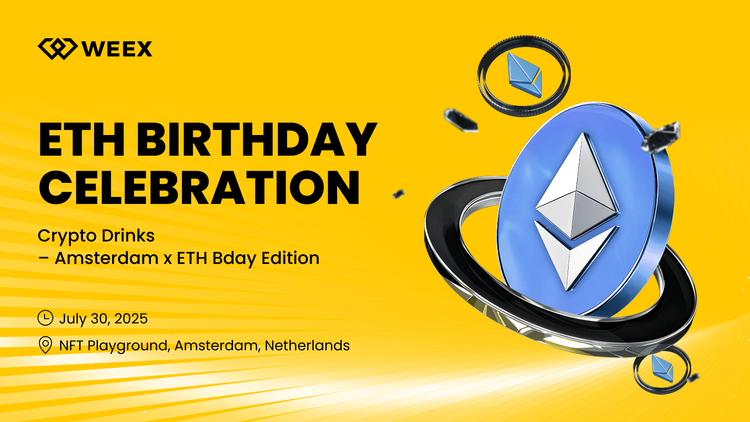
Świętowanie urodzin ETH i networking Web3 z WEEX
WEEX dołączył do Crypto Drinks – Amsterdam x ETH Birthday Edition, tętniącego życiem wydarzenia towarzyszącego, podczas którego świętowano rocznicę powstania Ethereum wraz z europejską społecznością kryptowalutową.

WEEX na Gali powitalnej CONF3RENCE Dortmund 2025
Dla WEEX udział w CONF3RENCE Dortmund stanowi kolejny ważny krok w strategii globalnej ekspansji firmy.

SharpLink pozyskuje 295 milionów dolarów w ETH 5 sierpnia 2025 r. - przewyższając całą emisję eteru w zeszłym miesiącu
Wyobraź sobie firmę, która nie tylko zanurza się w świecie kryptowalut, ale zanurza się w głowie, zmieniając...
Divine Research wprowadza niezabezpieczone pożyczki kryptograficzne zasilane przez World ID Sama Altmana od 5 sierpnia 2025
Wyobraź sobie, że wkraczasz do świata, w którym zwykli ludzie, od nauczycieli szkół średnich po sprzedawców owoców, mogą szybko zdobyć pożyczki…
Aktualność rynkowa — 31 grudnia
Od Korei Południowej i OECD, które przyspieszają wdrażanie regulacji kryptowalut i ram zgodności, po równoczesny rozwój TAO ETF, technologii prywatności, górnictwa i rezerw Bitcoin, podczas gdy incydenty bezpieczeństwa i straty finansowe nadal rosną, rynek kryptowalut wkroczył w nową fazę pośród wielu wyzwań "silnej regulacji + ewolucji technologicznej + zwiększonych ryzyk".
Trading AI na rynkach kryptowalut: Od automatycznych robotów handlowych po algorytmiczne strategie
Handel oparty na sztucznej inteligencji przesuwa kryptowaluty z spekulacji detalicznej na konkurencję na poziomie instytucji, gdzie wykonywanie i zarządzanie ryzykiem są ważniejsze niż kierunek. W miarę wzrostu liczby transakcji AI zwiększa się ryzyko systemowe i presja regulacyjna, co czyni z długoterminowej wydajności, solidnych systemów i zgodności kluczowymi czynnikiem różnicującym.
Analiza emocji AI i zmienność kryptowalut: Co zmienia ceny kryptowalut
Sentiment AI coraz bardziej wpływa na rynki kryptowalut, a zmiany w oczekiwaniach związanych z AI przekładają się na zmienność dla głównych aktywów cyfrowych. Rynki kryptowalutowe mają tendencję do wzmacniania narracji AI, pozwalając przepływom napędzanym sentymentem przewyższać fundamenty w krótkim czasie. Zrozumienie, w jaki sposób kształtuje się i rozprzestrzenia sentyment AI, pomaga inwestorom lepiej przewidywać cykle ryzyka i pozycjonowanie możliwości w ramach aktywów cyfrowych.
Listopad 2025 Przegląd rynku kryptowalut: Korekta cen, zwroty ETF i ewoluujący krajobraz blockchain
W listopadzie 2025 r. nastąpiła wyraźna zmienność i korekta strukturalna w szerszym ekosystemie blockchain, głównie w wyniku zmiennych prognoz makroekonomicznych i dynamiki przepływu kapitału.
WEEX podbija świat serią wydarzeń offline w 2025 roku
Globalny zasięg WEEX: rok niepowstrzymanego wzrostu
Świętowanie urodzin ETH i networking Web3 z WEEX
WEEX dołączył do Crypto Drinks – Amsterdam x ETH Birthday Edition, tętniącego życiem wydarzenia towarzyszącego, podczas którego świętowano rocznicę powstania Ethereum wraz z europejską społecznością kryptowalutową.
Popularne monety
Najnowsze wiadomości kryptowalutowe


Obsługa klienta:@weikecs
Współpraca biznesowa:@weikecs
Quant trading i MM:[email protected]
Usługi VIP:[email protected]
 App
App