
- Comprar cripto
- Mercados
- Futuros
- Spot
- Copy Trade
 WE-Launch
After the financial markets were bloodbathed, how do Wall Street tycoons view Trump's tariff policy?

Billionaire Bill Ackman, founder of Pershing Square, has issued a warning to world leaders: "Don't wait for a war to start negotiating, pick up the phone and call the president now."
Ackman's warning is not just hyperbole—it's more like a plea.
A few days ago, President Trump's tariff plan was like a nuclear bomb, causing chaos in global markets, with the U.S. stock market losing $6 trillion in market value in a week, and the Dow Jones Industrial Average experiencing its largest intraday swing of 2595 points on Monday. Oil prices fell, interest rates were cut, inflation concerns lingered, and Trump confidently declared on Truth Social, "Tariffs are a wonderful thing," but Wall Street titans couldn't sit still, speaking out one after another and forming a symphony of tariffs on Wall Street.
On April 6, 2025, Ackman posted on Twitter, "By imposing massive and disproportionate tariffs on our friends and enemies, we are simultaneously waging a global economic war on the world. We are heading towards a self-induced economic nuclear winter."
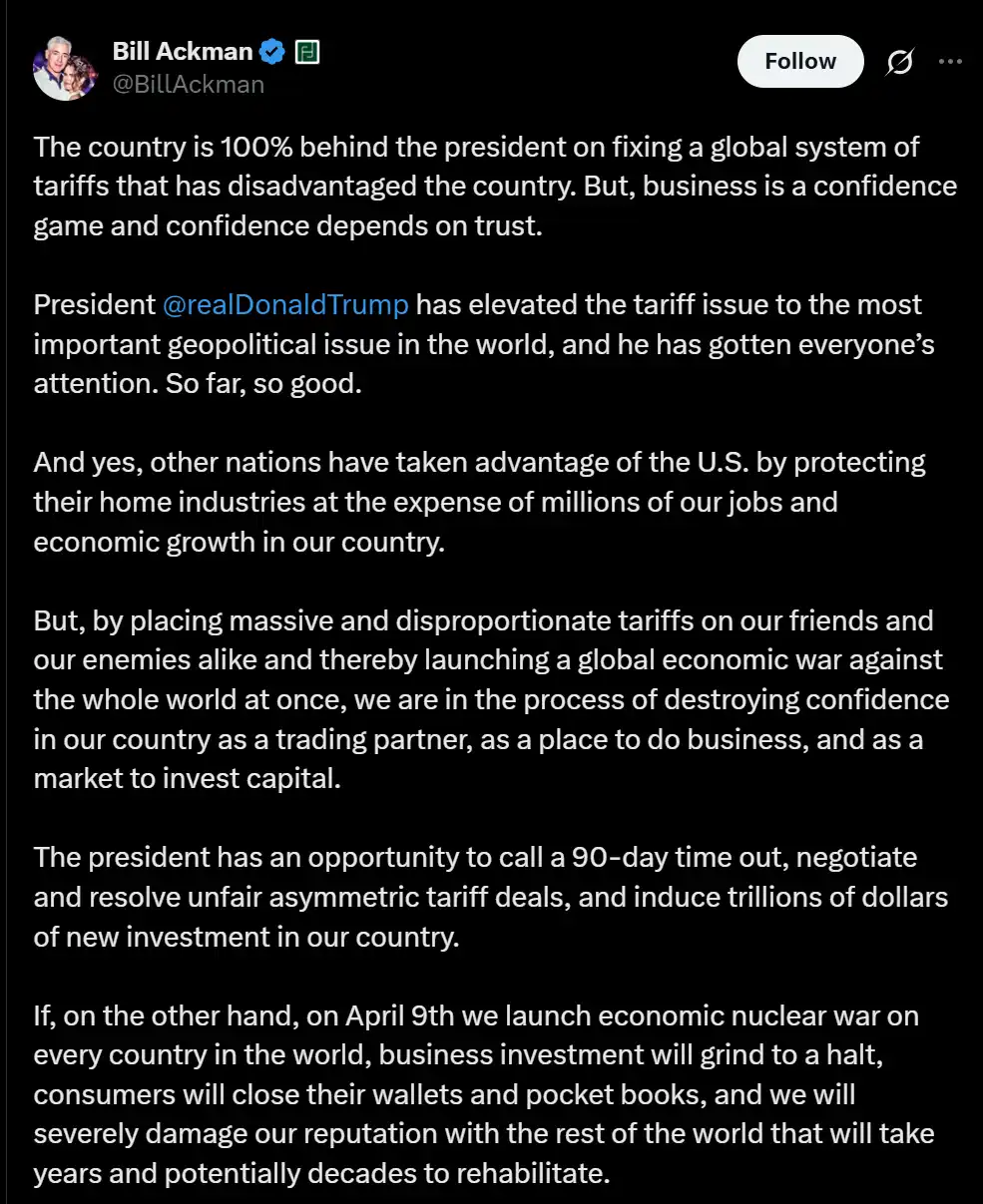
Faced with the Trump administration's escalating tariff policy, Ackman is not the only one sounding the alarm. Many Wall Street heavyweights have openly opposed the expansionary tariff policy, even those who once supported him or hoped for deregulation and economic growth under his administration.
Former Goldman Sachs CEO Lloyd Blankfein also questioned, "Why not give them a chance?" and suggested that Trump should negotiate with other countries on a "reciprocal" tariff rate.
Other voices included Boaz Weinstein, CEO and President of Gerber Kawasaki Ross Gerber, and JPMorgan Chase CEO Jamie Dimon.
Boaz Weinstein predicted that "the avalanche is just beginning." Dimon bluntly said, "The sooner this issue is resolved, the better, as some of the negative impacts will accumulate over time and be difficult to reverse," warning that a catastrophic split in America's long-standing economic alliances could occur. Gerber called President Donald Trump's tariff policy "destructive," saying it could lead to an economic recession.
It is clear that even those accustomed to market volatility, and even financial titans who once supported Trump, are now beginning to worry that this tariff war could trigger uncontrollable chain reactions.
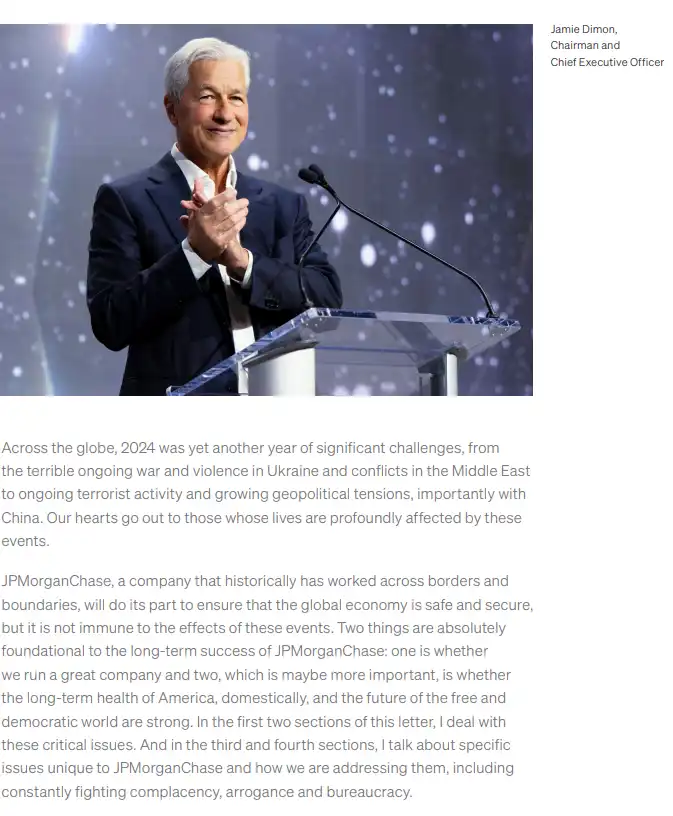
More and more criticism has been directed at Trump for not giving any indication that he is ready to back down from the punitive trade reform set to begin on April 9. The market can tolerate uncertainty but not strongman "policy speculation." This collective outcry from Wall Street indicates that capital is unwilling to foot the bill for political gambling.
Oaktree Capital's Co-Chairman Howard Marks, in an interview with Bloomberg, noted that the tariff policy has altered the established global trade and economic pattern, making the market environment more complex. Investors need to consider a range of unknown variables, such as the inflation that tariffs may trigger, supply chain disruptions, retaliatory measures from trading partners, and the potential impact of these factors on economic growth and asset prices.
Marks's warning actually reveals the anxiety of the entire professional investment community. When policy dominance overrides market rules, the traditional analytical framework is failing, and even the most seasoned fund managers must relearn how to place bets in a global economic game.
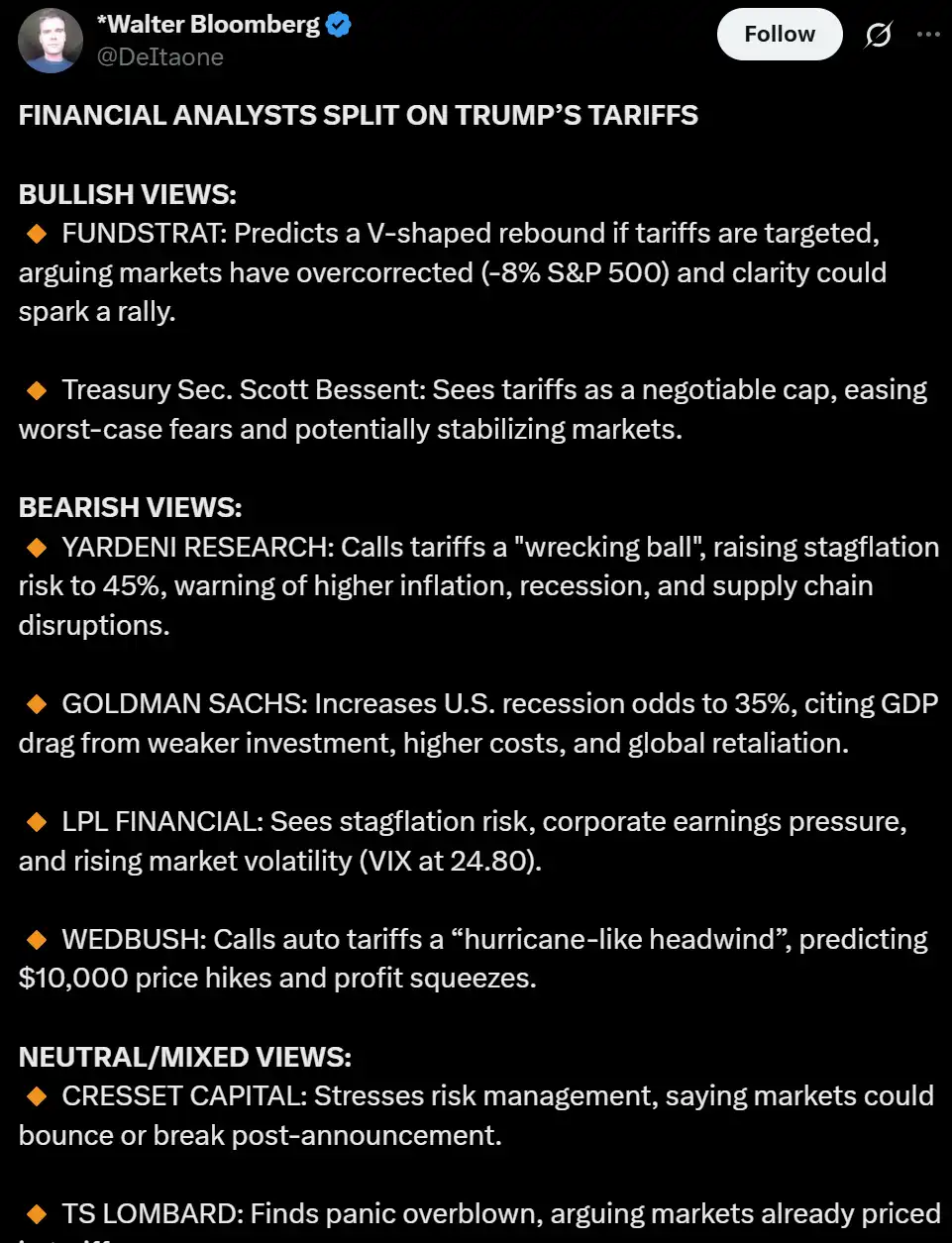
As of April 3, 2025, Wall Street's stance on Trump's tariff policy remains divided. The bulls camp, such as Fundstrat and Treasury Secretary Scott Besent, believe that the previous market adjustment was oversold and that once the policy direction becomes clear, it may trigger a "V-shaped rebound." The bears warn of escalating risks, with Yardeni Research likening tariffs to a "wrecking ball," Goldman Sachs raising the U.S. recession probability to 35%, and LPL and Wedbush expressing concerns about stagflation shadows, corporate profit pressures, and the automotive industry facing severe damage.
Meanwhile, moderates emphasize more on risk management, pointing out that some negative factors have already been priced in by the market, and the future trend largely depends on the intensity of tariff implementation and the actual resilience of the manufacturing sector. However, with the market experiencing severe turbulence and rising panic, voices that were originally in a wait-and-see attitude are also shifting, significantly questioning Trump's tariff policy.
Despite Ken Fisher's ruthless criticism of Trump's tariff plan launched in early April as "stupid, wrong, and extremely arrogant," he still maintains his usual optimism. He believes that "fear is often more frightening than reality" and that this storm may only be a market correction similar to 1998, ultimately potentially yielding up to a 26% annualized return.
Steve Eisman, known for his role in shorting the subprime mortgage crisis and the prototype of "The Big Short," warns that the market has not yet truly reflected the worst-case scenario of Trump's tariff policy and that it is not the time to be a "hero." He bluntly states that Wall Street is overly reliant on the old paradigm of "beneficial free trade" and is inevitably at a loss in the face of a president who breaks with tradition.
He admitted that he also suffered heavy losses from going long, pointing out that the market is filled with the "grievances of the losers." Eiseman also emphasized that current policies are attempting to address the overlooked groups under free trade, and Wall Street should not be surprised by this, as Trump "has long said he would do so, but no one took it seriously."
Amidst the clamor, U.S. Treasury Secretary Scott Bessent emphasized that tariffs are essentially a "maximized leverage" negotiation chip, rather than a long-term economic barrier. He asked, "If tariffs are really so bad, why are our trading partners also using them? If they will only harm American consumers, why are they so nervous?" In his view, this is a counterattack against China's "low-cost, forced labor, and subsidy" system.
However, in reality, Bessent does not seem to have played a key role in the decision-making process and appears more like a "spokesperson" within the government used to appease the market. The dramatic fluctuations caused by the tariffs have also alerted the White House internally.
This tariff storm has exposed the impact of policy uncertainty on market confidence, leading to a rare "collective venting" on Wall Street. Regardless of their position, the majority of voices are questioning or even criticizing the radical and hasty nature of the policy. Behind the disagreements lies a general dissatisfaction with the logic of the policy and the pace of its implementation, and perhaps what really needs to be discussed is how confidence can be rebuilt amidst this chaos?
Você também pode gostar
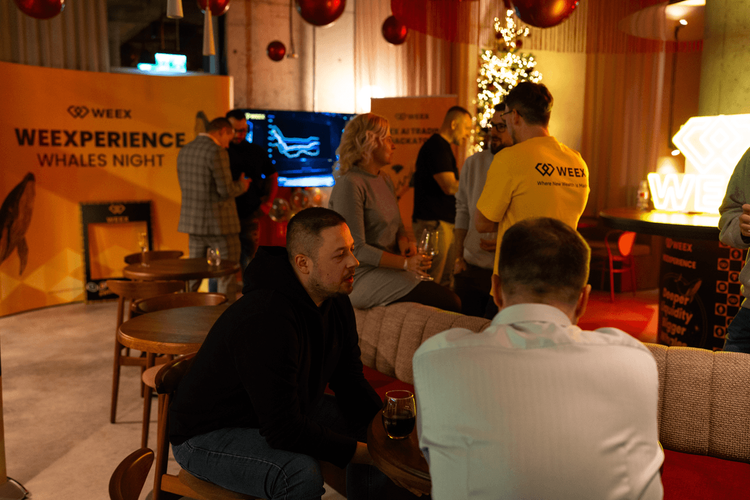
WEEXPERIENCE Whales Night: Inteligência Artificial, Crypto Community & Crypto Market Insights
Em 12 de dezembro de 2025, a WEEX sediou a WEEXPERIENCE Whales Night, uma reunião da comunidade offline projetada para reunir membros da comunidade local de criptomoedas. O evento combinou compartilhamento de conteúdo, jogos interativos e apresentações de projetos para criar uma experiência offline relaxada e envolvente.
Riscos de negociação de IA em criptomoedas: Por que melhores estratégias de negociação de criptomoedas podem gerar maiores perdas?
O risco já não reside principalmente em má tomada de decisão ou erros emocionais. Vive cada vez mais na estrutura de mercado, caminhos de execução e comportamento coletivo. Entender essa mudança é mais importante do que encontrar a próxima estratégia “melhor”.
Agentes de IA estão substituindo a pesquisa de criptografia? Como a IA autônoma está reformulando o Crypto Trading
A IA está passando de auxiliar os comerciantes para automatizar todo o processo de pesquisa até execução nos mercados de criptomoedas. A vantagem mudou de insights humanos para tubulações de dados, velocidade e sistemas de IA prontos para execução, tornando os atrasos na integração de IA uma desvantagem competitiva.
Bots de negociação de IA e Copy Trading: Como estratégias sincronizadas reformulam a volatilidade do mercado de criptomoedas
Os comerciantes de criptomoedas de varejo enfrentam há muito os mesmos desafios: má gestão de risco, entradas atrasadas, decisões emocionais e execução inconsistente. As ferramentas de negociação AI prometeram uma solução. Hoje em dia, sistemas de negociação de cópia e bots de breakout apoiados por IA ajudam os comerciantes a dimensionar posições, definir paradas e agir mais rápido do que nunca. Além da velocidade e precisão, essas ferramentas estão silenciosamente reformulando os mercados - os traders não estão apenas negociando mais inteligentemente, eles estão se movendo em sincronia, criando uma nova dinâmica que amplifica tanto o risco quanto as oportunidades.
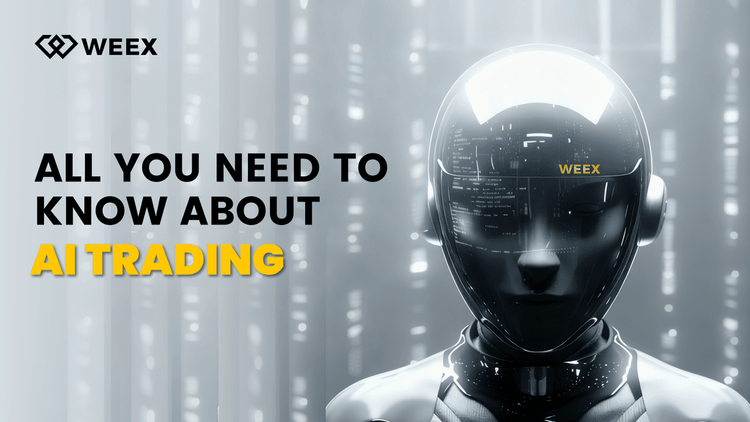
Trading de IA em Crypto Explicado: Como a negociação autónoma está reformulando os mercados de criptomoedas e as bolsas de criptomoedas
O AI Trading está rapidamente transformando a criptografia. As estratégias tradicionais lutam para acompanhar a volatilidade sem parar da criptomoeda e a complexa estrutura de mercado, enquanto a IA pode processar dados maciços, gerar estratégias adaptativas, gerenciar riscos e executar operações de forma autónoma. Este artigo orienta os usuários da WEEX pelo que é o trading de IA, por que a criptografia acelera sua adoção, como a indústria está evoluindo para agentes autônomos e por que a WEEX está construindo o ecossistema de negociação de IA da próxima geração.
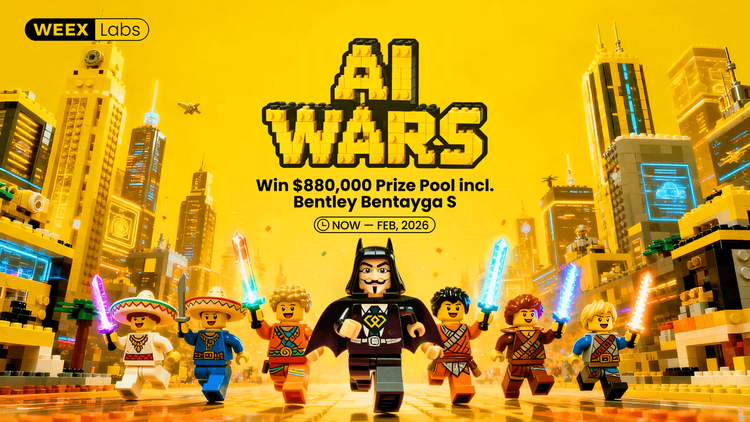
Call to Join AI Wars: WEEX Alpha Awakens — Competição Global de Negociação de IA com $880,000 Prize Pool
Agora, estamos chamando comerciantes de IA de todo o mundo para se juntarem a AI Wars: WEEX Alpha Awakens, uma competição global de negociação de IA com um pool de prêmios de US$ 880.000.
Negociação de IA em Mercados de Cripto: De robôs de negociação automatizados a estratégias algoritmicas
O comércio impulsionado por IA está mudando a criptomoeda da especulação de varejo para a concorrência de nível institucional, onde a execução e a gestão de risco importam mais do que a direção. À medida que as negociações de IA aumentam, o risco sistêmico e a pressão regulatória aumentam, tornando o desempenho a longo prazo, sistemas robustos e conformidade os principais diferenciais.
Análise de sentimentos de IA e volatilidade de criptomoedas: O que move os preços de criptomoedas
O sentimento da IA está influenciando cada vez mais os mercados de criptomoedas, com mudanças nas expectativas relacionadas à IA se traduzindo em volatilidade para os principais ativos digitais. Os mercados de criptomoedas tendem a amplificar as narrativas de IA, permitindo que os fluxos impulsionados pelo sentimento superem os fundamentos a curto prazo. Compreender como o sentimento da IA se forma e se espalha ajuda os investidores a antecipar melhor os ciclos de risco e posicionar oportunidades em todos os ativos digitais.
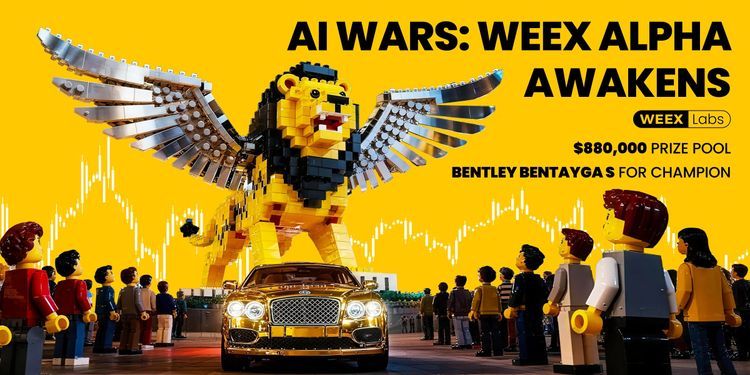
Guerras da IA: Guia do participante
Nesta batalha final, os melhores desenvolvedores, analistas quantitativos e traders de todo o mundo irão lançar seus algoritmos em batalhas no mercado real, competindo por um dos maiores prêmios da história do trading de criptomoedas com IA: 880.000 dólares, incluindo um Bentley Bentayga S para o campeão. Este guia irá guiá-lo por todas as etapas necessárias, desde a inscrição até o início oficial da competição.
Segunda semana do Banco Central e volatilidade do mercado de criptomoedas: Como as decisões de taxa de juros moldam as condições de negociação na WEEX
As decisões de juros de grandes bancos centrais como a Reserva Federal são eventos macroeconômicos significativos que afetam os mercados financeiros globais, influenciando diretamente as expectativas de liquidez do mercado e o apetite de risco. À medida que o mercado de criptomoedas continua a se desenvolver e sua estrutura de negociação e participantes amadurecem, o mercado de criptomoedas está sendo gradualmente incorporado ao sistema de preços macroeconômicos.
Teste da API WEEX: Guia Oficial para Hackathon de Negociação de IA e APIs de Crypto Trading
WEEX API Testing é projetado para garantir que cada participante pode transformar a lógica de negociação em execução real. Todas as interações API ocorrem no sistema de negociação ao vivo da WEEX, permitindo que os participantes trabalhem em condições de mercado autênticas em vez de simulações. Com um requisito de entrada baixo, a tarefa é acessível tanto para desenvolvedores experientes e iniciantes motivados, enquanto ainda valida habilidades técnicas essenciais.
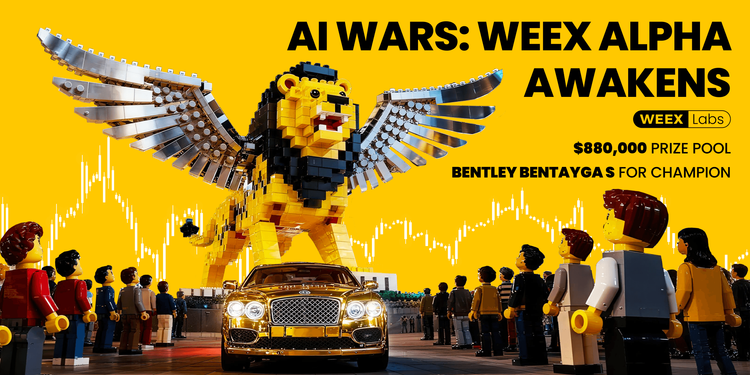
Guerras da IA: WEEX Alpha Awakens | Guia do processo de teste do WEEX Global Hackathon API
AI Wars: O registro do WEEX Alpha Awakens está agora aberto. e este guia descreve como acessar o teste da API e concluir com sucesso o processo.
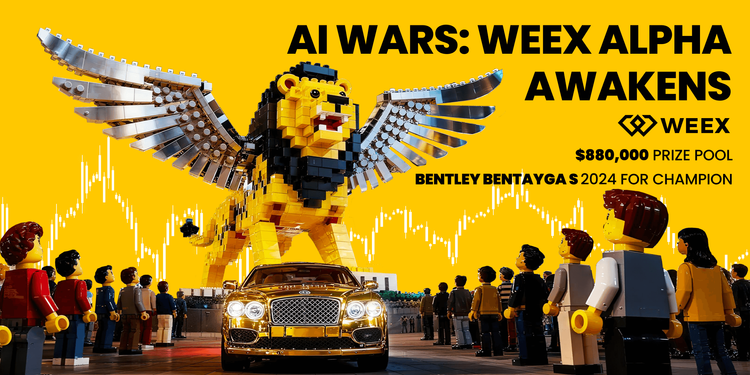
O que é o WEEX Alpha Awakens e como participar? Um guia completo
Para acelerar os avanços na interseção de IA e criptografia, a WEEX está lançando o primeiro hackathon global de negociação de IA – AI Wars: Alpha despertou.
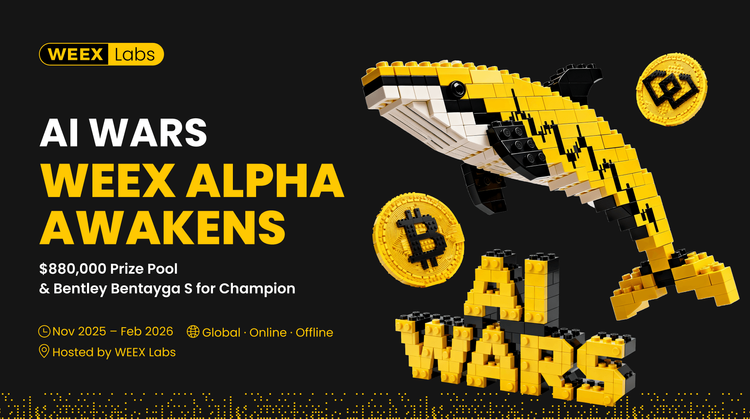
Juntar-se a AI Wars: WEEX Alpha despertou!Global Call for AI Trading Alphas
AI Wars: WEEX Alpha Awakens é um hackathon global de negociação de IA em Dubai, chamando equipes de quantidade, traders algoritmicos e desenvolvedores de IA para lançar suas estratégias de negociação de criptomoedas de IA em mercados ao vivo por uma parte de um pool de prêmios de US $ 880,000.
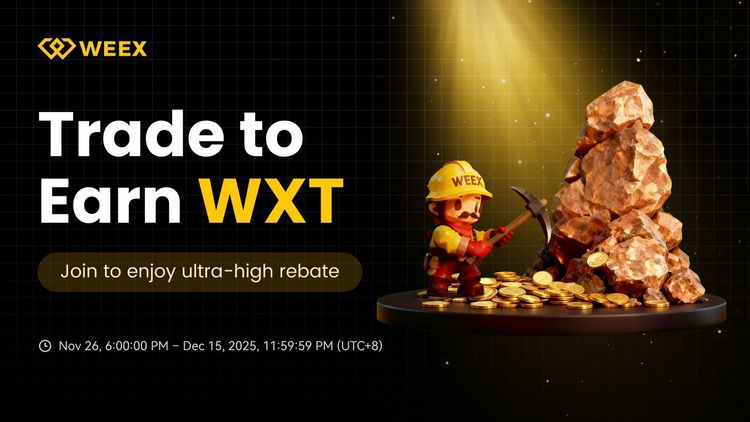
WEEX revela o comércio para ganhar: Até 30% de reembolso instantâneo + $2M WXT Buyback
A WEEX tem o prazer de anunciar o lançamento do nosso programa Trade to Earn, que automaticamente concede até 30% de desconto nas taxas de negociação. Todas as recompensas são creditadas diretamente à sua conta spot em $WXT - apoiado pelo nosso plano de compra de $2.000.000 WXT que alimenta o valor de token a longo prazo.

Novo: Preço estimado de liquidação no app candlestick gráficos
WEEX introduziu um novo preço de liquidação estimado (Est. Liq. Preço) recurso no gráfico do candlestick para ajudar os traders a gerenciar melhor o risco e identificar intervalos seguros para suas posições.
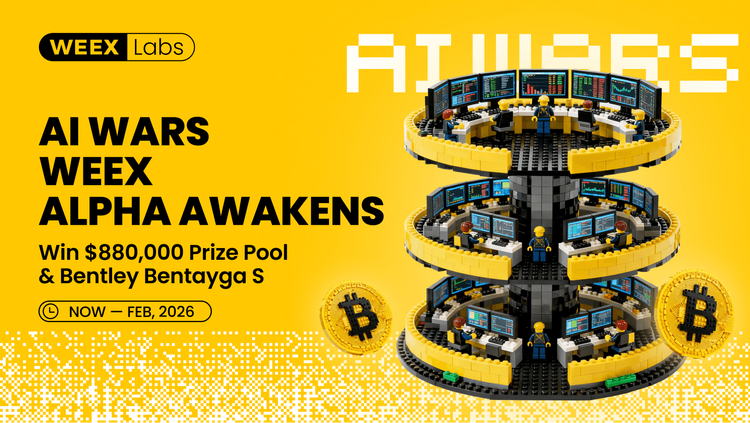
WEEX AI Hackathon Guia: Encontre o seu WEEX UID e registe
De agora até fevereiro de 2026, a WEEX lança AI Wars: WEEX Alpha Awakens, o primeiro hackathon mundial de negociação de criptomoedas AI. Venha o seu UID e registre-se para o WEEX Global AI Trading Hackathon.
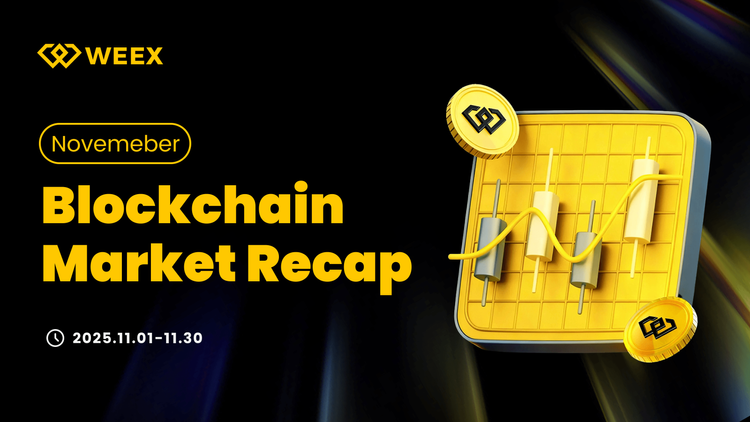
Novembro de 2025 Revisão do Mercado de Cripto: Correção de Preços, Redempções de ETFs e Evolução da Blockchain
Novembro de 2025 viu volatilidade pronunciada e uma correção estrutural dentro do ecossistema blockchain mais amplo, impulsionado principalmente por previsões macroeconômicas flutuantes e dinâmicas específicas de fluxo de capital.
WEEXPERIENCE Whales Night: Inteligência Artificial, Crypto Community & Crypto Market Insights
Em 12 de dezembro de 2025, a WEEX sediou a WEEXPERIENCE Whales Night, uma reunião da comunidade offline projetada para reunir membros da comunidade local de criptomoedas. O evento combinou compartilhamento de conteúdo, jogos interativos e apresentações de projetos para criar uma experiência offline relaxada e envolvente.
Riscos de negociação de IA em criptomoedas: Por que melhores estratégias de negociação de criptomoedas podem gerar maiores perdas?
O risco já não reside principalmente em má tomada de decisão ou erros emocionais. Vive cada vez mais na estrutura de mercado, caminhos de execução e comportamento coletivo. Entender essa mudança é mais importante do que encontrar a próxima estratégia “melhor”.
Agentes de IA estão substituindo a pesquisa de criptografia? Como a IA autônoma está reformulando o Crypto Trading
A IA está passando de auxiliar os comerciantes para automatizar todo o processo de pesquisa até execução nos mercados de criptomoedas. A vantagem mudou de insights humanos para tubulações de dados, velocidade e sistemas de IA prontos para execução, tornando os atrasos na integração de IA uma desvantagem competitiva.
Bots de negociação de IA e Copy Trading: Como estratégias sincronizadas reformulam a volatilidade do mercado de criptomoedas
Os comerciantes de criptomoedas de varejo enfrentam há muito os mesmos desafios: má gestão de risco, entradas atrasadas, decisões emocionais e execução inconsistente. As ferramentas de negociação AI prometeram uma solução. Hoje em dia, sistemas de negociação de cópia e bots de breakout apoiados por IA ajudam os comerciantes a dimensionar posições, definir paradas e agir mais rápido do que nunca. Além da velocidade e precisão, essas ferramentas estão silenciosamente reformulando os mercados - os traders não estão apenas negociando mais inteligentemente, eles estão se movendo em sincronia, criando uma nova dinâmica que amplifica tanto o risco quanto as oportunidades.
Trading de IA em Crypto Explicado: Como a negociação autónoma está reformulando os mercados de criptomoedas e as bolsas de criptomoedas
O AI Trading está rapidamente transformando a criptografia. As estratégias tradicionais lutam para acompanhar a volatilidade sem parar da criptomoeda e a complexa estrutura de mercado, enquanto a IA pode processar dados maciços, gerar estratégias adaptativas, gerenciar riscos e executar operações de forma autónoma. Este artigo orienta os usuários da WEEX pelo que é o trading de IA, por que a criptografia acelera sua adoção, como a indústria está evoluindo para agentes autônomos e por que a WEEX está construindo o ecossistema de negociação de IA da próxima geração.
Call to Join AI Wars: WEEX Alpha Awakens — Competição Global de Negociação de IA com $880,000 Prize Pool
Agora, estamos chamando comerciantes de IA de todo o mundo para se juntarem a AI Wars: WEEX Alpha Awakens, uma competição global de negociação de IA com um pool de prêmios de US$ 880.000.
Populares
Últimas notícias sobre cripto


Atendimento ao cliente:@weikecs
Parcerias comerciais:@weikecs
Quant trading e MM:[email protected]
Serviços VIP:[email protected]
 App
App