
- Comprar cripto
- Mercados
- Futuros
- Spot
- Copy Trade
 WE-Launch
Does the US Intentionally "Want" a Recession?

Original Author: The Kobeissi Letter
Original Translation: Deep Tide TechFlow
Is the U.S. Government Expecting an Economic Recession?
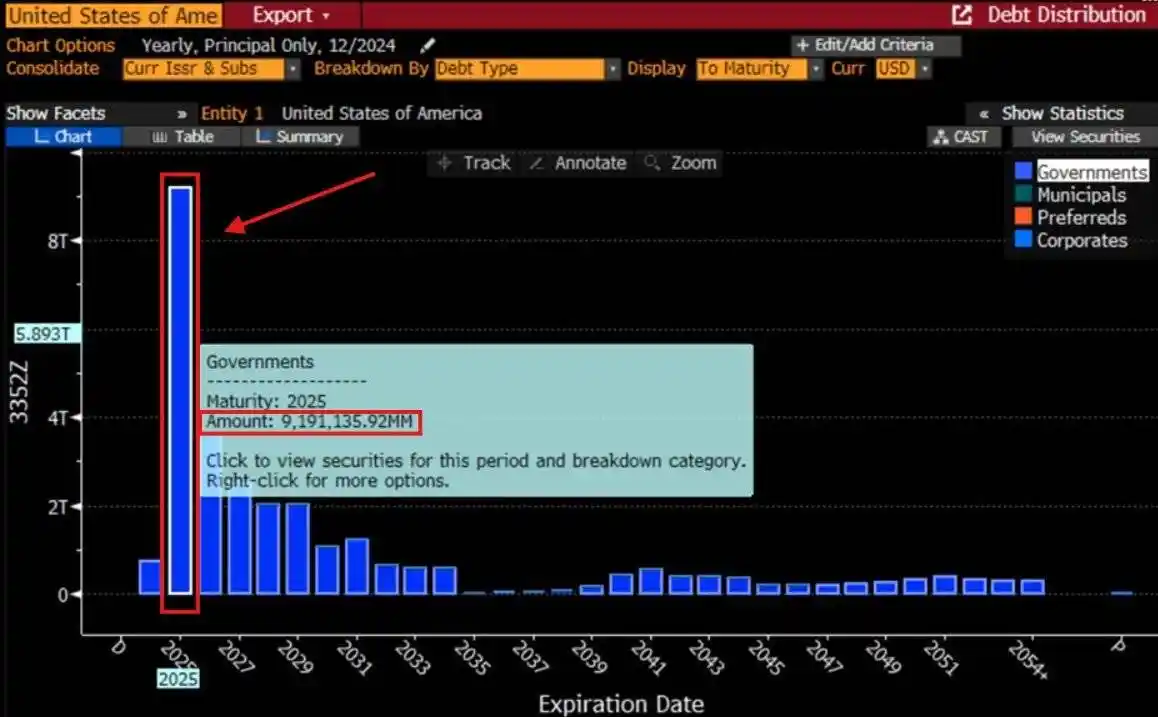
By 2025, the U.S. will have $92 trillion in debt maturing or needing to be refinanced. Faced with this massive refinancing, the quickest way to lower rates may be to induce an economic recession.
But can the U.S. benefit from a market crash?
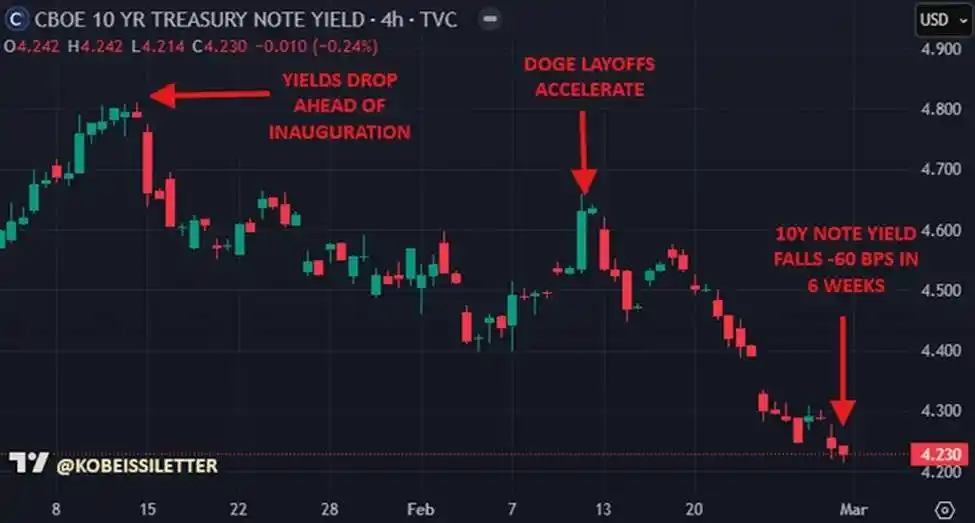
Over the past two months, the 10-year treasury yield has dropped by around 60 basis points. This is partly due to market expectations of cuts to the government's discretionary sector spending. However, it is also tied to increased uncertainty and the rising possibility of a U.S. economic recession.
An economic recession almost guarantees a rate cut.
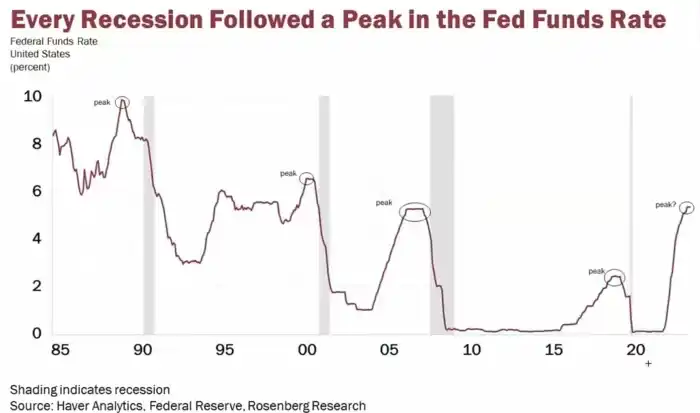
But why does an economic recession signify a rate cut?
Since the 1980s, every U.S. economic recession has occurred after the federal funds rate has peaked. When economic growth stalls, the Fed acts to "stimulate" the economy. This means lowering rates to reduce the cost of capital and encourage spending.
Since the start of the trade war, U.S. economic growth expectations have plummeted significantly. Meanwhile, oil prices have hit a new 6-month low. Interestingly, President Trump has repeatedly expressed his desire to lower oil prices to alleviate inflationary pressures.
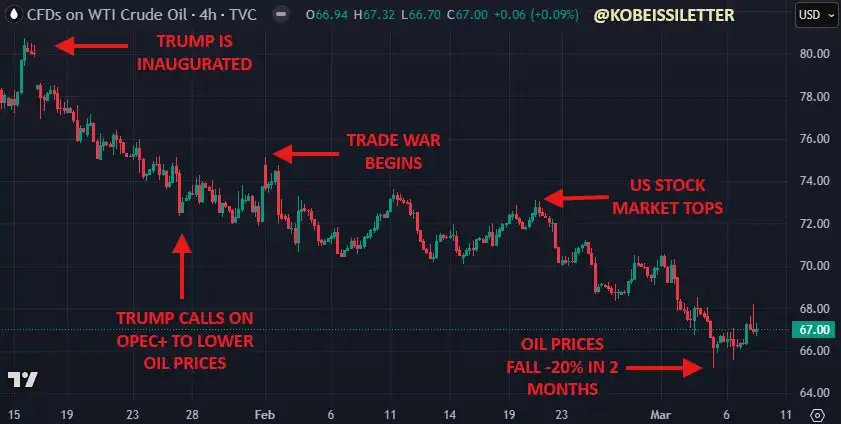
On January 25, President Trump claimed he has a solution to the Fed's more than 3-year fight against inflation. He called on the Organization of the Petroleum Exporting Countries (OPEC) to lower oil prices and urged a global rate cut.
However, the quickest way to lower oil prices is most likely through a demand-reducing economic recession.
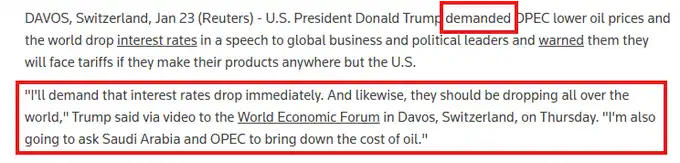
In a recent interview with Fox News, President Trump mentioned that he would prioritize lowering rates.
He said, "Rates are coming down... and I hope they do because I love the country and I'd like to see the country thrive." This quote is from @amitisinvesting's report.
Next, let's take a look at the inflation data.
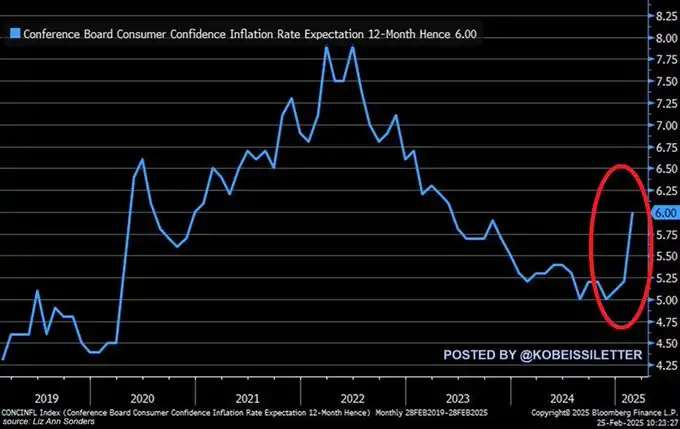
American consumers believe that the inflation rate for the next 12 months will rise to +6.0%, the highest level since May 2023. This marks the third consecutive month of rising inflation expectations.
Inflation is on the rise, rate cuts are postponed, yet interest rates are declining.
The market is pricing in an economic recession.
In the escalating trade war of soaring inflation, a sharp rate cut is almost inevitably a precursor to an economic recession. Furthermore, on March 6, President Trump stated that he doesn't even pay attention to the stock market. The reality, however, is that, just as we saw in his first term, Trump has always been watching the market.
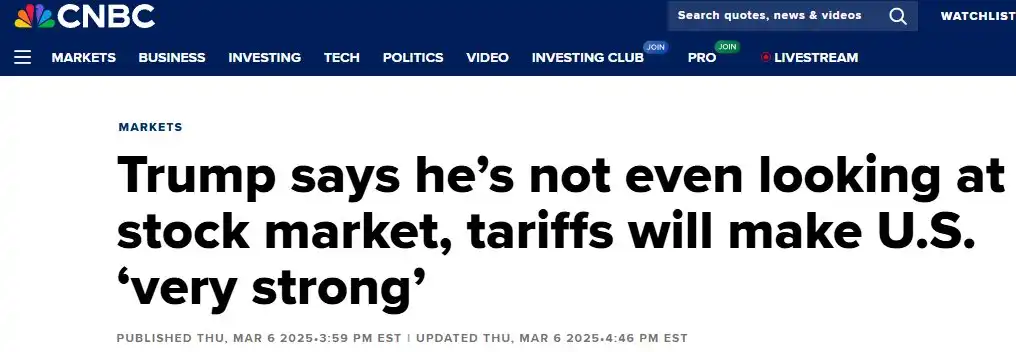
President Trump's statement of "not paying attention to the market" is significant.
In a scenario where he clearly does pay attention to the market, this is actually a signal he is sending to Wall Street, indicating his willingness to lower interest rates and reduce the trade deficit at all costs, even if it means potentially triggering an economic recession.
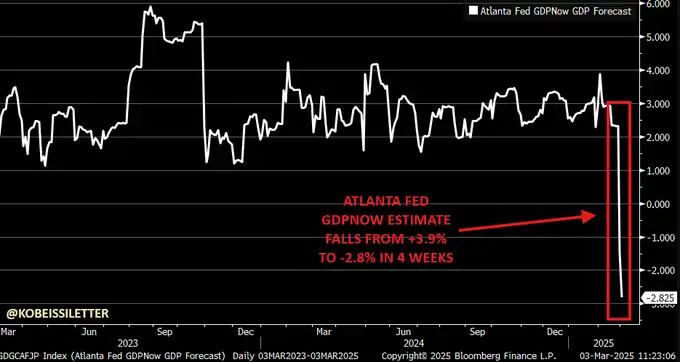
In the chaos of the trade war, we see a significant downward revision in economic growth expectations. The Atlanta Fed last week lowered its GDP growth forecast for the first quarter of 2025 to as low as -2.8%. Therefore, we see a sharp increase in market expectations for rate cuts last week.
Is this intentional?
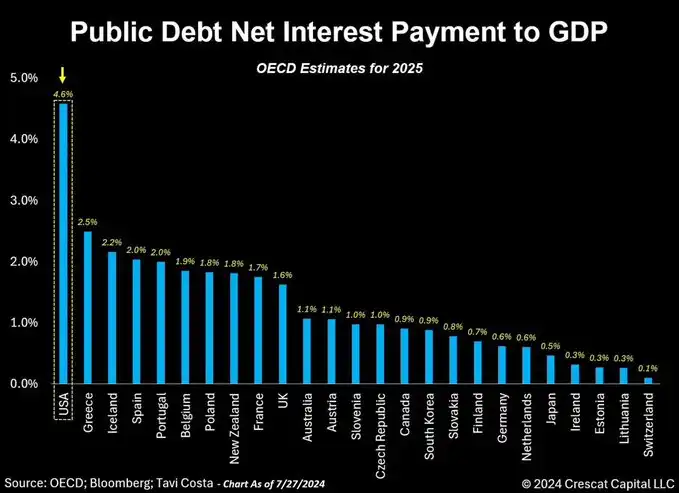
High-interest rates are the biggest challenge facing the U.S. government.
As interest rates soar, the cost of debt interest payments increases significantly. Currently, the average interest rate on the U.S.'s $36.2 trillion national debt is 3.2%, hitting the highest level since 2010. The U.S. government needs a rate cut more than anyone.
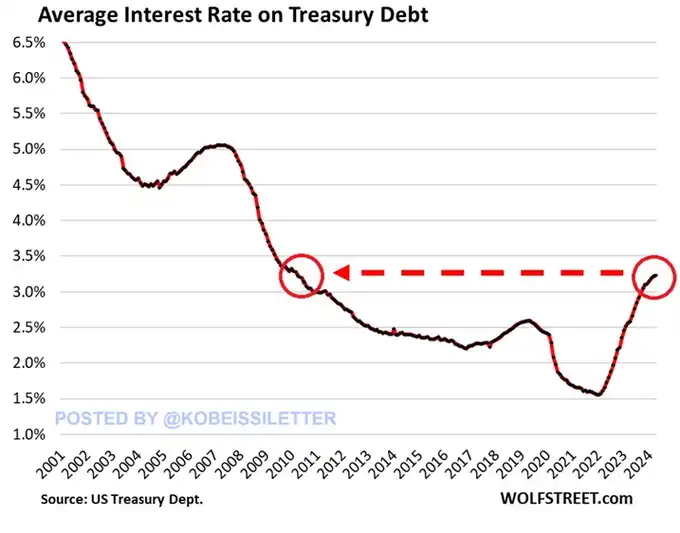
Furthermore, a rate cut is imminent:
The U.S.'s $9.2 trillion debt maturity is heavily concentrated in the first half of 2025, with 70% of the debt needing refinancing from January to June 2025.
The average interest rate on this debt is expected to rise by about 1 percentage point.
Moreover, efforts to reduce deficit spending in the U.S. will not happen overnight.
In the 2024 fiscal year, the United States had expenditures of up to $7.8 trillion, while income was only about $5.0 trillion. This means that for every $1 of income generated, there was $1.56 in costs. The shadow of a debt crisis will loom over the United States for a long time to come.
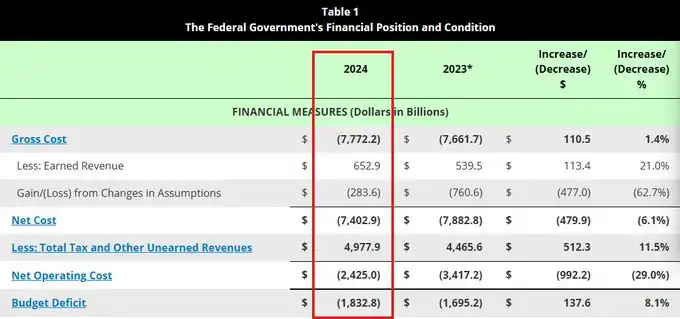
These significant changes in the macroeconomic landscape will have a broad impact on the entire market, and we are currently and will continue to seize opportunities from them.
Interested in how we trade the market? Click the link below to subscribe to our premium analysis and alert service: https://www.thekobeissiletter.com/pricing
Finally, let's go back to 2023 when the Federal Reserve was on the verge of calling for an economic recession to curb inflation.
In February 2023, many studies indicated that an economic recession might be the only solution. Subsequently, the Fed shifted to the narrative of a "soft landing," but this strategy has so far failed to lower interest rates.
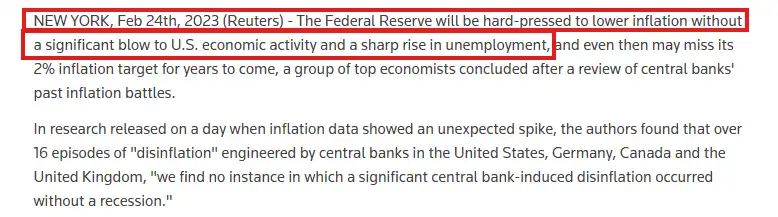
The reality is that the U.S. debt crisis is currently the most severe yet most neglected crisis. While President Trump has acknowledged this, it may be too late. An economic recession may be the only solution to lower interest rates.
Follow us @KobeissiLetter for real-time analysis updates.
Você também pode gostar

WEEXPERIENCE Whales Night: Inteligência Artificial, Crypto Community & Crypto Market Insights
Em 12 de dezembro de 2025, a WEEX sediou a WEEXPERIENCE Whales Night, uma reunião da comunidade offline projetada para reunir membros da comunidade local de criptomoedas. O evento combinou compartilhamento de conteúdo, jogos interativos e apresentações de projetos para criar uma experiência offline relaxada e envolvente.
Riscos de negociação de IA em criptomoedas: Por que melhores estratégias de negociação de criptomoedas podem gerar maiores perdas?
O risco já não reside principalmente em má tomada de decisão ou erros emocionais. Vive cada vez mais na estrutura de mercado, caminhos de execução e comportamento coletivo. Entender essa mudança é mais importante do que encontrar a próxima estratégia “melhor”.
Agentes de IA estão substituindo a pesquisa de criptografia? Como a IA autônoma está reformulando o Crypto Trading
A IA está passando de auxiliar os comerciantes para automatizar todo o processo de pesquisa até execução nos mercados de criptomoedas. A vantagem mudou de insights humanos para tubulações de dados, velocidade e sistemas de IA prontos para execução, tornando os atrasos na integração de IA uma desvantagem competitiva.
Bots de negociação de IA e Copy Trading: Como estratégias sincronizadas reformulam a volatilidade do mercado de criptomoedas
Os comerciantes de criptomoedas de varejo enfrentam há muito os mesmos desafios: má gestão de risco, entradas atrasadas, decisões emocionais e execução inconsistente. As ferramentas de negociação AI prometeram uma solução. Hoje em dia, sistemas de negociação de cópia e bots de breakout apoiados por IA ajudam os comerciantes a dimensionar posições, definir paradas e agir mais rápido do que nunca. Além da velocidade e precisão, essas ferramentas estão silenciosamente reformulando os mercados - os traders não estão apenas negociando mais inteligentemente, eles estão se movendo em sincronia, criando uma nova dinâmica que amplifica tanto o risco quanto as oportunidades.
Trading de IA em Crypto Explicado: Como a negociação autónoma está reformulando os mercados de criptomoedas e as bolsas de criptomoedas
O AI Trading está rapidamente transformando a criptografia. As estratégias tradicionais lutam para acompanhar a volatilidade sem parar da criptomoeda e a complexa estrutura de mercado, enquanto a IA pode processar dados maciços, gerar estratégias adaptativas, gerenciar riscos e executar operações de forma autónoma. Este artigo orienta os usuários da WEEX pelo que é o trading de IA, por que a criptografia acelera sua adoção, como a indústria está evoluindo para agentes autônomos e por que a WEEX está construindo o ecossistema de negociação de IA da próxima geração.
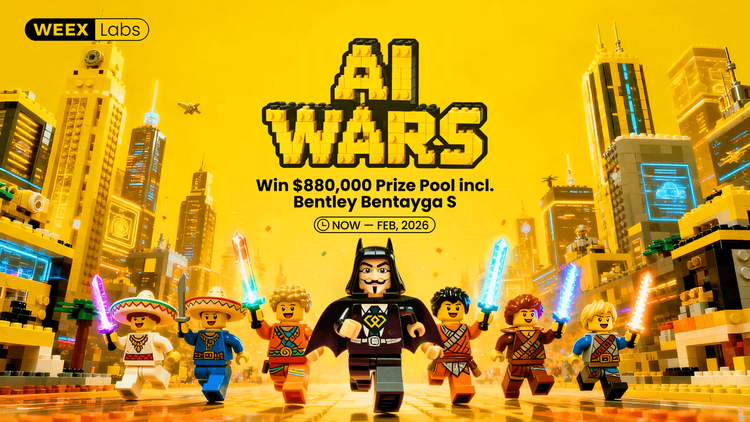
Call to Join AI Wars: WEEX Alpha Awakens — Competição Global de Negociação de IA com $880,000 Prize Pool
Agora, estamos chamando comerciantes de IA de todo o mundo para se juntarem a AI Wars: WEEX Alpha Awakens, uma competição global de negociação de IA com um pool de prêmios de US$ 880.000.

Negociação de IA em Mercados de Cripto: De robôs de negociação automatizados a estratégias algoritmicas
O comércio impulsionado por IA está mudando a criptomoeda da especulação de varejo para a concorrência de nível institucional, onde a execução e a gestão de risco importam mais do que a direção. À medida que as negociações de IA aumentam, o risco sistêmico e a pressão regulatória aumentam, tornando o desempenho a longo prazo, sistemas robustos e conformidade os principais diferenciais.

Análise de sentimentos de IA e volatilidade de criptomoedas: O que move os preços de criptomoedas
O sentimento da IA está influenciando cada vez mais os mercados de criptomoedas, com mudanças nas expectativas relacionadas à IA se traduzindo em volatilidade para os principais ativos digitais. Os mercados de criptomoedas tendem a amplificar as narrativas de IA, permitindo que os fluxos impulsionados pelo sentimento superem os fundamentos a curto prazo. Compreender como o sentimento da IA se forma e se espalha ajuda os investidores a antecipar melhor os ciclos de risco e posicionar oportunidades em todos os ativos digitais.
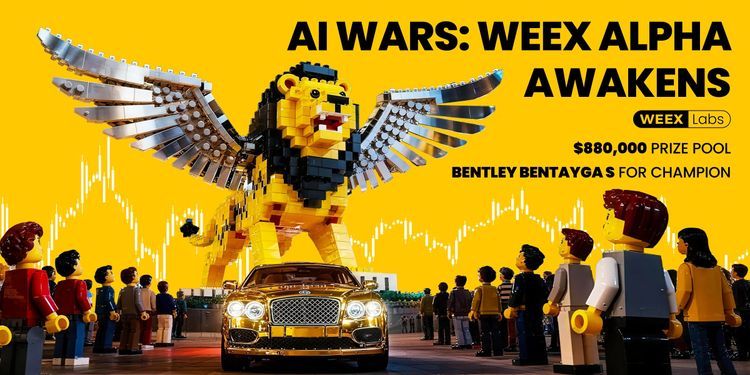
Guerras da IA: Guia do participante
Nesta batalha final, os melhores desenvolvedores, analistas quantitativos e traders de todo o mundo irão lançar seus algoritmos em batalhas no mercado real, competindo por um dos maiores prêmios da história do trading de criptomoedas com IA: 880.000 dólares, incluindo um Bentley Bentayga S para o campeão. Este guia irá guiá-lo por todas as etapas necessárias, desde a inscrição até o início oficial da competição.
Segunda semana do Banco Central e volatilidade do mercado de criptomoedas: Como as decisões de taxa de juros moldam as condições de negociação na WEEX
As decisões de juros de grandes bancos centrais como a Reserva Federal são eventos macroeconômicos significativos que afetam os mercados financeiros globais, influenciando diretamente as expectativas de liquidez do mercado e o apetite de risco. À medida que o mercado de criptomoedas continua a se desenvolver e sua estrutura de negociação e participantes amadurecem, o mercado de criptomoedas está sendo gradualmente incorporado ao sistema de preços macroeconômicos.
Teste da API WEEX: Guia Oficial para Hackathon de Negociação de IA e APIs de Crypto Trading
WEEX API Testing é projetado para garantir que cada participante pode transformar a lógica de negociação em execução real. Todas as interações API ocorrem no sistema de negociação ao vivo da WEEX, permitindo que os participantes trabalhem em condições de mercado autênticas em vez de simulações. Com um requisito de entrada baixo, a tarefa é acessível tanto para desenvolvedores experientes e iniciantes motivados, enquanto ainda valida habilidades técnicas essenciais.
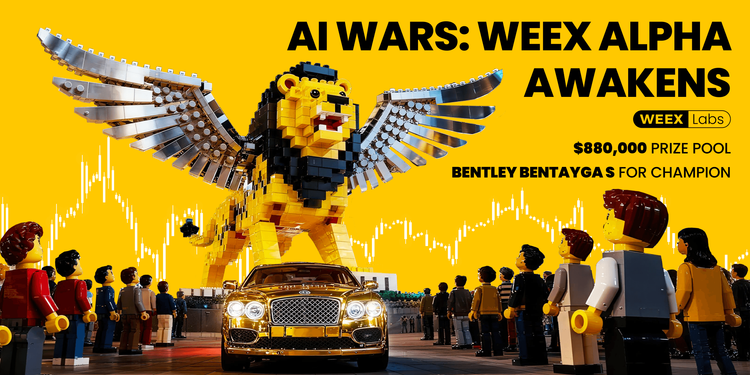
Guerras da IA: WEEX Alpha Awakens | Guia do processo de teste do WEEX Global Hackathon API
AI Wars: O registro do WEEX Alpha Awakens está agora aberto. e este guia descreve como acessar o teste da API e concluir com sucesso o processo.
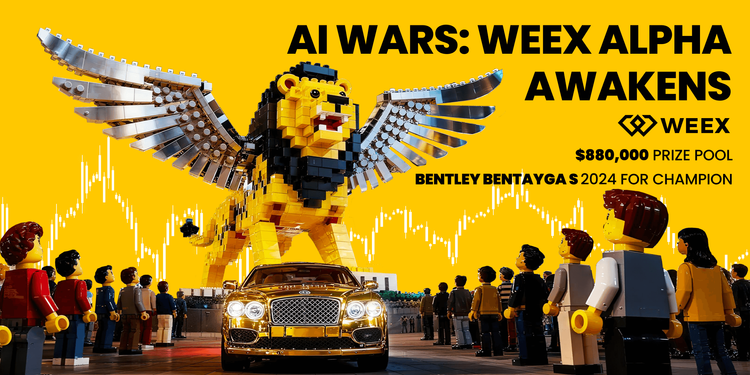
O que é o WEEX Alpha Awakens e como participar? Um guia completo
Para acelerar os avanços na interseção de IA e criptografia, a WEEX está lançando o primeiro hackathon global de negociação de IA – AI Wars: Alpha despertou.
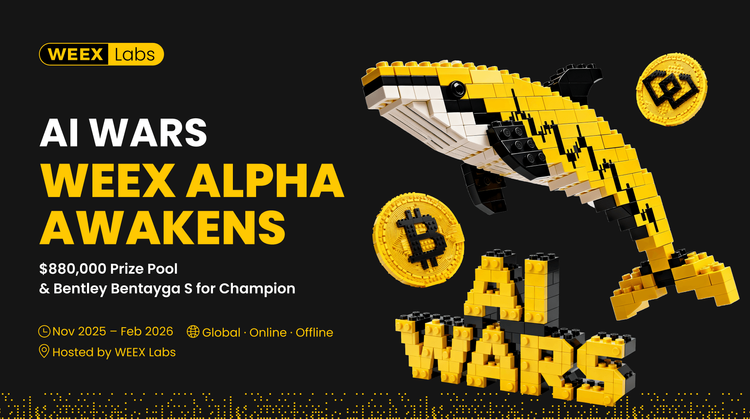
Juntar-se a AI Wars: WEEX Alpha despertou!Global Call for AI Trading Alphas
AI Wars: WEEX Alpha Awakens é um hackathon global de negociação de IA em Dubai, chamando equipes de quantidade, traders algoritmicos e desenvolvedores de IA para lançar suas estratégias de negociação de criptomoedas de IA em mercados ao vivo por uma parte de um pool de prêmios de US $ 880,000.
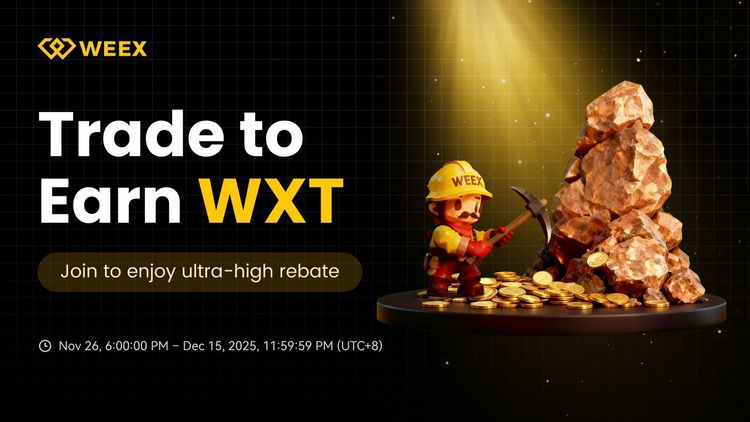
WEEX revela o comércio para ganhar: Até 30% de reembolso instantâneo + $2M WXT Buyback
A WEEX tem o prazer de anunciar o lançamento do nosso programa Trade to Earn, que automaticamente concede até 30% de desconto nas taxas de negociação. Todas as recompensas são creditadas diretamente à sua conta spot em $WXT - apoiado pelo nosso plano de compra de $2.000.000 WXT que alimenta o valor de token a longo prazo.

Novo: Preço estimado de liquidação no app candlestick gráficos
WEEX introduziu um novo preço de liquidação estimado (Est. Liq. Preço) recurso no gráfico do candlestick para ajudar os traders a gerenciar melhor o risco e identificar intervalos seguros para suas posições.
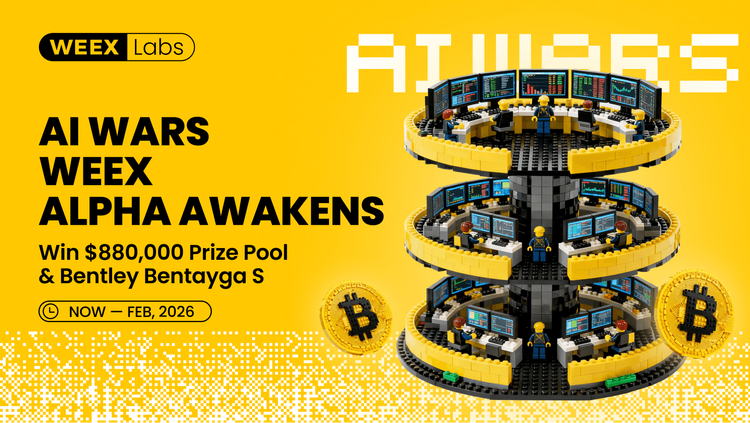
WEEX AI Hackathon Guia: Encontre o seu WEEX UID e registe
De agora até fevereiro de 2026, a WEEX lança AI Wars: WEEX Alpha Awakens, o primeiro hackathon mundial de negociação de criptomoedas AI. Venha o seu UID e registre-se para o WEEX Global AI Trading Hackathon.
Novembro de 2025 Revisão do Mercado de Cripto: Correção de Preços, Redempções de ETFs e Evolução da Blockchain
Novembro de 2025 viu volatilidade pronunciada e uma correção estrutural dentro do ecossistema blockchain mais amplo, impulsionado principalmente por previsões macroeconômicas flutuantes e dinâmicas específicas de fluxo de capital.
WEEXPERIENCE Whales Night: Inteligência Artificial, Crypto Community & Crypto Market Insights
Em 12 de dezembro de 2025, a WEEX sediou a WEEXPERIENCE Whales Night, uma reunião da comunidade offline projetada para reunir membros da comunidade local de criptomoedas. O evento combinou compartilhamento de conteúdo, jogos interativos e apresentações de projetos para criar uma experiência offline relaxada e envolvente.
Riscos de negociação de IA em criptomoedas: Por que melhores estratégias de negociação de criptomoedas podem gerar maiores perdas?
O risco já não reside principalmente em má tomada de decisão ou erros emocionais. Vive cada vez mais na estrutura de mercado, caminhos de execução e comportamento coletivo. Entender essa mudança é mais importante do que encontrar a próxima estratégia “melhor”.
Agentes de IA estão substituindo a pesquisa de criptografia? Como a IA autônoma está reformulando o Crypto Trading
A IA está passando de auxiliar os comerciantes para automatizar todo o processo de pesquisa até execução nos mercados de criptomoedas. A vantagem mudou de insights humanos para tubulações de dados, velocidade e sistemas de IA prontos para execução, tornando os atrasos na integração de IA uma desvantagem competitiva.
Bots de negociação de IA e Copy Trading: Como estratégias sincronizadas reformulam a volatilidade do mercado de criptomoedas
Os comerciantes de criptomoedas de varejo enfrentam há muito os mesmos desafios: má gestão de risco, entradas atrasadas, decisões emocionais e execução inconsistente. As ferramentas de negociação AI prometeram uma solução. Hoje em dia, sistemas de negociação de cópia e bots de breakout apoiados por IA ajudam os comerciantes a dimensionar posições, definir paradas e agir mais rápido do que nunca. Além da velocidade e precisão, essas ferramentas estão silenciosamente reformulando os mercados - os traders não estão apenas negociando mais inteligentemente, eles estão se movendo em sincronia, criando uma nova dinâmica que amplifica tanto o risco quanto as oportunidades.
Trading de IA em Crypto Explicado: Como a negociação autónoma está reformulando os mercados de criptomoedas e as bolsas de criptomoedas
O AI Trading está rapidamente transformando a criptografia. As estratégias tradicionais lutam para acompanhar a volatilidade sem parar da criptomoeda e a complexa estrutura de mercado, enquanto a IA pode processar dados maciços, gerar estratégias adaptativas, gerenciar riscos e executar operações de forma autónoma. Este artigo orienta os usuários da WEEX pelo que é o trading de IA, por que a criptografia acelera sua adoção, como a indústria está evoluindo para agentes autônomos e por que a WEEX está construindo o ecossistema de negociação de IA da próxima geração.
Call to Join AI Wars: WEEX Alpha Awakens — Competição Global de Negociação de IA com $880,000 Prize Pool
Agora, estamos chamando comerciantes de IA de todo o mundo para se juntarem a AI Wars: WEEX Alpha Awakens, uma competição global de negociação de IA com um pool de prêmios de US$ 880.000.
Populares
Últimas notícias sobre cripto


Atendimento ao cliente:@weikecs
Parcerias comerciais:@weikecs
Quant trading e MM:[email protected]
Serviços VIP:[email protected]
 App
App