
- Comprar cripto
- Mercados
- Futuros
- Spot
- Copy Trade
 WE-Launch
What is Mantle (MNT)? A Comprehensive Guide

Key Takeaways
- Definition and Core Concept: Mantle (MNT) is the native token of the Mantle ecosystem, a modular Layer 2 scaling solution built on Ethereum that aims to bridge traditional finance (TradFi) and decentralized finance (DeFi) with innovative tools like the Mantle Network, mETH Protocol, and more, powering governance, staking, and ecosystem growth.
- Key Mechanisms: It operates on a rollup architecture secured by Ethereum, utilizing modular data availability through partnerships like EigenLayer, which drastically reduces costs and enhances scalability while maintaining high security.
- Use Cases and Advantages: MNT enables staking, governance voting, and participation in DeFi protocols; its advantages include low transaction fees (over 90% cheaper than direct Ethereum use), EVM compatibility for easy developer adoption, and a focus on unifying financial services in Web3.
- Market Position: As of August 20, 2025, with a market cap of around $2.44 billion and ranking #42 on CoinMarketCap, MNT shows strong trading volume and whale activity, but it comes with risks like market volatility and regulatory uncertainties.
What Is Mantle (MNT)?
Mantle (MNT) is a cryptocurrency token that serves as the backbone of the Mantle ecosystem, designed to revolutionize blockchain scalability by integrating traditional and decentralized finance through a modular Layer 2 network on Ethereum.
Ever wondered how blockchain could make finance as seamless as ordering coffee on your phone? That’s the vision behind Mantle. Launched as a pioneering project, Mantle emerged from the BitDAO initiative, evolving into a full-fledged ecosystem that tackles Ethereum’s biggest headaches: high fees and slow speeds. Picture Ethereum as a bustling city highway jammed with traffic – Mantle builds an express lane right beside it, using clever tech to speed things up without sacrificing safety. The core concept revolves around creating a unified platform where users can spend, save, and invest in Web3, blending TradFi reliability with DeFi’s innovation.
The project kicked off with roots in BitDAO, a decentralized autonomous organization (DAO) focused on funding Web3 projects. In 2023, it rebranded and expanded into Mantle Network, an optimistic rollup Layer 2 solution. Key proponents include a team of blockchain experts from various backgrounds, including former contributors to Ethereum scaling solutions. The ecosystem includes products like the Mantle Network for scalable transactions, mETH Protocol for liquid staking, Function (FBTC) for Bitcoin integration, and Mantle Index Four (MI4) for advanced financial tools. At its heart, MNT isn’t just a token – it’s the fuel for governance and staking, empowering a community-driven economy. With a circulating supply of over 3.36 billion tokens as of August 20, 2025, and a total max supply of about 6.22 billion, Mantle positions itself as a bridge to the future of finance. It’s like having a Swiss Army knife for crypto: versatile, efficient, and ready for the next big wave.
Origins and Background
Mantle’s story starts with BitDAO, which was backed by major players like Peter Thiel’s Founders Fund and Bybit exchange. The transition to Mantle in mid-2023 marked a shift toward building a dedicated Layer 2 network. This wasn’t just a name change; it was a strategic pivot to address real-world scalability issues.
Core Concept and Ecosystem
At its core, Mantle is about modularity. Instead of cramming everything into one blockchain layer, it separates tasks like execution, settlement, and data availability. This makes the ecosystem more efficient and cost-effective. The Mantle Network, for instance, processes transactions off-chain and batches them to Ethereum for final security. Add in tools like mETH for earning yields on ETH stakes, and you’ve got a robust setup that’s attracting developers and users alike.
Why Does This Matter in Crypto?
In a world where Ethereum dominates but struggles with scalability, Mantle offers a practical alternative. It’s not trying to replace Ethereum; it’s enhancing it. Think of it as the helpful sidekick that makes the hero even stronger.
Who Created Mantle (MNT)?
Mantle didn’t just appear out of thin air – it’s the brainchild of a collaborative effort stemming from BitDAO, with key figures in the crypto space driving its development. The project was initially proposed by the BitDAO community, which included influential backers like Bybit, a major crypto exchange, and venture capitalists such as Pantera Capital and Dragonfly Capital.
The founding team comprises experienced blockchain developers and entrepreneurs, many with backgrounds in Ethereum scaling and DeFi. While specific individual founders aren’t always highlighted in DAO-style projects, the Mantle Treasury and governance are managed by a decentralized community. The whitepaper, released during the BitDAO era and updated for Mantle, outlines the vision for a scalable, secure Layer 2 network. Key milestones include the 2021 launch of BitDAO with a massive treasury, the 2023 rebrand to Mantle, and the rollout of the Mantle Network mainnet in July 2023. Since then, integrations like the EigenLayer partnership for data availability have marked significant progress. By August 2025, Mantle has hit a market cap of $2.44 billion, reflecting steady growth amid crypto’s ups and downs.
Project Origins and Whitepaper
BitDAO started as a DAO to fund Web3 innovation, raising billions through token sales. The whitepaper emphasizes decentralization and community governance, evolving into Mantle’s focus on modular blockchain design.
Historical Milestones
From its genesis block to partnerships with protocols like EigenLayer, Mantle’s journey includes launching mETH in 2024 and expanding to over 3 billion circulating tokens by mid-2025. It’s like watching a startup grow into a tech giant, one upgrade at a time.
FAQs on Mantle’s Creators
- Who leads the Mantle team? While decentralized, core development is handled by Mantle Labs, a team of experts in blockchain tech.
- Is there a central founder? No single person; it’s community-driven, much like Ethereum’s early days.
How Does Mantle (MNT) Work?
Diving into the nuts and bolts, Mantle operates as an Ethereum Layer 2 rollup, meaning it processes transactions off the main Ethereum chain to boost speed and cut costs, then settles them back on Ethereum for security. It’s like outsourcing the heavy lifting to a specialist team while keeping the boss (Ethereum) in the loop.
At the heart is its optimistic rollup mechanism. Transactions are bundled and assumed valid unless challenged, which saves on gas fees. Mantle uses a modular approach: execution happens on the rollup, consensus via Ethereum’s proof-of-stake, and data availability through EigenLayer. This partnership is a game-changer – it’s the first L2 to use ETH restaking for data, ensuring availability without bloating Ethereum.
Smart contracts on Mantle are EVM-compatible, so if you’ve coded for Ethereum, it’s plug-and-play. Private and public keys work just like in other Ethereum-based systems: your private key is your secret password for signing transactions, while the public key verifies them. Security? Mantle inherits Ethereum’s robustness, with added fraud proofs for dispute resolution. Imagine a restaurant where chefs (nodes) prepare meals off-site, servers (rollups) deliver them efficiently, and the manager (Ethereum) oversees quality control. That’s Mantle in action – efficient, secure, and scalable.
Blockchain and Consensus Mechanisms
Mantle leverages Ethereum’s proof-of-stake for consensus, avoiding energy-intensive proof-of-work. This keeps things eco-friendly and fast.
Smart Contracts and Technical Principles
EVM compatibility means developers can deploy dApps without rewriting code. Keys ensure ownership: lose your private key, and it’s like losing your house keys – gone forever.
Everyday Analogy
Think of sending money on Mantle like emailing a photo: quick, cheap, and secure, versus mailing a physical print which is slow and expensive.
How Is New Mantle (MNT) Created?
New MNT tokens aren’t “mined” like Bitcoin; they’re issued through a combination of initial distribution, staking rewards, and ecosystem incentives. The total supply is capped at 6.22 billion, with about 3.36 billion in circulation as of August 20, 2025.
The creation process ties into Mantle’s governance and staking model. Initially, tokens were allocated via the BitDAO treasury and community proposals. Now, new tokens emerge through staking rewards, where users lock MNT to secure the network and earn yields. It’s a proof-of-stake-like system, but layered on Ethereum. Inflation is controlled to avoid dilution – rewards decrease over time, promoting long-term holding. No unlimited minting here; it’s all about sustainable growth. Reward mechanisms include liquidity mining in DeFi pools and governance participation bonuses. Picture it as a community garden: plant your tokens (stake), tend to it (participate), and harvest rewards, all while the garden’s size is fixed.
Issuance Method and Staking
Staking MNT via protocols like mETH lets you earn while contributing to network stability. No heavy hardware needed – just a wallet and some tokens.
Inflation Model and Supply Limit
With a max supply, Mantle avoids hyperinflation. Rewards are algorithmically adjusted based on network activity.
FAQs on MNT Creation
- Can anyone create new MNT? Not directly; it’s through staking and ecosystem programs.
- What’s the reward rate? Varies, but often around 5-10% APY, depending on market conditions.
What Are the Use Cases of Mantle (MNT)?
MNT shines in bridging TradFi and DeFi, offering real-world applications that make crypto practical. For starters, it’s used for payments within the ecosystem – think low-fee transfers that beat traditional banks. As a governance token, holders vote on proposals, shaping the network’s future like shareholders in a company.
In DeFi, MNT powers staking and yield farming via mETH, where you stake ETH and get liquid tokens to use elsewhere. Cross-border transfers? Mantle’s speed makes it ideal for remittances, dodging high fees. NFTs and gaming thrive on its scalable network, with lower costs attracting creators. Even value storage – with its Ethereum security, MNT acts as a stable(ish) asset in volatile markets. Institutions love Function (FBTC) for Bitcoin exposure in DeFi. It’s like having one token that unlocks a whole financial toolbox.
Payments and Value Storage
Send MNT globally in seconds, or hold it as digital gold with staking perks.
DeFi and Smart Contracts
Build and deploy dApps, from lending platforms to DEXs, all EVM-friendly.
Emerging Use Cases
With MI4, Mantle eyes advanced indexing for investments – the future of crypto portfolios?
How Can You Buy, Send, or Store Mantle (MNT)?
Getting your hands on MNT is straightforward, especially with user-friendly exchanges. Start by choosing a platform like WEEX Exchange, known for its secure trading and beginner-friendly interface. Registering on WEEX even nets you a free 20 USDT bonus, making it a smart entry point into crypto trading.
https://www.weex.com/how-to-buy
Once bought, sending MNT is easy: use a compatible wallet, enter the recipient’s address, and confirm. For storage, hot wallets like MetaMask are great for quick access, while cold wallets (hardware like Ledger) offer top security for long-term holdings. Always enable two-factor authentication and back up your seed phrase – think of it as locking your valuables in a safe. Common processes? Buy via fiat on-ramp, swap on a DEX, or stake directly. Security tip: Never share private keys. It’s like handling cash; treat it with care to avoid mishaps.
Purchasing Channels
Exchanges like WEEX or OTC desks for larger buys. WEEX stands out for its reliability in trading MNT pairs.
Wallet Types and Security
Hot for daily use, cold for savings. Diversify to minimize risks.
Step-by-Step Guide
1 sigue: Sign up on WEEX, deposit funds, search for MNT, and trade. Simple as that.
Pros & Cons / Risks
Mantle (MNT) has plenty going for it, but like any crypto, it’s not without downsides. Let’s break it down.
- Pros:
– Scalability and Low Costs: Reduces Ethereum fees by over 90% through modular design – perfect for high-volume DeFi.
– Security: Backed by Ethereum and EigenLayer, offering robust protection without compromising speed.
– Ecosystem Versatility: From staking to governance, MNT powers a full suite of financial tools.
– Developer-Friendly: EVM compatibility means easy migration for Ethereum devs.
– Community-Driven: Strong governance model empowers users.
- Cons / Risks:
– Volatility: Prices can swing wildly, as seen in recent whale activity fueling profit-taking.
– Regulatory Uncertainty: Governments might crack down on DeFi, affecting adoption.
– Technical Risks: Bugs in rollups or partnerships could lead to issues, though rare.
– Market Dependence: Tied to Ethereum’s performance; if ETH struggles, MNT might too.
– Adoption Hurdles: Still building its user base compared to giants like Solana.
Weigh these before diving in – crypto’s exciting, but risky.
Comparison
How does Mantle stack up against heavyweights like Optimism or Arbitrum? All are Ethereum L2s, but Mantle’s edge is its modular data availability via EigenLayer, slashing costs more aggressively. Unlike Polygon, which has its own chain, Mantle stays tightly integrated with Ethereum for max security. Compared to Bitcoin, MNT is more utility-focused – BTC is digital gold, while MNT is the engine for DeFi apps. It’s positioned as the efficient middle ground: faster than Ethereum, more secure than some standalone L2s.
Key Differences
Mantle vs. Optimism: Both optimistic rollups, but Mantle’s EigenLayer integration adds extra data efficiency.
Why Choose Mantle?
If you’re into DeFi without the gas pain, it’s a solid pick over pricier alternatives.
Market & Ecosystem
Mantle’s market presence is solid, reflecting its growing role in the crypto landscape as of August 20, 2025.
Market Cap & Trading Volume
With a market cap of $2,436,118,330 USD and 24-hour trading volume of $150,017,345 USD, MNT ranks #42. It’s seen a slight 0.13% dip recently, but overall momentum is positive.
Exchanges Where It’s Listed
Available on major spots like Binance, Bybit, and WEEX Exchange, plus DEXs on the Mantle Network.
Community Size & Activity
Boasting active communities on Twitter (over 200K followers), Reddit (r/Mantle), and Telegram groups with thousands discussing updates. Engagement is high, with frequent AMAs and governance votes.
Ecosystem Growth: Partnerships, Developer Activity
Partnerships like EigenLayer and Bybit staking have boosted growth. Developer activity is ramping up, with hundreds of dApps in the pipeline and grants for builders.
What’s the Latest News of Mantle (MNT)?
Based on recent updates, here’s what’s buzzing around Mantle.
Mantle: Volatility ahead? Whale activity could fuel MNT’s profit-taking
Mantle’s surge blends Bybit staking integration, whale-led accumulation, exchange outflows, and rising Open Interest. The market has turned its attention to Mantle (MNT) as it experienced a sharp upward momentum, supported by both rising derivatives activity and whale-driven accumulation, however, while short-term price action appears favorable, potential volatility looms due to profit-taking.
Conclusion / Next Steps
Mantle (MNT) is carving out a niche as a scalable bridge between old-school finance and the wild world of DeFi, with potential to grow even bigger as Web3 evolves. Its modular tech and strong security make it a contender for the next bull run. Curious to learn more? Dive into the Mantle whitepaper or check the roadmap on their official site. Join the community forums to stay updated – who knows, you might even spot the next big feature. If you’re ready to trade, platforms like WEEX offer a smooth start. Remember, crypto’s a marathon, not a sprint – research, start small, and enjoy the ride.
Você também pode gostar

Trading de IA em Crypto Explicado: Como a negociação autónoma está reformulando os mercados de criptomoedas e as bolsas de criptomoedas
O AI Trading está rapidamente transformando a criptografia. As estratégias tradicionais lutam para acompanhar a volatilidade sem parar da criptomoeda e a complexa estrutura de mercado, enquanto a IA pode processar dados maciços, gerar estratégias adaptativas, gerenciar riscos e executar operações de forma autónoma. Este artigo orienta os usuários da WEEX pelo que é o trading de IA, por que a criptografia acelera sua adoção, como a indústria está evoluindo para agentes autônomos e por que a WEEX está construindo o ecossistema de negociação de IA da próxima geração.

Call to Join AI Wars: WEEX Alpha Awakens — Competição Global de Negociação de IA com $880,000 Prize Pool
Agora, estamos chamando comerciantes de IA de todo o mundo para se juntarem a AI Wars: WEEX Alpha Awakens, uma competição global de negociação de IA com um pool de prêmios de US$ 880.000.

Negociação de IA em Mercados de Cripto: De robôs de negociação automatizados a estratégias algoritmicas
O comércio impulsionado por IA está mudando a criptomoeda da especulação de varejo para a concorrência de nível institucional, onde a execução e a gestão de risco importam mais do que a direção. À medida que as negociações de IA aumentam, o risco sistêmico e a pressão regulatória aumentam, tornando o desempenho a longo prazo, sistemas robustos e conformidade os principais diferenciais.

Análise de sentimentos de IA e volatilidade de criptomoedas: O que move os preços de criptomoedas
O sentimento da IA está influenciando cada vez mais os mercados de criptomoedas, com mudanças nas expectativas relacionadas à IA se traduzindo em volatilidade para os principais ativos digitais. Os mercados de criptomoedas tendem a amplificar as narrativas de IA, permitindo que os fluxos impulsionados pelo sentimento superem os fundamentos a curto prazo. Compreender como o sentimento da IA se forma e se espalha ajuda os investidores a antecipar melhor os ciclos de risco e posicionar oportunidades em todos os ativos digitais.
Segunda semana do Banco Central e volatilidade do mercado de criptomoedas: Como as decisões de taxa de juros moldam as condições de negociação na WEEX
As decisões de juros de grandes bancos centrais como a Reserva Federal são eventos macroeconômicos significativos que afetam os mercados financeiros globais, influenciando diretamente as expectativas de liquidez do mercado e o apetite de risco. À medida que o mercado de criptomoedas continua a se desenvolver e sua estrutura de negociação e participantes amadurecem, o mercado de criptomoedas está sendo gradualmente incorporado ao sistema de preços macroeconômicos.
Novembro de 2025 Revisão do Mercado de Cripto: Correção de Preços, Redempções de ETFs e Evolução da Blockchain
Novembro de 2025 viu volatilidade pronunciada e uma correção estrutural dentro do ecossistema blockchain mais amplo, impulsionado principalmente por previsões macroeconômicas flutuantes e dinâmicas específicas de fluxo de capital.

Série de eventos presenciais ao redor do mundo coloca a WEEX em destaque em 2025
Por dentro da presença global da WEEX: expansão contínua
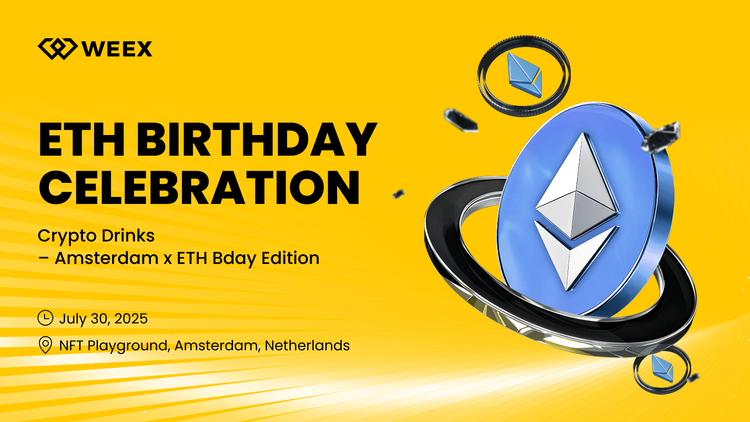
Celebração de Aniversário da ETH e Networking da Web3
A WEEX participou do Crypto Drinks – Edição Amsterdã x Aniversário da ETH, um evento empolgante, que comemora o aniversário da Ethereum com a comunidade cripto europeia.

WEEX no Jantar de boas-vindas da CONF3RENCE Dortmund 2025
Para a WEEX, participar da CONF3RENCE Dortmund marca mais um passo importante em sua estratégia de expansão global.

WEEX no Blockchain Forum 2025
A WEEX fez uma estreia de impacto no Blockchain Forum 2025 em Moscou. Como Patrocinadora Ouro, a WEEX destacou sua inovação em tecnologia de trading, infraestrutura de segurança e desenvolvimento do ecossistema Web3.
SharpLink abocanha US$ 295 milhões em ETH em 5 de agosto de 2025 – superando toda a emissão de Ether do mês passado
Imagine uma empresa que não está apenas mergulhando no mundo das criptomoedas, mas mergulhando de cabeça, girando...
Divine Research lança empréstimos criptográficos sem garantia, com tecnologia World ID de Sam Altman, a partir de 5 de agosto de 2025
Imagine entrar em um mundo onde pessoas comuns, de professores do ensino médio a vendedores de frutas, podem obter empréstimos rápidos...
Trading de IA em Crypto Explicado: Como a negociação autónoma está reformulando os mercados de criptomoedas e as bolsas de criptomoedas
O AI Trading está rapidamente transformando a criptografia. As estratégias tradicionais lutam para acompanhar a volatilidade sem parar da criptomoeda e a complexa estrutura de mercado, enquanto a IA pode processar dados maciços, gerar estratégias adaptativas, gerenciar riscos e executar operações de forma autónoma. Este artigo orienta os usuários da WEEX pelo que é o trading de IA, por que a criptografia acelera sua adoção, como a indústria está evoluindo para agentes autônomos e por que a WEEX está construindo o ecossistema de negociação de IA da próxima geração.
Call to Join AI Wars: WEEX Alpha Awakens — Competição Global de Negociação de IA com $880,000 Prize Pool
Agora, estamos chamando comerciantes de IA de todo o mundo para se juntarem a AI Wars: WEEX Alpha Awakens, uma competição global de negociação de IA com um pool de prêmios de US$ 880.000.
Negociação de IA em Mercados de Cripto: De robôs de negociação automatizados a estratégias algoritmicas
O comércio impulsionado por IA está mudando a criptomoeda da especulação de varejo para a concorrência de nível institucional, onde a execução e a gestão de risco importam mais do que a direção. À medida que as negociações de IA aumentam, o risco sistêmico e a pressão regulatória aumentam, tornando o desempenho a longo prazo, sistemas robustos e conformidade os principais diferenciais.
Análise de sentimentos de IA e volatilidade de criptomoedas: O que move os preços de criptomoedas
O sentimento da IA está influenciando cada vez mais os mercados de criptomoedas, com mudanças nas expectativas relacionadas à IA se traduzindo em volatilidade para os principais ativos digitais. Os mercados de criptomoedas tendem a amplificar as narrativas de IA, permitindo que os fluxos impulsionados pelo sentimento superem os fundamentos a curto prazo. Compreender como o sentimento da IA se forma e se espalha ajuda os investidores a antecipar melhor os ciclos de risco e posicionar oportunidades em todos os ativos digitais.
Segunda semana do Banco Central e volatilidade do mercado de criptomoedas: Como as decisões de taxa de juros moldam as condições de negociação na WEEX
As decisões de juros de grandes bancos centrais como a Reserva Federal são eventos macroeconômicos significativos que afetam os mercados financeiros globais, influenciando diretamente as expectativas de liquidez do mercado e o apetite de risco. À medida que o mercado de criptomoedas continua a se desenvolver e sua estrutura de negociação e participantes amadurecem, o mercado de criptomoedas está sendo gradualmente incorporado ao sistema de preços macroeconômicos.
Novembro de 2025 Revisão do Mercado de Cripto: Correção de Preços, Redempções de ETFs e Evolução da Blockchain
Novembro de 2025 viu volatilidade pronunciada e uma correção estrutural dentro do ecossistema blockchain mais amplo, impulsionado principalmente por previsões macroeconômicas flutuantes e dinâmicas específicas de fluxo de capital.
Populares
Últimas notícias sobre cripto


Atendimento ao cliente:@weikecs
Parcerias comerciais:@weikecs
Quant trading e MM:[email protected]
Serviços VIP:[email protected]
 App
App