
- Comprar cripto
- Mercados
- Futuros
- Spot
- Copy Trade
 Renda
Renda- Mais
Y Combinator: 10 innovative directions worth exploring in the field of AI

Original source: Y Combinator
Original translation: TechFlow
The Golden Age of Construction
This is the best time in history for builders. We just witnessed an amazing scene: a giant robot "chopsticks" accurately grabbed a falling skyscraper from the air. This is not only a miracle of technology, but also a symbol of a huge leap in construction capabilities. Artificial intelligence (AI) is changing the way we work at an unprecedented speed, especially for builders, AI is having a profound impact. It can be said that we are entering a golden age of construction, which also provides us with a rare opportunity to create things that can truly make the country better. Here are some innovative directions that we think are particularly worth paying attention to and exploring in this golden age.
Government Software
(Video link)
By Harj Taggar
Selling software to government is notoriously difficult, and most entrepreneurs won’t even consider entering the field. But if you can crack it, the rewards can be huge. For example, Palantir is one of the few startups that has successfully entered this market and is now valued at $125 billion.
Now may be a particularly good time to try. With fiscal deficits high, governments are eager to ease pressure by reducing spending and improving efficiency. At the same time, the rapid development of artificial intelligence technology has made it possible to automate many administrative tasks that cost governments billions of dollars each year.
Combining these two points, developing AI-based software to help automate government work can not only reduce expenses but also improve efficiency. In particular, large language models (LLMs) excel at handling repetitive administrative tasks such as filling out forms, reviewing applications, or summarizing documents. As users of government services, we all benefit from more efficient services, such as no more long lines at the DMV.
While government may sound like a less sexy area to start a business, if you are willing to dig deeper, we would love to hear your ideas.
Public Safety Technology

(Video link)
By Garry Tan
Everyone should feel safe in their homes and on the streets. This is a basic security that a civilized society should provide to its citizens. Startups are already working in this area. For example, license plate cameras developed by Flock Safety (YC S17) have helped solve 10% of reported crimes in the United States, and their goal is to increase this to 25% by next year. Meanwhile, Abel Police (YC S24) reduces the time officers spend filling out paperwork from hours to minutes, saving them up to 25% of their time each day for actual policing.
Public safety technology is and will continue to make a real difference. We’d especially like to hear from you if you’re innovating in the following areas:
· Advanced Computer Vision:Developing computer vision-based technology that can identify suspicious activity or people in need of help from video streams while protecting individual privacy.
· Emergency Response Technology:Technology that improves the speed and coordination of emergency response is critical. If you have an idea that can get help to where it’s needed faster, we want to help you make it a reality.
· Community Safety Tools:Developing tools that improve community interactions with law enforcement, such as solutions that help neighbors look out for each other and stay informed about safety conditions.
· Efficient Law Enforcement Technology:Technology that helps law enforcement work more efficiently and fairly, such as workload management systems or tools that improve operational precision.
If your startup is ready to join the wave of innovation in this area, we’d love to talk to you.
Made in the USA

(Video link)
By Jared Friedman
In the 19th century, Britain became the world’s wealthiest country by becoming the “world’s factory.” The United States replicated this success in the 20th century. However, over the past few decades, the United States has gradually abandoned this role. The hollowing out of manufacturing has not only exacerbated social and political divisions, but also put the United States in a geopolitically unstable position.
Bringing manufacturing back to the United States is one of the areas where there is currently strong bipartisan consensus. Elon Musk has shown us how feasible this goal is by building Tesla Gigafactories in Austin and Nevada. We believe that current technological advances provide more opportunities for a new generation of builders to emulate his success.
New robotic systems based on machine learning (ML) allow more production processes to be automated, thereby reducing the labor cost gap of outsourcing manufacturing to other countries. In addition, companies like SpaceX and Tesla have trained a whole generation of engineers who have mastered how to create an American company that produces physical products but operates as a startup.
We’ve already seen this model work. For example, Astranis (W16) builds telecommunications satellites in the heart of San Francisco, where warships were built for the US Navy during World War II. Gecko Robotics (W16), based in Pittsburgh, the old industrial heartland of the US, builds robots for industrial inspection. Solugen (W17) produces industrial chemicals in a large factory in Houston.
Stablecoin 2.0

(Video link)
By Brad Flora and Harj Taggar
Earlier this year, we published a request for more stablecoin startups. From there, things have only gotten better for the stablecoin space. For a long time, the main challenge with stablecoins has been regulation, with several attempts to pass stablecoin regulation in the US failing. But now, the outlook for stablecoin regulation in the US is more positive, and we expect sensible legislation to be on the horizon.
This year, stablecoin payment transactions have surged, now accounting for more than a fifth of Mastercard’s payment volume. Nearly 30% of global remittances are done in stablecoins, and traditional financial institutions like Visa are also providing platforms for banks to issue their own stablecoins. Additionally, Stripe recently acquired a stablecoin startup, Bridge, for $1 billion, which will undoubtedly attract more investors and capital to the space.
Therefore, now is one of the best times to launch a stablecoin startup. We are particularly interested in ideas in the following directions:
· Services for enterprises to help them hold and manage stablecoins more easily.
· Provide developers with easy-to-use tools to quickly integrate stablecoin functionality.
If you are exploring innovations related to stablecoins, we are very much looking forward to communicating with you.
Large Language Models for Chip Design (LLMs for chip design)

(Video link)
Author: Garry Tan
Every breakthrough in AI drives the need for more powerful chips to support the training of larger models. In this technological race, no country wants to fall behind. The design and manufacture of chips is now not only an economic issue, but also the key to survival in the post-AI era. OpenAI's O1 model shows us that large language models (LLMs) with reasoning capabilities can drive major breakthroughs in science and engineering. We are very interested in any team that uses LLMs to improve chip design.
We are particularly interested in teams that focus on designing ASICs (application-specific integrated circuits) and FPGAs (field-programmable gate arrays). Traditionally, designing customized digital systems requires a lot of development, design, and testing costs, so the research and development of FPGAs and ASICs has always been a high-cost, high-threshold field. With the emergence of large language models, these costs are falling significantly, making more types of specialized computing possible.
Currently, most computers use the Von Neumann architecture, which processes programs and data through a single shared memory and operates through serial instruction fetch and execution cycles. The advantage of this architecture is high flexibility and easy reprogramming of the system. However, for specific tasks (such as cryptocurrency mining, data compression, or specialized encryption tasks), by optimizing algorithms and hardware design, it is possible to achieve a 5 to 100 times increase in computing speed while reducing energy consumption by 10 to 100 times.
Below is a diagram provided by Taner Sadikoglu showing the difference in data flow between an optimized FPGA system and a traditional CPU.
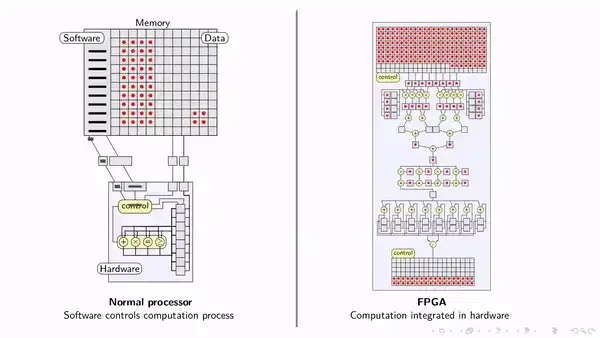
Given the orders of magnitude performance gains that FPGAs and ASICs can deliver, optimizing this process with LLMs could be extremely valuable and create a huge business opportunity for startups.
Fintech 2.0
(Video link)
By Dalton Caldwell
The past two years have been challenging for Fintech startups. The collapse of Silicon Valley Bank led to regulators tightening restrictions on new startups and investors retreating from the space. However, we believe this is about to change and that now is the best time to start a Fintech startup.
In the past, the hardest part of starting a financial startup was getting an agreement with a bank or other regulated partner. Now, with the emergence of service providers such as Stripe and the popularity of new technologies such as stablecoins, this process is becoming easier.
The rapid development of AI tools will inevitably drive changes in the financial industry. For small startups without the burden of legacy systems, this change brings structural advantages, allowing them to quickly build future global financial products.
We believe that now is the ideal time to create a new generation of fintech companies based on existing infrastructure. We hope to see innovative ideas around insurance, investment banking, wealth management, international payments and other fields.
New space companies
(Video link)
By Jared Friedman and Dalton Caldwell
The cost of accessing space is falling rapidly, having dropped more than 10-fold since SpaceX’s first launch in 2006. Today, a startup can build and launch a satellite with just a seed round of funding.
As access to space becomes as routine and low-cost as commercial aviation, shipping, or cargo transportation, this will unlock many new business opportunities. Can you imagine how many kilograms of payload are launched into space today? How will that number grow in one year, five years, and ten years?
While starting a space company may seem ambitious, it’s not necessarily more difficult than starting a software company. YC has funded several space companies, including Astranis, Relativity Space, and Stoke, and their success rate may even exceed that of companies in other fields.
AI-aided engineering tools
(Video link)
Author: Diana Hu
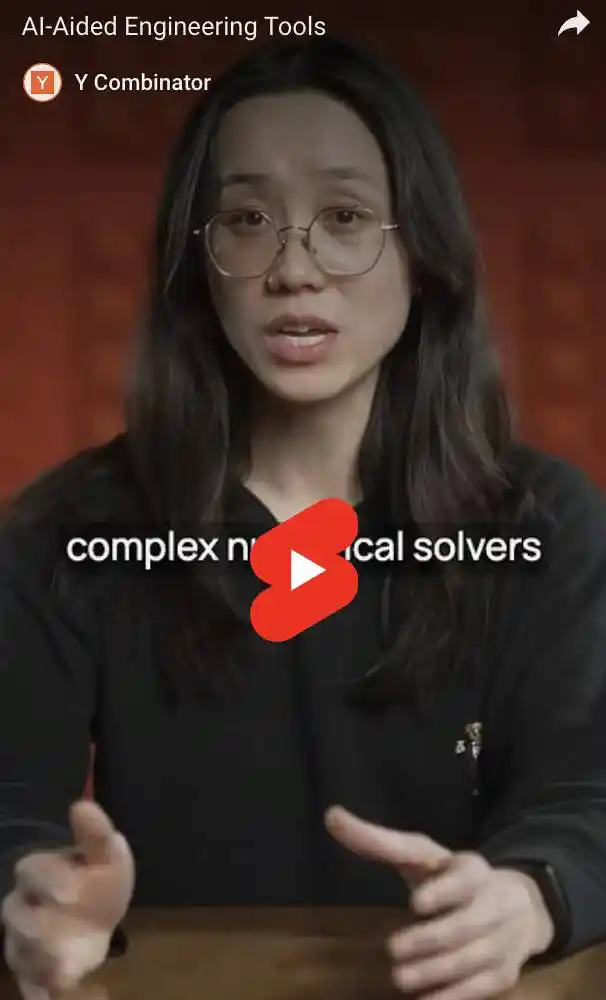
Engineering tools for the physical world have made little real progress for decades. CAD/CAM software used by mechanical engineers, EDA tools used by electrical engineers, and CFD tools used by aerospace engineers—these tools still rely on complex numerical solvers and physics simulations. These tools are not only computationally expensive, but also require deep expertise, sometimes even a Ph.D. to use effectively.
We believe that a new generation of AI-driven tools will change all that.
By infusing new AI models with the reasoning power of solving math and physics problems, we can help engineers design and build physical systems—planes, buildings, circuits, chips, satellites—faster and with higher quality.
We look to founders to develop AI-assisted engineering tools to drive this change and become the driving force of the next generation of computer-aided engineering (CAE).
One million jobs 2.0

(Video link)
By Dalton Caldwell
We want to fund startups that can create one million jobs that require humans to do the work and do not rely on AI to replace them.
Historically, whenever there has been a major change in technology, the types of jobs people do have changed. For example, in the past, many people were farmers, but with the spread of mechanization, the agricultural labor force has been greatly reduced. Likewise, professions such as elevator operators and typists are disappearing.
However, technological change often creates new professions that are better equipped and provide greater value to humanity. In this new AI-driven world, these professions may include giving more people the tools to run their own local businesses, or to make a living by providing services to others online or offline.
Many AI futurists are uncertain about what the future of professions will look like, and we want to fund founders who can answer that question.
Original link
Você também pode gostar

Crypto e IA: o mercado cinza digital escondido de Xianyu
Crypto e AI: Você pode comprar qualquer coisa em Xianyu.

O que está impulsionando os mercados de criptomoedas no início de 2026: Swings de mercado, AI Trading e ETF Flows?
Imagine verificar os preços do Bitcoin e Ethereum em um dia — um minuto a 5%, o próximo a 4%. Movimentos afiados, reversões rápidas e sensibilidade aos sinais macro marcaram a primeira semana de 2026. Após uma recuperação no início do ano, ambos os ativos se retiraram à medida que os mercados recalibravam as expectativas em torno da política monetária dos EUA e dos fluxos institucionais. Para os comerciantes — incluindo aqueles que dependem de IA ou sistemas automatizados — este período ofereceu um lembrete vivo: sinais abundantes não garantem clareza. Manter-se disciplinado na execução é muitas vezes o verdadeiro desafio.
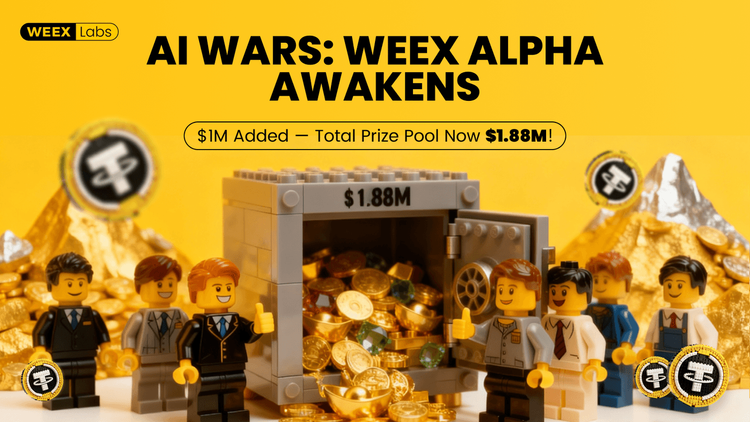
WEEX Global AI Trading Hackathon Começa: $1.88M Prize Pool empodera a próxima geração de AI Trading Champions
WEEX Labs, o braço de inovação da WEEX, uma bolsa de criptomoedas global líder que atende mais de 6,2 milhões de usuários em mais de 150 países, está preparado para lançar a rodada preliminar de seu hackathon global de negociação de IA, AI Wars: WEEX Alpha Awakens, em 12 de janeiro de 2026. Apoiado pelo forte apoio de patrocinadores de classe mundial, incluindo Amazon Web Services (AWS), o pool total de prêmios aumentou de US $ 880.000 para US $ 1.880.000 sem precedentes, posicionando AI Wars entre os maiores hackathons de negociação de IA na indústria de criptografia. No topo do ranking espera-se um prêmio de campeão extraordinário — um Bentley Bentayga S, já em espera em Dubai, pronto para ser reivindicado pelo vencedor final do comércio de IA.

From Theory to Live Markets: O sistema dual-brain da AOT Matrix no WEEX AI Trading Hackathon
Nos mercados de criptomoedas — um dos sistemas não estacionários mais imperdoáveis — o fracasso da estratégia raramente é causado por modelos serem muito simples. Isso acontece porque a maioria das estratégias nunca são realmente expostas à pressão do mercado real. Este é exatamente o problema que o WEEX AI Trading Hackathon foi concebido para surgir – mudando o foco da inovação teórica para a implementação real, execução real e desempenho real. Entre as equipes participantes, a AOT Matrix destacou-se com capacidades quantitativas avançadas impulsionadas por IA. Através de sua arquitetura dual-brain V4.4, o sistema alcançou otimização de ponta a ponta — da lógica do núcleo à execução — refletindo a dupla ênfase da plataforma na inovação e no desempenho do mundo real.
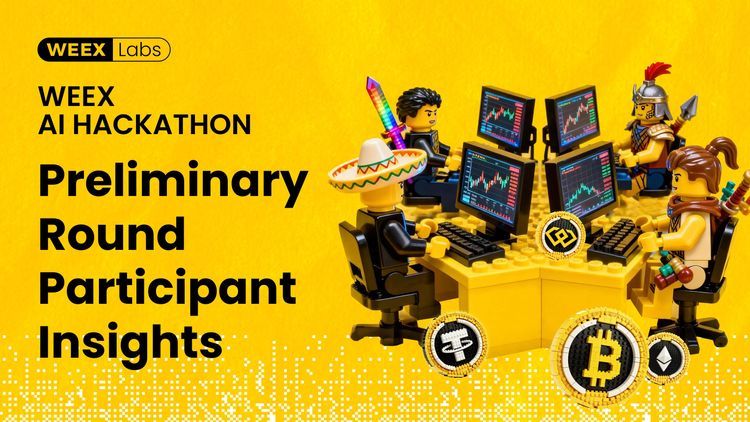
Preliminary Round Participant Insights — AOT Matrix: Análise do cérebro esquerdo, decisões do cérebro direito no comércio de IA
No WEEX AI Trading Hackathon, a AOT Matrix escolheu um caminho mais cauteloso no design do sistema - um que é realmente mais difícil de arrancar em um ambiente de negociação ao vivo. Desde o início, eles fizeram escolhas claras sobre o papel que a IA deveria e não deveria desempenhar no sistema de negociação. Entrevistamos a AOT Matrix sobre sua lógica de tomada de decisão, as múltiplas iterações de sua arquitetura de sistema, e como é implementá-lo sob o ambiente de negociação real da WEEX e limitações de engenharia.

Por que os tokens de IA estão crescendo mais rápido do que o mercado mais amplo de criptomoedas
Os tokens de IA estão superando o desempenho — e não silenciosamente. Bitcoin está em movimento. Ethereum está segurando terreno. No entanto, alguns dos ganhos relativos mais fortes vêm de tokens etiquetados com IA, não majors, nem memes. À primeira vista, isso parece intuitivo. AI é tecnologia real. Ele está moldando indústrias muito além da criptografia. Mas os mercados raramente se movem apenas pela intuição — especialmente não tão rápido. Quando os preços aceleram antes da adoção, a pergunta mais útil não é “A IA é importante?” É a versão da história da IA que o mercado está comprando – agora.

Atualização de mercado — 7 de janeiro
Bitmine investiu mais 28 mil Ethereum, no valor de cerca de 91,16 milhões de dólares.

Deixando para trás os primeiros dias caóticos, criadores de mercado de criptomoedas estão celebrando sua chegada de idade
A luta de vida ou morte para criadores de mercado de criptomoedas é como uma evolução de espécies em condições extremas.
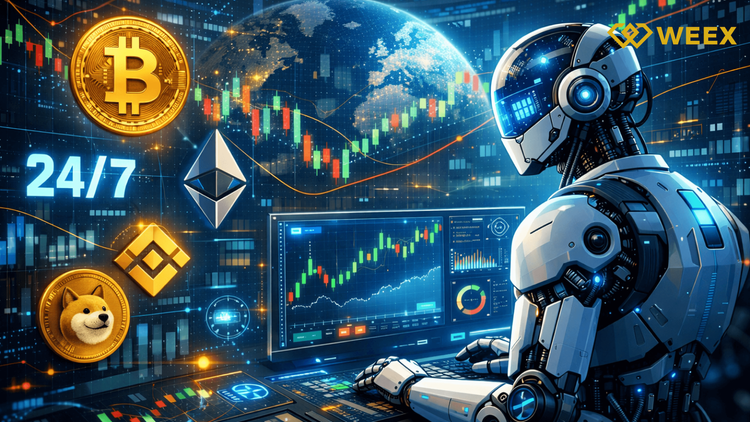
Por que os bots de negociação de IA estão se tornando essenciais nos mercados de criptomoedas 24/7.
Os mercados de criptomoedas operam continuamente e se movem mais rápido do que a atenção humana pode sustentar de forma confiável. Os preços reagem instantaneamente a eventos globais, mudanças de liquidez entre regiões e oportunidades negociáveis muitas vezes existem por minutos em vez de horas. Para muitos comerciantes, o desafio central já não é gerar ideias, mas executar decisões de forma consistente sem monitoramento constante ou interferência emocional. É aqui que os robôs de negociação de IA são cada vez mais adotados – não como garantias de lucro, mas como ferramentas projetadas para traduzir estratégias predefinidas em execução confiável e repetível.

AI Crypto Trading Competition: Guia completo para conhecer o WEEX Alpha Awakens
A integração da inteligência artificial no comércio de criptomoedas evoluiu de um experimento inovador para um utilitário de núcleo. Em 2026, as ferramentas orientadas por IA tornaram-se indispensáveis para os traders que buscam disciplina aprimorada, velocidade de execução superior e tomada de decisão estruturada e baseada em dados em meio à volatilidade do mercado. Este guia fornece um desdobramento prático, passo a passo de como participar do WEEX Alpha Awakens, com um exame focado de como essas estratégias são implementadas dentro de ambientes de negociação ao vivo.

As linhas K da vida não podem curar a ansiedade, e os mercados de previsão não podem calcular o fim.
A vida real muitas vezes se desenrola além das linhas K.
Como a IA ajuda os traders de criptomoedas a analisar os mercados, gerenciar o risco e negociar de forma mais inteligente
Negociação de criptomoedas já não é apenas sobre ter uma boa ideia - é sobre executar consistentemente em um mercado que nunca pára. À medida que os volumes de dados e a velocidade do mercado aumentam, a análise manual tradicional atinge seus limites. A IA ajuda os traders a ultrapassar esses limites transformando a forma como os mercados são analisados, como o sentimento é interpretado e como o risco é controlado. Este artigo explora como a IA está reformulando o comércio de criptomoedas – e o que isso significa para os traders hoje.

WEEX × LALIGA: Sete estrelas que representam um padrão comum de excelência
A verdadeira excelência no futebol nunca é acidental. É construído sobre disciplina, consistência e capacidade de entregar sob pressão – temporada após temporada. Os mesmos princípios se aplicam na negociação profissional, onde o desempenho a longo prazo importa mais do que o impulso de curta duração. Como parceiro regional oficial da LALIGA, a WEEX destaca sete jogadores notáveis que encarnam o espírito competitivo da liga e o apelo global. Cada um traz um estilo único ao palco, mas todos compartilham valores que se alinham estreitamente com o compromisso da WEEX com estabilidade, precisão e execução profissional. Esta parceria é construída sobre padrões compartilhados – onde consistência e controle definem o desempenho sob pressão.

De Wuhan ao Vale do Silício, Manus conseguiu isso em apenas nove meses.
Você pode chamá-lo de um “envelope”, mas envolveu seu caminho até Meta.

A WEEX faz parceria com a LALIGA para expandir o alcance global e integrar a criptomoeda na cultura esportiva mainstream
Hong Kong, 1 de janeiro de 2026. A WEEX entrou em nova parceria com a LALIGA, como parceira regional oficial da LALIGA em Taiwan e Hong Kong. O acordo traz a WEEX para a rede de colaboradores regionais da LALIGA e abre a porta para novas formas de envolver fãs e comerciantes durante a temporada.

Negociação de IA em Crypto: Como os traders aplicam a IA nos mercados reais de criptomoedas
A inteligência artificial passou para além da experimentação nos mercados de criptomoedas. Em 2025, as ferramentas de negociação impulsionadas por IA são cada vez mais usadas por traders que querem uma melhor disciplina, execução mais rápida e tomada de decisão mais estruturada em mercados voláteis. Este guia explica como a IA é realmente usada na negociação de criptomoedas, passo a passo - com foco em como essas estratégias são executadas em ambientes de negociação reais.

Atualização do mercado — 31 de dezembro
Desde a Coréia do Sul e a OCDE acelerando a implementação de quadros de regulamentação e conformidade de criptomoedas, ao desenvolvimento simultâneo de ETFs TAO, tecnologias de privacidade, mineração e reservas de Bitcoin, enquanto os incidentes de segurança e perdas financeiras continuam a aumentar, o mercado de criptomoedas entrou em uma nova fase em meio a múltiplos desafios de "regulação forte + evolução tecnológica + riscos amplificados".
Quando todos usam AI Trading, para onde vai a Cryptocurrency Alpha em 2026?
Em 2025, o comércio de IA tornou-se o padrão, mas o Alpha não desapareceu — ele foi erodido pela multidão, já que dados, modelos e estratégias semelhantes fazem com que os comerciantes agam de forma sincronizada e perdem sua vantagem.
O Real Alpha mudou para camadas mais difíceis de copiar, como dados comportamentais e em cadeia, qualidade de execução, gerenciamento de risco e julgamento humano em mercados extremos, onde agir de forma diferente - ou não agir de forma alguma - importa mais do que melhores previsões.
Crypto e IA: o mercado cinza digital escondido de Xianyu
Crypto e AI: Você pode comprar qualquer coisa em Xianyu.
O que está impulsionando os mercados de criptomoedas no início de 2026: Swings de mercado, AI Trading e ETF Flows?
Imagine verificar os preços do Bitcoin e Ethereum em um dia — um minuto a 5%, o próximo a 4%. Movimentos afiados, reversões rápidas e sensibilidade aos sinais macro marcaram a primeira semana de 2026. Após uma recuperação no início do ano, ambos os ativos se retiraram à medida que os mercados recalibravam as expectativas em torno da política monetária dos EUA e dos fluxos institucionais. Para os comerciantes — incluindo aqueles que dependem de IA ou sistemas automatizados — este período ofereceu um lembrete vivo: sinais abundantes não garantem clareza. Manter-se disciplinado na execução é muitas vezes o verdadeiro desafio.
WEEX Global AI Trading Hackathon Começa: $1.88M Prize Pool empodera a próxima geração de AI Trading Champions
WEEX Labs, o braço de inovação da WEEX, uma bolsa de criptomoedas global líder que atende mais de 6,2 milhões de usuários em mais de 150 países, está preparado para lançar a rodada preliminar de seu hackathon global de negociação de IA, AI Wars: WEEX Alpha Awakens, em 12 de janeiro de 2026. Apoiado pelo forte apoio de patrocinadores de classe mundial, incluindo Amazon Web Services (AWS), o pool total de prêmios aumentou de US $ 880.000 para US $ 1.880.000 sem precedentes, posicionando AI Wars entre os maiores hackathons de negociação de IA na indústria de criptografia. No topo do ranking espera-se um prêmio de campeão extraordinário — um Bentley Bentayga S, já em espera em Dubai, pronto para ser reivindicado pelo vencedor final do comércio de IA.
From Theory to Live Markets: O sistema dual-brain da AOT Matrix no WEEX AI Trading Hackathon
Nos mercados de criptomoedas — um dos sistemas não estacionários mais imperdoáveis — o fracasso da estratégia raramente é causado por modelos serem muito simples. Isso acontece porque a maioria das estratégias nunca são realmente expostas à pressão do mercado real. Este é exatamente o problema que o WEEX AI Trading Hackathon foi concebido para surgir – mudando o foco da inovação teórica para a implementação real, execução real e desempenho real. Entre as equipes participantes, a AOT Matrix destacou-se com capacidades quantitativas avançadas impulsionadas por IA. Através de sua arquitetura dual-brain V4.4, o sistema alcançou otimização de ponta a ponta — da lógica do núcleo à execução — refletindo a dupla ênfase da plataforma na inovação e no desempenho do mundo real.
Preliminary Round Participant Insights — AOT Matrix: Análise do cérebro esquerdo, decisões do cérebro direito no comércio de IA
No WEEX AI Trading Hackathon, a AOT Matrix escolheu um caminho mais cauteloso no design do sistema - um que é realmente mais difícil de arrancar em um ambiente de negociação ao vivo. Desde o início, eles fizeram escolhas claras sobre o papel que a IA deveria e não deveria desempenhar no sistema de negociação. Entrevistamos a AOT Matrix sobre sua lógica de tomada de decisão, as múltiplas iterações de sua arquitetura de sistema, e como é implementá-lo sob o ambiente de negociação real da WEEX e limitações de engenharia.
Por que os tokens de IA estão crescendo mais rápido do que o mercado mais amplo de criptomoedas
Os tokens de IA estão superando o desempenho — e não silenciosamente. Bitcoin está em movimento. Ethereum está segurando terreno. No entanto, alguns dos ganhos relativos mais fortes vêm de tokens etiquetados com IA, não majors, nem memes. À primeira vista, isso parece intuitivo. AI é tecnologia real. Ele está moldando indústrias muito além da criptografia. Mas os mercados raramente se movem apenas pela intuição — especialmente não tão rápido. Quando os preços aceleram antes da adoção, a pergunta mais útil não é “A IA é importante?” É a versão da história da IA que o mercado está comprando – agora.


 App
App