
- Comprar cripto
- Mercados
- Futuros
- Spot
- Copy Trade
 WE-Launch
Ye Kai: Reframing Asset Liquidity — How RWA Reshapes Data Asset Management Model

Original Article Title: "Ye Kai: Rethinking Asset Liquidity — How RWA Reshapes Data Asset Management Models | China Data Asset Management 50+ Forum"
Original Source: Shanghai Data Exchange
1. High RWA Financing Cost in Hong Kong
The current RWA market in Hong Kong faces high financing costs. From a cost perspective, the financing cost for high-quality domestic enterprises through bank channels generally remains in the range of 3.5%-4%, while the comprehensive cost of issuing RWAs in Hong Kong (including HKD 4-5 million issuance expenses) is as high as 10%, showing a clear cost inversion phenomenon. In this context, the core appeal for listed companies to participate in RWA has shifted from simple financing to market value management. A typical case shows that a technology company, after issuing RWA, saw its market value climb from HKD 6.7 billion to HKD 14.6 billion within three to four months.
The transitional nature of the Hong Kong regulatory framework is particularly prominent. According to current regulations, debt-based RWAs are limited to professional investors (PIs) participation, and licensed trading platforms cannot open a secondary retail market. This restriction objectively drives the market to form a "securitization-first, tokenization-follow-up" Web2.5 model: companies need to first transform assets into fund products regulated by a Type 9 license before undergoing tokenization by licensed institutions. Although liquidity is constrained in the short term, it creates an opportunity to build a multi-level cross-border market system.
2. Multi-level Market Collaborative Architecture
The key to unlocking the liquidity dilemma in the Hong Kong market lies in establishing a cross-border collaborative mechanism, such as establishing a three-layer experimental architecture for Mainland China-Hong Kong-Singapore.
· The first layer is the onshore ownership layer, where data asset trading platforms in Mainland China conduct data asset standardization processing, prepare assets through a sandbox mechanism, and ensure onshore ownership of core data, among other operations.
· The second layer is the offshore issuance layer, where Hong Kong licensed institutions package processed data assets into compliant fund products and conduct private placements based on a Type 9 license.
· The third layer is the global circulation layer, where Singapore leverages the advantage of an RMO license to accommodate secondary market circulation, achieving compliant cross-border circulation through the China-Singapore international data channel.
The innovative value of this architecture lies in three dimensions: first, the onshore link strictly observes data security bottom line to avoid risks of Regulation 38; second, Hong Kong leverages the professional advantages of licensed institutions, focusing on primary market issuance; third, Singapore opens the secondary retail market, activating global capital participation.
3. Structured Financial Design Thinking
Mere asset tokenization cannot form effective financial products; instead, structured financial product design is needed. Taking BlackRock's fund operation model as an example, BlackRock combines mid-term US Treasury ETFs with smart contract collateralization to ensure a base return of 6-8% while unlocking premium floating space through native token issuance. This model has successfully attracted over 30% of crypto-native capital allocation demand.
Offshore support system is equally important. For example, in the Hainan Free Trade Port, the VIE structure + FT account combination can be tested to achieve cross-border asset transfer and fund circulation in a physically isolated framework. The "regulatory sandbox + whitelist network" design provides a solution for the circulation of sensitive assets. This model uses the VIE structure to achieve the outbound transfer of asset ownership in a legal sense, utilizes the FT account system to build a firewall for fund flow, and establishes a dedicated network channel to overcome cross-border operational barriers.
IV. Wall Street Stair-step Penetration Strategy
BlackRock's stair-step penetration strategy is worthy of special attention. From a Bitcoin spot ETF (with over $30 billion in AUM) to tokenized money market funds (BUIDL Fund surpassing $1 billion in scale), and then collaborating with Circle to issue the stablecoin USDB, its development path demonstrates a seamless transition from the institutional market to the retail market. Even more disruptive is the institution's plan to transform $11.6 trillion in medium to long-term assets into on-chain liquidity through collateralization, potentially reshaping the global fund circulation paradigm.
A Distributed Digital Identity (DID) system constitutes a strategic fulcrum. BlackRock explicitly positions DID as the infrastructure for inclusive finance in public documents, attempting to break down barriers between institutional and retail markets through a verifiable credit system. The insight for Hong Kong is that RWA development should not be limited to the professional investor market but should encompass forward-looking initiatives such as digital identity authentication and on-chain settlement capabilities.
V. Development Assessment and Path Selection
The Hong Kong RWA ecosystem is currently in a phase where regulatory arbitrage opportunities overlap with the key period of model standardization. The breakthrough direction presents three major trends: first, optimizing market structure to consolidate Hong Kong's position in the primary issuance market and complementing Singapore's secondary market. Second, upgrading product capabilities from simple asset securitization to structured designs such as ABS tranching and revenue rights passthrough. Third, prioritizing digital infrastructure development, accelerating the construction of DID systems, smart contract clearing platforms, and other foundational infrastructure.
For domestic businesses, the priorities are firstly to innovate development models by establishing a standardized process for "domestic asset preparation - offshore financial issuance," secondly to cultivate cross-border structured product design capabilities to gain a competitive advantage, and thirdly to focus on stablecoin and collateral derivative innovation to prevent overseas liquidity suction effects.
Você também pode gostar

WEEXPERIENCE Whales Night: Inteligência Artificial, Crypto Community & Crypto Market Insights
Em 12 de dezembro de 2025, a WEEX sediou a WEEXPERIENCE Whales Night, uma reunião da comunidade offline projetada para reunir membros da comunidade local de criptomoedas. O evento combinou compartilhamento de conteúdo, jogos interativos e apresentações de projetos para criar uma experiência offline relaxada e envolvente.
Riscos de negociação de IA em criptomoedas: Por que melhores estratégias de negociação de criptomoedas podem gerar maiores perdas?
O risco já não reside principalmente em má tomada de decisão ou erros emocionais. Vive cada vez mais na estrutura de mercado, caminhos de execução e comportamento coletivo. Entender essa mudança é mais importante do que encontrar a próxima estratégia “melhor”.
Agentes de IA estão substituindo a pesquisa de criptografia? Como a IA autônoma está reformulando o Crypto Trading
A IA está passando de auxiliar os comerciantes para automatizar todo o processo de pesquisa até execução nos mercados de criptomoedas. A vantagem mudou de insights humanos para tubulações de dados, velocidade e sistemas de IA prontos para execução, tornando os atrasos na integração de IA uma desvantagem competitiva.

Bots de negociação de IA e Copy Trading: Como estratégias sincronizadas reformulam a volatilidade do mercado de criptomoedas
Os comerciantes de criptomoedas de varejo enfrentam há muito os mesmos desafios: má gestão de risco, entradas atrasadas, decisões emocionais e execução inconsistente. As ferramentas de negociação AI prometeram uma solução. Hoje em dia, sistemas de negociação de cópia e bots de breakout apoiados por IA ajudam os comerciantes a dimensionar posições, definir paradas e agir mais rápido do que nunca. Além da velocidade e precisão, essas ferramentas estão silenciosamente reformulando os mercados - os traders não estão apenas negociando mais inteligentemente, eles estão se movendo em sincronia, criando uma nova dinâmica que amplifica tanto o risco quanto as oportunidades.
Trading de IA em Crypto Explicado: Como a negociação autónoma está reformulando os mercados de criptomoedas e as bolsas de criptomoedas
O AI Trading está rapidamente transformando a criptografia. As estratégias tradicionais lutam para acompanhar a volatilidade sem parar da criptomoeda e a complexa estrutura de mercado, enquanto a IA pode processar dados maciços, gerar estratégias adaptativas, gerenciar riscos e executar operações de forma autónoma. Este artigo orienta os usuários da WEEX pelo que é o trading de IA, por que a criptografia acelera sua adoção, como a indústria está evoluindo para agentes autônomos e por que a WEEX está construindo o ecossistema de negociação de IA da próxima geração.
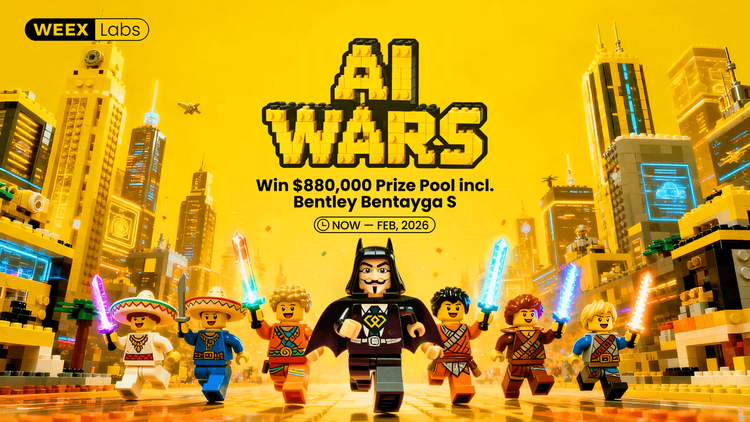
Call to Join AI Wars: WEEX Alpha Awakens — Competição Global de Negociação de IA com $880,000 Prize Pool
Agora, estamos chamando comerciantes de IA de todo o mundo para se juntarem a AI Wars: WEEX Alpha Awakens, uma competição global de negociação de IA com um pool de prêmios de US$ 880.000.
Negociação de IA em Mercados de Cripto: De robôs de negociação automatizados a estratégias algoritmicas
O comércio impulsionado por IA está mudando a criptomoeda da especulação de varejo para a concorrência de nível institucional, onde a execução e a gestão de risco importam mais do que a direção. À medida que as negociações de IA aumentam, o risco sistêmico e a pressão regulatória aumentam, tornando o desempenho a longo prazo, sistemas robustos e conformidade os principais diferenciais.
Análise de sentimentos de IA e volatilidade de criptomoedas: O que move os preços de criptomoedas
O sentimento da IA está influenciando cada vez mais os mercados de criptomoedas, com mudanças nas expectativas relacionadas à IA se traduzindo em volatilidade para os principais ativos digitais. Os mercados de criptomoedas tendem a amplificar as narrativas de IA, permitindo que os fluxos impulsionados pelo sentimento superem os fundamentos a curto prazo. Compreender como o sentimento da IA se forma e se espalha ajuda os investidores a antecipar melhor os ciclos de risco e posicionar oportunidades em todos os ativos digitais.
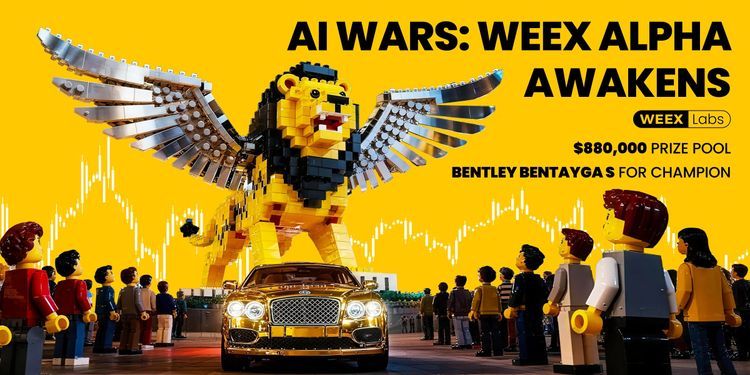
Guerras da IA: Guia do participante
Nesta batalha final, os melhores desenvolvedores, analistas quantitativos e traders de todo o mundo irão lançar seus algoritmos em batalhas no mercado real, competindo por um dos maiores prêmios da história do trading de criptomoedas com IA: 880.000 dólares, incluindo um Bentley Bentayga S para o campeão. Este guia irá guiá-lo por todas as etapas necessárias, desde a inscrição até o início oficial da competição.

Segunda semana do Banco Central e volatilidade do mercado de criptomoedas: Como as decisões de taxa de juros moldam as condições de negociação na WEEX
As decisões de juros de grandes bancos centrais como a Reserva Federal são eventos macroeconômicos significativos que afetam os mercados financeiros globais, influenciando diretamente as expectativas de liquidez do mercado e o apetite de risco. À medida que o mercado de criptomoedas continua a se desenvolver e sua estrutura de negociação e participantes amadurecem, o mercado de criptomoedas está sendo gradualmente incorporado ao sistema de preços macroeconômicos.
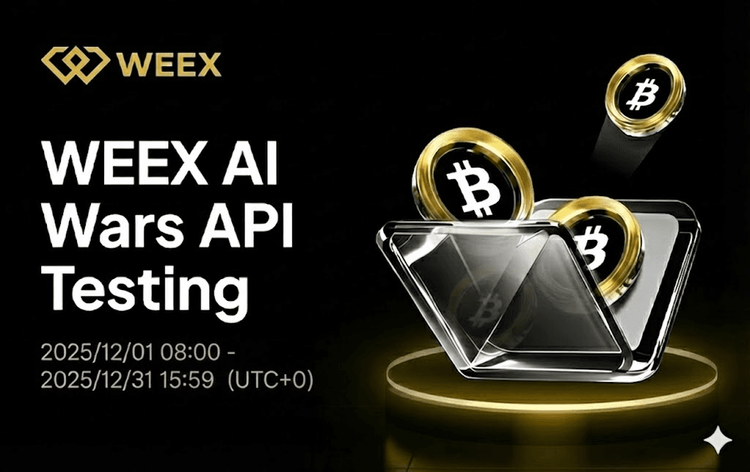
Teste da API WEEX: Guia Oficial para Hackathon de Negociação de IA e APIs de Crypto Trading
WEEX API Testing é projetado para garantir que cada participante pode transformar a lógica de negociação em execução real. Todas as interações API ocorrem no sistema de negociação ao vivo da WEEX, permitindo que os participantes trabalhem em condições de mercado autênticas em vez de simulações. Com um requisito de entrada baixo, a tarefa é acessível tanto para desenvolvedores experientes e iniciantes motivados, enquanto ainda valida habilidades técnicas essenciais.
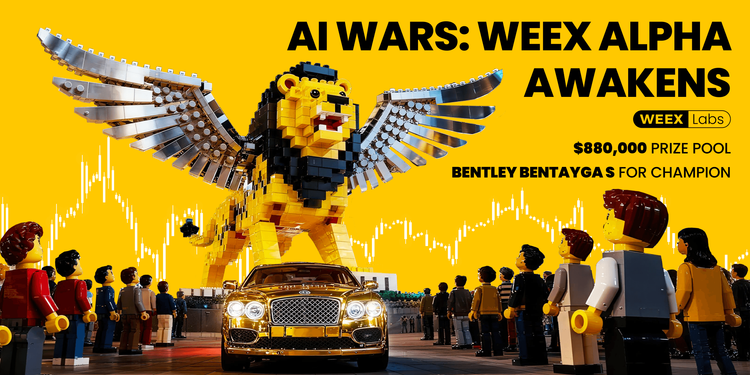
Guerras da IA: WEEX Alpha Awakens | Guia do processo de teste do WEEX Global Hackathon API
AI Wars: O registro do WEEX Alpha Awakens está agora aberto. e este guia descreve como acessar o teste da API e concluir com sucesso o processo.
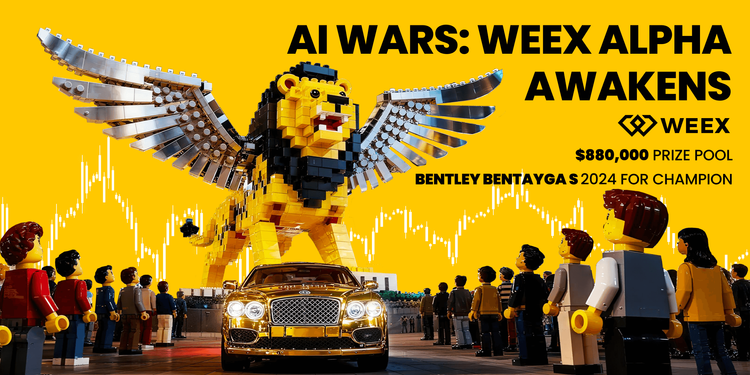
O que é o WEEX Alpha Awakens e como participar? Um guia completo
Para acelerar os avanços na interseção de IA e criptografia, a WEEX está lançando o primeiro hackathon global de negociação de IA – AI Wars: Alpha despertou.
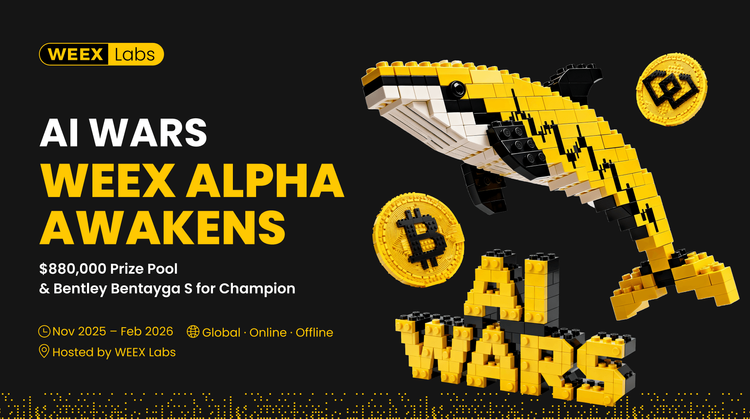
Juntar-se a AI Wars: WEEX Alpha despertou!Global Call for AI Trading Alphas
AI Wars: WEEX Alpha Awakens é um hackathon global de negociação de IA em Dubai, chamando equipes de quantidade, traders algoritmicos e desenvolvedores de IA para lançar suas estratégias de negociação de criptomoedas de IA em mercados ao vivo por uma parte de um pool de prêmios de US $ 880,000.
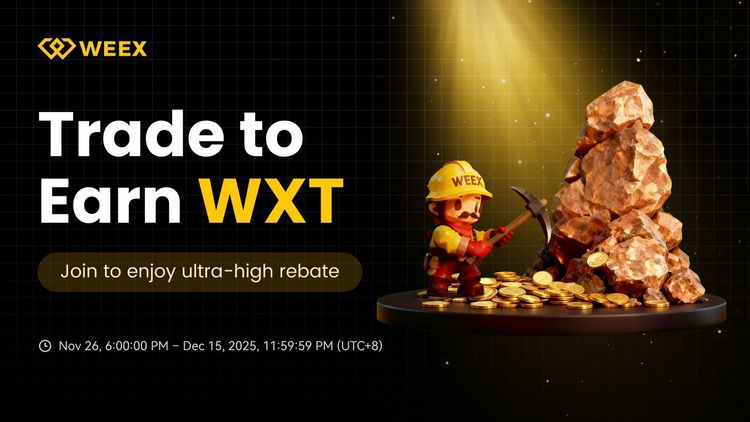
WEEX revela o comércio para ganhar: Até 30% de reembolso instantâneo + $2M WXT Buyback
A WEEX tem o prazer de anunciar o lançamento do nosso programa Trade to Earn, que automaticamente concede até 30% de desconto nas taxas de negociação. Todas as recompensas são creditadas diretamente à sua conta spot em $WXT - apoiado pelo nosso plano de compra de $2.000.000 WXT que alimenta o valor de token a longo prazo.

Novo: Preço estimado de liquidação no app candlestick gráficos
WEEX introduziu um novo preço de liquidação estimado (Est. Liq. Preço) recurso no gráfico do candlestick para ajudar os traders a gerenciar melhor o risco e identificar intervalos seguros para suas posições.
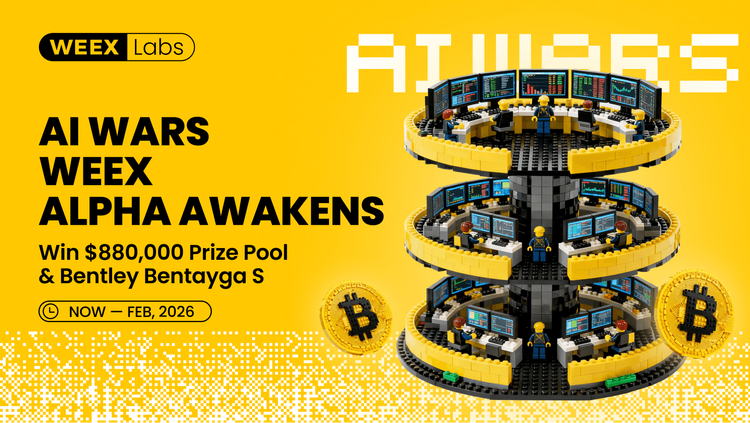
WEEX AI Hackathon Guia: Encontre o seu WEEX UID e registe
De agora até fevereiro de 2026, a WEEX lança AI Wars: WEEX Alpha Awakens, o primeiro hackathon mundial de negociação de criptomoedas AI. Venha o seu UID e registre-se para o WEEX Global AI Trading Hackathon.
Novembro de 2025 Revisão do Mercado de Cripto: Correção de Preços, Redempções de ETFs e Evolução da Blockchain
Novembro de 2025 viu volatilidade pronunciada e uma correção estrutural dentro do ecossistema blockchain mais amplo, impulsionado principalmente por previsões macroeconômicas flutuantes e dinâmicas específicas de fluxo de capital.
WEEXPERIENCE Whales Night: Inteligência Artificial, Crypto Community & Crypto Market Insights
Em 12 de dezembro de 2025, a WEEX sediou a WEEXPERIENCE Whales Night, uma reunião da comunidade offline projetada para reunir membros da comunidade local de criptomoedas. O evento combinou compartilhamento de conteúdo, jogos interativos e apresentações de projetos para criar uma experiência offline relaxada e envolvente.
Riscos de negociação de IA em criptomoedas: Por que melhores estratégias de negociação de criptomoedas podem gerar maiores perdas?
O risco já não reside principalmente em má tomada de decisão ou erros emocionais. Vive cada vez mais na estrutura de mercado, caminhos de execução e comportamento coletivo. Entender essa mudança é mais importante do que encontrar a próxima estratégia “melhor”.
Agentes de IA estão substituindo a pesquisa de criptografia? Como a IA autônoma está reformulando o Crypto Trading
A IA está passando de auxiliar os comerciantes para automatizar todo o processo de pesquisa até execução nos mercados de criptomoedas. A vantagem mudou de insights humanos para tubulações de dados, velocidade e sistemas de IA prontos para execução, tornando os atrasos na integração de IA uma desvantagem competitiva.
Bots de negociação de IA e Copy Trading: Como estratégias sincronizadas reformulam a volatilidade do mercado de criptomoedas
Os comerciantes de criptomoedas de varejo enfrentam há muito os mesmos desafios: má gestão de risco, entradas atrasadas, decisões emocionais e execução inconsistente. As ferramentas de negociação AI prometeram uma solução. Hoje em dia, sistemas de negociação de cópia e bots de breakout apoiados por IA ajudam os comerciantes a dimensionar posições, definir paradas e agir mais rápido do que nunca. Além da velocidade e precisão, essas ferramentas estão silenciosamente reformulando os mercados - os traders não estão apenas negociando mais inteligentemente, eles estão se movendo em sincronia, criando uma nova dinâmica que amplifica tanto o risco quanto as oportunidades.
Trading de IA em Crypto Explicado: Como a negociação autónoma está reformulando os mercados de criptomoedas e as bolsas de criptomoedas
O AI Trading está rapidamente transformando a criptografia. As estratégias tradicionais lutam para acompanhar a volatilidade sem parar da criptomoeda e a complexa estrutura de mercado, enquanto a IA pode processar dados maciços, gerar estratégias adaptativas, gerenciar riscos e executar operações de forma autónoma. Este artigo orienta os usuários da WEEX pelo que é o trading de IA, por que a criptografia acelera sua adoção, como a indústria está evoluindo para agentes autônomos e por que a WEEX está construindo o ecossistema de negociação de IA da próxima geração.
Call to Join AI Wars: WEEX Alpha Awakens — Competição Global de Negociação de IA com $880,000 Prize Pool
Agora, estamos chamando comerciantes de IA de todo o mundo para se juntarem a AI Wars: WEEX Alpha Awakens, uma competição global de negociação de IA com um pool de prêmios de US$ 880.000.
Populares
Últimas notícias sobre cripto


Atendimento ao cliente:@weikecs
Parcerias comerciais:@weikecs
Quant trading e MM:[email protected]
Serviços VIP:[email protected]
 App
App