
- Купити крипту
- Ринок
- Ф’ючерси
- Спот
- Копітрейдинг
 WE-Launch
Paradigm: Unraveling the Mystery of the North Korean Hacker Group Lazarus Group

Original Article Title: "Demystifying the North Korean Threat"
Original Article Author: samczsun, Research Partner at Paradigm
Original Article Translation: Bright, Foresight News
One morning in February, the SEAL 911 team's alarm bells went off as we watched in confusion as Bybit moved over $1 billion worth of tokens from their cold wallet to a brand-new address and promptly initiated the liquidation of over $200 million worth of LST. Within minutes, through confirmations from the Bybit team and independent analysis (multi-signature, previously using a publicly verifiable Safe Wallet implementation, now deploying a newly deployed unverified contract), it became clear that this was not a routine maintenance. Someone had orchestrated the largest hack in cryptocurrency history, and we were sitting in the front row of this historical spectacle.
While some team members (and the broader intelligence community) began tracing the funds and notifying cooperating exchanges, other team members were trying to figure out what exactly had happened and whether other funds were at risk. Luckily, identifying the culprit was straightforward. Only one known actor had successfully stolen billions of dollars from cryptocurrency exchanges over the past few years: North Korea, also known as the DPRK.
However, beyond that, we had little to go on. Due to the cunning nature of North Korean hackers and their adeptness at self-obliteration, not only was it hard to pinpoint the root cause of the breach, but it was also challenging to determine which specific DPRK unit internally was responsible for this. Our only recourse was existing intelligence, which suggested that North Korea indeed favored infiltrating cryptocurrency exchanges through social engineering. Therefore, we speculated that North Korea likely compromised Bybit's signers and then deployed some malware to interfere with the signing process.
As it turned out, this speculation was entirely baseless. Days later, we discovered that North Korea had actually compromised the infrastructure of the Safe Wallet itself and launched a targeted malicious overload against Bybit. This level of sophistication was something no one had ever considered or prepared for, posing a significant challenge to many security models in the market.
North Korean hackers pose an increasingly serious threat to our industry, and we cannot defeat an enemy we do not know or understand. While there are numerous documented incidents and articles about various aspects of North Korean cyber operations, piecing them together has proven difficult. I hope this overview helps shed light on how North Korea operates and their tactics and procedures, making it easier for us to implement the right mitigation strategies.
Organizational Structure
Perhaps the most significant misconception to address is how to categorize and name the extensive network activities of North Korea. While using the term "Lazarus Group" informally to refer to them is acceptable, employing more precise terminology can be helpful when discussing North Korea's systemic cyber threats in detail.
Firstly, understanding North Korea's "organizational chart" can be helpful. At the top of the hierarchy is North Korea's ruling party (also the only ruling party) — the Workers' Party of Korea (WPK), which leads all of North Korea's governmental entities. This includes the Korean People's Army (KPA) and the Central Committee. Within the People's Army is the General Staff Department (GSD), with the Reconnaissance General Bureau (RGB) housed within. Under the Central Committee is the Ministry of Military Affairs (MID).
The RGB is responsible for nearly all of North Korea's cyber warfare activities, including almost all the activities related to the cryptocurrency industry. Apart from the notorious Lazarus Group, other threat actors that have emerged from the RGB include AppleJeus, APT38, DangerousPassword, and TraderTraitor. On the other hand, the MID oversees North Korea's nuclear missile program, serving as a primary source of North Korean IT workers, known in the intelligence community as Contagious Interview and Wagemole.
Lazarus Group
The Lazarus Group is a highly sophisticated hacking organization, with cybersecurity experts believing that some of the largest and most destructive cyberattacks in history have been attributed to this group. In 2016, Novetta first identified the Lazarus Group while analyzing the Sony Pictures Entertainment hack.
In 2014, Sony was producing the action comedy film "The Interview," with a major plot point involving the embarrassing and subsequent assassination of Kim Jong-un. Understandably, this did not sit well with the North Korean regime, which retaliated by breaching Sony's network, exfiltrating terabytes of data, leaking hundreds of gigabytes of confidential or otherwise sensitive information, and deleting originals. As then-CEO Michael Lynton put it, "The people who did this are criminals. They destroyed a company." Ultimately, the cost of investigation and remediation for Sony in this attack was at least $15 million, with potentially more losses incurred.
Subsequently, in 2016, a hacker group bearing a striking resemblance to the Lazarus Group infiltrated the Bangladesh Bank with the intention of stealing nearly $1 billion. Over the course of a year, the hackers diligently engaged in social engineering attacks on Bangladesh Bank employees, eventually gaining remote access and moving laterally within the bank's internal network until reaching the computer responsible for interfacing with the SWIFT network. From then on, they waited for the perfect moment to strike: the Bangladesh Bank observed a Thursday holiday, while the Federal Reserve Bank of New York had a Friday holiday.
On Thursday night local time in Bangladesh, threat actors utilized their access to the SWIFT network to send 36 separate transfer requests to the Federal Reserve Bank of New York, which was Thursday morning local time. Over the next 24 hours, the Federal Reserve Bank of New York forwarded these transfers to the Rizal Commercial Banking Corporation (RCBC) in the Philippines, which took action. Subsequently, when the Bangladesh Bank resumed business hours, they discovered the hack and attempted to notify RCBC to halt the transactions in progress, only to find that RCBC was closed for the Lunar New Year.
Finally, in 2017, a large-scale WannaCry 2.0 ransomware attack crippled industries worldwide, partly attributed to the Lazarus Group. WannaCry is estimated to have caused billions of dollars in damages, exploiting an NSA-developed Microsoft Windows 0day, encrypting local devices and spreading to other accessible devices, eventually infecting hundreds of thousands of devices globally. Fortunately, security researcher Marcus Hutchins discovered and activated a kill switch within eight hours, limiting the ultimate damage.
Throughout the evolution of the Lazarus Group, they have demonstrated high technical capabilities and operational sophistication, with one of their goals being revenue generation for the North Korean regime. Therefore, their shift of focus to the cryptocurrency industry was only a matter of time.
Derivatives
Over time, as the Lazarus Group has become the catch-all term the media likes to use when describing North Korean cyber activity, the cybersecurity industry has coined more precise names for the specific activities of the Lazarus Group and North Korea. One example is APT38, which split from the Lazarus Group around 2016, focusing on financial crime, initially targeting banks (such as the Bangladesh Bank) and later moving on to cryptocurrency. In 2018, a new threat named AppleJeus was discovered spreading malware targeting cryptocurrency users. Finally, as early as 2018, when OFAC first announced sanctions against two front companies used by North Koreans, North Korean actors posing as IT professionals had already infiltrated the tech industry.
North Korean IT Workers
Although the earliest records mentioning North Korean IT workers date back to OFAC sanctions in 2018, a Unit 42 report in 2023 provided a more detailed account, identifying two distinct threat actors: Contagious Interview and Wagemole.
It has been reported that the Contagious Interview scam involves impersonating recruiters from well-known companies to deceive developers into participating in a fake interview process. Subsequently, the prospective candidates are instructed to clone a repository for local debugging, presented as a coding challenge on the surface, but the repository actually contains a backdoor. Executing the backdoor grants the attacker control of the affected machine. This activity has been ongoing, with the most recent recorded instance on August 11, 2024.
On the other hand, Wagemole operatives' primary objective is not to hire potential victims but to be hired by companies, where they simply work like regular engineers, albeit potentially less efficiently. Nevertheless, there are records of IT workers leveraging their access for attacks, such as in the Munchables incident, where an employee associated with North Korean activities used their privileged access to smart contracts to steal all assets.
The complexity of Wagemole operatives varies, from generic resume templates and reluctance to engage in video calls, to highly customized resumes, deeply faked video interviews, and identity documents like driver's licenses and utility bills. In some cases, operatives have infiltrated victim organizations for up to a year, then used their access to breach other systems and/or cash out completely.
AppleJeus
AppleJeus primarily focuses on spreading malware and excels in sophisticated supply chain attacks. In 2023, the 3CX supply chain attack enabled attackers to potentially infect over 12 million users of 3CX VoIP software, but it was later discovered that 3CX itself was also compromised due to an attack on one of its upstream suppliers, Trading Technologies.
In the cryptocurrency industry, AppleJeus initially distributed malware disguised as legitimate software (such as trading apps or cryptocurrency wallets). However, over time, their strategy evolved. In October 2024, Radiant Capital was compromised by a threat actor who posed as a trusted contractor and sent malicious software via Telegram. Mandiant attributed this incident to AppleJeus.
Dangerous Password
Dangerous Password is responsible for conducting low-complexity, social engineering-based attacks on the cryptocurrency industry. As early as 2019, JPCERT/CC documented that Dangerous Password would send phishing emails with enticing attachments for users to download. In the earlier years, Dangerous Password was known for impersonating industry figures to send phishing emails with subjects like "Stablecoin and Cryptocurrency Risk Assessment."
Today, Dangerous Password is still sending phishing emails, but has also expanded to other platforms. For example, Radiant Capital reports that they received a phishing message via Telegram from someone impersonating a security researcher, who distributed a file named "Penpie_Hacking_Analysis_Report.zip." Furthermore, users reported that someone impersonating journalists and investors contacted them, requesting a call using an inconspicuous video conferencing app. Similar to Zoom, these apps would download a one-time installation program that would, when run, install malware on the device.
TraderTraitor
TraderTraitor is the most seasoned North Korean hacker targeting the cryptocurrency industry, initiating hacks on platforms such as Axie Infinity and Rain.com. TraderTraitor primarily targets exchanges and other companies with significant reserves, opting not to deploy zero-day vulnerabilities against its targets but instead using highly sophisticated spear-phishing techniques to attack victims. In the Axie Infinity hack case, TraderTraitor reached out to a senior engineer via LinkedIn, successfully convincing them to undergo a series of interviews and then sending a "proposal," which delivered malware.
Subsequently, in the WazirX hack, TraderTraitor operatives disrupted an as-yet-unidentified component in the signing pipeline and drained the exchange's hot wallet through repeated deposits and withdrawals, forcing WazirX engineers to rebalance from cold to hot wallet. When the WazirX engineers attempted to sign transactions to transfer funds, they were tricked into signing a transaction handing control of the cold wallet to TraderTraitor. This incident was very similar to the attack on Bybit in February 2025, where TraderTraitor first compromised the Safe{Wallet} infrastructure through social engineering attacks and then deployed malicious JavaScript to the Safe Wallet frontend specifically targeting Bybit's cold wallet. When Bybit attempted to rebalance their wallets, the malicious code was triggered, leading Bybit engineers to sign a transaction handing control of the cold wallet to TraderTraitor.
Stay Safe
North Korea has demonstrated the ability to exploit zero-day vulnerabilities against adversaries, but currently has no recorded incidents or known events of North Korea deploying zero-day vulnerabilities against the cryptocurrency industry. Therefore, typical security recommendations apply to almost all North Korean hacker threats.
For individuals, it is important to use common sense and be cautious of social engineering tactics. For example, if someone claims to have highly confidential information and is willing to share it with you, proceed with caution. Or if someone is exerting time pressure on you to download and run certain software, consider if they are trying to push you into a situation where rational thinking may be compromised.
For organizations, applying the principle of least privilege is crucial. Minimize the number of people with access to sensitive systems as much as possible, and ensure they use password managers and 2FA. Keep personal devices separate from work devices, and install Mobile Device Management (MDM) and Endpoint Detection and Response (EDR) software on work devices to ensure security pre-breach and visibility post-breach.
Unfortunately, for large exchanges or other high-value targets, TraderTraitor can cause more damage than expected even without the need for zero-day vulnerabilities. Therefore, additional preventive measures must be taken to eliminate single points of failure and prevent total loss of funds from a single intrusion.
However, even if all else fails, there is still hope. The FBI has a dedicated division to track and prevent North Korean intrusions, which has been conducting victim notifications for years, and recently I was pleased to assist agents from that division in reaching out to potential North Korean targets. Therefore, to be prepared for the worst-case scenario, ensure you have public contact information available, or that you are connected with a sufficient number of people in the ecosystem (e.g., SEAL 911), so that messages traversing the social graph can reach you at the fastest pace.
Вам також може сподобатися

WEEXPERIENCE Ніч китів: ШІ-торгівля, криптоспільнота та аналітика крипторинку
12 грудня 2025 року WEEX провела WEEXPERIENCE Whales Night, офлайн-зустріч спільноти, призначену для об'єднання членів місцевої криптовалютної спільноти. Захід поєднував обмін контентом, інтерактивні ігри та презентації проектів, щоб створити невимушений, але водночас захопливий офлайн-досвід.

Ризик торгівлі криптовалютою за допомогою штучного інтелекту: Чому кращі стратегії криптовалютної торгівлі можуть призвести до більших збитків?
Ризик більше не полягає переважно в поганих рішеннях чи емоційних помилках. Воно дедалі більше проявляється в ринковій структурі, шляхах виконання та колективній поведінці. Розуміння цього зрушення важливіше, ніж пошук наступної «кращої» стратегії.
Чи замінюють агенти штучного інтелекту криптодослідження? Як автономний штучний інтелект змінює криптовалютну торгівлю
Штучний інтелект переходить від допомоги трейдерам до автоматизації всього процесу від дослідження до виконання на криптовалютних ринках. Перевага змістилася від людського розуміння до конвеєрів даних, швидкості та систем штучного інтелекту, готових до виконання, що робить затримки в інтеграції штучного інтелекту конкурентним недоліком.

Торговельні боти на основі штучного інтелекту та копіювання торгівлі: Як синхронізовані стратегії змінюють волатильність крипторинку
Роздрібні криптотрейдери вже давно стикаються з тими ж проблемами: погане управління ризиками, пізні входи, емоційні рішення та непослідовне виконання. Інструменти торгівлі на основі штучного інтелекту обіцяли рішення. Сьогодні системи копіювальної торгівлі на базі штучного інтелекту та боти для проривів допомагають трейдерам визначати розмір позицій, встановлювати стоп-стопи та діяти швидше, ніж будь-коли. Окрім швидкості та точності, ці інструменти непомітно змінюють ринки — трейдери не просто торгують розумніше, вони рухаються синхронно, створюючи нову динаміку, яка посилює як ризик, так і можливості.

Пояснення торгівлі криптовалютою за допомогою штучного інтелекту: Як автономна торгівля змінює крипторинки та криптобіржі
ШІ-трейдинг швидко змінює криптоландшафт. Традиційні стратегії намагаються встигати за безперервною волатильністю криптовалют та складною структурою ринку, тоді як штучний інтелект може обробляти величезні обсяги даних, генерувати адаптивні стратегії, керувати ризиками та виконувати угоди автономно. Ця стаття розповідає користувачам WEEX, що таке торгівля на основі штучного інтелекту, чому криптовалюта прискорює її впровадження, як галузь розвивається в напрямку автономних агентів і чому WEEX створює екосистему торгівлі на основі штучного інтелекту наступного покоління.

Заклик до участі у AI Wars: WEEX Alpha Awakens — Глобальні змагання зі штучного інтелекту з призовим фондом $880 000
Зараз ми закликаємо трейдерів, що використовують штучний інтелект, з усього світу приєднатися до AI Wars: WEEX Alpha Awakens — глобальні змагання з торгівлі на основі штучного інтелекту з призовим фондом у 880 000 доларів.

Торгівля на криптовалютних ринках за допомогою штучного інтелекту: Від автоматизованих торгових ботів до алгоритмічних стратегій
Торгівля на основі штучного інтелекту переводить криптовалюту з роздрібної спекуляції в конкуренцію інституційного рівня, де виконання та управління ризиками важливіші за напрямок. Зі зростанням торгівлі на базі штучного інтелекту зростають системні ризики та регуляторний тиск, що робить довгострокову ефективність, надійні системи та відповідність вимогам ключовими відмінними рисами.

Аналіз настроїв за допомогою ШІ та волатильність криптовалюти: Що впливає на ціни на криптовалюту
Настрої щодо штучного інтелекту дедалі більше впливають на криптовалютні ринки, а зміни в очікуваннях, пов'язаних зі штучним інтелектом, призводять до волатильності основних цифрових активів. Крипторинки схильні посилювати наративи штучного інтелекту, дозволяючи потокам, зумовленим настроями, переважати фундаментальні фактори в короткостроковій перспективі. Розуміння того, як формуються та поширюються настрої щодо ШІ, допомагає інвесторам краще передбачати цикли ризику та можливості позиціонування цифрових активів.

AI Wars: посібник учасника
У цьому фінальному протистоянні провідні розробники, квантові аналітики та трейдери з усього світу використають свої алгоритми в реальних ринкових битвах, змагаючись за один з наймасштабніших призових фондів в історії ШІ-криптотрейдингу: 880 000 дол. США, зокрема Bentley Bentayga S для чемпіона. Цей посібник проведе вас через кожен необхідний крок від реєстрації до офіційного початку змагань.

Тиждень центрального банку та волатильність криптовалютного ринку: Як рішення щодо процентних ставок формують умови торгівлі на WEEX
Рішення щодо процентних ставок, прийняті основними центральними банками, такими як Федеральна резервна система, є значними макроекономічними подіями, що впливають на світові фінансові ринки, безпосередньо впливаючи на очікування ліквідності ринку та схильність до ризику. У міру того, як ринок криптовалют продовжує розвиватися, а його торгова структура та учасники стають зрілими, крипторинок поступово інтегрується в макроекономічну систему ціноутворення.

Тестування WEEX API: Офіційний посібник з хакатону зі штучним інтелектом та API для криптовалютної торгівлі
Тестування API WEEX розроблено для того, щоб кожен учасник міг перетворити торговельну логіку на реальне виконання. Усі взаємодії API відбуваються в системі живої торгівлі WEEX, що дозволяє учасникам працювати в реальних ринкових умовах, а не в симуляціях. Завдяки низьким вступним вимогам, це завдання доступне як для досвідчених розробників, так і для мотивованих новачків, водночас підтверджуючи необхідні технічні навички.
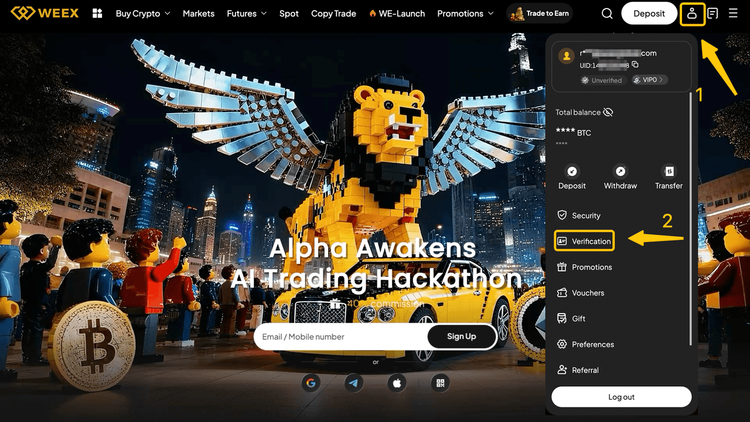
Війни ШІ: Тест для учасників
Частина 1: Рекомендований метод (хмарні сервери)
Для найкращої стабільності ми наполегливо рекомендуємо використовувати хмарний сервер зі статичною публічною IP-адресою та підтримкою цілодобової безперебійної роботи, наприклад: AWS (Amazon Web Services), Alibaba Cloud та Tencent Cloud.
**Частина 2:** Альтернативний метод (локальний комп’ютер)
Якщо ви вирішите запускати свого торгового бота з персонального комп’ютера або домашньої мережі, ви **повинні** підтвердити, що ваша вихідна IP-адреса є статичною. Зміна IP-адреси призведе до проблем із підключенням.
У вас є два основні варіанти для забезпечення стабільної вихідної IP-адреси:
Використовуйте статичну IP-адресу, надану вашим інтернет-провайдером (ISP).Використовуйте VPN або проксі-сервіс з фіксованою вихідною IP-адресою (і переконайтеся, що VPN/проксі постійно ввімкнено без перемикання серверів).Кроки для пошуку вашої локальної публічної IP-адреси:
Вимкніть усі VPN або залиште лише ту VPN, IP-адресу якої ви плануєте додати до білого списку.Відвідайте whatismyip.com у вашому браузері.На сторінці буде відображено вашу публічну IPv4-адресу.Скопіюйте цю IP-адресу та додайте її до білого списку.Примітка: Більшість домашніх широкосмугових IPv4-адрес є динамічними та можуть періодично змінюватися. Наполегливо рекомендується використовувати хмарне серверне середовище, щоб уникнути збоїв з’єднання під час змагань.
1.3 Бракує інформації? Ми будемо стежити за ситуацієюПісля того, як ви надішлете свою BUIDL, команда WEEX розгляне вашу заявку на основі вимог конкурсу. Процес перевірки зазвичай триває один робочий день.
Якщо якась інформація відсутня або потребує уточнення, наша команда зв’яжеться з вами одним із наступних каналів:
Система обміну повідомленнями DoraHacksОфіційна система повідомлень WEEXВаша зареєстрована контактна інформація (Telegram, X тощо)Будь ласка, тримайте свої контактні дані активними та доступними.
Після схвалення вашого BUIDL ви отримаєте свій аккаунт для участі в змаганнях та ексклюзивний ключ API, який дозволить вам перейти до наступного етапу: Тестування API та інтеграція моделей.
. Будь ласка, уважно прочитайте офіційну документацію WEEX API: https://www.weex.com/api-doc/ai/intro
2. Підключіться до хмарного сервера та запустіть код нижче. Ви повинні отримати відповідь, яка підтверджує, чи ваше мережеве з’єднання працює належним чином.
curl -s --max-time 10 "https://api-contract.weex.com/capi/v2/market/time"{"epoch":"1765423487.896","iso":"2025-12-11T03:24:47.896Z","timstamp":1765423487896
2. Підключіться до хмарного сервера та запустіть код нижче. Ви повинні отримати відповідь, яка підтверджує, чи ваше мережеве з’єднання працює належним чином.
import time import hmac import hashlib import base64 import requests api_key = "" secret_key = "" access_passphrase = "" def generate_signature_get(secret_key, timestamp, method, request_path, query_string): message = timestamp + method.upper() + request_path + query_string signature = hmac.new(secret_key.encode(), message.encode(), hashlib.sha256).digest() return base64.b64encode(signature).decode() def send_request_get(api_key, secret_key, access_passphrase, method, request_path, query_string): timestamp = str(int(time.time() * 1000)) signature = generate_signature_get(secret_key, timestamp, method, request_path, query_string) headers = { "ACCESS-KEY": api_key, "ACCESS-SIGN": signature, "ACCESS-TIMESTAMP": позначка часу, "ACCESS-PASSPHRASE": пароль_доступу, "Content-Type": "додаток/json", "локалізація": "uk-US" } url = "https://api-contract.weex.com/" # Будь ласка, замініть фактичною адресою API if method == "GET": response = requests.get(url + request_path+query_string, headers=headers) return response def assets(): request_path = "/capi/v2/account/assets" query_string = "" response = send_request_get(api_key, secret_key, access_passphrase, "GET", request_path, query_string) print(response.status_code) print(response.text) if __name__ == '__main__': assets()
Чому WEEX Alpha Awakens – найкраще змагання з торгівлі на основі штучного інтелекту 2025 року? Все, що вам потрібно знати
Щоб пришвидшити прориви на перетині штучного інтелекту та криптовалют, WEEX запускає перший у світі глобальний хакатон з торгівлі на основі штучного інтелекту — AI Wars: Альфа пробуджується. Призовий фонд заходу перевищує 880 000 доларів США, включаючи Bentley Bentayga S для абсолютного чемпіона.

Війни ШІ: WEEX Alpha Awakens | Посібник з процесу тестування API WEEX Global Hackathon
Війни ШІ: Реєстрація на WEEX Alpha Awakens вже відкрита, і в цьому посібнику описано, як отримати доступ до тестування API та успішно завершити процес.

Що таке WEEX Alpha Awakens і як взяти участь? Повний посібник
Щоб пришвидшити прориви на перетині штучного інтелекту та криптовалют, WEEX запускає перший у світі глобальний хакатон з торгівлі на основі штучного інтелекту — AI Wars: Альфа пробуджується.
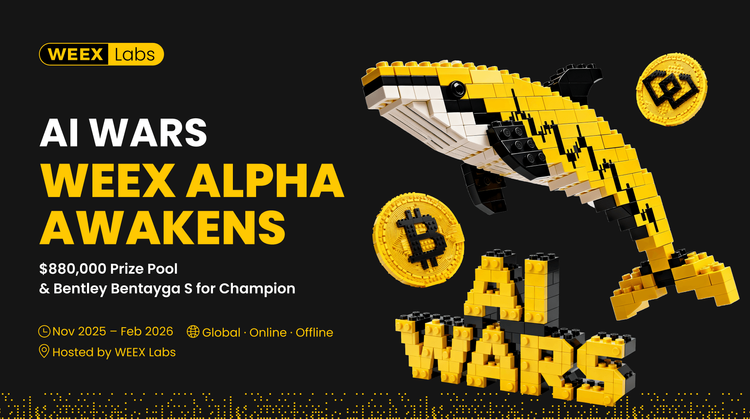
Приєднуйтесь до війн штучного інтелекту: WEEX Альфа пробуджується!Глобальний заклик до альфа-версій торгівлі зі штучним інтелектом
Війни ШІ: WEEX Alpha Awakens – це глобальний хакатон з торгівлі на основі штучного інтелекту в Дубаї, який запрошує квантові команди, алгоритмічних трейдерів та розробників штучного інтелекту розкрити свої стратегії торгівлі на основі штучного інтелекту в криптовалюті на реальних ринках та виграти частину призового фонду в розмірі 880 000 доларів США.

WEEX представляє платформу «Торгуй, щоб заробляти»: Миттєвий ребейт до 30% + викуп WXT на суму $2 млн
WEEX рада оголосити про запуск нашої програми «Trade to Earn», яка автоматично надає вам знижку на торговельні комісії до 30%. Усі винагороди зараховуються безпосередньо на ваш спотовий рахунок у $WXT, що підтримується нашим планом викупу WXT на суму $2 000 000, який сприяє довгостроковому зростанню вартості токенів.

Нове: Орієнтовна ціна ліквідації на графіках свічок у додатку
WEEX представила нову **Очікувану ліквідаційну ціну** (Est. Liq. Ціна) на графіку свічок, щоб допомогти трейдерам краще керувати ризиками та визначати безпечні діапазони для своїх позицій.
WEEXPERIENCE Ніч китів: ШІ-торгівля, криптоспільнота та аналітика крипторинку
12 грудня 2025 року WEEX провела WEEXPERIENCE Whales Night, офлайн-зустріч спільноти, призначену для об'єднання членів місцевої криптовалютної спільноти. Захід поєднував обмін контентом, інтерактивні ігри та презентації проектів, щоб створити невимушений, але водночас захопливий офлайн-досвід.
Ризик торгівлі криптовалютою за допомогою штучного інтелекту: Чому кращі стратегії криптовалютної торгівлі можуть призвести до більших збитків?
Ризик більше не полягає переважно в поганих рішеннях чи емоційних помилках. Воно дедалі більше проявляється в ринковій структурі, шляхах виконання та колективній поведінці. Розуміння цього зрушення важливіше, ніж пошук наступної «кращої» стратегії.
Чи замінюють агенти штучного інтелекту криптодослідження? Як автономний штучний інтелект змінює криптовалютну торгівлю
Штучний інтелект переходить від допомоги трейдерам до автоматизації всього процесу від дослідження до виконання на криптовалютних ринках. Перевага змістилася від людського розуміння до конвеєрів даних, швидкості та систем штучного інтелекту, готових до виконання, що робить затримки в інтеграції штучного інтелекту конкурентним недоліком.
Торговельні боти на основі штучного інтелекту та копіювання торгівлі: Як синхронізовані стратегії змінюють волатильність крипторинку
Роздрібні криптотрейдери вже давно стикаються з тими ж проблемами: погане управління ризиками, пізні входи, емоційні рішення та непослідовне виконання. Інструменти торгівлі на основі штучного інтелекту обіцяли рішення. Сьогодні системи копіювальної торгівлі на базі штучного інтелекту та боти для проривів допомагають трейдерам визначати розмір позицій, встановлювати стоп-стопи та діяти швидше, ніж будь-коли. Окрім швидкості та точності, ці інструменти непомітно змінюють ринки — трейдери не просто торгують розумніше, вони рухаються синхронно, створюючи нову динаміку, яка посилює як ризик, так і можливості.
Пояснення торгівлі криптовалютою за допомогою штучного інтелекту: Як автономна торгівля змінює крипторинки та криптобіржі
ШІ-трейдинг швидко змінює криптоландшафт. Традиційні стратегії намагаються встигати за безперервною волатильністю криптовалют та складною структурою ринку, тоді як штучний інтелект може обробляти величезні обсяги даних, генерувати адаптивні стратегії, керувати ризиками та виконувати угоди автономно. Ця стаття розповідає користувачам WEEX, що таке торгівля на основі штучного інтелекту, чому криптовалюта прискорює її впровадження, як галузь розвивається в напрямку автономних агентів і чому WEEX створює екосистему торгівлі на основі штучного інтелекту наступного покоління.
Заклик до участі у AI Wars: WEEX Alpha Awakens — Глобальні змагання зі штучного інтелекту з призовим фондом $880 000
Зараз ми закликаємо трейдерів, що використовують штучний інтелект, з усього світу приєднатися до AI Wars: WEEX Alpha Awakens — глобальні змагання з торгівлі на основі штучного інтелекту з призовим фондом у 880 000 доларів.
Популярні монети
Останні новини криптовалют


Підтримка клієнтів:@weikecs
Співпраця:@weikecs
Кількісна торгівля та маркетмейкінг:[email protected]
VIP-послуги:[email protected]
 App
App