
- Купити крипту
- Ринок
- Ф’ючерси
- Спот
- Копітрейдинг
 WE-Launch
Ray Dalio's Latest Interview: Current Market Resembles the 1930s in an "Amazing" Way, Three Major Orders Are Collapsing

Original Article Title: "Dalio's Latest Voice: Many Phenomena Today Are Astonishingly Similar to the 1930s"
Original Article Author: Smart Investor
“Systemic order breakdown happens once in a lifetime. Yet, in history, it has never been absent.”
“I do agree that ‘not making things is a big problem,’ but the question is, do we have the manufacturing capacity?”
Ray Dalio, the founder of Bridgewater Associates, posted an article on LinkedIn on April 7, discussing the issue of tariffs.
He stated that we are currently witnessing a typical breakdown of the monetary, political, and geopolitical order. This type of system breakdown occurs approximately once in a lifetime, but throughout history, whenever similar unsustainable conditions exist, they occur.
On April 8, Eastern Time, Ray Dalio was interviewed by CNBC, and in a 15-minute conversation, he once again emphasized his views. Faced with sharp questions from three top hosts, Dalio also spoke his mind.
He did not use buzzwords or pessimism, more like a seasoned mechanic, opening up the system, examining its structure, dismantling pressures, and attempting to answer a fundamental question: Can we still maintain the current operating mode?
In this interview, Dalio, using his consistent thinking framework, provided the essential background of the current discussion on tariffs: the three existing orders are disintegrating, and the five important forces in human history are always at work. “Tariffs are actually addressing the issue of global imbalance.”
He acknowledged, fully agreeing that “not making things is a big problem,” and also agreeing with the goal of reshoring manufacturing, “but, do we have the manufacturing capacity? This is a deeper structural issue.”
Dalio's sobering realization is that he dissects the U.S. population structure and finds the feasibility too challenging.
“Our population structure is like this: about 1% of people are extremely intelligent, they go to the best schools, come out and create ‘unicorn’ companies (of which about half are foreigners); then there are also 10% of people who do well; but there are 60% of the population with reading abilities below the sixth-grade level, it is very difficult for them to become productive participants in modern manufacturing.”
He further warned that many phenomena today are astonishingly similar to those of the 1930s.
Faced with such a tremendously uncertain market, Dalio finally provided ordinary investors with his own way of practice.
He emphasized that only when you are in a sufficiently secure financial position can you truly build a diversified investment portfolio that suits you. Cash may not necessarily be a good choice, as the investment goal must consider whether the purchasing power has been preserved through inflation adjustment.
Question 1: Ray, frankly, we are also trying to figure out what will happen next. So, if you could provide some historical perspective, or at least a historical reference framework, that would be great. How do you view the current situation?
Ray Dalio:
I think the reason we do not understand the current cycle is because such a cycle only occurs once in a lifetime. But there is an "order" in this, meaning there is a whole set of systems. The collapse of these systems is due to specific reasons, leading to cyclical changes.
For example, there is a monetary system, and then there is a debt cycle.
So the current situation is this: one person's debt is another person's asset.
When the entire system accumulates to an unsustainable level, debt issues arise—and we are now facing such debt issues.
Of course, this is part of the monetary cycle.
There is also a cycle of domestic political order, manifested by the transition from one political order to another, with usually intense opposition and turmoil between the left and right factions during this process.
Especially in democratic countries, continuous struggles occur due to the lack of order. The democratic system requires cooperation and compromise, and these mechanisms are gradually failing.
What we are experiencing is precisely this transition of political order.
In addition, there is a larger system—the international order.
This international order began in 1945, after the end of World War II. The victorious side—the dominant power—was able to establish rules.
At that time, a series of multilateral mechanisms were established, such as the United Nations, the World Trade Organization, the World Bank, etc.
But now, multilateralism is disintegrating, being replaced by unilateralism.
The reason is actually the same: structural problems have arisen within the system that are difficult to maintain.
Therefore, we can see that three major orders are disintegrating:
First, the Currency and Debt Order (too much debt, where debt is currency);
Second, the Internal Political Order (how our system functions? Who controls the issues?);
Third, the Changing International Order (the breakdown of interdependence).
Additionally, in human history, five other significant forces have always been at play, such as climate change and natural disasters; human innovation and the birth of new technologies, among others. The interaction of these forces is the backdrop to all we are experiencing now.
Returning to the issue of tariffs, tariffs are actually addressing the problem of global imbalances. Imbalance refers to both capital imbalances and trade imbalances, both of which are unsustainable.
At the same time, it also involves the issue of international conflicts. For example: How can the U.S. achieve national security without producing any goods? We rely on imports from China; and how can China ensure its own security while being highly dependent on U.S. capital? This interdependent relationship is being broken.
This is the essence of what we are currently discussing.
Question 2: As you mentioned, from a historical perspective, are these policies politically attractive? Are they popular in the U.S. or other countries? What about from an economic standpoint? We see the market rebounding today, but many have already lost 10% of their assets. What does this mean structurally?
Ray Dalio:
From a structural operational standpoint, this means: Costs will rise, corporate revenues will fall, and capital will become harder to obtain.
What does this mean for businesses? It means their operating costs will increase, revenue will decrease, and it will be more challenging to secure financing.
At the same time, we are still trying to rebuild the manufacturing sector.
I completely agree that "not making things is a big problem," and I agree with this goal. However, do we have the manufacturing capacity? This is a deeper structural issue.
Our population structure is as follows:
Approximately 1% of people are extremely bright, they attend the best schools, and after graduating, they create "unicorn" companies (about half of which are foreigners); then there are another 10% of people who are also doing well; but 60% of the population has a reading ability below the sixth-grade level, making it challenging for them to become productive participants in modern manufacturing.
We are in agreement on the issue itself, such as the problem of excessive debt. The Finance Minister and others also believe that we should keep the budget deficit within 3% of GDP.
However, the question is: How should we do it? When should we do it? How can we truly achieve "self-sufficiency" in this context?
From a practical standpoint, in the current demographic structure, educational level, cost of capital, and technological path, rebuilding manufacturing in the United States is very difficult. Yet it is indeed very necessary.
Question 3: So are you ultimately in support of the President's policies or against them? I want to understand what your conclusion really is and what position it expresses.
Ray Dalio:
I agree with the essence of this issue. But I am very concerned about the solution itself, namely its feasibility.
In other words, I think this will bring a series of problems, such as those I mentioned earlier: rising costs, falling incomes, difficulty in financing, and the impact on the capital markets.
Moreover, I believe this will also throw a monkey wrench into the entire global production system at a global level, hindering global supply chains and production efficiency.
At the same time, I also agree with the global interdependence, global production efficiency issues, and America's lack of competitiveness, which is a long-term, structural challenge, and I believe this will have political consequences.
This is the nature of the cycle. Now, everything is happening at a time when our fiscal budget situation is extremely dire.
Our current budget deficit problem is equally severe. Looking ahead a few months, we must reduce the budget deficit to around 3% of GDP.
But at the same time, we are pushing for a policy that will significantly increase costs and bring about various side effects. These issues are not easy to solve.
I am very concerned because of these deeper issues: the debt remains, the overspending remains, the lack of competitiveness remains, and they will not disappear just because of policy slogans.
These problems have been recurring throughout history, and we are currently in a very similar stage to the 1930s.
Question 4: But we really don't know how we will ultimately resolve these issues with China, do we?
Ray Dalio:
I am not an ideology-driven person. I am more like a mechanic doing the work of system diagnosis.
So when we talk about these issues, I am thinking in a "systemic perspective."
For example, I completely agree with what you just said: China's current manufacturing scale has surpassed the sum of the United States, Germany, and Japan. It is the world's most competitive manufacturing powerhouse.
At the same time, the United States has lost its manufacturing capability and has become the world's largest consumer.
We rely heavily on debt to fund our consumption, which has put us in a very, very difficult situation.
Question 5: In this situation, what does foreign investors buying U.S. Treasury bonds mean? How do you view short-term money supply and demand?
Ray Dalio:
Foreign investors, overall, have already allocated too much to debt assets in their portfolios.
And the scale of U.S. Treasury bonds we now need to sell to them is equivalent to 6.5% of GDP, an amount they are not willing to continue buying into.
Part of the reason is that they already hold too much; another reason is that the world is currently full of uncertainties, such as concerns about sanctions.
You see, these things actually happened in the 1930s.
At that time, conflicts between the U.S. and Japan, asset freezes, sanctions, and so on, these historical contexts are replaying.
The current situation is: an imbalance of supply and demand.
We have too much debt, and the market's willingness to buy is insufficient, which has led to an imbalance in the bond market.
Question 6: Do you think this will lead to an increase in interest rates? Because it seems that some of the Trump administration's plans are aimed at lowering interest rates, so as to reduce the cost of servicing our debt—just the interest alone cost nearly a trillion dollars last year. Do you think we can achieve this goal?
Ray Dalio:
You are right. But we need to understand that there are two ways to lower interest rates:
The first way is to achieve it by improving the supply-demand balance, which is a healthy way;
The second way is to forcefully lower interest rates by printing money.
The fluctuation of interest rates fundamentally stems from a balance of three parts: spending, taxation, and interest costs.
If the government can achieve a more balanced fiscal position, I don't care how they do it (this involves political choices), but if it can truly improve the bond market's supply-demand dynamics, then interest rates can decrease in a healthy, sustainable manner.
This can also help us achieve the goal of reducing the deficit to 3% of GDP.
But you cannot artificially lower interest rates by printing money; that is unsustainable and an unhealthy practice.
Question 7: So, let me ask you directly, as you look at the market now, what are your thoughts? Do you think the market is currently overvalued? Fairly valued? Or undervalued? Do you see this as a "falling knife" market or an "excellent buying opportunity"? How should the average person think about the current market environment?
Ray Dalio:
Some things are certain to happen, while others are possibilities. I don't want to say "now is a buying point" or "now is a selling point." I won't do that, and I never give market timing advice.
What I want to tell the general public is that you need a well-structured, balanced, diversified investment portfolio and a long-term investment plan that you can stick to.
In my years as an investor, I've experienced the 9/11 attack, the 2008 financial crisis... I've been through a lot.
Most importantly, you need to have a robust, diversified investment portfolio that can withstand changes in various environments.
I won't go into details.
But if you ask me, "How should I diversify my investments?" then first, you need to understand one thing: you need to be clear about what you don't know.
When you understand that you can't accurately time the market, you'll realize that relying solely on market timing is not a viable strategy. You'll end up being driven by emotional reactions.
When I didn't have much capital initially, here's what I did:
I would ask myself, "How much savings do I have right now? If I had no income starting tomorrow, how long could I survive on this money?"
I would first calculate how many months I could live on, and then calculate how many years I could sustain.
Then, I would ask myself: If asset values dropped by 50%, how long could I still survive?
Only when you are in a secure enough financial position can you truly build a diversified investment portfolio that suits you.
But there is a misconception here: Don't think that cash is safe.
In the long run, cash may be the worst investment decision you can make.
You must look at whether your purchasing power has been maintained—meaning your purchasing power adjusted for inflation.
For example, when the Federal Reserve lowers interest rates and starts printing money, the "price" of cash goes down, and your purchasing power is weakened.
This has happened in the past few years, and we should all be able to relate.
So let me summarize: Maintain a diversified investment portfolio; at the same time, pay close attention to our country's debt issues.
Вам також може сподобатися

WEEXPERIENCE Ніч китів: ШІ-торгівля, криптоспільнота та аналітика крипторинку
12 грудня 2025 року WEEX провела WEEXPERIENCE Whales Night, офлайн-зустріч спільноти, призначену для об'єднання членів місцевої криптовалютної спільноти. Захід поєднував обмін контентом, інтерактивні ігри та презентації проектів, щоб створити невимушений, але водночас захопливий офлайн-досвід.
Ризик торгівлі криптовалютою за допомогою штучного інтелекту: Чому кращі стратегії криптовалютної торгівлі можуть призвести до більших збитків?
Ризик більше не полягає переважно в поганих рішеннях чи емоційних помилках. Воно дедалі більше проявляється в ринковій структурі, шляхах виконання та колективній поведінці. Розуміння цього зрушення важливіше, ніж пошук наступної «кращої» стратегії.
Чи замінюють агенти штучного інтелекту криптодослідження? Як автономний штучний інтелект змінює криптовалютну торгівлю
Штучний інтелект переходить від допомоги трейдерам до автоматизації всього процесу від дослідження до виконання на криптовалютних ринках. Перевага змістилася від людського розуміння до конвеєрів даних, швидкості та систем штучного інтелекту, готових до виконання, що робить затримки в інтеграції штучного інтелекту конкурентним недоліком.
Торговельні боти на основі штучного інтелекту та копіювання торгівлі: Як синхронізовані стратегії змінюють волатильність крипторинку
Роздрібні криптотрейдери вже давно стикаються з тими ж проблемами: погане управління ризиками, пізні входи, емоційні рішення та непослідовне виконання. Інструменти торгівлі на основі штучного інтелекту обіцяли рішення. Сьогодні системи копіювальної торгівлі на базі штучного інтелекту та боти для проривів допомагають трейдерам визначати розмір позицій, встановлювати стоп-стопи та діяти швидше, ніж будь-коли. Окрім швидкості та точності, ці інструменти непомітно змінюють ринки — трейдери не просто торгують розумніше, вони рухаються синхронно, створюючи нову динаміку, яка посилює як ризик, так і можливості.
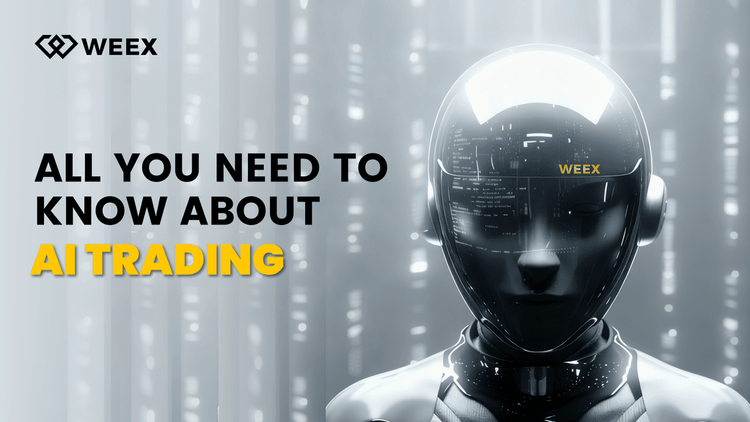
Пояснення торгівлі криптовалютою за допомогою штучного інтелекту: Як автономна торгівля змінює крипторинки та криптобіржі
ШІ-трейдинг швидко змінює криптоландшафт. Традиційні стратегії намагаються встигати за безперервною волатильністю криптовалют та складною структурою ринку, тоді як штучний інтелект може обробляти величезні обсяги даних, генерувати адаптивні стратегії, керувати ризиками та виконувати угоди автономно. Ця стаття розповідає користувачам WEEX, що таке торгівля на основі штучного інтелекту, чому криптовалюта прискорює її впровадження, як галузь розвивається в напрямку автономних агентів і чому WEEX створює екосистему торгівлі на основі штучного інтелекту наступного покоління.
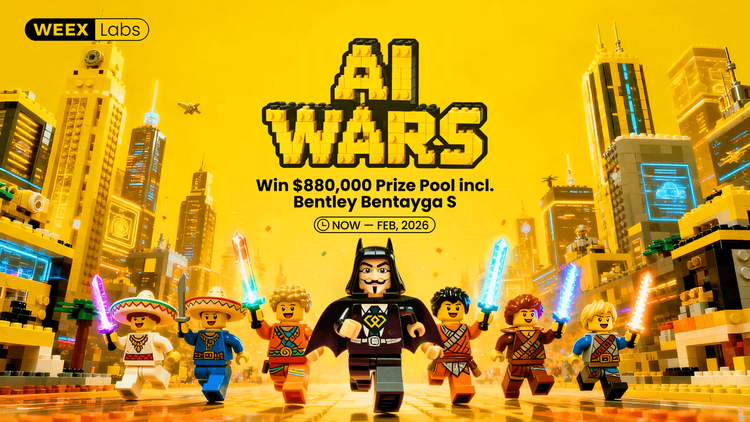
Заклик до участі у AI Wars: WEEX Alpha Awakens — Глобальні змагання зі штучного інтелекту з призовим фондом $880 000
Зараз ми закликаємо трейдерів, що використовують штучний інтелект, з усього світу приєднатися до AI Wars: WEEX Alpha Awakens — глобальні змагання з торгівлі на основі штучного інтелекту з призовим фондом у 880 000 доларів.
Торгівля на криптовалютних ринках за допомогою штучного інтелекту: Від автоматизованих торгових ботів до алгоритмічних стратегій
Торгівля на основі штучного інтелекту переводить криптовалюту з роздрібної спекуляції в конкуренцію інституційного рівня, де виконання та управління ризиками важливіші за напрямок. Зі зростанням торгівлі на базі штучного інтелекту зростають системні ризики та регуляторний тиск, що робить довгострокову ефективність, надійні системи та відповідність вимогам ключовими відмінними рисами.
Аналіз настроїв за допомогою ШІ та волатильність криптовалюти: Що впливає на ціни на криптовалюту
Настрої щодо штучного інтелекту дедалі більше впливають на криптовалютні ринки, а зміни в очікуваннях, пов'язаних зі штучним інтелектом, призводять до волатильності основних цифрових активів. Крипторинки схильні посилювати наративи штучного інтелекту, дозволяючи потокам, зумовленим настроями, переважати фундаментальні фактори в короткостроковій перспективі. Розуміння того, як формуються та поширюються настрої щодо ШІ, допомагає інвесторам краще передбачати цикли ризику та можливості позиціонування цифрових активів.
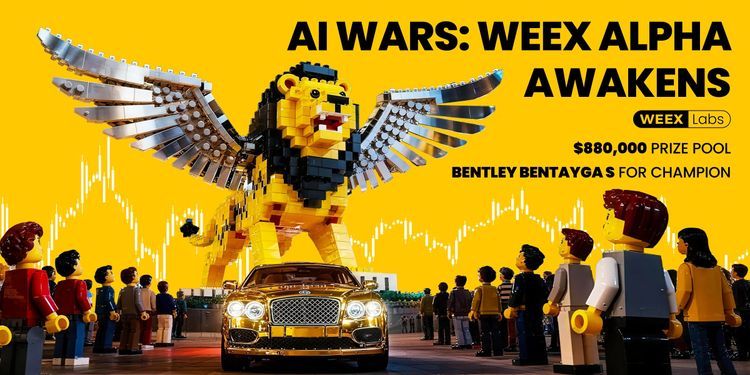
AI Wars: посібник учасника
У цьому фінальному протистоянні провідні розробники, квантові аналітики та трейдери з усього світу використають свої алгоритми в реальних ринкових битвах, змагаючись за один з наймасштабніших призових фондів в історії ШІ-криптотрейдингу: 880 000 дол. США, зокрема Bentley Bentayga S для чемпіона. Цей посібник проведе вас через кожен необхідний крок від реєстрації до офіційного початку змагань.

Тиждень центрального банку та волатильність криптовалютного ринку: Як рішення щодо процентних ставок формують умови торгівлі на WEEX
Рішення щодо процентних ставок, прийняті основними центральними банками, такими як Федеральна резервна система, є значними макроекономічними подіями, що впливають на світові фінансові ринки, безпосередньо впливаючи на очікування ліквідності ринку та схильність до ризику. У міру того, як ринок криптовалют продовжує розвиватися, а його торгова структура та учасники стають зрілими, крипторинок поступово інтегрується в макроекономічну систему ціноутворення.

Тестування WEEX API: Офіційний посібник з хакатону зі штучним інтелектом та API для криптовалютної торгівлі
Тестування API WEEX розроблено для того, щоб кожен учасник міг перетворити торговельну логіку на реальне виконання. Усі взаємодії API відбуваються в системі живої торгівлі WEEX, що дозволяє учасникам працювати в реальних ринкових умовах, а не в симуляціях. Завдяки низьким вступним вимогам, це завдання доступне як для досвідчених розробників, так і для мотивованих новачків, водночас підтверджуючи необхідні технічні навички.
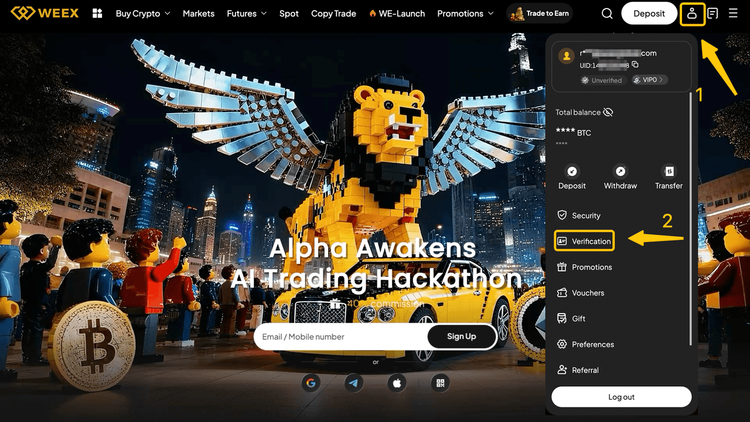
Війни ШІ: Тест для учасників
Частина 1: Рекомендований метод (хмарні сервери)
Для найкращої стабільності ми наполегливо рекомендуємо використовувати хмарний сервер зі статичною публічною IP-адресою та підтримкою цілодобової безперебійної роботи, наприклад: AWS (Amazon Web Services), Alibaba Cloud та Tencent Cloud.
**Частина 2:** Альтернативний метод (локальний комп’ютер)
Якщо ви вирішите запускати свого торгового бота з персонального комп’ютера або домашньої мережі, ви **повинні** підтвердити, що ваша вихідна IP-адреса є статичною. Зміна IP-адреси призведе до проблем із підключенням.
У вас є два основні варіанти для забезпечення стабільної вихідної IP-адреси:
Використовуйте статичну IP-адресу, надану вашим інтернет-провайдером (ISP).Використовуйте VPN або проксі-сервіс з фіксованою вихідною IP-адресою (і переконайтеся, що VPN/проксі постійно ввімкнено без перемикання серверів).Кроки для пошуку вашої локальної публічної IP-адреси:
Вимкніть усі VPN або залиште лише ту VPN, IP-адресу якої ви плануєте додати до білого списку.Відвідайте whatismyip.com у вашому браузері.На сторінці буде відображено вашу публічну IPv4-адресу.Скопіюйте цю IP-адресу та додайте її до білого списку.Примітка: Більшість домашніх широкосмугових IPv4-адрес є динамічними та можуть періодично змінюватися. Наполегливо рекомендується використовувати хмарне серверне середовище, щоб уникнути збоїв з’єднання під час змагань.
1.3 Бракує інформації? Ми будемо стежити за ситуацієюПісля того, як ви надішлете свою BUIDL, команда WEEX розгляне вашу заявку на основі вимог конкурсу. Процес перевірки зазвичай триває один робочий день.
Якщо якась інформація відсутня або потребує уточнення, наша команда зв’яжеться з вами одним із наступних каналів:
Система обміну повідомленнями DoraHacksОфіційна система повідомлень WEEXВаша зареєстрована контактна інформація (Telegram, X тощо)Будь ласка, тримайте свої контактні дані активними та доступними.
Після схвалення вашого BUIDL ви отримаєте свій аккаунт для участі в змаганнях та ексклюзивний ключ API, який дозволить вам перейти до наступного етапу: Тестування API та інтеграція моделей.
. Будь ласка, уважно прочитайте офіційну документацію WEEX API: https://www.weex.com/api-doc/ai/intro
2. Підключіться до хмарного сервера та запустіть код нижче. Ви повинні отримати відповідь, яка підтверджує, чи ваше мережеве з’єднання працює належним чином.
curl -s --max-time 10 "https://api-contract.weex.com/capi/v2/market/time"{"epoch":"1765423487.896","iso":"2025-12-11T03:24:47.896Z","timstamp":1765423487896
2. Підключіться до хмарного сервера та запустіть код нижче. Ви повинні отримати відповідь, яка підтверджує, чи ваше мережеве з’єднання працює належним чином.
import time import hmac import hashlib import base64 import requests api_key = "" secret_key = "" access_passphrase = "" def generate_signature_get(secret_key, timestamp, method, request_path, query_string): message = timestamp + method.upper() + request_path + query_string signature = hmac.new(secret_key.encode(), message.encode(), hashlib.sha256).digest() return base64.b64encode(signature).decode() def send_request_get(api_key, secret_key, access_passphrase, method, request_path, query_string): timestamp = str(int(time.time() * 1000)) signature = generate_signature_get(secret_key, timestamp, method, request_path, query_string) headers = { "ACCESS-KEY": api_key, "ACCESS-SIGN": signature, "ACCESS-TIMESTAMP": позначка часу, "ACCESS-PASSPHRASE": пароль_доступу, "Content-Type": "додаток/json", "локалізація": "uk-US" } url = "https://api-contract.weex.com/" # Будь ласка, замініть фактичною адресою API if method == "GET": response = requests.get(url + request_path+query_string, headers=headers) return response def assets(): request_path = "/capi/v2/account/assets" query_string = "" response = send_request_get(api_key, secret_key, access_passphrase, "GET", request_path, query_string) print(response.status_code) print(response.text) if __name__ == '__main__': assets()
Чому WEEX Alpha Awakens – найкраще змагання з торгівлі на основі штучного інтелекту 2025 року? Все, що вам потрібно знати
Щоб пришвидшити прориви на перетині штучного інтелекту та криптовалют, WEEX запускає перший у світі глобальний хакатон з торгівлі на основі штучного інтелекту — AI Wars: Альфа пробуджується. Призовий фонд заходу перевищує 880 000 доларів США, включаючи Bentley Bentayga S для абсолютного чемпіона.
Війни ШІ: WEEX Alpha Awakens | Посібник з процесу тестування API WEEX Global Hackathon
Війни ШІ: Реєстрація на WEEX Alpha Awakens вже відкрита, і в цьому посібнику описано, як отримати доступ до тестування API та успішно завершити процес.
Що таке WEEX Alpha Awakens і як взяти участь? Повний посібник
Щоб пришвидшити прориви на перетині штучного інтелекту та криптовалют, WEEX запускає перший у світі глобальний хакатон з торгівлі на основі штучного інтелекту — AI Wars: Альфа пробуджується.
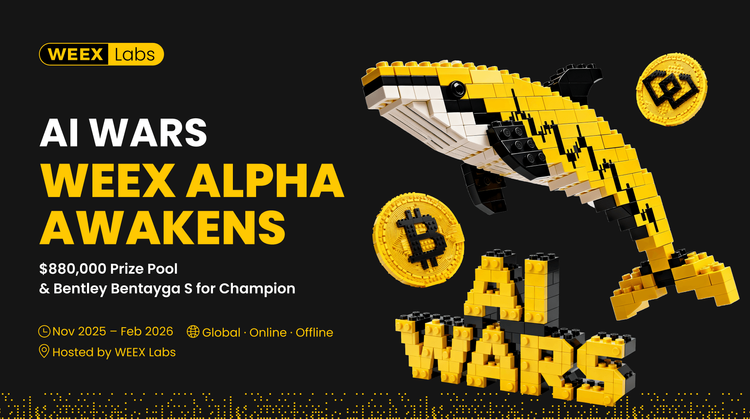
Приєднуйтесь до війн штучного інтелекту: WEEX Альфа пробуджується!Глобальний заклик до альфа-версій торгівлі зі штучним інтелектом
Війни ШІ: WEEX Alpha Awakens – це глобальний хакатон з торгівлі на основі штучного інтелекту в Дубаї, який запрошує квантові команди, алгоритмічних трейдерів та розробників штучного інтелекту розкрити свої стратегії торгівлі на основі штучного інтелекту в криптовалюті на реальних ринках та виграти частину призового фонду в розмірі 880 000 доларів США.
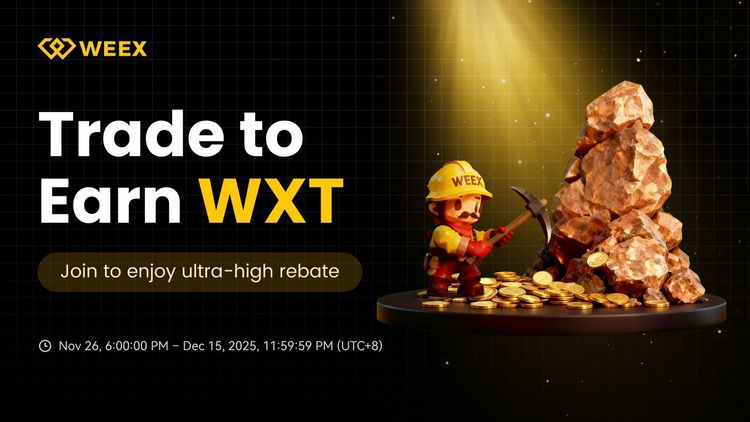
WEEX представляє платформу «Торгуй, щоб заробляти»: Миттєвий ребейт до 30% + викуп WXT на суму $2 млн
WEEX рада оголосити про запуск нашої програми «Trade to Earn», яка автоматично надає вам знижку на торговельні комісії до 30%. Усі винагороди зараховуються безпосередньо на ваш спотовий рахунок у $WXT, що підтримується нашим планом викупу WXT на суму $2 000 000, який сприяє довгостроковому зростанню вартості токенів.

Нове: Орієнтовна ціна ліквідації на графіках свічок у додатку
WEEX представила нову **Очікувану ліквідаційну ціну** (Est. Liq. Ціна) на графіку свічок, щоб допомогти трейдерам краще керувати ризиками та визначати безпечні діапазони для своїх позицій.
WEEXPERIENCE Ніч китів: ШІ-торгівля, криптоспільнота та аналітика крипторинку
12 грудня 2025 року WEEX провела WEEXPERIENCE Whales Night, офлайн-зустріч спільноти, призначену для об'єднання членів місцевої криптовалютної спільноти. Захід поєднував обмін контентом, інтерактивні ігри та презентації проектів, щоб створити невимушений, але водночас захопливий офлайн-досвід.
Ризик торгівлі криптовалютою за допомогою штучного інтелекту: Чому кращі стратегії криптовалютної торгівлі можуть призвести до більших збитків?
Ризик більше не полягає переважно в поганих рішеннях чи емоційних помилках. Воно дедалі більше проявляється в ринковій структурі, шляхах виконання та колективній поведінці. Розуміння цього зрушення важливіше, ніж пошук наступної «кращої» стратегії.
Чи замінюють агенти штучного інтелекту криптодослідження? Як автономний штучний інтелект змінює криптовалютну торгівлю
Штучний інтелект переходить від допомоги трейдерам до автоматизації всього процесу від дослідження до виконання на криптовалютних ринках. Перевага змістилася від людського розуміння до конвеєрів даних, швидкості та систем штучного інтелекту, готових до виконання, що робить затримки в інтеграції штучного інтелекту конкурентним недоліком.
Торговельні боти на основі штучного інтелекту та копіювання торгівлі: Як синхронізовані стратегії змінюють волатильність крипторинку
Роздрібні криптотрейдери вже давно стикаються з тими ж проблемами: погане управління ризиками, пізні входи, емоційні рішення та непослідовне виконання. Інструменти торгівлі на основі штучного інтелекту обіцяли рішення. Сьогодні системи копіювальної торгівлі на базі штучного інтелекту та боти для проривів допомагають трейдерам визначати розмір позицій, встановлювати стоп-стопи та діяти швидше, ніж будь-коли. Окрім швидкості та точності, ці інструменти непомітно змінюють ринки — трейдери не просто торгують розумніше, вони рухаються синхронно, створюючи нову динаміку, яка посилює як ризик, так і можливості.
Пояснення торгівлі криптовалютою за допомогою штучного інтелекту: Як автономна торгівля змінює крипторинки та криптобіржі
ШІ-трейдинг швидко змінює криптоландшафт. Традиційні стратегії намагаються встигати за безперервною волатильністю криптовалют та складною структурою ринку, тоді як штучний інтелект може обробляти величезні обсяги даних, генерувати адаптивні стратегії, керувати ризиками та виконувати угоди автономно. Ця стаття розповідає користувачам WEEX, що таке торгівля на основі штучного інтелекту, чому криптовалюта прискорює її впровадження, як галузь розвивається в напрямку автономних агентів і чому WEEX створює екосистему торгівлі на основі штучного інтелекту наступного покоління.
Заклик до участі у AI Wars: WEEX Alpha Awakens — Глобальні змагання зі штучного інтелекту з призовим фондом $880 000
Зараз ми закликаємо трейдерів, що використовують штучний інтелект, з усього світу приєднатися до AI Wars: WEEX Alpha Awakens — глобальні змагання з торгівлі на основі штучного інтелекту з призовим фондом у 880 000 доларів.
Популярні монети
Останні новини криптовалют


Підтримка клієнтів:@weikecs
Співпраця:@weikecs
Кількісна торгівля та маркетмейкінг:[email protected]
VIP-послуги:[email protected]
 App
App