
- Купити крипту
- Ринок
- Ф’ючерси
- Спот
- Копітрейдинг
 WE-Launch
What If Quantum Computers Have Already Cracked Bitcoin’s Security?

Imagine waking up one day to find your Bitcoin holdings vanishing into thin air, not through some dramatic hack, but quietly, as if you yourself decided to move them. That’s the chilling scenario experts warn about if quantum computers secretly break through Bitcoin’s defenses. A machine powerful enough to shatter current encryption could siphon off coins while the network hums along normally, leaving everyone none the wiser. As we sit here in 2025, with quantum tech advancing rapidly, this isn’t just science fiction—it’s a ticking time bomb that could upend the crypto world.
David Carvalho, a leader in post-quantum infrastructure, paints a stark picture: “Everything would appear as valid access,” he explains. “By the time you spot a quantum threat, it might have been lurking for months.” You wouldn’t notice a thing. Labs at giants like IBM and Google, along with government-funded efforts, are hustling to bridge this vulnerability gap. The U.S. National Institute of Standards and Technology (NIST) has rolled out several post-quantum algorithms since 2024, yet many blockchains still cling to outdated 1980s encryption. For now, it’s hypothetical, but if it turns real, Bitcoin’s shields could collapse quicker than the community could rally.
How Quantum Attacks Could Shatter Bitcoin Encryption
At Bitcoin’s heart lies the Elliptic Curve Digital Signature Algorithm (ECDSA), a cryptographic backbone dating back to 1985. It lets you prove wallet ownership via a private key, while only the public key shows up on the blockchain. Enter Shor’s algorithm: a quantum computing method that could, in theory, reverse-engineer that private key from the public one on a sufficiently advanced machine. Suddenly, any exposed public key—think early Bitcoin transactions—becomes fair game for thieves.
“It’d be undetectable because it mimics legitimate entry,” Carvalho notes. You’d just see funds shifting as if the owners chose to spend them. Kapil Dhiman, behind a quantum-focused blockchain initiative, highlights the prime targets: “Those ancient wallets, like Satoshi’s untouched stash, would be easy pickings.” If they stir, trust in Bitcoin could evaporate overnight, even as the chain keeps chugging. Blocks mine on, the ledger stays whole, but control slips away silently.
Contrast this with today’s reality: enhanced GPUs and smarter algorithms nudge brute-force attacks forward, but Bitcoin’s 256-bit ECDSA keys remain out of classical computers’ grasp. Still, as of October 2025, quantum milestones like Google’s recent claim of quantum supremacy in error-corrected systems (announced in a September 2025 paper) amp up the urgency. It’s like comparing a locked safe to a glass door—quantum tech could smash right through.
Bitcoin Lags Behind Traditional Finance in Post-Quantum Defenses
While banks and governments gear up for the quantum era, Bitcoin and its peers drag their feet on 1980s tech. “Blockchains know this encryption flaw is a core weakness,” Dhiman says, pointing to quantum computers’ potential to dismantle ECDSA. Upgrading Bitcoin demands a network-wide consensus revamp, involving miners, devs, and users— no small feat.
Proposals like Bitcoin Improvement Proposal 360 sketch paths to quantum-resistant crypto, and ideas for sunsetting old signatures are floating around. Ethereum folks have toyed with lattice-based options, but implementation lags. Meanwhile, traditional finance surges ahead: NIST’s 2024 approvals expanded in 2025 with fresh standards like ML-KEM and SLH-DSA, per their October 2025 update. Even players like JPMorgan have piloted quantum-safe ledgers.
“TradFi has the edge with centralized control and resources for swift changes,” Carvalho observes. “Crypto’s decentralized nature means consensus slows everything.” Newer chains are stepping up, baking in NIST-approved hash-based signatures from the start, proving quantum-secure systems aren’t just possible—they’re here.
In this evolving landscape, platforms like WEEX exchange stand out by prioritizing cutting-edge security that aligns with post-quantum standards, ensuring users trade Bitcoin and other assets with confidence. WEEX’s commitment to robust, forward-thinking infrastructure not only protects against emerging threats but also builds trust through seamless, user-focused features that make crypto accessible and secure for everyone.
The Fallout If Bitcoin Fails the Quantum Challenge
For everyday holders, the real nightmare is a confidence crash, tanking prices and shaking markets amid rising institutional crypto adoption. “There’s a slim chance it’s already happening,” Carvalho cautions, citing scientific consensus that it’s unlikely—but not impossible. He draws a parallel to the Enigma code in World War II: deemed unbreakable, yet secretly cracked by Alan Turing’s team, who kept it hush to exploit the edge.
“When a quantum system emerges publicly, it might have dominated quietly for months,” he warns. Yet hope persists: “Quantum-secure blockchains are within reach,” Dhiman affirms. “We must build them now.” As of October 2025, Twitter buzzes with discussions—posts from crypto influencers like @CryptoWhale alert over 500K followers to NIST’s latest approvals, sparking threads on quantum risks. Google searches spike for “quantum threat to Bitcoin 2025,” with users questioning timelines, often linking to official announcements like IBM’s Q3 2025 quantum roadmap revealing scalable qubit advances. Recent updates, including a U.S. government advisory on October 15, 2025, urge accelerated post-quantum migrations, fueling debates on forums about Bitcoin’s vulnerability window shrinking to 2030 or sooner.
Experts compare it to upgrading from an old lock to a biometric vault: delay too long, and you’re exposed. Real-world evidence? The 2025 quantum simulation attacks on scaled-down ECDSA keys by researchers at MIT, proving Shor’s algorithm works in practice, underscore the need for action. It’s not speculation—data from these breakthroughs shows the threat is closing in, pushing the industry toward resilient designs that safeguard your investments.
FAQ
What is the biggest quantum threat to Bitcoin right now?
The main risk comes from Shor’s algorithm potentially cracking ECDSA encryption, allowing attackers to steal private keys from public ones. As of 2025, no quantum computer can do this at scale, but progress in qubit stability makes it a growing concern.
How can I protect my Bitcoin from quantum attacks?
Move funds to wallets with unexposed public keys and stay updated on network upgrades. Consider platforms integrating post-quantum tech for added security, and diversify into quantum-resistant assets to mitigate risks.
When will quantum computers actually break Bitcoin?
Experts estimate 2030-2035 based on current trends, like Google’s 2025 quantum advancements. However, timelines vary; ongoing NIST standards and blockchain proposals aim to fortify defenses before then.
Вам також може сподобатися
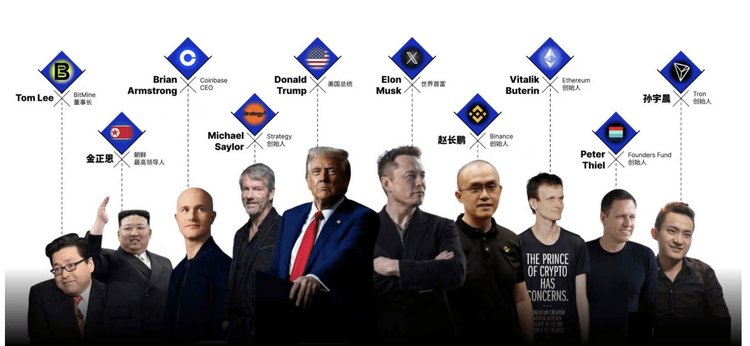
Десять людей, які переосмислюють межі влади криптовалют у 2025 році
Від Волл-стріт до Білого дому, від Кремнієвої долини до Шеньчженя формується нова енергомережа.

Торгівля на криптовалютних ринках за допомогою штучного інтелекту: Від автоматизованих торгових ботів до алгоритмічних стратегій
Торгівля на основі штучного інтелекту переводить криптовалюту з роздрібної спекуляції в конкуренцію інституційного рівня, де виконання та управління ризиками важливіші за напрямок. Зі зростанням торгівлі на базі штучного інтелекту зростають системні ризики та регуляторний тиск, що робить довгострокову ефективність, надійні системи та відповідність вимогам ключовими відмінними рисами.

Аналіз настроїв за допомогою ШІ та волатильність криптовалюти: Що впливає на ціни на криптовалюту
Настрої щодо штучного інтелекту дедалі більше впливають на криптовалютні ринки, а зміни в очікуваннях, пов'язаних зі штучним інтелектом, призводять до волатильності основних цифрових активів. Крипторинки схильні посилювати наративи штучного інтелекту, дозволяючи потокам, зумовленим настроями, переважати фундаментальні фактори в короткостроковій перспективі. Розуміння того, як формуються та поширюються настрої щодо ШІ, допомагає інвесторам краще передбачати цикли ризику та можливості позиціонування цифрових активів.

Огляд крипторинку за листопад 2025 року: Корекція цін, погашення ETF та розвиток ландшафту блокчейну
У листопаді 2025 року відбулася виражена волатильність та структурна корекція в ширшій екосистемі блокчейну, головним чином через коливання макроекономічних прогнозів та динаміку потоків капіталу.

WEEX на Blockchain Life 2025: Об'єднання громад та стимулювання інновацій у Дубаї
Участь WEEX у Blockchain Life 2025 стала важливою віхою на нашому шляху до того, щоб стати світовим лідером у крипто-просторі. Продовжуючи розширювати нашу діяльність, ми залишаємося відданими створенню більшої ліквідності та більших можливостей для трейдерів, лідерів думок та всієї спільноти блокчейнів.

Чи досягне біткойн позначки в 200 000 доларів у 2025 році? Аналітик називає це «дуже малоймовірним»
Якщо поглянути на ситуацію на ринку криптовалют на сьогоднішній день, 5 серпня 2025 року, біткойн продовжує приваблювати інвесторів...
Bitfarms запускає програму викупу 10% акцій, вважає акції недооціненими на тлі повороту AI
Уявіть собі компанію, яка не просто катається на хвилі видобутку біткойнів, але сміливо рухається в майбутнє...
Біткойн готується до значного зростання в 2026 році, оскільки традиційний чотирирічний цикл втрачає силу, прогнозує CIO Bitwise
Уявіть, що біткойн звільнився від своїх старих ритмів, подібно до досвідченого спортсмена, який відмовився від передбачуваної тренувальної програми...
Сатоші-Ера Біткойн Кіт Кешує 80,000 BTC за 9 мільярдів доларів через Galaxy Digital на фоні зростаючої волатильності
Сатоші-Ера Біткойн Кіт Кешує 80,000 BTC за 9 мільярдів доларів через Galaxy Digital на фоні зростаючої волатильності
Divine Research запускає незабезпечені криптопозики на основі World ID Сема Альтмана станом на 5 серпня 2025 року
Уявіть собі, що ви заходите у світ, де звичайні люди, від вчителів середньої школи до продавців фруктів, можуть отримати швидкі позики...
Роберт Кіосакі видав нове попередження про ризики, пов'язані з біткойнами, золотом і сріблом ETF станом на 5 серпня 2025 року
Відомий інвестор і фінансовий гуру Роберт Кіосакі знову забив на сполох щодо небезпек, що чатують у…
Найбільша торговельна угода викликає сплеск Біткоїна: 5 ключових висновків для цього тижня в криптовалютах
Коли ми вступаємо в перший повний тиждень серпня 2025 року — зокрема, 5 серпня 2025 року — Біткоїн…
Десять людей, які переосмислюють межі влади криптовалют у 2025 році
Від Волл-стріт до Білого дому, від Кремнієвої долини до Шеньчженя формується нова енергомережа.
Торгівля на криптовалютних ринках за допомогою штучного інтелекту: Від автоматизованих торгових ботів до алгоритмічних стратегій
Торгівля на основі штучного інтелекту переводить криптовалюту з роздрібної спекуляції в конкуренцію інституційного рівня, де виконання та управління ризиками важливіші за напрямок. Зі зростанням торгівлі на базі штучного інтелекту зростають системні ризики та регуляторний тиск, що робить довгострокову ефективність, надійні системи та відповідність вимогам ключовими відмінними рисами.
Аналіз настроїв за допомогою ШІ та волатильність криптовалюти: Що впливає на ціни на криптовалюту
Настрої щодо штучного інтелекту дедалі більше впливають на криптовалютні ринки, а зміни в очікуваннях, пов'язаних зі штучним інтелектом, призводять до волатильності основних цифрових активів. Крипторинки схильні посилювати наративи штучного інтелекту, дозволяючи потокам, зумовленим настроями, переважати фундаментальні фактори в короткостроковій перспективі. Розуміння того, як формуються та поширюються настрої щодо ШІ, допомагає інвесторам краще передбачати цикли ризику та можливості позиціонування цифрових активів.
Огляд крипторинку за листопад 2025 року: Корекція цін, погашення ETF та розвиток ландшафту блокчейну
У листопаді 2025 року відбулася виражена волатильність та структурна корекція в ширшій екосистемі блокчейну, головним чином через коливання макроекономічних прогнозів та динаміку потоків капіталу.
WEEX на Blockchain Life 2025: Об'єднання громад та стимулювання інновацій у Дубаї
Участь WEEX у Blockchain Life 2025 стала важливою віхою на нашому шляху до того, щоб стати світовим лідером у крипто-просторі. Продовжуючи розширювати нашу діяльність, ми залишаємося відданими створенню більшої ліквідності та більших можливостей для трейдерів, лідерів думок та всієї спільноти блокчейнів.
Чи досягне біткойн позначки в 200 000 доларів у 2025 році? Аналітик називає це «дуже малоймовірним»
Якщо поглянути на ситуацію на ринку криптовалют на сьогоднішній день, 5 серпня 2025 року, біткойн продовжує приваблювати інвесторів...
Популярні монети
Останні новини криптовалют


Підтримка клієнтів:@weikecs
Співпраця:@weikecs
Кількісна торгівля та маркетмейкінг:[email protected]
VIP-послуги:[email protected]
 App
App