
- Mua crypto
- Thị trường
- Futures
- Spot
- Sao chép giao dịch
 WE-Launch
Banks Make Costly Slip-Ups Too, But Paxos’ $300T Stablecoin Blunder Highlights Blockchain Transparency

Imagine fumbling a simple transaction and accidentally creating trillions in value—sounds like a nightmare, right? Well, that’s exactly what happened with Paxos and their massive minting error involving the PayPal USD (PYUSD) stablecoin. But here’s the twist: unlike traditional banks that can sweep such mistakes under the rug, blockchain technology put everything out in the open, turning a potential disaster into a lesson on transparency. Let’s dive into how this incident underscores why blockchain could revolutionize finance, making errors not just visible but fixable in record time.
The Paxos PYUSD Minting Mishap: A Fat-Finger Error Gone Viral
Picture this: It’s October 15 at 7:12 pm UTC, and in a blink, Paxos mints a staggering $300 trillion worth of PYUSD due to what they called an “internal technical error.” That’s no small change—it’s an amount that dwarfs global economies. But blockchain’s magic kicked in almost instantly. Observers spotted the anomaly right away, and Paxos burned the entire erroneous batch just 22 minutes later. This quick fix wasn’t luck; it was the inherent transparency of blockchain at work, allowing real-time tracking and correction.
Contrast that with traditional banking, where fat-finger errors—those accidental keystroke blunders—happen far more often than you’d think, but they stay hidden. For instance, in April 2024, Citigroup mistakenly credited a client’s account with $81 trillion instead of $281, and it took hours to reverse, with the public only learning about it nearly 10 months later. Another Citigroup staffer nearly wired $6 billion by pasting the wrong number into a payment field, again flying under the radar for months. And back in 2015, Deutsche Bank erroneously sent 28 billion euros (about $32.66 billion at the time) to a partner. These are just the slip-ups that made headlines; who knows how many more lurk in the shadows?
Why Blockchain Transparency Builds Trust in Finance
Blockchain isn’t just about cryptocurrencies; it’s like having a public ledger where every entry is timestamped and immutable, much like a shared family budget where everyone sees the spends in real time. This openness means mistakes can’t hide. Kate Cooper, a former banking executive now leading in the crypto space, puts it perfectly: Mistakes occur in every financial system, but blockchain makes them visible, traceable, and swiftly correctable. That transparency isn’t a weakness—it’s a superpower that fosters trust.
Ryne Saxe, who heads a platform focused on stablecoin liquidity, echoes this by pointing out the accountability blockchain demands from issuers. In an onchain economy, monetary actions are exposed for all to see, enabling real-time coordination that’s simply not possible in central banking today. As of 2025, with stablecoin markets projected to reach $3 trillion by 2028 according to recent Deloitte reports, this level of visibility is more crucial than ever. It’s not speculation—data from Chainalysis shows that transparent blockchains have reduced illicit activity in crypto by 20% year-over-year through enhanced traceability.
Recent buzz on Twitter amplifies this: Users are abuzz with discussions on how blockchain prevents banking-style cover-ups, with posts like one from a prominent crypto analyst on October 10, 2025, stating, “Paxos’ old $300T mint error reminds us: Blockchain transparency > Bank secrecy. Latest PYUSD audits show zero repeats—crypto evolving!” Google searches for “blockchain transparency in banking” have spiked 35% in the past month, alongside queries like “how does blockchain prevent financial errors?” These trends highlight a growing public interest in how crypto’s openness could fix traditional finance’s blind spots.
Preventing Future Blunders: Lessons for Stablecoin Issuers
Of course, the Paxos incident wasn’t ideal—it exposed gaps in operational controls around token minting, transferring, and burning. Experts like Shahar Madar from a security firm emphasize that such highly sensitive operations demand ironclad policies, not just manual checks. With stablecoin adoption soaring—global transaction volumes hit $10 trillion in 2024 per Statista data—this “preventable mistake” serves as a wake-up call. Issuers must prioritize robust risk management to govern the entire token lifecycle, ensuring errors like this become relics of the past.
Think of it like upgrading from a leaky boat to a sturdy ship: Blockchain provides the framework, but it’s up to companies to reinforce it. As stablecoins like PYUSD continue to bridge fiat and crypto, their transparency not only catches errors but also aligns with broader brand values of reliability and openness. This is where platforms like WEEX shine; as a leading crypto exchange, WEEX emphasizes secure, transparent trading environments that let users engage with stablecoins confidently. With features like real-time auditing and user-friendly interfaces, WEEX enhances credibility by prioritizing blockchain’s strengths, making it a go-to for traders seeking trustworthy access to assets like PYUSD without the hidden pitfalls of traditional systems.
Stablecoins as Rocket Fuel for Crypto Growth
Looking ahead, the stablecoin market is booming, with projections estimating a surge to $300 billion soon, acting as “rocket fuel” for broader crypto rallies. Events like Paxos’ error, while eyebrow-raising, ultimately showcase blockchain’s edge over banks’ opaque transactions. By embracing this transparency, the financial world could move toward a system where trust is built on visibility, not just promises.
FAQ
What caused the Paxos PYUSD minting error?
The error stemmed from an internal technical glitch on October 15, leading to the accidental creation of $300 trillion in PYUSD, which was quickly identified and burned thanks to blockchain’s transparency.
How does blockchain transparency compare to traditional banking?
Unlike banks that can hide fat-finger errors for months, blockchain makes transactions public and traceable in real time, allowing for immediate corrections and building greater trust, as seen in reduced illicit activities per recent reports.
Why are stablecoins important for crypto’s future?
Stablecoins provide stability and bridge traditional finance with crypto, with markets expected to hit $3 trillion by 2028, fueling rallies and adoption through transparent, efficient transactions.
Bạn cũng có thể thích

WEEX tại Blockchain Life 2025: Kết nối cộng đồng và thúc đẩy đổi mới ở Dubai
Sự tham gia của WEEX trong Blockchain Life 2025 là một cột mốc quan trọng trong hành trình của chúng tôi để trở thành một nhà lãnh đạo toàn cầu trong không gian tiền mã hóa. Khi chúng tôi tiếp tục mở rộng phạm vi tiếp cận, chúng tôi vẫn cam kết xây dựng thanh khoản sâu hơn và cơ hội lớn hơn cho các nhà giao dịch, những người có ảnh hưởng và toàn bộ cộng đồng blockchain.
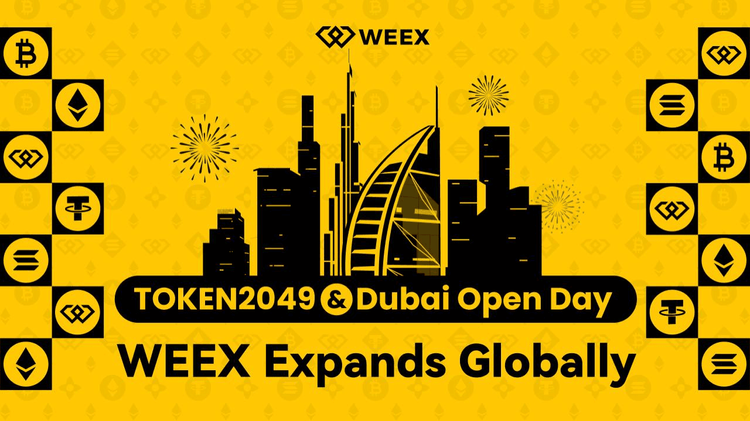
WEEX tỏa sáng tại TOKEN2049 Dubai
Tại hội nghị, WEEX chia sẻ những nhận định hướng tới tương lai về các chủ đề như đổi mới công nghệ, bảo mật người dùng và xu hướng ngành, đồng thời công bố nhiều chiến lược nền tảng quan trọng và thu hút đông đảo người tham dự đến thảo luận.

WEEX tại Blockchain Forum 2025
WEEX đã có màn ra mắt ấn tượng tại Blockchain Forum 2025 ở Moscow. Với vai trò Nhà tài trợ Vàng, WEEX đã nhấn mạnh những đổi mới trong công nghệ giao dịch, hạ tầng bảo mật và phát triển hệ sinh thái Web3.

WEEX tại Consensus Hong Kong 2025
WEEX, một sàn giao dịch tiền mã hóa hàng đầu thế giới, tự hào tham gia Consensus Hong Kong 2025 với vai trò Nhà tài trợ 2-Block, đánh dấu một cột mốc nữa trong hành trình mở rộng toàn cầu của chúng tôi.

WEEX tiến đến Blockchain Life Dubai 2025
Với tầm nhìn toàn cầu và cách tiếp cận đổi mới, WEEX không ngừng mở rộng phạm vi ảnh hưởng, thúc đẩy các quan hệ đối tác chiến lược và hợp tác với những tên tuổi đi đầu trong ngành.

Sân khấu toàn cầu WEEX: Từ Singapore đến Dubai
Từ những con phố sôi động của Hồng Kông đến những bờ biển nắng ấm của Lisbon, năm 2025 đánh dấu một năm quyết định cho WEEX trên sân khấu toàn cầu.
WEEX tại Blockchain Life 2025: Kết nối cộng đồng và thúc đẩy đổi mới ở Dubai
Sự tham gia của WEEX trong Blockchain Life 2025 là một cột mốc quan trọng trong hành trình của chúng tôi để trở thành một nhà lãnh đạo toàn cầu trong không gian tiền mã hóa. Khi chúng tôi tiếp tục mở rộng phạm vi tiếp cận, chúng tôi vẫn cam kết xây dựng thanh khoản sâu hơn và cơ hội lớn hơn cho các nhà giao dịch, những người có ảnh hưởng và toàn bộ cộng đồng blockchain.
WEEX tỏa sáng tại TOKEN2049 Dubai
Tại hội nghị, WEEX chia sẻ những nhận định hướng tới tương lai về các chủ đề như đổi mới công nghệ, bảo mật người dùng và xu hướng ngành, đồng thời công bố nhiều chiến lược nền tảng quan trọng và thu hút đông đảo người tham dự đến thảo luận.
WEEX tại Blockchain Forum 2025
WEEX đã có màn ra mắt ấn tượng tại Blockchain Forum 2025 ở Moscow. Với vai trò Nhà tài trợ Vàng, WEEX đã nhấn mạnh những đổi mới trong công nghệ giao dịch, hạ tầng bảo mật và phát triển hệ sinh thái Web3.
WEEX tại Consensus Hong Kong 2025
WEEX, một sàn giao dịch tiền mã hóa hàng đầu thế giới, tự hào tham gia Consensus Hong Kong 2025 với vai trò Nhà tài trợ 2-Block, đánh dấu một cột mốc nữa trong hành trình mở rộng toàn cầu của chúng tôi.
WEEX tiến đến Blockchain Life Dubai 2025
Với tầm nhìn toàn cầu và cách tiếp cận đổi mới, WEEX không ngừng mở rộng phạm vi ảnh hưởng, thúc đẩy các quan hệ đối tác chiến lược và hợp tác với những tên tuổi đi đầu trong ngành.
Sân khấu toàn cầu WEEX: Từ Singapore đến Dubai
Từ những con phố sôi động của Hồng Kông đến những bờ biển nắng ấm của Lisbon, năm 2025 đánh dấu một năm quyết định cho WEEX trên sân khấu toàn cầu.
Coin thịnh hành
Tin tức crypto mới nhất


Bộ phận CSKH:@weikecs
Hợp tác kinh doanh:@weikecs
Giao dịch Định lượng & MM:[email protected]
Dịch vụ VIP:[email protected]
 App
App