
- Mua crypto
- Thị trường
- Futures
- Spot
- Sao chép giao dịch
 WE-Launch
Bitcoin’s Institutional Surge: Wall Street Gains Bring Hidden Philosophical Risks for BTC

As Bitcoin continues its remarkable ascent, intertwining with Wall Street’s influence, it’s gaining stability and prestige from institutional capital. Yet this shift introduces systemic risks, heightened regulatory scrutiny, and a subtle dilution of Bitcoin’s foundational principles. Imagine Bitcoin as a rebellious startup that’s now courting corporate giants—it’s growing up, but at what cost to its original spirit?
2.38% ETH $3,850 0.51% XRP $2.80 5.04% BNB $720 0.99% SOL $158 4.57% DOGE $0.20 5.38% ADA $0.70 5.02% STETH $3,845 0.85% TRX $0.31 1.86% AVAX $20.50 5.18% SUI $3.28 5.36% TON $3.05 0.46% BTC $106,500 2.38% ETH $3,850 0.51% XRP $2.80 5.04% BNB $720 0.99% SOL $158 4.57% DOGE $0.20 5.38% ADA $0.70 5.02% STETH $3,845 0.85% TRX $0.31 1.86% AVAX $20.50 5.18% SUI $3.28 5.36% TON $3.05 0.46%
Institutional inflows are transforming Bitcoin into a more mature player, offering stability and elevated status. However, this comes hand-in-hand with vulnerabilities tied to broader financial systems, increased oversight, and a gradual shift away from its decentralized ethos. Think of it like a wild river being channeled into a controlled stream—more predictable, but less free-flowing.
Key Insights on Bitcoin’s Evolving Role
Bitcoin has firmly established itself as a macro-level asset, with its movements now closely aligned to traditional risk markets, making it susceptible to the same pressures that affect conventional finance. The concentration of custody is altering Bitcoin’s underlying structure, heightening systemic risks and diminishing the emphasis on self-custody. We might soon witness a divide between a polished, institutional-grade Bitcoin and a more untamed, self-sovereign version, which could undermine the asset’s inherent neutrality and purpose.
As waves of institutional money pour in, Bitcoin BTC $106,500 Bitcoin Change (24h) 2.38% Market Cap $2.10T Volume (24h) $38.50B View More is leaving behind its fringe reputation. This change delivers fresh legitimacy and substantial funding, yet it also ties Bitcoin to the ebbs and flows of worldwide finance—think economic indicators, seasonal investment shifts, and inevitable regulatory trade-offs. The big question lingers: can this premier cryptocurrency hold onto its essence amid Wall Street’s embrace?
Navigating Bitcoin as a Macro Powerhouse
The influx of big players is taming Bitcoin’s wild swings, delighting those in it for the long haul while frustrating day traders seeking quick thrills. But stepping into the realm of high finance means Bitcoin now dances to the tune of broader economic tides and business rhythms, much like any major traded commodity.
This reality urges Bitcoin enthusiasts to keep a sharp eye on global, particularly U.S., economic signals and policy changes. Take the ongoing tariff disputes as a prime example—they’re rippling through markets and influencing Bitcoin’s path. Diving into Bitcoin’s links with established assets and credit metrics uncovers a fundamental change since 2018, when institutions began dipping their toes in.
Recent analyses, such as those from on-chain data firms like Glassnode paired with insights from Avenir, highlight that market cycles from 2018–2022 and 2023–2026 showed robust positive ties to assets like the S&P 500 ETF (SPY) and Nasdaq-100 ETF (QQQ), alongside an inverse relationship with the U.S. Dollar Index (DXY). Today, Bitcoin behaves like a high-growth tech stock: it surges with abundant liquidity and dips when the dollar strengthens.
Even more telling is its escalating negative correlation with high-yield option-adjusted spreads (HY OAS). This metric gauges the premium investors seek for holding riskier bonds over secure Treasurys. When spreads widen, indicating credit market strain, Bitcoin feels the pinch; tighter spreads signal optimism that lifts it. It’s like Bitcoin has become a high-octane version of market mood—excelling in bullish times but suffering amplified hits during downturns.
This ties directly to its institutional maturation: greater respectability, but also amplified exposure to overarching risks. On the upside, Bitcoin stands to gain outsized rewards from loose monetary policies and swelling liquidity. Savvy traders can leverage these patterns to forecast Bitcoin’s trajectory within a wider macro strategy.
One under-the-radar institutional habit worth watching is the quarterly rebalancing act. Unlike everyday holders fueled by belief or bets, institutions often cash out to secure gains for end-of-period reports. This can spark unnatural selling waves, particularly near quarter or year closes, muddying true price signals.
We saw this play out in the closing days of 2024, with spot Bitcoin ETFs experiencing $1.4 billion in outflows, likely from investors booking profits to polish their books.
In this landscape of institutional trading, platforms like WEEX exchange stand out for their seamless alignment with both retail and professional needs. WEEX offers robust tools for navigating these macro shifts, with features like low-fee spot and futures trading, advanced security measures, and real-time analytics that help users stay ahead of correlations like those with HY OAS or DXY. Its commitment to user empowerment mirrors Bitcoin’s ethos, providing a reliable bridge between traditional finance and crypto’s innovative edge, all while ensuring brand alignment through transparent operations and community-focused updates.
The Fade of Bitcoin’s Foundational Ideals
Looking past the trading mechanics, Bitcoin’s deepening ties to institutions pose profound structural and ideological threats, especially the slow creep toward centralization. Bitcoin was designed as a decentralized, peer-to-peer network, but now custodial ETFs and funds control over 1.2 million BTC—about 5.8% of the total supply, based on updated 2025 figures from trackers like BitcoinTreasuries.NET. Add in public and private firms holding around 950,000 BTC (4.5%) and governments, led by the U.S., with roughly 450,000 (2.1%), and the picture sharpens.
These entities can’t overhaul the protocol or dominate the network outright, but they wield sway over markets and, crucially, shape how people interact with Bitcoin. The boom in ETFs is steering investors away from self-custody, as handling personal wallets and keys seems like extra hassle compared to convenient intermediaries. Yet, handing over control chips away at the self-reliance that defines Bitcoin’s true worth—it’s like trading a sturdy, independent fortress for a luxurious but guarded apartment.
There’s a wider cultural peril as well. With regulations intensifying, we could see Bitcoin splitting into two worlds: a sanitized, compliant variant favored by institutions, and a raw, unregulated one that’s pushed to the fringes or even targeted through mining restrictions or wallet blocks. This divide might not dent prices immediately, but it eats away at Bitcoin’s essence as an impartial, open-access monetary system.
Institutional money is a mixed blessing, delivering liquidity, trust, and wider reach. But it risks dismantling the pillars of decentralization, durability, and liberty that Bitcoin stands on. The real task ahead isn’t shunning these big players, but grasping how Bitcoin operates in their domain and pushing back against influences that compromise its core strengths.
Recent buzz on Twitter echoes these concerns, with users debating Bitcoin’s macro correlations in threads like those from analyst @CryptoWhale, who noted on August 25, 2025, “BTC’s tie to HY OAS is tighter than ever—credit crunch incoming?” Official updates from the SEC on ETF regulations, announced August 20, 2025, have sparked discussions on potential bifurcation risks. Frequently searched Google queries, such as “Is Bitcoin still decentralized?” and “How do institutions affect Bitcoin price?”, highlight public curiosity about these shifts, often leading to explorations of self-custody benefits versus ETF convenience.
To illustrate, compare Bitcoin’s journey to the internet’s evolution: once a freewheeling space for innovators, it too faced centralization from tech giants, gaining scale but losing some purity. Backed by data from Glassnode’s 2025 reports showing a 15% drop in self-custodied BTC holdings since 2023, this trend underscores the need for balance. Real-world examples, like the 2024 ETF outflow event, prove how institutional behaviors can sway markets without altering Bitcoin’s code, emphasizing resilience through community vigilance.
FAQ
What does Bitcoin’s correlation with traditional markets mean for everyday investors?
It means Bitcoin now reacts more to economic news like interest rate changes or stock market dips, so investors should watch indicators like the S&P 500 or DXY to predict movements, treating it like a high-risk stock in their portfolio.
How is institutional involvement risking Bitcoin’s decentralization?
By concentrating holdings in ETFs and funds, it promotes reliance on custodians over self-custody, potentially leading to a split between regulated and unregulated Bitcoin, which could weaken its permissionless nature.
Can Bitcoin maintain its original ethos amid Wall Street’s influence?
Yes, if the community prioritizes education on self-sovereignty and resists over-centralization, but it requires balancing institutional benefits with core principles like neutrality and resilience.
Bạn cũng có thể thích

Cập nhật thị trường — 30/12
Brevis mở theo dõi AirDrop; Trend Research thêm hơn 46.000 ETH trong một ngày duy nhất.
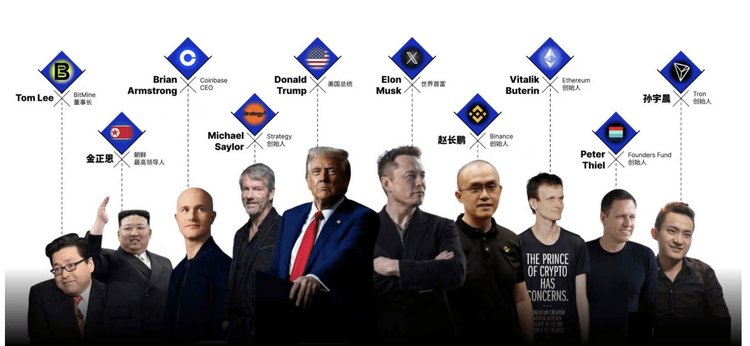
Ten People Redefining the Power Boundaries of Crypto in 2025
Từ Wall Street đến Nhà Trắng, từ Thung lũng Silicon đến Thâm Quyến, một mạng lưới điện mới đang hình thành.

Giao dịch AI trong Crypto Markets: Từ robot giao dịch tự động đến chiến lược thuật toán
Giao dịch do AI thúc đẩy đang chuyển đổi tiền điện tử từ suy đoán bán lẻ sang cạnh tranh ở cấp độ tổ chức, nơi thực thi và quản lý rủi ro quan trọng hơn là hướng đi. Khi giao dịch AI leo thang, rủi ro hệ thống và áp lực quản lý tăng lên, làm cho hiệu suất dài hạn, hệ thống mạnh mẽ và tuân thủ các yếu tố khác biệt quan trọng.

Phân tích cảm xúc AI và biến động tiền mã hóa: Chuyển đổi giá Crypto
Cảm xúc AI đang ngày càng ảnh hưởng đến thị trường tiền điện tử, với những thay đổi trong những kỳ vọng liên quan đến AI chuyển thành sự biến động cho các tài sản kỹ thuật số lớn. Thị trường tiền điện tử có xu hướng mở rộng các câu chuyện AI, cho phép các luồng được thúc đẩy bởi tình cảm vượt quá những yếu tố cơ bản trong ngắn hạn. Hiểu được cảm xúc AI hình thành và phổ biến như thế nào giúp các nhà đầu tư dự đoán tốt hơn chu kỳ rủi ro và định vị cơ hội trên các tài sản kỹ thuật số.

Tháng 11-2025 Crypto Market Review: Sửa đổi giá, thanh toán ETF và phát triển Blockchain
Tháng 11 năm 2025 đã chứng kiến sự biến động rõ rệt và một sự điều chỉnh cấu trúc trong hệ sinh thái blockchain rộng hơn, chủ yếu được thúc đẩy bởi các dự báo kinh tế vĩ mô biến động và động lực dòng vốn cụ thể.

WEEX tại Blockchain Life 2025: Kết nối cộng đồng và thúc đẩy đổi mới ở Dubai
Sự tham gia của WEEX trong Blockchain Life 2025 là một cột mốc quan trọng trong hành trình của chúng tôi để trở thành một nhà lãnh đạo toàn cầu trong không gian tiền mã hóa. Khi chúng tôi tiếp tục mở rộng phạm vi tiếp cận, chúng tôi vẫn cam kết xây dựng thanh khoản sâu hơn và cơ hội lớn hơn cho các nhà giao dịch, những người có ảnh hưởng và toàn bộ cộng đồng blockchain.

Liệu Bitcoin có đạt mức 200.000 đô la vào năm 2025 không? Nhà phân tích gọi đó là 'Rất khó xảy ra'
Khi chúng ta nhìn vào bối cảnh tiền điện tử vào ngày này, 5 tháng 8 năm 2025, Bitcoin tiếp tục thu hút các nhà đầu tư…
Bitfarms ra mắt chương trình mua lại 10% cổ phiếu, cho rằng cổ phiếu bị định giá thấp trong bối cảnh AI Pivot
Hãy tưởng tượng một công ty không chỉ lướt trên làn sóng khai thác Bitcoin mà còn mạnh dạn tiến vào tương lai…
Bitcoin sẵn sàng cho một đợt tăng trưởng lớn vào năm 2026 khi chu kỳ bốn năm truyền thống mất kiểm soát, Giám đốc Đầu tư Bitwise dự đoán
Hãy tưởng tượng Bitcoin thoát khỏi những nhịp điệu cũ của nó, giống như một vận động viên dày dạn bỏ qua một thói quen tập luyện có thể đoán trước…
Cá voi Bitcoin thời Satoshi rút 80.000 BTC để lấy 9 tỷ đô la thông qua Galaxy Digital trong bối cảnh biến động tăng cao
Cá voi Bitcoin thời Satoshi rút 80.000 BTC để lấy 9 tỷ đô la thông qua Galaxy Digital trong bối cảnh biến động tăng cao
Divine Research triển khai các khoản vay tiền điện tử không được hỗ trợ bởi World ID của Sam Altman kể từ ngày 5 tháng 8 năm 2025
Hãy tưởng tượng bước vào một thế giới mà mọi người bình thường, từ giáo viên trung học đến những người bán trái cây, có thể kiếm được các khoản vay nhanh chóng...
Robert Kiyosaki đưa ra cảnh báo mới về rủi ro của Bitcoin, vàng và quỹ ETF bạc tính đến ngày 5 tháng 8 năm 2025
Nhà đầu tư nổi tiếng và chuyên gia tài chính Robert Kiyosaki một lần nữa đã dấy lên cảnh báo về những nguy hiểm đang rình rập trong…
Cập nhật thị trường — 30/12
Brevis mở theo dõi AirDrop; Trend Research thêm hơn 46.000 ETH trong một ngày duy nhất.
Ten People Redefining the Power Boundaries of Crypto in 2025
Từ Wall Street đến Nhà Trắng, từ Thung lũng Silicon đến Thâm Quyến, một mạng lưới điện mới đang hình thành.
Giao dịch AI trong Crypto Markets: Từ robot giao dịch tự động đến chiến lược thuật toán
Giao dịch do AI thúc đẩy đang chuyển đổi tiền điện tử từ suy đoán bán lẻ sang cạnh tranh ở cấp độ tổ chức, nơi thực thi và quản lý rủi ro quan trọng hơn là hướng đi. Khi giao dịch AI leo thang, rủi ro hệ thống và áp lực quản lý tăng lên, làm cho hiệu suất dài hạn, hệ thống mạnh mẽ và tuân thủ các yếu tố khác biệt quan trọng.
Phân tích cảm xúc AI và biến động tiền mã hóa: Chuyển đổi giá Crypto
Cảm xúc AI đang ngày càng ảnh hưởng đến thị trường tiền điện tử, với những thay đổi trong những kỳ vọng liên quan đến AI chuyển thành sự biến động cho các tài sản kỹ thuật số lớn. Thị trường tiền điện tử có xu hướng mở rộng các câu chuyện AI, cho phép các luồng được thúc đẩy bởi tình cảm vượt quá những yếu tố cơ bản trong ngắn hạn. Hiểu được cảm xúc AI hình thành và phổ biến như thế nào giúp các nhà đầu tư dự đoán tốt hơn chu kỳ rủi ro và định vị cơ hội trên các tài sản kỹ thuật số.
Tháng 11-2025 Crypto Market Review: Sửa đổi giá, thanh toán ETF và phát triển Blockchain
Tháng 11 năm 2025 đã chứng kiến sự biến động rõ rệt và một sự điều chỉnh cấu trúc trong hệ sinh thái blockchain rộng hơn, chủ yếu được thúc đẩy bởi các dự báo kinh tế vĩ mô biến động và động lực dòng vốn cụ thể.
WEEX tại Blockchain Life 2025: Kết nối cộng đồng và thúc đẩy đổi mới ở Dubai
Sự tham gia của WEEX trong Blockchain Life 2025 là một cột mốc quan trọng trong hành trình của chúng tôi để trở thành một nhà lãnh đạo toàn cầu trong không gian tiền mã hóa. Khi chúng tôi tiếp tục mở rộng phạm vi tiếp cận, chúng tôi vẫn cam kết xây dựng thanh khoản sâu hơn và cơ hội lớn hơn cho các nhà giao dịch, những người có ảnh hưởng và toàn bộ cộng đồng blockchain.
Coin thịnh hành
Tin tức crypto mới nhất


Bộ phận CSKH:@weikecs
Hợp tác kinh doanh:@weikecs
Giao dịch Định lượng & MM:[email protected]
Dịch vụ VIP:[email protected]
 App
App