
- Mua crypto
- Thị trường
- Futures
- Spot
- Sao chép giao dịch
 Kiếm thưởng
- Xem thêm
Pacific Water Drop Network Webinar Series Selection: Unlocking the Wealth Code of Cryptographic Quantitative Arbitrage

In the ever-changing cryptocurrency market, quantitative arbitrage strategy has gradually become a sought-after wealth code by investors due to its stability and risk control. In this issue of the webinar, Pacific Droplet has invited two partners, Allen and Leon, from Hashflow Asset Management. The webinar is hosted by Xiaozhou, Executive Director of Taiping Asset Management Hong Kong, to explore the core logic of this strategy and its market potential together with the audience.
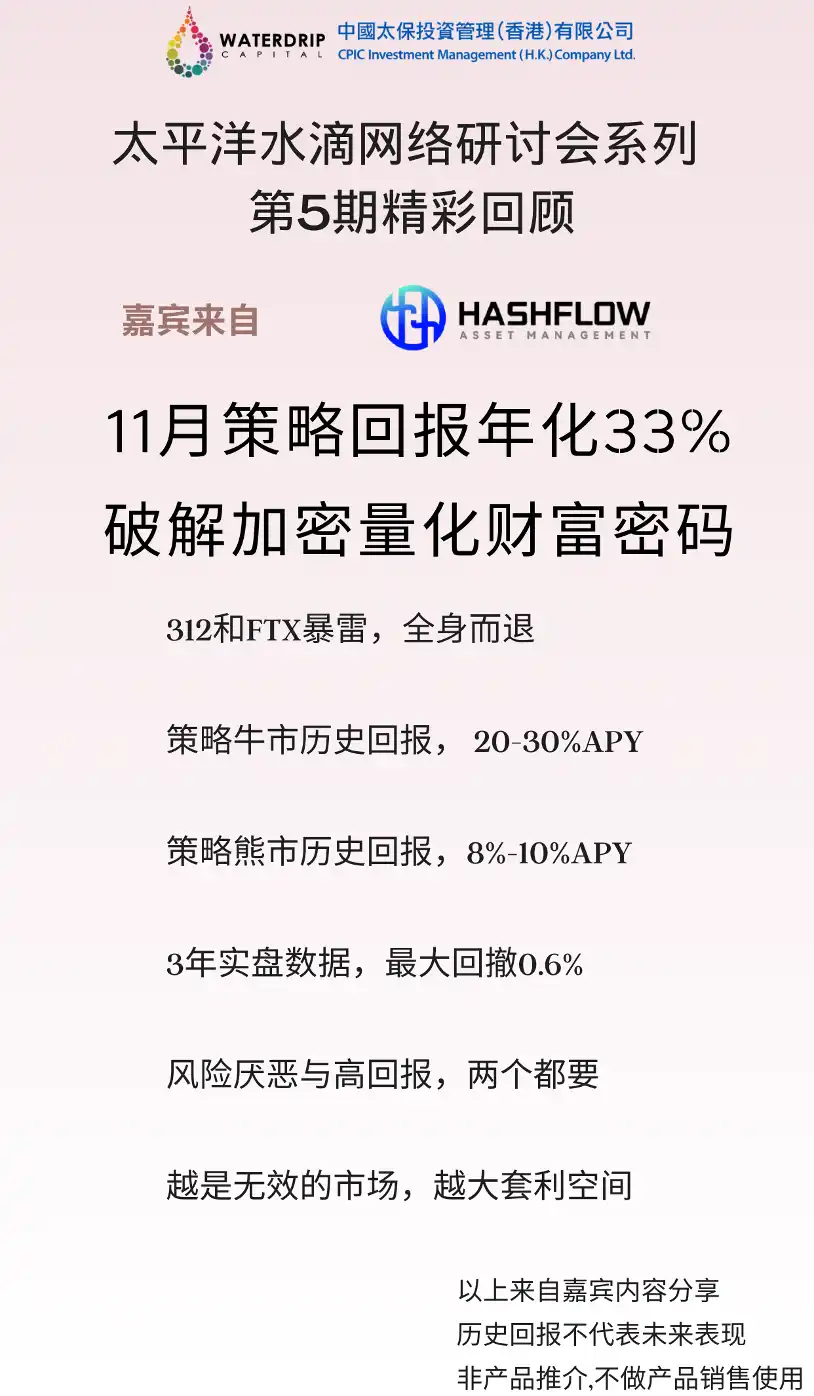
Guest Introduction
· Allen: Coming from a traditional finance background, Allen has previously worked extensively in areas such as stocks and futures. In 2018, he transitioned into the cryptocurrency market, pioneering the introduction of traditional market quantitative models into crypto trading. With over six years of digital asset quantitative trading experience, his led crypto asset quant team successfully hedged against crises in both the 2020 3/12 event and the 2022 FTX flash crash.
· Leon: With years of experience in hedge funds and risk management, Leon has previously worked at Citibank and top domestic hedge funds. Since 2018, he has been focusing on quantitative arbitrage strategies in the cryptocurrency market.
· Host: Xiaozhou, currently the Executive Director of Taiping Asset Management Hong Kong, has long been dedicated to the field of fixed income investments.
Exciting Q&A Content
Opening: The Birth and Background of Quantitative Arbitrage Strategy
Xiaozhou: Allen and Leon, both of you were originally senior professionals in the traditional finance field. What prompted you to enter the cryptocurrency market and make quantitative arbitrage your main focus?
Allen: "In traditional finance, algorithmic trading is already very mature. However, when we entered the cryptocurrency market in 2018, we found that the market's volatility, retail investor proportion, and overall immaturity were very suitable for the application of quantitative strategies. The cryptocurrency market's unique mechanisms, such as perpetual contracts and funding rates, also brought us brand-new arbitrage opportunities."
Leon: "At that time, we saw many trading mechanisms in the crypto market similar to the traditional market, but due to lower liquidity and insufficient market participant expertise, quantitative arbitrage had significant room. Coupled with our team's deep experience in algorithmic trading, we quickly identified opportunities."
Question 1: Please provide a specific introduction to the operational logic and revenue source of quant arbitrage?
Allen: "The essence of quant arbitrage is to profit from the spread between spot and perpetual contracts. We buy spot and simultaneously short perpetual contracts. Since holding a long position in perpetual contracts incurs funding rates, this cost ultimately becomes the arbitrageur's source of income."
Leon: "The core advantage of this strategy is that through the hedge between spot and futures, we can achieve market neutrality. Regardless of whether the market is up or down, the portfolio will not be affected by price fluctuations."
Key Points Summary:
· Funding Rate: Settled every 8 hours, with an annualized return of 20%-30% in a bull market and still maintaining 8%-10% in a bear market.
· Risk Neutrality: Hedging between spot and futures ensures stable returns, avoiding market volatility.
Question 2: With high market volatility and complexity in operations, how does quant arbitrage ensure long-term stability?
Allen: "We utilize a unified margin account, integrating fund management between spot and futures to avoid cross-account fund risks. Additionally, we rely on the deep liquidity of blue-chip coins (such as BTC, ETH) for fundamental security."
Leon: "Furthermore, our dynamic rotation mechanism is another key point. We monitor funding rates of all mainstream coins daily and adjust the portfolio based on returns and risks to maximize profits and minimize risks."
Key Points Summary:
· Unified Margin Account: Simplifying fund flow, reducing settlement risks.
· Dynamic Rotation: Real-time allocation adjustments to optimize returns and risks.
Question 3: If the market spread suddenly widens or funding rates turn negative, how do you deal with these potential risks?
Allen: "When the spread widens, we will timely reduce positions or reconfigure based on real-time monitored retracement data. Additionally, the deep liquidity of blue-chip coins ensures that the spread quickly reverts."
Leon: "As for negative funding rate, we have established a strict stop-loss mechanism. If a certain asset experiences a negative funding rate for 5 consecutive days, we will remove it from the portfolio."
Key Takeaways:
· Risk Management: Reduce position, rebalance, or lower leverage.
· Stop-Loss Mechanism: Asset removed if negative funding rate persists for more than 5 days.
Question 4: For some investors, holding BTC directly may seem more attractive. So why choose quantitative arbitrage?
Leon: "The returns from holding the asset directly are entirely dependent on market price fluctuations, posing high risks. Quantitative arbitrage, on the other hand, offers a low-risk, stable return option. For risk-averse investors, this balance is crucial."
Allen: "For portfolio management, we also recommend combining asset holding with quantitative arbitrage to achieve enhanced returns. Holding assets captures upside potential, while arbitrage strategies mitigate volatility risks."
Key Takeaways:
· Low-Risk Stability: Suitable for risk-averse investors.
· Portfolio Advantage: Combination of asset holding and arbitrage for enhanced returns.
Question 5: How long can the cryptocurrency market's bull run last? How long can the high-yield phase of arbitrage strategies be sustained?
Allen: "Based on historical cycles, the cryptocurrency market experiences a halving event approximately every four years. We anticipate that the high-yield phase of the bull market may continue for the next 6 months, until the market enters the early stages of a bear market."
Leon: "Even in a bear market, quantitative arbitrage remains a preferred strategy. Through precise management and diversified asset allocation, we can continue to maintain low drawdowns and stable returns."
Key Takeaways:
· Bull Market Phase: High-yield period expected to last 6 months.
· Bear Market Advantage: Strategy has a small drawdown and can still provide steady returns.
Question 6: Many viewers are interested in the specific operation of quantitative arbitrage, such as what the actual process would be with $1 million?
Allen: "We would use spot and perpetual contracts for arbitrage. For example, $1 million can be used to buy $2 million worth of spot and simultaneously short an equivalent amount of perpetual contracts. This involves moderate leverage, usually kept within two times. This operation ensures that the profit comes from funding rates rather than market fluctuations."
Leon: "Furthermore, current trading platforms support unified margin accounts, which greatly simplifies the operational process. In the past, we needed to constantly rebalance between spot and contract accounts, but now all operations can be completed within the same account, reducing fund transfer risk and improving efficiency."
Key Points Summary:
· Leverage Control: Moderate leverage amplifies profits while reducing risk.
· Unified Account: Simplifies operational processes, reducing fund flow risks.
Question 7: Quantitative arbitrage seems to have low drawdown but still carries risks. Could you explain in detail what potential risks there are and how to manage these risks?
Allen: "Main risks include:
· Spread Fluctuation: The spread at the time of establishing a position may widen in the short term, leading to unrealized losses.
· Negative Funding Rate: Although the funding rate is mostly positive in the long term, it can also turn negative in the short term."
To counter these risks, we have established strict stop-loss rules. If a currency has a negative funding rate for 5 consecutive days, we will remove it from the portfolio. Additionally, through multi-currency allocation, we have reduced the impact of single currency volatility."
Leon: "The recovery of drawdown mainly depends on two points:
· Spread Reversion: Market spreads will eventually return to normal ranges."
· Funding Rate Recovery: Long-term positive returns will gradually offset short-term negative returns.
Key Points Summary:
· Spread Volatility and Negative Funding Rate: Main sources of risk, but effectively controlled through multi-currency allocation and strict stop-loss.
· Drawdown Recovery Mechanism: Relies on spread regression and funding rate recovery.
Question 8: In extreme market conditions, such as sudden large price swings, how does quantitative arbitrage respond?
Leon: "We have taken various measures:
· Position Diversification: The allocation of a single currency does not exceed 5%.
· Dynamic Rebalancing: When the spread widens, positions are reduced to lower risk. If the spread is deemed to be at its limit, we will add to the position in the opposite direction to capture gains."
Allen: "The team's technology and processes are also crucial. For example, during the 3/12 Event (March 12, 2020), many trading platforms experienced downtime, but our system was able to issue alerts promptly and quickly increase positions after system recovery, ultimately profiting."
Key Points Summary:
· Diversified Allocation: Reducing single currency risk.
· Technical Safeguards: Addressing extreme events through alerts and rapid response systems.
Question 9: How does the performance of quantitative arbitrage differ in a bull market versus a bear market? Is there a significant difference in returns?
Allen: "In a bull market, funding rates are higher, and arbitrage returns are usually between 20%-30% annualized. In a bear market, funding rates decrease, and annualized returns are around 8%-10%. Even in a bear market, arbitrage strategies can still provide steady returns because risks and volatility have been hedged."
Leon: "In a bear market, we pay more attention to funding rate rotation, ensuring maximum returns by selecting the optimal currency. For example, in past bear markets, through optimized currency allocation, we kept the overall drawdown to less than 0.6%."
Key Points Summary:
· Bull Market Returns: Up to 30%.
· Bear Market Returns: Approximately 8%-10%, very low risk.
Question 10: I understand that a quantitative arbitrage strategy is somewhat like a cash management enhancement tool in traditional finance. Is it more suitable to switch from traditional bonds or money market funds to this strategy rather than directly engaging in high-risk assets?
Allen: "Your understanding is very accurate! The characteristic of a quantitative arbitrage strategy is stable low risk. It is more like an upgraded version of a cash management tool. Compared to bonds or money market funds, our annualized returns are higher, while the risk remains at an extremely low level."
Leon: "Indeed. For the conservative portion of asset allocation, quantitative arbitrage is a very ideal choice. Especially for institutional investors or high-net-worth clients, traditional cash management tools have lower yields in the current interest rate environment, while our strategy can achieve a significant enhancement."
Key Points Summary:
· Cash Management Tool Upgrade: Higher returns, very low risk.
· Asset Allocation Recommendation: Suitable for investors transitioning from bonds or money market funds.
Question 11: If the spot price continues to rise and we short perpetual swaps, will our returns be affected due to high funding rates?
Allen: "That's a very good question. In a unified account, the P&L of spot and perpetual swaps is calculated together. Even if the funding rate rises, our returns mainly come from spread fluctuations and positive funding rate income. Additionally, our system will automatically adjust margin to ensure the stability of the overall position and avoid one-sided risk."
Leon: "The advantage of a unified account structure is that it can manage the assets of spot and contracts together, reducing liquidity issues and margin top-ups, while ensuring the stability of the overall strategy."
Key Points Summary:
· Unified Account: Comprehensive calculation of PnL to ensure overall revenue.
· Funding Rate Risk Management: Revenue mainly comes from spreads and positive funding rates.
Question 12: In an extreme market environment, such as the 3·12 Event in 2020, how does quantitative arbitrage respond?
Leon: "In extreme events like 3·12, we immediately reduce our position to ensure risk control. At the same time, our technical systems will alert us quickly to help adjust our strategy. Additionally, we focus on trading in large-cap coins with high liquidity, such as BTC and ETH, to avoid losses due to insufficient liquidity in small-cap coins."
Allen: "Such extreme volatility may also present opportunities for us. For example, post-market recovery, by quickly increasing our position to capture spread income, we achieved excess returns after the 3·12 event." Extreme market volatility is both a challenge and an opportunity for us.
Key Takeaways:
· Risk Control: Timely position reduction, focus on large-cap coins.
· Technical Support: Alert system and rapid adjustment mechanism.
The above is the full content of this seminar. We invite you to continue following the Pacific Water Drop Network Webinar.
This article is contributed content and does not represent the views of BlockBeats.
Bạn cũng có thể thích

Crypto và AI: thị trường xám kỹ thuật số ẩn của Xianyu
Crypto và AI: Bạn có thể mua bất cứ thứ gì trên Xianyu.

Điều gì đang thúc đẩy thị trường tiền điện tử vào đầu năm 2026: Thị trường Swings, AI Trading, và ETF Flows?
Hãy tưởng tượng việc kiểm tra giá Bitcoin và Ethereum trong một ngày - một phút lên 5%, sau đó xuống 4%. Chuyển động sắc nét, đảo ngược nhanh và nhạy cảm với tín hiệu macro đánh dấu tuần đầu tiên của 2026. Sau một sự gia tăng đầu năm, cả hai tài sản đều rút lui khi thị trường đánh giá lại kỳ vọng về chính sách tiền tệ và các luồng tổ chức của Mỹ. Đối với các nhà giao dịch - bao gồm cả những người dựa vào AI hoặc các hệ thống tự động - thời kỳ này cung cấp một lời nhắc nhở sống động: tín hiệu phong phú không đảm bảo sự rõ ràng. Giữ kỷ luật trong việc thi hành thường là thách thức thực sự.
WEEX Global AI Trading Hackathon ra mắt: $1.88M Prize Pool cung cấp sức mạnh cho thế hệ tiếp theo của AI Trading Champions
WEEX Labs, nhánh sáng tạo của WEEX, một sàn giao dịch tiền điện tử toàn cầu hàng đầu phục vụ hơn 6,2 triệu người dùng ở hơn 150 quốc gia, sẽ bắt đầu vòng đầu tiên của hackathon thương mại AI toàn cầu, AI Wars: WEEX Alpha Awakens, vào ngày 12 tháng 1 năm 2026. Được hỗ trợ mạnh mẽ bởi các nhà tài trợ đẳng cấp thế giới bao gồm Amazon Web Services (AWS), tổng số giải thưởng đã tăng từ $880,000 lên $1,880,000, đặt AI Wars trong số các hackathons giao dịch AI lớn nhất trong ngành crypto. Ở đỉnh của bảng xếp hạng đang chờ đợi một giải vô địch phi thường - một Bentley Bentayga S, đã sẵn sàng ở Dubai, sẵn sàng để được tuyên bố bởi người chiến thắng giao dịch AI cuối cùng.

Từ lý thuyết đến thị trường trực tiếp: Hệ thống Dual-Brain của AOT Matrix trong WEEX AI Trading Hackathon
Trong các thị trường tiền điện tử - một trong những hệ thống phi cố định không tha thứ nhất - thất bại chiến lược hiếm khi được gây ra bởi các mô hình quá đơn giản. Nó xảy ra bởi vì hầu hết các chiến lược không bao giờ thực sự tiếp xúc với áp lực thị trường trực tiếp. Đây chính xác là vấn đề mà WEEX AI Trading Hackathon được thiết kế để lộ diện – chuyển trọng tâm từ sự đổi mới lý thuyết sang khả năng triển khai thực tế, thực hiện thực tế và hiệu suất thực tế. Trong số các nhóm tham gia, AOT Matrix nổi bật với khả năng định lượng được thúc đẩy bởi AI tiên tiến. Thông qua kiến trúc dual-brain V4.4, hệ thống đã đạt được tối ưu hóa end-to-end - từ logic cốt lõi cho đến execution - phản ánh sự nhấn mạnh kép của nền tảng về đổi mới và hiệu suất trong thế giới thực.
Thông tin tham gia vòng tròn sơ bộ — AOT Matrix: Phân tích não trái, quyết định não phải trong giao dịch AI
Trong WEEX AI Trading Hackathon, AOT Matrix đã chọn một con đường cẩn thận hơn trong thiết kế hệ thống - một con đường thực sự khó thực hiện hơn trong môi trường giao dịch trực tiếp. Ngay từ đầu, họ đã đưa ra lựa chọn rõ ràng về vai trò AI nên và không nên chơi trong hệ thống giao dịch. Chúng tôi phỏng vấn AOT Matrix về logic ra quyết định của họ, nhiều lần lặp lại cấu trúc hệ thống của họ, và nó như thế nào để thực hiện nó trong môi trường giao dịch thực sự của WEEX và các hạn chế kỹ thuật.

Tại sao token AI tăng nhanh hơn thị trường tiền mã hóa rộng hơn
AI token đang vượt trội - và không lặng lẽ. Bitcoin đang di chuyển Ethereum đang giữ đất. Tuy nhiên, một số lợi ích tương đối mạnh nhất đến từ token có nhãn AI, không phải majors, không memes. Ở cái nhìn đầu tiên, nó có vẻ trực quan. AI là công nghệ thực sự. Nó đang định hình các ngành công nghiệp xa hơn crypto. Tuy nhiên, thị trường hiếm khi di chuyển theo trực giác – đặc biệt là không nhanh như vậy. Khi giá tăng tốc trước khi áp dụng, câu hỏi hữu ích hơn không phải là “AI có quan trọng không?” Đó là phiên bản của câu chuyện AI mà thị trường đang mua - ngay bây giờ.

Cập nhật thị trường — 7 tháng 1
Bitmine đã huy động thêm 28.000 Ethereum, trị giá khoảng 91,16 triệu USD.

Để lại những ngày đầu hỗn loạn, các nhà sản xuất thị trường tiền điện tử đang ăn mừng sự ra đời của họ
Cuộc đấu tranh sống hay chết cho các nhà sản xuất thị trường tiền điện tử giống như sự tiến hóa loài trong điều kiện cực đoan.
Tại sao AI Trading Bots đang trở nên cần thiết trong 24/7 Crypto Markets
Thị trường tiền điện tử hoạt động liên tục và di chuyển nhanh hơn so với sự chú ý của con người có thể duy trì một cách đáng tin cậy. Giá phản ứng ngay lập tức với các sự kiện toàn cầu, chuyển động thanh khoản giữa các khu vực, và các cơ hội có thể giao dịch thường tồn tại trong vài phút thay vì vài giờ. Đối với nhiều nhà giao dịch, thách thức cốt lõi không còn là tạo ra ý tưởng, mà là thực hiện các quyết định liên tục mà không có sự giám sát liên tục hoặc can thiệp cảm xúc. Đây là nơi mà AI trading bots đang ngày càng được áp dụng - không phải là bảo đảm lợi nhuận, mà là công cụ được thiết kế để dịch các chiến lược được xác định trước thành thực hiện đáng tin cậy, có thể lặp lại.
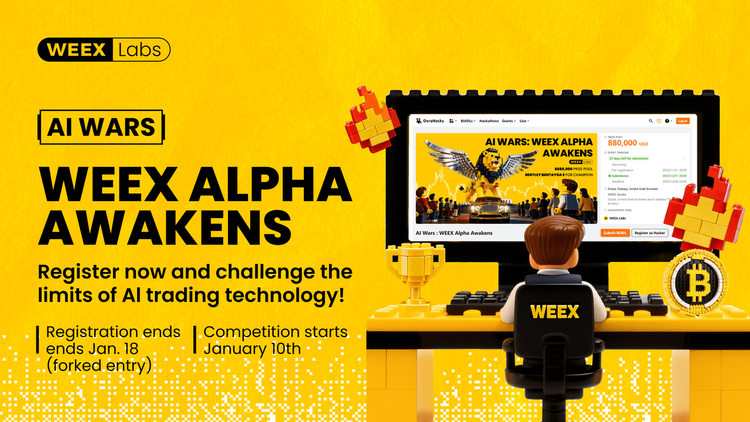
Chiến dịch giao dịch mã hóa AI: Trang chủ » WEEX Alpha Awakens
Việc tích hợp trí tuệ nhân tạo vào giao dịch tiền mã hóa đã phát triển từ một thí nghiệm mới thành một tiện ích cốt lõi. Vào năm 2026, các công cụ được thúc đẩy bởi AI đã trở nên cần thiết cho các nhà giao dịch tìm kiếm kỷ luật nâng cao, tốc độ thực hiện vượt trội và ra quyết định có cấu trúc, dựa trên dữ liệu trong bối cảnh thị trường bất ổn. Hướng dẫn này cung cấp một mô tả thực tiễn, từng bước về cách tham gia WEEX Alpha Awakens, với một cuộc kiểm tra tập trung về cách các chiến lược này được thực hiện trong môi trường giao dịch trực tiếp.

Các K-line của cuộc sống không thể chữa khỏi lo âu, và các thị trường dự đoán không thể tính toán kết thúc.
Cuộc sống thực sự thường diễn ra bên ngoài K-line.
Làm thế nào AI giúp các nhà giao dịch tiền mã hóa phân tích thị trường, quản lý rủi ro và giao dịch thông minh hơn
Giao dịch crypto không còn là chỉ có một ý tưởng tốt - nó là về việc thực hiện liên tục trong một thị trường không bao giờ dừng lại. Khi khối lượng dữ liệu và tốc độ thị trường tăng lên, phân tích thủ công truyền thống đạt đến giới hạn. AI giúp các nhà giao dịch vượt quá những giới hạn này bằng cách thay đổi cách phân tích thị trường, cách diễn giải tình cảm và cách kiểm soát rủi ro. Bài viết này khám phá cách AI đang định hình lại giao dịch tiền mã hóa - và điều đó có ý nghĩa gì đối với các nhà giao dịch ngày nay.

WEEX × LALIGA: Bảy ngôi sao đại diện cho một tiêu chuẩn chung của sự xuất sắc
Sự xuất sắc trong bóng đá không bao giờ là ngẫu nhiên. Nó được xây dựng trên kỷ luật, nhất quán, và khả năng cung cấp dưới áp lực - mùa sau mùa. Các nguyên tắc tương tự áp dụng trong giao dịch chuyên nghiệp, nơi hiệu suất dài hạn quan trọng hơn động lực ngắn hạn. Là một đối tác chính thức của LALIGA, WEEX làm nổi bật bảy cầu thủ xuất sắc thể hiện tinh thần cạnh tranh của giải đấu và sức hấp dẫn toàn cầu. Mỗi phong cách mang đến một phong cách độc đáo cho sân, nhưng tất cả đều chia sẻ các giá trị phù hợp chặt chẽ với cam kết của WEEX đối với sự ổn định, chính xác và thực hiện chuyên nghiệp. Quan hệ đối tác này được xây dựng trên các tiêu chuẩn chung - nơi sự nhất quán và kiểm soát xác định hiệu suất dưới áp lực.

Từ Wuhan đến Thung lũng Silicon, Manus đã làm điều đó chỉ trong chín tháng.
Bạn có thể gọi nó là một “bọc”, nhưng nó đã bao bọc con đường của nó cho đến Meta.

WEEX hợp tác với LALIGA để mở rộng phạm vi toàn cầu và tích hợp Crypto vào văn hóa thể thao chủ đạo
Hong Kong, ngày 1 tháng 1 năm 2026. WEEX đã ký hợp tác mới với LALIGA, là đối tác khu vực chính thức của LALIGA tại Đài Loan và Hong Kong. Thỏa thuận này đưa WEEX vào mạng lưới cộng tác viên khu vực của LALIGA và mở ra cánh cửa cho các cách mới để thu hút cả người hâm mộ và thương nhân trong mùa giải.
Giao dịch AI trong Crypto: Làm thế nào các nhà giao dịch thực sự áp dụng AI trong thị trường crypto thực sự
Trí tuệ nhân tạo đã vượt ra ngoài thử nghiệm trong thị trường crypto. Năm 2025, các công cụ giao dịch do AI thúc đẩy ngày càng được sử dụng bởi các nhà giao dịch muốn có kỷ luật tốt hơn, thực thi nhanh hơn và ra quyết định có cấu trúc hơn trong các thị trường bất ổn. Hướng dẫn này giải thích cách AI thực sự được sử dụng trong giao dịch tiền mã hóa, từng bước - với trọng tâm về cách các chiến lược này được thực hiện trong môi trường giao dịch thực tế.

Cập nhật thị trường — 31 tháng 12
Từ Hàn Quốc và OECD đẩy nhanh việc thực hiện các khuôn khổ quy định và tuân thủ tiền mã hóa, đến sự phát triển đồng thời của ETF TAO, công nghệ bảo mật, khai thác và dự trữ Bitcoin, trong khi các sự cố an ninh và tổn thất tài chính tiếp tục tăng, thị trường tiền mã hóa đã bước vào một giai đoạn mới trong bối cảnh nhiều thách thức của "quy định mạnh + tiến hóa công nghệ + rủi ro gia tăng".
Khi mọi người sử dụng giao dịch AI, Cryptocurrency Alpha sẽ đi đâu vào năm 2026?
Trong năm 2025, giao dịch AI đã trở thành mặc định, nhưng Alpha đã không biến mất - nó đã bị xói mòn bởi sự đông đúc, khi dữ liệu, mô hình và chiến lược tương tự khiến các nhà giao dịch hành động đồng bộ và mất lợi thế.
Real Alpha đã chuyển sang các lớp khó sao chép hơn như dữ liệu hành vi và trên chuỗi, chất lượng thực hiện, quản lý rủi ro và phán đoán của con người ở các thị trường cực đoan, nơi hành động khác biệt - hoặc không hành động - quan trọng hơn so với dự đoán tốt hơn.
Crypto và AI: thị trường xám kỹ thuật số ẩn của Xianyu
Crypto và AI: Bạn có thể mua bất cứ thứ gì trên Xianyu.
Điều gì đang thúc đẩy thị trường tiền điện tử vào đầu năm 2026: Thị trường Swings, AI Trading, và ETF Flows?
Hãy tưởng tượng việc kiểm tra giá Bitcoin và Ethereum trong một ngày - một phút lên 5%, sau đó xuống 4%. Chuyển động sắc nét, đảo ngược nhanh và nhạy cảm với tín hiệu macro đánh dấu tuần đầu tiên của 2026. Sau một sự gia tăng đầu năm, cả hai tài sản đều rút lui khi thị trường đánh giá lại kỳ vọng về chính sách tiền tệ và các luồng tổ chức của Mỹ. Đối với các nhà giao dịch - bao gồm cả những người dựa vào AI hoặc các hệ thống tự động - thời kỳ này cung cấp một lời nhắc nhở sống động: tín hiệu phong phú không đảm bảo sự rõ ràng. Giữ kỷ luật trong việc thi hành thường là thách thức thực sự.
WEEX Global AI Trading Hackathon ra mắt: $1.88M Prize Pool cung cấp sức mạnh cho thế hệ tiếp theo của AI Trading Champions
WEEX Labs, nhánh sáng tạo của WEEX, một sàn giao dịch tiền điện tử toàn cầu hàng đầu phục vụ hơn 6,2 triệu người dùng ở hơn 150 quốc gia, sẽ bắt đầu vòng đầu tiên của hackathon thương mại AI toàn cầu, AI Wars: WEEX Alpha Awakens, vào ngày 12 tháng 1 năm 2026. Được hỗ trợ mạnh mẽ bởi các nhà tài trợ đẳng cấp thế giới bao gồm Amazon Web Services (AWS), tổng số giải thưởng đã tăng từ $880,000 lên $1,880,000, đặt AI Wars trong số các hackathons giao dịch AI lớn nhất trong ngành crypto. Ở đỉnh của bảng xếp hạng đang chờ đợi một giải vô địch phi thường - một Bentley Bentayga S, đã sẵn sàng ở Dubai, sẵn sàng để được tuyên bố bởi người chiến thắng giao dịch AI cuối cùng.
Từ lý thuyết đến thị trường trực tiếp: Hệ thống Dual-Brain của AOT Matrix trong WEEX AI Trading Hackathon
Trong các thị trường tiền điện tử - một trong những hệ thống phi cố định không tha thứ nhất - thất bại chiến lược hiếm khi được gây ra bởi các mô hình quá đơn giản. Nó xảy ra bởi vì hầu hết các chiến lược không bao giờ thực sự tiếp xúc với áp lực thị trường trực tiếp. Đây chính xác là vấn đề mà WEEX AI Trading Hackathon được thiết kế để lộ diện – chuyển trọng tâm từ sự đổi mới lý thuyết sang khả năng triển khai thực tế, thực hiện thực tế và hiệu suất thực tế. Trong số các nhóm tham gia, AOT Matrix nổi bật với khả năng định lượng được thúc đẩy bởi AI tiên tiến. Thông qua kiến trúc dual-brain V4.4, hệ thống đã đạt được tối ưu hóa end-to-end - từ logic cốt lõi cho đến execution - phản ánh sự nhấn mạnh kép của nền tảng về đổi mới và hiệu suất trong thế giới thực.
Thông tin tham gia vòng tròn sơ bộ — AOT Matrix: Phân tích não trái, quyết định não phải trong giao dịch AI
Trong WEEX AI Trading Hackathon, AOT Matrix đã chọn một con đường cẩn thận hơn trong thiết kế hệ thống - một con đường thực sự khó thực hiện hơn trong môi trường giao dịch trực tiếp. Ngay từ đầu, họ đã đưa ra lựa chọn rõ ràng về vai trò AI nên và không nên chơi trong hệ thống giao dịch. Chúng tôi phỏng vấn AOT Matrix về logic ra quyết định của họ, nhiều lần lặp lại cấu trúc hệ thống của họ, và nó như thế nào để thực hiện nó trong môi trường giao dịch thực sự của WEEX và các hạn chế kỹ thuật.
Tại sao token AI tăng nhanh hơn thị trường tiền mã hóa rộng hơn
AI token đang vượt trội - và không lặng lẽ. Bitcoin đang di chuyển Ethereum đang giữ đất. Tuy nhiên, một số lợi ích tương đối mạnh nhất đến từ token có nhãn AI, không phải majors, không memes. Ở cái nhìn đầu tiên, nó có vẻ trực quan. AI là công nghệ thực sự. Nó đang định hình các ngành công nghiệp xa hơn crypto. Tuy nhiên, thị trường hiếm khi di chuyển theo trực giác – đặc biệt là không nhanh như vậy. Khi giá tăng tốc trước khi áp dụng, câu hỏi hữu ích hơn không phải là “AI có quan trọng không?” Đó là phiên bản của câu chuyện AI mà thị trường đang mua - ngay bây giờ.


 App
App