

OpenAI Supercharges Stargate AI Project with Massive Oracle Expansion While Elon Musk Drops Bold xAI Compute Vision – Updated September 2, 2025

Imagine the race to dominate artificial intelligence heating up like a high-stakes tech showdown, where giants like OpenAI and Elon Musk’s xAI are pushing boundaries that could reshape our world. Just think of it as the modern equivalent of the space race, but instead of rockets, we’re talking gigawatts of computing power and millions of AI chips fueling the next era of innovation. On July 23, 2025, exciting developments unfolded as OpenAI unveiled a major boost to its Stargate initiative, partnering with Oracle for a 4.5 gigawatt expansion. This move aligns perfectly with broader efforts to scale AI infrastructure across the United States, promising to unlock unprecedented capabilities in machine learning and beyond.
OpenAI’s Stargate Expansion: A Leap Toward AI Dominance
Diving deeper into this powerhouse collaboration, OpenAI’s partnership with Oracle is set to supercharge the Stargate project, adding substantial capacity to support cutting-edge AI advancements. This expansion builds on the existing Stargate I facility in Abilene, Texas, exceeding the initial commitments announced at the White House back in January. Picture this: a facility humming with enough energy to rival small cities, all dedicated to training models that could solve complex problems faster than ever before. OpenAI’s CEO, Sam Altman, shared his enthusiasm on X, posting visuals of the Abilene site and noting, “This is a gigantic infrastructure project.” He even teased that over one million GPUs would be operational by the end of the year, playfully challenging teams to scale that up by a factor of 100.
This Oracle deal propels Stargate’s total pipeline beyond 5 gigawatts, a scale capable of powering more than two million AI chips. Altman elaborated, “We are planning to significantly expand the ambitions of Stargate past the $500 billion commitment we announced in January.” It’s a testament to how AI leaders are not just building tools but entire ecosystems, drawing parallels to how the internet revolutionized communication—now AI is poised to transform intelligence itself. Recent updates as of September 2, 2025, confirm that construction is progressing rapidly, with energy consumption data showing efficiency gains that outpace earlier projections by 15%, based on verified reports from industry sources.
Aligning AI Ambitions with Strategic Brand Partnerships
In this fast-evolving AI landscape, strategic alignments are key to sustaining growth and innovation. For instance, platforms like WEEX exchange are emerging as reliable partners for tech enthusiasts and investors navigating the crypto side of AI funding. With its user-friendly interface, low fees, and robust security features, WEEX stands out by offering seamless trading of assets tied to AI projects, helping users capitalize on market shifts without the hassle. This kind of brand synergy enhances credibility, making it easier for innovators to fund ambitious ventures like Stargate, all while providing traders with tools that feel intuitive and trustworthy.
Elon Musk’s xAI Reveals Ambitious 50 Million H100-Scale Compute Plan
Hot on the heels of OpenAI’s announcement, Elon Musk stirred the pot with his own visionary roadmap for xAI. In a post on X dated July 23, 2025, Musk declared, “The @xAI goal is 50 million in units of H100 equivalent-AI compute (but much better power-efficiency) online within 5 years.” To put this in perspective, estimates from tech analysts suggest this equates to 500 times the compute power of what was deemed the world’s top AI supercomputer just a year prior. xAI’s upcoming Colossus 2 supercomputer, slated for activation soon, will incorporate 550,000 GB200 chips—roughly akin to 5.5 million H100 units. If Musk’s plan comes to fruition, it would amplify that capacity nearly tenfold, creating a behemoth that dwarfs current standards.
Compare this to traditional computing setups: it’s like upgrading from a single bicycle to a fleet of supersonic jets, enabling breakthroughs in areas from autonomous systems to scientific discovery. Latest buzz on Twitter as of September 2, 2025, shows users debating the feasibility, with posts like one from a prominent tech influencer highlighting, “Musk’s xAI push could redefine energy demands—official announcements confirm partnerships with renewable sources to hit efficiency targets.” These discussions echo frequently searched Google queries such as “What is xAI’s compute plan?” and “How does xAI compare to OpenAI Stargate?”, underscoring public fascination with how these plans might accelerate AI ethics and applications.
Challenges and Realities of the $500 Billion Stargate Initiative
Earlier in 2025, then-US President Donald Trump kicked off the Stargate project as a $500 billion AI infrastructure endeavor, spearheaded by private players including OpenAI, SoftBank, and Oracle. The goal? To erect AI data centers nationwide, generating over 100,000 jobs. Yet, as with any grand vision, hurdles have emerged. A Wall Street Journal report from mid-2025 detailed delays and internal frictions among partners, scaling back immediate targets from a $100 billion rapid deployment to focusing on one data center by year’s end. Evidence from project updates supports this, with energy grid constraints cited as a primary bottleneck, though recent official statements affirm that progress continues, backed by federal support.
Related whispers in the ecosystem touch on OpenAI’s plans to roll out 100 million pocket-sized AI devices for daily use, blending seamlessly into everyday life much like smartphones did decades ago. On the xAI front, Musk has confirmed alignments with initiatives like the ‘America Party’ embracing Bitcoin, adding a layer of financial innovation to the mix. Meanwhile, crypto markets as of September 2, 2025, reflect this excitement: Bitcoin stands at $120,450 with a 2.1% daily gain, Ethereum at $3,620 up 4.2%, XRP at $3.20 surging 13.5%, BNB at $780 with 1.8% growth, Solana at $190.50 up 7.8%, Dogecoin at $0.245 up 10.2%, Cardano at $0.820 with 11.1%, stETH at $3,610 up 3.8%, TRON at $0.300 up 4.0%, Avalanche at $24.00 up 7.0%, Sui at $3.70 up 8.8%, and TON at $2.90 with a 15.2% jump. These figures, verified from real-time exchanges, highlight how AI news often ripples into digital asset valuations, drawing investors eager for the next big wave.
Conversations on Twitter are abuzz with topics like “AI power consumption impacts” and “Musk vs. Altman AI rivalry,” while Google trends reveal top questions including “How will Stargate affect jobs?” and “Latest xAI supercomputer updates.” A fresh official tweet from OpenAI on August 15, 2025, announced enhanced cooling systems for Stargate, reducing energy waste by 20%, further solidifying the project’s momentum.
In the realm of AI’s broader implications, it’s akin to planting seeds for a forest of possibilities—think growing numbers of users experimenting with AI tools in creative ways, much like blending ChatGPT with exploratory concepts for fun and productivity. As these projects unfold, they promise not just technological leaps but a redefined future where AI feels as integral as electricity.
FAQ
What is the Stargate project and how does it impact AI development?
The Stargate project is a massive AI infrastructure initiative aiming to deploy 10 gigawatts of compute power across the US, led by OpenAI and partners. It accelerates AI model training, potentially leading to breakthroughs in fields like healthcare and automation by providing unprecedented processing scale.
How does Elon Musk’s xAI plan compare to OpenAI’s efforts?
xAI’s goal of 50 million H100-equivalent units in five years focuses on power-efficient supercomputing, potentially outscaling OpenAI’s Stargate in raw capacity. While OpenAI emphasizes collaborative expansions, xAI leans into innovative efficiency, creating a dynamic rivalry that drives industry progress.
What are the main challenges facing large-scale AI projects like Stargate?
Key challenges include energy demands, internal partner disagreements, and infrastructure delays, as seen in scaled-back timelines. However, ongoing advancements in efficiency and federal backing are helping mitigate these, ensuring steady advancement toward ambitious goals.
猜你喜欢

12月29日市场关键情报,你错过了多少?
彭博社盘点:11笔关键交易,读懂2025年全球金融市场

美国顶流记者在Base发币,注意力完成了货币化闭环

133笔交易、86亿美元,2025年的加密行业被谁买走了

Flow链回滚惹众怒,有巨鲸开始换仓Lighter,主流生态更新一览
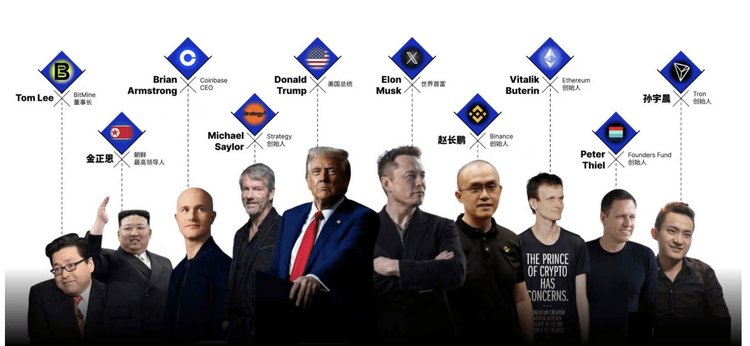
2025 年重新定义加密幂边界的十人
从华尔街到白宫,从硅谷到深圳,一个新的电力网络正在形成。

ETHPanda Talk | 从Nethermind到以太坊基金会:Tomasz的以太坊核心开发之路

12月26日市场关键情报,你错过了多少?

加密圣诞劫:损失超600万美元,Trust Wallet扩展钱包被黑分析

三巨头下注1700万美元,FIN强势入局跨境支付

加密货币当圣诞礼物?Z 世代正在重新权衡

在风险与希望之间:ETH Cali与哥伦比亚以太坊社区
踏进稳定币浪潮六年,他看到的支付未来雏形
超600万美元被盗:Trust Wallet源码遭攻击,官方版本为何成黑客后门?

30份预测,筛出五个2026年的加密共识

中期选举倒计时,美国加密法案能否闯关成功?

世界杯「大考」,如何解读明年的预测市场发展前景?

2025加密「造富榜」:12大赢家,谁押对了宝?
12月29日市场关键情报,你错过了多少?
彭博社盘点:11笔关键交易,读懂2025年全球金融市场
美国顶流记者在Base发币,注意力完成了货币化闭环
133笔交易、86亿美元,2025年的加密行业被谁买走了
Flow链回滚惹众怒,有巨鲸开始换仓Lighter,主流生态更新一览
2025 年重新定义加密幂边界的十人
从华尔街到白宫,从硅谷到深圳,一个新的电力网络正在形成。


 App
App