
- Krypto kaufen
- Märkte
- Futures
- Spot
- Copy-Trade
 WE-Launch
2026 to Mark Ethereum ZK Rollup Inflection Point: Proof of Stake Sees 'Merge-like' Overhaul

BlockBeats News, December 26: Researchers and developers expect that 2026 will be a key year for Ethereum to achieve exponential scalability through zero-knowledge proofs (ZK). By then, some Ethereum validators will no longer re-execute transactions but will directly validate ZK proofs, fundamentally changing the way the blockchain operates, with scalability comparable to the Ethereum "merge" from PoW to PoS in 2022.
Ethereum researcher Justin Drake stated that the initial validators will start validating the ZK proofs of each block instead of re-executing all transactions, bringing instant scalability to Layer 1 and laying the foundation for a future 10,000 TPS. The current Ethereum mainnet throughput is about 30 TPS.
During Devconnet, Drake demonstrated that ZK proof validation can be done using an old laptop. It is expected that by the end of 2026, approximately 10% of validators will switch to ZK validation mode (Lean Execution Phase 1). This shift will significantly reduce the hardware requirements for validator nodes while maintaining network decentralization.
Ethereum Besu client engineer Gary Schulte pointed out that future computationally intensive work will be mainly handled by block builders and ZK provers, while regular validators will only need to perform lightweight verification, creating conditions for increasing the gas limit and overall throughput.
On the roadmap, Ethereum is currently in Phase 0 (voluntary validation), expected to enter Phase 1 (partial validator switch) in 2026, and move to Phase 2 in 2027, which will require block producers to generate ZK proofs, achieving full ZK rollup execution.
Das könnte Ihnen auch gefallen

AI Trading in Crypto Markets: Von automatisierten Trading Bots zu algorithmischen Strategien
KI-gesteuerter Handel verlagert Krypto von Einzelhandelsspekulationen zu institutionellem Wettbewerb, bei dem Ausführung und Risikomanagement wichtiger sind als Richtung. Da der KI-Handel skaliert, steigen Systemrisiken und regulatorischer Druck, was langfristige Leistung, robuste Systeme und Compliance zu den wichtigsten Unterscheidungsmerkmalen macht.

AI Sentiment Analysis and Cryptocurrency Volatility: Was bewegt Kryptopreise
KI-Sentiment beeinflusst zunehmend die Kryptomärkte, wobei sich Verschiebungen der KI-bezogenen Erwartungen in Volatilität für wichtige digitale Assets niederschlagen. Kryptomärkte neigen dazu, KI-Narrative zu verstärken, so dass sentimentgetriebene Ströme kurzfristig die Fundamentaldaten überwiegen. Zu verstehen, wie sich KI-Sentiments bilden und verbreiten, hilft Anlegern, Risikozyklen und Positionierungsmöglichkeiten in digitalen Assets besser zu antizipieren.
November 2025 Crypto Market Review: Kurskorrektur, ETF-Einlösungen und sich entwickelnde Blockchain-Landschaft
Im November 2025 gab es eine ausgeprägte Volatilität und eine strukturelle Korrektur innerhalb des breiteren Blockchain-Ökosystems, die vor allem durch schwankende makroökonomische Prognosen und spezifische Kapitalflussdynamiken getrieben wurde.

WEEX erobert die Weltbühne mit einer Reihe von Offline-Veranstaltungen im Jahr 2025
Einblicke in die globale Präsenz von WEEX: Ein Jahr unaufhaltsamen Momentums
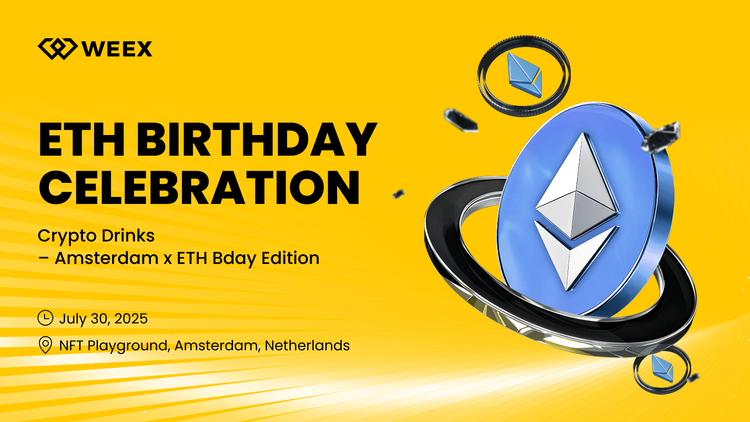
WEEX ETH Geburtstagsfeier & Web3 Networking
WEEX nahm an der Crypto Drinks – Amsterdam x ETH Birthday Edition teil, einer lebhaften Aktion, bei der das Jubiläum von Ethereum mit der europäischen Community gefeiert wurde.
SharpLink sichert sich am 5. August 2025 295 Millionen Dollar in ETH – übertrifft damit die gesamte Ether-Emission des letzten Monats
Stellen Sie sich ein Unternehmen vor, das nicht nur die Zehen in die Kryptowelt steckt, sondern mit vollem Körpereinsatz einsteigt und dabei...
AI Trading in Crypto Markets: Von automatisierten Trading Bots zu algorithmischen Strategien
KI-gesteuerter Handel verlagert Krypto von Einzelhandelsspekulationen zu institutionellem Wettbewerb, bei dem Ausführung und Risikomanagement wichtiger sind als Richtung. Da der KI-Handel skaliert, steigen Systemrisiken und regulatorischer Druck, was langfristige Leistung, robuste Systeme und Compliance zu den wichtigsten Unterscheidungsmerkmalen macht.
AI Sentiment Analysis and Cryptocurrency Volatility: Was bewegt Kryptopreise
KI-Sentiment beeinflusst zunehmend die Kryptomärkte, wobei sich Verschiebungen der KI-bezogenen Erwartungen in Volatilität für wichtige digitale Assets niederschlagen. Kryptomärkte neigen dazu, KI-Narrative zu verstärken, so dass sentimentgetriebene Ströme kurzfristig die Fundamentaldaten überwiegen. Zu verstehen, wie sich KI-Sentiments bilden und verbreiten, hilft Anlegern, Risikozyklen und Positionierungsmöglichkeiten in digitalen Assets besser zu antizipieren.
November 2025 Crypto Market Review: Kurskorrektur, ETF-Einlösungen und sich entwickelnde Blockchain-Landschaft
Im November 2025 gab es eine ausgeprägte Volatilität und eine strukturelle Korrektur innerhalb des breiteren Blockchain-Ökosystems, die vor allem durch schwankende makroökonomische Prognosen und spezifische Kapitalflussdynamiken getrieben wurde.
WEEX erobert die Weltbühne mit einer Reihe von Offline-Veranstaltungen im Jahr 2025
Einblicke in die globale Präsenz von WEEX: Ein Jahr unaufhaltsamen Momentums
WEEX ETH Geburtstagsfeier & Web3 Networking
WEEX nahm an der Crypto Drinks – Amsterdam x ETH Birthday Edition teil, einer lebhaften Aktion, bei der das Jubiläum von Ethereum mit der europäischen Community gefeiert wurde.
SharpLink sichert sich am 5. August 2025 295 Millionen Dollar in ETH – übertrifft damit die gesamte Ether-Emission des letzten Monats
Stellen Sie sich ein Unternehmen vor, das nicht nur die Zehen in die Kryptowelt steckt, sondern mit vollem Körpereinsatz einsteigt und dabei...
Beliebte Coins
Neueste Krypto-Nachrichten


Kundenservice:@weikecs
Geschäftliche Zusammenarbeit:@weikecs
Quant-Trading & MM:[email protected]
VIP-Services:[email protected]
 App
App