
- Krypto kaufen
- Märkte
- Futures
- Spot
- Copy-Trade
 WE-Launch
a16z: How will stablecoins eat into the payments industry? What happens after that?

Original title: How stablecoins will eat payments, and what happens next
Original author: Sam Broner, a16z crypto investment partner
Original translation: 0xjs, Golden Finance
Today's payments landscape is dominated by gatekeepers who charge high fees, undercut the profitability of every business they touch, and justify those fees in the name of ubiquity and convenience — while they stifle competition and limit the creativity of builders.
Stablecoins can do better.
Stablecoins have lower fees, more competition among payment providers, and wider accessibility. Because stablecoins reduce transaction costs to almost zero, they can free businesses from the friction of existing alternatives. Adoption of stablecoins will start with businesses most affected by current payment methods, a process that will disrupt the payments industry.
Stablecoins have become the cheapest way to transfer dollars. Last month, 28.5 million unique stablecoin users sent over 600 million transactions. Stablecoin users are found in nearly every country and use stablecoins because they offer a safe, cheap, and inflation-resistant way to save and spend. Aside from cash and gold, stablecoins are the only widely adopted payment method that can operate without gatekeepers such as banks, payment networks, or central banks. At the same time, stablecoins are permissionless, programmable, scalable, and integrable—anyone can help build a stablecoin payment platform on top of a stablecoin payment rail.
This disruption may take time, but it may happen faster than many expect. Businesses such as restaurants, retailers, enterprises, and payment processors will benefit the most from stablecoin platforms, with significantly higher profit margins. This demand will drive adoption, and as stablecoin adoption continues to increase, the other benefits of stablecoins—permissionless composability and improved programmability—will bring more benefits to on-chain users, businesses, and products. I’ll share more whys and hows below, but first some background on the payments industry.
Payment Tracks
• Payment Channels: The technology, rules, and networks that process transactions
• Payment Processors: Operators on the payment rails that facilitate transactions
• Payment Service Providers: Entities that provide access to payment systems to end users or other systems
• Payment Solutions: Products provided by payment service providers
• Payment Platforms: A suite of interrelated payment solutions across providers, processors, and rails
Payments Industry Background
The size of the payments industry cannot be underestimated. In 2023, the global payments industry processed 3.4 trillion transactions worth $1.8 trillion and generated $2.4 trillion in revenue. In the United States alone, credit card payments accounted for $5.6 trillion and debit card payments accounted for $4.4 trillion.
Despite the industry’s ubiquity and scale, payment solutions remain expensive and complex, and payment apps are often shielded from the consumer experience. For example, while peer-to-peer payment app Venmo may look simple on the front end, on the back end, the product hides a maze of bank integrations, debit card vulnerabilities, and countless compliance obligations. Payment solutions are often interdependent, which adds to the complexity, and people still use a variety of payment methods: cash, debit cards, credit cards, peer-to-peer payment apps, ACH (Automated Clearing House), checks, etc.
The four main metrics for payment products are timeliness, cost, reliability, and convenience.
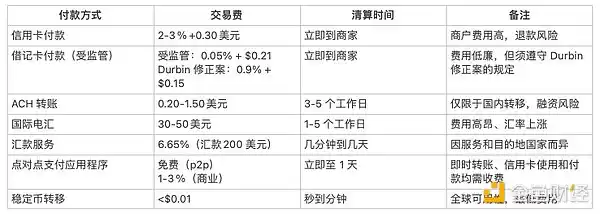
Consumers prioritize questions like “How much will I pay?” Merchants ask “Will I get paid?” But in fact, all four metrics are essential for both parties.
Ever since businesses had to find fraudulent credit cards in physical ledgers, waves of innovation have continuously improved the payment experience. Each wave of innovation has brought faster, more reliable, more convenient, and cheaper payment methods, which in turn has led to an increase in transaction volume and the amount spent.
But many customers are still not enjoying modern services, or are underserved. For merchants, credit cards are expensive, directly eating into their profits. Despite growing adoption of real-time payments (RTP), U.S. bank transfers are still too slow, taking days. And peer-to-peer applications are region- and network-specific, making transfers between ecosystems slow, costly, and complex.
While businesses and consumers have come to expect more sophisticated functionality from payment platforms, not all users benefit from existing solutions. In fact, most users pay too much in fees and don’t use all of the bundled payment products. But they accept the current state of affairs.
Where Stablecoins Fit In
The key to stablecoins disrupting the industry is the failure of existing payment solutions (high cost, low availability, or high friction), and the fact that bundled products of payment solutions (including identity, lending, compliance, fraud protection, and bank integration) are least necessary.
Take remittances as an example. It was born out of desperation. Many remittance users are underbanked and use highly fragmented banking services. As a result, these users see little value in native integrations between traditional payments and banking services. Stablecoin payments offer instant finality, low costs, and no middlemen, which are structural advantages for any payment user or builder. After all, with stablecoins, it costs less than $0.01 to send $200 from the United States to Colombia, but $12.13 on traditional corridors. (Remittance users need to send money home regardless of transaction costs, but will benefit greatly from lower fees.)
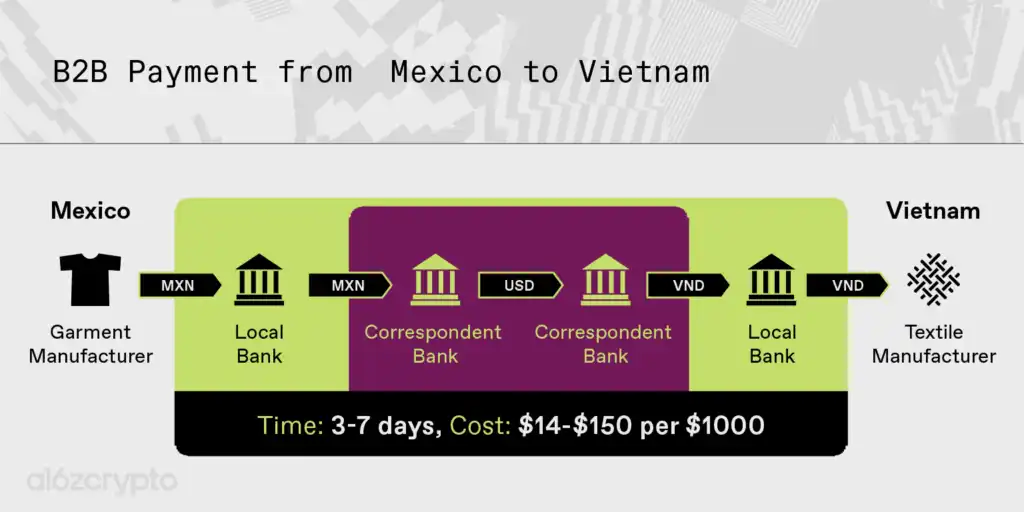
International commercial payments, especially for small businesses in emerging markets, also face high fees, slow processing times, and low bank acceptance. For example, a payment between a Mexican apparel manufacturer and a Vietnamese textile manufacturer will involve four or more intermediaries – local bank, foreign exchange, correspondent bank, correspondent bank, foreign exchange, local bank. Each intermediary charges a percentage and there is a risk of middleman bankruptcy.
Fortunately, these transactions occur between partners with a regular relationship. With stablecoins, Mexican payers and Vietnamese payees can experiment and eliminate slow, bureaucratic, and expensive intermediaries. They may have to work hard to find local channels and workflows, but in the end they can enjoy faster, cheaper transactions and more control over the payment process.
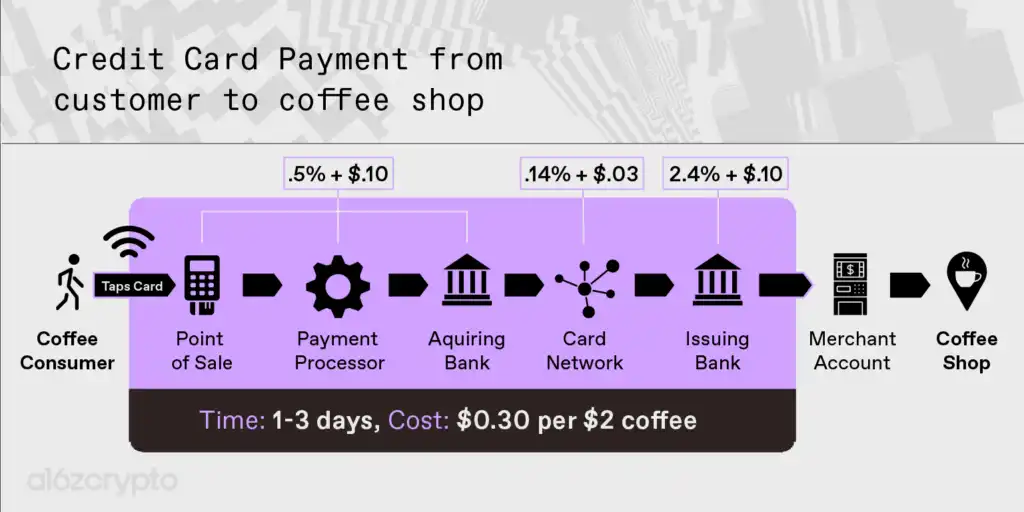
Small-value transactions (especially low-fraud face-to-face transactions, such as those conducted in restaurants, coffee shops, or corner stores) are also a promising opportunity. These businesses are cost-sensitive due to their low profit margins, so the 15-cent transaction fee charged by payment solutions has a big impact on their profitability.
For every $2 a customer spends on a cup of coffee, only $1.70 to $1.80 goes to the coffee shop, with the remaining nearly 15% going to the credit card company—just for facilitating the transaction. But credit cards are here for convenience: neither the consumer nor the store needs additional features to justify the charges. Consumers don’t need fraud protection (they’re just getting a cup of coffee) or loans (the coffee was only $2). And coffee shops have limited compliance and bank integration needs (they typically use integrated restaurant management software or none at all). So if there’s a cheap, reliable alternative, these businesses will take advantage of it.
Cheaper Payments Improve Profitability
Current payment system transaction fees directly hurt the bottom line for many businesses. Lowering these fees would provide a huge boost to profitability. The first shoe has already dropped: Stripe announced they will charge 1.5% on stablecoin payments, 30% less than what they charge for credit card payments. To support this effort, Stripe announced the acquisition of Bridge.xyz for approximately $1 billion.
Wider adoption of stablecoins would significantly improve profitability for many businesses—not just small businesses like coffee shops or restaurants. Let’s look at the financials for three public companies in fiscal 2024 to get a rough idea of the impact of reducing payment processing rates to 0.1%. (For simplicity, this assessment assumes that businesses pay a 1.6% hybrid payment processor cost and that on- and off-ramps have minimal costs. More on this below.)
· Walmart, with $648 billion in annual revenue, could pay $10 billion in credit card fees and make $15.5 billion in profit. Do the math: Given the elimination of payment fees and Walmart's profitability, its valuation (controlling for all other factors) could increase by more than 60% just through a cheaper payment solution.
· Chipotle is a fast-growing fast-food restaurant with $9.8 billion in annual revenue. It makes $1.2 billion in profit each year, of which it pays $148 million in credit card fees. Just by reducing fees, Chipotle could increase profitability by 12%—an astonishing number not available elsewhere on its income statement.
· National grocer Krogers has the lowest margins and therefore makes the most money. Surprisingly, Krogers’ net revenue and payment costs may be nearly equal. Like many grocery stores, its profit margin is less than 2%, which is less than the fees businesses pay to process credit card payments. With stablecoin payments, Krogers’ profits could double.
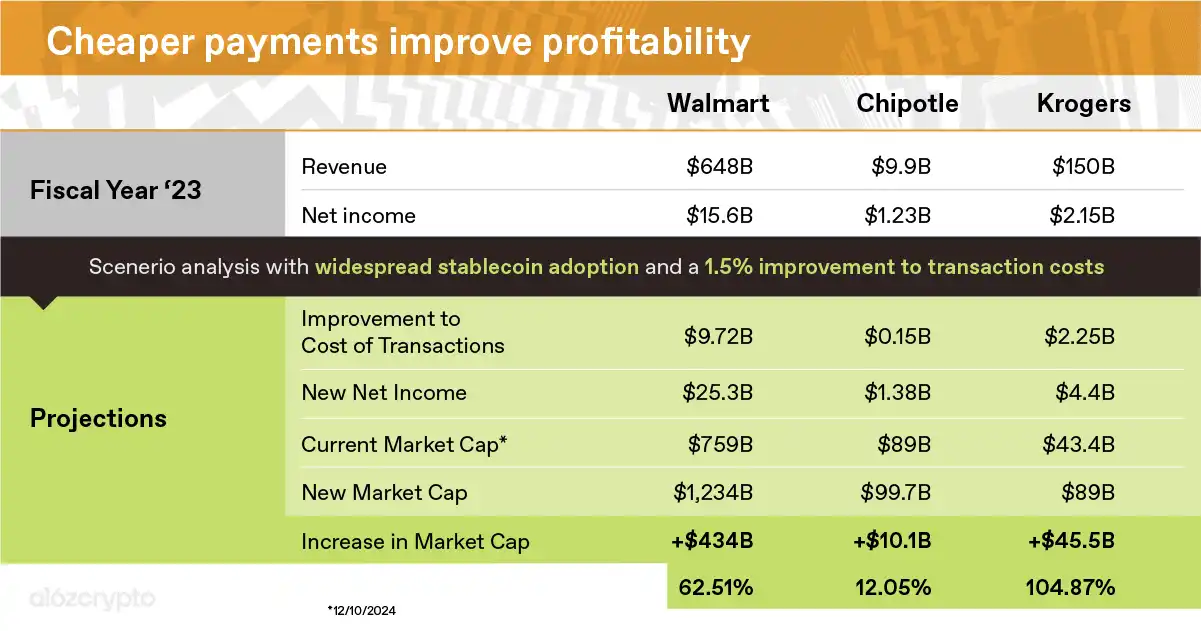
How will Walmart, Chipotle, and Krogers reduce transaction fees with stablecoins? First, consider an idealized scenario: consumers will not accept stablecoins all at once, and there will still be considerable fees until stablecoins gain enough acceptance, especially when starting and stopping use. Second, both retailers and payment processors oppose high-fee payment solutions. Payment processors are also low-margin businesses that give up most of their profits to credit card networks and issuing banks. When payment processors process transactions, most of their fees are passed on to payment networks. So when Stripe handles the online retail checkout process, they take a 2.9% cut of the total transaction and a $0.30 fee, but they pay more than 70% to Visa and the issuing bank. As more payment processors like Block- formerly Square, Fiserv, Stripe, and Toast adopt stablecoins to improve their profit margins, they will make stablecoins more accessible to more businesses.
Stablecoins have low fees and no network gatekeeper fees to pay. This means payment processors earn much higher margins on revenue from stablecoin transactions. Higher margins could lead payment processors to support and encourage more businesses and use cases to use stablecoins. But as payment processors begin to adopt stablecoins, expect stablecoin payment fees to compress over time: Stripe’s 1.5% fee is likely to fall.
Next Steps: Mass Consumer Adoption
Today, stablecoins are a new permissionless way to send and store money. Entrepreneurs are already building solutions to turn stablecoin rails into stablecoin platforms. As with previous innovations, adoption will occur gradually, starting at the fringes of consumer demand, then forward-thinking businesses, until the platform matures enough to meet the needs of everyday users and cautious businesses. Three trends will drive more mainstream enterprise adoption of stablecoins.
1. Increase back-end integration through stablecoin aggregation
Stablecoin aggregation (the ability to monitor, guide, and integrate stablecoins) will soon be integrated into payment processors such as Stripe. These aggregation products enable businesses to process payments at a much lower cost than current mechanisms without major process or engineering changes. Consumers may end up with cheaper products without knowing it, because invoices, payrolls, and subscriptions have lower structural costs by default.
Many of these stablecoin aggregation businesses have begun to attract customers who want instant settlement, low-cost, and widely available business-to-business or business-to-consumer payments. By integrating stablecoins in the backend, businesses will benefit from the advantages of stablecoins—without interrupting or reducing the quality of service that users expect from payment providers, while the adoption of stablecoins will increase.
2. Improve the enterprise entry process and increase shared incentives
The stablecoin business is becoming more and more mature in bringing end users into the chain by sharing incentives and improving entry solutions.
Entry is becoming cheaper, faster, and more ubiquitous, making it easier for users to get started with cryptocurrencies. At the same time, more and more consumer applications support cryptocurrencies, allowing users to benefit from the expanded stablecoin ecosystem—without adopting new applications or user behaviors. Popular applications such as Venmo, ApplePay, Paypal, CashApp, Nubank, and Revolut allow their customers to use stablecoins.
Moreover, companies are more motivated to use these channels to integrate stablecoins and deposit funds in stablecoins. Fiat-backed stablecoin issuers such as Circle, Paypal, and Tether are sharing profits with ordinary businesses, just as Visa shares profits with United and Chase for signed credit card users. Such cooperation and integration benefit stablecoin issuers because they can create a larger pool of assets to earn returns. But they can also benefit businesses that successfully convert users from credit cards to stablecoins. These businesses can now earn a portion of the revenue generated by the funds their products generate, a business model that is usually only available to banks, fintech companies and gift card issuers that make money from user float.
3. Improve regulatory clarity and availability of compliance solutions
When businesses are confident in the regulatory environment, they are more likely to adopt stablecoins. While we have not yet seen comprehensive global regulation of stablecoins, many jurisdictions have issued rules and guidance on stablecoins, allowing entrepreneurs to start the hard work of building compliant, user-friendly businesses.
For example, the EU's Markets in Crypto-Assets Regulation (MiCA) sets rules for stablecoin issuers, including prudential and behavioral requirements. Since the stablecoin provisions came into effect earlier this year, the regulation has significantly changed the European stablecoin market.
Despite the current lack of a stablecoin framework in the United States, policymakers from both parties are increasingly recognizing the need for effective stablecoin legislation. Such regulation needs to ensure that issuers fully back their tokens with high-quality assets, have their reserves audited by third parties, and take comprehensive measures to combat illegal financial activities. At the same time, legislation needs to preserve the ability of creators to create decentralized stablecoins, reduce user risks by eliminating intermediaries, and take advantage of decentralization.
These policy efforts will get companies across industries to consider moving from traditional payment methods to stablecoin infrastructure. While compliance solutions are unattractive, everyone who adopts stablecoins helps prove to incumbents that stablecoins are a reliable, secure, regulated, and improved solution to traditional payment problems.
As stablecoins gain popularity, the platform’s network effects will grow stronger. While it may still be a few years before stablecoins can be used at point-of-sale or as a replacement for bank accounts, as the number of stablecoin users grows, stablecoin-centric solutions will become more mainstream and more attractive to consumers, businesses, and entrepreneurs.
Trend: Why Stablecoins Will Continue to Improve
As adoption progresses, the product itself will continue to improve. The web3 community is celebrating stablecoin adoption for good reason: stablecoins are climbing the value innovation S-curve thanks to years of investment in infrastructure and on-chain applications. As infrastructure improves, on-chain applications become more abundant, and on-chain networks grow, stablecoins will become more attractive to users. This will happen in two ways.
First, the painstaking engineering of crypto infrastructure has made stablecoin payments of less than a cent possible. Future investments will continue to make transactions cheaper and faster. At the same time, stablecoin aggregation and an improved onboarding experience are only possible through better wallets, bridges, deposits and withdrawals, developer experience, and AMMs.
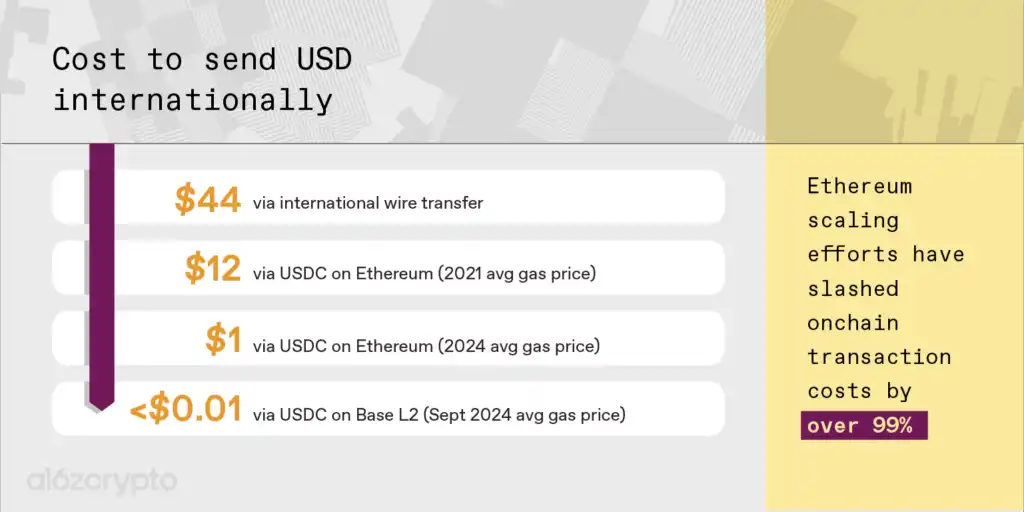
This technological foundation provides increasing incentives for entrepreneurs to build stablecoins that provide a better developer experience, a rich ecosystem, broad applications, and permissionless composability of on-chain currencies.
Second, stablecoins unlock new user scenarios through the permissionless composability of on-chain currencies. Other payment platforms have gatekeepers that force entrepreneurs to work with extraction networks, such as costly intermediaries in credit card transactions or international payments. But stablecoins are self-custodial and programmable, lowering the threshold for creating new payment experiences and integrating value-added services. Stablecoins are also composable, allowing users to benefit from increasingly powerful on-chain applications and increasing competition. For example, stablecoin users have benefited from DeFi, on-chain subscriptions, and social applications.
Conclusion
Stablecoins can lead us into a world of free, scalable, and instant payments. As Stripe CEO Patrick Collison said, stablecoins are "room temperature superconductors for financial services." They will enable businesses to pursue new opportunities that would otherwise not be able to withstand the burden of existing payment channels or the friction of traditional gatekeepers.
In the short term, stablecoins will have a structural change to financial products as payments become free and open. Incumbent payment companies will seek new ways to monetize, either by taking a percentage of revenue or by selling services that are complementary to this newly commoditized platform. As these traditional businesses recognize the changing landscape, entrepreneurs will create new solutions that help these businesses leverage stablecoins.
In the long run, as stablecoins become more common and the technology advances, startups will seize the opportunities presented by a world of feeless, frictionless, and instant payments. These startups will be founded today, unlocking new and unexpected scenarios and further democratizing the opportunities afforded by the global financial system.
Acknowledgements: Special thanks to Tim Sullivan, Aiden Slavin, Eddy Lazzarin, Robert Hackett, Jay Drain, Liz Harkavy, Miles Jennings, and Scott Kominers for their thoughtful feedback and suggestions that made this article possible.
Das könnte Ihnen auch gefallen

WEEXPERIENCE Whales Night: KI-Handel, Krypto-Community und Krypto-Markteinblicke
Am 12. Dezember 2025 veranstaltete WEEX die WEEXPERIENCE Whales Night, ein Offline-Gemeinschaftstreffen, das lokale Kryptowährungs-Communitymitglieder zusammenbringen sollte. Die Veranstaltung kombinierte Content Sharing, interaktive Spiele und Projektpräsentationen, um ein entspanntes und dennoch ansprechendes Offline-Erlebnis zu schaffen.

AI Trading Risk in Kryptowährung: Warum können bessere Krypto-Handelsstrategien größere Verluste verursachen?
Risiko sitzt nicht mehr in erster Linie in schlechten Entscheidungen oder emotionalen Fehlern. Sie lebt zunehmend in Marktstruktur, Ausführungswegen und kollektivem Verhalten. Diesen Wandel zu verstehen ist wichtiger als die nächste „bessere“ Strategie zu finden.

KI-Agenten ersetzen Kryptoforschung? Wie autonome KI den Kryptohandel verändert
KI entwickelt sich von der Unterstützung von Händlern zur Automatisierung des gesamten Research-to-Execution-Prozesses in Kryptomärkten. Der Vorsprung hat sich von menschlichen Erkenntnissen hin zu Datenpipelines, Geschwindigkeit und ausführungsbereiten KI-Systemen verlagert, wodurch Verzögerungen bei der KI-Integration zu einem Wettbewerbsnachteil werden.

AI Trading Bots und Copy Trading: Wie synchronisierte Strategien die Volatilität des Kryptomarktes verändern
Krypto-Händler im Einzelhandel stehen seit langem vor denselben Herausforderungen: schlechtes Risikomanagement, späte Einstiege, emotionale Entscheidungen und inkonsequente Ausführung. KI-Handelstools versprachen eine Lösung. Heute helfen KI-gestützte Copy-Trading-Systeme und Breakout-Bots Händlern, Positionen zu vergrößern, Stopps zu setzen und schneller als je zuvor zu handeln. Über Geschwindigkeit und Präzision hinaus verändern diese Tools die Märkte im Stillen – Trader handeln nicht nur intelligenter, sie bewegen sich synchron und schaffen eine neue Dynamik, die sowohl Risiken als auch Chancen verstärkt.

AI Trading in Crypto Erklärt: Wie autonomer Handel Kryptomärkte und Kryptobörsen verändert
KI-Handel verändert die Krypto-Landschaft rasant. Traditionelle Strategien haben Schwierigkeiten, mit der Nonstop-Volatilität und komplexen Marktstruktur von Krypto Schritt zu halten, während KI massive Daten verarbeiten, adaptive Strategien generieren, Risiken managen und Trades autonom ausführen kann. Dieser Artikel führt WEEX-Nutzer durch, was KI-Handel ist, warum Krypto seine Einführung beschleunigt, wie sich die Branche hin zu autonomen Agenten entwickelt und warum WEEX das KI-Handelsökosystem der nächsten Generation aufbaut.

Aufruf zur Teilnahme an AI Wars: WEEX Alpha Awakens — Globaler KI-Handelswettbewerb mit 880.000 US-Dollar Preispool
Jetzt rufen wir KI-Händler aus aller Welt dazu auf, sich AI Wars anzuschließen: WEEX Alpha Awakens, ein globaler KI-Handelswettbewerb mit 880.000 US-Dollar Preispool.

AI Trading in Crypto Markets: Von automatisierten Trading Bots zu algorithmischen Strategien
KI-gesteuerter Handel verlagert Krypto von Einzelhandelsspekulationen zu institutionellem Wettbewerb, bei dem Ausführung und Risikomanagement wichtiger sind als Richtung. Da der KI-Handel skaliert, steigen Systemrisiken und regulatorischer Druck, was langfristige Leistung, robuste Systeme und Compliance zu den wichtigsten Unterscheidungsmerkmalen macht.

AI Sentiment Analysis and Cryptocurrency Volatility: Was bewegt Kryptopreise
KI-Sentiment beeinflusst zunehmend die Kryptomärkte, wobei sich Verschiebungen der KI-bezogenen Erwartungen in Volatilität für wichtige digitale Assets niederschlagen. Kryptomärkte neigen dazu, KI-Narrative zu verstärken, so dass sentimentgetriebene Ströme kurzfristig die Fundamentaldaten überwiegen. Zu verstehen, wie sich KI-Sentiments bilden und verbreiten, hilft Anlegern, Risikozyklen und Positionierungsmöglichkeiten in digitalen Assets besser zu antizipieren.

AI Wars: Teilnehmerleitfaden
In diesem ultimativen Showdown werden Top-Entwickler, Quants und Trader aus aller Welt ihre Algorithmen in realen Marktkämpfen einsetzen und um einen der höchsten Preispools in der Geschichte des KI-Kryptohandels konkurrieren: 880.000 USD, einschließlich eines Bentley Bentayga S für den Champion. Dieser Leitfaden führt Sie durch alle erforderlichen Schritte von der Anmeldung bis zum offiziellen Start des Wettbewerbs.

Zentralbankwoche und Kryptomarktvolatilität: Wie Zinsentscheidungen die Handelsbedingungen an WEEX prägen
Zinsentscheidungen großer Zentralbanken wie der Federal Reserve sind bedeutende makroökonomische Ereignisse, die die globalen Finanzmärkte beeinflussen und die Liquiditätserwartungen und die Risikobereitschaft der Märkte unmittelbar beeinflussen. Da sich der Kryptowährungsmarkt weiter entwickelt und seine Handelsstruktur und Teilnehmer reifen, wird der Kryptomarkt schrittweise in das makroökonomische Preissystem integriert.

WEEX API Testing: Offizieller Leitfaden für KI Trading Hackathon und Krypto Trading APIs
WEEX API Testing wurde entwickelt, um sicherzustellen, dass jeder Teilnehmer Handelslogik in echte Ausführung umsetzen kann. Alle API-Interaktionen finden auf dem Live-Trading-System von WEEX statt, sodass die Teilnehmer unter authentischen Marktbedingungen und nicht unter Simulationen arbeiten können. Mit einer geringen Einstiegsvoraussetzung ist die Aufgabe sowohl für erfahrene Entwickler als auch für motivierte Anfänger zugänglich und validiert dennoch wesentliche technische Fähigkeiten.

AI Wars: Teilnehmerführung test
Teil 1: Die empfohlene Methode (Cloud-Server)
Für beste Stabilität empfehlen wir dringend die Verwendung eines Cloud-Servers mit statischer öffentlicher IP und Unterstützung für einen unterbrechungsfreien Betrieb rund um die Uhr, wie z. B.: AWS (Amazon Web Services), Alibaba Cloud und Tencent Cloud.
Teil 2: Die alternative Methode (lokaler Computer)
Wenn Sie Ihren Handelsbot über einen PC oder ein Heimnetzwerk ausführen möchten, müssen Sie bestätigen, dass Ihre ausgehende IP-Adresse statisch ist. Eine sich ändernde IP führt zu Verbindungsproblemen.
Sie haben zwei Hauptoptionen, um eine stabile ausgehende IP zu gewährleisten:
Verwenden Sie eine statische IP, die von Ihrem Internet Service Provider (ISP) bereitgestellt wird.Verwenden Sie einen VPN- oder Proxydienst mit einer festen Ausgangs-IP (und stellen Sie sicher, dass das VPN/Proxy konsistent aktiviert ist, ohne Server zu wechseln).Schritte zum Auffinden Ihrer lokalen öffentlichen IP:
Deaktivieren Sie alle VPNs, oder behalten Sie nur das einzelne VPN bei, dessen IP Sie auf die Whitelist setzen möchten.Besuchen Sie whatismyip.com in Ihrem Browser.Die Seite zeigt Ihre öffentliche IPv4-Adresse an.Kopieren Sie diese IP und senden Sie sie an die Whitelist.Hinweis: Die meisten Heim-Breitband-IPv4-Adressen sind dynamisch und können sich periodisch ändern. Es wird dringend empfohlen, eine Cloud-Serverumgebung zu verwenden, um Verbindungsausfälle während des Wettbewerbs zu vermeiden.
1.3 Fehlende Informationen? Wir folgen weiterNachdem Sie Ihre BUIDL eingereicht haben, wird das WEEX-Team Ihre Bewerbung anhand der Wettbewerbsanforderungen prüfen. Der Überprüfungsprozess dauert normalerweise einen Geschäftstag.
Wenn Informationen fehlen oder geklärt werden müssen, wird unser Team Sie über einen der folgenden Kanäle kontaktieren:
DoraHacks NachrichtensystemOffizielles WEEX Messaging-SystemIhre registrierten Kontaktdaten (Telegramm, X, etc.)Bitte halten Sie Ihre Kontaktdaten aktiv und zugänglich.
Sobald Ihr BUIDL genehmigt ist, erhalten Sie Ihr Gewinnspielkonto und den exklusiven API Key, mit dem Sie zur nächsten Stufe übergehen können: API-Test und Modellintegration.
. Bitte lesen Sie die offizielle WEEX API Dokumentation sorgfältig durch: https://www.weex.com/api-doc/ai/intro
2. Verbinden Sie sich mit einem Cloud-Server und führen Sie den untenstehenden Code aus. Sie sollten eine Antwort erhalten, die bestätigt, ob Ihre Netzwerkverbindung ordnungsgemäß funktioniert.
curl -s --max-time 10 "https://api-contract.weex.com/capi/v2/market/time"{"epoch":"1765423487.896","iso":"2025-12-11T03:24:47.896Z","timestamp":1765423487896
2. Verbinden Sie sich mit einem Cloud-Server und führen Sie den untenstehenden Code aus. Sie sollten eine Antwort erhalten, die bestätigt, ob Ihre Netzwerkverbindung ordnungsgemäß funktioniert.
import time import hmac import hashlib import base64 import requests api_key = "" secret_key = "" access_passphrase = "" def generate_signature_get(secret_key, timestamp, method, request_path, query_string): message = timestamp + method.upper() + request_path + query_string signature = hmac.new(secret_key.encode(), message.encode(), hashlib.sha256).digest() return base64.b64encode(signature).decode() def send_request_get(api_key, secret_key, access_passphrase, method, request_path, query_string): timestamp = str(int(time.time() * 1000)) signature = generate_signature_get(secret_key, timestamp, method, request_path, query_string) headers = "ACCESS-KEY": api_key, "ACCESS-SIGN": signature, "ACCESS-TIMESTAMP": timestamp, "ACCESS-PASSPHRASE": access_passphrase, "Inhaltstyp": "application/json", "locale": "en-US" } url = "https://api-contract.weex.com/" # Bitte ersetzen Sie durch die tatsächliche API-Adresse, wenn Methode == "GET": response = requests.get(url + request_path+query_string, headers=headers) return response def assets(): request_path = "/capi/v2/account/assets" query_string = "" response = send_request_get(api_key, secret_key, access_passphrase, "GET", request_path, query_string) print(response.status_code) print(response.text) if __name__ == '__main__': assets()
WEEX AI Trading Hackathon Guide: Finden Sie Ihre WEEX-UID und registrieren Sie sich
Bis Februar 2026 veranstaltet WEEX die AI Wars: WEEX Alpha Awakens, den weltweit ersten globalen Krypto-KI-Trading-Hackathon. Melden Sie sich mit Ihrer UID für den WEEX Global AI Trading Hackathon an.
Warum ist WEEX Alpha Awakens der beste KI-Handelswettbewerb 2025? Alles, was Sie wissen müssen
Um die Durchbrüche an der Schnittstelle von KI und Krypto zu beschleunigen, startet WEEX den weltweit ersten globalen KI Trading Hackathon – AI Wars: Alpha Erwacht. Das Event verfügt über einen bahnbrechenden Preispool von mehr als 880.000 US-Dollar, einschließlich eines Bentley Bentayga S für den ultimativen Champion.

AI Wars: WEEX Alpha Awakens | WEEX Global Hackathon API Test Process Guide
AI Wars: Die Registrierung für WEEX Alpha Awakens ist nun geöffnet. Diese Anleitung beschreibt, wie Sie auf den API-Test zugreifen und den Prozess erfolgreich abschließen können.

Was ist WEEX Alpha Awakens und wie kann man teilnehmen? Eine vollständige Anleitung
Um die Durchbrüche an der Schnittstelle von KI und Krypto zu beschleunigen, startet WEEX den weltweit ersten globalen KI Trading Hackathon – AI Wars: Alpha Erwacht.

Der WEEX HODL’em Trading Royale und Dubai Offline Trading Competition erfolgreich abgeschlossen
Am 4. Dezember 2025 veranstaltete die WEEX ihren ersten Dubai HODL’em Trading Royale und Dubai Offline Trading Competition, der die Leidenschaft von AI WARS in die reale Welt brachte.
Beitritt zu AI Wars: WEEX Alpha Erwacht!Global Call for AI Trading Alphas
AI Wars: WEEX Alpha Awakens ist ein globaler KI-Handelshackathon in Dubai, der Quantenteams, algorithmische Händler und KI-Entwickler aufruft, ihre KI-Krypto-Handelsstrategien in Live-Märkten für einen Anteil von 880.000 US-Dollar Preispool freizusetzen.
WEEXPERIENCE Whales Night: KI-Handel, Krypto-Community und Krypto-Markteinblicke
Am 12. Dezember 2025 veranstaltete WEEX die WEEXPERIENCE Whales Night, ein Offline-Gemeinschaftstreffen, das lokale Kryptowährungs-Communitymitglieder zusammenbringen sollte. Die Veranstaltung kombinierte Content Sharing, interaktive Spiele und Projektpräsentationen, um ein entspanntes und dennoch ansprechendes Offline-Erlebnis zu schaffen.
AI Trading Risk in Kryptowährung: Warum können bessere Krypto-Handelsstrategien größere Verluste verursachen?
Risiko sitzt nicht mehr in erster Linie in schlechten Entscheidungen oder emotionalen Fehlern. Sie lebt zunehmend in Marktstruktur, Ausführungswegen und kollektivem Verhalten. Diesen Wandel zu verstehen ist wichtiger als die nächste „bessere“ Strategie zu finden.
KI-Agenten ersetzen Kryptoforschung? Wie autonome KI den Kryptohandel verändert
KI entwickelt sich von der Unterstützung von Händlern zur Automatisierung des gesamten Research-to-Execution-Prozesses in Kryptomärkten. Der Vorsprung hat sich von menschlichen Erkenntnissen hin zu Datenpipelines, Geschwindigkeit und ausführungsbereiten KI-Systemen verlagert, wodurch Verzögerungen bei der KI-Integration zu einem Wettbewerbsnachteil werden.
AI Trading Bots und Copy Trading: Wie synchronisierte Strategien die Volatilität des Kryptomarktes verändern
Krypto-Händler im Einzelhandel stehen seit langem vor denselben Herausforderungen: schlechtes Risikomanagement, späte Einstiege, emotionale Entscheidungen und inkonsequente Ausführung. KI-Handelstools versprachen eine Lösung. Heute helfen KI-gestützte Copy-Trading-Systeme und Breakout-Bots Händlern, Positionen zu vergrößern, Stopps zu setzen und schneller als je zuvor zu handeln. Über Geschwindigkeit und Präzision hinaus verändern diese Tools die Märkte im Stillen – Trader handeln nicht nur intelligenter, sie bewegen sich synchron und schaffen eine neue Dynamik, die sowohl Risiken als auch Chancen verstärkt.
AI Trading in Crypto Erklärt: Wie autonomer Handel Kryptomärkte und Kryptobörsen verändert
KI-Handel verändert die Krypto-Landschaft rasant. Traditionelle Strategien haben Schwierigkeiten, mit der Nonstop-Volatilität und komplexen Marktstruktur von Krypto Schritt zu halten, während KI massive Daten verarbeiten, adaptive Strategien generieren, Risiken managen und Trades autonom ausführen kann. Dieser Artikel führt WEEX-Nutzer durch, was KI-Handel ist, warum Krypto seine Einführung beschleunigt, wie sich die Branche hin zu autonomen Agenten entwickelt und warum WEEX das KI-Handelsökosystem der nächsten Generation aufbaut.
Aufruf zur Teilnahme an AI Wars: WEEX Alpha Awakens — Globaler KI-Handelswettbewerb mit 880.000 US-Dollar Preispool
Jetzt rufen wir KI-Händler aus aller Welt dazu auf, sich AI Wars anzuschließen: WEEX Alpha Awakens, ein globaler KI-Handelswettbewerb mit 880.000 US-Dollar Preispool.
Beliebte Coins
Neueste Krypto-Nachrichten


Kundenservice:@weikecs
Geschäftliche Zusammenarbeit:@weikecs
Quant-Trading & MM:[email protected]
VIP-Services:[email protected]
 App
App