
- Krypto kaufen
- Märkte
- Futures
- Spot
- Copy-Trade
 WE-Launch
Anaxi Labs and Carnegie Mellon University CyLab have launched a groundbreaking proof system, paving the way for scalable and secure real-world applications

Anaxi Labs has partnered with Carnegie Mellon University's Network Security and Privacy Institute CyLab to announce the launch of a groundbreaking cryptographic compiler framework that tackles a longstanding industry challenge — building scalable zero-knowledge applications has traditionally required trade-offs at a fundamental level. Previously, the three characteristics of scalability, cryptographic security, and decentralization were deemed impossible to achieve simultaneously, which was also a barrier to widespread adoption — until now.
A Cryptographic Breakthrough Without Trade-Offs
Blockchains like Ethereum have been hailed as the future of decentralized infrastructure, with zero-knowledge (ZK) technology expected to elevate Ethereum's security and scalability to over 120 transactions per second. However, reality has been quite different. Developing zero-knowledge proofs is both complex and time-consuming, requiring dozens of developers to invest thousands of hours. To optimize proof generation speed, manual protocol design is often necessary, and manual coding and tens of thousands of lines of code bring significant security risks. This complexity has made creating security-sensitive decentralized applications challenging and has turned auditing and compliance into nightmares — all of which have hindered the widespread adoption of this technology in regulated industries such as finance, healthcare, and artificial intelligence.
Carnegie Mellon University's research team is collaborating with Anaxi Labs to overcome this challenge
In a recent paper published by Carnegie Mellon University, a revolutionary approach has been proposed to automatically compile high-level software into a simpler form required by the underlying proof system (low-level representation). This fully automated, reproducible, and auditable process eliminates manual work, significantly improves performance, and ensures process security at the cryptographic level. This achievement involves analyzing high-level programs, breaking them down into small, indivisible units, and then creating low-level representations from each unit, which can easily be input into various proof systems.
Carnegie Mellon University's Department of Electrical and Computer Engineering Assistant Professor Riad Wahby stated: "Breaking computation down into very specific blocks in an automated way, rather than through a CPU, is a new approach, and this is the first time anyone has attempted this compiler approach that avoids a full program representation. We are very excited about this."
Empowering the Next Generation of Decentralized Applications
This research, along with the framework built by Anaxi Labs based on the research, will fundamentally change the industry landscape of Web3 and beyond. In the traditional and regulated financial sector, maintaining auditability while improving performance enables real-time settlement of interbank transfers (such as instant USD payments). In the healthcare sector, amidst challenges faced by 23andMe, the secure and privacy-preserving encryption tools supported by Anaxi Labs' product can now address critical issues by ensuring individuals' rightful ownership of their DNA, while supporting valuable research. In the enterprise AI and critical infrastructure sector, decentralized solutions requiring high availability and near-zero latency (such as rapid fine-tuning and inferencing across multiple data and compute resources) have also become a reality.
Most recently, products based on this research have provided the most effective solutions for Web3 enterprises grappling with scalability, security, and decentralization trade-offs, offering new design paradigms for rollups and interoperability products.
Kate Shen, Co-founder of Anaxi Labs, stated: "This research, along with the products we are building that integrate the findings of this research, will have a profound impact on many key industry applications today that require auditable solutions to address scaling bottlenecks, such as ZK and EVM, ultimately bringing us closer to realizing the vision of a cryptographically secure, real-time settlement-capable decentralized consensus."
Shen added: "We also appreciate the cross-language capability of this research, meaning various projects can benefit without modifying their code. This allows us to build an open, collaborative framework rather than adopting today's increasingly static, monolithic approach. This enables all developers to automatically select and combine the advantages of the latest proofing systems, such as lookups, co-processors, and hardware acceleration, maximizing the performance gains of each computational approach."
Anaxi Labs and CyLab: A Game-Changing Collaboration
CyLab at Carnegie Mellon University has been a hub of cutting-edge blockchain development (including zero-knowledge technologies). CyLab's renowned professor researchers include Bryan Parno, a significant contributor to the history of zero-knowledge technology development, whose lab has produced widely cited Nova paper series; and Assistant Professor Riad Wahby, whose research achievements have led to the realization of new cryptographic technologies aligning with the Ethereum Foundation's vision (recently also with the pioneering Jolt zkVM implementation by Andreessen Horowitz's a16z crypto).
The research findings of this compiler framework stem from a collaborative partnership established through the CMU Security and Blockchain Initiative, between Anaxi Labs and CyLab. This collaboration has enabled Carnegie Mellon University scholars to work with Anaxi Labs, gaining insights from their blockchain research commercial deployments in Web3 and Web 2.0 applications. It has allowed them to find business solutions to existing major issues in blockchain, bridging the gap between the known advantages of blockchain technology and large-scale applications. It has also provided a launching pad for Carnegie Mellon University students to embark on careers in the Web3 field.
CyLab's Director of Strategic Partnerships, Michael Lisanti, stated, "The collaboration between Anaxi Labs and CyLab has enhanced the ability of Carnegie Mellon University researchers to work on projects with direct real-world applications, ensuring that their work is practically relevant and potentially impactful."
For more information about Anaxi Labs, please visit the official website.
For more on the latest work by Anaxi Labs and CyLab, please visit here.
For more information on the collaboration between CyLab and Anaxi Labs, please visit here.
About Anaxi Labs
Anaxi Labs is a novel research and development laboratory that bridges the gap between cutting-edge academic theory and large-scale applications. We are committed to conducting original frontier research, building enterprise-grade, secure, and scalable decentralized infrastructures, and advancing the development of cryptography-driven next-generation decentralized applications.
We collaborate with world-class cryptography researchers and top-notch engineers who have successfully built and operated renowned products at the scale of hundreds of millions of users, providing robust technical support for our projects with their expertise and experience. We are an industry partner of top-tier cryptographic academic institutions like Carnegie Mellon University. We are collectively dedicated to transforming the future of the internet by unlocking the potential of science for humanity, society, and the planet.
About CyLab
CyLab at Carnegie Mellon University is the university-wide security and privacy research institute. We bring together experts from across the university, spanning engineering, computer science, public policy, information systems, business, financial information risk management, humanities, and social sciences. Our mission is to catalyze, support, promote, and enhance collaborative research and education in security and privacy across departmental, disciplinary, and geographic boundaries to have a meaningful impact on research, education, public policy, and practice.
This article is contributed content and does not represent the views of BlockBeats
Das könnte Ihnen auch gefallen
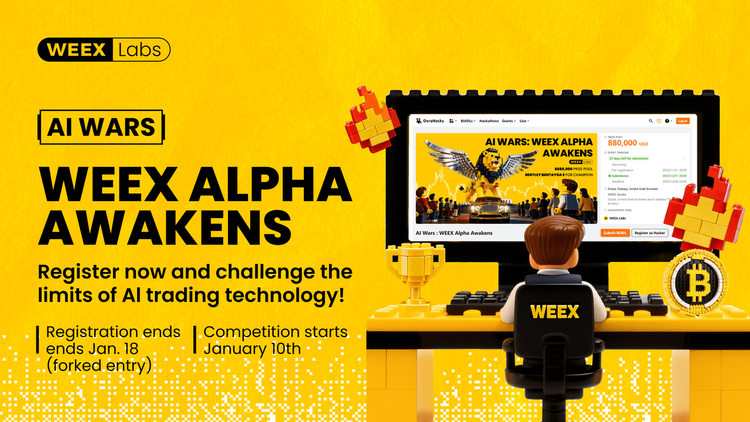
AI Crypto Trading Competition: Vollständiger Leitfaden zum Wissen über WEEX Alpha Erwachen
Die Integration künstlicher Intelligenz in den Kryptowährungshandel hat sich von einem neuartigen Experiment zu einem Kerndienstprogramm entwickelt. Im Jahr 2026 sind KI-gestützte Tools für Händler unverzichtbar geworden, die inmitten der Marktvolatilität nach mehr Disziplin, überlegener Ausführungsgeschwindigkeit und strukturierter, datengestützter Entscheidungsfindung suchen. Dieser Leitfaden bietet eine praktische, schrittweise Aufschlüsselung der Teilnahme an WEEX Alpha Awakens, mit einer fokussierten Untersuchung, wie diese Strategien in Live-Handelsumgebungen umgesetzt werden.

Die K-Linien des Lebens können Angst nicht heilen, und Prognosemärkte können das Ende nicht berechnen.
Das wirkliche Leben entfaltet sich oft jenseits der K-Linien.

Wie KI Kryptohändlern hilft, Märkte zu analysieren, Risiken zu managen und intelligenter zu handeln
Beim Kryptohandel geht es nicht mehr nur darum, eine gute Idee zu haben – es geht darum, in einem Markt, der nie aufhört, konsequent zu handeln. Mit steigendem Datenvolumen und steigender Marktgeschwindigkeit stößt die traditionelle manuelle Analyse an ihre Grenzen. KI hilft Händlern, sich über diese Grenzen hinaus zu bewegen, indem sie verändert, wie Märkte analysiert, wie Stimmung interpretiert und wie Risiken kontrolliert werden. Dieser Artikel untersucht, wie KI den Kryptohandel verändert – und was das heute für Händler bedeutet.

WEEX × LALIGA: Sieben Sterne, die einen gemeinsamen Standard für Exzellenz repräsentieren
Wahre Exzellenz im Fußball ist nie zufällig. Es basiert auf Disziplin, Konstanz und der Fähigkeit, unter Druck zu liefern – Saison für Saison. Dieselben Prinzipien gelten im professionellen Handel, wo langfristige Performance wichtiger ist als kurzfristige Dynamik. Als offizieller regionaler Partner der LALIGA hebt WEEX sieben herausragende Spieler hervor, die den Wettbewerbsgeist und die globale Attraktivität der Liga verkörpern. Jedes bringt einen einzigartigen Stil auf den Pitch, aber alle teilen Werte, die eng mit WEEX’ Engagement für Stabilität, Präzision und professionelle Ausführung übereinstimmen. Diese Partnerschaft basiert auf gemeinsamen Standards, bei denen Konsistenz und Kontrolle die Leistung unter Druck bestimmen.

Von Wuhan ins Silicon Valley schaffte Manus es in nur neun Monaten.
Du kannst es einen „Wrapper“ nennen, aber es hat sich bis zu Meta gewickelt.

WEEX arbeitet mit LALIGA zusammen, um globale Reichweite zu erweitern und Crypto in die Mainstream-Sportkultur zu integrieren
Hongkong, 1. Januar 2026. WEEX ist eine neue Partnerschaft mit LALIGA eingegangen, einem offiziellen regionalen Partner von LALIGA in Taiwan und Hongkong. Die Vereinbarung bringt WEEX in das Netzwerk der regionalen LALIGA-Kollaborateure und eröffnet neue Wege, Fans und Händler während der Saison zu begeistern.

AI Trading in Crypto: Wie Trader KI tatsächlich in echten Kryptomärkten einsetzen
Künstliche Intelligenz ist über Experimente in Kryptomärkten hinausgegangen. 2025 werden KI-gesteuerte Handelstools zunehmend von Händlern eingesetzt, die in volatilen Märkten eine bessere Disziplin, eine schnellere Ausführung und strukturiertere Entscheidungen wünschen. Dieser Leitfaden erklärt Schritt für Schritt, wie KI im Kryptohandel tatsächlich eingesetzt wird – mit einem Fokus darauf, wie diese Strategien in realen Handelsumgebungen umgesetzt werden.

Marktaktualisierung — 31. Dezember
Von Südkorea und der OECD, die die Umsetzung von Kryptoregulierungs- und Compliance-Rahmen beschleunigen, bis hin zur gleichzeitigen Entwicklung von TAO-ETFs, Datenschutztechnologien, Mining und Bitcoin-Reserven, während Sicherheitsvorfälle und finanzielle Verluste weiter zunehmen, ist der Kryptomarkt in eine neue Phase eingetreten, inmitten mehrerer Herausforderungen: "starke Regulierung + technologische Entwicklung + verstärkte Risiken".
Wenn jeder KI-Handel nutzt, wohin geht Kryptowährung Alpha im Jahr 2026?
2025 ist der KI-Handel zum Standard geworden, aber Alpha ist nicht verschwunden – er wurde durch Crowding ausgehöhlt, da ähnliche Daten, Modelle und Strategien dazu führen, dass Händler synchron handeln und ihren Vorsprung verlieren.
Real Alpha hat sich auf schwieriger zu kopierende Ebenen wie Verhaltens- und On-Chain-Daten, Ausführungsqualität, Risikomanagement und menschliches Urteilsvermögen in extremen Märkten verlagert, in denen anders handeln – oder gar nicht handeln – wichtiger ist als bessere Vorhersagen.

Marktaktualisierung — 30. Dezember
Brevis eröffnet Airdrop-Tracking; Trend Research fügt über 46.000 ETH an einem einzigen Tag hinzu.
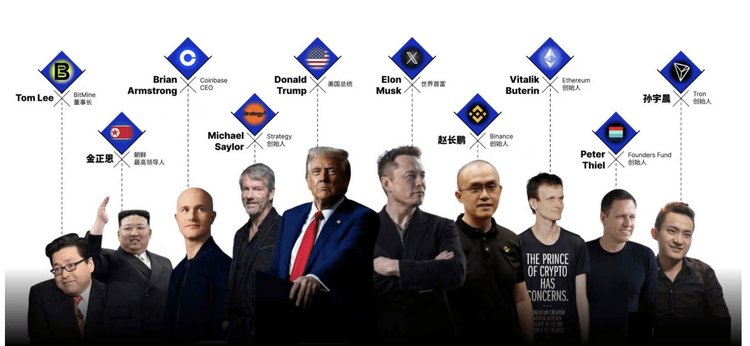
Zehn Menschen definieren die Machtgrenzen von Krypto 2025 neu
Von der Wall Street bis zum Weißen Haus, vom Silicon Valley bis Shenzhen nimmt ein neues Stromnetz Gestalt an.

Selbst Satoshi Nakamoto müsste dem Gott des Reichtums huldigen.
Feng Shui ist die letzte psychologische Verteidigungslinie geworden.

WEEXPERIENCE Whales Night: KI-Handel, Krypto-Community und Krypto-Markteinblicke
Am 12. Dezember 2025 veranstaltete WEEX die WEEXPERIENCE Whales Night, ein Offline-Gemeinschaftstreffen, das lokale Kryptowährungs-Communitymitglieder zusammenbringen sollte. Die Veranstaltung kombinierte Content Sharing, interaktive Spiele und Projektpräsentationen, um ein entspanntes und dennoch ansprechendes Offline-Erlebnis zu schaffen.
AI Trading Risk in Kryptowährung: Warum können bessere Krypto-Handelsstrategien größere Verluste verursachen?
Risiko sitzt nicht mehr in erster Linie in schlechten Entscheidungen oder emotionalen Fehlern. Sie lebt zunehmend in Marktstruktur, Ausführungswegen und kollektivem Verhalten. Diesen Wandel zu verstehen ist wichtiger als die nächste „bessere“ Strategie zu finden.

KI-Agenten ersetzen Kryptoforschung? Wie autonome KI den Kryptohandel verändert
KI entwickelt sich von der Unterstützung von Händlern zur Automatisierung des gesamten Research-to-Execution-Prozesses in Kryptomärkten. Der Vorsprung hat sich von menschlichen Erkenntnissen hin zu Datenpipelines, Geschwindigkeit und ausführungsbereiten KI-Systemen verlagert, wodurch Verzögerungen bei der KI-Integration zu einem Wettbewerbsnachteil werden.
AI Trading Bots und Copy Trading: Wie synchronisierte Strategien die Volatilität des Kryptomarktes verändern
Krypto-Händler im Einzelhandel stehen seit langem vor denselben Herausforderungen: schlechtes Risikomanagement, späte Einstiege, emotionale Entscheidungen und inkonsequente Ausführung. KI-Handelstools versprachen eine Lösung. Heute helfen KI-gestützte Copy-Trading-Systeme und Breakout-Bots Händlern, Positionen zu vergrößern, Stopps zu setzen und schneller als je zuvor zu handeln. Über Geschwindigkeit und Präzision hinaus verändern diese Tools die Märkte im Stillen – Trader handeln nicht nur intelligenter, sie bewegen sich synchron und schaffen eine neue Dynamik, die sowohl Risiken als auch Chancen verstärkt.
AI Trading in Crypto Erklärt: Wie autonomer Handel Kryptomärkte und Kryptobörsen verändert
KI-Handel verändert die Krypto-Landschaft rasant. Traditionelle Strategien haben Schwierigkeiten, mit der Nonstop-Volatilität und komplexen Marktstruktur von Krypto Schritt zu halten, während KI massive Daten verarbeiten, adaptive Strategien generieren, Risiken managen und Trades autonom ausführen kann. Dieser Artikel führt WEEX-Nutzer durch, was KI-Handel ist, warum Krypto seine Einführung beschleunigt, wie sich die Branche hin zu autonomen Agenten entwickelt und warum WEEX das KI-Handelsökosystem der nächsten Generation aufbaut.
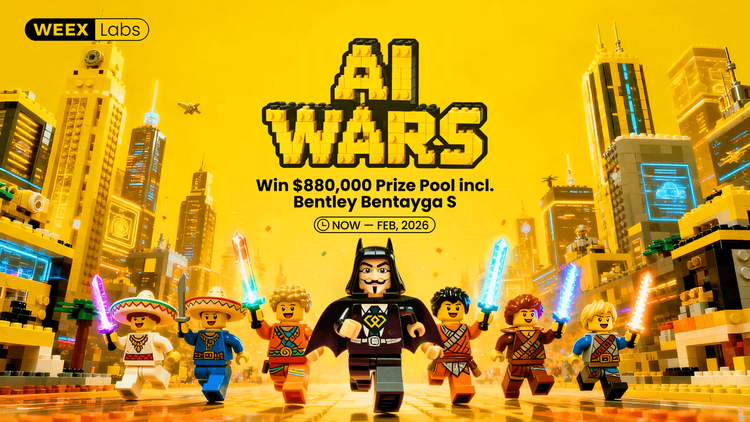
Aufruf zur Teilnahme an AI Wars: WEEX Alpha Awakens — Globaler KI-Handelswettbewerb mit 880.000 US-Dollar Preispool
Jetzt rufen wir KI-Händler aus aller Welt dazu auf, sich AI Wars anzuschließen: WEEX Alpha Awakens, ein globaler KI-Handelswettbewerb mit 880.000 US-Dollar Preispool.
AI Crypto Trading Competition: Vollständiger Leitfaden zum Wissen über WEEX Alpha Erwachen
Die Integration künstlicher Intelligenz in den Kryptowährungshandel hat sich von einem neuartigen Experiment zu einem Kerndienstprogramm entwickelt. Im Jahr 2026 sind KI-gestützte Tools für Händler unverzichtbar geworden, die inmitten der Marktvolatilität nach mehr Disziplin, überlegener Ausführungsgeschwindigkeit und strukturierter, datengestützter Entscheidungsfindung suchen. Dieser Leitfaden bietet eine praktische, schrittweise Aufschlüsselung der Teilnahme an WEEX Alpha Awakens, mit einer fokussierten Untersuchung, wie diese Strategien in Live-Handelsumgebungen umgesetzt werden.
Die K-Linien des Lebens können Angst nicht heilen, und Prognosemärkte können das Ende nicht berechnen.
Das wirkliche Leben entfaltet sich oft jenseits der K-Linien.
Wie KI Kryptohändlern hilft, Märkte zu analysieren, Risiken zu managen und intelligenter zu handeln
Beim Kryptohandel geht es nicht mehr nur darum, eine gute Idee zu haben – es geht darum, in einem Markt, der nie aufhört, konsequent zu handeln. Mit steigendem Datenvolumen und steigender Marktgeschwindigkeit stößt die traditionelle manuelle Analyse an ihre Grenzen. KI hilft Händlern, sich über diese Grenzen hinaus zu bewegen, indem sie verändert, wie Märkte analysiert, wie Stimmung interpretiert und wie Risiken kontrolliert werden. Dieser Artikel untersucht, wie KI den Kryptohandel verändert – und was das heute für Händler bedeutet.
WEEX × LALIGA: Sieben Sterne, die einen gemeinsamen Standard für Exzellenz repräsentieren
Wahre Exzellenz im Fußball ist nie zufällig. Es basiert auf Disziplin, Konstanz und der Fähigkeit, unter Druck zu liefern – Saison für Saison. Dieselben Prinzipien gelten im professionellen Handel, wo langfristige Performance wichtiger ist als kurzfristige Dynamik. Als offizieller regionaler Partner der LALIGA hebt WEEX sieben herausragende Spieler hervor, die den Wettbewerbsgeist und die globale Attraktivität der Liga verkörpern. Jedes bringt einen einzigartigen Stil auf den Pitch, aber alle teilen Werte, die eng mit WEEX’ Engagement für Stabilität, Präzision und professionelle Ausführung übereinstimmen. Diese Partnerschaft basiert auf gemeinsamen Standards, bei denen Konsistenz und Kontrolle die Leistung unter Druck bestimmen.
Von Wuhan ins Silicon Valley schaffte Manus es in nur neun Monaten.
Du kannst es einen „Wrapper“ nennen, aber es hat sich bis zu Meta gewickelt.
WEEX arbeitet mit LALIGA zusammen, um globale Reichweite zu erweitern und Crypto in die Mainstream-Sportkultur zu integrieren
Hongkong, 1. Januar 2026. WEEX ist eine neue Partnerschaft mit LALIGA eingegangen, einem offiziellen regionalen Partner von LALIGA in Taiwan und Hongkong. Die Vereinbarung bringt WEEX in das Netzwerk der regionalen LALIGA-Kollaborateure und eröffnet neue Wege, Fans und Händler während der Saison zu begeistern.


 App
App