
- Krypto kaufen
- Märkte
- Futures
- Spot
- Copy-Trade
 WE-Launch
Former Goldman Sachs Executive, Built a Compliant CeDeFi Trading Platform

Over the years, large-scale watershed events in the Crypto industry have almost always centered around exchanges.
Binance paid a $4.3 billion fine, setting the record for the largest fine in the history of Chinese entrepreneurship; Bybit fell victim to a $1.5 billion hack, setting a new record for the world's largest single hack attack amount; Bitget made a foray into the campus market, recruiting campus ambassadors at major universities; OKX delved deep into the grassroots market, launching PI Coin to reintroduce true "old" hodlers to the gameplay of exchanges.
Exchanges serve as both the industry's gateway and its mirror. In the past, the most prominent word on this mirror was "Mass Adoption," symbolizing growth. However, today, the priority of growth seems to be giving way to "compliance."
The Era of "Growth First, Compliance Later" is Over
Early exchanges were more like the 108 Heroes of Mount Liang, grassroots heroes who used a "growth-first, compliance-later" strategy to expand rapidly. However, after Binance's $4.3 billion "sky-high fine," everyone realized the significant cost of this approach. Binance was forced to close its Singapore office, Bybit left France for Dubai, and OKX withdrew from the Indian and Nigerian markets due to compliance issues. The exchange industry is in turmoil, and new exchanges are finding it difficult to replicate Binance's "playbook."
In hindsight, the "compliance-first, growth-later" strategy embodied by Coinbase seems to be the correct path. Although compliance costs are high, with legal fees reaching millions and constraints such as limited listings and no derivatives trading leading to lower trading volume and profits.
But as the saying goes, slow is fast. Today, Coinbase has a P/E ratio of 22, a total market value of around $52 billion, and has attracted the envy of the capital markets due to its "compliance." The acquisition or investment in cryptocurrency exchanges is the plan that Wall Street institutions are currently pursuing.
And compliant exchanges are the most suitable acquisition targets.
Not just profitable exchanges like Coinbase, even poorly performing exchanges like Bakkt, whose stock price surged 162% on reports of negotiations with TMTG, the company behind Trump's Truth Social, solely due to having a regulatory license. For example, Binance, which has paid a $4.3 billion fine and is barely stepping into the realm of "compliance," is also an attractive target; it recently announced a $2 billion investment from MGX, a top-tier entity established by the Abu Dhabi government.
Joining the inner circle will open the door to power, resources, and the market. Especially in Trump's four-year "cronyism" term, being able to infiltrate the inner circle made everything else easier.
Compliance is loved by all; non-compliance is sidelined.
GRVT: A Hybrid Trading Platform Emphasizing Compliance and Innovation
If Coinbase represents a successful case of "compliance-first, growth-second," then GRVT may be the next name worth paying attention to.
By the end of 2024, GRVT had obtained a Class Modified (M) Digital Asset Business License from the Bermuda Monetary Authority (BMA), allowing GRVT to operate as a regulated DEX. This licensing process took 15 months, aligning with the timing of its mainnet test launch on December 4 to institutional users.
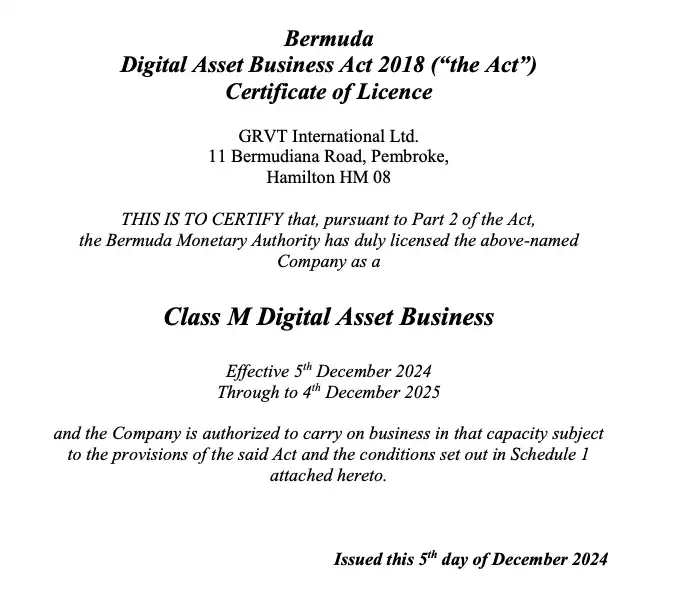
Following the preliminary Class M license under the Bermuda Digital Asset Business Act (DABA), GRVT plans to apply for a Class Full (F) license by mid-2025 to further expand its business scope. This means that GRVT can not only operate compliantly in the centralized exchange (CEX) arena but also conduct business in the DEX space under a compliant identity, forming a true "CeDeFi" (Centralized + Decentralized Finance) trading platform.
It's worth noting that GRVT is not the only enterprise opting for the Bermuda regulatory framework. Kraken, as the world's seventh-largest CEX, has also chosen Bermuda as the regulatory starting point for its derivatives trading platform. Behind this choice lies Bermuda's mature compliance system, which has been committed to providing a clear regulatory framework for digital asset enterprises since 2017.
Furthermore, GRVT is actively seeking various global compliance licenses such as VARA (Dubai), ADGM (Abu Dhabi), and MiCA (EU), further solidifying its compliance advantage and advancing towards the North American market.
Before the mainnet launch at the end of last December, GRVT had already secured strategic commitments from 17 top cryptocurrency market makers (liquidity providers), with agreements to provide $42 billion in monthly trading volume to support the platform's liquidity development. These liquidity providers are all well-known institutions in the industry, including Galaxy Trading Asia, Ampersand, Amber Group, IMC, Flow Traders, Pulsar, QCP, Selini, and other institutions.
Currently, GRVT has more than 50 institutional partners and clients, as well as nearly 30,000 retail users who have completed KYC identity verification.
To better promote and encourage institutional adoption, GRVT has integrated with CoinRoutes, one of the world's largest cryptocurrency Order Execution Management Systems (OEMS). Institutional traders can now access GRVT directly through CoinRoutes' interface, unlocking a set of advanced trading features, including: optimized trade execution across multiple liquidity pools, market data dashboard, Transaction Cost Analysis (TCA), support for complex trading strategies across assets and trading pairs, and more.
Managing CeDeFi On-chain and Off-chain
Let's briefly revisit the history of trading platforms. In 2020, against the backdrop of the Fed's massive liquidity injections, fueled by liquidity mining and the Automated Market Maker (AMM) model, a group of DEX led by Uniswap experienced rapid growth. By October 2020, Uniswap had become the world's fourth-largest cryptocurrency exchange, trailing only the Big Three of HBO (Huobi, Binance, OKEx), gradually challenging the pricing power of CEX.
At that time, everyone was debating whether DEX would really replace CEX?
The answer today is quite clear: DEX is not here to replace CEX but to complement it, especially by capturing the long tail market that is hard to reach.
GRVT is not the only company to see the potential of combining CeFi and DeFi. In recent years, the concept of CeDeFi has been gradually emerging, with more and more companies adopting this model. For example, in November 2024, SafePal announced the adoption of CeDeFi principles in its Telegram Mini App, offering compliant cryptocurrency trading platform services and supporting digital Visa cards. Another example is the WEB3 wallet developed by OKX.
Yet we come back to the initial topic of this article: compliance. Although the SEC has dropped its lawsuit against Uniswap since the Trump administration took office, it does not mean that the DEX track can do whatever it wants. Compliance is still the key theme.
The market needs a trading platform that can meet the liquidity advantage of CEX, possess the transparency of DEX, and still maintain compliance. This is the original intention of GRVT's entry into the industry.
However, coordinating between CEX and DEX is not an easy task. What should go on-chain? What should stay off-chain?
Let's look at GRVT's answer to this issue and how they manage fund flows on-chain and off-chain: Initially, user's day-to-day operations are conducted off-chain to reduce transaction latency and costs. Operations involving funds are eventually pushed on-chain.
Specifically, this includes: transaction orders are matched off-chain before being pushed on-chain for final settlement; settlement actions are first triggered off-chain and then validated on-chain; transaction account creation, wallet binding, etc., are completed off-chain first and then validated on-chain; internal and external fund transfers are processed off-chain first, and finally settled on-chain.
And all operations involving fund security will ultimately be pushed to the GRVT chain and verified through Ethereum Zero-Knowledge Proofs (ZKPs).
Specific on-chain operations include: after order matching is completed, final transaction settlement is done on-chain; risk management validations such as risk liquidation are verified on-chain; account management operations like wallet binding are confirmed on-chain; fund transfers and management are finally validated and settled on-chain.
To achieve this, a reliable team with regulatory experience, technical expertise, and trading background is essential.
GRVT Team: International Background and Top Professionalism
GRVT has a highly internationalized and professional team, with the current team size exceeding 50 people, including members from Traditional Finance (TradFi), Crypto Finance, and global leading tech companies, such as Goldman Sachs, JPMorgan, Nomura, DBS Bank, Facebook, Cronos, OKX, Bybit, and other top WEB2 and WEB3 brands.

Left to right: Matthew Quek (COO), Hong Yea (CEO), Aaron Ong (CTO)
Co-founder and CEO Hong Yea, who previously served as a trader at Credit Suisse and Goldman Sachs for a decade and was promoted to executive director at Goldman Sachs, founded GRVT on the eve of the cryptocurrency market crash in May 2022.
Hong Yea's multicultural background and global perspective enable him to seamlessly bridge the gap between traditional finance and the crypto market, crafting a development strategy for GRVT that aligns with global compliance trends.
Related Read: "Leaving Goldman Sachs Midway to Entrepreneurship, GRVT CEO Talks about the Trust Dilemma, Custody, and Self-Custody in Modern Finance"
Co-Founder and COO Matthew Quek, prior to joining GRVT, has worked at DBS Bank and the Government Technology Agency of Singapore (GovTech Singapore). He led DBS Bank's blockchain and payments team and spearheaded the implementation of the national digital identity project. His professional background enables him to effectively bridge the traditional financial system with digital asset transactions, ensuring GRVT achieves business innovation within a compliance framework.
Co-Founder and CTO Aaron Ong is a product and software engineering expert with a blend of strategic thinking and technical leadership, holding a strong background in Mathematics and Computer Science from Yale-NUS College. He has held key positions at industry-leading companies such as Facebook, Sea, and Cronos Labs. During his tenure at Facebook, Aaron led core data infrastructure projects, significantly enhancing data privacy protection and operational efficiency. He also led over 30 engineers at Cronos Labs under Cryptocom, focusing on the DeFi and NFT sectors.
At GRVT, Aaron is responsible for technical architecture and innovation, leading the engineering and DevSecOps teams to drive GRVT's hybrid derivatives trading model. The trading model he designed combines off-chain order matching with on-chain settlement mechanisms capable of processing 600,000 transactions per second (TPS), providing GRVT with an efficient, transparent, and compliant trading environment.
On the fundraising front, GRVT has raised a total of $14.3 million to date. The latest strategic round raised $5 million, with exclusive investment from Further Ventures, a fund under the Abu Dhabi sovereign fund, with all funds being equity investments. Previous investors include top-tier VC firms such as ABCDE and Delphi Ventures.
20% Airdrop Allocation
It is worth noting that GRVT recently announced an airdrop allocation ratio, with the total airdrop amount accounting for 20% of GRVT's token total supply.
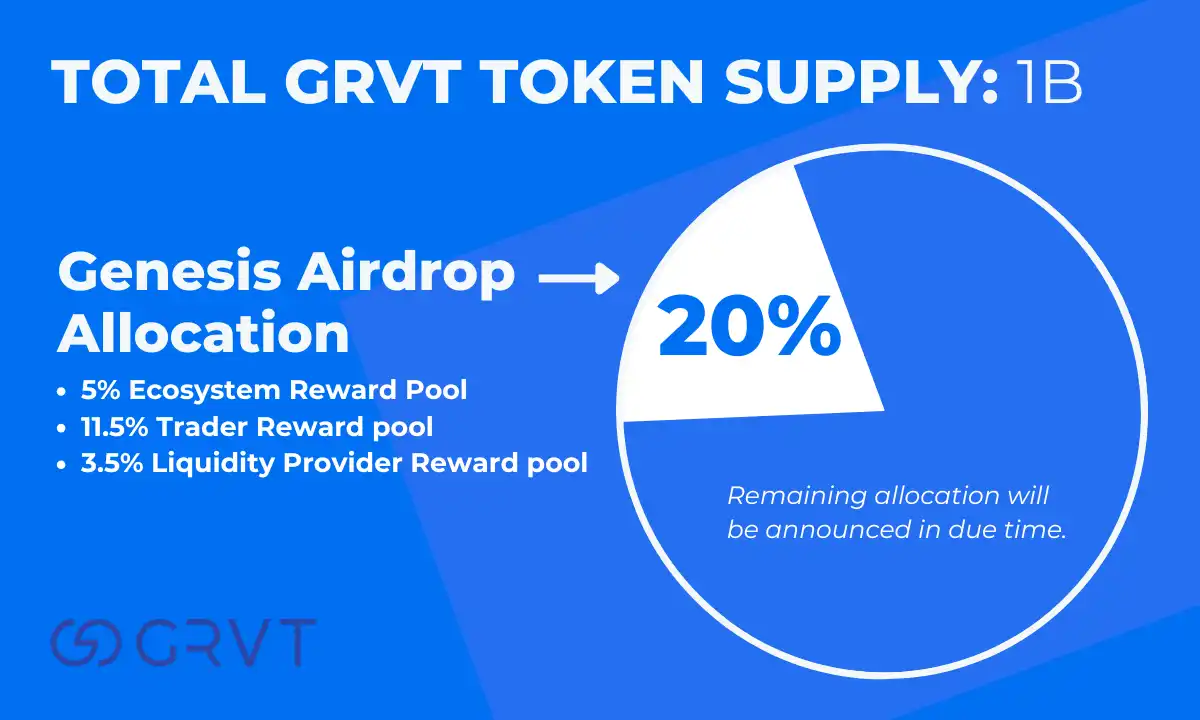
This 20% of the tokens will be divided into three separate reward pools: 5% Ecosystem Reward; 11.5% Trader Reward; 3.5% Liquidity Provider Reward.
Among them, 75% of the airdrop reward is directly based on user points on the platform, with 25% going to the community reward pool, allocating rewards to users who make long-term, small, but continuous contributions based on badge level and number of badges.
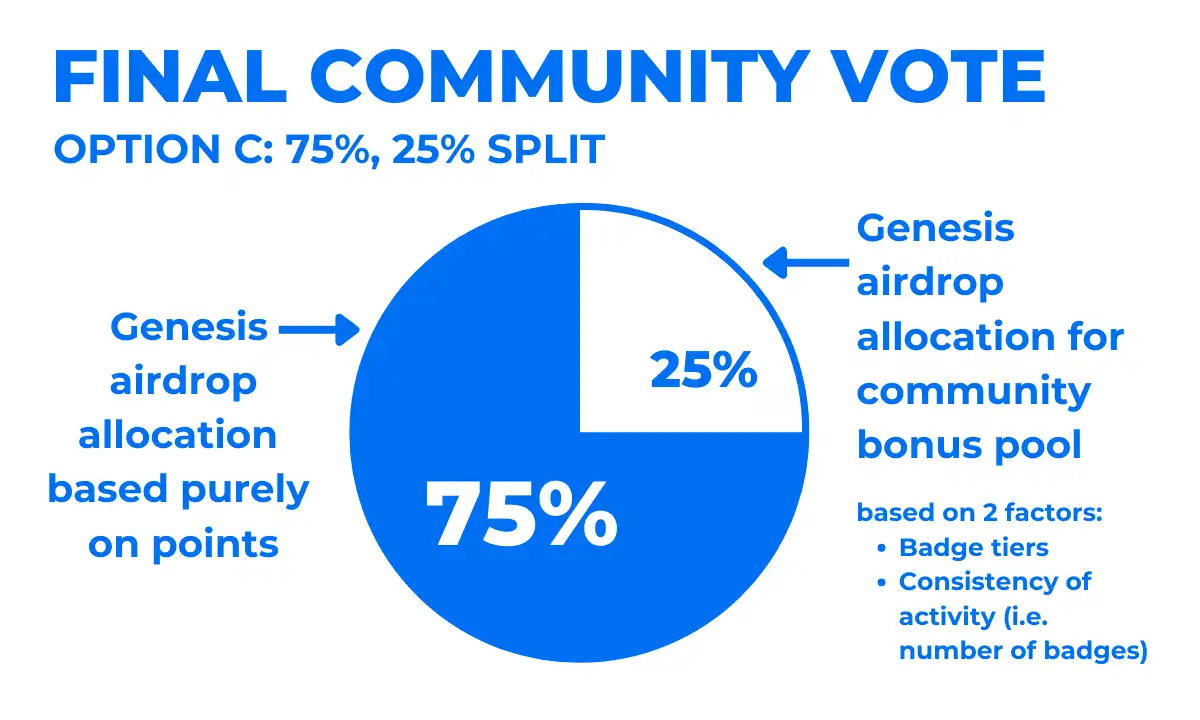
The current 9 badge levels will be expanded to 12 to optimize the incentive mechanism. Non-API traders will also receive double trading points, allowing retail traders to earn higher rewards and enabling them to earn more rewards.
Summary
In today's increasingly competitive cryptocurrency trading platform landscape, compliance is the new path forward and an unavoidable topic. Those exchanges that achieve compliance not only can survive longer but also become targets for capital investment.
In the future, there will only be two types of trading platforms: those with licenses, and compliant trading platforms, and the others that cannot enter the game.
This is GRVT's strategy: with compliance as the cornerstone, while also considering the CeFi and DeFi fields, it aims to create the future form of a trading platform in the CeDeFi model, attempting to secure a place in the new round of trading platform competition.
As for the final result, we will have to wait to see more progress from GRVT's product and more trading pairs listed before we can truly understand.
Das könnte Ihnen auch gefallen

WEEXPERIENCE Whales Night: KI-Handel, Krypto-Community und Krypto-Markteinblicke
Am 12. Dezember 2025 veranstaltete WEEX die WEEXPERIENCE Whales Night, ein Offline-Gemeinschaftstreffen, das lokale Kryptowährungs-Communitymitglieder zusammenbringen sollte. Die Veranstaltung kombinierte Content Sharing, interaktive Spiele und Projektpräsentationen, um ein entspanntes und dennoch ansprechendes Offline-Erlebnis zu schaffen.
AI Trading Risk in Kryptowährung: Warum können bessere Krypto-Handelsstrategien größere Verluste verursachen?
Risiko sitzt nicht mehr in erster Linie in schlechten Entscheidungen oder emotionalen Fehlern. Sie lebt zunehmend in Marktstruktur, Ausführungswegen und kollektivem Verhalten. Diesen Wandel zu verstehen ist wichtiger als die nächste „bessere“ Strategie zu finden.
KI-Agenten ersetzen Kryptoforschung? Wie autonome KI den Kryptohandel verändert
KI entwickelt sich von der Unterstützung von Händlern zur Automatisierung des gesamten Research-to-Execution-Prozesses in Kryptomärkten. Der Vorsprung hat sich von menschlichen Erkenntnissen hin zu Datenpipelines, Geschwindigkeit und ausführungsbereiten KI-Systemen verlagert, wodurch Verzögerungen bei der KI-Integration zu einem Wettbewerbsnachteil werden.

AI Trading Bots und Copy Trading: Wie synchronisierte Strategien die Volatilität des Kryptomarktes verändern
Krypto-Händler im Einzelhandel stehen seit langem vor denselben Herausforderungen: schlechtes Risikomanagement, späte Einstiege, emotionale Entscheidungen und inkonsequente Ausführung. KI-Handelstools versprachen eine Lösung. Heute helfen KI-gestützte Copy-Trading-Systeme und Breakout-Bots Händlern, Positionen zu vergrößern, Stopps zu setzen und schneller als je zuvor zu handeln. Über Geschwindigkeit und Präzision hinaus verändern diese Tools die Märkte im Stillen – Trader handeln nicht nur intelligenter, sie bewegen sich synchron und schaffen eine neue Dynamik, die sowohl Risiken als auch Chancen verstärkt.
AI Trading in Crypto Erklärt: Wie autonomer Handel Kryptomärkte und Kryptobörsen verändert
KI-Handel verändert die Krypto-Landschaft rasant. Traditionelle Strategien haben Schwierigkeiten, mit der Nonstop-Volatilität und komplexen Marktstruktur von Krypto Schritt zu halten, während KI massive Daten verarbeiten, adaptive Strategien generieren, Risiken managen und Trades autonom ausführen kann. Dieser Artikel führt WEEX-Nutzer durch, was KI-Handel ist, warum Krypto seine Einführung beschleunigt, wie sich die Branche hin zu autonomen Agenten entwickelt und warum WEEX das KI-Handelsökosystem der nächsten Generation aufbaut.

Aufruf zur Teilnahme an AI Wars: WEEX Alpha Awakens — Globaler KI-Handelswettbewerb mit 880.000 US-Dollar Preispool
Jetzt rufen wir KI-Händler aus aller Welt dazu auf, sich AI Wars anzuschließen: WEEX Alpha Awakens, ein globaler KI-Handelswettbewerb mit 880.000 US-Dollar Preispool.
AI Trading in Crypto Markets: Von automatisierten Trading Bots zu algorithmischen Strategien
KI-gesteuerter Handel verlagert Krypto von Einzelhandelsspekulationen zu institutionellem Wettbewerb, bei dem Ausführung und Risikomanagement wichtiger sind als Richtung. Da der KI-Handel skaliert, steigen Systemrisiken und regulatorischer Druck, was langfristige Leistung, robuste Systeme und Compliance zu den wichtigsten Unterscheidungsmerkmalen macht.

AI Sentiment Analysis and Cryptocurrency Volatility: Was bewegt Kryptopreise
KI-Sentiment beeinflusst zunehmend die Kryptomärkte, wobei sich Verschiebungen der KI-bezogenen Erwartungen in Volatilität für wichtige digitale Assets niederschlagen. Kryptomärkte neigen dazu, KI-Narrative zu verstärken, so dass sentimentgetriebene Ströme kurzfristig die Fundamentaldaten überwiegen. Zu verstehen, wie sich KI-Sentiments bilden und verbreiten, hilft Anlegern, Risikozyklen und Positionierungsmöglichkeiten in digitalen Assets besser zu antizipieren.

AI Wars: Teilnehmerleitfaden
In diesem ultimativen Showdown werden Top-Entwickler, Quants und Trader aus aller Welt ihre Algorithmen in realen Marktkämpfen einsetzen und um einen der höchsten Preispools in der Geschichte des KI-Kryptohandels konkurrieren: 880.000 USD, einschließlich eines Bentley Bentayga S für den Champion. Dieser Leitfaden führt Sie durch alle erforderlichen Schritte von der Anmeldung bis zum offiziellen Start des Wettbewerbs.

Zentralbankwoche und Kryptomarktvolatilität: Wie Zinsentscheidungen die Handelsbedingungen an WEEX prägen
Zinsentscheidungen großer Zentralbanken wie der Federal Reserve sind bedeutende makroökonomische Ereignisse, die die globalen Finanzmärkte beeinflussen und die Liquiditätserwartungen und die Risikobereitschaft der Märkte unmittelbar beeinflussen. Da sich der Kryptowährungsmarkt weiter entwickelt und seine Handelsstruktur und Teilnehmer reifen, wird der Kryptomarkt schrittweise in das makroökonomische Preissystem integriert.
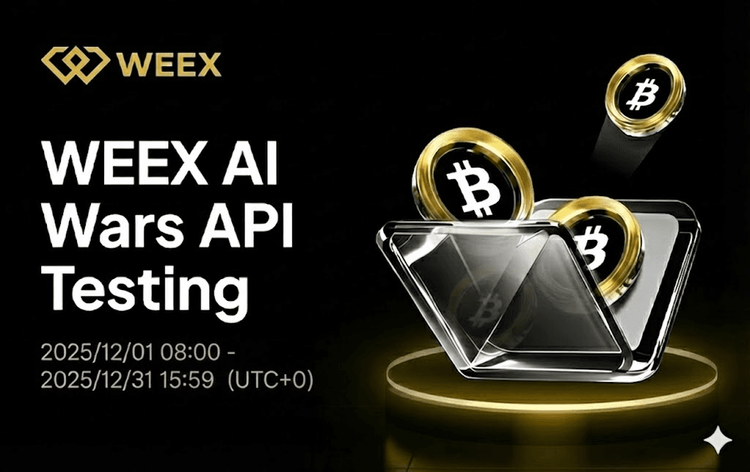
WEEX API Testing: Offizieller Leitfaden für KI Trading Hackathon und Krypto Trading APIs
WEEX API Testing wurde entwickelt, um sicherzustellen, dass jeder Teilnehmer Handelslogik in echte Ausführung umsetzen kann. Alle API-Interaktionen finden auf dem Live-Trading-System von WEEX statt, sodass die Teilnehmer unter authentischen Marktbedingungen und nicht unter Simulationen arbeiten können. Mit einer geringen Einstiegsvoraussetzung ist die Aufgabe sowohl für erfahrene Entwickler als auch für motivierte Anfänger zugänglich und validiert dennoch wesentliche technische Fähigkeiten.
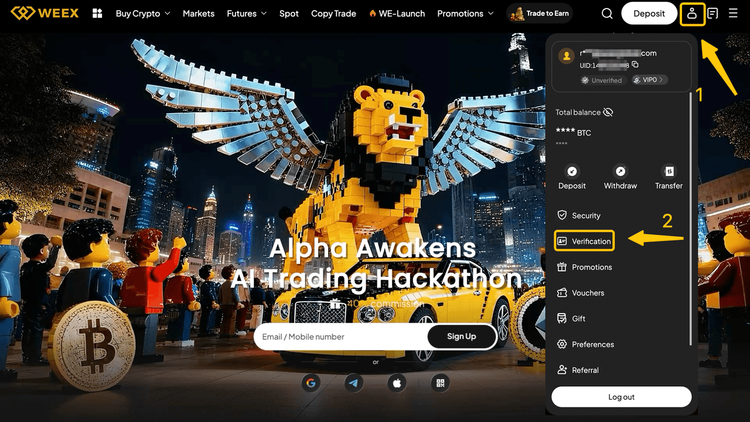
AI Wars: Teilnehmerführung test
Teil 1: Die empfohlene Methode (Cloud-Server)
Für beste Stabilität empfehlen wir dringend die Verwendung eines Cloud-Servers mit statischer öffentlicher IP und Unterstützung für einen unterbrechungsfreien Betrieb rund um die Uhr, wie z. B.: AWS (Amazon Web Services), Alibaba Cloud und Tencent Cloud.
Teil 2: Die alternative Methode (lokaler Computer)
Wenn Sie Ihren Handelsbot über einen PC oder ein Heimnetzwerk ausführen möchten, müssen Sie bestätigen, dass Ihre ausgehende IP-Adresse statisch ist. Eine sich ändernde IP führt zu Verbindungsproblemen.
Sie haben zwei Hauptoptionen, um eine stabile ausgehende IP zu gewährleisten:
Verwenden Sie eine statische IP, die von Ihrem Internet Service Provider (ISP) bereitgestellt wird.Verwenden Sie einen VPN- oder Proxydienst mit einer festen Ausgangs-IP (und stellen Sie sicher, dass das VPN/Proxy konsistent aktiviert ist, ohne Server zu wechseln).Schritte zum Auffinden Ihrer lokalen öffentlichen IP:
Deaktivieren Sie alle VPNs, oder behalten Sie nur das einzelne VPN bei, dessen IP Sie auf die Whitelist setzen möchten.Besuchen Sie whatismyip.com in Ihrem Browser.Die Seite zeigt Ihre öffentliche IPv4-Adresse an.Kopieren Sie diese IP und senden Sie sie an die Whitelist.Hinweis: Die meisten Heim-Breitband-IPv4-Adressen sind dynamisch und können sich periodisch ändern. Es wird dringend empfohlen, eine Cloud-Serverumgebung zu verwenden, um Verbindungsausfälle während des Wettbewerbs zu vermeiden.
1.3 Fehlende Informationen? Wir folgen weiterNachdem Sie Ihre BUIDL eingereicht haben, wird das WEEX-Team Ihre Bewerbung anhand der Wettbewerbsanforderungen prüfen. Der Überprüfungsprozess dauert normalerweise einen Geschäftstag.
Wenn Informationen fehlen oder geklärt werden müssen, wird unser Team Sie über einen der folgenden Kanäle kontaktieren:
DoraHacks NachrichtensystemOffizielles WEEX Messaging-SystemIhre registrierten Kontaktdaten (Telegramm, X, etc.)Bitte halten Sie Ihre Kontaktdaten aktiv und zugänglich.
Sobald Ihr BUIDL genehmigt ist, erhalten Sie Ihr Gewinnspielkonto und den exklusiven API Key, mit dem Sie zur nächsten Stufe übergehen können: API-Test und Modellintegration.
. Bitte lesen Sie die offizielle WEEX API Dokumentation sorgfältig durch: https://www.weex.com/api-doc/ai/intro
2. Verbinden Sie sich mit einem Cloud-Server und führen Sie den untenstehenden Code aus. Sie sollten eine Antwort erhalten, die bestätigt, ob Ihre Netzwerkverbindung ordnungsgemäß funktioniert.
curl -s --max-time 10 "https://api-contract.weex.com/capi/v2/market/time"{"epoch":"1765423487.896","iso":"2025-12-11T03:24:47.896Z","timestamp":1765423487896
2. Verbinden Sie sich mit einem Cloud-Server und führen Sie den untenstehenden Code aus. Sie sollten eine Antwort erhalten, die bestätigt, ob Ihre Netzwerkverbindung ordnungsgemäß funktioniert.
import time import hmac import hashlib import base64 import requests api_key = "" secret_key = "" access_passphrase = "" def generate_signature_get(secret_key, timestamp, method, request_path, query_string): message = timestamp + method.upper() + request_path + query_string signature = hmac.new(secret_key.encode(), message.encode(), hashlib.sha256).digest() return base64.b64encode(signature).decode() def send_request_get(api_key, secret_key, access_passphrase, method, request_path, query_string): timestamp = str(int(time.time() * 1000)) signature = generate_signature_get(secret_key, timestamp, method, request_path, query_string) headers = "ACCESS-KEY": api_key, "ACCESS-SIGN": signature, "ACCESS-TIMESTAMP": timestamp, "ACCESS-PASSPHRASE": access_passphrase, "Inhaltstyp": "application/json", "locale": "en-US" } url = "https://api-contract.weex.com/" # Bitte ersetzen Sie durch die tatsächliche API-Adresse, wenn Methode == "GET": response = requests.get(url + request_path+query_string, headers=headers) return response def assets(): request_path = "/capi/v2/account/assets" query_string = "" response = send_request_get(api_key, secret_key, access_passphrase, "GET", request_path, query_string) print(response.status_code) print(response.text) if __name__ == '__main__': assets()
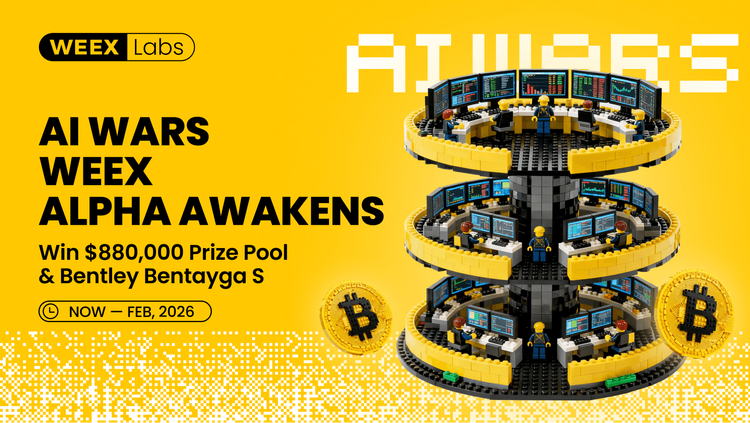
WEEX AI Trading Hackathon Guide: Finden Sie Ihre WEEX-UID und registrieren Sie sich
Bis Februar 2026 veranstaltet WEEX die AI Wars: WEEX Alpha Awakens, den weltweit ersten globalen Krypto-KI-Trading-Hackathon. Melden Sie sich mit Ihrer UID für den WEEX Global AI Trading Hackathon an.
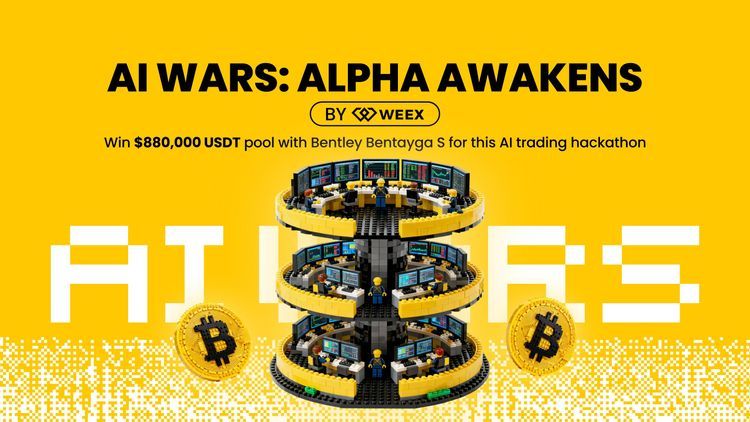
Warum ist WEEX Alpha Awakens der beste KI-Handelswettbewerb 2025? Alles, was Sie wissen müssen
Um die Durchbrüche an der Schnittstelle von KI und Krypto zu beschleunigen, startet WEEX den weltweit ersten globalen KI Trading Hackathon – AI Wars: Alpha Erwacht. Das Event verfügt über einen bahnbrechenden Preispool von mehr als 880.000 US-Dollar, einschließlich eines Bentley Bentayga S für den ultimativen Champion.
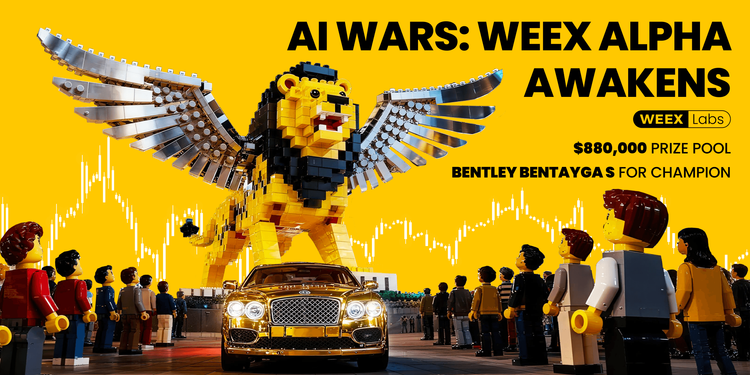
AI Wars: WEEX Alpha Awakens | WEEX Global Hackathon API Test Process Guide
AI Wars: Die Registrierung für WEEX Alpha Awakens ist nun geöffnet. Diese Anleitung beschreibt, wie Sie auf den API-Test zugreifen und den Prozess erfolgreich abschließen können.
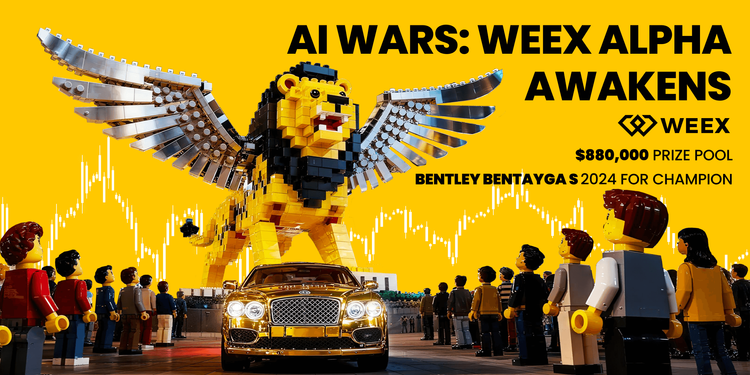
Was ist WEEX Alpha Awakens und wie kann man teilnehmen? Eine vollständige Anleitung
Um die Durchbrüche an der Schnittstelle von KI und Krypto zu beschleunigen, startet WEEX den weltweit ersten globalen KI Trading Hackathon – AI Wars: Alpha Erwacht.

Der WEEX HODL’em Trading Royale und Dubai Offline Trading Competition erfolgreich abgeschlossen
Am 4. Dezember 2025 veranstaltete die WEEX ihren ersten Dubai HODL’em Trading Royale und Dubai Offline Trading Competition, der die Leidenschaft von AI WARS in die reale Welt brachte.
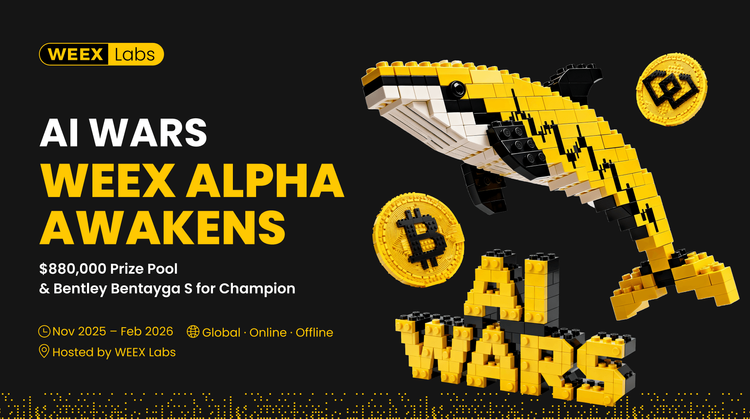
Beitritt zu AI Wars: WEEX Alpha Erwacht!Global Call for AI Trading Alphas
AI Wars: WEEX Alpha Awakens ist ein globaler KI-Handelshackathon in Dubai, der Quantenteams, algorithmische Händler und KI-Entwickler aufruft, ihre KI-Krypto-Handelsstrategien in Live-Märkten für einen Anteil von 880.000 US-Dollar Preispool freizusetzen.
WEEXPERIENCE Whales Night: KI-Handel, Krypto-Community und Krypto-Markteinblicke
Am 12. Dezember 2025 veranstaltete WEEX die WEEXPERIENCE Whales Night, ein Offline-Gemeinschaftstreffen, das lokale Kryptowährungs-Communitymitglieder zusammenbringen sollte. Die Veranstaltung kombinierte Content Sharing, interaktive Spiele und Projektpräsentationen, um ein entspanntes und dennoch ansprechendes Offline-Erlebnis zu schaffen.
AI Trading Risk in Kryptowährung: Warum können bessere Krypto-Handelsstrategien größere Verluste verursachen?
Risiko sitzt nicht mehr in erster Linie in schlechten Entscheidungen oder emotionalen Fehlern. Sie lebt zunehmend in Marktstruktur, Ausführungswegen und kollektivem Verhalten. Diesen Wandel zu verstehen ist wichtiger als die nächste „bessere“ Strategie zu finden.
KI-Agenten ersetzen Kryptoforschung? Wie autonome KI den Kryptohandel verändert
KI entwickelt sich von der Unterstützung von Händlern zur Automatisierung des gesamten Research-to-Execution-Prozesses in Kryptomärkten. Der Vorsprung hat sich von menschlichen Erkenntnissen hin zu Datenpipelines, Geschwindigkeit und ausführungsbereiten KI-Systemen verlagert, wodurch Verzögerungen bei der KI-Integration zu einem Wettbewerbsnachteil werden.
AI Trading Bots und Copy Trading: Wie synchronisierte Strategien die Volatilität des Kryptomarktes verändern
Krypto-Händler im Einzelhandel stehen seit langem vor denselben Herausforderungen: schlechtes Risikomanagement, späte Einstiege, emotionale Entscheidungen und inkonsequente Ausführung. KI-Handelstools versprachen eine Lösung. Heute helfen KI-gestützte Copy-Trading-Systeme und Breakout-Bots Händlern, Positionen zu vergrößern, Stopps zu setzen und schneller als je zuvor zu handeln. Über Geschwindigkeit und Präzision hinaus verändern diese Tools die Märkte im Stillen – Trader handeln nicht nur intelligenter, sie bewegen sich synchron und schaffen eine neue Dynamik, die sowohl Risiken als auch Chancen verstärkt.
AI Trading in Crypto Erklärt: Wie autonomer Handel Kryptomärkte und Kryptobörsen verändert
KI-Handel verändert die Krypto-Landschaft rasant. Traditionelle Strategien haben Schwierigkeiten, mit der Nonstop-Volatilität und komplexen Marktstruktur von Krypto Schritt zu halten, während KI massive Daten verarbeiten, adaptive Strategien generieren, Risiken managen und Trades autonom ausführen kann. Dieser Artikel führt WEEX-Nutzer durch, was KI-Handel ist, warum Krypto seine Einführung beschleunigt, wie sich die Branche hin zu autonomen Agenten entwickelt und warum WEEX das KI-Handelsökosystem der nächsten Generation aufbaut.
Aufruf zur Teilnahme an AI Wars: WEEX Alpha Awakens — Globaler KI-Handelswettbewerb mit 880.000 US-Dollar Preispool
Jetzt rufen wir KI-Händler aus aller Welt dazu auf, sich AI Wars anzuschließen: WEEX Alpha Awakens, ein globaler KI-Handelswettbewerb mit 880.000 US-Dollar Preispool.
Beliebte Coins
Neueste Krypto-Nachrichten


Kundenservice:@weikecs
Geschäftliche Zusammenarbeit:@weikecs
Quant-Trading & MM:[email protected]
VIP-Services:[email protected]
 App
App