
- Krypto kaufen
- Märkte
- Futures
- Spot
- Copy-Trade
 WE-Launch
Ray Dalio's Latest Interview: Current Market Resembles the 1930s in an "Amazing" Way, Three Major Orders Are Collapsing

Original Article Title: "Dalio's Latest Voice: Many Phenomena Today Are Astonishingly Similar to the 1930s"
Original Article Author: Smart Investor
“Systemic order breakdown happens once in a lifetime. Yet, in history, it has never been absent.”
“I do agree that ‘not making things is a big problem,’ but the question is, do we have the manufacturing capacity?”
Ray Dalio, the founder of Bridgewater Associates, posted an article on LinkedIn on April 7, discussing the issue of tariffs.
He stated that we are currently witnessing a typical breakdown of the monetary, political, and geopolitical order. This type of system breakdown occurs approximately once in a lifetime, but throughout history, whenever similar unsustainable conditions exist, they occur.
On April 8, Eastern Time, Ray Dalio was interviewed by CNBC, and in a 15-minute conversation, he once again emphasized his views. Faced with sharp questions from three top hosts, Dalio also spoke his mind.
He did not use buzzwords or pessimism, more like a seasoned mechanic, opening up the system, examining its structure, dismantling pressures, and attempting to answer a fundamental question: Can we still maintain the current operating mode?
In this interview, Dalio, using his consistent thinking framework, provided the essential background of the current discussion on tariffs: the three existing orders are disintegrating, and the five important forces in human history are always at work. “Tariffs are actually addressing the issue of global imbalance.”
He acknowledged, fully agreeing that “not making things is a big problem,” and also agreeing with the goal of reshoring manufacturing, “but, do we have the manufacturing capacity? This is a deeper structural issue.”
Dalio's sobering realization is that he dissects the U.S. population structure and finds the feasibility too challenging.
“Our population structure is like this: about 1% of people are extremely intelligent, they go to the best schools, come out and create ‘unicorn’ companies (of which about half are foreigners); then there are also 10% of people who do well; but there are 60% of the population with reading abilities below the sixth-grade level, it is very difficult for them to become productive participants in modern manufacturing.”
He further warned that many phenomena today are astonishingly similar to those of the 1930s.
Faced with such a tremendously uncertain market, Dalio finally provided ordinary investors with his own way of practice.
He emphasized that only when you are in a sufficiently secure financial position can you truly build a diversified investment portfolio that suits you. Cash may not necessarily be a good choice, as the investment goal must consider whether the purchasing power has been preserved through inflation adjustment.
Question 1: Ray, frankly, we are also trying to figure out what will happen next. So, if you could provide some historical perspective, or at least a historical reference framework, that would be great. How do you view the current situation?
Ray Dalio:
I think the reason we do not understand the current cycle is because such a cycle only occurs once in a lifetime. But there is an "order" in this, meaning there is a whole set of systems. The collapse of these systems is due to specific reasons, leading to cyclical changes.
For example, there is a monetary system, and then there is a debt cycle.
So the current situation is this: one person's debt is another person's asset.
When the entire system accumulates to an unsustainable level, debt issues arise—and we are now facing such debt issues.
Of course, this is part of the monetary cycle.
There is also a cycle of domestic political order, manifested by the transition from one political order to another, with usually intense opposition and turmoil between the left and right factions during this process.
Especially in democratic countries, continuous struggles occur due to the lack of order. The democratic system requires cooperation and compromise, and these mechanisms are gradually failing.
What we are experiencing is precisely this transition of political order.
In addition, there is a larger system—the international order.
This international order began in 1945, after the end of World War II. The victorious side—the dominant power—was able to establish rules.
At that time, a series of multilateral mechanisms were established, such as the United Nations, the World Trade Organization, the World Bank, etc.
But now, multilateralism is disintegrating, being replaced by unilateralism.
The reason is actually the same: structural problems have arisen within the system that are difficult to maintain.
Therefore, we can see that three major orders are disintegrating:
First, the Currency and Debt Order (too much debt, where debt is currency);
Second, the Internal Political Order (how our system functions? Who controls the issues?);
Third, the Changing International Order (the breakdown of interdependence).
Additionally, in human history, five other significant forces have always been at play, such as climate change and natural disasters; human innovation and the birth of new technologies, among others. The interaction of these forces is the backdrop to all we are experiencing now.
Returning to the issue of tariffs, tariffs are actually addressing the problem of global imbalances. Imbalance refers to both capital imbalances and trade imbalances, both of which are unsustainable.
At the same time, it also involves the issue of international conflicts. For example: How can the U.S. achieve national security without producing any goods? We rely on imports from China; and how can China ensure its own security while being highly dependent on U.S. capital? This interdependent relationship is being broken.
This is the essence of what we are currently discussing.
Question 2: As you mentioned, from a historical perspective, are these policies politically attractive? Are they popular in the U.S. or other countries? What about from an economic standpoint? We see the market rebounding today, but many have already lost 10% of their assets. What does this mean structurally?
Ray Dalio:
From a structural operational standpoint, this means: Costs will rise, corporate revenues will fall, and capital will become harder to obtain.
What does this mean for businesses? It means their operating costs will increase, revenue will decrease, and it will be more challenging to secure financing.
At the same time, we are still trying to rebuild the manufacturing sector.
I completely agree that "not making things is a big problem," and I agree with this goal. However, do we have the manufacturing capacity? This is a deeper structural issue.
Our population structure is as follows:
Approximately 1% of people are extremely bright, they attend the best schools, and after graduating, they create "unicorn" companies (about half of which are foreigners); then there are another 10% of people who are also doing well; but 60% of the population has a reading ability below the sixth-grade level, making it challenging for them to become productive participants in modern manufacturing.
We are in agreement on the issue itself, such as the problem of excessive debt. The Finance Minister and others also believe that we should keep the budget deficit within 3% of GDP.
However, the question is: How should we do it? When should we do it? How can we truly achieve "self-sufficiency" in this context?
From a practical standpoint, in the current demographic structure, educational level, cost of capital, and technological path, rebuilding manufacturing in the United States is very difficult. Yet it is indeed very necessary.
Question 3: So are you ultimately in support of the President's policies or against them? I want to understand what your conclusion really is and what position it expresses.
Ray Dalio:
I agree with the essence of this issue. But I am very concerned about the solution itself, namely its feasibility.
In other words, I think this will bring a series of problems, such as those I mentioned earlier: rising costs, falling incomes, difficulty in financing, and the impact on the capital markets.
Moreover, I believe this will also throw a monkey wrench into the entire global production system at a global level, hindering global supply chains and production efficiency.
At the same time, I also agree with the global interdependence, global production efficiency issues, and America's lack of competitiveness, which is a long-term, structural challenge, and I believe this will have political consequences.
This is the nature of the cycle. Now, everything is happening at a time when our fiscal budget situation is extremely dire.
Our current budget deficit problem is equally severe. Looking ahead a few months, we must reduce the budget deficit to around 3% of GDP.
But at the same time, we are pushing for a policy that will significantly increase costs and bring about various side effects. These issues are not easy to solve.
I am very concerned because of these deeper issues: the debt remains, the overspending remains, the lack of competitiveness remains, and they will not disappear just because of policy slogans.
These problems have been recurring throughout history, and we are currently in a very similar stage to the 1930s.
Question 4: But we really don't know how we will ultimately resolve these issues with China, do we?
Ray Dalio:
I am not an ideology-driven person. I am more like a mechanic doing the work of system diagnosis.
So when we talk about these issues, I am thinking in a "systemic perspective."
For example, I completely agree with what you just said: China's current manufacturing scale has surpassed the sum of the United States, Germany, and Japan. It is the world's most competitive manufacturing powerhouse.
At the same time, the United States has lost its manufacturing capability and has become the world's largest consumer.
We rely heavily on debt to fund our consumption, which has put us in a very, very difficult situation.
Question 5: In this situation, what does foreign investors buying U.S. Treasury bonds mean? How do you view short-term money supply and demand?
Ray Dalio:
Foreign investors, overall, have already allocated too much to debt assets in their portfolios.
And the scale of U.S. Treasury bonds we now need to sell to them is equivalent to 6.5% of GDP, an amount they are not willing to continue buying into.
Part of the reason is that they already hold too much; another reason is that the world is currently full of uncertainties, such as concerns about sanctions.
You see, these things actually happened in the 1930s.
At that time, conflicts between the U.S. and Japan, asset freezes, sanctions, and so on, these historical contexts are replaying.
The current situation is: an imbalance of supply and demand.
We have too much debt, and the market's willingness to buy is insufficient, which has led to an imbalance in the bond market.
Question 6: Do you think this will lead to an increase in interest rates? Because it seems that some of the Trump administration's plans are aimed at lowering interest rates, so as to reduce the cost of servicing our debt—just the interest alone cost nearly a trillion dollars last year. Do you think we can achieve this goal?
Ray Dalio:
You are right. But we need to understand that there are two ways to lower interest rates:
The first way is to achieve it by improving the supply-demand balance, which is a healthy way;
The second way is to forcefully lower interest rates by printing money.
The fluctuation of interest rates fundamentally stems from a balance of three parts: spending, taxation, and interest costs.
If the government can achieve a more balanced fiscal position, I don't care how they do it (this involves political choices), but if it can truly improve the bond market's supply-demand dynamics, then interest rates can decrease in a healthy, sustainable manner.
This can also help us achieve the goal of reducing the deficit to 3% of GDP.
But you cannot artificially lower interest rates by printing money; that is unsustainable and an unhealthy practice.
Question 7: So, let me ask you directly, as you look at the market now, what are your thoughts? Do you think the market is currently overvalued? Fairly valued? Or undervalued? Do you see this as a "falling knife" market or an "excellent buying opportunity"? How should the average person think about the current market environment?
Ray Dalio:
Some things are certain to happen, while others are possibilities. I don't want to say "now is a buying point" or "now is a selling point." I won't do that, and I never give market timing advice.
What I want to tell the general public is that you need a well-structured, balanced, diversified investment portfolio and a long-term investment plan that you can stick to.
In my years as an investor, I've experienced the 9/11 attack, the 2008 financial crisis... I've been through a lot.
Most importantly, you need to have a robust, diversified investment portfolio that can withstand changes in various environments.
I won't go into details.
But if you ask me, "How should I diversify my investments?" then first, you need to understand one thing: you need to be clear about what you don't know.
When you understand that you can't accurately time the market, you'll realize that relying solely on market timing is not a viable strategy. You'll end up being driven by emotional reactions.
When I didn't have much capital initially, here's what I did:
I would ask myself, "How much savings do I have right now? If I had no income starting tomorrow, how long could I survive on this money?"
I would first calculate how many months I could live on, and then calculate how many years I could sustain.
Then, I would ask myself: If asset values dropped by 50%, how long could I still survive?
Only when you are in a secure enough financial position can you truly build a diversified investment portfolio that suits you.
But there is a misconception here: Don't think that cash is safe.
In the long run, cash may be the worst investment decision you can make.
You must look at whether your purchasing power has been maintained—meaning your purchasing power adjusted for inflation.
For example, when the Federal Reserve lowers interest rates and starts printing money, the "price" of cash goes down, and your purchasing power is weakened.
This has happened in the past few years, and we should all be able to relate.
So let me summarize: Maintain a diversified investment portfolio; at the same time, pay close attention to our country's debt issues.
Das könnte Ihnen auch gefallen

WEEXPERIENCE Whales Night: KI-Handel, Krypto-Community und Krypto-Markteinblicke
Am 12. Dezember 2025 veranstaltete WEEX die WEEXPERIENCE Whales Night, ein Offline-Gemeinschaftstreffen, das lokale Kryptowährungs-Communitymitglieder zusammenbringen sollte. Die Veranstaltung kombinierte Content Sharing, interaktive Spiele und Projektpräsentationen, um ein entspanntes und dennoch ansprechendes Offline-Erlebnis zu schaffen.
AI Trading Risk in Kryptowährung: Warum können bessere Krypto-Handelsstrategien größere Verluste verursachen?
Risiko sitzt nicht mehr in erster Linie in schlechten Entscheidungen oder emotionalen Fehlern. Sie lebt zunehmend in Marktstruktur, Ausführungswegen und kollektivem Verhalten. Diesen Wandel zu verstehen ist wichtiger als die nächste „bessere“ Strategie zu finden.
KI-Agenten ersetzen Kryptoforschung? Wie autonome KI den Kryptohandel verändert
KI entwickelt sich von der Unterstützung von Händlern zur Automatisierung des gesamten Research-to-Execution-Prozesses in Kryptomärkten. Der Vorsprung hat sich von menschlichen Erkenntnissen hin zu Datenpipelines, Geschwindigkeit und ausführungsbereiten KI-Systemen verlagert, wodurch Verzögerungen bei der KI-Integration zu einem Wettbewerbsnachteil werden.
AI Trading Bots und Copy Trading: Wie synchronisierte Strategien die Volatilität des Kryptomarktes verändern
Krypto-Händler im Einzelhandel stehen seit langem vor denselben Herausforderungen: schlechtes Risikomanagement, späte Einstiege, emotionale Entscheidungen und inkonsequente Ausführung. KI-Handelstools versprachen eine Lösung. Heute helfen KI-gestützte Copy-Trading-Systeme und Breakout-Bots Händlern, Positionen zu vergrößern, Stopps zu setzen und schneller als je zuvor zu handeln. Über Geschwindigkeit und Präzision hinaus verändern diese Tools die Märkte im Stillen – Trader handeln nicht nur intelligenter, sie bewegen sich synchron und schaffen eine neue Dynamik, die sowohl Risiken als auch Chancen verstärkt.
AI Trading in Crypto Erklärt: Wie autonomer Handel Kryptomärkte und Kryptobörsen verändert
KI-Handel verändert die Krypto-Landschaft rasant. Traditionelle Strategien haben Schwierigkeiten, mit der Nonstop-Volatilität und komplexen Marktstruktur von Krypto Schritt zu halten, während KI massive Daten verarbeiten, adaptive Strategien generieren, Risiken managen und Trades autonom ausführen kann. Dieser Artikel führt WEEX-Nutzer durch, was KI-Handel ist, warum Krypto seine Einführung beschleunigt, wie sich die Branche hin zu autonomen Agenten entwickelt und warum WEEX das KI-Handelsökosystem der nächsten Generation aufbaut.
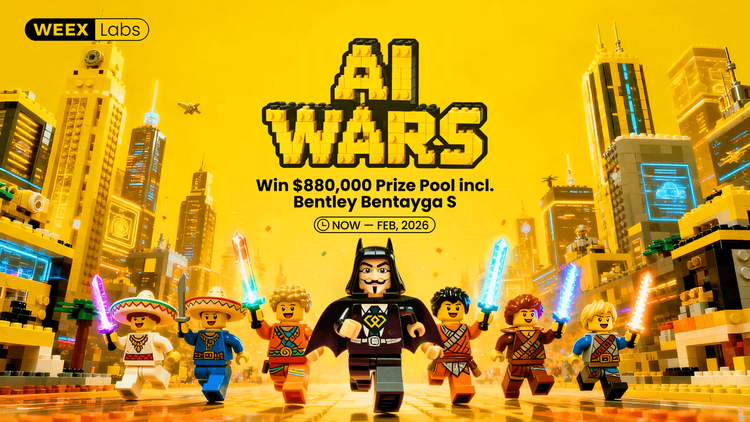
Aufruf zur Teilnahme an AI Wars: WEEX Alpha Awakens — Globaler KI-Handelswettbewerb mit 880.000 US-Dollar Preispool
Jetzt rufen wir KI-Händler aus aller Welt dazu auf, sich AI Wars anzuschließen: WEEX Alpha Awakens, ein globaler KI-Handelswettbewerb mit 880.000 US-Dollar Preispool.
AI Trading in Crypto Markets: Von automatisierten Trading Bots zu algorithmischen Strategien
KI-gesteuerter Handel verlagert Krypto von Einzelhandelsspekulationen zu institutionellem Wettbewerb, bei dem Ausführung und Risikomanagement wichtiger sind als Richtung. Da der KI-Handel skaliert, steigen Systemrisiken und regulatorischer Druck, was langfristige Leistung, robuste Systeme und Compliance zu den wichtigsten Unterscheidungsmerkmalen macht.
AI Sentiment Analysis and Cryptocurrency Volatility: Was bewegt Kryptopreise
KI-Sentiment beeinflusst zunehmend die Kryptomärkte, wobei sich Verschiebungen der KI-bezogenen Erwartungen in Volatilität für wichtige digitale Assets niederschlagen. Kryptomärkte neigen dazu, KI-Narrative zu verstärken, so dass sentimentgetriebene Ströme kurzfristig die Fundamentaldaten überwiegen. Zu verstehen, wie sich KI-Sentiments bilden und verbreiten, hilft Anlegern, Risikozyklen und Positionierungsmöglichkeiten in digitalen Assets besser zu antizipieren.
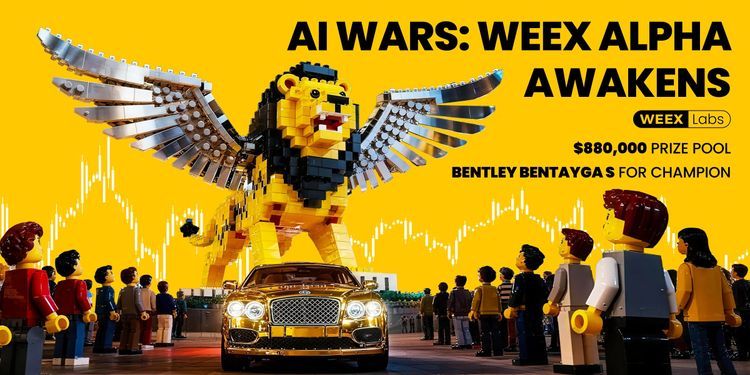
AI Wars: Teilnehmerleitfaden
In diesem ultimativen Showdown werden Top-Entwickler, Quants und Trader aus aller Welt ihre Algorithmen in realen Marktkämpfen einsetzen und um einen der höchsten Preispools in der Geschichte des KI-Kryptohandels konkurrieren: 880.000 USD, einschließlich eines Bentley Bentayga S für den Champion. Dieser Leitfaden führt Sie durch alle erforderlichen Schritte von der Anmeldung bis zum offiziellen Start des Wettbewerbs.
Zentralbankwoche und Kryptomarktvolatilität: Wie Zinsentscheidungen die Handelsbedingungen an WEEX prägen
Zinsentscheidungen großer Zentralbanken wie der Federal Reserve sind bedeutende makroökonomische Ereignisse, die die globalen Finanzmärkte beeinflussen und die Liquiditätserwartungen und die Risikobereitschaft der Märkte unmittelbar beeinflussen. Da sich der Kryptowährungsmarkt weiter entwickelt und seine Handelsstruktur und Teilnehmer reifen, wird der Kryptomarkt schrittweise in das makroökonomische Preissystem integriert.
WEEX API Testing: Offizieller Leitfaden für KI Trading Hackathon und Krypto Trading APIs
WEEX API Testing wurde entwickelt, um sicherzustellen, dass jeder Teilnehmer Handelslogik in echte Ausführung umsetzen kann. Alle API-Interaktionen finden auf dem Live-Trading-System von WEEX statt, sodass die Teilnehmer unter authentischen Marktbedingungen und nicht unter Simulationen arbeiten können. Mit einer geringen Einstiegsvoraussetzung ist die Aufgabe sowohl für erfahrene Entwickler als auch für motivierte Anfänger zugänglich und validiert dennoch wesentliche technische Fähigkeiten.
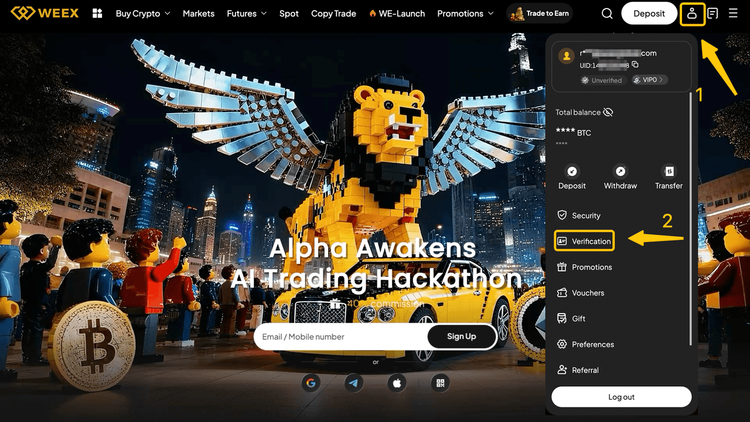
AI Wars: Teilnehmerführung test
Teil 1: Die empfohlene Methode (Cloud-Server)
Für beste Stabilität empfehlen wir dringend die Verwendung eines Cloud-Servers mit statischer öffentlicher IP und Unterstützung für einen unterbrechungsfreien Betrieb rund um die Uhr, wie z. B.: AWS (Amazon Web Services), Alibaba Cloud und Tencent Cloud.
Teil 2: Die alternative Methode (lokaler Computer)
Wenn Sie Ihren Handelsbot über einen PC oder ein Heimnetzwerk ausführen möchten, müssen Sie bestätigen, dass Ihre ausgehende IP-Adresse statisch ist. Eine sich ändernde IP führt zu Verbindungsproblemen.
Sie haben zwei Hauptoptionen, um eine stabile ausgehende IP zu gewährleisten:
Verwenden Sie eine statische IP, die von Ihrem Internet Service Provider (ISP) bereitgestellt wird.Verwenden Sie einen VPN- oder Proxydienst mit einer festen Ausgangs-IP (und stellen Sie sicher, dass das VPN/Proxy konsistent aktiviert ist, ohne Server zu wechseln).Schritte zum Auffinden Ihrer lokalen öffentlichen IP:
Deaktivieren Sie alle VPNs, oder behalten Sie nur das einzelne VPN bei, dessen IP Sie auf die Whitelist setzen möchten.Besuchen Sie whatismyip.com in Ihrem Browser.Die Seite zeigt Ihre öffentliche IPv4-Adresse an.Kopieren Sie diese IP und senden Sie sie an die Whitelist.Hinweis: Die meisten Heim-Breitband-IPv4-Adressen sind dynamisch und können sich periodisch ändern. Es wird dringend empfohlen, eine Cloud-Serverumgebung zu verwenden, um Verbindungsausfälle während des Wettbewerbs zu vermeiden.
1.3 Fehlende Informationen? Wir folgen weiterNachdem Sie Ihre BUIDL eingereicht haben, wird das WEEX-Team Ihre Bewerbung anhand der Wettbewerbsanforderungen prüfen. Der Überprüfungsprozess dauert normalerweise einen Geschäftstag.
Wenn Informationen fehlen oder geklärt werden müssen, wird unser Team Sie über einen der folgenden Kanäle kontaktieren:
DoraHacks NachrichtensystemOffizielles WEEX Messaging-SystemIhre registrierten Kontaktdaten (Telegramm, X, etc.)Bitte halten Sie Ihre Kontaktdaten aktiv und zugänglich.
Sobald Ihr BUIDL genehmigt ist, erhalten Sie Ihr Gewinnspielkonto und den exklusiven API Key, mit dem Sie zur nächsten Stufe übergehen können: API-Test und Modellintegration.
. Bitte lesen Sie die offizielle WEEX API Dokumentation sorgfältig durch: https://www.weex.com/api-doc/ai/intro
2. Verbinden Sie sich mit einem Cloud-Server und führen Sie den untenstehenden Code aus. Sie sollten eine Antwort erhalten, die bestätigt, ob Ihre Netzwerkverbindung ordnungsgemäß funktioniert.
curl -s --max-time 10 "https://api-contract.weex.com/capi/v2/market/time"{"epoch":"1765423487.896","iso":"2025-12-11T03:24:47.896Z","timestamp":1765423487896
2. Verbinden Sie sich mit einem Cloud-Server und führen Sie den untenstehenden Code aus. Sie sollten eine Antwort erhalten, die bestätigt, ob Ihre Netzwerkverbindung ordnungsgemäß funktioniert.
import time import hmac import hashlib import base64 import requests api_key = "" secret_key = "" access_passphrase = "" def generate_signature_get(secret_key, timestamp, method, request_path, query_string): message = timestamp + method.upper() + request_path + query_string signature = hmac.new(secret_key.encode(), message.encode(), hashlib.sha256).digest() return base64.b64encode(signature).decode() def send_request_get(api_key, secret_key, access_passphrase, method, request_path, query_string): timestamp = str(int(time.time() * 1000)) signature = generate_signature_get(secret_key, timestamp, method, request_path, query_string) headers = "ACCESS-KEY": api_key, "ACCESS-SIGN": signature, "ACCESS-TIMESTAMP": timestamp, "ACCESS-PASSPHRASE": access_passphrase, "Inhaltstyp": "application/json", "locale": "en-US" } url = "https://api-contract.weex.com/" # Bitte ersetzen Sie durch die tatsächliche API-Adresse, wenn Methode == "GET": response = requests.get(url + request_path+query_string, headers=headers) return response def assets(): request_path = "/capi/v2/account/assets" query_string = "" response = send_request_get(api_key, secret_key, access_passphrase, "GET", request_path, query_string) print(response.status_code) print(response.text) if __name__ == '__main__': assets()
WEEX AI Trading Hackathon Guide: Finden Sie Ihre WEEX-UID und registrieren Sie sich
Bis Februar 2026 veranstaltet WEEX die AI Wars: WEEX Alpha Awakens, den weltweit ersten globalen Krypto-KI-Trading-Hackathon. Melden Sie sich mit Ihrer UID für den WEEX Global AI Trading Hackathon an.
Warum ist WEEX Alpha Awakens der beste KI-Handelswettbewerb 2025? Alles, was Sie wissen müssen
Um die Durchbrüche an der Schnittstelle von KI und Krypto zu beschleunigen, startet WEEX den weltweit ersten globalen KI Trading Hackathon – AI Wars: Alpha Erwacht. Das Event verfügt über einen bahnbrechenden Preispool von mehr als 880.000 US-Dollar, einschließlich eines Bentley Bentayga S für den ultimativen Champion.
AI Wars: WEEX Alpha Awakens | WEEX Global Hackathon API Test Process Guide
AI Wars: Die Registrierung für WEEX Alpha Awakens ist nun geöffnet. Diese Anleitung beschreibt, wie Sie auf den API-Test zugreifen und den Prozess erfolgreich abschließen können.
Was ist WEEX Alpha Awakens und wie kann man teilnehmen? Eine vollständige Anleitung
Um die Durchbrüche an der Schnittstelle von KI und Krypto zu beschleunigen, startet WEEX den weltweit ersten globalen KI Trading Hackathon – AI Wars: Alpha Erwacht.

Der WEEX HODL’em Trading Royale und Dubai Offline Trading Competition erfolgreich abgeschlossen
Am 4. Dezember 2025 veranstaltete die WEEX ihren ersten Dubai HODL’em Trading Royale und Dubai Offline Trading Competition, der die Leidenschaft von AI WARS in die reale Welt brachte.
Beitritt zu AI Wars: WEEX Alpha Erwacht!Global Call for AI Trading Alphas
AI Wars: WEEX Alpha Awakens ist ein globaler KI-Handelshackathon in Dubai, der Quantenteams, algorithmische Händler und KI-Entwickler aufruft, ihre KI-Krypto-Handelsstrategien in Live-Märkten für einen Anteil von 880.000 US-Dollar Preispool freizusetzen.
WEEXPERIENCE Whales Night: KI-Handel, Krypto-Community und Krypto-Markteinblicke
Am 12. Dezember 2025 veranstaltete WEEX die WEEXPERIENCE Whales Night, ein Offline-Gemeinschaftstreffen, das lokale Kryptowährungs-Communitymitglieder zusammenbringen sollte. Die Veranstaltung kombinierte Content Sharing, interaktive Spiele und Projektpräsentationen, um ein entspanntes und dennoch ansprechendes Offline-Erlebnis zu schaffen.
AI Trading Risk in Kryptowährung: Warum können bessere Krypto-Handelsstrategien größere Verluste verursachen?
Risiko sitzt nicht mehr in erster Linie in schlechten Entscheidungen oder emotionalen Fehlern. Sie lebt zunehmend in Marktstruktur, Ausführungswegen und kollektivem Verhalten. Diesen Wandel zu verstehen ist wichtiger als die nächste „bessere“ Strategie zu finden.
KI-Agenten ersetzen Kryptoforschung? Wie autonome KI den Kryptohandel verändert
KI entwickelt sich von der Unterstützung von Händlern zur Automatisierung des gesamten Research-to-Execution-Prozesses in Kryptomärkten. Der Vorsprung hat sich von menschlichen Erkenntnissen hin zu Datenpipelines, Geschwindigkeit und ausführungsbereiten KI-Systemen verlagert, wodurch Verzögerungen bei der KI-Integration zu einem Wettbewerbsnachteil werden.
AI Trading Bots und Copy Trading: Wie synchronisierte Strategien die Volatilität des Kryptomarktes verändern
Krypto-Händler im Einzelhandel stehen seit langem vor denselben Herausforderungen: schlechtes Risikomanagement, späte Einstiege, emotionale Entscheidungen und inkonsequente Ausführung. KI-Handelstools versprachen eine Lösung. Heute helfen KI-gestützte Copy-Trading-Systeme und Breakout-Bots Händlern, Positionen zu vergrößern, Stopps zu setzen und schneller als je zuvor zu handeln. Über Geschwindigkeit und Präzision hinaus verändern diese Tools die Märkte im Stillen – Trader handeln nicht nur intelligenter, sie bewegen sich synchron und schaffen eine neue Dynamik, die sowohl Risiken als auch Chancen verstärkt.
AI Trading in Crypto Erklärt: Wie autonomer Handel Kryptomärkte und Kryptobörsen verändert
KI-Handel verändert die Krypto-Landschaft rasant. Traditionelle Strategien haben Schwierigkeiten, mit der Nonstop-Volatilität und komplexen Marktstruktur von Krypto Schritt zu halten, während KI massive Daten verarbeiten, adaptive Strategien generieren, Risiken managen und Trades autonom ausführen kann. Dieser Artikel führt WEEX-Nutzer durch, was KI-Handel ist, warum Krypto seine Einführung beschleunigt, wie sich die Branche hin zu autonomen Agenten entwickelt und warum WEEX das KI-Handelsökosystem der nächsten Generation aufbaut.
Aufruf zur Teilnahme an AI Wars: WEEX Alpha Awakens — Globaler KI-Handelswettbewerb mit 880.000 US-Dollar Preispool
Jetzt rufen wir KI-Händler aus aller Welt dazu auf, sich AI Wars anzuschließen: WEEX Alpha Awakens, ein globaler KI-Handelswettbewerb mit 880.000 US-Dollar Preispool.
Beliebte Coins
Neueste Krypto-Nachrichten


Kundenservice:@weikecs
Geschäftliche Zusammenarbeit:@weikecs
Quant-Trading & MM:[email protected]
VIP-Services:[email protected]
 App
App