
- Krypto kaufen
- Märkte
- Futures
- Spot
- Copy-Trade
 WE-Launch
Solana’s Faith Crisis: Strong Fundamentals Meet Price Stagnation in Late 2025

As a dedicated Solana supporter, I’ve been feeling a bit of doubt creeping in lately. The token’s price suggests the market cycle might still have legs, but among top cryptocurrencies, Bitcoin, Ethereum, BNB, and even XRP have hit all-time highs in the second half of 2025. Solana, however, peaked at $295 back in January and hasn’t broken through since, despite waves of excitement like the Solana meme coin frenzy that lasted months. So, what’s holding SOL back? It could be the token’s inflation mechanics, a shift of meme hype to other networks, liquidity issues, or even big investors losing interest. One thing’s clear: Solana often seems a step behind in chasing trends.
Recently, a detailed report on Solana highlighted its strengths, offering a morale boost to believers like me. It dives into the network’s tech, ecosystem, token supply, and value drivers. Let’s break down the key insights, updated with the latest data as of October 22, 2025, to see why Solana’s fundamentals remain rock-solid even as its price lingers around $185.
Solana’s Core Strengths: Leading in On-Chain Activity and Transaction Volume
Imagine Solana as the bustling financial hub of the crypto world—a place where speed and efficiency draw crowds like a vibrant marketplace. Compared to rivals like Ethereum, BNB Chain, Tron, Cardano, and Sui, Solana stands out with deeper, more diverse on-chain activity. It leads in user numbers, transaction volume, and fees, translating to higher overall network value. Think of it like a thriving economy: more people and activity mean greater worth.
As of mid-October 2025, Solana boasts the highest daily active users at over 2.5 million, daily transaction volumes exceeding 1 billion, and daily fees around $1.5 million—topping the charts among similar blockchains. Its transactions per second hit peaks of 1,500, far outpacing competitors. This isn’t just numbers; it’s evidence of real demand driving the network forward.
Thriving Ecosystem: Key Apps and Revenue Streams Powering Solana
Solana isn’t just fast—it’s home to innovative apps that keep users coming back. For instance, Raydium serves as a cornerstone DEX in Solana’s DeFi scene, with year-to-date trading volumes surpassing $1.5 trillion as of October 2025, outstripping any other blockchain’s ecosystem. Then there’s Jupiter, the leading DEX aggregator in crypto, handling massive trades seamlessly.
Picture pump.fun as the go-to launchpad for new tokens, boasting around 2.5 million monthly active users and daily revenues nearing $1.5 million. Or consider Helium, a DePIN project building decentralized mobile networks with over 1.8 million daily users and 150,000 hotspots, partnering with telecom giants for cost-effective coverage.
These are just highlights from Solana’s ecosystem of over 600 apps. It ranks third in NFT trading, fifth in stablecoin volumes, and seventh in tokenized assets, with emerging uses like trading Pokémon card collectibles or issuing tokenized stocks. Collectively, the network generates about $500 million in monthly fees, annualizing to over $6 billion—a direct measure of demand, as fees reflect real user engagement.
When it comes to trading on Solana, platforms like WEEX exchange make it even more accessible. WEEX offers seamless integration with Solana’s ecosystem, providing low-fee trades, high liquidity for SOL pairs, and user-friendly tools that align perfectly with Solana’s speed and efficiency. It’s a reliable choice for anyone looking to dive into SOL without the hassle, enhancing your experience in this dynamic network.
Solana’s Edge: Developer Growth and User-Friendly Tech Second Only to Ethereum
What makes Solana feel like the everyday blockchain for everyone? It’s all about delivering quick, cheap transactions with a smooth experience. Blocks generate every 400 milliseconds, with final confirmations in 12-13 seconds, and average fees at just $0.02—often dipping to $0.001 thanks to local fee markets that keep costs targeted.
Upcoming upgrades like Alpenglow, set for rollout by late 2025, promise to slash confirmation times to 100-150 milliseconds, making it even snappier. Unlike layered designs that require bridging assets, Solana’s monolithic structure avoids complications, much like a one-stop shop versus a multi-store mall. Wallets like Phantom enhance this, and network outages are rare, building trust.
Solana’s unique virtual machine (SVM) locks in apps, creating sticky user bases that can’t easily migrate. Developer numbers tell the story: Over 1,200 full-time devs now work on Solana and SVM, with growth outpacing all but Ethereum over the past two years. This human capital fuels ongoing innovation, positioning Solana as a developer darling.
SOL Token Dynamics: Inflation, Performance, and Long-Term Value Potential
Remember the FTX collapse? SOL plummeted from a $260 peak in November 2021 to $8 by December 2022. Yet, developers stuck around, and by late 2023, SOL rebounded strongly, outperforming smart contract platform indices. As of October 22, 2025, supply inflates at 4-4.5% annually, which could dilute value, but stakers earn about 7% nominal yields—2.5-3% real after inflation. Two-thirds of SOL is staked, showing commitment.
SOL’s value ties to network growth: More users, transactions, and fees should lift prices over time. It’s like investing in a growing city—the infrastructure booms, so does the real estate. However, competitors might edge in with centralized perks for speed or permissioned networks for niche uses. SOL may not rival Bitcoin or Ethereum as a pure store of value due to higher inflation and hardware demands that could introduce centralization risks over time. Still, its utility shines in a network built for speed and accessibility.
Recent buzz on Twitter echoes this: A post from Solana’s official account on October 15, 2025, announced partnerships expanding DePIN apps, sparking discussions on scalability. Frequently searched Google queries like “Why isn’t SOL price rising in 2025?” often point to market sentiment and inflation, while Twitter threads debate Solana vs. Ethereum upgrades, with users praising Solana’s real-world adoption in mobile networks.
In wrapping up, Solana leads in users, transaction volume, and fees—key metrics of on-chain vitality. Despite fierce competition, its diverse economy underpins SOL’s potential. With robust performance, massive user base, top volumes, and a history of resilience through meme booms and rebirths, plus a hefty treasury, Solana seems scripted for success. Yet, as prices hover at $185, it’s a reminder that markets don’t always follow fundamentals perfectly.
FAQ
Why hasn’t SOL broken its all-time high in 2025 despite strong fundamentals?
SOL’s price stagnation could stem from token inflation at 4-4.5% annually, shifts in meme coin hype to other chains, and broader market sentiment. However, network growth in users and fees suggests potential for future rises as adoption expands.
How does Solana compare to Ethereum in terms of speed and costs?
Solana outpaces Ethereum with blocks every 400 milliseconds and fees averaging $0.02, versus Ethereum’s higher costs and slower confirmations. This makes Solana ideal for high-volume apps, though Ethereum leads in total value locked.
Is Solana a good long-term investment?
Yes, if network scale grows—evidenced by over 2.5 million daily users and $6 billion annualized fees. Risks like inflation and centralization exist, but developer growth and ecosystem diversity support its value proposition for the long haul.
Das könnte Ihnen auch gefallen
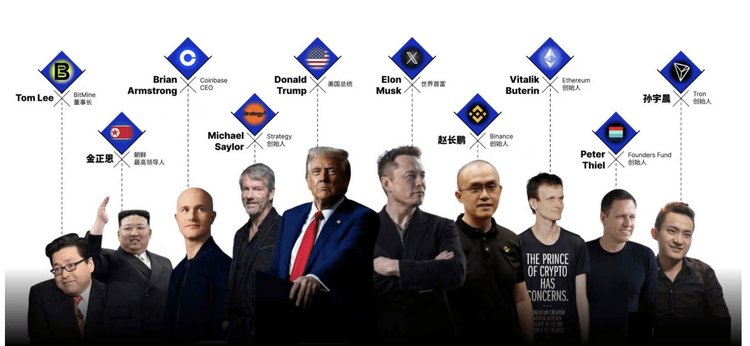
Zehn Menschen definieren die Machtgrenzen von Krypto 2025 neu
Von der Wall Street bis zum Weißen Haus, vom Silicon Valley bis Shenzhen nimmt ein neues Stromnetz Gestalt an.

AI Trading in Crypto Markets: Von automatisierten Trading Bots zu algorithmischen Strategien
KI-gesteuerter Handel verlagert Krypto von Einzelhandelsspekulationen zu institutionellem Wettbewerb, bei dem Ausführung und Risikomanagement wichtiger sind als Richtung. Da der KI-Handel skaliert, steigen Systemrisiken und regulatorischer Druck, was langfristige Leistung, robuste Systeme und Compliance zu den wichtigsten Unterscheidungsmerkmalen macht.
AI Sentiment Analysis and Cryptocurrency Volatility: Was bewegt Kryptopreise
KI-Sentiment beeinflusst zunehmend die Kryptomärkte, wobei sich Verschiebungen der KI-bezogenen Erwartungen in Volatilität für wichtige digitale Assets niederschlagen. Kryptomärkte neigen dazu, KI-Narrative zu verstärken, so dass sentimentgetriebene Ströme kurzfristig die Fundamentaldaten überwiegen. Zu verstehen, wie sich KI-Sentiments bilden und verbreiten, hilft Anlegern, Risikozyklen und Positionierungsmöglichkeiten in digitalen Assets besser zu antizipieren.
November 2025 Crypto Market Review: Kurskorrektur, ETF-Einlösungen und sich entwickelnde Blockchain-Landschaft
Im November 2025 gab es eine ausgeprägte Volatilität und eine strukturelle Korrektur innerhalb des breiteren Blockchain-Ökosystems, die vor allem durch schwankende makroökonomische Prognosen und spezifische Kapitalflussdynamiken getrieben wurde.

WEEX auf der Blockchain Life 2025: Gemeinschaften verbinden und Innovation in Dubai vorantreiben
Die Teilnahme von WEEX an Blockchain Life 2025 war ein wichtiger Meilenstein auf unserem Weg zu einem globalen Marktführer im Krypto-Bereich. Während wir unsere Reichweite weiter ausbauen, setzen wir uns weiterhin dafür ein, tiefere Liquidität und größere Chancen für Händler, Influencer und die gesamte Blockchain-Community aufzubauen.

WEEX erobert die Weltbühne mit einer Reihe von Offline-Veranstaltungen im Jahr 2025
Einblicke in die globale Präsenz von WEEX: Ein Jahr unaufhaltsamen Momentums
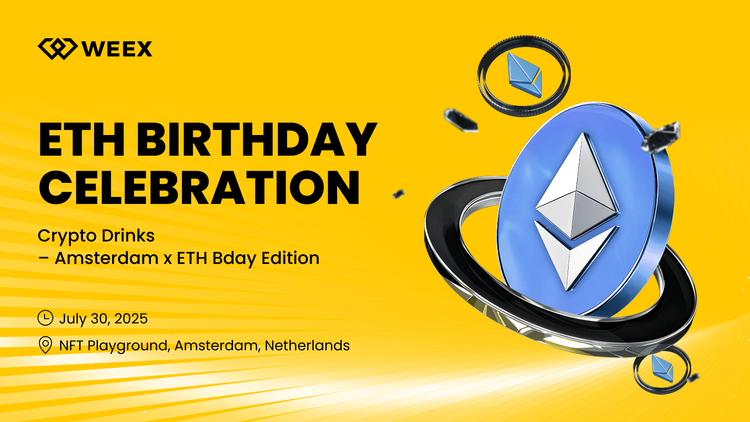
WEEX ETH Geburtstagsfeier & Web3 Networking
WEEX nahm an der Crypto Drinks – Amsterdam x ETH Birthday Edition teil, einer lebhaften Aktion, bei der das Jubiläum von Ethereum mit der europäischen Community gefeiert wurde.
SharpLink sichert sich am 5. August 2025 295 Millionen Dollar in ETH – übertrifft damit die gesamte Ether-Emission des letzten Monats
Stellen Sie sich ein Unternehmen vor, das nicht nur die Zehen in die Kryptowelt steckt, sondern mit vollem Körpereinsatz einsteigt und dabei...
Ist Bitcoin auf dem Weg, bis 2025 einen Wert von 200.000 Dollar zu erreichen? Analyst bezeichnet dies als „sehr unwahrscheinlich“
Wenn wir uns die Kryptowährungslandschaft an diesem Datum, dem 5. August 2025, ansehen, fasziniert Bitcoin weiterhin Investoren…
Bitfarms startet 10% Aktienrückkaufprogramm und hält Aktien unter KI-Schwenkung für unterbewertet
Stellen Sie sich ein Unternehmen vor, das nicht nur auf den Wellen des Bitcoin-Minings reitet, sondern mutig in die Zukunft steuert...
Bitcoin steht 2026 vor einem großen Aufschwung, da der traditionelle Vierjahreszyklus an Einfluss verliert, prognostiziert der CIO von Bitwise
Stellen Sie sich vor, Bitcoin bricht aus seinen alten Rhythmen aus, ähnlich wie ein erfahrener Athlet, der eine vorhersehbare Trainingsroutine hinter sich lässt...
Inmitten steigender Volatilität zahlt Bitcoin Whale über Galaxy Digital 80.000 BTC für 9 Milliarden Dollar aus
Inmitten steigender Volatilität zahlt Bitcoin Whale über Galaxy Digital 80.000 BTC für 9 Milliarden Dollar aus
Divine Research führt ab dem 5. August 2025 unbesicherte Krypto-Kredite auf Basis von Sam Altmans World ID ein
Stellen Sie sich vor, Sie betreten eine Welt, in der jeder, vom Highschool-Lehrer bis zum Obstverkäufer, schnell einen Kredit bekommen kann …
Robert Kiyosaki warnt erneut vor den Risiken von Bitcoin, Gold und Silber ETFs am 5. August 2025
Der bekannte Investor und Finanzguru Robert Kiyosaki hat erneut Alarm geschlagen über die Gefahren, die in… lauern.
Der größte Handelsvertrag löst einen Bitcoin-Anstieg aus: 5 wichtige Erkenntnisse für diese Woche in Krypto
Während wir in die erste volle Woche im August 2025 eintreten – konkret an diesem Datum, dem 5. August 2025 – ist Bitcoin…
Zehn Menschen definieren die Machtgrenzen von Krypto 2025 neu
Von der Wall Street bis zum Weißen Haus, vom Silicon Valley bis Shenzhen nimmt ein neues Stromnetz Gestalt an.
AI Trading in Crypto Markets: Von automatisierten Trading Bots zu algorithmischen Strategien
KI-gesteuerter Handel verlagert Krypto von Einzelhandelsspekulationen zu institutionellem Wettbewerb, bei dem Ausführung und Risikomanagement wichtiger sind als Richtung. Da der KI-Handel skaliert, steigen Systemrisiken und regulatorischer Druck, was langfristige Leistung, robuste Systeme und Compliance zu den wichtigsten Unterscheidungsmerkmalen macht.
AI Sentiment Analysis and Cryptocurrency Volatility: Was bewegt Kryptopreise
KI-Sentiment beeinflusst zunehmend die Kryptomärkte, wobei sich Verschiebungen der KI-bezogenen Erwartungen in Volatilität für wichtige digitale Assets niederschlagen. Kryptomärkte neigen dazu, KI-Narrative zu verstärken, so dass sentimentgetriebene Ströme kurzfristig die Fundamentaldaten überwiegen. Zu verstehen, wie sich KI-Sentiments bilden und verbreiten, hilft Anlegern, Risikozyklen und Positionierungsmöglichkeiten in digitalen Assets besser zu antizipieren.
November 2025 Crypto Market Review: Kurskorrektur, ETF-Einlösungen und sich entwickelnde Blockchain-Landschaft
Im November 2025 gab es eine ausgeprägte Volatilität und eine strukturelle Korrektur innerhalb des breiteren Blockchain-Ökosystems, die vor allem durch schwankende makroökonomische Prognosen und spezifische Kapitalflussdynamiken getrieben wurde.
WEEX auf der Blockchain Life 2025: Gemeinschaften verbinden und Innovation in Dubai vorantreiben
Die Teilnahme von WEEX an Blockchain Life 2025 war ein wichtiger Meilenstein auf unserem Weg zu einem globalen Marktführer im Krypto-Bereich. Während wir unsere Reichweite weiter ausbauen, setzen wir uns weiterhin dafür ein, tiefere Liquidität und größere Chancen für Händler, Influencer und die gesamte Blockchain-Community aufzubauen.
WEEX erobert die Weltbühne mit einer Reihe von Offline-Veranstaltungen im Jahr 2025
Einblicke in die globale Präsenz von WEEX: Ein Jahr unaufhaltsamen Momentums
Beliebte Coins
Neueste Krypto-Nachrichten


Kundenservice:@weikecs
Geschäftliche Zusammenarbeit:@weikecs
Quant-Trading & MM:[email protected]
VIP-Services:[email protected]
 App
App