
- Krypto kaufen
- Märkte
- Futures
- Spot
- Copy-Trade
 WE-Launch
What is Flare (FLR)? A Comprehensive Guide

Key Takeaways
- Flare (FLR) is a layer-1 blockchain designed to bring smart contract functionality to networks that don’t natively support them, like XRP Ledger, by providing decentralized data oracles and enabling secure, trustless data access for dApps.
- Its core use cases include DeFi applications, cross-chain interoperability, and real-world data integration, making it a bridge between traditional finance and blockchain with features like the Flare Time Series Oracle (FTSO) for price feeds.
- FLR operates on a proof-of-stake consensus, offering advantages such as low-cost transactions, high scalability, and rewards for staking, while emphasizing security through its State Connector for verifying external blockchain states.
- Key benefits include enhanced data reliability for smart contracts and ecosystem growth through partnerships, though it faces risks like market volatility and regulatory uncertainties common in crypto.
What Is Flare (FLR)?
Flare (FLR) is a decentralized blockchain network that specializes in providing secure and reliable data to smart contracts, effectively acting as a data oracle layer for other blockchains.
Imagine you’re trying to build a smart contract that needs real-time price data from the outside world—something like stock prices or weather info—but most blockchains aren’t great at pulling that in without trusting a central party. That’s where Flare steps in. Launched in 2020, Flare was created to solve the “oracle problem” in blockchain, ensuring that decentralized apps (dApps) can access trustworthy data without compromising on security. It’s not just another Ethereum clone; it’s built to integrate with non-smart-contract chains like XRP Ledger, Bitcoin, and others, expanding their capabilities. The founding team, including Hugo Philion, Sean Rowan, and Naiem Yeganeh, drew from their backgrounds in tech and finance to develop this. At its heart, Flare’s core concept revolves around two main protocols: the Flare Time Series Oracle (FTSO) for decentralized price feeds and the State Connector for verifying states across chains. The ecosystem includes the native FLR token for governance, staking, and fees, plus tools for developers to build cross-chain apps. Since its mainnet launch in 2023, Flare has grown to support DeFi, NFTs, and more, with a focus on scalability and low fees. It’s like giving older blockchains a smart upgrade without reinventing the wheel—pretty clever, right?
Origins and Background
Flare emerged from the need to make blockchains more interconnected and data-rich. It started as a project to enhance the XRP ecosystem but evolved into a standalone layer-1 chain.
Founding Team and Proponents
The team brings expertise from fields like software engineering and blockchain research, aiming to democratize access to off-chain data.
Core Concepts of Flare
At its core, Flare uses innovative protocols to ensure data integrity, setting it apart in the oracle space.
Ecosystem Overview
Flare’s ecosystem includes dApps, partnerships with major players, and a growing developer community.
Who Created Flare (FLR)?
Flare was founded by a trio of innovators: Hugo Philion, Sean Rowan, and Naiem Yeganeh. Hugo, the CEO, has a background in fintech and blockchain, having worked on projects involving decentralized systems. Sean, as CTO, brings deep technical expertise from software development, while Naiem focuses on research with a PhD in theoretical physics—talk about brainpower! The project originated in 2019 as a way to add smart contracts to the XRP Ledger without altering its core, but it quickly expanded. The whitepaper, released in 2020, outlined Flare’s vision for a “universal oracle” network, emphasizing decentralized data provision to prevent single points of failure. Key milestones include the 2020 token distribution (via a snapshot of XRP holders, where FLR was airdropped), the testnet launch in 2021, and the full mainnet activation in January 2023. Since then, Flare has hit strides like integrating with Google Cloud for infrastructure and partnering with protocols for DeFi expansions. It’s fascinating how it all started from a simple idea to empower XRP users and grew into a broader ecosystem. Ever wondered how a physics PhD ends up building blockchains? It’s those unexpected paths that often lead to breakthroughs.
Project Origins
Flare began as an extension for XRP but pivoted to a full blockchain.
Whitepaper Highlights
The document details protocols for secure data relay.
Historical Milestones
From airdrop to mainnet, Flare’s journey has been marked by steady progress.
Key Achievements
Integrations and upgrades that boosted adoption.
How Does Flare (FLR) Work?
Flare operates as a layer-1 blockchain using a proof-of-stake (PoS) consensus mechanism, which is energy-efficient compared to proof-of-work systems like Bitcoin’s. At its foundation is the Avalanche consensus protocol, adapted for Flare’s needs, allowing for fast finality—transactions confirm in seconds. Think of it like a well-oiled machine where validators stake FLR to secure the network and earn rewards. Smart contracts on Flare are written in Solidity, just like on Ethereum, making it developer-friendly. The magic happens with its two pillars: the Flare Time Series Oracle (FTSO), which aggregates price data from multiple sources in a decentralized way to avoid manipulation, and the State Connector, which verifies events from other blockchains without oracles. Private and public keys work similarly to other cryptos: your private key signs transactions securely, while the public key verifies them. It’s all about trustless data—Flare ensures dApps get accurate info without relying on centralized providers. Picture this: You’re betting on a sports outcome in a DeFi app; Flare pulls the real result from off-chain sources reliably. Pretty neat for avoiding those “who do you trust?” dilemmas in crypto.
Operational Mechanisms
Flare’s tech stack includes custom protocols for data handling.
Blockchain Basics
Built on a scalable PoS framework.
Consensus Mechanism
Avalanche-inspired for speed and security.
Smart Contracts
Compatible with EVM for easy porting.
Technical Principles
Keys and signatures ensure privacy.
FAQs on Flare’s Functionality
- How does Flare differ from Chainlink? While Chainlink is an oracle service, Flare integrates oracles natively into its blockchain.
- Is Flare EVM-compatible? Yes, it supports Ethereum tools seamlessly.
How Is New Flare (FLR) Created?
New FLR tokens are primarily created through an inflation model tied to staking rewards, rather than traditional mining. The total supply is capped at around 100 billion FLR, but it’s designed with a 10% annual inflation rate that decreases over time—think of it as a controlled faucet to incentivize participation without flooding the market. Users can stake FLR to become validators or delegate to them, earning rewards from transaction fees and inflation. There’s no energy-intensive mining; instead, it’s all about PoS, where stakers lock up tokens to secure the network. Rewards are distributed based on stake size and performance, with additional bonuses for providing data via the FTSO. For example, if you stake 1,000 FLR, you might earn a portion of the daily inflation plus fees. This model encourages long-term holding and network security. Remember that time when Bitcoin mining ate up more power than some countries? Flare avoids that drama entirely. The issuance is governed by the community through proposals, ensuring fairness.
Issuance Methods
Inflation drives new token creation.
Staking Mechanisms
Delegate or validate to earn.
Reward Systems
Performance-based incentives.
Inflation Model
Controlled to balance supply and demand.
Total Supply Limits
Capped but inflationary for growth.
What Are the Use Cases of Flare (FLR)?
Flare shines in scenarios needing reliable data for smart contracts. In DeFi, it’s used for lending platforms that require accurate price feeds—imagine borrowing against your assets with real-time valuations from FTSO. For cross-border transfers, Flare bridges chains like XRP and Litecoin, enabling seamless swaps without high fees. NFTs get a boost too; creators can mint on Flare with low costs and integrate real-world data, like tying artwork value to market indices. Governance is another big one: FLR holders vote on proposals via staking, giving the community a say. It’s also powering real-world asset tokenization, where things like property deeds are verified through the State Connector. Picture sending money abroad faster than a bank wire, or building a dApp that pays out based on election results—Flare makes that possible without trusting a middleman. Oh, and it’s dipping into gaming, where in-game economies need secure data feeds. The versatility is what keeps me hooked; it’s not just theory, it’s practical stuff happening now.
Application Scenarios
From finance to fun, Flare covers it.
DeFi and Smart Contracts
Core for lending and yields.
Cross-Border Transfers
Efficient and low-cost.
NFTs and Governance
Creative and democratic uses.
How Can You Buy, Send, or Store Flare (FLR)?
Getting started with FLR is straightforward. You can buy it on major exchanges like WEEX, which offers a user-friendly platform for trading. To send, use a compatible wallet—transfer FLR by entering the recipient’s address and confirming with your private key. Storage options include hot wallets (like MetaMask for easy access) or cold wallets (hardware like Ledger for top security). Always enable two-factor authentication and avoid sharing keys. The process: Buy on an exchange, withdraw to your wallet, and you’re set. For a trusted spot, check out WEEX Exchange—registering there even gets you a free 20 USDT bonus, perfect for dipping your toes into FLR trading without much risk. It’s like having a reliable coffee shop for your crypto needs.
https://www.weex.com/how-to-buy
Purchasing Channels
Exchanges and OTC options.
Wallet Types
Hot vs. cold for different needs.
Storage Security
Best practices to stay safe.
Common Operations
Step-by-step for buying and sending.
FAQs on Handling FLR
- What’s the best wallet for FLR? Ledger for security, or Bifrost for mobile ease.
- How do I send FLR? Input address, amount, and confirm—simple as that.
Pros & Cons / Risks
- Pros: High scalability with low fees, making it ideal for everyday transactions; strong focus on data security via decentralized oracles, reducing manipulation risks; PoS consensus is eco-friendly and rewards stakers generously; interoperability with other chains expands its utility.
- Cons/Risks: Market volatility can swing FLR’s price wildly, as with most cryptos; regulatory uncertainties, especially around oracles and DeFi, might lead to crackdowns; technical risks like smart contract bugs could cause losses; dependence on network adoption—if partnerships falter, growth stalls; and competition from established oracles like Chainlink adds pressure.
Advantages
Decentralization and speed stand out.
Security Features
Robust against attacks.
Risks
Volatility and regulation loom large.
Technical Uncertainties
Bugs and scalability limits.
Comparison
Flare positions itself uniquely against giants like Ethereum and Chainlink. Unlike Ethereum’s general-purpose layer-1 with high gas fees, Flare focuses on data oracles and interoperability, offering cheaper, faster transactions for specific use cases. Compared to Chainlink, which is an add-on oracle service, Flare builds oracles into its native blockchain, providing deeper integration but potentially less flexibility across all chains. It’s like Flare is the specialized tool in your toolbox—great for data-heavy tasks—while Ethereum is the all-purpose hammer.
Flare vs. Ethereum
Specialization vs. generality.
Flare vs. Chainlink
Native vs. service-based oracles.
Conclusion / Next Steps
Flare’s potential lies in bridging the gap between blockchains and real-world data, positioning it for growth in DeFi and beyond as adoption ramps up. Keep an eye on its roadmap for upcoming upgrades like layer-2 scaling. Dive deeper by checking the official whitepaper or joining the community forums—it’s a great way to stay informed and maybe even contribute ideas.
Market & Ecosystem
As of 2025-08-20 14:06:11, Flare’s market cap hovers around $1.5 billion, with a 24-hour trading volume of about $50 million, reflecting steady interest amid broader crypto trends. It’s listed on exchanges like WEEX, Binance, and KuCoin, making it accessible for traders worldwide. The community is vibrant, with over 100,000 followers on Twitter (now X), active Reddit discussions in r/FlareNetworks (around 20,000 members), and a Telegram group boasting 50,000+ participants where updates and AMAs happen frequently. Ecosystem growth is strong, with partnerships like Google Cloud for node infrastructure and collaborations with DeFi protocols for oracle integrations. Developer activity is picking up, with GitHub repos showing regular commits and tools for building dApps. It’s like watching a startup ecosystem bloom—partnerships fuel the fire, and community buzz keeps it alive.
Market Cap & Trading Volume
Solid figures indicate healthy liquidity.
Exchanges Listed
WEEX and others for easy access.
Community Size & Activity
Engaged across platforms.
Ecosystem Growth
Partnerships and devs driving expansion.
What’s the Latest News of Flare (FLR)?
As of 2025-08-20 14:06:11, the provided news summaries do not contain any specific updates directly related to Flare (FLR). For the most current developments, consider checking official Flare channels or trusted crypto news sources.
Das könnte Ihnen auch gefallen

Marktaktualisierung — 31. Dezember
Von Südkorea und der OECD, die die Umsetzung von Kryptoregulierungs- und Compliance-Rahmen beschleunigen, bis hin zur gleichzeitigen Entwicklung von TAO-ETFs, Datenschutztechnologien, Mining und Bitcoin-Reserven, während Sicherheitsvorfälle und finanzielle Verluste weiter zunehmen, ist der Kryptomarkt in eine neue Phase eingetreten, inmitten mehrerer Herausforderungen: "starke Regulierung + technologische Entwicklung + verstärkte Risiken".

Marktaktualisierung — 30. Dezember
Brevis eröffnet Airdrop-Tracking; Trend Research fügt über 46.000 ETH an einem einzigen Tag hinzu.
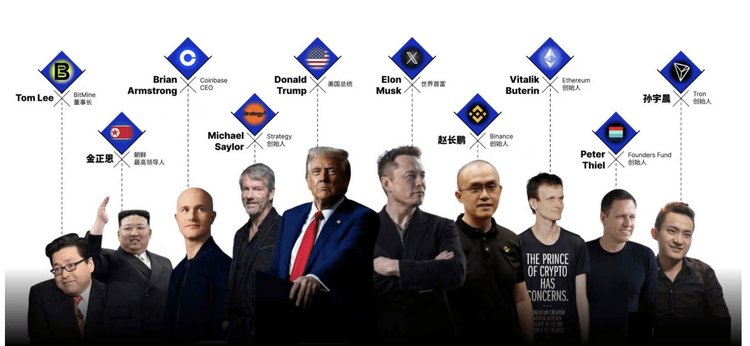
Zehn Menschen definieren die Machtgrenzen von Krypto 2025 neu
Von der Wall Street bis zum Weißen Haus, vom Silicon Valley bis Shenzhen nimmt ein neues Stromnetz Gestalt an.

AI Trading in Crypto Erklärt: Wie autonomer Handel Kryptomärkte und Kryptobörsen verändert
KI-Handel verändert die Krypto-Landschaft rasant. Traditionelle Strategien haben Schwierigkeiten, mit der Nonstop-Volatilität und komplexen Marktstruktur von Krypto Schritt zu halten, während KI massive Daten verarbeiten, adaptive Strategien generieren, Risiken managen und Trades autonom ausführen kann. Dieser Artikel führt WEEX-Nutzer durch, was KI-Handel ist, warum Krypto seine Einführung beschleunigt, wie sich die Branche hin zu autonomen Agenten entwickelt und warum WEEX das KI-Handelsökosystem der nächsten Generation aufbaut.

Aufruf zur Teilnahme an AI Wars: WEEX Alpha Awakens — Globaler KI-Handelswettbewerb mit 880.000 US-Dollar Preispool
Jetzt rufen wir KI-Händler aus aller Welt dazu auf, sich AI Wars anzuschließen: WEEX Alpha Awakens, ein globaler KI-Handelswettbewerb mit 880.000 US-Dollar Preispool.

AI Trading in Crypto Markets: Von automatisierten Trading Bots zu algorithmischen Strategien
KI-gesteuerter Handel verlagert Krypto von Einzelhandelsspekulationen zu institutionellem Wettbewerb, bei dem Ausführung und Risikomanagement wichtiger sind als Richtung. Da der KI-Handel skaliert, steigen Systemrisiken und regulatorischer Druck, was langfristige Leistung, robuste Systeme und Compliance zu den wichtigsten Unterscheidungsmerkmalen macht.
AI Sentiment Analysis and Cryptocurrency Volatility: Was bewegt Kryptopreise
KI-Sentiment beeinflusst zunehmend die Kryptomärkte, wobei sich Verschiebungen der KI-bezogenen Erwartungen in Volatilität für wichtige digitale Assets niederschlagen. Kryptomärkte neigen dazu, KI-Narrative zu verstärken, so dass sentimentgetriebene Ströme kurzfristig die Fundamentaldaten überwiegen. Zu verstehen, wie sich KI-Sentiments bilden und verbreiten, hilft Anlegern, Risikozyklen und Positionierungsmöglichkeiten in digitalen Assets besser zu antizipieren.
Zentralbankwoche und Kryptomarktvolatilität: Wie Zinsentscheidungen die Handelsbedingungen an WEEX prägen
Zinsentscheidungen großer Zentralbanken wie der Federal Reserve sind bedeutende makroökonomische Ereignisse, die die globalen Finanzmärkte beeinflussen und die Liquiditätserwartungen und die Risikobereitschaft der Märkte unmittelbar beeinflussen. Da sich der Kryptowährungsmarkt weiter entwickelt und seine Handelsstruktur und Teilnehmer reifen, wird der Kryptomarkt schrittweise in das makroökonomische Preissystem integriert.
November 2025 Crypto Market Review: Kurskorrektur, ETF-Einlösungen und sich entwickelnde Blockchain-Landschaft
Im November 2025 gab es eine ausgeprägte Volatilität und eine strukturelle Korrektur innerhalb des breiteren Blockchain-Ökosystems, die vor allem durch schwankende makroökonomische Prognosen und spezifische Kapitalflussdynamiken getrieben wurde.

WEEX auf der Blockchain Life 2025: Gemeinschaften verbinden und Innovation in Dubai vorantreiben
Die Teilnahme von WEEX an Blockchain Life 2025 war ein wichtiger Meilenstein auf unserem Weg zu einem globalen Marktführer im Krypto-Bereich. Während wir unsere Reichweite weiter ausbauen, setzen wir uns weiterhin dafür ein, tiefere Liquidität und größere Chancen für Händler, Influencer und die gesamte Blockchain-Community aufzubauen.

WEEX erobert die Weltbühne mit einer Reihe von Offline-Veranstaltungen im Jahr 2025
Einblicke in die globale Präsenz von WEEX: Ein Jahr unaufhaltsamen Momentums
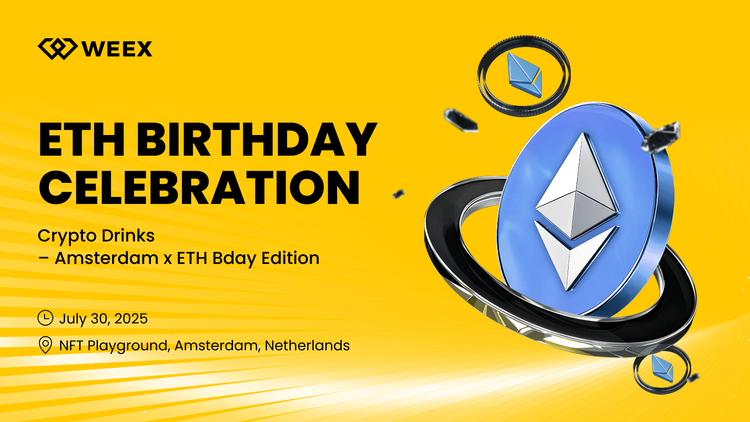
WEEX ETH Geburtstagsfeier & Web3 Networking
WEEX nahm an der Crypto Drinks – Amsterdam x ETH Birthday Edition teil, einer lebhaften Aktion, bei der das Jubiläum von Ethereum mit der europäischen Community gefeiert wurde.

WEEX auf der CONF3RENCE Dortmund 2025 Willkommensgala
Für WEEX ist die Teilnahme an der CONF3RENCE Dortmund ein weiterer wichtiger Schritt in seiner globalen Expansionsstrategie.

WEEX auf dem Blockchain-Forum 2025
WEEX hat auf dem Blockchain Forum 2025 in Moskau einen starken Auftritt hingelegt. Als Gold-Sponsor stellte WEEX seine Innovationen in den Bereichen Trading-Technologie, Sicherheitsinfrastruktur und Entwicklung des Web3-Ökosystems in den Vordergrund.
SharpLink sichert sich am 5. August 2025 295 Millionen Dollar in ETH – übertrifft damit die gesamte Ether-Emission des letzten Monats
Stellen Sie sich ein Unternehmen vor, das nicht nur die Zehen in die Kryptowelt steckt, sondern mit vollem Körpereinsatz einsteigt und dabei...
Ist Bitcoin auf dem Weg, bis 2025 einen Wert von 200.000 Dollar zu erreichen? Analyst bezeichnet dies als „sehr unwahrscheinlich“
Wenn wir uns die Kryptowährungslandschaft an diesem Datum, dem 5. August 2025, ansehen, fasziniert Bitcoin weiterhin Investoren…
Bitfarms startet 10% Aktienrückkaufprogramm und hält Aktien unter KI-Schwenkung für unterbewertet
Stellen Sie sich ein Unternehmen vor, das nicht nur auf den Wellen des Bitcoin-Minings reitet, sondern mutig in die Zukunft steuert...
Bitcoin steht 2026 vor einem großen Aufschwung, da der traditionelle Vierjahreszyklus an Einfluss verliert, prognostiziert der CIO von Bitwise
Stellen Sie sich vor, Bitcoin bricht aus seinen alten Rhythmen aus, ähnlich wie ein erfahrener Athlet, der eine vorhersehbare Trainingsroutine hinter sich lässt...
Marktaktualisierung — 31. Dezember
Von Südkorea und der OECD, die die Umsetzung von Kryptoregulierungs- und Compliance-Rahmen beschleunigen, bis hin zur gleichzeitigen Entwicklung von TAO-ETFs, Datenschutztechnologien, Mining und Bitcoin-Reserven, während Sicherheitsvorfälle und finanzielle Verluste weiter zunehmen, ist der Kryptomarkt in eine neue Phase eingetreten, inmitten mehrerer Herausforderungen: "starke Regulierung + technologische Entwicklung + verstärkte Risiken".
Marktaktualisierung — 30. Dezember
Brevis eröffnet Airdrop-Tracking; Trend Research fügt über 46.000 ETH an einem einzigen Tag hinzu.
Zehn Menschen definieren die Machtgrenzen von Krypto 2025 neu
Von der Wall Street bis zum Weißen Haus, vom Silicon Valley bis Shenzhen nimmt ein neues Stromnetz Gestalt an.
AI Trading in Crypto Erklärt: Wie autonomer Handel Kryptomärkte und Kryptobörsen verändert
KI-Handel verändert die Krypto-Landschaft rasant. Traditionelle Strategien haben Schwierigkeiten, mit der Nonstop-Volatilität und komplexen Marktstruktur von Krypto Schritt zu halten, während KI massive Daten verarbeiten, adaptive Strategien generieren, Risiken managen und Trades autonom ausführen kann. Dieser Artikel führt WEEX-Nutzer durch, was KI-Handel ist, warum Krypto seine Einführung beschleunigt, wie sich die Branche hin zu autonomen Agenten entwickelt und warum WEEX das KI-Handelsökosystem der nächsten Generation aufbaut.
Aufruf zur Teilnahme an AI Wars: WEEX Alpha Awakens — Globaler KI-Handelswettbewerb mit 880.000 US-Dollar Preispool
Jetzt rufen wir KI-Händler aus aller Welt dazu auf, sich AI Wars anzuschließen: WEEX Alpha Awakens, ein globaler KI-Handelswettbewerb mit 880.000 US-Dollar Preispool.
AI Trading in Crypto Markets: Von automatisierten Trading Bots zu algorithmischen Strategien
KI-gesteuerter Handel verlagert Krypto von Einzelhandelsspekulationen zu institutionellem Wettbewerb, bei dem Ausführung und Risikomanagement wichtiger sind als Richtung. Da der KI-Handel skaliert, steigen Systemrisiken und regulatorischer Druck, was langfristige Leistung, robuste Systeme und Compliance zu den wichtigsten Unterscheidungsmerkmalen macht.


 App
App