
- Krypto kaufen
- Märkte
- Futures
- Spot
- Copy-Trade
 WE-Launch
What is Litecoin? A Comprehensive Guide

Key Takeaways
- Litecoin (LTC) is a decentralized cryptocurrency designed as a faster, lighter alternative to Bitcoin, focusing on quick and low-cost peer-to-peer transactions using blockchain technology.
- It employs a Proof-of-Work consensus mechanism with the Scrypt hashing algorithm, enabling block times of just 2.5 minutes, which makes it ideal for everyday payments, micro-transactions, and point-of-sale uses.
- With a capped supply of 84 million coins, Litecoin offers strong security through cryptographic defenses, preventing double-spends and ensuring network uptime, while its ecosystem supports integrations in DeFi, NFTs, and cross-border payments.
- Advantages include low fees, high speed, and widespread merchant acceptance, but it faces risks like price volatility and regulatory uncertainties common in the crypto space.
- As of August 20, 2025, Litecoin ranks #18 by market cap with a price of around $115.81 USD, making it a staple in the crypto industry for both newbies and seasoned investors.
What Is Litecoin?
Litecoin (LTC) is a peer-to-peer cryptocurrency and open-source software project released under the MIT/X11 license, created to enable fast, secure, and low-cost payments by leveraging blockchain technology.
Imagine you’re at a coffee shop, and instead of fumbling with cash or waiting for a card to process, you just scan a QR code and pay instantly with digital money that’s not controlled by any bank. That’s the essence of Litecoin. Born in 2011 as a fork of Bitcoin, it was designed to address some of Bitcoin’s limitations, like slow transaction times and high fees. Charlie Lee, a former Google engineer, spearheaded this project, often calling it the “silver to Bitcoin’s gold.” The core concept revolves around decentralization—no central authority governs it, just a network of users and miners keeping things running smoothly. Litecoin’s ecosystem has grown to include wallets, exchanges, and even integrations with payment processors, making it accessible for everyday use. It’s not just about trading; it’s built for real-world adoption, with features like faster blocks and a unique hashing algorithm that sets it apart. Over the years, it’s maintained a spot in the top cryptocurrencies, proving its staying power in the volatile crypto world. If you’ve ever wondered why some folks prefer LTC over BTC for quick transfers, it’s all about that speed and efficiency—think of it as the express lane in the highway of digital currencies.
Origins and Background
Litecoin didn’t just pop up overnight. It emerged from the early days of crypto enthusiasm, right when Bitcoin was starting to gain traction but showing some growing pains. Back in 2011, the crypto scene was like the Wild West—exciting, unpredictable, and full of innovation. Litecoin was launched to offer a more practical alternative, emphasizing usability over being a store of value alone.
Founding Team and Proponents
At the helm was Charlie Lee, who left his job at Google to dive headfirst into crypto. He’s often seen as a down-to-earth figure in the space, transparent about his decisions—like when he sold his LTC holdings to avoid conflicts of interest. The Litecoin Foundation, a non-profit, supports development, with a team of developers and community contributors keeping the project alive. It’s not backed by big venture capital; it’s more of a grassroots effort, which adds to its trustworthiness in my book.
Core Concept and Ecosystem
The heart of Litecoin is its blockchain, a distributed ledger that records all transactions securely. Unlike some newer coins with fancy bells and whistles, LTC sticks to the basics but does them exceptionally well. Its ecosystem includes tools for developers, merchant integrations, and even privacy enhancements like MimbleWimble. Picture it as a reliable toolbox for anyone wanting to build or use crypto without the complexity.
How Litecoin Fits into the Crypto Industry
In the broader crypto landscape, Litecoin acts as a bridge between old-school coins like Bitcoin and the flashy DeFi world. It’s been around long enough to weather storms, like the 2018 bear market, and come out stronger. Relevance? It’s huge for testing new ideas—many Bitcoin upgrades get trialed on Litecoin first, thanks to their similar codebases.
FAQs on Litecoin Basics
What makes Litecoin different from Bitcoin?
Litecoin processes transactions four times faster than Bitcoin, with blocks every 2.5 minutes versus 10 minutes, making it better for quick payments.
Is Litecoin a good investment for beginners?
It can be, thanks to its stability and lower entry barriers, but remember, crypto is volatile—do your homework!
Who Created Litecoin?
Charlie Lee, often dubbed “Satoshi Lite” in crypto circles, is the mastermind behind Litecoin. A MIT graduate and ex-Google employee, he forked Bitcoin’s code in October 2011 to create something more agile. Why? He saw Bitcoin’s potential but wanted faster transactions for everyday use. Lee released the open-source client on GitHub, and the network went live just days later on October 13, 2011. It’s funny how a side project turned into a multi-billion-dollar asset—talk about a weekend well spent.
Background on the Founders
Lee isn’t your typical crypto founder with a mysterious persona. He’s active on social media, sharing insights and even criticisms of the industry. The Litecoin Foundation, established in 2017, handles ongoing development, with Lee as its managing director. It’s a small but dedicated team, including developers like Adrian Gallagher (thrasher) who’ve contributed to the codebase.
Project Origins and White Paper
Litecoin’s origins trace back to Bitcoin’s white paper by Satoshi Nakamoto, but Lee adapted it. There isn’t a formal white paper for Litecoin per se; instead, it’s documented through its GitHub repository and Lee’s announcements. The goal was simple: improve on Bitcoin without reinventing the wheel. Early milestones include the first block mined in 2011 and adoption by merchants starting in 2013.
Historical Milestones
Fast forward through the years—2013 saw LTC hit $50 during the crypto boom, only to crash in the bear market. By 2017, it surged to over $300 amid the ICO craze. Key upgrades like SegWit in 2017 enhanced scalability, and the MimbleWimble privacy protocol in 2022 added optional anonymity. Litecoin has survived hacks, forks, and regulations, hitting its all-time high around $410 in 2021. It’s like that reliable friend who’s been through it all and still shows up.
Challenges and Evolutions
Not everything was smooth. Lee faced backlash for selling his LTC in 2017, but he argued it eliminated bias. The project has evolved with community input, focusing on sustainability—like exploring energy-efficient mining.
How Does Litecoin Work?
At its core, Litecoin operates on a blockchain, a chain of blocks where each block holds transaction data. Think of it as a digital notebook that everyone can see but no one can tamper with. Transactions are verified by miners, who solve complex puzzles to add blocks. It’s decentralized, meaning no single entity controls it—power to the people, right?
Blockchain and Consensus Mechanisms
Litecoin uses Proof-of-Work (PoW), similar to Bitcoin, but with the Scrypt algorithm instead of SHA-256. Scrypt is memory-intensive, designed to be ASIC-resistant initially, though that’s evolved. This consensus ensures transactions are confirmed quickly, with a new block every 2.5 minutes. It’s energy-intensive, but the combined mining power secures the network against attacks.
Smart Contracts and Technical Principles
Litecoin doesn’t natively support complex smart contracts like Ethereum, but it can integrate with them via sidechains or layer-2 solutions. The basics involve public and private keys: your public key is like your bank account number, shareable for receiving funds, while the private key is your PIN—keep it secret! When you send LTC, you sign the transaction with your private key, and miners validate it.
Private and Public Keys Explained
Public keys generate addresses for receiving coins, visible on the blockchain. Private keys prove ownership. Lose your private key? Say goodbye to your funds. It’s like having a key to a safe—simple yet crucial for security.
Network Security Features
The PoW model, combined with a large hashrate, makes Litecoin incredibly secure. Attacks like 51% would require immense computing power, practically impossible today. Plus, features like atomic swaps allow seamless trades with other chains.
FAQs on Litecoin’s Mechanics
How fast are Litecoin transactions?
Typically confirmed in under 10 minutes, thanks to quick block times—perfect for buying that latte without waiting.
Can Litecoin be hacked?
While no system is foolproof, its cryptographic setup and miner network make it highly resistant to cracks.
How Is New Litecoin Created?
New Litecoin is created through mining, where miners use powerful computers to solve cryptographic puzzles and validate transactions. It’s like a digital gold rush, but instead of picks and shovels, it’s GPUs and ASICs.
Issuance Method and Mining Mechanisms
Miners compete to find a hash below a target value, earning block rewards. Currently, the reward is 6.25 LTC per block, halving every four years—next one in 2027. This controls inflation, with a hard cap of 84 million LTC.
Inflation Model and Total Supply Limit
Litecoin’s supply is deflationary by design. About 76 million are in circulation as of August 20, 2025, leaving room for more but not infinitely. Halvings reduce new supply, potentially increasing scarcity over time.
Reward Mechanisms
Miners get the block reward plus transaction fees. It’s incentivized to keep the network humming. Staking isn’t native, but some platforms offer LTC staking via wrapped tokens.
Mining Pools and Accessibility
Solo mining is tough these days; most join pools to share rewards. It’s democratized crypto creation, though energy concerns persist—ever thought about how your transaction indirectly powers a server farm?
What Are the Use Cases of Litecoin?
Litecoin shines in practical scenarios, far beyond just trading. It’s built for speed, so payments are a no-brainer—send money across borders without hefty fees or delays.
Payments and Value Storage
Merchants love it for point-of-sale; fees are pennies compared to credit cards. As a store of value, it’s like digital silver—reliable during market dips.
DeFi, Smart Contracts, and NFTs
While not a DeFi powerhouse, LTC integrates with platforms for lending and yield farming. NFTs? Possible via wrapped LTC on other chains. Governance happens through community proposals.
Cross-Border Transfers and More
Remittances are huge—cheap, fast transfers beat traditional wires. It’s also used in gaming and micropayments, where tiny fees matter.
Real-World Examples
Companies like Atari accept LTC for games. In DeFi, you can stake LTC on protocols for interest. It’s versatile, isn’t it?
How Can You Buy, Send, or Store Litecoin?
Getting started with Litecoin is straightforward. First, choose an exchange, buy some LTC, then store it securely. Let’s break it down.
Purchasing Channels
Exchanges like WEEX are great for trading LTC. They’re user-friendly and offer tools for beginners. Over-the-counter (OTC) options suit large buys without market slippage.
https://www.weex.com/how-to-buy
For a trusted platform, consider signing up on WEEX Exchange. New users can earn a free 20 USDT bonus upon registration, making it a smart entry point into trading Litecoin and other cryptos. It’s secure, with low fees, tying perfectly into Litecoin’s ethos of affordability.
Wallet Types and Storage Security
Hot wallets (like mobile apps) are convenient for daily use but online, so vulnerable. Cold wallets (hardware devices) are offline, safer for long-term storage. Always enable two-factor authentication and backup your seed phrase.
Common Operational Processes
To send: Enter the recipient’s address, amount, and confirm. Storing? Transfer from exchange to wallet. Simple as that, but double-check addresses—typos can mean lost funds forever.
Tips for Beginners
Start small. Use reputable wallets like Ledger for cold storage. And hey, if you’re sending to a friend, it’s quicker than wiring money internationally.
FAQs on Buying and Storing
What’s the safest way to store Litecoin?
A hardware wallet kept offline is your best bet against hacks.
How do I buy Litecoin on WEEX?
Head to their how-to-buy page, sign up, deposit funds, and trade—easy peasy.
Pros & Cons / Risks
Litecoin has its ups and downs, like any investment. Let’s weigh them out.
Advantages
- Speed and Efficiency: 2.5-minute blocks mean fast confirmations—great for real-time use.
- Low Fees: Transactions cost fractions of a cent, beating many alternatives.
- Security: Proven PoW and a massive mining network ensure robustness.
- Decentralization: No central control, empowering users.
- Widespread Adoption: Accepted by thousands of merchants worldwide.
Risks and Cons
- Volatility: Prices can swing wildly—remember the 2022 crash?
- Regulatory Uncertainty: Governments might crack down, affecting value.
- Technical Risks: Bugs or network attacks, though rare, are possible.
- Competition: Newer coins with advanced features could overshadow it.
- Environmental Impact: PoW mining consumes energy, drawing criticism.
It’s balanced, but always invest what you can afford to lose.
Comparison
Litecoin often gets compared to Bitcoin, its bigger sibling. While both use PoW, Litecoin is faster (2.5 vs. 10-minute blocks) and has a higher supply cap (84M vs. 21M). It’s positioned as “lite” for daily transactions, whereas Bitcoin is more of a digital gold. Against Ethereum, LTC lacks smart contracts but wins on simplicity and speed. If Bitcoin is the king, Litecoin is the efficient prince—quicker for payments but without the DeFi complexity.
Market & Ecosystem
As of August 20, 2025, around 1:58 PM, Litecoin holds strong in the crypto market. Its data reflects ongoing relevance, with steady trading and community buzz.
Market Cap & Trading Volume
Litecoin boasts a market cap of $8,815,553,857 USD, ranking it #18. The 24-hour trading volume is $646,438,466 USD, showing active interest. Prices sit at $115.81 USD, up 0.45% in the last day—modest but positive.
Exchanges Where It’s Listed
You’ll find LTC on major platforms worldwide, supporting pairs like LTC/USD and LTC/BTC. Liquidity is high, making it easy to trade.
Community Size & Activity
The community is vibrant: Reddit’s r/litecoin has thousands discussing updates, Telegram channels buzz with tips, and Twitter (now X) sees daily engagement from Charlie Lee and fans. It’s active, with forums for troubleshooting and ideas.
Ecosystem Growth: Partnerships and Developer Activity
Growth is steady—partnerships with payment processors and DeFi integrations expand its reach. Developer activity on GitHub is consistent, with commits for upgrades. Think of it as a maturing ecosystem, adding privacy features and cross-chain compatibility.
What’s the Latest News of Litecoin?
Litecoin Price Today, LTC to USD Live Price, Marketcap and Chart
Litecoin’s current price, market cap, and charts are available on platforms like CoinMarketCap, highlighting its trading pairs such as LTC/USD and recent upgrades like MimbleWimble for enhanced privacy. This resource provides real-time data and insights into Litecoin’s performance.
Litecoin: Buy, Hold, Pay & Learn LTC
The official Litecoin site offers guides on buying, using, and learning about LTC, including how to purchase it securely and explore its foundation’s initiatives. It emphasizes Litecoin’s role as a fast, easy-to-use digital currency for global payments.
Litecoin: Open Source P2P Digital Currency
Litecoin is described as an open-source, decentralized payment network with resources like downloads for Litecoin Core and community channels on forums, Telegram, and Reddit. The source code is available on GitHub for developers interested in contributing to the project.
Litecoin Price: LTC Live Price Chart, Market Cap & News Today
CoinGecko tracks Litecoin’s real-time price across numerous exchanges, calculating it via a global volume-weighted average, and notes its circulating supply of 76 million tokens. This helps users monitor market cap and trading activity effectively.
Buy Litecoin – LTC Price Today, Live Charts and News
Robinhood provides tools to buy and sell Litecoin 24/7, along with news like a pharmaceuticals firm establishing a $100M LTC treasury through a private placement. This highlights growing institutional interest in Litecoin as a treasury asset.
Conclusion / Next Steps
Litecoin’s future looks promising, with ongoing upgrades like better privacy and scalability potentially boosting adoption. As crypto matures, its role in fast payments could shine brighter, especially with global shifts toward digital money. For deeper dives, check the GitHub repo for code, join community forums to chat with users, or review the roadmap on the official site. If you’re ready to dip your toes, start by exploring a wallet or trading on a platform like WEEX—it’s a solid way to engage. Remember, crypto’s exciting but unpredictable; stay informed and trade wisely. What’s your first move going to be?
Das könnte Ihnen auch gefallen

Marktaktualisierung — 30. Dezember
Brevis eröffnet Airdrop-Tracking; Trend Research fügt über 46.000 ETH an einem einzigen Tag hinzu.
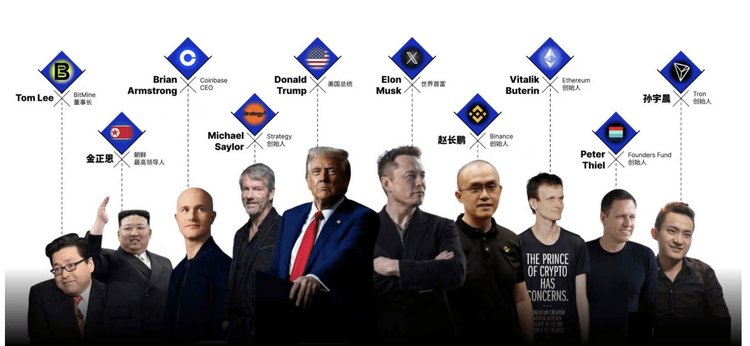
Zehn Menschen definieren die Machtgrenzen von Krypto 2025 neu
Von der Wall Street bis zum Weißen Haus, vom Silicon Valley bis Shenzhen nimmt ein neues Stromnetz Gestalt an.

AI Trading in Crypto Markets: Von automatisierten Trading Bots zu algorithmischen Strategien
KI-gesteuerter Handel verlagert Krypto von Einzelhandelsspekulationen zu institutionellem Wettbewerb, bei dem Ausführung und Risikomanagement wichtiger sind als Richtung. Da der KI-Handel skaliert, steigen Systemrisiken und regulatorischer Druck, was langfristige Leistung, robuste Systeme und Compliance zu den wichtigsten Unterscheidungsmerkmalen macht.

AI Sentiment Analysis and Cryptocurrency Volatility: Was bewegt Kryptopreise
KI-Sentiment beeinflusst zunehmend die Kryptomärkte, wobei sich Verschiebungen der KI-bezogenen Erwartungen in Volatilität für wichtige digitale Assets niederschlagen. Kryptomärkte neigen dazu, KI-Narrative zu verstärken, so dass sentimentgetriebene Ströme kurzfristig die Fundamentaldaten überwiegen. Zu verstehen, wie sich KI-Sentiments bilden und verbreiten, hilft Anlegern, Risikozyklen und Positionierungsmöglichkeiten in digitalen Assets besser zu antizipieren.
November 2025 Crypto Market Review: Kurskorrektur, ETF-Einlösungen und sich entwickelnde Blockchain-Landschaft
Im November 2025 gab es eine ausgeprägte Volatilität und eine strukturelle Korrektur innerhalb des breiteren Blockchain-Ökosystems, die vor allem durch schwankende makroökonomische Prognosen und spezifische Kapitalflussdynamiken getrieben wurde.

WEEX auf der Blockchain Life 2025: Gemeinschaften verbinden und Innovation in Dubai vorantreiben
Die Teilnahme von WEEX an Blockchain Life 2025 war ein wichtiger Meilenstein auf unserem Weg zu einem globalen Marktführer im Krypto-Bereich. Während wir unsere Reichweite weiter ausbauen, setzen wir uns weiterhin dafür ein, tiefere Liquidität und größere Chancen für Händler, Influencer und die gesamte Blockchain-Community aufzubauen.

WEEX auf der CONF3RENCE Dortmund 2025 Willkommensgala
Für WEEX ist die Teilnahme an der CONF3RENCE Dortmund ein weiterer wichtiger Schritt in seiner globalen Expansionsstrategie.

Ist Bitcoin auf dem Weg, bis 2025 einen Wert von 200.000 Dollar zu erreichen? Analyst bezeichnet dies als „sehr unwahrscheinlich“
Wenn wir uns die Kryptowährungslandschaft an diesem Datum, dem 5. August 2025, ansehen, fasziniert Bitcoin weiterhin Investoren…
Bitfarms startet 10% Aktienrückkaufprogramm und hält Aktien unter KI-Schwenkung für unterbewertet
Stellen Sie sich ein Unternehmen vor, das nicht nur auf den Wellen des Bitcoin-Minings reitet, sondern mutig in die Zukunft steuert...
Bitcoin steht 2026 vor einem großen Aufschwung, da der traditionelle Vierjahreszyklus an Einfluss verliert, prognostiziert der CIO von Bitwise
Stellen Sie sich vor, Bitcoin bricht aus seinen alten Rhythmen aus, ähnlich wie ein erfahrener Athlet, der eine vorhersehbare Trainingsroutine hinter sich lässt...
Inmitten steigender Volatilität zahlt Bitcoin Whale über Galaxy Digital 80.000 BTC für 9 Milliarden Dollar aus
Inmitten steigender Volatilität zahlt Bitcoin Whale über Galaxy Digital 80.000 BTC für 9 Milliarden Dollar aus
Divine Research führt ab dem 5. August 2025 unbesicherte Krypto-Kredite auf Basis von Sam Altmans World ID ein
Stellen Sie sich vor, Sie betreten eine Welt, in der jeder, vom Highschool-Lehrer bis zum Obstverkäufer, schnell einen Kredit bekommen kann …
Robert Kiyosaki warnt erneut vor den Risiken von Bitcoin, Gold und Silber ETFs am 5. August 2025
Der bekannte Investor und Finanzguru Robert Kiyosaki hat erneut Alarm geschlagen über die Gefahren, die in… lauern.
Der größte Handelsvertrag löst einen Bitcoin-Anstieg aus: 5 wichtige Erkenntnisse für diese Woche in Krypto
Während wir in die erste volle Woche im August 2025 eintreten – konkret an diesem Datum, dem 5. August 2025 – ist Bitcoin…
Marktaktualisierung — 30. Dezember
Brevis eröffnet Airdrop-Tracking; Trend Research fügt über 46.000 ETH an einem einzigen Tag hinzu.
Zehn Menschen definieren die Machtgrenzen von Krypto 2025 neu
Von der Wall Street bis zum Weißen Haus, vom Silicon Valley bis Shenzhen nimmt ein neues Stromnetz Gestalt an.
AI Trading in Crypto Markets: Von automatisierten Trading Bots zu algorithmischen Strategien
KI-gesteuerter Handel verlagert Krypto von Einzelhandelsspekulationen zu institutionellem Wettbewerb, bei dem Ausführung und Risikomanagement wichtiger sind als Richtung. Da der KI-Handel skaliert, steigen Systemrisiken und regulatorischer Druck, was langfristige Leistung, robuste Systeme und Compliance zu den wichtigsten Unterscheidungsmerkmalen macht.
AI Sentiment Analysis and Cryptocurrency Volatility: Was bewegt Kryptopreise
KI-Sentiment beeinflusst zunehmend die Kryptomärkte, wobei sich Verschiebungen der KI-bezogenen Erwartungen in Volatilität für wichtige digitale Assets niederschlagen. Kryptomärkte neigen dazu, KI-Narrative zu verstärken, so dass sentimentgetriebene Ströme kurzfristig die Fundamentaldaten überwiegen. Zu verstehen, wie sich KI-Sentiments bilden und verbreiten, hilft Anlegern, Risikozyklen und Positionierungsmöglichkeiten in digitalen Assets besser zu antizipieren.
November 2025 Crypto Market Review: Kurskorrektur, ETF-Einlösungen und sich entwickelnde Blockchain-Landschaft
Im November 2025 gab es eine ausgeprägte Volatilität und eine strukturelle Korrektur innerhalb des breiteren Blockchain-Ökosystems, die vor allem durch schwankende makroökonomische Prognosen und spezifische Kapitalflussdynamiken getrieben wurde.
WEEX auf der Blockchain Life 2025: Gemeinschaften verbinden und Innovation in Dubai vorantreiben
Die Teilnahme von WEEX an Blockchain Life 2025 war ein wichtiger Meilenstein auf unserem Weg zu einem globalen Marktführer im Krypto-Bereich. Während wir unsere Reichweite weiter ausbauen, setzen wir uns weiterhin dafür ein, tiefere Liquidität und größere Chancen für Händler, Influencer und die gesamte Blockchain-Community aufzubauen.


 App
App