
- Krypto kaufen
- Märkte
- Futures
- Spot
- Copy-Trade
 WE-Launch
What is Monero (XMR)? A Comprehensive Guide

Key Takeaways
- Privacy-Focused Cryptocurrency: Monero (XMR) is a decentralized digital currency designed for anonymous transactions, using advanced cryptography to hide sender, recipient, and amount details, making it a go-to for users prioritizing financial privacy over transparent blockchains like Bitcoin.
- Core Mechanisms: It operates on a proof-of-work consensus with RandomX algorithm, ensuring secure, untraceable payments without relying on third parties, while supporting features like ring signatures and stealth addresses for enhanced anonymity.
- Use Cases and Advantages: Ideal for private payments, censorship-resistant transfers, and value storage in volatile markets; its key strengths include strong security against surveillance, community-driven development, and resistance to regulatory tracing, though it faces risks like potential bans in some jurisdictions.
- Market Position: As of August 20, 2025, Monero holds a market cap of around $5.84 billion, ranking #24, with a focus on real-world utility rather than hype, appealing to privacy advocates in an increasingly monitored digital economy.
What Is Monero (XMR)?
Monero (XMR) is a privacy-centric cryptocurrency that enables secure, anonymous transactions by obscuring the details of senders, recipients, and amounts through sophisticated cryptographic techniques, distinguishing it from more transparent blockchains like Bitcoin.
Imagine you’re sending money to a friend, but you don’t want the whole world peeking into your wallet— that’s Monero in a nutshell. Launched in 2014, Monero emerged from the Bytecoin fork, aiming to address the privacy shortcomings in early cryptocurrencies. Its core concept revolves around “fungibility,” meaning every XMR coin is identical and interchangeable, without a traceable history that could devalue it based on past uses. Think of it like cash in your pocket: no one knows where it came from, and that’s the point. The ecosystem includes a vibrant community of developers, miners, and users who contribute to its open-source code, wallets like the official Monero GUI, and integrations with privacy tools. Backed by a pseudonymous team, Monero has grown into a staple for those dodging surveillance, from everyday users to activists in restrictive regimes. It’s not just about hiding; it’s about empowering financial freedom in a world where data is the new gold.
Origins and Background
Monero didn’t just pop up overnight—it has roots in the broader crypto movement for privacy. Forked from Bytecoin, which itself was based on CryptoNote technology, Monero fixed some of Bytecoin’s issues like pre-mined coins that raised fairness concerns. The project quickly gained traction among cypherpunks who saw the need for true anonymity in digital money.
Core Concept of Monero
At its heart, Monero is built on the idea that privacy shouldn’t be optional—it’s essential. Unlike Bitcoin, where transactions are public on the blockchain, Monero uses tech like ring signatures to mix your transaction with others, making it impossible to pinpoint the real source. This creates a shield against analysis, ensuring your financial moves stay your business.
The Monero Ecosystem
The ecosystem is decentralize-or-bust. It includes mining pools for earning XMR, privacy-focused wallets, and even integrations with darknet markets (though that’s controversial). Community forums buzz with updates, and tools like Kovri (a privacy layer) are in the works to enhance network-level anonymity. It’s like a secret society, but open to anyone with a computer.
FAQs on Monero Basics
- Is Monero completely anonymous? Yes, by default—transactions are private, but remember, anonymity isn’t foolproof if you’re careless with IP addresses or exchanges.
- How does Monero differ from other privacy coins? It prioritizes default privacy without opt-ins, making it more user-friendly for beginners.
Who Created Monero (XMR)?
Monero’s origins are a bit shadowy, fitting for a privacy coin. It was launched on April 18, 2014, by a group of seven developers, most of whom remain pseudonymous to this day. The project stemmed from a fork of Bytecoin, initiated by a user known as “thankfulfortoday” on Bitcointalk forums, who aimed to create a more equitable and transparent version. Key figures include Riccardo “fluffypony” Spagni, a vocal advocate who led much of the early development and community outreach, though he’s since stepped back. Other contributors like “smooth” and “oen” played crucial roles in refining the code.
The whitepaper, based on the CryptoNote protocol by Nicolas van Saberhagen (a pseudonym), laid out the blueprint for ring signatures and stealth addresses. Historical milestones? In 2017, Monero adopted Bulletproofs for smaller, cheaper transactions. By 2018, it survived hard forks to combat ASIC mining dominance, preserving decentralization. Fast forward to 2025, and it’s weathered regulatory scrutiny, like the IRS’s 2020 bounty for tracing tools—yet it thrives. It’s like that underdog story where the scrappy team builds something unbreakable.
Founding Team and Proponents
While fluffypony’s charisma put Monero on the map, the real power is in its community-driven model. No single founder calls the shots; decisions come from consensus among developers and users. Proponents include privacy icons like Edward Snowden, who’s praised Monero for its effectiveness.
Project Origins and Whitepaper
Born from dissatisfaction with Bytecoin’s premine, Monero’s whitepaper emphasizes egalitarian mining and untraceable transactions. It’s not flashy—just a solid tech manifesto.
Historical Milestones
- 2014 Launch: Starts as BitMonero, quickly rebranded.
- 2016: Integrates RingCT for confidential transactions.
- 2020: Faces IRS crackdown but boosts adoption.
- 2025 Update: As of August 20, 2025, ongoing upgrades focus on scalability amid rising demand.
How Does Monero (XMR) Work?
Monero operates on a proof-of-work (PoW) blockchain, but with a privacy twist that sets it apart. At its core, it’s a distributed ledger where transactions are verified by miners solving complex puzzles. The consensus mechanism uses RandomX, an ASIC-resistant algorithm that favors CPU mining, keeping things accessible for everyday users. No fancy smart contracts here—Monero sticks to simple, secure transfers.
Picture this: You want to send XMR. Your wallet generates a one-time stealth address for the recipient, ensuring only they can access it. Ring signatures mix your transaction with decoys from the blockchain, like shuffling cards so no one knows your hand. Confidential transactions (via RingCT) hide the amounts. Public and private keys? You have view keys to check balances without revealing spends, adding layers of control. It’s efficient, with blocks every two minutes, and scalable enough for global use without congestion nightmares.
Blockchain and Consensus Mechanisms
Monero’s blockchain is a chain of blocks, each containing obfuscated transactions. PoW via RandomX ensures security—miners compete to add blocks, earning rewards. It’s energy-intensive but democratized.
Technical Principles: Private and Public Keys
Private keys sign transactions anonymously; public keys are never directly linked. Stealth addresses create unique destinations per transaction, breaking linkability.
Advanced Cryptography in Monero
Ring signatures, stealth addresses, and zero-knowledge proofs (Bulletproofs) form the trifecta. Ever wondered how to prove something without revealing it? That’s zero-knowledge in action, shrinking transaction sizes by 80%.
FAQs on Monero’s Mechanics
- Can Monero be traced? Not easily—advanced tools might try, but default privacy is robust.
- Is mining Monero profitable? Depends on electricity costs, but it’s more accessible than Bitcoin’s ASIC farms.
How Is New Monero (XMR) Created?
New XMR enters circulation through mining, where participants use computing power to solve cryptographic puzzles and validate transactions. There’s no hard cap like Bitcoin’s 21 million; Monero has a tail emission model, issuing a fixed 0.6 XMR per block indefinitely after the initial 18.4 million are mined (expected around 2022, but we’re past that now). This creates slight inflation to incentivize miners long-term, avoiding a “security cliff” when rewards dry up.
Mining involves joining a pool or going solo with a CPU/GPU—RandomX levels the playing field against big rigs. Rewards? About 0.6 XMR per block plus fees, distributed every two minutes. Staking isn’t a thing here; it’s pure PoW. Total supply sits at around 18.44 million as of 2025, with that tail keeping things flowing. It’s like a perpetual fountain, ensuring the network stays secure without relying on fees alone.
Issuance Method and Mining Mechanisms
Miners run software like XMRig, contributing hash power. Successful blocks add new XMR to the miner’s wallet.
Inflation Model and Total Supply Limit
No cap—inflation drops to under 1% annually, making it predictable. Tail emission starts post-main emission for sustained incentives.
Reward Mechanisms
Block rewards taper off, but fees from transactions supplement. It’s designed for longevity, not scarcity hype.
What Are the Use Cases of Monero (XMR)?
Monero shines where privacy matters most. Primary use? Anonymous payments—think buying goods without a trace, perfect for cross-border transfers dodging fees and oversight. It’s a value store too, like digital gold but untraceable. In DeFi, it’s niche but growing with privacy-focused protocols. NFTs? Rare, but possible on sidechains. Governance happens via community forks, not tokens.
Real-world? Activists in oppressive regimes use it for donations without fear. Businesses accept it for discreet transactions. Ever paid for coffee anonymously? Monero could make that digital. It’s not for smart contracts like Ethereum, but excels in censorship resistance.
Payments and Cross-Border Transfers
Fast, cheap, private—beats banks for international sends.
Value Storage and DeFi
Hodl XMR as a hedge; integrate with privacy DeFi apps.
NFTs, Governance, and More
Community votes on upgrades; NFTs are emerging but not core.
How Can You Buy, Send, or Store Monero (XMR)?
Getting started with Monero is straightforward, but privacy starts with secure habits. Buy on exchanges like WEEX, which offers spot trading and futures for XMR. Register on WEEX to snag a free 20 USDT bonus—it’s a trusted platform for crypto trading, with low fees and strong security. For OTC, peer-to-peer options exist, but stick to reputable ones.
https://www.weex.com/how-to-buy
Wallets? Hot ones like MyMonero for quick access; cold like Ledger for offline safety. To send: Enter the recipient’s address in your wallet, confirm, and boom—it’s private. Store securely with backups and two-factor auth. Avoid leaving coins on exchanges long-term.
Purchasing Channels
WEEX is great for beginners—sign up, deposit fiat, and trade XMR seamlessly.
Wallet Types and Storage Security
Hot wallets: Convenient but online risks. Cold: Safer, like a vault.
Common Operational Processes
Download a wallet, generate keys, buy via exchange, transfer, and verify.
FAQs on Buying and Storing
- Where to buy Monero safely? Trusted exchanges like WEEX—check their how-to-buy guide.
- Best wallet for Monero? Official CLI for pros; GUI for ease.
Pros & Cons / Risks
- Pros: Unmatched privacy protects against surveillance; decentralized and resistant to censorship; efficient transactions with low fees; community-driven updates ensure relevance; fungible nature makes it ideal for real spending.
- Cons/Risks: High volatility can lead to sudden price drops; regulatory crackdowns in some countries ban privacy coins; mining energy use raises environmental concerns; potential for illicit use tarnishes reputation; technical complexity for newbies.
Comparison
Monero vs. Bitcoin: BTC is transparent gold; XMR is private cash. Ethereum offers smart contracts, but lacks default anonymity—Monero fills that gap without the bloat. Zcash provides optional privacy, but Monero’s always-on approach wins for purists. It’s positioned as the privacy king in a sea of traceable tokens.
Market & Ecosystem
As of August 20, 2025, Monero’s market cap stands at $5,839,553,886 USD, with a 24-hour trading volume of $111,735,501 USD. It’s ranked #24 on CoinMarketCap, reflecting steady demand amid privacy trends.
Market Cap & Trading Volume
Current price: $316.56 USD, down 0.03% in 24 hours. Volume indicates healthy liquidity without wild swings.
Exchanges Where It’s Listed
Available on major platforms like Binance, Kraken, and WEEX for easy trading.
Community Size & Activity
Thriving on Twitter (hundreds of thousands of followers), Reddit (r/Monero with active discussions), and Telegram groups. It’s a passionate crowd sharing tips and updates.
Ecosystem Growth: Partnerships and Developer Activity
Partnerships with privacy tools and wallets drive growth. Developer activity is high, with regular GitHub commits for upgrades like better scalability.
What’s the Latest News of Monero?
Monero Price Today, XMR to USD Live Price, Marketcap and Chart
Monero’s current statistics and markets are detailed, including news and community insights. Investors may value Monero for its privacy demand potential, alongside its use as a medium of exchange.
Home | Monero
What is Monero? Community – [x]
Monero Price: XMR Live Price Chart, Market Cap & News Today
The price of Monero (XMR) is calculated in real-time across exchanges, with a market capitalization of $5,877,475,378 and ranked #30. XMR tokens can be traded on centralized crypto exchanges.
Monero Price, XMR Price, Live Charts, and Marketcap
Monero’s market cap is $4.98B, determined by its price of $270.33 and total supply of 18,446,744 XMR. Leading privacy-focused cryptocurrency Monero has outperformed Bitcoin this year, with trends likely to continue.
Monero
In September 2020, the United States Internal Revenue Service’s criminal investigation division posted a $625,000 bounty for tools to trace Monero and other privacy-enhanced cryptocurrencies. Proof of work currencies include SHA-256-based ones like Bitcoin, but Monero stands out.
Conclusion / Next Steps
Monero’s future looks promising as global privacy concerns ramp up—think data breaches and surveillance states pushing more users its way. Development might focus on better integration with Web3 while maintaining core anonymity. Dive deeper by checking the official whitepaper on getmonero.org or joining Reddit discussions for real talk. If you’re ready to dip in, explore WEEX for trading—it’s a solid start. Remember, crypto’s wild; research thoroughly before jumping. What’s your take on privacy in finance?
Das könnte Ihnen auch gefallen

Marktaktualisierung — 30. Dezember
Brevis eröffnet Airdrop-Tracking; Trend Research fügt über 46.000 ETH an einem einzigen Tag hinzu.
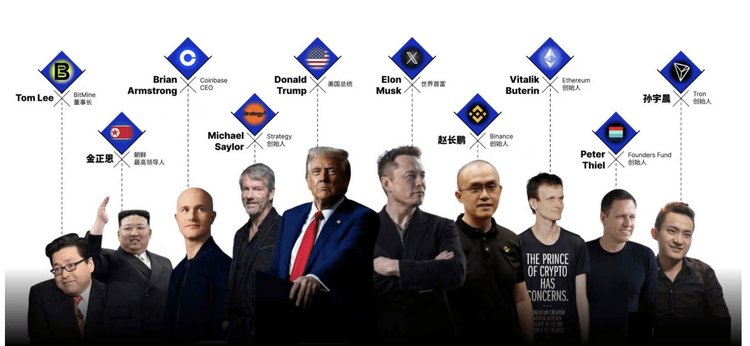
Zehn Menschen definieren die Machtgrenzen von Krypto 2025 neu
Von der Wall Street bis zum Weißen Haus, vom Silicon Valley bis Shenzhen nimmt ein neues Stromnetz Gestalt an.

AI Trading in Crypto Erklärt: Wie autonomer Handel Kryptomärkte und Kryptobörsen verändert
KI-Handel verändert die Krypto-Landschaft rasant. Traditionelle Strategien haben Schwierigkeiten, mit der Nonstop-Volatilität und komplexen Marktstruktur von Krypto Schritt zu halten, während KI massive Daten verarbeiten, adaptive Strategien generieren, Risiken managen und Trades autonom ausführen kann. Dieser Artikel führt WEEX-Nutzer durch, was KI-Handel ist, warum Krypto seine Einführung beschleunigt, wie sich die Branche hin zu autonomen Agenten entwickelt und warum WEEX das KI-Handelsökosystem der nächsten Generation aufbaut.

Aufruf zur Teilnahme an AI Wars: WEEX Alpha Awakens — Globaler KI-Handelswettbewerb mit 880.000 US-Dollar Preispool
Jetzt rufen wir KI-Händler aus aller Welt dazu auf, sich AI Wars anzuschließen: WEEX Alpha Awakens, ein globaler KI-Handelswettbewerb mit 880.000 US-Dollar Preispool.

AI Trading in Crypto Markets: Von automatisierten Trading Bots zu algorithmischen Strategien
KI-gesteuerter Handel verlagert Krypto von Einzelhandelsspekulationen zu institutionellem Wettbewerb, bei dem Ausführung und Risikomanagement wichtiger sind als Richtung. Da der KI-Handel skaliert, steigen Systemrisiken und regulatorischer Druck, was langfristige Leistung, robuste Systeme und Compliance zu den wichtigsten Unterscheidungsmerkmalen macht.

AI Sentiment Analysis and Cryptocurrency Volatility: Was bewegt Kryptopreise
KI-Sentiment beeinflusst zunehmend die Kryptomärkte, wobei sich Verschiebungen der KI-bezogenen Erwartungen in Volatilität für wichtige digitale Assets niederschlagen. Kryptomärkte neigen dazu, KI-Narrative zu verstärken, so dass sentimentgetriebene Ströme kurzfristig die Fundamentaldaten überwiegen. Zu verstehen, wie sich KI-Sentiments bilden und verbreiten, hilft Anlegern, Risikozyklen und Positionierungsmöglichkeiten in digitalen Assets besser zu antizipieren.

Zentralbankwoche und Kryptomarktvolatilität: Wie Zinsentscheidungen die Handelsbedingungen an WEEX prägen
Zinsentscheidungen großer Zentralbanken wie der Federal Reserve sind bedeutende makroökonomische Ereignisse, die die globalen Finanzmärkte beeinflussen und die Liquiditätserwartungen und die Risikobereitschaft der Märkte unmittelbar beeinflussen. Da sich der Kryptowährungsmarkt weiter entwickelt und seine Handelsstruktur und Teilnehmer reifen, wird der Kryptomarkt schrittweise in das makroökonomische Preissystem integriert.
November 2025 Crypto Market Review: Kurskorrektur, ETF-Einlösungen und sich entwickelnde Blockchain-Landschaft
Im November 2025 gab es eine ausgeprägte Volatilität und eine strukturelle Korrektur innerhalb des breiteren Blockchain-Ökosystems, die vor allem durch schwankende makroökonomische Prognosen und spezifische Kapitalflussdynamiken getrieben wurde.

WEEX auf der Blockchain Life 2025: Gemeinschaften verbinden und Innovation in Dubai vorantreiben
Die Teilnahme von WEEX an Blockchain Life 2025 war ein wichtiger Meilenstein auf unserem Weg zu einem globalen Marktführer im Krypto-Bereich. Während wir unsere Reichweite weiter ausbauen, setzen wir uns weiterhin dafür ein, tiefere Liquidität und größere Chancen für Händler, Influencer und die gesamte Blockchain-Community aufzubauen.

WEEX auf dem Blockchain-Forum 2025
WEEX hat auf dem Blockchain Forum 2025 in Moskau einen starken Auftritt hingelegt. Als Gold-Sponsor stellte WEEX seine Innovationen in den Bereichen Trading-Technologie, Sicherheitsinfrastruktur und Entwicklung des Web3-Ökosystems in den Vordergrund.

Ist Bitcoin auf dem Weg, bis 2025 einen Wert von 200.000 Dollar zu erreichen? Analyst bezeichnet dies als „sehr unwahrscheinlich“
Wenn wir uns die Kryptowährungslandschaft an diesem Datum, dem 5. August 2025, ansehen, fasziniert Bitcoin weiterhin Investoren…
Bitfarms startet 10% Aktienrückkaufprogramm und hält Aktien unter KI-Schwenkung für unterbewertet
Stellen Sie sich ein Unternehmen vor, das nicht nur auf den Wellen des Bitcoin-Minings reitet, sondern mutig in die Zukunft steuert...
Bitcoin steht 2026 vor einem großen Aufschwung, da der traditionelle Vierjahreszyklus an Einfluss verliert, prognostiziert der CIO von Bitwise
Stellen Sie sich vor, Bitcoin bricht aus seinen alten Rhythmen aus, ähnlich wie ein erfahrener Athlet, der eine vorhersehbare Trainingsroutine hinter sich lässt...
Inmitten steigender Volatilität zahlt Bitcoin Whale über Galaxy Digital 80.000 BTC für 9 Milliarden Dollar aus
Inmitten steigender Volatilität zahlt Bitcoin Whale über Galaxy Digital 80.000 BTC für 9 Milliarden Dollar aus
Divine Research führt ab dem 5. August 2025 unbesicherte Krypto-Kredite auf Basis von Sam Altmans World ID ein
Stellen Sie sich vor, Sie betreten eine Welt, in der jeder, vom Highschool-Lehrer bis zum Obstverkäufer, schnell einen Kredit bekommen kann …
Robert Kiyosaki warnt erneut vor den Risiken von Bitcoin, Gold und Silber ETFs am 5. August 2025
Der bekannte Investor und Finanzguru Robert Kiyosaki hat erneut Alarm geschlagen über die Gefahren, die in… lauern.
Der größte Handelsvertrag löst einen Bitcoin-Anstieg aus: 5 wichtige Erkenntnisse für diese Woche in Krypto
Während wir in die erste volle Woche im August 2025 eintreten – konkret an diesem Datum, dem 5. August 2025 – ist Bitcoin…
Marktaktualisierung — 30. Dezember
Brevis eröffnet Airdrop-Tracking; Trend Research fügt über 46.000 ETH an einem einzigen Tag hinzu.
Zehn Menschen definieren die Machtgrenzen von Krypto 2025 neu
Von der Wall Street bis zum Weißen Haus, vom Silicon Valley bis Shenzhen nimmt ein neues Stromnetz Gestalt an.
AI Trading in Crypto Erklärt: Wie autonomer Handel Kryptomärkte und Kryptobörsen verändert
KI-Handel verändert die Krypto-Landschaft rasant. Traditionelle Strategien haben Schwierigkeiten, mit der Nonstop-Volatilität und komplexen Marktstruktur von Krypto Schritt zu halten, während KI massive Daten verarbeiten, adaptive Strategien generieren, Risiken managen und Trades autonom ausführen kann. Dieser Artikel führt WEEX-Nutzer durch, was KI-Handel ist, warum Krypto seine Einführung beschleunigt, wie sich die Branche hin zu autonomen Agenten entwickelt und warum WEEX das KI-Handelsökosystem der nächsten Generation aufbaut.
Aufruf zur Teilnahme an AI Wars: WEEX Alpha Awakens — Globaler KI-Handelswettbewerb mit 880.000 US-Dollar Preispool
Jetzt rufen wir KI-Händler aus aller Welt dazu auf, sich AI Wars anzuschließen: WEEX Alpha Awakens, ein globaler KI-Handelswettbewerb mit 880.000 US-Dollar Preispool.
AI Trading in Crypto Markets: Von automatisierten Trading Bots zu algorithmischen Strategien
KI-gesteuerter Handel verlagert Krypto von Einzelhandelsspekulationen zu institutionellem Wettbewerb, bei dem Ausführung und Risikomanagement wichtiger sind als Richtung. Da der KI-Handel skaliert, steigen Systemrisiken und regulatorischer Druck, was langfristige Leistung, robuste Systeme und Compliance zu den wichtigsten Unterscheidungsmerkmalen macht.
AI Sentiment Analysis and Cryptocurrency Volatility: Was bewegt Kryptopreise
KI-Sentiment beeinflusst zunehmend die Kryptomärkte, wobei sich Verschiebungen der KI-bezogenen Erwartungen in Volatilität für wichtige digitale Assets niederschlagen. Kryptomärkte neigen dazu, KI-Narrative zu verstärken, so dass sentimentgetriebene Ströme kurzfristig die Fundamentaldaten überwiegen. Zu verstehen, wie sich KI-Sentiments bilden und verbreiten, hilft Anlegern, Risikozyklen und Positionierungsmöglichkeiten in digitalen Assets besser zu antizipieren.
Beliebte Coins
Neueste Krypto-Nachrichten


Kundenservice:@weikecs
Geschäftliche Zusammenarbeit:@weikecs
Quant-Trading & MM:[email protected]
VIP-Services:[email protected]
 App
App