
What Is Cryptocurrency and How Does It Work?

 Prefer us on Google


What Is a Cryptocurrency ?
A cryptocurrency is a digital or virtual form of currency secured by cryptography. It functions as a decentralized medium of exchange, enabling peer-to-peer transactions without the need for intermediaries like banks or payment processors. Cryptocurrencies operate on a global scale, 24/7, allowing users to transfer value directly.
Instead of relying on physical wallets or traditional bank accounts, users manage their cryptocurrency holdings through digital wallets or cryptocurrency exchanges.
The First Cryptocurrency
Bitcoin, launched in 2009 by an anonymous entity known as Satoshi Nakamoto, is the first and most widely recognized cryptocurrency. Since its inception, thousands of other cryptocurrencies have been developed, each with distinct features and applications.
While cryptocurrencies can serve as a medium of exchange like fiat currencies, their use cases have expanded significantly. Today, they power innovations across various sectors including decentralized finance (DeFi), artificial intelligence, gaming, governance, healthcare, digital collectibles, and more.
How Does Cryptocurrency Work?
Blockchain Technology
Most cryptocurrencies are decentralized and rely on a distributed network of computers (nodes) to manage and record transactions on a public ledger called a blockchain.
When you send cryptocurrency to someone, the transaction must be verified and validated by multiple nodes across the network. Each node maintains an updated copy of the blockchain. Once confirmed, transactions are permanently recorded and cannot be altered.
This decentralized structure enhances security by eliminating single points of failure. Any node that attempts to process invalid transactions is quickly identified and removed from the network.
Cryptography
Cryptocurrencies use cryptographic techniques to secure transactions, protect data integrity, and control the creation of new units. When you initiate a transaction from your wallet, your private key generates a digital signature. The network verifies this signature before adding the transaction to a new block.
A block is a collection of transactions, and the blockchain is a chain of such blocks—forming a secure, chronological, and immutable record.
-- Price
What Makes Cryptocurrency Unique?
Cryptocurrencies offer several distinctive features that set them apart from traditional financial systems:
- Decentralization Users have full control over their assets without reliance on a central authority. This reduces the risk of manipulation or control by any single entity.
- Transparency and Immutability All transactions are recorded on a public ledger that is transparent and resistant to tampering. Once added, transactions cannot be altered or erased.
- Programmability Many cryptocurrencies, like Ethereum (ETH) , are open-source and programmable. Developers can build decentralized applications (DApps) and smart contracts on top of these blockchains.
- Borderless Transactions Cryptocurrencies can be sent and received anywhere in the world, facilitating fast and low-cost international transfers.
- Limited Supply Numerous cryptocurrencies have a capped supply. For example, Bitcoin has a maximum supply of 21 million coins. This scarcity can help preserve value and mitigate inflation.
What Is Crypto Market Cap ?
Cryptocurrency market capitalization (market cap) is a metric used to gauge the size and value of a cryptocurrency. It is calculated as:
text
Market Cap = Circulating Supply × Current Price
A higher market cap generally indicates a more established and stable cryptocurrency, while a lower market cap may suggest higher volatility and risk. However, market cap is just one factor to consider—technology, team, tokenomics, and real-world utility are also crucial.
Top 5 Cryptocurrencies by Market Cap
As of November 2024, the following are among the largest cryptocurrencies by market capitalization:
- Bitcoin (BTC) The original cryptocurrency, often referred to as digital gold. It uses a proof-of-work (PoW) consensus mechanism and has a fixed supply of 21 million coins.
- Ether (ETH) The native token of the Ethereum blockchain, which supports smart contracts and DApps. Ethereum transitioned from proof-of-work to proof-of-stake (PoS) to improve efficiency.
- Tether (USDT) A stablecoin pegged to the US dollar. It is backed by reserves and widely used for trading and transferring value without crypto volatility.
- Solana (SOL) The native cryptocurrency of the Solana blockchain, known for its high throughput, fast transactions, and low fees.
How to Safely Invest in Crypto
Investing in cryptocurrency involves risk. Here are six tips to help you invest more safely:
- Do Your Own Research (DYOR ) Understand the basics of blockchain, different cryptocurrencies, and market trends before investing. Use books, articles, podcasts, and forums to educate yourself.
- Beware of Scams Be cautious of online scams, including phishing attempts, fake giveaways, and Ponzi schemes. Always verify information through official channels and never share private keys or seed phrases.
- Start Small Begin with a small investment to learn how the market works without exposing yourself to significant financial risk.
- Stay Informed The crypto space evolves rapidly. Keep up with news, technological developments, and regulatory changes.
- Choose a Reputable Exchange Select a well-established and secure cryptocurrency exchange. Consider factors like security measures, fees, available assets, and user reviews.
- Practice Risk Management Only invest what you can afford to lose. Use tools like stop-loss orders to limit potential losses.
What Is a Crypto Whitepaper?
A whitepaper is a foundational document that outlines a cryptocurrency project’s goals, technology, team, tokenomics, and roadmap. It helps investors and community members evaluate the project’s potential.
However, whitepapers are not regulated and may contain misleading claims. Always verify the information through independent research.
Conclusion
Cryptocurrency represents a transformative approach to money and financial systems. While some envision it replacing traditional finance, others see it as a complementary innovation. Regardless, its impact on technology and global finance is undeniable and continues to grow.
Ready to explore the world of crypto trading? Join WEEX Exchange today — where you can trade a wide range of cryptocurrencies securely, with low fees and user-friendly tools. Whether you're just getting started or are an experienced trader, WEEX provides a reliable and innovative platform to help you navigate the markets with confidence.
Further Reading
- History of Cryptography
- Bitcoin vs Dollar: Is Cryptocurrency the Future of Money?
- 5 Exit Strategies for Traders
- 10 Terms Every Crypto Trader Should Know
Disclaimer: The opinions expressed in this article are for informational purposes only. This article does not constitute an endorsement of any of the products and services discussed or investment, financial, or trading advice. Qualified professionals should be consulted prior to making financial decisions.
This content is provided for general informational purposes only and doesn't constitute financial, investment, legal, or tax advice. Any events, rewards, online promotions, or related information mentioned herein should not be considered a recommendation, solicitation, or invitation to purchase, sell, trade, or otherwise deal in any crypto assets. Crypto assets are highly volatile and may result in loss. The availability of WEEX services, products, and related events may vary by region. You are responsible for ensuring that your participation is in accordance with applicable local laws and regulations.
You may also like

Crypto Convert vs Transfer vs Bridge: Which Action Do You Need?

How to Convert ETH to USDT on WEEX: Step-by-Step Guide
How to Convert USDT to BTC on WEEX: Step-by-Step Guide

How to Convert BTC to ETH on WEEX: Step-by-Step Guide
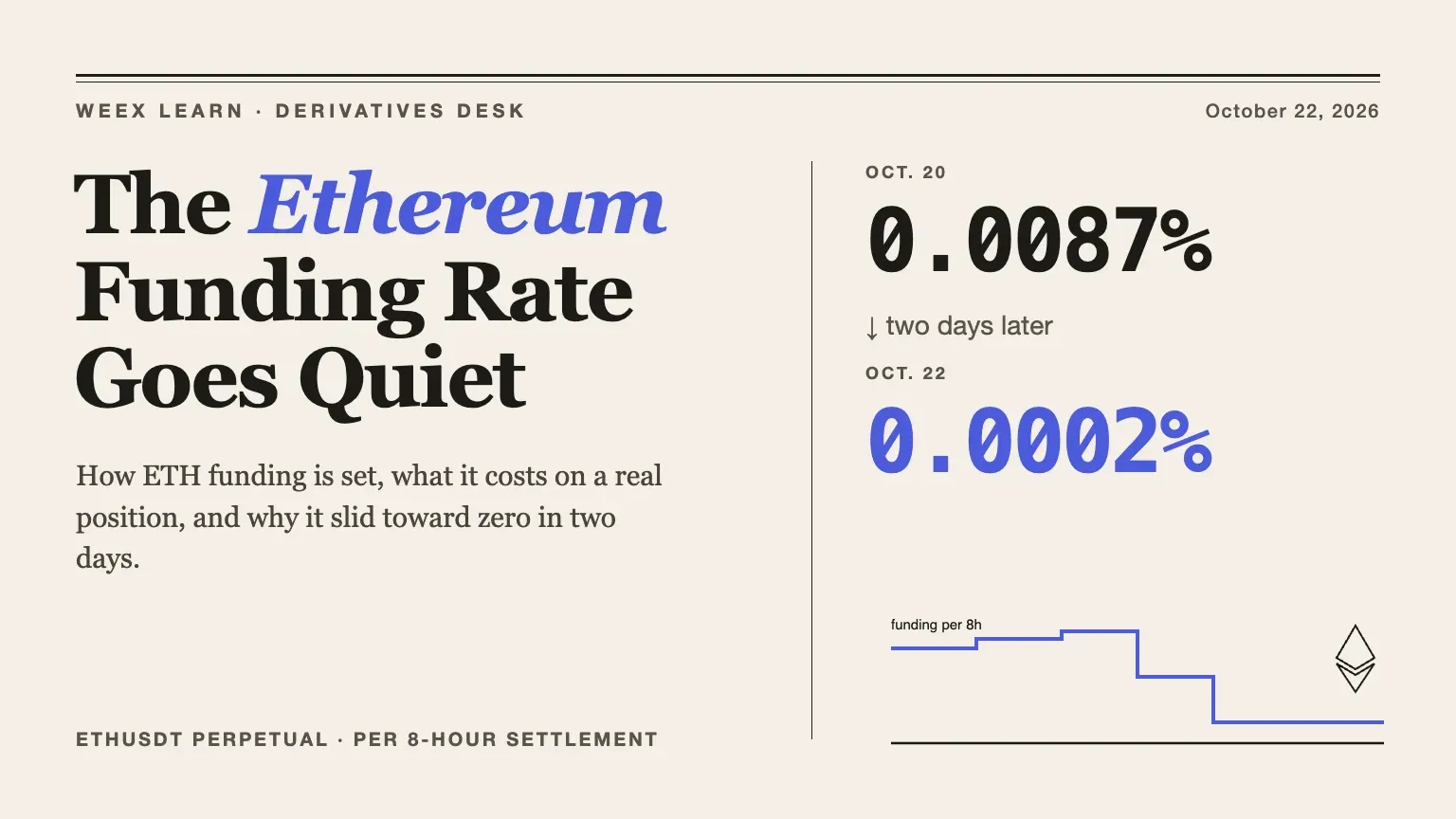
Ethereum Funding Rate: How It Works and Why It Dropped Near Zero

Crypto Liquidation Heatmap: Reading the $972M Oct. 15 Long Flush

Margin Trading Crypto: Cross vs Isolated and Liquidation Math
How to Convert BTC to USDT: A Step-by-Step WEEX Guide
xStocks Crypto Explained: What Tokenized Stocks Are, How They Work and What Holders Should Check

What Happened to Aergo (AERGO) Crypto? Token Migration and What Holders Should Do

ETH Funding Rate Today: 0.0087% per 8h as Ether Longs Re-Lever

What Is Blockchain and How Does It Work? One Transaction, Traced

Staking APR vs Inflation: How Much of Your Crypto Yield Is Real?

WEEX Convert Fees: What Zero-Fee Conversion Really Costs You

WEEX Convert Quote: How the 8-Second Price Lock Really Works

WEEX Convert Limits: Minimum and Maximum Amounts Explained

How to Check a WEEX Convert Order: History, Rate and Status

Bitcoin Price After Hot CPI: Why BTC Is Pinned Near $82,000

Limit Sell Order: How to Set a Take-Profit Price in Crypto

Best Crypto Podcasts for Beginners: A 4-Week Listening Plan

What Is Plume (PLUME)? Why the RWA Token Stays 93% Below Its High Even After the Layer 2 Rally

ETH Futures: Why Ether Is Falling Faster Than Bitcoin This Week
How to Buy Presale Crypto: Step by Step Guide for Beginners

Ethereum Glamsterdam Hits 200M Gas on Sepolia: What Changes After the Upgrade?

What Is Staking? 4 Myths to Clear Up Before You Stake Crypto

CAP Price Up 23%: Why Short Liquidations Don't Explain the Rally

Ethereum Glamsterdam Upgrade: Sepolia Date and ETH Price Impact

How to Earn Interest on USDT: What a 10% APR Really Pays in 2026

How to Buy Crypto With Apple Pay in 5 Steps: Why Your Bank May Decline the Payment

What Is Blockchain and How Does It Work? One Real Block Explained
Crypto Convert vs Transfer vs Bridge: Which Action Do You Need?
How to Convert ETH to USDT on WEEX: Step-by-Step Guide
How to Convert USDT to BTC on WEEX: Step-by-Step Guide
How to Convert BTC to ETH on WEEX: Step-by-Step Guide
Ethereum Funding Rate: How It Works and Why It Dropped Near Zero
Crypto Liquidation Heatmap: Reading the $972M Oct. 15 Long Flush
Contents
Popular coins
Latest articles




