
- Buy Crypto
- Markets
- Futures
- Spot
- Copy Trade
 WE-Launch
Insight: 2026 Could Usher in a “Crypto Winter,” but Institutionalization and On-chain Transformation Are Accelerating

Key Takeaways
- Cantor Fitzgerald predicts Bitcoin could face an extended downtrend, signaling a potential “Crypto Winter” by 2026.
- Institutional investors now dominate the market, contrasting prior cycles led by retail investors.
- The “Digital Asset Market Clarity Act” has enhanced regulatory clarity, encouraging increased institutional participation in crypto.
- Despite expected price declines, institutional growth and on-chain innovation continue to solidify the crypto ecosystem.
WEEX Crypto News, 2025-12-30 07:07:58(today’s date,foramt: day, month, year)
In the rapidly evolving world of cryptocurrency, the nuanced fluctuations in Bitcoin and other digital assets have captured the attention of both seasoned investors and industry newcomers alike. Recent insights from Cantor Fitzgerald have cast an intriguing perspective on what may lie ahead, suggesting a foreseen “Crypto Winter” looming by the year 2026. However, rather than mere speculation, the current trends indicate a robust market evolution driven primarily by institutional involvement and on-chain technological advancements.
Market Dynamics: The Institutional Shift
Historically, the cryptocurrency market has been largely characterized by volatility and unpredictability, heavily influenced by the retail investor demographic. These individuals often contributed to the dramatic rises and falls in the market, making it a rollercoaster of speculative projections and real-time adjustments. However, a shift is clearly underway; the current market landscape reveals a pivot from retail to institutional investors. This transition has significant implications not only for market stability but also for the future of cryptocurrency as a mainstream financial instrument.
Institutions such as banks and asset management funds have increasingly taken a foothold in cryptocurrency investments, heralding a new era where the stakes—and the players—are considerably higher. These entities possess the capability to stabilize the market with large-scale investments and have a vested interest in reducing volatility, making them less prone to the swift selling seen from retail investments during times of market turbulence.
Analyzing the Predicted “Crypto Winter”
Analyst Brett Knoblauch from Cantor Fitzgerald posits that Bitcoin may currently be on a downturn, having retreated from its peak value for over eighty days. Should this trend persist, he foresees the possibility of Bitcoin’s price further compressing, testing levels near its average cost benchmark around the $75,000 mark. Such a sustained downtrend would not be unprecedented but would instead be reflective of cyclical patterns observed throughout Bitcoin’s historical price phenomena.
The notion of a “Crypto Winter” represents a prolonged period of depressed prices and low investor enthusiasm. The term conjures up memories of previous market lulls during which extended bear markets prevailed, such as the post-2017 downturn that lasted well into late 2018. In this context, observers should not anticipate a singular cataclysmic drop but rather a measured, steady decline culminating in a potential reset stage for Bitcoin and other cryptos by 2026.
Divergence in On-Chain Fundamentals
While price might face suppression, the divergence between token market valuations and on-chain frameworks illustrates a contrasting story. Notably, sectors such as Decentralized Finance (DeFi), tokenized assets, and burgeoning crypto infrastructure continue to demonstrate robust growth, irrespective of market conditions. What this illustrates is a market maturing beyond mere speculative trading to signify tangible usage and technological prowess—foundations that suggest a resilient long-term outlook.
Development within the DeFi sphere, for example, underscores enormous potential for transforming conventional financial services using blockchain technology. Protocols offering lending, trading, and yield farming already demonstrate viable alternatives to traditional finance systems, indicating a comprehensive financial ecosystem built upon decentralized infrastructures.
Legislative Developments and Regulatory Clarity
The landscape has also been significantly altered by the introduction of new regulatory frameworks, particularly within the United States. The passage of the Digital Asset Market Clarity Act represents a watershed moment in cryptocurrency regulation, promising to mitigate ambiguities and facilitating clearer guidelines for engagement within digital asset markets.
Regulatory clarity is anticipated to serve as a catalyst for institutional entries, allowing banks and major asset managers to invest more confidently and heavily in cryptocurrencies. These dynamics not only reflect a maturation of the regulatory environment but also signal growing recognition of crypto’s potential from traditional financial powers. Such clarity can lead to innovative financial products and services that incorporate blockchain technology and digital assets.
Institutionalization and Innovation Amid Market Cooldown
While the specter of a cooled market lingers, the essential underpinnings of a vibrant market environment are actively being laid. As noted by Cantor Fitzgerald, the entire ecosystem—comprising compliance channels and blockchain infrastructure—is taking shape amid the potential downturn. These components are positioning the crypto industry to weather market fluctuations effectively and emerge with a fortified base, ready for the next bullish phase.
These developments within the crypto industry showcase a departure from historical patterns dominated by retail fervor. Instead, the growth trajectory of current digital assets presents established pathways integrating compliance and technical infrastructures. Such advancements ensure that once the market conditions align favorably, the ecosystem is not only ready but also strategically positioned to capitalize on these opportunities.
The Bigger Picture: Long-term Prospects
The impending “Crypto Winter” is not a harbinger of doom but rather an opportunity for recalibration and expansion built on sustainable growth principles. Institutional participation has arguably ushered in more accountability and less impulsivity, while on-chain advancements continue to redefine the utility and applicability of blockchain technology across various verticals.
Ultimately, while market participants brace for a potentially challenging phase ahead, the broader comprehension that cryptocurrency and blockchain innovations hold will likely pave the way for renewed optimism and engagement. Future positions will be built on well-founded strategies harnessing enhanced compliance and streamlined architecture, ready to usher in the next evolutionary phase of global finance.
FAQs
What is a “Crypto Winter”?
A “Crypto Winter” refers to a significant and extended bear market phase in the cryptocurrency industry, characterized by prolonged downturns in asset prices and diminished investor enthusiasm.
How do institutional investors impact the crypto market differently from retail investors?
Institutional investors typically bring large-scale investments, stability, and reduced volatility to the market compared to individual retail investors. They have longer investment horizons and increased financial capacity to influence market sensibility.
What is the significance of the “Digital Asset Market Clarity Act”?
This U.S. legislative act provides clearer regulatory guidance for digital assets, aiming to minimize policy ambiguity, which fosters a more secure and predictable environment for institutional investors engaging in the crypto market.
How are on-chain fundamentals influencing the crypto market?
On-chain fundamentals, such as developments in DeFi, tokenized assets, and blockchain infrastructure, are driving significant growth and innovation, providing substantive value beyond price fluctuations.
Why is the forecast for a “Crypto Winter” not necessarily indicative of a negative outlook for the crypto industry?
The forecasted “Crypto Winter” points towards a period of price stabilization rather than systemic risk. Institutionalization and ongoing technological transformation provide a foundation for potential future growth and innovation within the industry.
You may also like

Caixin: Digital RMB Wallet Balances to Begin Earning Interest in 2026
Key Takeaways: Starting January 1, 2026, digital RMB wallets will earn interest on balances. The operational structure will…

Lighter Founder’s Latest Response on Token Launch Progress, What Was Said
Lighter’s Founder, Vladimir Novakovski, clarifies key concerns in an AMA, focusing on detecting and resolving bot account manipulations…

Cryptocurrency Trends and Insights: Navigating the 2025 Landscape
Key Takeaways Cryptocurrency continues to evolve rapidly, with new trends reshaping the market. Blockchain technology’s applications extend beyond…

Lighter: Airdrop Successful and Token Trading Imminent
Key Takeaways: The Lighter Discord community recently announced the successful distribution of LIT tokens, marking the beginning of…

UNI Burn Arbitrage Opportunity, Ondo Tokenized Stock Liquidity Debate, What’s the Overseas Crypto Community Talking About Today?
Key Takeaways The crypto market is buzzing with multi-threaded discussions, from macro trends to specific protocols and scams.…

Announcement: The Fed to Release Minutes of its Monetary Policy Meeting Soon
Key Takeaways The Federal Reserve is anticipated to disclose the minutes from its latest monetary policy meeting, offering…

“Elon Musk’s Nemesis Trade” Colossal ETH Short Sparks Debate in Crypto Circles
Key Takeaways A colossal short position was secured against Ethereum (ETH) worth approximately $106 million by a single…

Dragonfly Partner Foresees BTC Surpassing $150K by 2026 but Market Share Decline
Key Takeaways Bitcoin is anticipated to climb over $150,000 by the end of 2026, although its market dominance…

Elon Musk Liquidation Wall: Liquidates $106M Short Position, Faces $479K Loss
Key Takeaways A $106 million ETH short position was liquidated after just 15 hours, resulting in a $479,000…
Unstable Stablecoins: Understanding the Market’s Concerns and Dynamics
Key Takeaways Recent financial reports indicate concerns and instability in the stablecoin market. Circle, a leading stablecoin issuer,…

Market Update — December 30
Brevis opens airdrop tracking; Trend Research adds over 46,000 ETH in a single day.

UNI Burn Arbitrage Opportunity, Ondo Tokenized Stock Liquidity Debate, What's the Overseas Crypto Community Talking About Today?

BlockBeats 2025: Enabling 15 Million People to Witness Bitcoin's New All-Time High

Will Ethereum See a Strong Breakout After the End of the Staking Net Outflow?
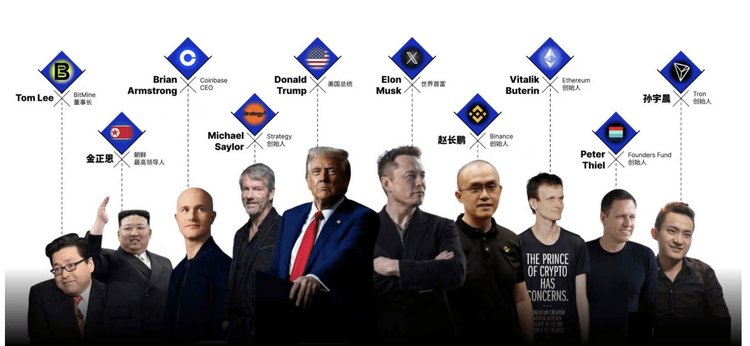
Ten People Redefining the Power Boundaries of Crypto in 2025
From Wall Street to the White House, from Silicon Valley to Shenzhen, a new power network is taking shape.

Bloomberg Checklist: 11 Key Trades to Understand the 2025 Global Financial Market
Lighter Founder's Latest Response on Token Launch Progress, What Was Said

Whale Withdraws 2,218 ETH from Kraken Sparking Market Interest
Key Takeaways A massive withdrawal of 2,218 ETH, 37.1 million SKY, and 4,772 AAVE occurred from Kraken. The…
Caixin: Digital RMB Wallet Balances to Begin Earning Interest in 2026
Key Takeaways: Starting January 1, 2026, digital RMB wallets will earn interest on balances. The operational structure will…
Lighter Founder’s Latest Response on Token Launch Progress, What Was Said
Lighter’s Founder, Vladimir Novakovski, clarifies key concerns in an AMA, focusing on detecting and resolving bot account manipulations…
Cryptocurrency Trends and Insights: Navigating the 2025 Landscape
Key Takeaways Cryptocurrency continues to evolve rapidly, with new trends reshaping the market. Blockchain technology’s applications extend beyond…
Lighter: Airdrop Successful and Token Trading Imminent
Key Takeaways: The Lighter Discord community recently announced the successful distribution of LIT tokens, marking the beginning of…
UNI Burn Arbitrage Opportunity, Ondo Tokenized Stock Liquidity Debate, What’s the Overseas Crypto Community Talking About Today?
Key Takeaways The crypto market is buzzing with multi-threaded discussions, from macro trends to specific protocols and scams.…
Announcement: The Fed to Release Minutes of its Monetary Policy Meeting Soon
Key Takeaways The Federal Reserve is anticipated to disclose the minutes from its latest monetary policy meeting, offering…
Popular coins
Latest Crypto News


Customer Support:@weikecs
Business Cooperation:@weikecs
Quant Trading & MM:[email protected]
VIP Services:[email protected]
 App
App