
- Buy Crypto
- Markets
- Futures
- Spot
- Copy Trade
 WE-Launch
Introduction to Canton Network: A New Era for Institutional-Grade Digital Assets

Canton Network is rapidly emerging as one of the most compelling blockchain projects in the financial technology space. Known for its native Canton Network coin (CC token), this public, permissionless blockchain was specifically designed for institutional-level finance. While many projects promise “financial infrastructure on-chain,” Canton Network stands out as the first settlement layer genuinely used by major institutions such as Microsoft, Deutsche Bank, and Morgan Stanley. Its focus is not hype—it’s about providing real-world utility for regulated assets and stablecoins.
Canton Network: Unlocking Institutional Assets
Over the past two years, discussions around Real-World Assets (RWA) on-chain have dominated the blockchain community, yet few projects have delivered tangible solutions. Canton Network addresses this gap by enabling the tokenization and seamless movement of institutional-grade assets such as government bonds, commercial papers, repo agreements, and mortgage-backed securities. By moving these assets onto a verifiable and auditable blockchain, Canton allows financial institutions to achieve:
- Cross-system collateral mobility, breaking down traditional silos.
- Regulatory-compliant auditability, ensuring all processes meet strict compliance requirements.
Capital efficiency, where assets aren’t just stored on-chain—they actively circulate and settle, reshaping the dynamics of institutional finance.
In other words, Canton Network doesn’t simply put financial assets on a blockchain; it makes them fluid, usable, and compliant, laying the foundation for a programmable financial ecosystem.

Canton Coin: Tokenomics Built for Real Utility
The Canton Coin (CC) token operates under a unique, transparent, and fair economic model:
- There are no pre-sales, no team allocations, and no VC holdings—CC is entirely community-produced.
- Gas fees paid with CC are automatically burned, creating a natural deflationary mechanism.
- New tokens are distributed every 10 minutes to nodes based on validation activity and application usage.
- A dynamic supply mechanism adjusts issuance according to transaction volume, ensuring balanced growth and scarcity.
This model encourages participants to earn tokens through meaningful network activity rather than speculation, aligning incentives between builders, validators, and users.
Institutional Adoption and Market Momentum
Canton Network has surpassed 500,000 daily transactions, demonstrating strong adoption from both traditional banks and crypto exchanges. Leading financial institutions such as Goldman Sachs, HSBC, and Broadridge, alongside U.S.-based exchanges like Binance U.S., Crypto.com, Gemini, and Kraken, are actively supporting its growth. The recent listing of CC tokens on Binance pre-market contracts and WEEX highlights the network’s increasing liquidity and growing institutional credibility.
Although the current price hovers around $0.127, Canton Network’s fundamentals are reminiscent of early-stage privacy-focused projects like Zcash, which once surged past $700. Unlike speculative projects, Canton Network is grounded in real institutional partnerships and a sustainable token-burning mechanism, positioning it for substantial long-term valuation potential.
Exploring Canton Network’s Technology and Architecture
Canton Network’s architecture is designed as a “network of networks”, enabling multiple institutions to maintain private sub-ledgers while synchronizing securely through a shared layer. Key features include:
- Node and consensus design: Validator nodes store and execute contracts, while synchronizers manage encrypted transaction coordination.
- Privacy-first distribution: Only nodes specified in smart contracts receive relevant data, unlike many blockchains where all transactions are broadcast to all nodes.
- Global governance: The Global Synchronizer Foundation (GSF), under the Linux Foundation, ensures robust oversight while maintaining decentralization.
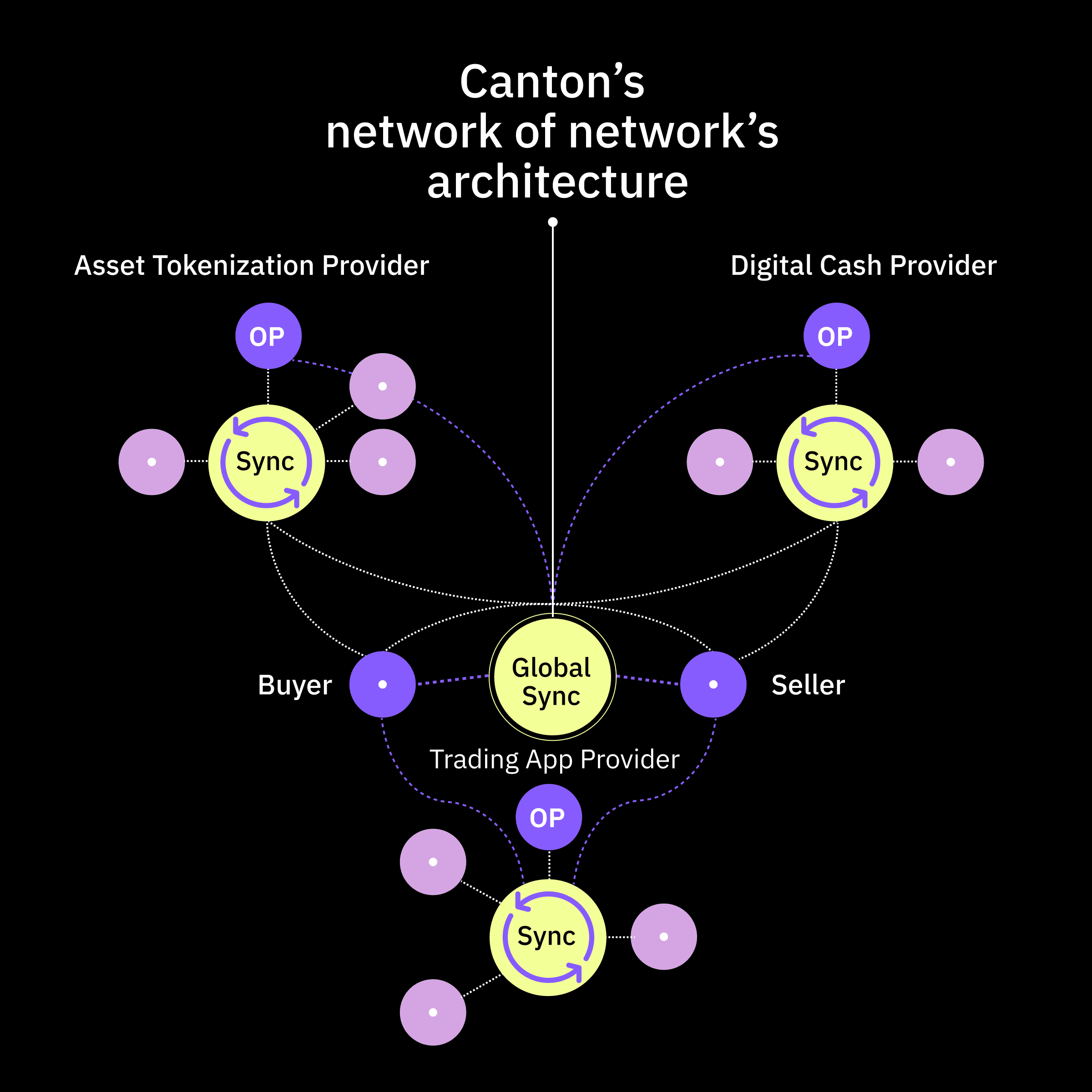
This infrastructure enables a secure, privacy-preserving environment suitable for high-value financial transactions while maintaining interoperability across institutions.
Canton Coin in Action
The Canton Coin application incentivizes stakeholders to contribute value to the network. Validators, Super Validators, and application providers can mint CC by performing network utility tasks rather than speculative investment. Canton Coin also serves as an optional payment method for transaction fees and application usage, providing public visibility into network activity without compromising privacy. This approach fosters a healthy network economy where utility drives token distribution, rather than hype or speculation.
Why does the Canton Network Matters?
Canton Network represents the bridge between DeFi and RealFi—bringing regulatory-compliant, interoperable financial infrastructure to blockchain. By enabling assets and stablecoins to move freely and settle efficiently, it is redefining institutional finance for the digital era. For early adopters, Canton Network offers a rare opportunity to participate in the foundational layer of a global, programmable settlement system.
For investors and users looking for a secure platform to trade and engage with CC trading pairs, WEEX exchange provides a reliable, user-friendly environment. With WEEX’s robust trading infrastructure, seamless fiat-crypto integration, and commitment to institutional-grade security, Canton Coin can be accessed and utilized safely by both retail and institutional participants.
Frequently Asked Questions (FAQ)
1. What is Canton Network and how does it differ from other blockchains?
Canton Network is a public blockchain designed specifically for institutional finance. Unlike traditional blockchains, it enables real-time settlement, private asset transfers, and compliance-ready audit trails, making it suitable for regulated financial markets.
2. What is the role of Canton Coin (CC token) in the network?
Canton Coin serves multiple purposes: it incentivizes validators and application providers, acts as a payment method for network fees and services, and provides visibility into network activity. Tokens are minted only by contributing utility, not through speculative pre-sales.
3. How can I access and trade CC tokens?
CC tokens are available on major exchanges including Binance, Kraken, Gate, and Bybit. For a secure and seamless experience, WEEX exchange allows users to trade CC tokens with institutional-grade security and liquidity, making it an ideal platform for both new and experienced participants.
4. What kind of assets can Canton Network handle?
Canton Network supports tokenization and on-chain settlement of institutional-grade assets such as government bonds, commercial papers, repo agreements, and mortgage-backed securities, allowing them to move, settle, and circulate efficiently on-chain.
5. Is Canton Network suitable for retail investors?
While Canton Network primarily targets institutional use, CC tokens can be accessed by retail investors via exchanges like WEEX. The tokenomics are designed to reward network participation and utility, making it accessible to those interested in supporting and engaging with the ecosystem.
You may also like

Lighter (LIT) Price Prediction 2025–2030: How High Could LIT Go?
Lighter (LIT) enters the crypto market at a moment when speculation alone is no longer enough to sustain valuations. Liquidity is selective, narratives are scrutinized, and DeFi protocols are increasingly judged by what they deliver rather than what they promise.
As a newly launched Ethereum-based token, LIT currently operates in a data-scarce environment with no extended price history, no mature volume profile, and no algorithmic forecasts from major analytics platforms.
Yet, the absence of historical data does not make analysis impossible. It simply requires a different lens. Instead of extrapolating from charts that do not yet exist, this Lighter price prediction relies on scenario-based reasoning, protocol fundamentals, and comparative behavior observed in early-stage DeFi projects.
Looking ahead to 2025–2030, LIT’s trajectory will be shaped by adoption, token utility, and broader crypto market cycles. The question is not whether LIT can move sharply volatility is almost guaranteed but whether it can sustain value as the market matures.
What Is Lighter (LIT)?Lighter (LIT) is a decentralized trading infrastructure project built on the Ethereum blockchain. It aims to provide a non-custodial, capital-efficient environment for traders. The native LIT token is designed to serve as a core component of the ecosystem, with proposed utilities typically revolving around governance, protocol incentives, and aligning the interests of users and developers.
The project's launch context is notable. Emerging after periods of speculative excess, Lighter enters a market that increasingly prioritizes tangible utility and sustainable models over viral hype. This environment sets a higher bar for execution but also creates opportunity for projects that successfully address genuine inefficiencies in on-chain trading.
LIT Token Price Overview and Current Market ContextAs a newly launched asset, LIT is in a phase of initial price discovery. Its valuation can exhibit significant dispersion across different trading venues, a common characteristic for tokens establishing their initial market base. Notably, due to the lack of an extended trading history, mainstream analytics platforms do not provide formal long-term algorithmic forecasts for LIT. This data scarcity underscores that any forward-looking assessment must be framed as a set of probabilistic scenarios rather than definitive predictions.
Key Factors That Will Influence Lighter (LIT) Price (2025–2030)The long-term valuation of LIT will be determined by several interlinked factors:
Protocol Adoption and Utility: The primary driver will be the actual usage of the Lighter platform. Metrics such as consistent trading volume, total value locked, and fee generation are fundamental value indicators, far outweighing transient social media hype.Token Economic Design: The specific mechanisms governing LIT's utility—such as its role in fee capture, staking rewards, governance power, or supply dynamics (e.g., burns, buybacks)—will critically influence its supply-demand equilibrium.Ethereum Ecosystem Traction: As an Ethereum-based application, Lighter's growth is tied to the broader health and scalability of its underlying blockchain. Widespread Layer-2 adoption and lower transaction costs would serve as significant tailwinds.Broader Market Cycles: The crypto market's inherent cyclicality will be a major external force. LIT's ability to maintain development and community engagement through potential bear markets will be as crucial as its performance during bullish periods.Lighter (LIT) Price Prediction (2025–2030)Given the absence of historical precedent, a scenario-based framework is more appropriate than linear predictions.
Lighter (LIT) Price Prediction 2025: The Validation Phase: This period will focus on establishing initial product-market fit. Price action will likely be volatile, driven by launch momentum, early user metrics, and exchange listings. The market will be assessing the project's basic viability.Lighter (LIT) Price Prediction 2026–2027: The Differentiation Phase: By this stage, the initial speculative noise typically subsides. Projects that fail to demonstrate growing utility and a sustainable model often fade, while those with genuine traction begin to stabilize and build a more consistent valuation floor based on fundamentals.Lighter (LIT) Price Prediction 2028–2030: The Maturation Phase: In the long term, LIT's price will reflect its established position within the DeFi landscape. Outcomes will diverge significantly:Conservative Scenario: Limited adoption and niche usage could see the token trade primarily on speculation with modest valuations.Base Case Scenario: Steady growth as a functional trading platform with a dedicated user base could support a valuation reflecting its fee generation and utility.Bull Case Scenario: Should Lighter emerge as a widely adopted core piece of DeFi trading infrastructure, significant value accrual to the LIT token becomes plausible.ConclusionLighter (LIT) represents a nascent thesis in the competitive DeFi trading sector. Its current lack of historical data is not an anomaly but a starting condition. Consequently, its long-term price path is not a pre-determined chart to be read, but a narrative to be written by the project's execution.
Investors and observers should focus less on precise price targets and more on monitoring the fundamental drivers: user growth, protocol utility, and tokenomics efficiency. The project's ultimate value will be determined by its ability to transition from a promising concept to a sustainably used and economically viable protocol within the evolving Ethereum ecosystem. As with any early-stage project, engagement requires an understanding of the high-risk, high-reward paradigm and a commitment to ongoing fundamental analysis.
Ready to trade Lighter (LIT)?Join WEEX now—enjoy zero trading fees, smooth execution, and instant access. Sign up today and start trading in minutes.
Further ReadingWhat is Snowball (SNOWBALL)?What is Clover Finance (CLV)? A Complete GuideWhat Is MANYU? ManyuShiba Meme Coin ExplainedDisclaimer: The opinions expressed in this article are for informational purposes only. This article does not constitute an endorsement of any of the products and services discussed or investment, financial, or trading advice. Qualified professionals should be consulted prior to making financial decisions.

What is POCHITA Coin? POCHITA Coin Price Prediction for 2026-2028
If you’re searching for what is POCHITA Coin and looking for a realistic POCHITA Coin price prediction, this article breaks it all down.
We’ll cover the story behind POCHITA, its roadmap, tokenomics, recent price movement, technical analysis, and long-term outlook through 2026–2028.
What is POCHITA?POCHITA Coin is a meme cryptocurrency launched on the Binance Smart Chain (BSC). It positions itself within a specific narrative lineage of dog-themed memes, claiming inspiration from predecessors like Cheems and Bonk, and aims to recapture a period of high activity for BSC-based meme tokens.
The project's core appeal is built on community-driven storytelling and nostalgia, rather than technological innovation or utility. It markets itself as a revival effort, seeking to leverage viral marketing and aggressive community engagement to gain traction.
POCHITA Coin RoadmapThe project's outlined development phases emphasize community growth and marketing intensity over technical milestones:
Phase 1: The Bark AwakensThis initial stage focused on launch activities: conducting a presale, locking liquidity pools, establishing its meme-centric narrative, launching on a Decentralized Exchange (DEX), and initiating community campaigns.
Phase 2: 2021 Season ReloadedThe subsequent phase aims to generate momentum through large-scale marketing, influencer collaborations, NFT integrations, and fostering a DAO-style community. The roadmap highlights a reliance on viral trends and speculative trading activity common to the meme coin sector.
POCHITA TokenomicsPOCHITA employs a straightforward tokenomic structure typical of many meme coins:
It implements a low transaction tax (e.g., 2% on buys and sells).The initial liquidity pool (LP) is locked to mitigate immediate "rug pull" risks.It has a fixed total supply.While these measures can encourage trading and provide initial security assurances, the long-term viability of such projects is predominantly driven by community sentiment and sustained market interest, rather than complex token mechanics.
POCHITA Coin Price Prediction for 2026-2028Providing a concrete price prediction for a meme coin like POCHITA over a multi-year horizon is highly speculative. Its long-term value is almost entirely contingent on two factors: the strength and longevity of its community, and the broader market's appetite for high-risk meme assets during future market cycles.
2026 Price Prediction: Price action will likely depend on the project's ability to maintain cultural relevance. In a best-case scenario with sustained viral engagement, it could see speculative rallies. Conversely, loss of community interest could lead to severe price depreciation.2027-2028 Price Prediction: By this period, the project's fate will be clearer. It may either solidify a niche community presence, potentially benefiting from renewed meme coin cycles, or fade into obscurity if unable to sustain engagement. Predictions are inherently unreliable and should be treated with extreme caution.ConclusionIn summary, POCHITA Coin is a speculative meme cryptocurrency that derives its value proposition from narrative and community sentiment rather than technical utility. While short-term analysis may indicate trading opportunities based on volatility patterns, any long-term price prediction is fraught with uncertainty due to the asset's inherent speculative nature.
Potential participants should conduct thorough personal research, understand the extreme risks associated with micro-cap meme coins, and only allocate capital they are prepared to lose entirely.
Ready to trade cryptocurrencies?Join WEEX now—enjoy zero trading fees, smooth execution, and instant access. Sign up today and start trading in minutes.
Further ReadingWhat is WOJAK and Why WOJAK Is Trending Again?Why POPCAT Crashes? A Complete ExplanationWhat is Purple Wojak (PURK)? A New Meme Coin with Stable PotentialDisclaimer: The opinions expressed in this article are for informational purposes only. This article does not constitute an endorsement of any of the products and services discussed or investment, financial, or trading advice. Qualified professionals should be consulted prior to making financial decisions.

What is Clover Finance (CLV)? A Complete Guide
If you’ve been following the Polkadot ecosystem or cross-chain DeFi projects, chances are you’ve come across Clover Finance and its native token, CLV. But for many newcomers, one big question still remains, what is CLV Coin, and why is it gaining attention in the crypto space?
In this article, we’ll break down everything you need to know about Clover Finance, what makes it unique, how the CLV token works, and a quick look at the current CLV price performance based on the latest market data.
What is Clover Finance?Clover Finance (often referred to as Clover) is a blockchain operating system built using Substrate, designed to integrate seamlessly into the Polkadot ecosystem. Its primary goal is not to offer a single service, but to provide a comprehensive, foundational infrastructure for both developers and end-users.
A key advantage of Clover is its full Ethereum Virtual Machine (EVM) compatibility. This allows developers to port and run Ethereum-based decentralized applications (dApps) efficiently on Substrate-based networks, effectively bridging the Ethereum and Polkadot ecosystems and simplifying cross-chain development. The project was founded in May 2020, with its mainnet launching in July 2021, marking its formal entry into the multi-chain arena.
Key Features of Clover Finance (CLV)Clover distinguishes itself as a multi-layered blockchain operating system rather than a single-purpose protocol. Its architecture comprises several integrated layers:
Storage Layer: For secure and efficient data handling.Smart Contract Layer: For executing application logic.DeFi Protocol Layer: For core financial services.eApp Layer: For deploying advanced decentralized applications.This holistic design supports complex, cross-chain functionalities while aiming to maintain a streamlined user experience. Other notable features include its cross-chain DeFi bridge for simplified asset movement, the introduction of "eApps" (external applications) for potentially higher performance, and a unique, flexible gas fee model. This model allows relayers to pay fees on users' behalf and employs an identity-based fee schedule that can lower costs for active network participants.
What is Clover Finance (CLV)?Clover Finance (CLV) is the native utility and governance token of the Clover Finance ecosystem. It serves multiple critical functions within the network:
Transaction Fees: Used to pay for network operations, with flexible payment options.Staking: Participants can stake CLV to help secure the network and earn rewards.Governance: Token holders can participate in on-chain voting to influence the protocol's future development.Funding & Development: The token is used to fund ecosystem projects through the treasury and to deploy smart contracts.This broad utility framework aims to embed CLV's value deeply within the platform's operations, extending its purpose beyond mere speculation.
Clover Finance (CLV) TokenomicsClover Finance has allocated its token supply to support long-term growth and ecosystem health. The distribution is focused on several key areas:
Ecosystem & Incentives: A significant portion is dedicated to ecosystem development and parachain offerings.Treasury & Staking: Substantial allocations are reserved for the project treasury and for staking rewards to secure the network.Team & Contributors: Allocations are designated for the founding team, early contributors, and community rounds.Initial Funding: Smaller portions were allocated to private, seed, and public sale investors.This structure emphasizes sustainability, community participation, and ongoing development.
ConclusionIn summary, CLV is the foundational token of Clover Finance, a blockchain operating system designed to streamline cross-chain application development and DeFi accessibility. By combining EVM compatibility, a multi-layered architecture, and a user-friendly gas model, Clover carves out a distinct niche in the Polkadot ecosystem. While the CLV token operates in a competitive and volatile segment of the market, its integral role in a protocol focused on solving cross-chain interoperability makes it a noteworthy project for those interested in the infrastructure layer of Web3.
Ready to trade cryptocurrencies?Join WEEX now—enjoy zero trading fees, smooth execution, and instant access. Sign up today and start trading in minutes.
Further ReadingWhat is WOJAK and Why WOJAK Is Trending Again?
Why POPCAT Crashes? A Complete Explanation
What Is MANYU? ManyuShiba Meme Coin Explained
Disclaimer: The opinions expressed in this article are for informational purposes only. This article does not constitute an endorsement of any of the products and services discussed or investment, financial, or trading advice. Qualified professionals should be consulted prior to making financial decisions.

Which 2 Cryptocurrencies Will Hit $100 Billion Market Cap in Q1 2026?
As the cryptocurrency market continues to mature, investors are increasingly focused on identifying assets poised to achieve major valuation milestones. One of the most significant markers of success and mainstream integration is a $100 billion market capitalization—a threshold that signifies substantial adoption, liquidity, and investor confidence.
With the market looking toward 2026, a pressing question emerges: which two cryptocurrencies are most likely to reach this milestone by the first quarter of that year? In this analysis, we’ll explore the contenders best positioned to cross into this elite tier and examine the factors that could propel them forward.
What does $100 Billion Milestone Mean?Before identifying potential candidates, it's important to understand what a $100 billion market cap truly represents. It reflects not only price appreciation but also widespread recognition, robust ecosystem development, and sustained utility. Achieving this level of valuation signals that a cryptocurrency has moved beyond speculative interest into the realm of globally significant digital assets.
Which 2 Cryptocurrencies Will Hit $100 Billion Market Cap in Q1 2026?While Bitcoin remains the undisputed leader in market capitalization, attention is shifting toward other networks with strong fundamentals and accelerating adoption. Based on current trajectories, ecosystem growth, and technological roadmaps, two assets stand out as the most probable to reach the $100 billion milestone in early 2026.
Ethereum (ETH)Ethereum is already the clear leader in smart contract platforms and decentralized application infrastructure. Its path to a $100 billion market cap is supported by several converging factors:
The full rollout of Ethereum 2.0 enhancements, which dramatically improve scalability, reduce energy consumption, and lower transaction costs, is expected to solidify its position as the foundational layer for Web3.Continued dominance in decentralized finance (DeFi), non-fungible tokens (NFTs), and institutional tokenization initiatives ensures sustained network activity and fee demand.Growing institutional adoption through ETFs, staking services, and enterprise blockchain integrations provides a steady inflow of capital and validation.Given these tailwinds, Ethereum reaching a $100 billion market capitalization in Q1 2026 is not only plausible but increasingly anticipated by analysts and investors alike.
Solana (SOL)Solana has distinguished itself as one of the fastest and most scalable smart contract platforms, positioning it as a serious contender for the $100 billion club. Key drivers for its growth include:
Exceptional throughput and low transaction fees, which have attracted a rapidly expanding ecosystem of developers, DeFi protocols, and consumer applications.Strategic partnerships and integrations across payments, gaming, and decentralized infrastructure, which broaden its utility beyond speculative trading.Ongoing network optimizations and a strong focus on user experience, making it accessible to both retail and institutional participants.If Solana maintains its current growth trajectory and continues to capture market share in key verticals, it is well-positioned to achieve a $100 billion valuation in the first quarter of 2026.
Why These Networks Are Poised for Growth
Several macro and ecosystem-specific factors support the potential of both Ethereum and Solana to reach this landmark valuation:
Expanding Real-World Use Cases: From decentralized finance and digital identity to supply chain management and content distribution, blockchain utility is moving beyond speculation. Both networks are at the forefront of these developments.Institutional Participation: Increasing involvement from regulated entities, including asset managers, banks, and corporations, provides stability, liquidity, and long-term credibility.Technological Evolution: Continuous upgrades in scalability, security, and interoperability enhance the value proposition of each network, supporting higher adoption and valuation over time.What's Next for Crypto Market?While market conditions are inherently unpredictable, Ethereum and Solana possess the technological foundations, community support, and real-world traction needed to sustain growth toward a $100 billion market cap. Investors and observers should monitor key developments such as protocol upgrades, regulatory clarity, and ecosystem expansion, which will play critical roles in shaping their paths forward.
ConclusionThe journey to a $100 billion market cap represents more than just price appreciation—it signifies maturation, trust, and functional relevance in the global economy. Ethereum and Solana are currently the strongest candidates to reach this milestone by Q1 2026, thanks to their leading roles in the ongoing evolution of decentralized technology. As the digital asset landscape continues to develop, these networks are likely to remain central to the narrative of blockchain adoption and value creation.
Ready to trade cryptocurrencies?Join WEEX now—enjoy zero trading fees, smooth execution, and instant access. Sign up today and start trading in minutes.
Further ReadingSolana vs Ethereum: Which Blockchain Is Better in 2025?What Is Ethereum(ETH) and How Does It Work?What Is Solana(SOL) and How Does It Work?Disclaimer: The opinions expressed in this article are for informational purposes only. This article does not constitute an endorsement of any of the products and services discussed or investment, financial, or trading advice. Qualified professionals should be consulted prior to making financial decisions.
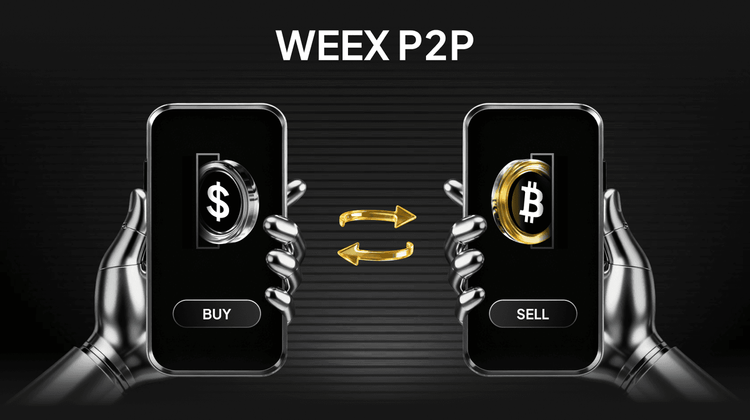
Buy USDT with Privat Bank on WEEX P2P – 0 Fee & Ultra-Fast UAH Trades
Privat Bank continues to stand out as one of the most efficient and commonly used methods for users in Ukraine to purchase crypto using UAH. With WEEX P2P, users can buy crypto directly through Privat Bank with zero fees, access 24/7 verified merchants, and enjoy ultra-fast release times.
Compared with Binance, Bybit, and local OTC platforms, WEEX consistently offers better UAH exchange rates, safer escrow protection, and more available ads for Privat Bank users.
As crypto adoption continues to expand in Ukraine, the demand for convenient and secure access to digital assets keeps growing. With WEEX P2P, users can buy USDT, BTC, or ETH via Privat Bank with instant processing, 0% buyer fees, and professional merchant support.
What is P2P Trading?
Peer-to-Peer (P2P) trading allows users to buy and sell crypto directly with other users, while the platform acts as a secure intermediary.
On WEEX P2P:
Crypto is held in escrowSellers release assets only after payment is confirmedTrades are processed quickly and safelyThis ensures zero counterparty risk and allows users to pay via local banking methods for a seamless experience.
Why WEEX P2P is the Best Choice for Privat Bank Users in 2025
WEEX P2P offers key advantages to users purchasing crypto with UAH via Privat Bank:
0% buyer fees:Save 2–8% compared to competing platforms and maximize the value of every tradeFast release times :Funds are typically released within 1–3 minutes, ensuring a smooth and efficient buying experienceOfficial escrow protection:Platform-managed escrow guarantees 100% transaction safetyFlexible trade sizes:Supports everything from small purchases to large-volume transactionsBest UAH exchange rates for Privat Bank users: Enjoy highly competitive pricing tailored for Privat Bank paymentsThousands of merchants online 24/7: Deep liquidity and constant availability at any time of dayMore Privat Bank ads than any competitor: Greater choice, faster matching, and higher deal completion ratesWhether you’re buying 1,000 UAH or 1,000,000 UAH, WEEX ensures fast, safe, and cost-efficient crypto purchases.
How to Buy USDT with Privat Bank on WEEX P2P
Buying crypto with Privat Bank on WEEX is simple and fast. Follow these steps:
Register on WEEX and complete basic KYC verification Create your WEEX account and finish the basic identity verification process, which typically takes less than one minute to complete.Navigate to Buy Crypto → P2P Trading From the main menu, enter the P2P trading section and select UAH as your preferred fiat currency.Apply the “Privat Bank” filter Enable the Privat Bank payment filter to view only those merchant advertisements that support Privat Bank bank transfers.Select the most suitable merchant Review and compare available merchants based on key indicators, including:Exchange priceOrder completion rateTotal trading volumeReal-time online statusEnter the amount you wish to purchase Input your desired crypto amount, and the system will automatically calculate and display the exact payable amount in UAH.Complete the payment via Privat Bank Transfer the displayed amount using Privat Bank, following the bank details provided by the selected merchant.Confirm payment and notify the seller Click “Transferred, Notify Seller” after completing the transfer. The seller will then verify your payment and promptly release the cryptocurrency to your WEEX account.Your USDT will arrive instantly in your WEEX wallet — safe, fast, and with zero fees.
Frequently Asked Questions (FAQ)
Q1: Are there any fees when paying with Privat Bank? A: 0% fee for buyers. Only sellers pay a small fee.
Q2: How fast will I receive USDT? A: Usually 1–5 minutes after marking payment as sent.
Q3: Is buying with Privat Bank safe on WEEX? A: Yes. All trades use official escrow.
Q4: Do I need full KYC? A: Basic KYC is required for P2P trading.
Ready to Buy USDT with Privat Bank?
Start buying crypto in under 3 minutes — fast, safe, and 0% fee for buyers!
Start Buying USDT on WEEX P2P with Privat Bank Now!
Buy USDT with Bank Transfer on WEEX P2P – 0 Fee & 24/7 PKR Merchants
Bank Transfer is widely recognized in Pakistan as a trusted and reliable option for fast and seamless cryptocurrency purchases using PKR. With WEEX P2P, users can buy crypto directly through Bank Transfer with zero fees, access 24/7 verified merchants, and enjoy ultra-fast release times.
Compared with Binance, Bybit, and local OTC platforms, WEEX consistently offers better PKR exchange rates, safer escrow protection, and more available ads for Bank Transfer users.
As crypto adoption continues to rise in Pakistan, secure and convenient access to digital assets has become increasingly important. With WEEX P2P, users can buy USDT, BTC, or ETH via Bank Transfer with instant processing, 0% buyer fees, and professional merchant support.
What is P2P Trading?
Peer-to-Peer (P2P) trading allows users to buy and sell crypto directly with other users, while the platform acts as a secure intermediary.
On WEEX P2P:
Crypto is held in escrowSellers release assets only after payment is confirmedTrades are processed quickly and safelyThis ensures zero counterparty risk and allows users to pay via local banking methods for a seamless experience.
Why WEEX P2P is the Best Choice for Bank Transfer Users
WEEX P2P offers key advantages to users purchasing crypto with PKR via Bank Transfer:
0% buyer fees:Save 2–8% compared to competing platforms and maximize the value of every tradeFast release times :Funds are typically released within 1–3 minutes, ensuring a smooth and efficient buying experienceOfficial escrow protection:Platform-managed escrow guarantees 100% transaction safetyFlexible trade sizes:Supports everything from small purchases to large-volume transactionsBest PKR exchange rates for Bank Transfer users: Enjoy highly competitive pricing tailored for Bank Transfer paymentsThousands of merchants online 24/7: Deep liquidity and constant availability at any time of dayMore Bank Transfer ads than any competitor: Greater choice, faster matching, and higher deal completion ratesWhether you’re buying 1,000 PKR or 1,000,000 PKR, WEEX ensures fast, safe, and cost-efficient crypto purchases.
How to Buy USDT with Bank Transfer on WEEX P2P
Buying crypto with Bank Transfer on WEEX is simple and fast. Follow these steps:
Register on WEEX and complete basic KYC verification Create your WEEX account and finish the basic identity verification process, which typically takes less than one minute to complete.Navigate to Buy Crypto → P2P Trading From the main menu, enter the P2P trading section and select PKR as your preferred fiat currency.Apply the “Bank Transfer” filter Enable the Bank Transfer payment filter to view only those merchant advertisements that support Bank Transfer bank transfers.Select the most suitable merchant Review and compare available merchants based on key indicators, including:Exchange priceOrder completion rateTotal trading volumeReal-time online statusEnter the amount you wish to purchase Input your desired crypto amount, and the system will automatically calculate and display the exact payable amount in PKR.Complete the payment via Bank Transfer Transfer the displayed amount using Bank Transfer, following the bank details provided by the selected merchant.Confirm payment and notify the seller Click “Transferred, Notify Seller” after completing the transfer. The seller will then verify your payment and promptly release the cryptocurrency to your WEEX account.Your USDT will arrive instantly in your WEEX wallet — safe, fast, and with zero fees.
Frequently Asked Questions (FAQ)
Q1: Are there any fees when paying with Bank Transfer? A: 0% fee for buyers. Only sellers pay a small fee.
Q2: How fast will I receive USDT? A: Usually 1–5 minutes after marking payment as sent.
Q3: Is buying with Bank Transfer safe on WEEX? A: Yes. All trades use official escrow.
Q4: Do I need full KYC? A: Basic KYC is required for P2P trading.
Ready to Buy USDT with Bank Transfer?
Start buying crypto in under 3 minutes — fast, safe, and 0% fee for buyers!
Start Buying USDT on WEEX P2P with Bank Transfer Now!
What is Mango (MNGO)? Is Mango (MNGO) Worth Buying?
Mango (MNGO) is a digital asset that intersects the cultural appeal of meme coins with functional utility in decentralized finance (DeFi). Initially drawing inspiration from the community-driven success of assets like Dogecoin, Mango (MNGO) has evolved beyond a purely social token by integrating with Mango Markets—a decentralized trading platform.
On Mango Markets, the token facilitates liquidity provision, decentralized trading, and governance participation. This dual nature—combining lighthearted meme culture with tangible DeFi utility—sets it apart from many speculative meme tokens and aims to create a sustainable economic model beyond short-term social trends.
Read More: What Are Meme Coins?
Mango (MNGO) Trending Meme CoinThe rise of MNGO reflects a broader trend where assets gain traction through narrative and community while also offering practical use cases. Its momentum is driven by several factors:
Cultural Resonance: Like other successful meme assets, MNGO leverages online communities and viral potential, which can rapidly amplify visibility and speculative interest.Functional Differentiation: Unlike purely cultural meme tokens, MNGO is linked to Mango Markets, a platform offering margin trading, lending, and borrowing services. This provides a foundational use case that extends beyond sentiment-driven trading.Governance Participation: Token holders can influence platform development through decentralized governance, adding a layer of long-term participatory value.This combination allows MNGO to appeal both to participants interested in meme-driven market cycles and to those seeking exposure to DeFi infrastructure development.
Is Mango (MNGO) Worth Buying?Determining whether MNGO represents a suitable investment requires a balanced evaluation of its unique position between meme culture and DeFi utility.
Strengths and Opportunities:Utility Foundation: Its integration with a live DeFi platform provides a clearer value proposition than many meme-only tokens.Community Momentum: Active social engagement can drive short-to-medium term price appreciation during favorable market conditions.Governance Rights: Participation in platform decisions aligns holder incentives with the ecosystem’s health and growth.Risks and Considerations:High Volatility: As with most assets in this category, MNGO is subject to sharp price swings influenced by social sentiment, market trends, and broader crypto volatility.Platform Dependency: Its value is closely tied to the adoption, security, and continuous development of Mango Markets. Any setbacks on the platform could directly impact the token.Competitive Landscape: It operates in a crowded space of both meme coins and DeFi platforms, requiring sustained differentiation to maintain relevance.Should I Invest in Mango (MNGO)?Mango (MNGO) is best understood as a high-risk, high-potential asset that blends speculative and utility-driven characteristics. Investors should:
Assess personal risk tolerance, as meme-adjacent tokens can experience rapid devaluation.Research the Mango Markets platform’s performance, security audits, and roadmap.Consider position sizing—treating it as a speculative allocation rather than a core portfolio holding.Monitor both social sentiment for short-term cues and platform metrics for long-term viability.ConclusionMango (MNGO) represents an experiment in merging meme coin virality with DeFi functionality. While it carries the inherent volatility and sentiment-driven risks common to social tokens, its foundation in a functioning trading platform offers a layer of utility absent in many purely cultural assets.
For investors, MNGO may serve as a tactical allocation for those comfortable with elevated risk and interested in the intersection of community-driven assets and decentralized finance. Success will likely depend on the sustained growth of Mango Markets, continued community engagement, and the token’s ability to balance its dual identity in a rapidly evolving market. As always, thorough independent research and clear risk parameters are essential before engagement.
Ready to trade cryptocurrencies?Join WEEX now—enjoy zero trading fees, smooth execution, and instant access. Sign up today and start trading in minutes.
Further ReadingWhat Is Audiera (BEAT)? Audiera (BEAT) Price Prediction 2025–2030Is This AI Token Worth It? Acet (ACT) Price AnalysisWhat Is Magma Finance (MAGMA) and How Does It Work?Disclaimer: The opinions expressed in this article are for informational purposes only. This article does not constitute an endorsement of any of the products and services discussed or investment, financial, or trading advice. Qualified professionals should be consulted prior to making financial decisions.

Which Crypto Will Go 1000x in 2026?
Examining historical 1000x gainers reveals patterns centered on timing, narrative, and network effects rather than predictable fundamentals. Such extraordinary returns typically emerge from assets that started with low valuations, aligned with powerful cultural or technological shifts, and captured momentum at the right phase of a broader market cycle.
Bitcoin (BTC): Initially valued at pennies, Bitcoin introduced decentralized digital scarcity and established a new asset class. Its growth beyond 1000x was fueled by growing institutional trust, global adoption, and its evolution into a macroeconomic reserve asset over multiple cycles.Ethereum (ETH): Launched as a smart contract platform, Ethereum unlocked decentralized applications, DeFi, and NFTs. Early participants realized exponential gains as its ecosystem became the foundation for Web3 innovation.Dogecoin (DOGE): Originally created as a humorous experiment, Dogecoin leveraged community-driven virality and celebrity endorsement to achieve parabolic returns, demonstrating the power of meme culture in financial markets.Shiba Inu (SHIB): Starting with a micro-cap valuation, SHIB capitalized on meme coin mania and retail frenzy, delivering gains measured in tens of thousands of percent through exchange listings and expanding ecosystem narratives.Pepe (PEPE): A 2023 entrant with no functional utility, PEPE illustrated how internet-native memes can rapidly translate into speculative financial assets, briefly generating multi-billion-dollar valuations purely through social momentum.These cases underscore that 1000x outcomes are less about guarantees and more about early exposure, compelling storytelling, and favorable market psychology.
Top Cryptos With 1000x Potential in 2026Identifying tokens with 1000x potential requires a focus on the high-risk, high-reward segment of the market. The following assets represent speculative narratives that could attract extreme capital flows during aggressive bull phases. All projections are illustrative and assume optimal market conditions.
Bitcoin Hyper (HYPER): Positions as a Bitcoin Layer-2 solution aiming to extend functionality beyond store of value. Benefits from strong Bitcoin-centric narratives during BTC-led market cycles.Dogecoin (DOGE): As one of the most recognized cryptocurrencies globally, DOGE retains potential for resurgence driven by community loyalty, social media trends, and celebrity influence.Pepe (PEPE): A pure meme asset relying entirely on cultural virality and speculative momentum, historically capable of rapid multi-billion dollar valuation spikes.Shiba Inu (SHIB): Evolved from a meme token into an ecosystem with its own Layer-2 network, combining community scale with ongoing development to sustain speculative interest.These tokens are characterized by high volatility, narrative dependency, and sensitivity to broader market sentiment. Position sizing and exit planning are critical when engaging with such assets.
High-Growth Cryptos That Could Still Deliver Significant ReturnsNot all opportunities require extreme risk. Many investors achieve substantial returns through established projects with clearer fundamentals, growing adoption, and ecosystem maturity. While unlikely to deliver 1000x from current valuations, these assets can still produce strong performance in favorable market conditions.
Maverick Protocol (MAV): A decentralized exchange emphasizing capital efficiency for liquidity providers. Positioned to benefit from renewed DeFi activity and trading volume expansion in bull markets.Sui (SUI): A high-throughput Layer-1 blockchain focused on consumer applications like gaming and payments. Gains traction through developer adoption and scalability narratives.Aptos (APT): A scalable Layer-1 with institutional backing, increasingly associated with real-world asset tokenization and enterprise use cases.These projects represent a more balanced risk-return profile, appealing to investors seeking exposure to crypto growth with relatively stronger fundamental grounding.
Can These Cryptos Make You a Millionaire?The possibility exists, but it is contingent on specific and often unforgiving conditions. True millionaire-making outcomes typically require:
Exceptionally early entry before broad recognitionFavorable macro and market cycle timingDisciplined position management and profit-takingMost successful crypto wealth stories involve a portfolio approach, where one or two high-conviction winners offset other positions. Equally important is the discipline to secure gains—many paper millionaires fail to realize profits by holding through volatile downturns.
While the assets discussed could theoretically generate life-changing returns, achieving such results depends far more on strategy, risk management, and emotional control than on merely selecting the "right" token.
Conclusion: Which Crypto Will Give 1000x in 2026?There is no definitive answer, as 1000x returns are inherently unpredictable and historically rare. They tend to emerge from narratives that resonate deeply during specific market phases, often beginning as overlooked or dismissed ideas.
Investors should balance ambition with pragmatism: high-risk meme and narrative-driven tokens offer theoretical upside but come with extreme volatility and failure rates. More established projects provide growth potential with comparatively lower risk.
Ultimately, the search for exponential returns is less about prediction and more about preparation—staying informed, managing exposure, maintaining discipline, and recognizing that in crypto, timing and psychology often outweigh fundamentals in the short to medium term.
Further ReadingWhat Is Dogecoin and How Does It Work?What Is Ethereum and How Does It Work?What Is Shiba Inu and How Does It Work?Disclaimer: The opinions expressed in this article are for informational purposes only. This article does not constitute an endorsement of any of the products and services discussed or investment, financial, or trading advice. Qualified professionals should be consulted prior to making financial decisions.
How to Keep Your Crypto Safe? Everything You Need to Know
One of the defining attributes of cryptocurrency, compared to traditional fiat currencies such as the U.S. dollar, is the direct ownership and control it grants individuals over their digital assets.
Rather than depending on banks or financial institutions to hold and transfer value, cryptocurrency is inherently designed to be accessed solely by the holder of the associated digital wallet. This architecture makes it resistant to censorship, seizure, or freezing by centralized authorities—provided it is stored with appropriate security measures.
However, this self-custody model also imposes the full responsibility of security on the individual. In an industry where theft, fraud, and accidental loss are not uncommon, safeguarding crypto assets demands knowledge and vigilance. While acquiring cryptocurrency has become increasingly accessible, knowing how to store it securely remains a challenging task, especially for those less familiar with technology.
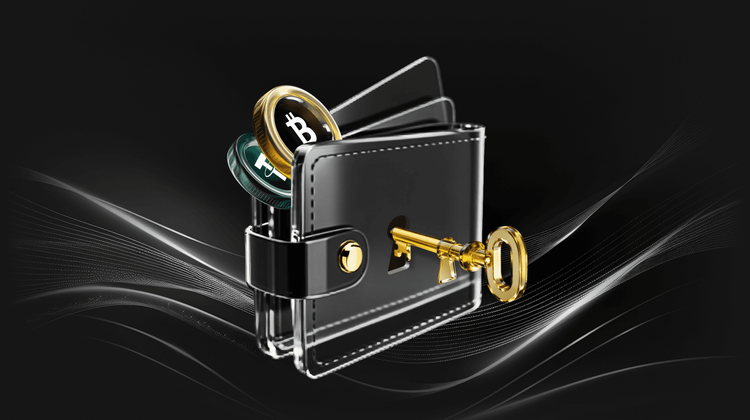
How to Store Crypto Safely?Since cryptocurrencies exist purely in digital form, there are no physical tokens to place in safes or vaults. Instead, access to your crypto is managed through digital wallets—software applications or dedicated hardware devices that securely store the cryptographic keys needed to control your funds.
A deeper understanding of wallet types and their security trade-offs is essential for anyone entering the crypto space.
How Crypto Wallets WorkTo grasp how cryptocurrency security functions, it helps to understand the role of cryptographic keys generated with each wallet.
When a wallet is created, two mathematically linked keys are produced:
A public key, which is hashed to create a public wallet address—similar to a public email address used to receive funds.A private key, which acts like a master password to authorize transactions and should never be shared.If the public key is comparable to a home address, the private key is the key to the front door. Losing the private key means permanent loss of access to the associated funds.
Most wallets also generate a seed phrase—a series of words that serves as a backup to restore a wallet on a new device. Like a private key, this seed phrase must be stored securely offline; if exposed, anyone can gain control of the wallet and its contents.
How to Keep Your Crypto Safe?1. Keep Private Keys and Seed Phrases OfflineNever store digital copies of private keys or seed phrases on devices connected to the internet. Write them down on paper or use specialized metal backup plates, and store them in a secure, fire-resistant location.
2. Limit Exposure on Exchanges and DeFi ProtocolsWhile trading platforms and decentralized finance protocols enable active participation, they also concentrate risk. Avoid keeping all your assets on any single platform or protocol. Use them primarily for active trading or yield farming, and transfer unused funds back to a secure personal wallet.
3. Enable Two-Factor Authentication (2FA)Strengthen account security by enabling 2FA using an authenticator app. Avoid SMS-based 2FA when possible, as it is more susceptible to SIM-swapping attacks.
4. Maintain Privacy About HoldingsPublicly disclosing crypto holdings can make you a target for phishing, social engineering, or physical threats. Practice discretion in both online and offline discussions about your assets.
Types of Crypto WalletsHot WalletsThese wallets remain connected to the internet, offering convenience for frequent transactions. Examples include browser-based wallets like MetaMask and mobile apps like Trust Wallet. While user-friendly, hot wallets are inherently more exposed to online threats such as malware, phishing, and hacking.
Cold WalletsPhysical devices that remain offline except when initiating transactions. Examples include Ledger and Trezor hardware wallets. Because they are disconnected from the internet, cold wallets offer significantly stronger protection against remote attacks. They are recommended for storing significant amounts of crypto long-term.
As a rule, purchase hardware wallets only from official sources to avoid tampered or compromised devices.
Read More: What is a Crypto Hardware Wallet?
Common Cryptocurrency Security ThreatsCrypto’s unregulated and high-value nature attracts a range of fraudulent schemes. Awareness of common scams is a critical defense mechanism.
1. Fake Giveaway ScamsOften impersonating celebrities or influencers on social media, these scams promise to multiply any crypto sent to a specified address. In reality, funds sent are stolen, and any “success stories” posted are typically fabricated.
2. Phishing AttacksAfter data breaches, affected users may receive emails or messages that appear to come from legitimate platforms, urging them to re-enter login details or private keys. These often contain malicious links designed to steal credentials or install wallet-draining malware.
3. Ponzi and High-Yield SchemesFraudulent platforms promise unsustainable returns with little risk or transparency. They may appear professional but often lack verifiable teams, clear revenue models, or consistent withdrawal functionality. Historical examples like BitConnect highlight the importance of thorough due diligence before investing.
A basic security checklist can help:
Verify the team and company background.Look for clear explanations of how returns are generated.Test withdrawal functionality with small amounts.Be skeptical of guarantees of high returns with no risk.Getting Started Securely with WEEXEntering the cryptocurrency space requires a balanced approach: embracing the freedom of self-custody while adopting disciplined security habits. Start by selecting a reputable wallet, practicing secure key management, and educating yourself on common threats. Over time, these practices become second nature, enabling you to navigate the digital asset ecosystem with greater confidence and safety.
If you're ready to explore cryptocurrency with security and ease, choose WEEX—a platform built with institutional-grade safeguards, 24/7 multilingual support, and seamless trading execution. Sign up today and experience a secure, reliable gateway to crypto trading.
Further ReadingWhat Are Airdrop Scams and How to Avoid Them?What Are Crypto Signals and How to Use them?What are Pyramid and Ponzi Schemes?Disclaimer: The opinions expressed in this article are for informational purposes only. This article does not constitute an endorsement of any of the products and services discussed or investment, financial, or trading advice. Qualified professionals should be consulted prior to making financial decisions.

What is OASIS Coin? OASIS Price Analysis
OASIS is a gaming-centric cryptocurrency designed to serve as the foundational token for an evolving decentralized metaverse ecosystem. Centered on digital identity, virtual worlds, and interconnected experiences, the project describes itself as a “Galaxy of Gaming”—positioned not merely as an in-game currency but as an economic layer for a broader, persistent virtual universe.
Rather than launching a single standalone game, OASIS aims to establish a shared infrastructure where users can navigate across multiple gaming environments, own digital assets, and participate in community-driven virtual economies. This places it within the growing intersection of gaming, decentralized finance, and the metaverse, tapping into long-term narratives around digital ownership and immersive online interaction.
OASIS Token DetailsOASIS operates on the BNB Smart Chain (BSC), utilizing its low transaction fees and high throughput to support seamless gaming and trading activity. Key token specifications include:
Blockchain: BNB Smart ChainToken Standard: BEP-20Token Symbol: OASISTotal & Max Supply: 100,000,000 OASISCirculating Supply: 100,000,000 OASISContract Address: 0x1a4d41219c547f3a0ee36cf3d9e68f80699cf283With the entire supply already in circulation, the token carries no inflationary pressure from future token issuance, placing emphasis on organic demand and ecosystem adoption.
OASIS Use Case and Ecosystem VisionThe project envisions OASIS as a multi-purpose asset within a growing virtual universe, including:
Serving as a primary medium of exchange across interconnected gaming worldsEnabling digital identity and avatar customizationFacilitating cross-platform asset portability and utilitySupporting community-driven virtual economies and governanceWhile the full ecosystem is still in development, the vision aligns with a broader trend toward interoperable, player-owned gaming environments where tokens enable both utility and user participation.
OASIS TokenomicsOASIS employs a straightforward tokenomic structure centered on scarcity and demand-driven valuation:
Fixed maximum supply of 100 million tokensNo inflationary minting or programmed token burnsValue reliant on ecosystem growth, user adoption, and market sentimentDesigned to benefit from network effects as the metaverse expandsThis model can encourage price appreciation during phases of high demand but may also increase volatility in the absence of sustained usage or during broader market downturns.
OASIS Price AnalysisRecently, OASIS achieved a new all-time high, reflecting increased trading interest and positive momentum:
All-time high: ~$0.6773All-time low: ~$0.519624-hour range: $0.6547 – $0.677324-hour change: +3.35%The token has demonstrated a generally upward trajectory since early December, although daily moves remain subject to volatility.
OASIS Technical Price AnalysisFrom a chart perspective, OASIS is currently trading near the upper bounds of its recent range:
Price is testing the upper Bollinger Band around $0.68The middle Bollinger Band near $0.669 acts as dynamic near-term supportRSI readings near 74 suggest overbought conditionsMACD remains in positive territory but shows early signs of momentum decelerationThis technical profile indicates a bullish structure that may be vulnerable to a short-term correction or consolidation if buying pressure subsides.
Key Support and Resistance LevelsBased on recent price action, notable levels include:
Immediate resistance: ~$0.68Psychological resistance: $0.70Near-term support: ~$0.669 (middle Bollinger Band)Secondary support: ~$0.660A sustained hold above the middle Bollinger Band would support continued upward momentum, while a break below could signal a period of retracement or sideways movement.
Is OASIS safe to invest in?Yes, OASIS should be considered a high-risk investment for several reasons:
Execution of its metaverse vision remains unproven and reliant on future developmentThe gaming ecosystem is still conceptual in many respectsThe token recently entered overbought technical territorySentiment in the gaming/metaverse niche can shift rapidly based on broader market conditionsWhile the project’s narrative is compelling, its long-term value will depend on tangible adoption, engaging user experiences, and sustained community growth.
ConclusionOASIS represents an ambitious attempt to build a token-driven metaverse gaming ecosystem on the BNB Smart Chain. Its fixed supply, gaming-focused narrative, and recent technical strength have fueled a notable price advance to new all-time highs.
However, overbought signals and the project’s early-stage status warrant caution. For momentum traders, OASIS offers volatility and short-term opportunity; for long-term holders, its ultimate success will hinge on whether the envisioned “Galaxy of Gaming” materializes into an active, engaged, and economically vibrant virtual universe. As with many gaming and metaverse tokens, prudent risk management and realistic timeframe expectations are advised.
Ready to trade cryptocurrencies?Join WEEX now—enjoy zero trading fees, smooth execution, and instant access. Sign up today and start trading in minutes.
Further ReadingWhat Is APRO (AT) and How Does It Work?What Is Quant (QNT)?What Is Momentum (MMT)?Disclaimer: The opinions expressed in this article are for informational purposes only. This article does not constitute an endorsement of any of the products and services discussed or investment, financial, or trading advice. Qualified professionals should be consulted prior to making financial decisions.

What Is Magma Finance (MAGMA) and How Does It Work?
Magma Finance is a next-generation decentralized liquidity protocol developed on the Sui blockchain, designed to address long-standing inefficiencies in decentralized finance. Unlike conventional automated market makers (AMMs) that passively distribute liquidity across wide price ranges, Magma introduces an Adaptive Liquidity Market Maker (ALMM) system enhanced by an off-chain artificial intelligence engine. This architecture actively concentrates capital in the most frequently traded price zones, dynamically adjusting positions in response to real-time market activity.
The protocol tackles core DeFi challenges such as liquidity fragmentation, high slippage, and suboptimal capital utilization. By implementing adaptive liquidity “bins” and continuously rebalancing funds, Magma ensures that a higher proportion of deposited assets remain actively earning fees. Additionally, it incorporates variable swap fees that adjust based on market volatility—offering higher compensation to liquidity providers during turbulent periods while maintaining competitive rates in stable conditions.
Governance and incentive alignment are central to Magma’s design. The protocol employs a ve(3,3) tokenomics framework, encouraging users to lock their MAGMA tokens to gain voting rights and participate in fee sharing. This structure aims to foster long-term engagement and coordinated growth among stakeholders. Backed by significant venture funding and recognized within the Sui ecosystem, Magma positions itself not merely as another decentralized exchange, but as an intelligent liquidity coordination layer for the broader network.
How Magma Finance (MAGMA) Works?Magma Finance operates through an Adaptive Liquidity Market Maker (ALMM) that restructures liquidity provision into discrete, price-specific bins. Only one bin is active at any given time, concentrating trading activity to minimize slippage. An off-chain AI engine monitors market conditions and automatically reallocates liquidity to the most relevant price zones, ensuring capital remains productive without requiring manual intervention from users.
Liquidity Bins: Capital is segmented into fixed-price intervals, enabling near-slippage-free execution for trades within the same bin.AI-Driven Rebalancing: Machine learning algorithms continuously analyze trading patterns and volatility to optimize bin placement and capital efficiency.Dynamic Fee Mechanism: Transaction fees are adjusted in real time based on market conditions—higher during volatility to reward liquidity providers, lower during calm periods to attract volume.Cross-DEX Routing & MEV Mitigation: The protocol intelligently routes orders across Sui-based exchanges while implementing protections against front-running and sandwich attacks.Permissionless Market Creation: Users can permissionlessly launch new trading pairs, enhancing ecosystem composability and accessibility.Sui Network Foundation: Built on Sui’s high-throughput, low-latency blockchain, the protocol supports the rapid execution required for real-time liquidity management.Magma Finance (MAGMA) TokenomicsThe Magma Finance (MAGMA) token functions as the central governance and utility asset within the Magma Finance ecosystem. Holders can lock their tokens to receive veMAGMA—a non-transferable governance token that confers voting power, reward amplification, and a share of protocol fees. This ve(3,3) model is designed to incentivize long-term alignment and reduce speculative selling pressure.
MAGMA has a fixed total supply of 1 billion tokens. Liquidity providers and active participants earn oMAGMA—a redeemable claim token that can be converted into MAGMA via fee payment or transformed into veMAGMA at a preferential rate. This redemption mechanism delays sell pressure and encourages deeper user integration. Protocol emissions follow a predictable, decreasing schedule, aiming to balance incentive distribution with long-term token scarcity.
MAGMA Airdrop: Everything You Should KnowMagma Finance structured its airdrop to reward early contributors while encouraging sustained ecosystem participation. Eligible users—including testnet participants, referral program members, and community advocates—received oMAGMA, a redeemable claim token representing the right to acquire MAGMA at a discount. To convert oMAGMA into MAGMA, users must either pay a redemption fee or commit to locking tokens as veMAGMA, which offers a more favorable conversion rate.
This design intentionally delays token liquidity, reduces immediate sell-side pressure, and promotes long-term staking and governance involvement. The MAGMA token officially entered circulation on December 16, 2025, with the airdrop acting as a strategic onboarding tool rather than a one-time distribution event.
Magma Finance (MAGMA) Token Price PredictionMAGMA enters the market amid growing interest in AI-enhanced DeFi solutions and the expanding Sui blockchain ecosystem. In the short term, price dynamics will likely be influenced by speculative trading, initial circulating supply constraints, and overall market sentiment. With a significant portion of the total supply initially locked or subject to gradual emission, early scarcity could support price appreciation if demand outpaces available liquidity.
However, built-in economic mechanisms may help stabilize volatility over time. The oMAGMA redemption process moderates airdrop-related selling, while decreasing emission schedules aim to reduce inflationary pressure. Should the protocol attract meaningful trading volume and liquidity provider participation, demand for veMAGMA could increase as users seek governance influence and enhanced rewards. While price movement remains speculative, MAGMA’s tokenomics—combined with its technological differentiation and ecosystem positioning—provide a structured foundation for potential value sustainability beyond initial launch volatility.
ConclusionMagma Finance represents a paradigm shift in decentralized liquidity provision—moving from passive capital deployment to actively managed, AI-optimized market making. By integrating adaptive liquidity bins, dynamic fees, and a carefully designed ve(3,3) token model, the protocol seeks to enhance capital efficiency, reduce slippage, and align long-term participant incentives.
The true measure of success will depend on its ability to attract sustained trading activity, retain liquidity, and deliver consistent value to users. If successful, Magma could establish itself as a core liquidity infrastructure within the Sui ecosystem, while also posing a broader question to the DeFi industry: What becomes possible when liquidity is not just decentralized, but intelligent?
Further ReadingWhat Is APRO (AT) and How Does It Work?What Is Quant (QNT)?What Is Momentum (MMT)?Disclaimer: The opinions expressed in this article are for informational purposes only. This article does not constitute an endorsement of any of the products and services discussed or investment, financial, or trading advice. Qualified professionals should be consulted prior to making financial decisions.
IR Airdrop on WEEX Exchange: Join the 50,000 USDT New User Rewards Event
The IR airdrop on WEEX Exchange is now live, offering a total 50,000 USDT reward pool for new and existing users. Powered by Infrared Finance, the core infrastructure layer of Berachain’s Proof of Liquidity (PoL) ecosystem, this campaign allows users to earn USDT rewards through deposits, spot trading, futures trading, and referrals. By participating in the IR airdrop, users can unlock welcome bonuses, volume-based futures rewards, and a share of a dedicated prize pool. The WEEX IR airdrop is designed to reward active traders while introducing users to Infrared Finance’s liquid staking and PoL infrastructure. With limited participation slots and first-come, first-served rewards, this IR airdrop on WEEX Exchange is a timely opportunity to earn crypto rewards while engaging with one of Berachain’s most important infrastructure projects.
What Is Infrared Finance and Why IR MattersInfrared Finance is the foundational infrastructure layer for Berachain’s Proof of Liquidity (PoL) ecosystem. It provides essential services such as liquid staking, validator infrastructure, and automated PoL vaults, forming the backbone of Berachain’s yield generation and governance mechanisms.
By supporting efficient capital deployment and decentralized participation, Infrared Finance plays a critical role in powering Berachain’s on-chain economy. The IR token represents access and alignment with this infrastructure, making the IR airdrop on WEEX Exchange an attractive opportunity for users interested in next-generation DeFi systems.
Event 1: IR New User Deposit and Spot Trading TaskNew users can unlock their first reward by completing a simple onboarding task.
Task requirements:
Net deposit of at least 100 USDTMaintain the deposited balance until the event endsComplete your first spot trade in eligible tokensReward:
10 USDTLimited to the first 1,000 participants, first-come, first-servedThis task lowers the entry barrier for users joining the IR airdrop on WEEX Exchange, making it accessible even for beginners.
Event 2: Futures Trading Volume TaskParticipants who reach the required futures trading volume in any trading pair can earn a base reward plus an additional futures bonus.
Reward tiers≥ 500 USDT volume: 5 USDT≥ 5,000 USDT volume: 10 USDT≥ 10,000 USDT volume: 20 USDTRewards are limited to the first 1,000 eligible users, ensuring early participants gain priority in the WEEX IR airdrop.
Event 3: Trade Futures to Share the 20,000 USDT Prize PoolUsers who trade 20,000 USDT or more in futures during the event period will qualify to share a 20,000 USDT prize pool.
Rewards are distributed proportionally based on trading volume, meaning higher activity leads to greater rewards. This event incentivizes consistent futures participation while increasing overall liquidity on WEEX Exchange.
Event 4: Referral Rewards ProgramBoth new and existing users can earn additional rewards by inviting friends to join WEEX.
Referral rules:
Each invitee must complete Event 1 and Event 2Each valid referral earns 10 USDTMaximum referral reward per user: 1,000 USDTThe referral program expands the reach of the IR airdrop on WEEX Exchange while rewarding users who help grow the community.
Reward Eligibility and Participation RulesTo qualify for rewards, users must complete tasks in sequence:
Event 1: Deposit and spot tradeEvent 2: Futures trading volumeFailure to follow the sequence may result in reward ineligibility.
Conclusion and Call to ActionThe IR airdrop on WEEX Exchange combines onboarding rewards, futures incentives, and referral bonuses into a single 50,000 USDT campaign. By participating, users gain early exposure to Infrared Finance while earning tangible trading rewards.

What is Sad Coin and Why This Meme Coin Is Going Up?
Sad Coin (SAD) is a meme token centered on the widely recognizable "sad face" motif, reflecting the collective emotional fluctuations of the crypto market. The project’s branding blends irony with ambition, positioning itself as culturally resonant during both downturns and speculative upswings.
Its community actively engages in discussions around market cycles, Solana’s potential, and the volatile nature of meme-driven assets. While concrete holder and volume data remains dynamic, the token emphasizes narrative and sentiment over traditional metrics—reminding participants to balance humor, speculation, and risk awareness in a highly unpredictable environment.
Why Is Sad Coin Going Up?Sad Coin's recent upward movement is primarily fueled by short-term market momentum and heightened trader sentiment rather than fundamental utility or long-term project development. Over the past 24 hours, SAD has experienced an increase of approximately 22%, reaching a price level around $0.13. This surge is accompanied by noticeable rises in transaction volume, active wallet participation, and net buying activity—indicators commonly associated with speculative interest and rotational trading into lower-cap meme tokens.
The token benefits from its easily recognizable branding, centered around the widely known “crying Wojak” meme, which facilitates social sharing and community identification. This cultural shorthand helps attract attention during periods when traders are actively scanning the market for high-volatility, sentiment-driven opportunities. On-chain metrics further reflect this activity, showing elevated transaction counts and stable liquidity provision, characteristics often seen in emerging meme assets that attract momentum-focused participants.
Additionally, Sad Coin’s market capitalization range allows for sharp percentage movements without requiring massive capital inflows, making it an appealing target for short-term traders seeking rapid gains. While this environment supports quick price appreciation, it also underscores the token's dependence on ongoing attention and speculative engagement—factors that can shift rapidly in the highly reactive meme coin landscape.
Sad Coin Price AnalysisCurrently trading near $0.133 with a market capitalization of approximately $131 million, Sad Coin is demonstrating active but mixed short-term price behavior. The 24-hour trading volume stands around $1.3 million—a meaningful level relative to the token’s liquidity depth and age—suggesting sustained speculative interest.
Chart analysis shows that recent price action has formed a series of higher lows following earlier corrections, indicating that buyers continue to enter during dips rather than exiting en masse. However, momentum remains inconsistent across shorter timeframes, reflecting the attention-driven and often discontinuous trading patterns typical of meme assets.
Liquidity conditions remain adequate for moderate-sized trades, reducing slippage risk for retail participants. Positive net buy flow over the past day aligns with the observed price appreciation, yet the token’s trajectory remains closely tied to social engagement and market sentiment rather than structured accumulation or institutional backing.
In essence, Sad Coin is moving because traders are actively trading it—its price reflects real-time participation rather than long-term valuation. This environment is marked by high volatility, where price advances can be as rapid as their reversals once attention or volume subsides.
ConclusionSad Coin’s recent appreciation is largely a reflection of renewed speculative interest in meme-based cryptocurrencies rather than a shift in its underlying fundamentals. Characterized by strong short-term trading activity, rising volume, and active community participation, SAD operates as a momentum-driven asset within a high-risk, high-volatility segment of the market.
Participants should remain mindful of the sentiment-sensitive nature of such tokens and employ disciplined risk management—including position sizing, exit strategies, and ongoing market monitoring—when engaging in short-term trading. For those comfortable navigating decentralized trading environments, Sad Coin represents a current focal point in the evolving narrative of community-driven digital assets.
Further ReadingWhat is the D ($D) and It's Safe to Invest in D ($D)?What Is Quant (QNT)?What Is Momentum (MMT)?Disclaimer: The opinions expressed in this article are for informational purposes only. This article does not constitute an endorsement of any of the products and services discussed or investment, financial, or trading advice. Qualified professionals should be consulted prior to making financial decisions.
FAQQ1: What is Sad Coin?
A: Sad Coin is a sentiment-driven meme cryptocurrency that leverages viral internet imagery and emotional themes to engage communities. Its value is largely influenced by social momentum and speculative trading activity rather than traditional utility.
Q2: Why is Sad Coin trending today?
A: Sad Coin is gaining attention due to a notable 24-hour price surge of approximately 22%, accompanied by rising trading volume and increased on-chain activity, reflecting renewed speculative interest in meme-based assets.
Q3: Is Sad Coin a long term investment?
A: Sad Coin is primarily viewed as a high-volatility, short-term speculative asset and is not typically positioned as a long-term investment due to its reliance on market sentiment and cultural trends.

What Is Frax USD (FRXUSD)?
Frax USD (FRXUSD) is an innovative algorithmic stablecoin built on the Frax Protocol, offering a fully decentralized alternative to traditional, centrally-managed stablecoins such as USDT and USDC. Unlike these conventional options, FRXUSD utilizes a hybrid system that blends algorithmic monetary policy with decentralized collateral backing to maintain a stable peg to the US dollar.
This unique structure ensures that FRXUSD remains both resilient and scalable, delivering the reliability of a fiat-pegged asset while minimizing the counterparty and custodial risks associated with centralized issuers. The system is dynamically governed by on-chain mechanisms, including adjustments to its collateral ratio, which help sustain price stability even under fluctuating market conditions.
FRXUSD is partially collateralized by assets including the protocol’s governance token, Frax Shares (FXS), creating a flexible and transparent reserve framework. This design makes it a dependable medium for decentralized finance (DeFi) activities, including lending, liquidity provision, and cross-protocol integrations.
Frax USD (FRXUSD) TokenomicsThe Frax USD contract is deployed at address: 0xCAcd6fd266aF91b8AeD52aCCc382b4e165586E29
The economic model of FRXUSD is centered around several core mechanisms that support its stability and decentralization:
Algorithmic Stability Management: An on-chain algorithm actively monitors supply and demand dynamics, expanding or contracting the FRXUSD supply to preserve its dollar peg in real time.Collateral Backing: A portion of the stablecoin’s value is secured by decentralized assets, with Frax Shares (FXS) playing a central role in the reserve system. This collateral layer provides a tangible foundation for confidence, particularly during periods of market stress.Decentralized Governance: Protocol upgrades, parameter adjustments, and treasury management are overseen by the Frax DAO, ensuring that development remains community-driven and transparent.Dynamic Collateral Ratio: The protocol autonomously calibrates the ratio between algorithmic and collateral-backed components, enabling it to adapt to varying levels of market trust and liquidity without reliance on centralized actors.Together, these elements position FRXUSD as a forward-looking stablecoin that marries the predictability of a fiat peg with the autonomy and transparency of decentralized finance.
Tokenomics.png">
Is Frax USD (FRXUSD) Worth Investing in?Whether Frax USD (FRXUSD) is worth investing in or holding depends largely on your risk tolerance, investment timeline, and market outlook. In the past seven days, FRXUSD has shown a modest gain of 0.13%, reflecting cautious optimism in the market. However, it currently trades about 20.72% below its all-time high, which places it in a medium-risk category—meaning potential upside exists, but volatility and downside risk remain present.
Before deciding to buy, assess key factors such as overall market trends, the project’s fundamentals, current valuation, and whether the price aligns with your entry strategy. Timing is crucial: buying during undervalued phases and selling during overvalued periods can enhance returns, but requires continuous monitoring and flexibility to adapt to changing conditions.
If you choose to invest, ensure you use a reputable exchange that supports FRXUSD, complete necessary verifications, and consider storing assets in a secure wallet. Always base your decisions on thorough research and clear risk management—never invest more than you can afford to lose.
ConclusionFrax USD (FRXUSD) represents a significant evolution in the stablecoin landscape, combining algorithmic precision with decentralized governance to deliver a transparent and resilient digital dollar alternative. Its hybrid collateral model and community-led development make it a compelling option for DeFi participants seeking stability without centralization.
With a clear understanding of how FRXUSD operates and the steps to acquire it, users are well-equipped to integrate this innovative stablecoin into their decentralized finance activities. Whether for trading, lending, or liquidity provision, FRXUSD offers a trustworthy and programmable foundation for the next generation of blockchain-based finance.
Further ReadingWhat Is APRO (AT) and How Does It Work?What Is Quant (QNT)?What Is Momentum (MMT)?Disclaimer: The opinions expressed in this article are for informational purposes only. This article does not constitute an endorsement of any of the products and services discussed or investment, financial, or trading advice. Qualified professionals should be consulted prior to making financial decisions.
What Are Stablecoins? A Beginner’s Guide to How They Work, Why They Matter, and Essential Tips for WEEX Crypto Traders
Stablecoins sit at the center of the crypto economy as its most “stable” foundation — digital assets engineered to maintain a steady value, most commonly pegged to 1 USD. From trading and cross-border payments to remittances, yield products, and nearly every corner of DeFi, stablecoins function as crypto’s universal settlement layer. They provide the reliability of traditional money with the speed and flexibility of blockchain. Put simply: without stablecoins, the crypto market would lose its anchor — and the entire ecosystem would feel like a car without brakes.
The Four Major Types of Stablecoins and How Each Maintains Price StabilityTo make sense of the stablecoin ecosystem, it helps to view it as a landscape shaped by four distinct models—fiat-backed, crypto-collateralized, commodity-backed, and algorithmic. Each was designed to answer the same question — how to keep a digital asset stable — but they approach the problem with very different tools, levels of risk, and underlying economic logic. The table below offers a straightforward comparison to help you see these differences at a glance.
td {white-space:nowrap;border:0.5pt solid #dee0e3;font-size:10pt;font-style:normal;font-weight:normal;vertical-align:middle;word-break:normal;word-wrap:normal;}
TypeExamplesHow Peg Is MaintainedAdvantagesDrawbacksFiat-BackedUSDT, USDC, EUROe, EURC1:1 backing with cash & Treasuries; mint/redeem arbitrageMost stable; easy to understand; strong liquidityRequires trust in issuer; regulation exposureCrypto-CollateralizedDAI, LUSD, USDAOver-collateralized with crypto (e.g., ETH); liquidation botsTransparent; fully on-chainHigh volatility of collateral; liquidationsCommodity-BackedPAXG, XAUTBacked by physical goldGood for gold investors; legally backed claimsNot pegged to USD; low liquidityAlgorithmicFRAX v1, AMPL, (UST – failed)Supply expands/shrinks based on priceMore “decentralized”; capital-efficientHistorically unstable; death-spiral riskFiat-backed stablecoins maintain their peg through 1:1 fiat reserves, offering high liquidity and ease of use but relying on centralized custodians and regulatory oversight. Crypto-collateralized stablecoins use over-collateralization and smart contracts to stay stable, providing transparency and decentralization at the cost of higher volatility and lower capital efficiency. Commodity-backed stablecoins derive value from assets like gold or oil, giving users inflation protection but suffering from limited liquidity and dependence on commodity price swings. Algorithmic stablecoins adjust supply programmatically to hold their peg, enabling high capital efficiency but carrying significant risk during market shocks. Overall, fiat-backed stablecoins remain the most widely used and trusted category.
Global Stablecoin Regulations: A Comprehensive Comparison of Rules and TrendsIn 2025, major jurisdictions including the US, EU, Hong Kong, and Japan introduced or updated stablecoin regulations, focusing on reserve requirements, redemption guarantees, disclosure, and AML/CFT compliance. These frameworks aim to integrate stablecoins into mainstream finance while reducing systemic and consumer risks.
td {white-space:nowrap;border:0.5pt solid #dee0e3;font-size:10pt;font-style:normal;font-weight:normal;vertical-align:middle;word-break:normal;word-wrap:normal;}
RegionRegulatory FrameworkKey RequirementsCurrent TrendUnited StatesGENIUS Act (2025) + Federal & State oversight- Full reserve backing (cash, bank deposits, short-term Treasuries, compliant MMFs) - No commercial paper, high-risk assets, or algorithmic reserves - Reserves cannot be rehypothecated; monthly disclosure required - Stablecoins must be redeemable with transparent termsFirst comprehensive federal framework; enhances transparency and trust; issuance and usage expected to grow rapidly.Europe (EU)MiCA (effective 2024/2025)- Licensed and registered issuers - Reserve adequacy and transparency - AML/CFT compliance and consumer protectionLicensed, audited USD/EUR-backed stablecoins gaining adoption; rules considered sufficient to mitigate risks.Hong KongStablecoins Ordinance (effective Aug 1, 2025, HKMA regulated)- HKMA license required for fiat-backed stablecoins - Reserve management, redemption, AML/CFT, investor protection - Unlicensed issuance/marketing prohibitedMoves from exploratory to formal regulation; first licenses expected late 2025/early 2026; aims to be regional crypto hub.JapanPayment Services Act amendments (2025)- Trust-type stablecoins may use up to 50% low-risk assets - Issuers/intermediaries must register with FSA, comply with AML/CFT, transparency, custody - User assets must remain in Japan; insolvency protection requiredShifts from restrictive to flexible framework; supports compliant yen- and foreign-currency stablecoins; facilitates payments, remittances, and digital asset adoption.The US, EU, Hong Kong, and Japan are leading the shift toward formal stablecoin regulation, emphasizing reserve backing, transparent redemption, disclosures, AML/CFT compliance, and licensing. The EU’s MiCA framework exemplifies this trend, strengthening market trust and consumer protection. Since MiCA’s implementation in June 2024, the euro stablecoin market has rebounded, with market capitalization doubling and transaction volumes rising nearly ninefold, led by tokens like EURS, EURC, and EURCV. These developments show that clear regulation not only fosters compliance and adoption but also supports real market growth, increased usage in payments and digital-asset trading, and higher consumer awareness.
Stablecoin Adoption Trends 2025: Market Growth, Bank Integration, and Tokenized DepositsStablecoins have seen strong growth in 2025, with total market capitalization rising from around $200 billion to over $308 billion. According to Defillama, as of December 10, 2025, short-term inflows remain robust, with a 7-day net inflow of $965 million and 30-day growth of 1.22%, indicating consistent accumulation rather than speculative spikes. USDT continues to dominate at roughly 60%, serving as the core liquidity token. This steady growth reflects real demand, institutional participation, and growing market confidence.
This robust market growth is mirrored by expanding adoption. Stablecoins are moving beyond crypto-native exchanges into payments, payroll, and cross-border remittances. Banks are exploring tokenized deposits, such as JPM Coin and HSBC initiatives, while clearer regulations attract traditional financial players. The combination of steady growth, institutional interest, and regulatory clarity positions stablecoins as a foundational layer of the modern internet-native financial system, enabling faster, more efficient, and globally accessible money movement.
Buying Stablecoins on WEEX: Fast, Secure and Beginner FriendlyBuying stablecoins on WEEX is designed to be fast, smooth, and effortless, giving every user—whether a beginner or an experienced trader—a superior on-ramp into the crypto world. With two secure and intuitive fiat gateways, Quick Buy and P2P Trading, WEEX makes converting fiat to USDT or USDC simpler than ever. Quick Buy offers an instant, fee-free checkout experience that supports 40+ fiat currencies and major payment methods like Visa, Mastercard, Apple Pay, and Google Pay, allowing users to complete a purchase and receive crypto in their Spot account within minutes. For users who prefer local payment methods, WEEX’s P2P marketplace provides unmatched flexibility with 0 fees, escrow protection, and 90+ local payment options, ensuring safe and convenient transactions globally. Whether you’re preparing to trade, managing risk, or moving into DeFi and yield products, WEEX delivers a reliable, fast, and frictionless stablecoin purchasing experience, keeping your funds flexible and ready for every opportunity in the market.
About WEEXFounded in 2018, WEEX has developed into a global crypto exchange with over 6.2 million users across more than 150 countries. The platform emphasizes security, liquidity, and usability, providing over 1,200+ spot trading pairs and offering up to 400x leverage in crypto futures trading. In addition to traditional spot and derivatives markets, WEEX is expanding rapidly in the AI era — delivering real-time AI news, empowering users with AI trading tools, and exploring innovative trade-to-earn models that make intelligent trading more accessible to everyone. Its 1,000 BTC Protection Fund further strengthens asset safety and transparency, while features such as copy trading and advanced trading tools allow users to follow professional traders and experience a more efficient, intelligent trading journey.
Follow WEEX on social mediaX: @WEEX_Official
Telegram: WeexGlobal Group
YouTube: @WEEX_Global
TikTok: @weex_global
Instagram: @WEEX Exchange
Discord: WEEX Community
Buy USDT with SBP-Fast Bank Transfer on WEEX P2P – 0 Fee & Ultra-Fast RUB Trades
SBP-Fast Bank Transfer is a top-choice option in Russia, offering users a fast and reliable way to buy crypto using RUB. With WEEX P2P, users can buy crypto directly through SBP-Fast Bank Transfer with zero fees, access 24/7 verified merchants, and enjoy ultra-fast release times.
Compared with Binance, Bybit, and local OTC platforms, WEEX consistently offers better RUB exchange rates, safer escrow protection, and more available ads for SBP-Fast Bank Transfer users.
With crypto adoption rising across Russia, reliable and fast access to digital assets has turned into a key requirement for users. With WEEX P2P, users can buy USDT, BTC, or ETH via SBP-Fast Bank Transfer with instant processing, 0% buyer fees, and professional merchant support.
What is P2P Trading?
Peer-to-Peer (P2P) trading allows users to buy and sell crypto directly with other users, while the platform acts as a secure intermediary.
On WEEX P2P:
Crypto is held in escrowSellers release assets only after payment is confirmedTrades are processed quickly and safelyThis ensures zero counterparty risk and allows users to pay via local banking methods for a seamless experience.
Why WEEX P2P is the Best Choice for SBP-Fast Bank Transfer Users
WEEX P2P offers key advantages to users purchasing crypto with RUB via SBP-Fast Bank Transfer:
0% fee for buyers (save 2-8% vs competitors)Fast release times (1–3 minutes on average)Official escrow protection – 100% safeSupport from small amounts to large-volume tradesBest RUB exchange rates for SBP-Fast Bank Transfer usersThousands of merchants online 24/7More SBP-Fast Bank Transfer ads than any competing platformWhether you’re buying 1,000 RUB or 1,000,000 RUB, WEEX ensures fast, safe, and cost-efficient crypto purchases.
How to Buy USDT with SBP-Fast Bank Transfer on WEEX P2P
Buying crypto with SBP-Fast Bank Transfer on WEEX is simple and fast. Follow these steps:
Register on WEEX and complete basic KYC Takes less than 1 minute.Go to Buy Crypto → P2P Trading Select RUB as your fiat currency.Filter by “SBP-Fast Bank Transfer” You will now only see advertisements that support SBP-Fast Bank Transfer transfers.Select the best merchant Compare based on:PriceCompletion rateVolumeOnline statusEnter the amount you want to buy The system will show your exact cost in RUB.Make the payment via SBP-Fast Bank Transfer Transfer the amount shown using the merchant’s bank details.Tap “Transferred, Notify Seller” The seller will verify your payment and release crypto.Your USDT will arrive instantly in your WEEX wallet — safe, fast, and with zero fees.
Frequently Asked Questions (FAQ)
Q1: Are there any fees when paying with SBP-Fast Bank Transfer? A: 0% fee for buyers. Only sellers pay a small fee.
Q2: How fast will I receive USDT? A: Usually 1–5 minutes after marking payment as sent.
Q3: Is buying with SBP-Fast Bank Transfer safe on WEEX? A: Yes. All trades use official escrow.
Q4: Do I need full KYC? A: Basic KYC is required for P2P trading.
Ready to Buy USDT with SBP-Fast Bank Transfer?
Start buying crypto in under 3 minutes — fast, safe, and 0% fee for buyers!
Start Buying USDT on WEEX P2P with SBP-Fast Bank Transfer Now!
Buy USDT with T-Bank on WEEX P2P – 0 Fee & Fast RUB Trades
In 2025, T-Bank remains one of the most popular and reliable ways for users in Russia to buy cryptocurrency with RUB. With WEEX P2P, users can buy crypto directly through T-Bank with zero fees, access 24/7 verified merchants, and enjoy ultra-fast release times.
Compared with Binance, Bybit, and local OTC platforms, WEEX consistently offers better RUB exchange rates, safer escrow protection, and more available ads for T-Bank users.
As crypto adoption grows in Russia, fast and secure access to digital assets has become essential. With WEEX P2P, users can buy USDT, BTC, or ETH via T-Bank with instant processing, 0% buyer fees, and professional merchant support.
What is P2P Trading?
Peer-to-Peer (P2P) trading allows users to buy and sell crypto directly with other users, while the platform acts as a secure intermediary.
On WEEX P2P:
Crypto is held in escrowSellers release assets only after payment is confirmedTrades are processed quickly and safelyThis ensures zero counterparty risk and allows users to pay via local banking methods for a seamless experience.
Why WEEX P2P is the Best Choice for T-Bank Users in 2025
WEEX P2P offers key advantages to users purchasing crypto with RUB via T-Bank:
0% fee for buyers (save 2-8% vs competitors)Fast release times (1–3 minutes on average)Official escrow protection – 100% safeSupport from small amounts to large-volume tradesBest RUB exchange rates for T-Bank usersThousands of merchants online 24/7More T-Bank ads than any competing platformWhether you’re buying 1,000 RUB or 1,000,000 RUB, WEEX ensures fast, safe, and cost-efficient crypto purchases.
How to Buy USDT with T-Bank on WEEX P2P
Buying crypto with T-Bank on WEEX is simple and fast. Follow these steps:
Register on WEEX and complete basic KYC Takes less than 1 minute.Go to Buy Crypto → P2P Trading Select RUB as your fiat currency.Filter by “T-Bank” You will now only see advertisements that support T-Bank transfers.Select the best merchant Compare based on:PriceCompletion rateVolumeOnline statusEnter the amount you want to buy The system will show your exact cost in RUB.Make the payment via T-Bank Transfer the amount shown using the merchant’s bank details.Tap “Transferred, Notify Seller” The seller will verify your payment and release crypto.Your USDT will arrive instantly in your WEEX wallet — safe, fast, and with zero fees.
Frequently Asked Questions (FAQ)
Q1: Are there any fees when paying with T-Bank? A: 0% fee for buyers. Only sellers pay a small fee.
Q2: How fast will I receive USDT? A: Usually 1–5 minutes after marking payment as sent.
Q3: Is buying with T-Bank safe on WEEX? A: Yes. All trades use official escrow.
Q4: Do I need full KYC? A: Basic KYC is required for P2P trading.
Ready to Buy USDT with T-Bank?
Start buying crypto in under 3 minutes — fast, safe, and 0% fee for buyers!
Start Buying USDT on WEEX P2P with T-Bank Now!

AVAX Airdrop New User Welcome Reward: Earn 50,000 USDT on WEEX
The AVAX Airdrop New User Welcome Reward is now available on WEEX, offering new users the chance to earn from a 50,000 USDT prize pool. This AVAX airdrop gives beginners an easy way to unlock bonuses by completing simple onboarding tasks such as making a net deposit, placing their first spot trade, and participating in futures trading. The AVAX New User Welcome Reward is open for a limited time, and all rewards follow a first-come, first-served rule, providing an incentive for users to join early. By completing Event 1 and Event 2 in sequence, users can qualify for AVAX airdrop rewards while exploring the speed, scalability, and ecosystem advantages of Avalanche. If you are new to WEEX or the Avalanche network, the AVAX welcome reward is a valuable opportunity to start trading and earn bonus USDT along the way.
AVAX Airdrop New User Welcome Reward: Claim Your Share of 50,000 USDTThe AVAX Airdrop New User Welcome Reward is officially live on WEEX, giving new traders a limited-time opportunity to earn from a 50,000 USDT prize pool. Avalanche (AVAX) has grown into one of the most influential blockchain networks in the crypto industry, known for its high-speed performance, sub-second finality, and powerful scalability. Now, WEEX users can take advantage of the AVAX airdrop by completing simple tasks designed to help beginners start their trading journey with meaningful rewards.
Whether you’re new to crypto or exploring new ecosystems, the AVAX New User Welcome Reward gives you an easy and rewarding entry point into WEEX.
What Is Avalanche (AVAX)?Avalanche is an open-source smart contract platform optimized for building decentralized finance (DeFi) applications and enterprise blockchain deployments. Its architecture enables:
Transaction confirmation in under 1 secondFull compatibility with the Ethereum Virtual Machine (EVM)Support for millions of independent validatorsHigh throughput and strong decentralizationAvalanche’s unique consensus mechanism allows it to scale efficiently while maintaining security and trustlessness, making it a leading ecosystem for DeFi, tokenization, and Web3 innovation.
Event Overview: AVAX Airdrop New User Welcome RewardEvent Period:
2025/12/08 18:00:00 – 2025/12/15 18:00:00 (UTC+8)
New users can unlock multiple layers of bonuses by completing simple deposit, spot trading, futures trading, and referral tasks. Rewards are issued in USDT and follow a first-come, first-served distribution.
Event 1: First Deposit and Spot Trading TaskTo begin earning from the AVAX airdrop, new users must complete:
Net deposit ≥ 100 USDTKeep the deposit locked until the event endsMake the first spot trade in eligible tokensOnce completed, users receive 10 USDT.
This reward is limited to the first 1,000 participants, making early participation essential for securing the AVAX welcome reward.
After completing Event 1, users can continue earning rewards through futures trading. The AVAX New User Welcome Reward includes multiple bonus tiers based on trading volume:
Futures Volume RequiredReward500 USDT5 USDT5,000 USDT10 USDT10,000 USDT20 USDTRewards are limited to the first 1,000 eligible traders.
Additionally, users who trade ≥ 20,000 USDT in futures across any trading pair will qualify to share a 20,000 USDT prize pool, allocated proportionally based on trading volume.
This structure encourages both new and active traders to participate in the AVAX airdrop.
Event 3: Referral Reward ProgramBoth new and existing WEEX users can earn referral bonuses during the AVAX airdrop campaign:
Invite friends to register during the eventEach invitee must complete Event 1 + Event 2You earn 10 USDT per valid referralEach participant can earn up to 1,000 USDTThis generous program makes it easy to accumulate additional rewards by growing your community.
Reward EligibilityTo successfully claim rewards from the AVAX Airdrop New User Welcome Reward:
Complete Event 1Complete Event 2Follow all event rules and hold the required assets until the event endsRewards are distributed on a first-come, first-served basisCompleting both events in sequence is mandatory to qualify for payouts.
Why Join the AVAX Airdrop on WEEX?Ideal for beginners entering the Avalanche ecosystemLow task thresholds and simple participation stepsMultiple reward layers: deposit, spot trading, futures trading, referralsStrong project fundamentals behind AVAXExclusive limited-time event with high earning potentialFinal ThoughtsThe AVAX Airdrop New User Welcome Reward is one of the best opportunities for newcomers to earn bonus USDT while discovering the Avalanche ecosystem’s speed and scalability. With a 50,000 USDT prize pool, multi-tiered reward structure, and beginner-friendly requirements, this event makes it easy for users to start their crypto journey on WEEX.
If you want to claim your share of the AVAX airdrop, join the event early and complete the tasks to maximize your rewards.
Lighter (LIT) Price Prediction 2025–2030: How High Could LIT Go?
Lighter (LIT) enters the crypto market at a moment when speculation alone is no longer enough to sustain valuations. Liquidity is selective, narratives are scrutinized, and DeFi protocols are increasingly judged by what they deliver rather than what they promise.
As a newly launched Ethereum-based token, LIT currently operates in a data-scarce environment with no extended price history, no mature volume profile, and no algorithmic forecasts from major analytics platforms.
Yet, the absence of historical data does not make analysis impossible. It simply requires a different lens. Instead of extrapolating from charts that do not yet exist, this Lighter price prediction relies on scenario-based reasoning, protocol fundamentals, and comparative behavior observed in early-stage DeFi projects.
Looking ahead to 2025–2030, LIT’s trajectory will be shaped by adoption, token utility, and broader crypto market cycles. The question is not whether LIT can move sharply volatility is almost guaranteed but whether it can sustain value as the market matures.
What Is Lighter (LIT)?Lighter (LIT) is a decentralized trading infrastructure project built on the Ethereum blockchain. It aims to provide a non-custodial, capital-efficient environment for traders. The native LIT token is designed to serve as a core component of the ecosystem, with proposed utilities typically revolving around governance, protocol incentives, and aligning the interests of users and developers.
The project's launch context is notable. Emerging after periods of speculative excess, Lighter enters a market that increasingly prioritizes tangible utility and sustainable models over viral hype. This environment sets a higher bar for execution but also creates opportunity for projects that successfully address genuine inefficiencies in on-chain trading.
LIT Token Price Overview and Current Market ContextAs a newly launched asset, LIT is in a phase of initial price discovery. Its valuation can exhibit significant dispersion across different trading venues, a common characteristic for tokens establishing their initial market base. Notably, due to the lack of an extended trading history, mainstream analytics platforms do not provide formal long-term algorithmic forecasts for LIT. This data scarcity underscores that any forward-looking assessment must be framed as a set of probabilistic scenarios rather than definitive predictions.
Key Factors That Will Influence Lighter (LIT) Price (2025–2030)The long-term valuation of LIT will be determined by several interlinked factors:
Protocol Adoption and Utility: The primary driver will be the actual usage of the Lighter platform. Metrics such as consistent trading volume, total value locked, and fee generation are fundamental value indicators, far outweighing transient social media hype.Token Economic Design: The specific mechanisms governing LIT's utility—such as its role in fee capture, staking rewards, governance power, or supply dynamics (e.g., burns, buybacks)—will critically influence its supply-demand equilibrium.Ethereum Ecosystem Traction: As an Ethereum-based application, Lighter's growth is tied to the broader health and scalability of its underlying blockchain. Widespread Layer-2 adoption and lower transaction costs would serve as significant tailwinds.Broader Market Cycles: The crypto market's inherent cyclicality will be a major external force. LIT's ability to maintain development and community engagement through potential bear markets will be as crucial as its performance during bullish periods.Lighter (LIT) Price Prediction (2025–2030)Given the absence of historical precedent, a scenario-based framework is more appropriate than linear predictions.
Lighter (LIT) Price Prediction 2025: The Validation Phase: This period will focus on establishing initial product-market fit. Price action will likely be volatile, driven by launch momentum, early user metrics, and exchange listings. The market will be assessing the project's basic viability.Lighter (LIT) Price Prediction 2026–2027: The Differentiation Phase: By this stage, the initial speculative noise typically subsides. Projects that fail to demonstrate growing utility and a sustainable model often fade, while those with genuine traction begin to stabilize and build a more consistent valuation floor based on fundamentals.Lighter (LIT) Price Prediction 2028–2030: The Maturation Phase: In the long term, LIT's price will reflect its established position within the DeFi landscape. Outcomes will diverge significantly:Conservative Scenario: Limited adoption and niche usage could see the token trade primarily on speculation with modest valuations.Base Case Scenario: Steady growth as a functional trading platform with a dedicated user base could support a valuation reflecting its fee generation and utility.Bull Case Scenario: Should Lighter emerge as a widely adopted core piece of DeFi trading infrastructure, significant value accrual to the LIT token becomes plausible.ConclusionLighter (LIT) represents a nascent thesis in the competitive DeFi trading sector. Its current lack of historical data is not an anomaly but a starting condition. Consequently, its long-term price path is not a pre-determined chart to be read, but a narrative to be written by the project's execution.
Investors and observers should focus less on precise price targets and more on monitoring the fundamental drivers: user growth, protocol utility, and tokenomics efficiency. The project's ultimate value will be determined by its ability to transition from a promising concept to a sustainably used and economically viable protocol within the evolving Ethereum ecosystem. As with any early-stage project, engagement requires an understanding of the high-risk, high-reward paradigm and a commitment to ongoing fundamental analysis.
Ready to trade Lighter (LIT)?Join WEEX now—enjoy zero trading fees, smooth execution, and instant access. Sign up today and start trading in minutes.
Further ReadingWhat is Snowball (SNOWBALL)?What is Clover Finance (CLV)? A Complete GuideWhat Is MANYU? ManyuShiba Meme Coin ExplainedDisclaimer: The opinions expressed in this article are for informational purposes only. This article does not constitute an endorsement of any of the products and services discussed or investment, financial, or trading advice. Qualified professionals should be consulted prior to making financial decisions.
What is POCHITA Coin? POCHITA Coin Price Prediction for 2026-2028
If you’re searching for what is POCHITA Coin and looking for a realistic POCHITA Coin price prediction, this article breaks it all down.
We’ll cover the story behind POCHITA, its roadmap, tokenomics, recent price movement, technical analysis, and long-term outlook through 2026–2028.
What is POCHITA?POCHITA Coin is a meme cryptocurrency launched on the Binance Smart Chain (BSC). It positions itself within a specific narrative lineage of dog-themed memes, claiming inspiration from predecessors like Cheems and Bonk, and aims to recapture a period of high activity for BSC-based meme tokens.
The project's core appeal is built on community-driven storytelling and nostalgia, rather than technological innovation or utility. It markets itself as a revival effort, seeking to leverage viral marketing and aggressive community engagement to gain traction.
POCHITA Coin RoadmapThe project's outlined development phases emphasize community growth and marketing intensity over technical milestones:
Phase 1: The Bark AwakensThis initial stage focused on launch activities: conducting a presale, locking liquidity pools, establishing its meme-centric narrative, launching on a Decentralized Exchange (DEX), and initiating community campaigns.
Phase 2: 2021 Season ReloadedThe subsequent phase aims to generate momentum through large-scale marketing, influencer collaborations, NFT integrations, and fostering a DAO-style community. The roadmap highlights a reliance on viral trends and speculative trading activity common to the meme coin sector.
POCHITA TokenomicsPOCHITA employs a straightforward tokenomic structure typical of many meme coins:
It implements a low transaction tax (e.g., 2% on buys and sells).The initial liquidity pool (LP) is locked to mitigate immediate "rug pull" risks.It has a fixed total supply.While these measures can encourage trading and provide initial security assurances, the long-term viability of such projects is predominantly driven by community sentiment and sustained market interest, rather than complex token mechanics.
POCHITA Coin Price Prediction for 2026-2028Providing a concrete price prediction for a meme coin like POCHITA over a multi-year horizon is highly speculative. Its long-term value is almost entirely contingent on two factors: the strength and longevity of its community, and the broader market's appetite for high-risk meme assets during future market cycles.
2026 Price Prediction: Price action will likely depend on the project's ability to maintain cultural relevance. In a best-case scenario with sustained viral engagement, it could see speculative rallies. Conversely, loss of community interest could lead to severe price depreciation.2027-2028 Price Prediction: By this period, the project's fate will be clearer. It may either solidify a niche community presence, potentially benefiting from renewed meme coin cycles, or fade into obscurity if unable to sustain engagement. Predictions are inherently unreliable and should be treated with extreme caution.ConclusionIn summary, POCHITA Coin is a speculative meme cryptocurrency that derives its value proposition from narrative and community sentiment rather than technical utility. While short-term analysis may indicate trading opportunities based on volatility patterns, any long-term price prediction is fraught with uncertainty due to the asset's inherent speculative nature.
Potential participants should conduct thorough personal research, understand the extreme risks associated with micro-cap meme coins, and only allocate capital they are prepared to lose entirely.
Ready to trade cryptocurrencies?Join WEEX now—enjoy zero trading fees, smooth execution, and instant access. Sign up today and start trading in minutes.
Further ReadingWhat is WOJAK and Why WOJAK Is Trending Again?Why POPCAT Crashes? A Complete ExplanationWhat is Purple Wojak (PURK)? A New Meme Coin with Stable PotentialDisclaimer: The opinions expressed in this article are for informational purposes only. This article does not constitute an endorsement of any of the products and services discussed or investment, financial, or trading advice. Qualified professionals should be consulted prior to making financial decisions.
What is Clover Finance (CLV)? A Complete Guide
If you’ve been following the Polkadot ecosystem or cross-chain DeFi projects, chances are you’ve come across Clover Finance and its native token, CLV. But for many newcomers, one big question still remains, what is CLV Coin, and why is it gaining attention in the crypto space?
In this article, we’ll break down everything you need to know about Clover Finance, what makes it unique, how the CLV token works, and a quick look at the current CLV price performance based on the latest market data.
What is Clover Finance?Clover Finance (often referred to as Clover) is a blockchain operating system built using Substrate, designed to integrate seamlessly into the Polkadot ecosystem. Its primary goal is not to offer a single service, but to provide a comprehensive, foundational infrastructure for both developers and end-users.
A key advantage of Clover is its full Ethereum Virtual Machine (EVM) compatibility. This allows developers to port and run Ethereum-based decentralized applications (dApps) efficiently on Substrate-based networks, effectively bridging the Ethereum and Polkadot ecosystems and simplifying cross-chain development. The project was founded in May 2020, with its mainnet launching in July 2021, marking its formal entry into the multi-chain arena.
Key Features of Clover Finance (CLV)Clover distinguishes itself as a multi-layered blockchain operating system rather than a single-purpose protocol. Its architecture comprises several integrated layers:
Storage Layer: For secure and efficient data handling.Smart Contract Layer: For executing application logic.DeFi Protocol Layer: For core financial services.eApp Layer: For deploying advanced decentralized applications.This holistic design supports complex, cross-chain functionalities while aiming to maintain a streamlined user experience. Other notable features include its cross-chain DeFi bridge for simplified asset movement, the introduction of "eApps" (external applications) for potentially higher performance, and a unique, flexible gas fee model. This model allows relayers to pay fees on users' behalf and employs an identity-based fee schedule that can lower costs for active network participants.
What is Clover Finance (CLV)?Clover Finance (CLV) is the native utility and governance token of the Clover Finance ecosystem. It serves multiple critical functions within the network:
Transaction Fees: Used to pay for network operations, with flexible payment options.Staking: Participants can stake CLV to help secure the network and earn rewards.Governance: Token holders can participate in on-chain voting to influence the protocol's future development.Funding & Development: The token is used to fund ecosystem projects through the treasury and to deploy smart contracts.This broad utility framework aims to embed CLV's value deeply within the platform's operations, extending its purpose beyond mere speculation.
Clover Finance (CLV) TokenomicsClover Finance has allocated its token supply to support long-term growth and ecosystem health. The distribution is focused on several key areas:
Ecosystem & Incentives: A significant portion is dedicated to ecosystem development and parachain offerings.Treasury & Staking: Substantial allocations are reserved for the project treasury and for staking rewards to secure the network.Team & Contributors: Allocations are designated for the founding team, early contributors, and community rounds.Initial Funding: Smaller portions were allocated to private, seed, and public sale investors.This structure emphasizes sustainability, community participation, and ongoing development.
ConclusionIn summary, CLV is the foundational token of Clover Finance, a blockchain operating system designed to streamline cross-chain application development and DeFi accessibility. By combining EVM compatibility, a multi-layered architecture, and a user-friendly gas model, Clover carves out a distinct niche in the Polkadot ecosystem. While the CLV token operates in a competitive and volatile segment of the market, its integral role in a protocol focused on solving cross-chain interoperability makes it a noteworthy project for those interested in the infrastructure layer of Web3.
Ready to trade cryptocurrencies?Join WEEX now—enjoy zero trading fees, smooth execution, and instant access. Sign up today and start trading in minutes.
Further ReadingWhat is WOJAK and Why WOJAK Is Trending Again?
Why POPCAT Crashes? A Complete Explanation
What Is MANYU? ManyuShiba Meme Coin Explained
Disclaimer: The opinions expressed in this article are for informational purposes only. This article does not constitute an endorsement of any of the products and services discussed or investment, financial, or trading advice. Qualified professionals should be consulted prior to making financial decisions.
Which 2 Cryptocurrencies Will Hit $100 Billion Market Cap in Q1 2026?
As the cryptocurrency market continues to mature, investors are increasingly focused on identifying assets poised to achieve major valuation milestones. One of the most significant markers of success and mainstream integration is a $100 billion market capitalization—a threshold that signifies substantial adoption, liquidity, and investor confidence.
With the market looking toward 2026, a pressing question emerges: which two cryptocurrencies are most likely to reach this milestone by the first quarter of that year? In this analysis, we’ll explore the contenders best positioned to cross into this elite tier and examine the factors that could propel them forward.
What does $100 Billion Milestone Mean?Before identifying potential candidates, it's important to understand what a $100 billion market cap truly represents. It reflects not only price appreciation but also widespread recognition, robust ecosystem development, and sustained utility. Achieving this level of valuation signals that a cryptocurrency has moved beyond speculative interest into the realm of globally significant digital assets.
Which 2 Cryptocurrencies Will Hit $100 Billion Market Cap in Q1 2026?While Bitcoin remains the undisputed leader in market capitalization, attention is shifting toward other networks with strong fundamentals and accelerating adoption. Based on current trajectories, ecosystem growth, and technological roadmaps, two assets stand out as the most probable to reach the $100 billion milestone in early 2026.
Ethereum (ETH)Ethereum is already the clear leader in smart contract platforms and decentralized application infrastructure. Its path to a $100 billion market cap is supported by several converging factors:
The full rollout of Ethereum 2.0 enhancements, which dramatically improve scalability, reduce energy consumption, and lower transaction costs, is expected to solidify its position as the foundational layer for Web3.Continued dominance in decentralized finance (DeFi), non-fungible tokens (NFTs), and institutional tokenization initiatives ensures sustained network activity and fee demand.Growing institutional adoption through ETFs, staking services, and enterprise blockchain integrations provides a steady inflow of capital and validation.Given these tailwinds, Ethereum reaching a $100 billion market capitalization in Q1 2026 is not only plausible but increasingly anticipated by analysts and investors alike.
Solana (SOL)Solana has distinguished itself as one of the fastest and most scalable smart contract platforms, positioning it as a serious contender for the $100 billion club. Key drivers for its growth include:
Exceptional throughput and low transaction fees, which have attracted a rapidly expanding ecosystem of developers, DeFi protocols, and consumer applications.Strategic partnerships and integrations across payments, gaming, and decentralized infrastructure, which broaden its utility beyond speculative trading.Ongoing network optimizations and a strong focus on user experience, making it accessible to both retail and institutional participants.If Solana maintains its current growth trajectory and continues to capture market share in key verticals, it is well-positioned to achieve a $100 billion valuation in the first quarter of 2026.
Why These Networks Are Poised for Growth
Several macro and ecosystem-specific factors support the potential of both Ethereum and Solana to reach this landmark valuation:
Expanding Real-World Use Cases: From decentralized finance and digital identity to supply chain management and content distribution, blockchain utility is moving beyond speculation. Both networks are at the forefront of these developments.Institutional Participation: Increasing involvement from regulated entities, including asset managers, banks, and corporations, provides stability, liquidity, and long-term credibility.Technological Evolution: Continuous upgrades in scalability, security, and interoperability enhance the value proposition of each network, supporting higher adoption and valuation over time.What's Next for Crypto Market?While market conditions are inherently unpredictable, Ethereum and Solana possess the technological foundations, community support, and real-world traction needed to sustain growth toward a $100 billion market cap. Investors and observers should monitor key developments such as protocol upgrades, regulatory clarity, and ecosystem expansion, which will play critical roles in shaping their paths forward.
ConclusionThe journey to a $100 billion market cap represents more than just price appreciation—it signifies maturation, trust, and functional relevance in the global economy. Ethereum and Solana are currently the strongest candidates to reach this milestone by Q1 2026, thanks to their leading roles in the ongoing evolution of decentralized technology. As the digital asset landscape continues to develop, these networks are likely to remain central to the narrative of blockchain adoption and value creation.
Ready to trade cryptocurrencies?Join WEEX now—enjoy zero trading fees, smooth execution, and instant access. Sign up today and start trading in minutes.
Further ReadingSolana vs Ethereum: Which Blockchain Is Better in 2025?What Is Ethereum(ETH) and How Does It Work?What Is Solana(SOL) and How Does It Work?Disclaimer: The opinions expressed in this article are for informational purposes only. This article does not constitute an endorsement of any of the products and services discussed or investment, financial, or trading advice. Qualified professionals should be consulted prior to making financial decisions.
Buy USDT with Privat Bank on WEEX P2P – 0 Fee & Ultra-Fast UAH Trades
Privat Bank continues to stand out as one of the most efficient and commonly used methods for users in Ukraine to purchase crypto using UAH. With WEEX P2P, users can buy crypto directly through Privat Bank with zero fees, access 24/7 verified merchants, and enjoy ultra-fast release times.
Compared with Binance, Bybit, and local OTC platforms, WEEX consistently offers better UAH exchange rates, safer escrow protection, and more available ads for Privat Bank users.
As crypto adoption continues to expand in Ukraine, the demand for convenient and secure access to digital assets keeps growing. With WEEX P2P, users can buy USDT, BTC, or ETH via Privat Bank with instant processing, 0% buyer fees, and professional merchant support.
What is P2P Trading?
Peer-to-Peer (P2P) trading allows users to buy and sell crypto directly with other users, while the platform acts as a secure intermediary.
On WEEX P2P:
Crypto is held in escrowSellers release assets only after payment is confirmedTrades are processed quickly and safelyThis ensures zero counterparty risk and allows users to pay via local banking methods for a seamless experience.
Why WEEX P2P is the Best Choice for Privat Bank Users in 2025
WEEX P2P offers key advantages to users purchasing crypto with UAH via Privat Bank:
0% buyer fees:Save 2–8% compared to competing platforms and maximize the value of every tradeFast release times :Funds are typically released within 1–3 minutes, ensuring a smooth and efficient buying experienceOfficial escrow protection:Platform-managed escrow guarantees 100% transaction safetyFlexible trade sizes:Supports everything from small purchases to large-volume transactionsBest UAH exchange rates for Privat Bank users: Enjoy highly competitive pricing tailored for Privat Bank paymentsThousands of merchants online 24/7: Deep liquidity and constant availability at any time of dayMore Privat Bank ads than any competitor: Greater choice, faster matching, and higher deal completion ratesWhether you’re buying 1,000 UAH or 1,000,000 UAH, WEEX ensures fast, safe, and cost-efficient crypto purchases.
How to Buy USDT with Privat Bank on WEEX P2P
Buying crypto with Privat Bank on WEEX is simple and fast. Follow these steps:
Register on WEEX and complete basic KYC verification Create your WEEX account and finish the basic identity verification process, which typically takes less than one minute to complete.Navigate to Buy Crypto → P2P Trading From the main menu, enter the P2P trading section and select UAH as your preferred fiat currency.Apply the “Privat Bank” filter Enable the Privat Bank payment filter to view only those merchant advertisements that support Privat Bank bank transfers.Select the most suitable merchant Review and compare available merchants based on key indicators, including:Exchange priceOrder completion rateTotal trading volumeReal-time online statusEnter the amount you wish to purchase Input your desired crypto amount, and the system will automatically calculate and display the exact payable amount in UAH.Complete the payment via Privat Bank Transfer the displayed amount using Privat Bank, following the bank details provided by the selected merchant.Confirm payment and notify the seller Click “Transferred, Notify Seller” after completing the transfer. The seller will then verify your payment and promptly release the cryptocurrency to your WEEX account.Your USDT will arrive instantly in your WEEX wallet — safe, fast, and with zero fees.
Frequently Asked Questions (FAQ)
Q1: Are there any fees when paying with Privat Bank? A: 0% fee for buyers. Only sellers pay a small fee.
Q2: How fast will I receive USDT? A: Usually 1–5 minutes after marking payment as sent.
Q3: Is buying with Privat Bank safe on WEEX? A: Yes. All trades use official escrow.
Q4: Do I need full KYC? A: Basic KYC is required for P2P trading.
Ready to Buy USDT with Privat Bank?
Start buying crypto in under 3 minutes — fast, safe, and 0% fee for buyers!
Start Buying USDT on WEEX P2P with Privat Bank Now!
Buy USDT with Bank Transfer on WEEX P2P – 0 Fee & 24/7 PKR Merchants
Bank Transfer is widely recognized in Pakistan as a trusted and reliable option for fast and seamless cryptocurrency purchases using PKR. With WEEX P2P, users can buy crypto directly through Bank Transfer with zero fees, access 24/7 verified merchants, and enjoy ultra-fast release times.
Compared with Binance, Bybit, and local OTC platforms, WEEX consistently offers better PKR exchange rates, safer escrow protection, and more available ads for Bank Transfer users.
As crypto adoption continues to rise in Pakistan, secure and convenient access to digital assets has become increasingly important. With WEEX P2P, users can buy USDT, BTC, or ETH via Bank Transfer with instant processing, 0% buyer fees, and professional merchant support.
What is P2P Trading?
Peer-to-Peer (P2P) trading allows users to buy and sell crypto directly with other users, while the platform acts as a secure intermediary.
On WEEX P2P:
Crypto is held in escrowSellers release assets only after payment is confirmedTrades are processed quickly and safelyThis ensures zero counterparty risk and allows users to pay via local banking methods for a seamless experience.
Why WEEX P2P is the Best Choice for Bank Transfer Users
WEEX P2P offers key advantages to users purchasing crypto with PKR via Bank Transfer:
0% buyer fees:Save 2–8% compared to competing platforms and maximize the value of every tradeFast release times :Funds are typically released within 1–3 minutes, ensuring a smooth and efficient buying experienceOfficial escrow protection:Platform-managed escrow guarantees 100% transaction safetyFlexible trade sizes:Supports everything from small purchases to large-volume transactionsBest PKR exchange rates for Bank Transfer users: Enjoy highly competitive pricing tailored for Bank Transfer paymentsThousands of merchants online 24/7: Deep liquidity and constant availability at any time of dayMore Bank Transfer ads than any competitor: Greater choice, faster matching, and higher deal completion ratesWhether you’re buying 1,000 PKR or 1,000,000 PKR, WEEX ensures fast, safe, and cost-efficient crypto purchases.
How to Buy USDT with Bank Transfer on WEEX P2P
Buying crypto with Bank Transfer on WEEX is simple and fast. Follow these steps:
Register on WEEX and complete basic KYC verification Create your WEEX account and finish the basic identity verification process, which typically takes less than one minute to complete.Navigate to Buy Crypto → P2P Trading From the main menu, enter the P2P trading section and select PKR as your preferred fiat currency.Apply the “Bank Transfer” filter Enable the Bank Transfer payment filter to view only those merchant advertisements that support Bank Transfer bank transfers.Select the most suitable merchant Review and compare available merchants based on key indicators, including:Exchange priceOrder completion rateTotal trading volumeReal-time online statusEnter the amount you wish to purchase Input your desired crypto amount, and the system will automatically calculate and display the exact payable amount in PKR.Complete the payment via Bank Transfer Transfer the displayed amount using Bank Transfer, following the bank details provided by the selected merchant.Confirm payment and notify the seller Click “Transferred, Notify Seller” after completing the transfer. The seller will then verify your payment and promptly release the cryptocurrency to your WEEX account.Your USDT will arrive instantly in your WEEX wallet — safe, fast, and with zero fees.
Frequently Asked Questions (FAQ)
Q1: Are there any fees when paying with Bank Transfer? A: 0% fee for buyers. Only sellers pay a small fee.
Q2: How fast will I receive USDT? A: Usually 1–5 minutes after marking payment as sent.
Q3: Is buying with Bank Transfer safe on WEEX? A: Yes. All trades use official escrow.
Q4: Do I need full KYC? A: Basic KYC is required for P2P trading.
Ready to Buy USDT with Bank Transfer?
Start buying crypto in under 3 minutes — fast, safe, and 0% fee for buyers!
Start Buying USDT on WEEX P2P with Bank Transfer Now!


 App
App