

Chainalysis report: Stablecoins, TradFi and RWA are leading the next wave of Web3

Original title: Growth Opportunities: Stablecoins, TradFi Engagement, and Tokenization Lead Web3's Next Wave
Original source: Chainalysis
Original translation: 1912212.eth, Foresight News
The cryptocurrency industry has entered a new stage of maturity, driven by increasing adoption, continued innovation, and deeper integration with the traditional financial system around the world.
This year, BTC hit new all-time highs in March and December, reflecting huge demand. At the same time, DeFi's position in the global economy is constantly consolidating, and global capital inflows are also approaching new highs. In addition, traditional finance (TradFi) is revitalized, and funds are pouring into areas such as stablecoins and crypto exchange-traded products (ETP) markets, indicating that cryptocurrencies are quietly fulfilling their promise to reshape the global financial infrastructure.
This is not just another market cycle, but a critical moment for cryptocurrencies.
Atypical Bull Market
At the end of 2023, BTC began to rise, marking the beginning of a new round of rising market.
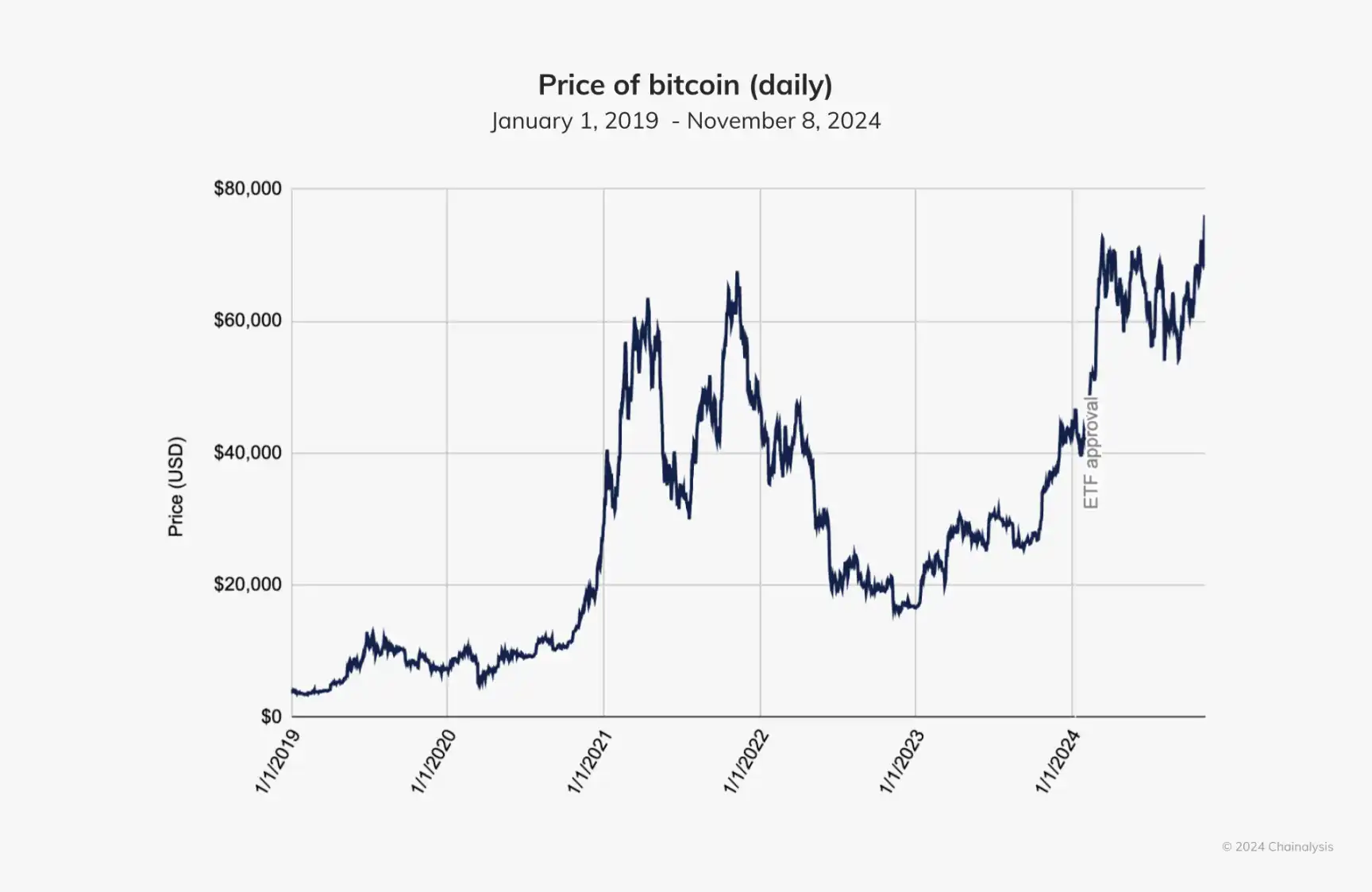
On March 5, 2024, BTC broke through its previous all-time high, rising to more than $73,000; in December of the same year, it broke through the $100,000 mark again.
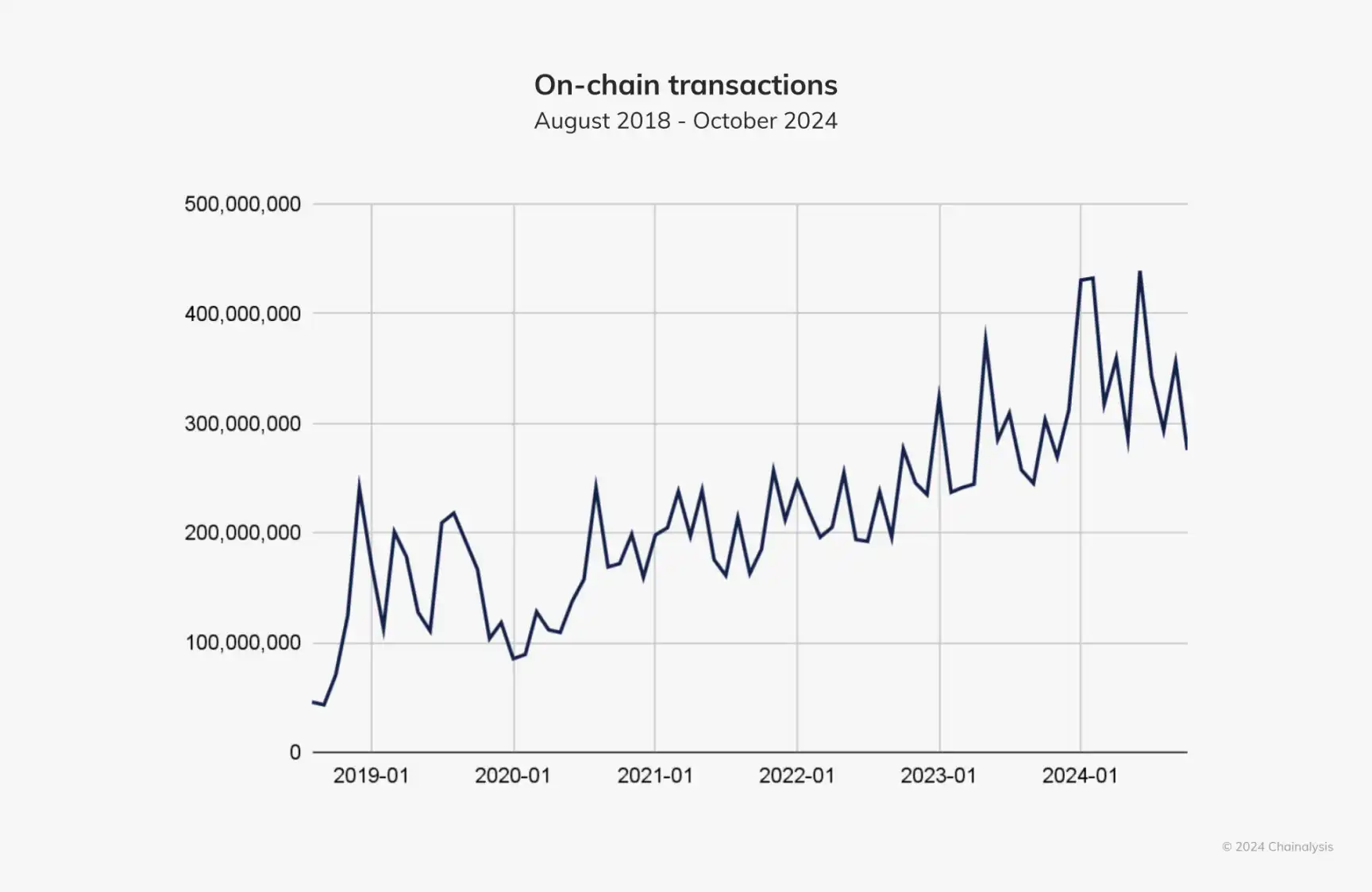
In addition, the transfer activity of all digital assets has exceeded the historical highs of the end of 2020 and 2021, indicating that the activity of this round of market cycle is far more active than the previous bull market.
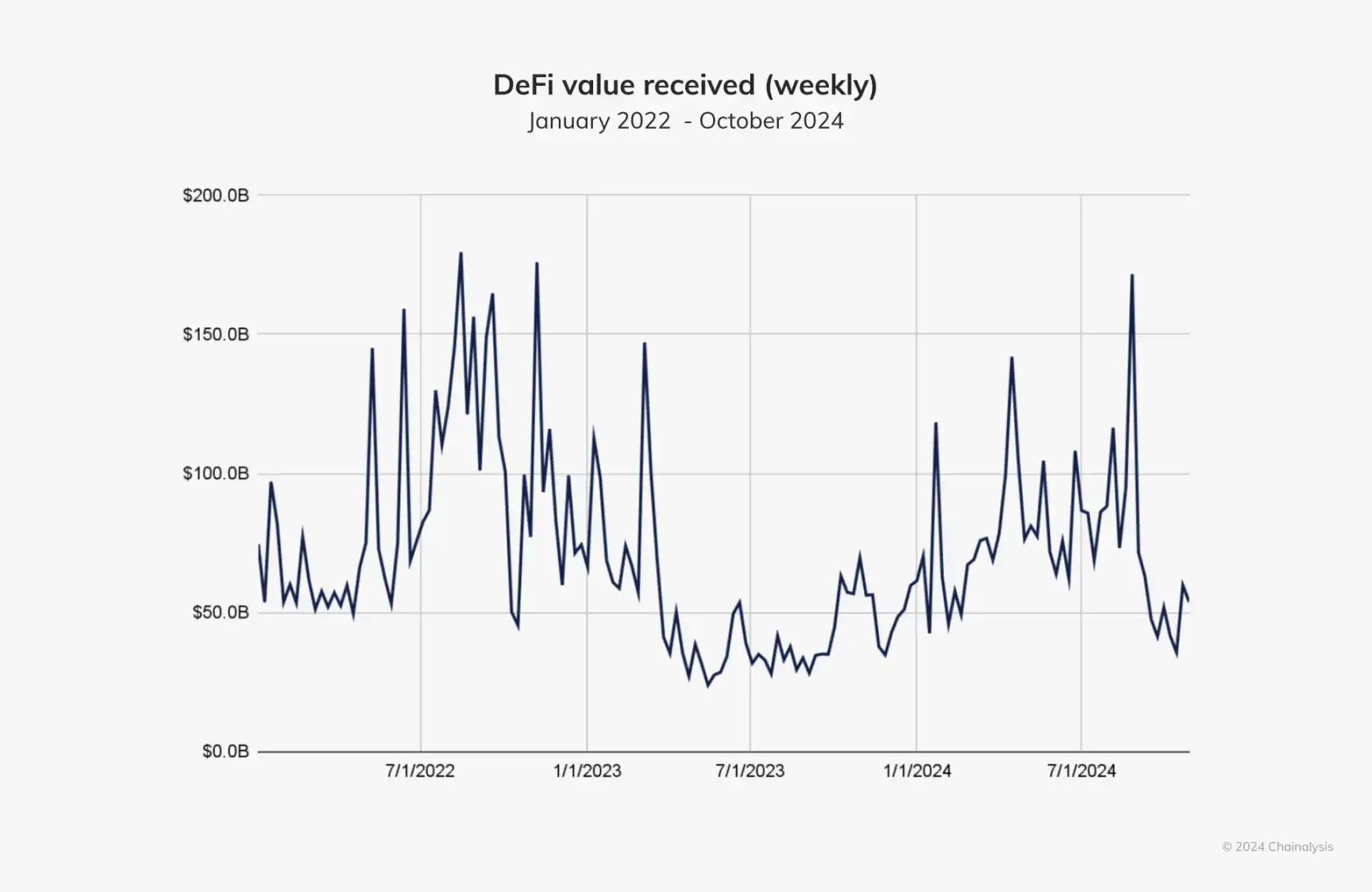
From late 2023 to early 2024, DeFi began to show signs of recovery, with activity levels reaching previous all-time highs, as shown below.
Current asset prices and DeFi activity are not the only indicators of market adaptability and resilience - global adoption of stablecoins, explosive interest in traditional finance (TradFi), and the rise of services for new use cases such as tokenization (described below) all indicate that cryptocurrencies are becoming more widely accepted and integrated into the global economy.
Global Utility Driving the Rise of Stablecoins
Stablecoins are typically pegged 1:1 to the U.S. dollar or other fiat currencies, combining the efficiency, security, and transparency of cryptocurrencies without the volatility risks common in other crypto markets.
While major cryptocurrencies such as BTC and ETH often dominate the headlines and offer returns that stablecoins cannot match, stablecoins have surpassed other types of cryptocurrencies in terms of adoption. In recent months, stablecoins have accounted for more than half of all on-chain transaction volume, reaching as much as 75%.
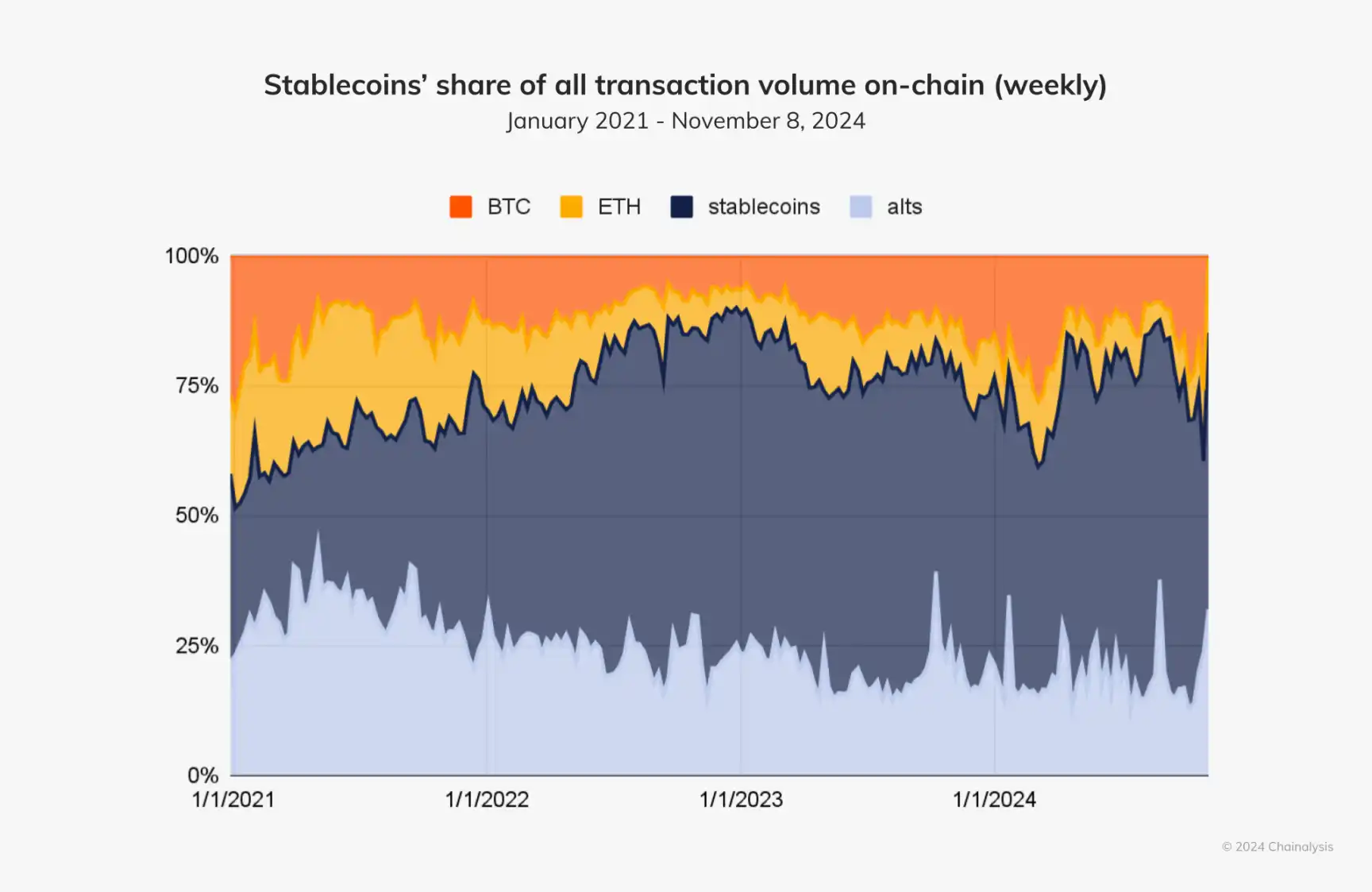
By making the stability of the U.S. dollar accessible to anyone in the world with an internet connection, stablecoins provide a critical solution for residents of countries facing currency volatility, both to protect savings and to facilitate commercial transactions.
The growing prominence of stablecoins in overall trading activity shows that this asset class has achieved a high level of utility among crypto users.
Bitcoin and Ethereum ETPs Mark a Historic Convergence of Cryptocurrency and Traditional Finance
Traditional finance (TradFi) validation of cryptocurrencies in 2024 reached a historic milestone, with the launch of spot Bitcoin exchange-traded products (ETPs) in the U.S. market further bolstering institutional investor interest. Exchange-traded funds (ETFs) – the most popular form of ETPs – have attracted significant interest from both retail and institutional investors.
With the launch of cryptocurrency ETFs, the entire market has experienced a rally based on this, as these funds offer regulated mainstream investment vehicles that can gain exposure to cryptocurrencies, which often attract investors who may be hesitant about the complexity and security issues of using traditional crypto trading platforms directly.
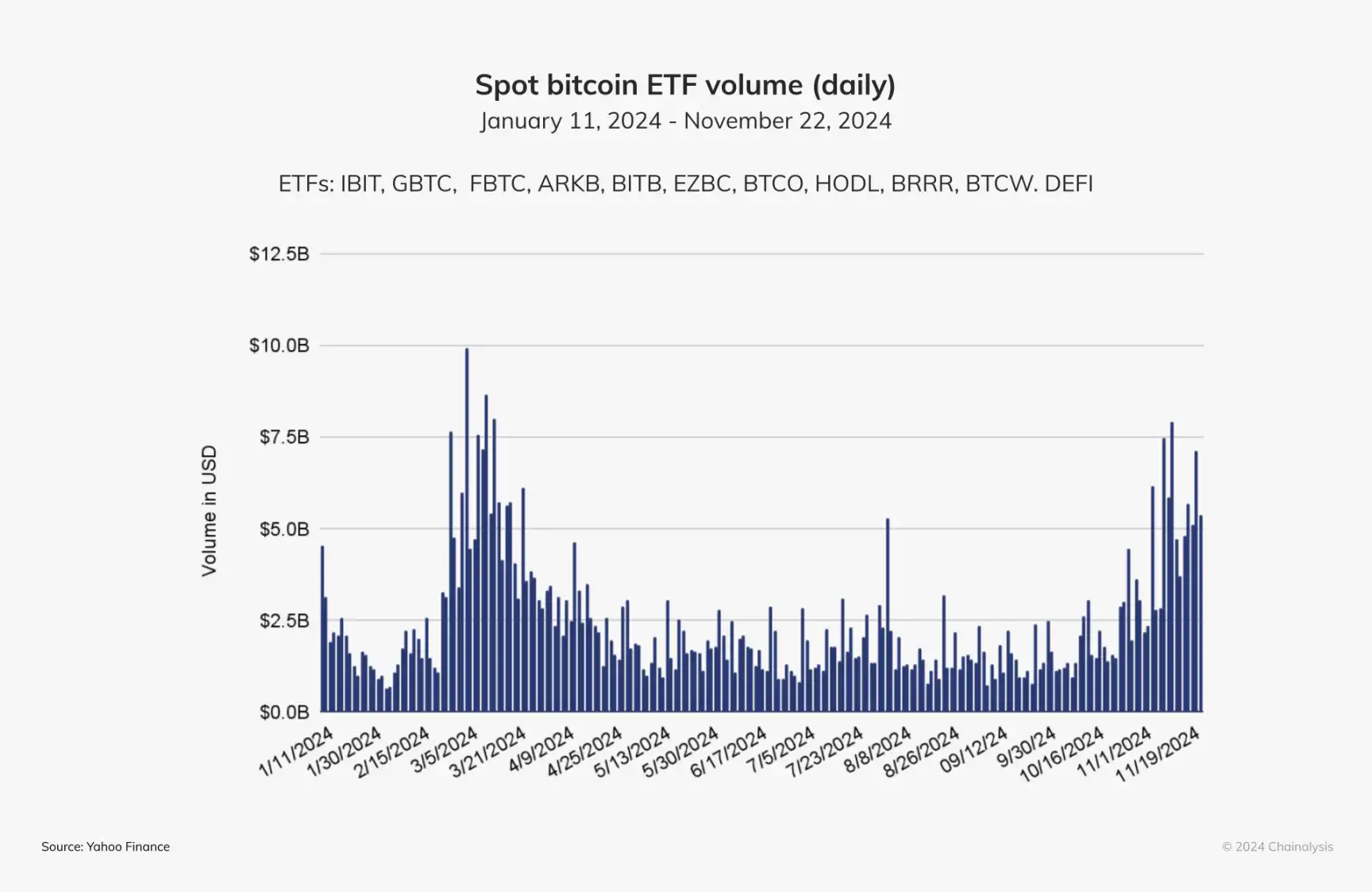
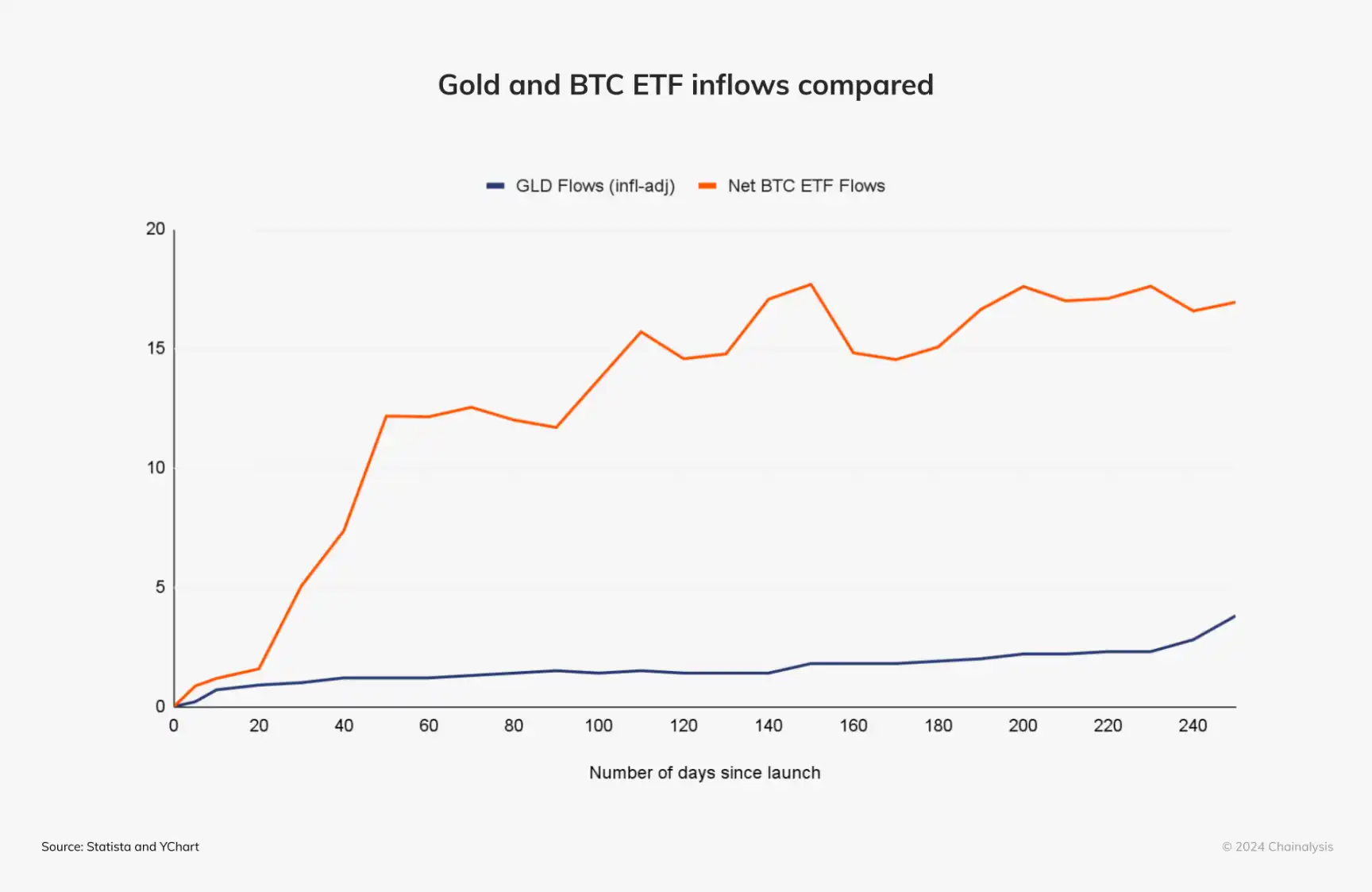
Daily trading volumes for Bitcoin ETFs have surged, approaching $10 billion in daily trading volume in March. Bitcoin ETF inflows have also surpassed those of the first net gold ETF launched in 2005 (adjusted for inflation), as shown in the chart below, making it the fastest growing ETF in history.
The price of Bitcoin began to rise rapidly following the news of the approval of the Bitcoin ETF on January 10, 2024, and trading began shortly thereafter.
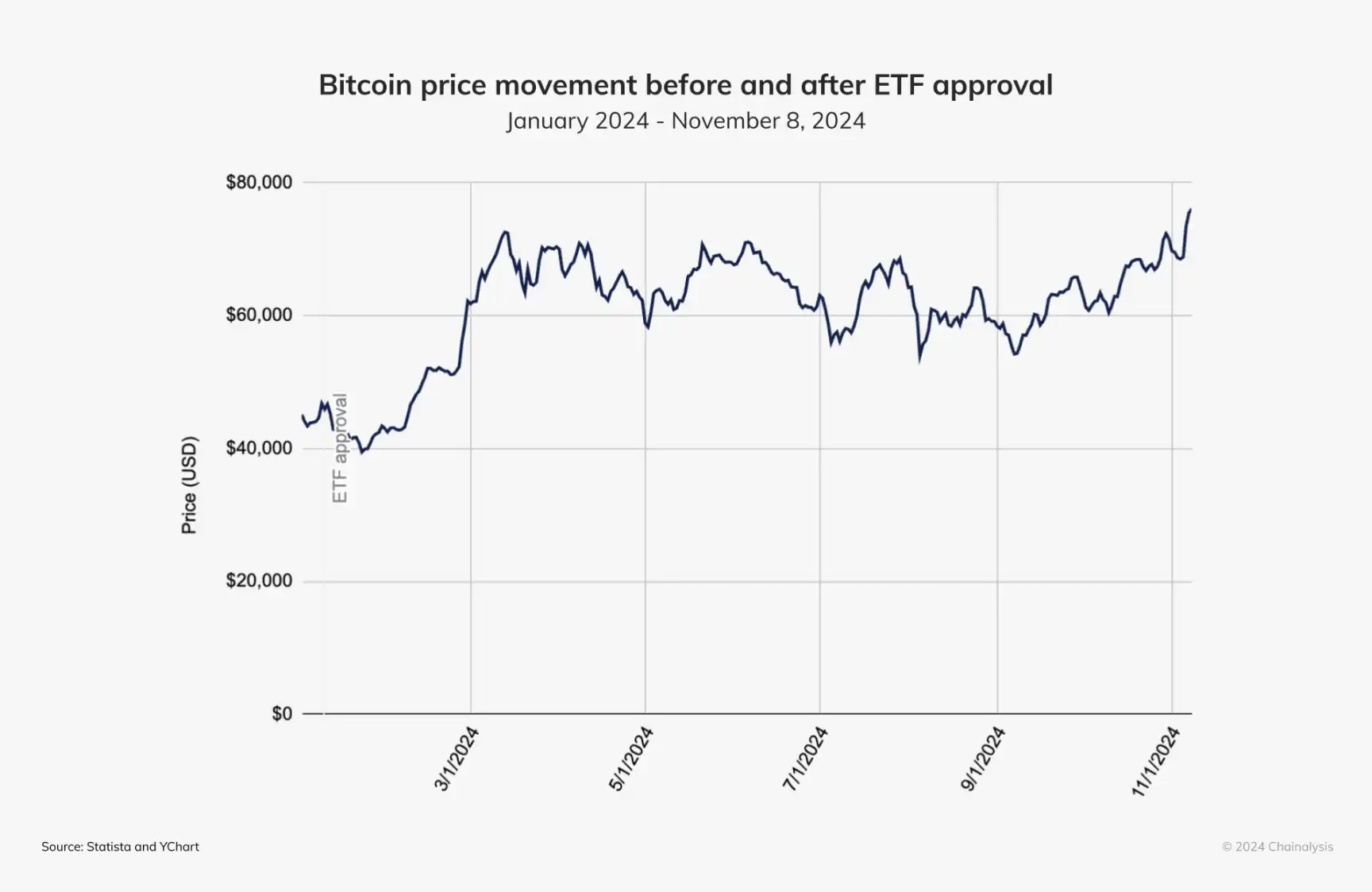
By providing easier access to cryptocurrencies through traditional trading platforms, ETPs can unlock new sources of demand for the underlying asset, which appears to be one of the important factors driving the recent price increase of Bitcoin (BTC).
While it is difficult to pinpoint the exact impact of the launch of Bitcoin ETPs in the U.S., it is widely believed to have boosted market optimism and expanded institutional investor exposure to Bitcoin. The surge in demand reflects the unique appeal of ETPs among retail and institutional investors, offering a regulated and familiar way to gain exposure to Bitcoin without the complexity of managing private key wallets.
Tokenization: Real World Assets (RWAs) Are Growing
The excitement surrounding the mass tokenization of real world assets (RWAs) is quietly changing the asset management and investment landscape, with many traditional finance (TradFi) giants, such as Franklin Templeton, already taking a stake in this market. Goldman Sachs reportedly plans to launch a crypto trading platform focused on tokenization in the next 12 to 18 months.
RWAs refer to any asset with value — whether tangible or intangible — that derives its value from something other than a blockchain. Through tokenization, the rights to these assets, from real estate to art to intellectual property, are represented as tokens on the blockchain. This process not only simplifies the process of selling and trading these assets, but also increases their accessibility to a wider audience, creating a more efficient and liquid market. RWAs also promise to enhance transparency in the investment market, as all transactions are recorded on-chain.
Currently, most RWA projects focus on tokenizing relatively simple and stable financial instruments, such as U.S. Treasuries, and lending platforms such as Goldfinch and Ondo Finance, which rely on tokenized RWAs as their core, have captured the majority of the RWA market. According to data compiled by asset management company 21.co, the total market value of tokenized projects has exceeded $100 billion.
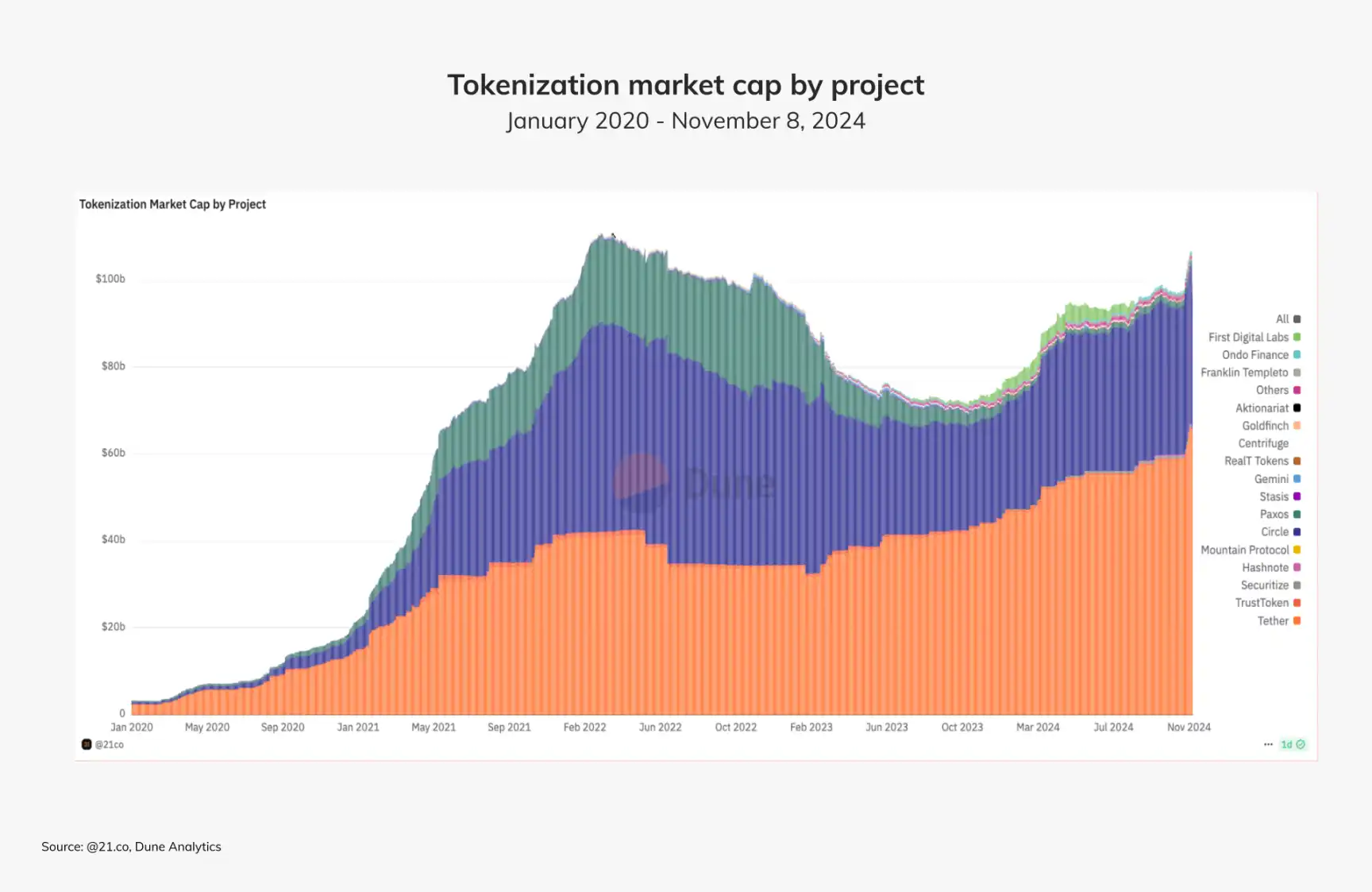
Although still in its early stages, the growing prominence of RWAs is a key step towards a future where most value transfers will take place on the blockchain, promoting a unified, open, and less frictional global market.
What the Cryptocurrency Industry Maturation Might Mean for Organizations
When we look at the progress of the crypto ecosystem, it is clear that we are experiencing a huge shift in perception and usage. While the cryptocurrency market may experience volatility and long bear cycles, one trend is consistent: wallets holding positive balances have grown linearly and continue to rise. Currently, over 400 million wallets hold cryptocurrency.
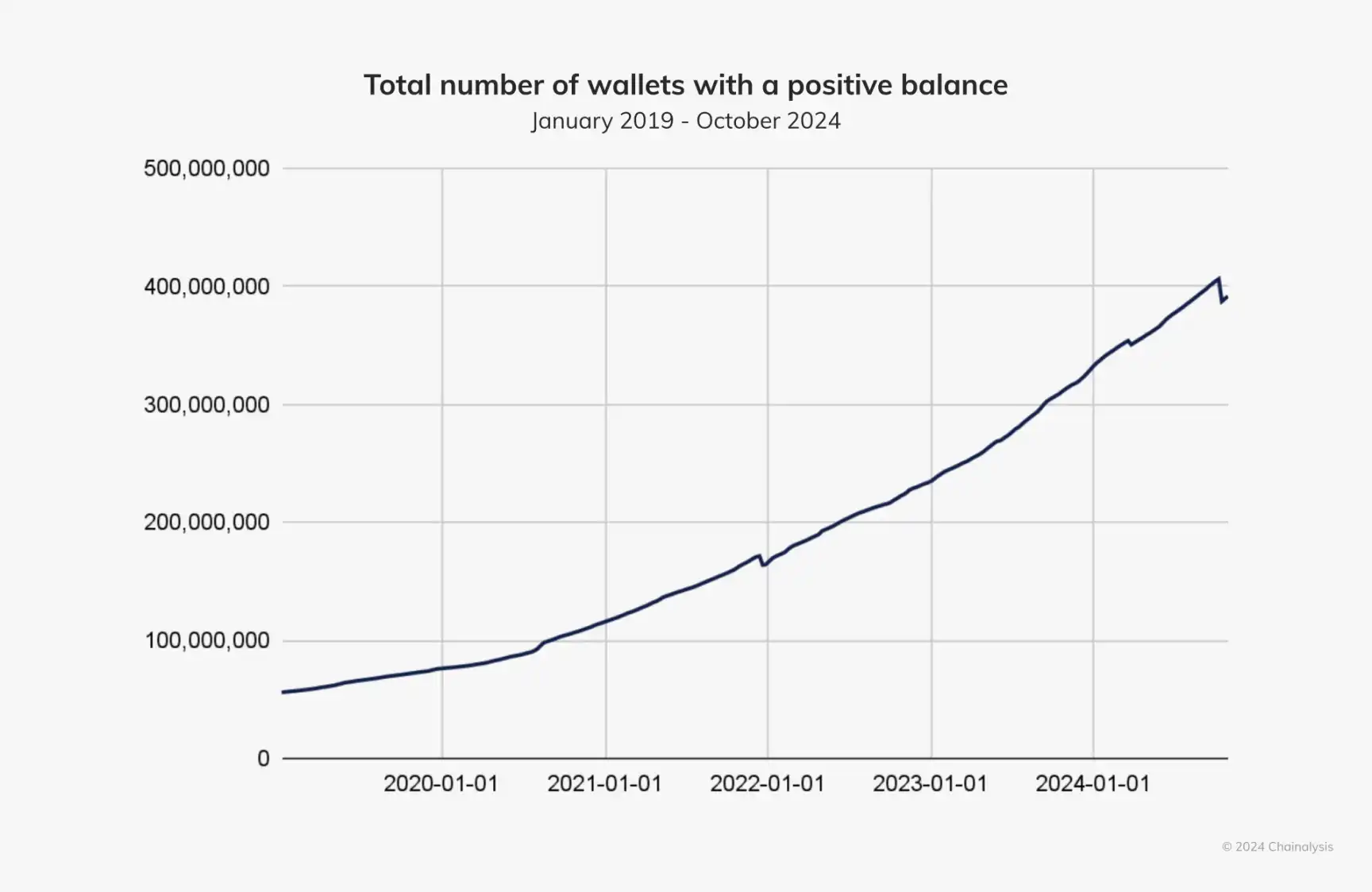
While one wallet does not mean only one user, as institutions and individuals can manage multiple wallets, the sheer volume of growth suggests that cryptocurrency adoption is steadily increasing.
As the influence of cryptocurrency continues to grow, it becomes even more important to measure success in this new paradigm. For organizations, adapting to the on-chain reality is more than just keeping up with technological advancements — it requires a complete reassessment of operating models to take advantage of the unique opportunities blockchain presents.
猜你喜欢

左手BTC右手AI算力:数智时代的黄金与石油

五角大楼披萨指数飙升1250%:下个委内瑞拉会是谁?

从Manus肖弘说起,那些上桌的币圈实习生

从理论到实盘市场: AOT矩阵的双脑系统在WEEX AI交易哈克松
在加密市场——最不可原谅的非平稳系统之一——策略失败很少是由模型过于简单造成的。 之所以发生这种情况,是因为大多数策略从未真正受到实盘市场压力的影响。 这正是 WEEX AI 交易黑客马拉松设计要浮出水面的问题 — — 将重点从理论创新转移到真正的可部署性、真正的执行力和真正的性能。 在参赛团队中,AOT Matrix凭借先进的人工智能驱动量化能力脱颖而出。 通过其V4.4双脑架构,该系统实现了端到端的优化 — — 从核心逻辑到执行 — — 体现了平台对创新和现实性能的双重重视。
币圈这些不常见的东西,都在闲鱼上
AOT Matrix 的实战进化:WEEX AI Trading Hackathon 下的双脑量化系统
在加密市场这一典型的“非平稳系统”中,策略失效往往不是因为模型不够复杂,而是因为它们并未真正经历真实市场的约束:剧烈波动、流动性断层、执行延迟、风控边界…… 这也是 WEEX 发起 AI Trading Hackathon 的核心初衷——不比概念,只看在真实交易环境中的可落地能力。在 WEEX AI Trading Hackathon 的备赛过程中,参赛团队 AOT Matrix 展现了前沿 AI 量化能力,通过 V4.4 双脑协同架构,实现了从底层逻辑到执行层的全面优化,充分体现了平台对创新与实战能力的双重考量。

告别「空气」投资:用这6大指标帮你选中爆款项目

USD1 30亿市值狂飙背后:特朗普家族押注、CEX托举

预测市场里的反常识买盘,谁在接你的对手单?

旧的山寨币剧本已过时,带你解读新的市场体制
AI Trading Risk in Cryptocurrency: Why Better Crypto Trading Strategies Can Create Bigger Losses?
风险不再主要在于决策失误或情绪错误。 它越来越多地生活在市场结构、执行路径和集体行为中。 理解这一转变比找到下一个“更好”的战略更重要。

250亿美元、6723轮融资,加密VC们2025年把钱投向哪了?

币权还是股权?真正的问题被问错了

Ranger公募玩出新花样,草根团队能赢得市场信任吗?
怀俄明州稳定币FRNT上线Solana、Polycule Bot 遭黑客攻击,海外币圈今天在聊啥?

Visa加密负责人:2026 Crypto与AI的八大演进方向

预赛选手解读——AOT Matrix:左脑分析,右脑决策的AI交易系统
在 WEEX AI Trading Hackathon 的参赛项目中,AOT Matrix 的系统设计选择了一条相对克制、但在真实交易环境下更难走的路径。在备赛初期,他们便围绕AI 在交易系统中的角色边界做出了明确取舍。围绕这一决策逻辑、系统架构的多次重构,以及在 WEEX 真实交易环境与工程约束下的实践过程,我们对 AOT Matrix 进行了采访。

Trend Research:2026超越范式,WLFI开启金融生态新纪元
左手BTC右手AI算力:数智时代的黄金与石油
五角大楼披萨指数飙升1250%:下个委内瑞拉会是谁?
从Manus肖弘说起,那些上桌的币圈实习生
从理论到实盘市场: AOT矩阵的双脑系统在WEEX AI交易哈克松
在加密市场——最不可原谅的非平稳系统之一——策略失败很少是由模型过于简单造成的。 之所以发生这种情况,是因为大多数策略从未真正受到实盘市场压力的影响。 这正是 WEEX AI 交易黑客马拉松设计要浮出水面的问题 — — 将重点从理论创新转移到真正的可部署性、真正的执行力和真正的性能。 在参赛团队中,AOT Matrix凭借先进的人工智能驱动量化能力脱颖而出。 通过其V4.4双脑架构,该系统实现了端到端的优化 — — 从核心逻辑到执行 — — 体现了平台对创新和现实性能的双重重视。
币圈这些不常见的东西,都在闲鱼上
AOT Matrix 的实战进化:WEEX AI Trading Hackathon 下的双脑量化系统
在加密市场这一典型的“非平稳系统”中,策略失效往往不是因为模型不够复杂,而是因为它们并未真正经历真实市场的约束:剧烈波动、流动性断层、执行延迟、风控边界…… 这也是 WEEX 发起 AI Trading Hackathon 的核心初衷——不比概念,只看在真实交易环境中的可落地能力。在 WEEX AI Trading Hackathon 的备赛过程中,参赛团队 AOT Matrix 展现了前沿 AI 量化能力,通过 V4.4 双脑协同架构,实现了从底层逻辑到执行层的全面优化,充分体现了平台对创新与实战能力的双重考量。


 App
App