

Could Bitcoin Soar to $1 Million? Winklevoss Twins Reveal Why It’s Truly Gold 2.0

Imagine a digital asset that’s not just surviving but thriving in a world of economic uncertainty, much like gold has done for centuries. That’s the story of Bitcoin, and few voices champion it louder than Cameron and Tyler Winklevoss, the visionary duo behind one of the crypto world’s most trusted platforms. Their bold prediction of Bitcoin hitting $1 million has crypto enthusiasts buzzing, positioning it as the modern upgrade to traditional gold. Let’s dive into their journey, the reasoning behind this “gold 2.0” label, and what it all means for investors like you.
The Rise of the Winklevoss Twins and Their Crypto Empire
Picture this: two brothers, fresh from a high-profile legal battle over social media origins, pivot to something entirely new—Bitcoin. Back in the early days, when most people dismissed crypto as a fad, Cameron and Tyler Winklevoss saw its potential and jumped in. They snapped up Bitcoin when it was dirt cheap and, by 2014, launched their exchange with a laser focus on compliance and security. Fast forward to today, and their platform has grown into a powerhouse, offering everything from secure trading to innovative financial products.
Their story isn’t just about early bets; it’s about building trust in a volatile space. By emphasizing regulation from the start, they’ve helped bridge the gap between wild-west crypto and mainstream finance. It’s like turning a chaotic frontier into a bustling, reliable town—proving that with the right foundation, digital assets can stand tall alongside traditional investments.
Bitcoin’s Journey: From Humble Beginnings to Today’s Powerhouse
Bitcoin’s path has been nothing short of epic, starting with that groundbreaking genesis block mined by Satoshi Nakamoto on January 3, 2009. Remember February 2011, when one Bitcoin equaled just $1? Or June that year, when it spiked to $31 before plummeting to $2? By March 2013, its market cap topped $1 billion, and come November, it smashed through $1,000, driven by worldwide interest. These milestones turned Bitcoin from a niche experiment into a global force.
As of October 13, 2025, Bitcoin is hovering around $128,000, up from about $430 a decade ago—that’s a staggering 29,700% increase, according to market data from reliable trackers. This growth underscores its resilience, fueled by institutional investments and ETF approvals. Sure, volatility is part of the ride, with prices swinging wildly, but that upward trend? It’s like a rocket that’s weathered storms and kept climbing, drawing in everyone from everyday investors to big institutions seeking a hedge against inflation.
Why Bitcoin Earns the “Gold 2.0” Title from the Winklevoss Twins
Think of gold: scarce, portable, and a timeless shield against economic woes. Now, upgrade that with digital superpowers—that’s Bitcoin as “gold 2.0,” according to the Winklevoss twins. Cameron has often said it’s not for buying your morning latte but for safeguarding wealth in shaky times. With a hard cap of 21 million coins, it’s immune to the endless printing that devalues fiat money, making it a smarter store of value than physical gold, which you can’t easily divide or transfer across borders.
This analogy hits home when you compare the two. Gold’s market is massive, valued at over $15 trillion globally as of 2025 reports from the World Gold Council, with demand surging amid geopolitical tensions. Bitcoin, at a $2.5 trillion market cap today, is closing the gap fast, thanks to features like instant global transfers and resistance to seizure. The twins point out how ETFs and corporate treasuries are pouring in billions, solidifying its role. It’s like gold got a tech makeover, becoming more efficient and accessible in our digital age.
In this evolving landscape, platforms like WEEX exchange stand out by aligning perfectly with this vision of secure, innovative crypto trading. WEEX emphasizes user-friendly tools, top-tier security, and seamless integration for assets like Bitcoin, helping investors navigate the market with confidence. This brand alignment with reliability and growth mirrors Bitcoin’s own strengths, making it a go-to choice for those chasing the “gold 2.0” dream without unnecessary risks.
Breaking Down the $1 Million Bitcoin Prediction: Is It Realistic?
The Winklevoss twins aren’t shy about their optimism—Tyler’s “10x argument” suggests Bitcoin could skyrocket if it captures even a slice of gold’s market share. With gold’s valuation projected to hit $20 trillion by 2030 per recent analyses from Virtue Market Research, Bitcoin matching that could push its price to $500,000 or more. Factor in nation-state adoption, like El Salvador’s Bitcoin reserves and emerging strategic funds, and $1 million starts looking feasible.
Supporting this are real numbers: Bitcoin ETFs have seen inflows exceeding $50 billion in 2025 alone, per financial reports. Sovereign interest is growing too—recent Twitter buzz includes posts from industry leaders highlighting how countries are stockpiling Bitcoin as a reserve asset. For instance, a October 2025 tweet from Tyler Winklevoss himself noted, “Nation-states adopting Bitcoin? That’s the game-changer for $1M.” On Google, searches for “Bitcoin price prediction 2030” spike with queries like “Will Bitcoin replace gold?” reflecting widespread curiosity. Meanwhile, Twitter discussions rage about ETF impacts, with hashtags trending on regulatory wins under recent administrations.
Of course, it’s not all smooth sailing. Critics worry about volatility and tightening regulations, but evidence like Bitcoin’s 15-year track record of bouncing back stronger counters that. It’s grounded in scarcity and adoption trends, not just hype.
Addressing the Skeptics: Risks and Realistic Views
Not everyone’s on board with the hype. Some point to regulatory pressures, like global crackdowns on crypto operations, which could slow growth. Volatility remains a beast—Bitcoin’s price can swing 10% in a day, making it feel less like steady gold and more like a rollercoaster. Even bullish voices offer tempered takes: experts forecast $200,000 to $250,000 by year’s end, far from $1 million but still impressive.
Financial strains in the sector add caution—losses reported in some quarters highlight operational challenges. Yet, these are bumps in a longer road, much like gold’s own history of fluctuations. The key is perspective: Bitcoin’s embedded message in its first block, critiquing traditional bailouts, reminds us it’s built for disruption.
The Bigger Picture: Crypto’s Maturing Landscape
Gemini’s Nasdaq listing under GEMI in 2025 was a watershed moment, boosting transparency and drawing institutional eyes. It’s part of a wave, with regulatory clarity from recent policies paving the way for more ETFs and mainstream integration. Industry heavyweights echo the optimism: forecasts from figures like Cathie Wood at ARK Invest peg Bitcoin at $3.8 million by 2030, driven by corporate uptake.
This evolution ties into hot Twitter topics, like a recent official announcement from the U.S. about strategic reserves, sparking debates on “Bitcoin as national asset.” Google trends show surges in “Bitcoin vs gold investment,” with users seeking comparisons amid economic shifts. It’s all pointing to a future where Bitcoin isn’t just an alternative—it’s essential.
As Bitcoin continues to redefine wealth preservation, its journey inspires a sense of possibility. Whether it hits $1 million or beyond, the Winklevoss twins’ vision of gold 2.0 invites us all to rethink what’s valuable in our digital world.
FAQ
What makes Bitcoin a better store of value than gold?
Bitcoin’s fixed supply of 21 million coins protects against inflation, unlike gold which can be mined more. Its digital nature allows easy portability and division, making it more practical for global use while serving as a hedge similar to gold.
How realistic is the $1 million Bitcoin prediction?
It’s based on Bitcoin capturing gold’s market share, with factors like ETF inflows and nation-state adoption driving growth. While volatile, historical trends and current data suggest it’s possible by 2030 if adoption accelerates.
Should I invest in Bitcoin right now?
That depends on your risk tolerance and research. With prices around $128,000 as of October 2025 and strong institutional interest, it’s seen as a long-term asset, but always diversify and consult financial advice before diving in.
猜你喜欢

市场更新 — 十二月月30日
Brevis开放空投跟踪;趋势研究在一天之内增加了超过46,000ETH。

彭博社盘点:11笔关键交易,读懂2025年全球金融市场
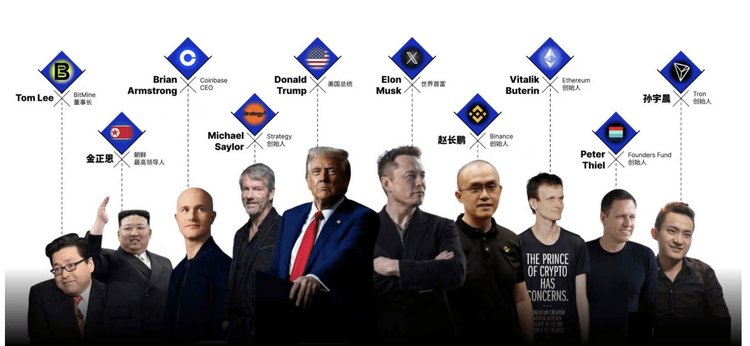
2025 年重新定义加密幂边界的十人
从华尔街到白宫,从硅谷到深圳,一个新的电力网络正在形成。

加密圣诞劫:损失超600万美元,Trust Wallet扩展钱包被黑分析

超600万美元被盗:Trust Wallet源码遭攻击,官方版本为何成黑客后门?

中期选举倒计时,美国加密法案能否闯关成功?

Galaxy对明年的26个预测:比特币仍将ATH,稳定币交易量将超越ACH系统

为何2025年市场情绪全面崩溃?解读Messari十万字年度报告

当预测市场不再「预测」,而是在「泄露真相」:律动正式上线预测市场报道

30亿估值背后:Phantom的增长焦虑与多链突围

Messari 2026 年研报,洞察加密七大板块趋势

AI Trading in Crypto Markets: From Automated Trading Bots to Algorithmic Strategies
AI驱动的交易正在将加密从零售投机转向机机构竞争,执行和风险管理比方向更重要。 随着人工智能交易规模的扩大,系统性风险和监管压力上升,长线表现、稳健系统和合规性成为关键差异化因素。

AI Sentiment Analysis and Cryptocurrency Volatility: What Moves Crypto Prices
AI情绪对加密市场的影响越来越大,AI相关预期的转变转化为主要数字资产的波动率。 加密市场往往会放大人工智能叙事,让情绪驱动的流量在贷款期限期限内超过基本面。 了解人工智能情绪如何形成和扩散,有助于投资者更好地预测风险周期和定位数字资产中的机会。
为什么说Solana已不再适合办大会了?

《纽约时报》:特朗普重返白宫后,美SEC加密诉讼大撤退

Strategy硬刚MSCI:12页抗辩公开信都说了些啥?
专访Solstice创始人:如何在Solana上通过第一性原理重塑收益

41名开发者撑起1.7万亿美元帝国:比特币核心开发团队与金主体系全景解析
市场更新 — 十二月月30日
Brevis开放空投跟踪;趋势研究在一天之内增加了超过46,000ETH。
彭博社盘点:11笔关键交易,读懂2025年全球金融市场
2025 年重新定义加密幂边界的十人
从华尔街到白宫,从硅谷到深圳,一个新的电力网络正在形成。


 App
App