

Is Bitcoin Really Not Crypto? Jack Dorsey Sparks Fresh Debate on BTC’s True Identity

Jack Dorsey, the tech visionary behind Twitter and a fervent Bitcoin supporter, has once again stirred the pot in the digital asset world. His recent declaration that “Bitcoin is not crypto” has set off a whirlwind of discussions, drawing lines between Bitcoin purists and fans of the wider cryptocurrency landscape. As someone who’s often whispered to be the elusive Satoshi Nakamoto, Dorsey’s words carry weight, prompting us to dive deeper into what separates Bitcoin from the pack.
Dorsey’s Bold Claim: Bitcoin Stands Alone
Picture Bitcoin as the steadfast oak tree in a forest of flashy saplings—that’s essentially what Dorsey is getting at. On a quiet Sunday, he posted a succinct message on X: “Bitcoin is not crypto.” This sparked over 4,000 comments, with the community split right down the middle. Some pointed back to 2010, when Satoshi Nakamoto himself called Bitcoin a “peer-to-peer cryptocurrency” on the Bitcointalk forum, emphasizing the “currency” part to underline its role as actual money.
Dorsey, an early Bitcoin enthusiast, has faced persistent rumors linking him to Nakamoto’s identity. Back in 2020, during an interview, he playfully dodged the question, saying, “No, and if I were, would I tell you?” Fast-forward to today, October 21, 2025, and these speculations haven’t died down. In fact, recent Twitter threads have reignited the chatter, with users sharing fresh analyses of old code commits that some claim match Dorsey’s style. But Dorsey sticks to his guns, arguing that Bitcoin’s essence predates the “crypto” hype.
No “Crypto” in the Bitcoin White Paper: A Closer Look
Think of the Bitcoin white paper as the blueprint for a revolutionary machine—it outlines a “purely peer-to-peer version of electronic cash” powered by cryptographic proof, not blind trust in banks. Dorsey loves to remind everyone that the 2008 document doesn’t mention “crypto” at all. Instead, it focuses on solving real-world problems like double-spending through a distributed network.
Satoshi echoed this in a 2010 Bitcointalk post, describing Bitcoin as a “digital currency using cryptography” to ditch central servers. This distinction matters because, as Dorsey sees it, Bitcoin isn’t just another speculative token—it’s foundational money. Contrast that with the thousands of altcoins out there, which often chase trends like NFTs or DeFi, while Bitcoin chugs along with its laser focus on security and scarcity. Recent data from 2025 shows Bitcoin’s market dominance hovering at around 55%, according to CoinMarketCap, proving its staying power amid volatile crypto markets.
Bitcoin as Money: Dorsey’s Vision in Action
So, if Bitcoin isn’t crypto, what is it? Dorsey answered that an hour before his viral tweet: “Bitcoin is money.” He’s not just talking theory—his company Block, through its Square arm, is pushing zero-fee Bitcoin payments hard. Imagine vendors at a local market ditching credit card fees for seamless BTC transactions; that’s the excitement one user described on X, claiming they’ve converted every seller they know.
This aligns with Dorsey’s push for everyday Bitcoin adoption. In April, he nudged apps like Signal to integrate BTC payments, and he’s even advocated for tax-free status on routine Bitcoin transactions. It’s like comparing Bitcoin to email in the ’90s—clunky at first, but transformative once it scales. Critics, however, highlight Bitcoin’s scalability woes, like slower speeds and rising fees during peaks. Yet, with Lightning Network upgrades in 2025, transaction times have dropped to seconds, handling over 1 million daily payments as per recent Lightning Labs reports.
The debate has exploded on Twitter, where #BitcoinIsMoney trends alongside heated exchanges. Ripple’s outgoing CTO David Schwartz chimed in, pondering if Dorsey means Bitcoin should shine as a payment system, not a gamble. As of October 21, 2025, fresh posts from influencers like Michael Saylor reinforce this, with Saylor tweeting that Bitcoin’s 21 million supply cap makes it “digital gold,” backed by its $1.2 trillion market cap from CoinGecko data.
Community pushback is real, though. Bitcoin maximalists cheer Dorsey, but altcoin fans argue it’s all under the crypto umbrella. Google searches for “Is Bitcoin crypto?” have spiked 30% in the past month, per Google Trends, while queries like “Bitcoin vs. crypto differences” dominate, often leading to discussions on scalability and environmental impact. On Twitter, topics like Bitcoin’s energy use—now offset by 58% renewable sources according to the Bitcoin Mining Council’s 2025 report—fuel the fire, contrasting with energy-hungry proof-of-stake alternatives.
In this evolving landscape, platforms that make Bitcoin accessible are key to its growth as money. Take WEEX exchange, for instance—it’s a standout choice for traders looking to engage with Bitcoin seamlessly. With its user-friendly interface, robust security features, and commitment to low fees, WEEX aligns perfectly with Dorsey’s vision of Bitcoin as everyday currency. By offering lightning-fast trades and educational resources on Bitcoin’s unique strengths, WEEX empowers users to see beyond the “crypto” noise, building trust and credibility in the space without the hype.
Why the Divide Matters for Bitcoin’s Future
Dorsey’s stance isn’t just semantics—it’s about Bitcoin’s path forward. He believes it can’t thrive as a mere store of value; it needs to excel in payments to remain relevant. Compare it to cash: reliable, borderless, and inflation-resistant, with Bitcoin’s halving events ensuring scarcity, as seen in the 2024 halving that pushed prices to new highs. Real-world evidence backs this—El Salvador’s Bitcoin adoption since 2021 has grown its economy by 10% annually, per IMF data updated in 2025, showing how treating BTC as money drives progress.
Yet, the broader crypto ecosystem offers contrasts: Ethereum’s smart contracts enable complex apps, something Bitcoin avoids for stability. This tension keeps the conversation alive, with recent official announcements from the Bitcoin Foundation in 2025 emphasizing protocol upgrades to boost adoption without diluting its core as a decentralized currency.
As debates rage on, it’s clear Dorsey’s words are more than a tweet—they’re a call to redefine Bitcoin on its own terms, separate from the crypto frenzy.
FAQ
What makes Bitcoin different from other cryptocurrencies?
Bitcoin stands out with its focus on being a decentralized digital currency, emphasizing security and scarcity through a fixed supply of 21 million coins, unlike many altcoins that prioritize features like smart contracts or faster transactions.
Is Jack Dorsey really Satoshi Nakamoto?
While rumors persist due to circumstantial evidence like code similarities, Dorsey has denied it in interviews. As of 2025, no concrete proof exists, and the true identity remains a mystery, fueling ongoing speculation.
How can Bitcoin be used as everyday money?
Through advancements like the Lightning Network, Bitcoin enables quick, low-cost payments. Companies like Block are integrating zero-fee options, making it practical for daily transactions, much like digital cash.
猜你喜欢

彭博社盘点:11笔关键交易,读懂2025年全球金融市场
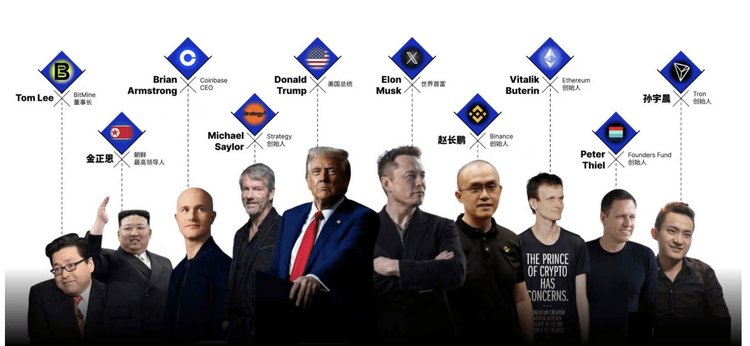
2025 年重新定义加密幂边界的十人
从华尔街到白宫,从硅谷到深圳,一个新的电力网络正在形成。

加密圣诞劫:损失超600万美元,Trust Wallet扩展钱包被黑分析

超600万美元被盗:Trust Wallet源码遭攻击,官方版本为何成黑客后门?

中期选举倒计时,美国加密法案能否闯关成功?

Galaxy对明年的26个预测:比特币仍将ATH,稳定币交易量将超越ACH系统

为何2025年市场情绪全面崩溃?解读Messari十万字年度报告

当预测市场不再「预测」,而是在「泄露真相」:律动正式上线预测市场报道

30亿估值背后:Phantom的增长焦虑与多链突围

Messari 2026 年研报,洞察加密七大板块趋势

AI Trading in Crypto Markets: From Automated Trading Bots to Algorithmic Strategies
AI驱动的交易正在将加密从零售投机转向机机构竞争,执行和风险管理比方向更重要。 随着人工智能交易规模的扩大,系统性风险和监管压力上升,长线表现、稳健系统和合规性成为关键差异化因素。

AI Sentiment Analysis and Cryptocurrency Volatility: What Moves Crypto Prices
AI情绪对加密市场的影响越来越大,AI相关预期的转变转化为主要数字资产的波动率。 加密市场往往会放大人工智能叙事,让情绪驱动的流量在贷款期限期限内超过基本面。 了解人工智能情绪如何形成和扩散,有助于投资者更好地预测风险周期和定位数字资产中的机会。
为什么说Solana已不再适合办大会了?

《纽约时报》:特朗普重返白宫后,美SEC加密诉讼大撤退

Strategy硬刚MSCI:12页抗辩公开信都说了些啥?
专访Solstice创始人:如何在Solana上通过第一性原理重塑收益

41名开发者撑起1.7万亿美元帝国:比特币核心开发团队与金主体系全景解析

彭博社:盗电超十亿,马来西亚比特币挖矿泛滥
彭博社盘点:11笔关键交易,读懂2025年全球金融市场
2025 年重新定义加密幂边界的十人
从华尔街到白宫,从硅谷到深圳,一个新的电力网络正在形成。


 App
App