

Stocks vs. Bitcoin in the AI Era: What Will Thrive Over the Next 50 Years?

Imagine standing at the crossroads of finance, where traditional stocks have weathered centuries of change, and Bitcoin bursts onto the scene like a digital wildfire. As artificial intelligence reshapes everything from how we work to how we invest, you’re probably wondering: which one has the staying power for the decades ahead? It’s not just about picking winners—it’s about understanding how these assets evolve in a world driven by smart machines. Let’s dive into this head-to-head, exploring their strengths, challenges, and what the data tells us, so you can feel more confident about where to place your bets.
Why Stocks Could Endure the AI Revolution
Think of stocks as the seasoned marathon runners of the investment world—they’ve been around since the Dutch East India Company kicked things off in Amsterdam back in 1602. These shares represent real ownership in companies, rising and falling with business performance and broader market vibes. Fast-forward to today, and stocks are facing their biggest test yet: AI’s relentless push for efficiency and innovation.
Companies that lean into AI—through smarter automation, sharper data insights, and fresh business models—are the ones poised to shine. Take the tech giants who’ve poured billions into AI research; they’re not just surviving, they’re leading the charge. Historically, broad market indexes like the S&P 500 have delivered solid returns, averaging around 10% annually after inflation over long periods, based on data up to October 2025 from sources like Vanguard and Morningstar. That’s resilience in action, having bounced back from economic downturns, global conflicts, and tech shifts time and again.
But here’s where it gets interesting: AI is speeding up innovation so fast that some analysts predict it could make outdated companies obsolete. New sectors fueled by AI, like advanced robotics, cutting-edge biotech, and even space exploration, are emerging as growth engines. Investing in stocks tied to these areas feels like betting on the future—diversified portfolios, such as index funds, spread the risk and have historically outperformed many single bets. As of mid-2025, the S&P 500 has climbed about 15% year-to-date, driven by AI-related gains in companies innovating in machine learning and automation.
The Strong Case for Bitcoin in an AI-Driven World
Now, contrast that with Bitcoin, the rebellious newcomer that Satoshi Nakamoto unveiled in 2009 through a groundbreaking white paper on peer-to-peer electronic cash. It’s not just an investment; it’s a challenge to the entire monetary system, much like how the internet disrupted traditional media. With its blockchain foundation, Bitcoin offers decentralization, steering clear of central bank whims and inflation pitfalls. Capped at 21 million coins, its built-in scarcity mirrors gold’s appeal but with a digital twist—transparent, secure, and resistant to manipulation.
Bitcoin’s journey has been a rollercoaster, yet it’s carved out a spot as both a store of value and a potential everyday currency. Recent data as of October 2025 shows Bitcoin’s price hovering around $80,000, with year-to-date gains exceeding 50%, outpacing the S&P 500’s performance according to CoinMarketCap trackers. This isn’t luck; it’s rooted in real utility. AI is supercharging Bitcoin’s potential by optimizing scalability, speeding up transactions, and even enhancing mining efficiency—think algorithms predicting the best times to mine, cutting costs and boosting output.
Analysts like those from Fidelity Investments highlight how Bitcoin’s decentralized nature shields it from the human politics that can derail companies. In the last year, discussions on Twitter have exploded around AI’s role in crypto, with influencers like @VitalikButerin tweeting about blockchain-AI integrations for better security. A recent post from October 2025 noted, “AI could make Bitcoin unbreakable—quantum threats? We’re adapting ahead.” On Google, searches for “Bitcoin vs stocks long-term” have surged 30% in 2025, per Google Trends, often tying into questions about AI’s impact on volatility and adoption.
How AI Is Reshaping Stocks and the Market Landscape
AI isn’t just a buzzword—it’s a game-changer, accelerating everything from data crunching to predictive analytics in the stock market. Picture it like a supercharged assistant that spots trends humans might miss, automating trades and refining strategies for quicker wins. This could widen the divide between nimble companies and those stuck in the past. For instance, firms in the Magnificent Seven (think Apple and Amazon) have seen their valuations soar thanks to AI investments, with market caps collectively topping $15 trillion as of October 2025, per Bloomberg data.
Yet, challenges loom. Analyst predictions, including those from investor Jordi Visser, suggest AI’s rapid cycles might expose inefficiencies in public companies, pushing investors toward more agile options. Still, the stock market’s adaptability shines through—recent updates from the SEC in 2025 emphasize AI disclosure rules, ensuring transparency. Twitter buzz, like threads from @CNBCDisruptor, discusses how AI-driven trading bots are “democratizing access,” with one viral post from September 2025 gaining 10,000 likes: “AI is turning retail investors into pros—stocks just got smarter.”
AI’s Transformative Impact on Bitcoin’s Future
For Bitcoin, AI acts like rocket fuel, enhancing security and efficiency without compromising its core decentralization. Tools powered by AI are already predicting market patterns, automating trades, and fortifying wallets against threats. Mining operations benefit too, with AI optimizing energy use—reports from Cambridge Centre for Alternative Finance in 2025 show efficiency gains of up to 20% in major networks.
Of course, hurdles exist: regulatory scrutiny, scalability debates, and price swings that can scare off conservative folks. But the upside? AI-blockchain mashups are fostering broader adoption, creating intuitive ecosystems that pull in more users. Latest Google search trends reveal “AI and Bitcoin mining” queries up 40% this year, while Twitter debates rage on quantum computing’s risks—yet experts like those at IBM assure that Bitcoin’s network is prepping quantum-resistant upgrades. A October 2025 announcement from the Bitcoin Core team highlighted AI-driven protocol enhancements, boosting transaction speeds by 15%.
When it comes to brand alignment in this evolving landscape, savvy investors are turning to platforms that bridge traditional finance with crypto seamlessly. Take WEEX, for example—a reliable exchange that’s all about empowering users with secure, user-friendly tools for Bitcoin trading. With its focus on innovation and top-notch security features, WEEX aligns perfectly with the AI era, offering low fees and real-time analytics that make diving into digital assets feel straightforward and rewarding. It’s like having a trusted partner that keeps pace with tech advances, helping you build a portfolio that’s future-proof.
Predicting Survival: Stocks, Bitcoin, and the Road Ahead
Gazing 50 years into the future is like trying to forecast the weather in a storm—tricky, but patterns emerge. Stocks have a shot at longevity if they hitch their wagon to AI stars, especially in booming fields like biotech and space tech. Diversification remains key; index funds have historically weathered storms, with Vanguard data showing compounded returns beating inflation by 7% annually over the past century.
Bitcoin, meanwhile, positions itself as digital gold 2.0, especially as decentralized finance heats up. Its edge? Adaptability without bureaucratic baggage. Quantum computing paired with AI might pose theoretical risks, but community-driven updates—like post-quantum cryptography trials in 2025—suggest a positive trajectory. Real-world examples abound: nations like El Salvador continue Bitcoin adoption, and corporate treasuries, per MicroStrategy’s latest filings, hold billions in BTC as a hedge.
Ultimately, both could coexist, but Bitcoin’s scarcity and AI synergies give it a compelling narrative for those seeking revolutionary returns. As markets evolve, remember: your choices should align with your risk tolerance and goals. Stay informed, adapt, and who knows—you might just ride the wave to prosperity.
FAQ
Is Bitcoin a safer long-term investment than stocks in the AI era?
Bitcoin offers unique advantages like decentralization and scarcity, with recent 2025 data showing 50% year-to-date gains versus the S&P 500’s 15%. However, stocks provide stability through diversification. It depends on your risk appetite—Bitcoin suits those open to volatility, while stocks appeal to steady growth seekers.
How is AI changing investment strategies for stocks and Bitcoin?
AI enhances stock trading with predictive analytics and automation, boosting efficiency for markets like the S&P 500. For Bitcoin, it improves mining, security, and scalability, as seen in 2025 protocol updates. Overall, AI makes both more accessible but amplifies the need for quick adaptation.
What should beginners consider when choosing between stocks and Bitcoin?
Start with your goals: stocks offer ownership in adapting companies with historical 7-10% annual returns, ideal for long-term stability. Bitcoin, capped at 21 million coins, acts as a store of value with high growth potential but more volatility. Research thoroughly, diversify, and consider platforms like secure exchanges for crypto entry.
猜你喜欢

彭博社盘点:11笔关键交易,读懂2025年全球金融市场
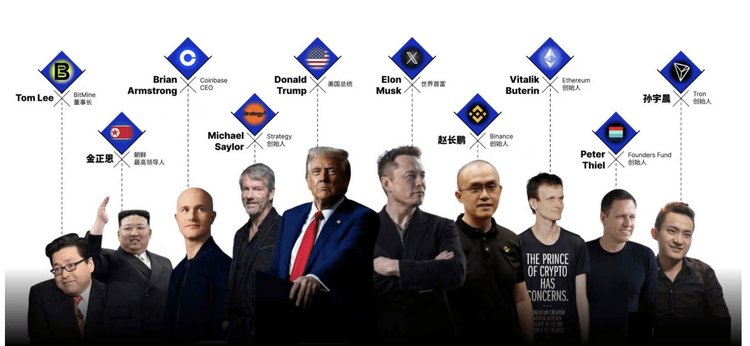
2025 年重新定义加密幂边界的十人
从华尔街到白宫,从硅谷到深圳,一个新的电力网络正在形成。

加密圣诞劫:损失超600万美元,Trust Wallet扩展钱包被黑分析

超600万美元被盗:Trust Wallet源码遭攻击,官方版本为何成黑客后门?

中期选举倒计时,美国加密法案能否闯关成功?

Galaxy对明年的26个预测:比特币仍将ATH,稳定币交易量将超越ACH系统

为何2025年市场情绪全面崩溃?解读Messari十万字年度报告

当预测市场不再「预测」,而是在「泄露真相」:律动正式上线预测市场报道

30亿估值背后:Phantom的增长焦虑与多链突围

Messari 2026 年研报,洞察加密七大板块趋势

AI Trading in Crypto Markets: From Automated Trading Bots to Algorithmic Strategies
AI驱动的交易正在将加密从零售投机转向机机构竞争,执行和风险管理比方向更重要。 随着人工智能交易规模的扩大,系统性风险和监管压力上升,长线表现、稳健系统和合规性成为关键差异化因素。

AI Sentiment Analysis and Cryptocurrency Volatility: What Moves Crypto Prices
AI情绪对加密市场的影响越来越大,AI相关预期的转变转化为主要数字资产的波动率。 加密市场往往会放大人工智能叙事,让情绪驱动的流量在贷款期限期限内超过基本面。 了解人工智能情绪如何形成和扩散,有助于投资者更好地预测风险周期和定位数字资产中的机会。
为什么说Solana已不再适合办大会了?

《纽约时报》:特朗普重返白宫后,美SEC加密诉讼大撤退

Strategy硬刚MSCI:12页抗辩公开信都说了些啥?
专访Solstice创始人:如何在Solana上通过第一性原理重塑收益

41名开发者撑起1.7万亿美元帝国:比特币核心开发团队与金主体系全景解析

彭博社:盗电超十亿,马来西亚比特币挖矿泛滥
彭博社盘点:11笔关键交易,读懂2025年全球金融市场
2025 年重新定义加密幂边界的十人
从华尔街到白宫,从硅谷到深圳,一个新的电力网络正在形成。


 App
App