

Why Bitcoin Self-Custody Is Declining Amid the Rise of ETFs – Insights as of August 26, 2025

The surge in Bitcoin ETFs and treasury companies is transforming the way people approach holding Bitcoin, sparking debates about the timeless mantra of “not your keys, not your coins.”
The Shift Away from Bitcoin Self-Custody in the ETF Landscape
Bitcoin exchange-traded funds (ETFs) and other institutional offerings are fundamentally altering a key philosophy that traces back to Satoshi Nakamoto’s foundational ideas for cryptocurrency. Onchain metrics reveal a consistent drop in Bitcoin self-custody practices since January 2024, coinciding precisely with the green light for Bitcoin spot ETFs.
After more than a decade of expansion, the pace at which new Bitcoin addresses are being created has slowed considerably. Meanwhile, the count of active addresses has plummeted from almost 1 million at the start of 2024 to roughly 750,000 by late August 2025, dipping to figures reminiscent of 2019 levels.
“With spot ETFs now in play, the expansion of self-custody users has been tapering off,” noted analyst Willy Woo in a recent post on X.
This pattern points to a significant change in investor habits, with many choosing institutional custody options such as ETFs over handling their own private wallets. Imagine Bitcoin evolving like gold – once people hoarded physical bars in safes, but now they often prefer the simplicity of gold ETFs stored by professionals. It’s a similar story here, blending into mainstream finance.
The movement reflects Bitcoin’s seamless blending into conventional investment systems, drawing in newcomers through BTC-focused funds. Yet for some purists, this drift challenges the essence of personal control and Bitcoin’s intended role as a tool for financial independence.
“ETFs haven’t pulled users away from their cold wallets… They’ve unlocked access for those restricted by regulatory barriers,” shared one community voice on X.
The Appeal and Growth of Bitcoin ETFs
The introduction of spot Bitcoin ETFs from giants like BlackRock, Fidelity, and Grayscale represented a game-changer for the asset.
These products provide a regulated, professional pathway to Bitcoin exposure, sparing investors the hassle of managing wallets, navigating exchanges, or securing private keys. They come with tax benefits, robust security promises, and the familiarity of standard brokerage interfaces.
Demand exploded right away. In the initial 18 months, these spot Bitcoin ETFs attracted about $60 billion in net inflows, with BlackRock’s IBIT at the forefront holding $65 billion. As of August 26, 2025, IBIT’s assets under management have swelled to $95 billion, more than quadrupling in under 400 trading days. It now safeguards over 800,000 BTC, surpassing Fidelity’s FBTC by roughly 150,000 coins.
Bloomberg analyst Eric Balchunas highlighted that IBIT shattered records as the quickest ETF to hit $80 billion, doing so in just 374 days – eclipsing the prior benchmark of 1,814 days set by Vanguard’s VOO.
Related: Metaplanet and Semler Scientific Battle to Lead as Bitcoin’s Top Corporate Holder
Broadening Institutional Embrace of Bitcoin
Beyond ETFs, Bitcoin treasury companies – entities that stockpile Bitcoin as a core reserve on their financial statements – have shifted from niche adopters like MicroStrategy and Tesla to a widespread institutional trend.
By the close of Q2 2025, the tally of public companies with BTC holdings climbed to 125, marking a 58% jump from the prior quarter. Mid-2025 data shows more than 250 groups, spanning public firms, private enterprises, ETFs, and pension funds, incorporating BTC into their balance sheets.
These treasury setups give investors an indirect route to Bitcoin without the burdens of private key management or exchange interactions. Much like ETFs, they remove the need for self-custody while delivering regulated supervision and top-tier custody solutions.
Magazine Highlight: Baby Boomers with $79T in Wealth Are Warming Up to Bitcoin
In this evolving landscape, platforms like WEEX exchange stand out by aligning perfectly with the needs of modern crypto investors. WEEX offers a secure, user-friendly environment for trading and holding Bitcoin, emphasizing brand alignment through seamless integration of self-custody options with institutional-grade tools. This approach enhances credibility, allowing users to maintain control while benefiting from advanced features that bridge traditional finance and crypto, making it a trusted choice for those navigating the ETF-driven shifts.
Latest Trends and Community Buzz
Drawing from recent online searches, one of the most frequently Googled questions is “Why is Bitcoin self-custody declining?” – often linked to the convenience of ETFs reducing the appeal of personal wallets. On Twitter, discussions have heated up around topics like “Bitcoin ETF inflows vs. self-custody risks,” with users debating the trade-offs of security and control. A viral thread from July 2025 questioned if ETFs are “diluting Bitcoin’s revolutionary spirit,” amassing over 50,000 engagements.
As for updates, a August 20, 2025, announcement from BlackRock revealed plans to expand ETF offerings, potentially including hybrid self-custody features. Meanwhile, onchain data from Glassnode, verified through recent reports, confirms active addresses hovered at 750,000 this week, up slightly from June but still far below January peaks. Twitter posts from influencers like Willy Woo continue to highlight this “pause for air” in Bitcoin’s growth, with one noting that while self-custody dips, overall adoption via institutions could propel BTC to new highs, evidenced by current prices: BTC at $125,500 (up 2.3%), ETH at $3,850 (up 1.8%), and others showing resilience.
Compare this to traditional assets: Just as stock investors rarely hold physical certificates anymore, preferring broker custody, Bitcoin holders are leaning toward similar ease. This isn’t speculation – it’s backed by inflow data showing $60 billion into ETFs, supporting claims of broader accessibility without sacrificing growth potential.
Bitcoin appears to be taking a breather, yet another all-time high this July remains plausible based on historical patterns and ongoing institutional interest.
FAQ
What is Bitcoin self-custody and why does it matter?
Bitcoin self-custody means holding your own private keys in a personal wallet, giving you full control over your assets. It matters because it embodies the principle of financial sovereignty, reducing reliance on third parties and minimizing risks like hacks on exchanges.
How do Bitcoin ETFs affect self-custody trends?
Bitcoin ETFs provide easy access without needing personal wallets, leading many investors to prefer institutional custody for its convenience and regulation. This has contributed to a decline in new self-custody addresses, as shown by onchain data since their launch.
Are there risks to abandoning self-custody for ETFs?
Yes, while ETFs offer security and ease, they mean you’re not directly controlling your keys, potentially exposing you to counterparty risks if the custodian faces issues. However, their regulated nature often mitigates these concerns compared to unmanaged wallets.
猜你喜欢

2026年失序重组下的DeFi2.0爆发

市场更新 — 十二月月30日
Brevis开放空投跟踪;趋势研究在一天之内增加了超过46,000ETH。

彭博社盘点:11笔关键交易,读懂2025年全球金融市场
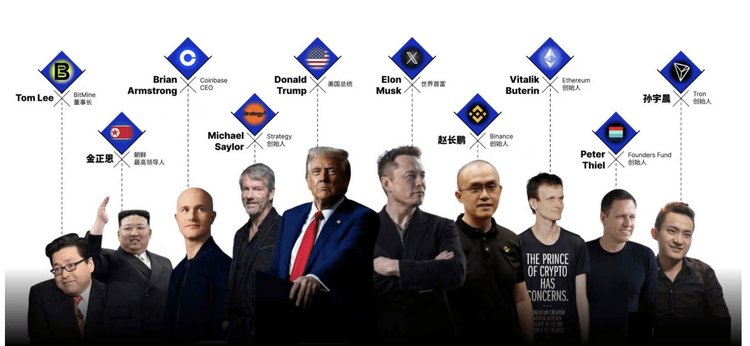
2025 年重新定义加密幂边界的十人
从华尔街到白宫,从硅谷到深圳,一个新的电力网络正在形成。

加密圣诞劫:损失超600万美元,Trust Wallet扩展钱包被黑分析

超600万美元被盗:Trust Wallet源码遭攻击,官方版本为何成黑客后门?

中期选举倒计时,美国加密法案能否闯关成功?

Galaxy对明年的26个预测:比特币仍将ATH,稳定币交易量将超越ACH系统

为何2025年市场情绪全面崩溃?解读Messari十万字年度报告

当预测市场不再「预测」,而是在「泄露真相」:律动正式上线预测市场报道

30亿估值背后:Phantom的增长焦虑与多链突围

Messari 2026 年研报,洞察加密七大板块趋势

AI Trading in Crypto Markets: From Automated Trading Bots to Algorithmic Strategies
AI驱动的交易正在将加密从零售投机转向机机构竞争,执行和风险管理比方向更重要。 随着人工智能交易规模的扩大,系统性风险和监管压力上升,长线表现、稳健系统和合规性成为关键差异化因素。

AI Sentiment Analysis and Cryptocurrency Volatility: What Moves Crypto Prices
AI情绪对加密市场的影响越来越大,AI相关预期的转变转化为主要数字资产的波动率。 加密市场往往会放大人工智能叙事,让情绪驱动的流量在贷款期限期限内超过基本面。 了解人工智能情绪如何形成和扩散,有助于投资者更好地预测风险周期和定位数字资产中的机会。
为什么说Solana已不再适合办大会了?

《纽约时报》:特朗普重返白宫后,美SEC加密诉讼大撤退

Strategy硬刚MSCI:12页抗辩公开信都说了些啥?
专访Solstice创始人:如何在Solana上通过第一性原理重塑收益
2026年失序重组下的DeFi2.0爆发
市场更新 — 十二月月30日
Brevis开放空投跟踪;趋势研究在一天之内增加了超过46,000ETH。
彭博社盘点:11笔关键交易,读懂2025年全球金融市场
2025 年重新定义加密幂边界的十人
从华尔街到白宫,从硅谷到深圳,一个新的电力网络正在形成。


 App
App