

Revisiting "Read Write Own": 16 Classic Insights from a16z's Founder

Original Article Title: 16 insights from New York Times bestseller Read Write Own
Original Source: a16z Crypto
Original Translation: Scof, ChainCatchert
This article features some insightful excerpts from the new book "Read Write Own: Blockchain Network Trends and Potential to Unlock the Web3 Paradigm" by Chris Dixon, founder and general partner at a16z Crypto. The content is compiled from relevant a16z tweets. Here is the translation of the original text:
Looking for a deeper understanding of the world of technology, business, and startups? Want to explore the history and future of the internet? Need a concise explanation of cryptocurrency, the blockchain movement, and its significance? We have the answers for you.
Here, we have selected the sharpest excerpts and most provocative points from the bestselling book "Read Write Own" by Chris Dixon, founder and general partner at a16z Crypto. This book is dense with information, delving into the hidden structures that govern how money and power flow on the network. Leveraging his decades of experience investing in startups, author Chris Dixon reveals how the networks that dominate our lives operate and how to restructure these networks to empower internet users as true owners.
The insights presented in "Read Write Own" offer a fresh perspective on business and life—from nurturing innovation, to seizing disruptive opportunities, to boldly betting on non-mainstream directions. Sam Altman, CEO of OpenAI, described this book as a "remarkable vision of the future of the internet and its path to realization." Whether you are passionate about the crypto space, just starting to explore, or simply curious about the turbulence in this field, this book will bring value to you.
Here are some of the most compelling excerpts from the book, each containing valuable insights:
1. The Essence of "Permission"
In business, seeking permission is not as straightforward as asking your parents or teacher for approval, where you can simply receive a "yes" or "no" answer; nor is it as clear-cut as traffic signals dictating the rules of the road. In the business world, permission often becomes a disguised tyranny. Dominant tech companies use the power of "permission" to block competition, disrupt markets, and extract value.
2. Software as Art
Software is extraordinarily expressive, and rather than seeing it as a product of the engineering field, it is better to view it as an art form. The malleability and flexibility of code provide a vast design space, a breadth of possibility closer to creative activities like sculpture or novel writing than to engineering practices like bridge-building. Like other art forms, practitioners in the software field continuously pioneer new genres and movements, fundamentally expanding the boundaries of possibility.
3. Problems Solved by Blockchain
Blockchain can make strong commitments about its future behavior, enabling the creation of entirely new networks. Blockchain networks address many issues present in early network architectures: they can connect people, build social networks while empowering users, rather than letting corporate interests dominate; they can support marketplaces and payment networks, facilitating commercial activities while significantly reducing intermediary costs; they can also foster new forms of monetizable media, interoperability, and immersive digital worlds that reward creators rather than exploit them with AI products...
Asking "What problems does blockchain solve?" is like asking "What problems does steel solve compared to wood?" You can build structures or railways with either wood or steel, but steel allowed us to construct taller buildings, sturdier railways, and grander public works during the early days of the Industrial Revolution. Similarly, through blockchain, we can create fairer, more sustainable, more resilient networks with broader horizons compared to today's network systems.
4. A New Era of the Internet
Our current decisions will determine the future of the internet: who builds, owns, and uses the internet; where innovation will happen; and how everyone's user experience will be. Blockchain and the networks it supports unleash the extraordinary power of software as an art form, with the internet becoming its canvas. This transformative movement has the opportunity to rewrite history, reshape the relationship between humanity and the digital world, redefine possibilities... It is an opportunity to create an ideal internet, rather than passively accepting the inherited internet.
5. The Supremacy of Networks
Network design determines destiny.
A network is an organizational framework that enables billions of people to interact orderly. It determines the world's winners and losers, with its algorithms guiding the flow of capital and attention. The structure of a network not only directs its own development but also determines the concentration of wealth and power. Given the scale of today's internet, even seemingly insignificant software design decisions could have profound ripple effects. When analyzing the power dynamics of the internet, "who controls a particular network" is the most critical question.
6. Protocol vs. Enterprise
The difference between a protocol network, such as email, and an enterprise network, like Twitter, is that the network effect of email belongs to a community rather than a specific company. Email is not owned or controlled by any company; anyone can access it using software created by independent developers that support the underlying protocol. Developers and users are free to decide what to build and what to use. The decisions that affect the community are also collectively made by the community itself.
7. Impact of New Technology
There are primarily two ways people use new technology: (1) to do things they could already do but now can do faster, cheaper, simpler, or with higher quality, and (2) to do entirely new things that were previously impossible. In the early stages of technological development, the first type of application is usually more popular, but the ones that have a lasting impact on the world are often the second type.
8. Corporate-Controlled Internet
The structure of an enterprise network is very simple: it is controlled by a single company that provides centralized services to the network. This company has absolute control and can modify the terms of service at any time and for any reason, decide who can access the network, and govern how funds flow.
Enterprise networks are centralized because ultimately all rules are determined by one person, typically the CEO.
9. Blockchain as a Contrarian Bet
Blockchain is unique. It is a contrarian bet. Despite many people (myself included) recognizing its potential, mainstream institutions often overlook it. In fact, the prevalent view in the tech industry is that only the technology improvements already focused on by incumbents matter, such as larger databases, faster processors, bigger neural networks, and smaller devices. This perspective is myopic.
10. How Hobbies Drive Future Industries
Unlike mainstream technologies, "outsider" technologies often emerge from the fringes. They are propelled by hobbyists, tech enthusiasts, open-source developers, and startup founders, incubating and growing outside the mainstream. These endeavors often involve less capital and formal training, leveling the playing field to some extent with industry insiders. However, the lower barriers also lead insiders to underestimate these technologies and their proponents.
Hobbies are the catalyst for future industries. Hobbies are often what the smartest people work on when unconstrained by short-term economic goals. I like to say that what the smartest people do on weekends will be what others do during the workweek ten years later.
11. The Simplicity of Tokens
What a token "is" is far less important than what it "can do."
A token can represent ownership of any digital asset, including money, art, photos, music, text, code, in-game items, voting rights, access rights, or even anything people might come up with in the future. With some additional building blocks, they can also represent real-world items such as physical goods, real estate, or dollars in a bank account. Anything that can be represented in code can be wrapped in a token for purposes of buying, selling, using, storing, embedding, transferring, or any other use.
If this sounds too simple or even trivial, that is precisely the intention of token design—simplicity is a virtue.
12. Owner vs. User
The concept of ownership is so deeply ingrained in our lives that we can hardly imagine what the world would be like without it.
Imagine if the clothes you bought could only be worn on the occasion of purchase; if you couldn't resell or reinvest in your house and car; or if you had to change your name every time you went somewhere? This is the digital world built by today's corporate networks.
13. Blockchain as a City
The functionality of blockchain has striking similarities to urban planning.
Launching a blockchain network is like building a new city on undeveloped land. City designers construct some initial buildings, then design a system of land allocation and tax incentives to attract residents and developers. Property rights—i.e., ownership—play a key role, providing property owners with a strong commitment: they will always own their property and can confidently invest in it. As the city grows, the tax base widens. Taxes are reinvested in public projects like streets, parks, more land is allocated, and the city continues to expand.
14. Restoring Community through Tokens
Blockchain networks embed community ownership deep into their core design, almost as if it's in their DNA.
While meme coin variants like Dogecoin may seem like a joke, they demonstrate how users seek community through various tokens (whether humorous or serious) to fill the sense of belonging and connection in the digital world.
These tokens are not just technical tools; they have become a way for people to rally around a community. By holding these tokens, users become participants and owners of the community, not just consumers. This design empowers users, disrupting the control traditionally dominated by centralized companies in the platform economy, creating possibilities for more decentralized, goal-oriented communities.
15. Blockchain as Network Constitution
Network designers can use blockchain to create formal rules enforced by code. These rules act as a network's constitution. The content of the constitution can be the subject of debate, discussion, and experimentation, but the mere existence of it and the ability to embed rules into immutable software represent an unprecedented advancement. This was not achievable in previous network designs.
16. The Two Cultures of Cryptocurrency
There exist two starkly different cultures interested in blockchain.
The first culture sees blockchain as a way to build a new type of network... I refer to this culture as the **"computing"** culture because its core idea is that blockchain is driving a new kind of computational revolution.
The other culture is primarily interested in speculation and making money. People in this mindset view blockchain solely as a tool to create new tokens for trading. I call this culture the **"casino"** culture because at its core, it's all about gambling.
But the "casino" culture should not drag down the "computing" culture.
Additional Section: The Good Old Days
Blockchain is at the forefront of computing development, much like personal computers in the 1980s, the internet in the 1990s, and mobile phones in the 2010s.
Today, people look back on classic moments in computing history, imagining scenes from that time—Noyce and Moore, Jobs and Wozniak, Page and Brin. Those amateur enthusiasts exploring, debating, and driving technological advancements, those creators who spent nights and weekends "coding."
It may seem late, but it's actually early. Now is the best time to reimagine what the internet can be and what it can do. Software is an unparalleled innovation playground. You don't have to accept the current state of the internet you find; you can create something better... as a builder, creator, user, and most importantly, as an owner.
You are here now. This is the "Good Old Days."
猜你喜歡

相較於 Gas 期貨市場,ETHGas 更希望做的是即時執行層

AI 如何幫助加密交易者分析市場、管理風險並更智能地進行交易
加密交易不再僅僅是一個好主意 — — 而是在一個永不停止的市場中始終如一地執行。 隨著數據量和市場速度的增加,傳統的人工分析達到了極限。 AI通過改變市場分析、情緒解讀和風險控制的方式,幫助交易者超越這些限制。 本文探討了人工智慧如何重塑加密交易 — — 以及這對當今交易者意味著什麼。
WEEX × LALIGA: 代表共同卓越標準的七星
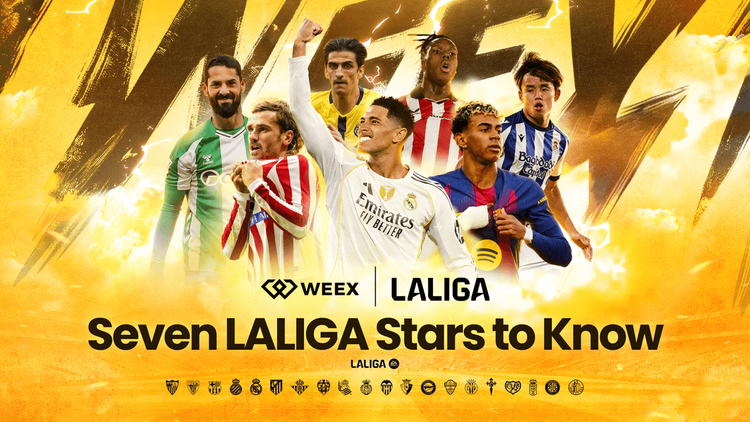
真正的足球卓越絕非偶然。 它建立在紀律、一致性和在壓力下交付的能力之上 — — 一季又一季。 同樣的原則也適用於專業交易,長線表現比空頭勢頭更重要。 作為LALIGA的官方區域合作夥伴,WEEX重點推薦了七位體現聯盟競爭精神和全球申訴的傑出球員。 每款產品都為球場帶來獨特的風格,但所有產品都擁有與WEEX對穩定性、計算精度和專業執行的承諾緊密一致的價值觀。 這種夥伴關係建立在共同標準之上——一致性和控制力決定了壓力下的業績。

Arkstream Capital:當加密資產 2025 年重歸「金融邏輯」

從武漢到矽谷,Manus 只用了九個月就做到了。
你可以稱它為“包裝器”,但它一直包裹在Meta上。

特朗普擁抱加密貨幣的這一年

IOSG:港口與新城,BNB Chain與Base的兩種加密世界觀
WEEX 與 LALIGA 合作,擴大全球影響力,將加密技術融入主流體育文化
香港,1月。 1,2026年。 WEEX與LALIGA建立了新的合作夥伴關係,成為LALIGA在台灣和香港的官方區域合作夥伴。 該協議將WEEX引入LALIGA的區域合作夥伴網絡,並為賽季期間球迷和交易商的參與打開了新途徑。

永續合約前傳:用魔法公式為流動性定價,透明度讓其無法發揚光大

閱讀美股上鏈:為何幣圈人轉投美股,華爾街卻反向上鏈?

老牌國產公鏈NEO兩位創始人爭鬥,財務不透明為核心原因

香港虛擬資產交易平台新規(下):新通函發布,虛擬資產業務的邊界被重新劃清了?

2026年失序重組下的DeFi 2.0爆發

加密中的人工智能交易: 交易者如何在真實加密市場中實際應用人工智能
人工智能已經超越了加密市場的實驗。 2025年,人工智能驅動的交易工具越來越多地被交易者使用,他們希望在動盪的市場中獲得更好的紀律、更快的執行和更有條理的決策。 本指南將逐步解釋人工智能在加密交易中的實際應用 — — 重點是如何在真實交易環境中執行這些策略。

美联储最新會議紀要:分歧仍存,但「大多數」官員主張繼續降息

市場更新 — 十二月31日
從韓國和OECD加速實施加密監管合規框架,到TAO ETF、隱私技術、礦業、比特幣儲備等同時發展,安全事件和資金損失持續上升,加密市場在「強監管+技術演進+風險放大」的多重挑戰中,進入新階段。
第一個大規模採用「收益型穩定幣」的,是中國

Lighter代幣分配引爭議、Zama上線USDT隱私轉帳,海外幣圈今天在談什麼?
相較於 Gas 期貨市場,ETHGas 更希望做的是即時執行層
AI 如何幫助加密交易者分析市場、管理風險並更智能地進行交易
加密交易不再僅僅是一個好主意 — — 而是在一個永不停止的市場中始終如一地執行。 隨著數據量和市場速度的增加,傳統的人工分析達到了極限。 AI通過改變市場分析、情緒解讀和風險控制的方式,幫助交易者超越這些限制。 本文探討了人工智慧如何重塑加密交易 — — 以及這對當今交易者意味著什麼。
WEEX × LALIGA: 代表共同卓越標準的七星
真正的足球卓越絕非偶然。 它建立在紀律、一致性和在壓力下交付的能力之上 — — 一季又一季。 同樣的原則也適用於專業交易,長線表現比空頭勢頭更重要。 作為LALIGA的官方區域合作夥伴,WEEX重點推薦了七位體現聯盟競爭精神和全球申訴的傑出球員。 每款產品都為球場帶來獨特的風格,但所有產品都擁有與WEEX對穩定性、計算精度和專業執行的承諾緊密一致的價值觀。 這種夥伴關係建立在共同標準之上——一致性和控制力決定了壓力下的業績。
Arkstream Capital:當加密資產 2025 年重歸「金融邏輯」
從武漢到矽谷,Manus 只用了九個月就做到了。
你可以稱它為“包裝器”,但它一直包裹在Meta上。


 App
App