
What Is Avantis (AVNT) and How Does It Work?

 Prefer us on Google

What is Avantis (AVNT)?
Avantis is a decentralized exchange (DEX) specializing in perpetual futures trading, built on Base, a Layer 2 Ethereum network. The platform enables leveraged trading across a variety of assets including cryptocurrencies and real-world assets (RWAs) such as forex, commodities, and indices.
Traders can open long or short positions with leverage, while liquidity providers deposit USDC to facilitate trading activity. With features like zero-fee perpetuals, loss rebates, and a tiered liquidity system, Avantis aims to bring sophisticated trading tools and cross-market access to decentralized finance (DeFi).
Perpetual futures are derivative contracts that allow traders to speculate on the price of an asset without owning it. Unlike traditional futures, these contracts have no expiration date, meaning positions can be held indefinitely as long as margin requirements are met.
Trades are collateralized using stablecoins. Leverage enables users to control a larger position with less capital, though this also amplifies potential profits and losses. Perpetuals offer a flexible way to take bullish or bearish views on asset prices without direct ownership.
How Avantis Works?
Avantis is a decentralized synthetic perpetual trading platform that enables users to take leveraged positions across a diverse set of markets using stablecoins such as USDC as collateral. Rather than utilizing an order book, the system operates through a pooled liquidity mechanism, with all profits and losses settled in USDC. This synthetic model allows Avantis to support not only cryptocurrencies but also traditional financial instruments including forex, commodities, and equity indices—all accessible on-chain.
Core Mechanics and Innovations
- High Leverage Access: Users can employ leverage of up to 500× in select markets such as forex and commodities, providing substantial capital efficiency alongside elevated risk exposure.
- Zero-Fee Trading for Loss-Making Trades: Fees are incurred only on profitable positions, lowering the entry barrier for high-frequency strategies and reducing costs for traders during unfavorable market conditions.
- Decentralized Oracle Infrastructure: Avantis sources price feeds from established oracle networks including Chainlink and Pyth, ensuring reliable and manipulation-resistant market data across all assets.
- Structured Liquidity Pools: Liquidity providers can deposit USDC into smart contract vaults segmented by risk-return profiles. Senior tranches target conservative investors with steadier yields, while junior tranches offer higher returns in exchange for increased exposure to trader profits.
- Market Balance Incentives: A unique rebate mechanism rewards traders who take positions that counter prevailing market sentiment, effectively reducing their net losses and promoting more balanced open interest.
- Layer-2 Scalability: Built on Base, an Ethereum L2 solution, Avantis combines low transaction costs with near-instant execution, enabling seamless trading and liquidity operations without compromising security.
Differentiating Factors
Avantis introduces several structural improvements over existing perpetual trading platforms such as GMX and dYdX. Its synthetic architecture eliminates the need for direct counterparty matching, allowing deeper liquidity and broader market access. The tranched liquidity system offers LPs customizable risk exposure, while the conditional fee model and loss rebates create a more aligned and efficient ecosystem for all participants.
By integrating high leverage, zero-fee unprofitable trades, and cross-market coverage within a scalable L2 environment, Avantis represents a shift toward more accessible, efficient, and resilient decentralized trading systems.
Key Features of Avantis (AVNT)
Zero-Fee Perpetuals (ZFP)
With ZFP, traders pay no fees to open or close positions. A fee is applied only when a trade is profitable—a percentage of the gains is retained by the protocol. This model benefits high-frequency and high-leverage traders by reducing overhead.
Loss Rebates
To encourage market balance, Avantis offers rebates to traders who take the opposite side of dominant market positions. This helps stabilize the ecosystem and compensates users for providing market liquidity.
Revenue Distribution
60% of protocol fees are distributed to liquidity providers. The remaining 40% is allocated to the treasury, which funds ecosystem incentives, vault insurance, and future development.
Risks and Considerations
Liquidity providers face risks including reduced returns from successful traders and potential smart contract vulnerabilities, despite audits. Traders should be aware that high leverage increases volatility and potential losses. Additionally, RWA markets such as forex can experience price gaps when trading resumes after closures, which may affect order execution.
The AVNT Token
The AVNT token is the native governance and utility token of Avantis, with a total supply capped at 1 billion. Its uses include:
- Governance: Token holders vote on protocol upgrades, fees, new features, and multi-chain expansion.
- Fee Discounts: Staking AVNT reduces trading fees for users.
- Loyalty Rewards: Stakers receive priority access to airdrops and loyalty programs.
- Ecosystem Security: Users can stake AVNT in the Security Module to help protect the protocol during liquidity shortfalls, earning rewards in return.
-- Price
Conclusion
Avantis redefines decentralized perpetual trading with zero-fee execution, dual-oracle pricing, and unique loss rebates. Its structured liquidity system lets you customize risk exposure, while the AVNT token enhances governance and trading benefits.
Now you can trade $AVNT securely on WEEX Exchange—enjoy deep liquidity, competitive fees, and professional-grade tools in a user-friendly environment. Whether you're a trader or liquidity provider, join the future of DeFi with confidence.
Further Reading
- What Is Holoworld AI (HOLO) and How Does It Work?
- What Is Unichain and How Does It Work?
- What Is Boundless (ZKC) and How Does It Work?
Disclaimer: The opinions expressed in this article are for informational purposes only. This article does not constitute an endorsement of any of the products and services discussed or investment, financial, or trading advice. Qualified professionals should be consulted prior to making financial decisions.
This content is provided for general informational purposes only and doesn't constitute financial, investment, legal, or tax advice. Any events, rewards, online promotions, or related information mentioned herein should not be considered a recommendation, solicitation, or invitation to purchase, sell, trade, or otherwise deal in any crypto assets. Crypto assets are highly volatile and may result in loss. The availability of WEEX services, products, and related events may vary by region. You are responsible for ensuring that your participation is in accordance with applicable local laws and regulations.
You may also like

What Is Aster (ASTER) and How Does It Work?

What Is Lombard (BARD) and How Does It Work?

What Is Internet Computer (ICP) and How Does It Work?

What is Holoworld AI (HOLO) Coin
Binance Hack Explained: What Is Confirmed, What Is Disputed and What Users Should Do Now

Hot Wallet Security Explained: Lessons From the Binance Incident

Binance Hack Scams: How to Spot Fake Refund and Recovery Offers

Binance Withdrawals Paused: What Users Should Check Right Now

HYPE Price Jumps After ICE Backs trade[XYZ] on Hyperliquid: What Is Confirmed and What Is Not

GOOGL Q3 Earnings: Why Alphabet Fell Despite 103% Cloud Growth

Is XTruth Oil (XTO) Legit? Contract Checks, Payout Gaps and Liquidity Risks

United States Dividend Fund (USDF) October 30 Announcement and October 31 Date: What to Verify Before Believing Either Claim

United States Dividend Fund (USDF): Is There a Connection to Trump’s Dividend Plan?

Ripple National Trust Bank: Who Really Gains From OCC Approval
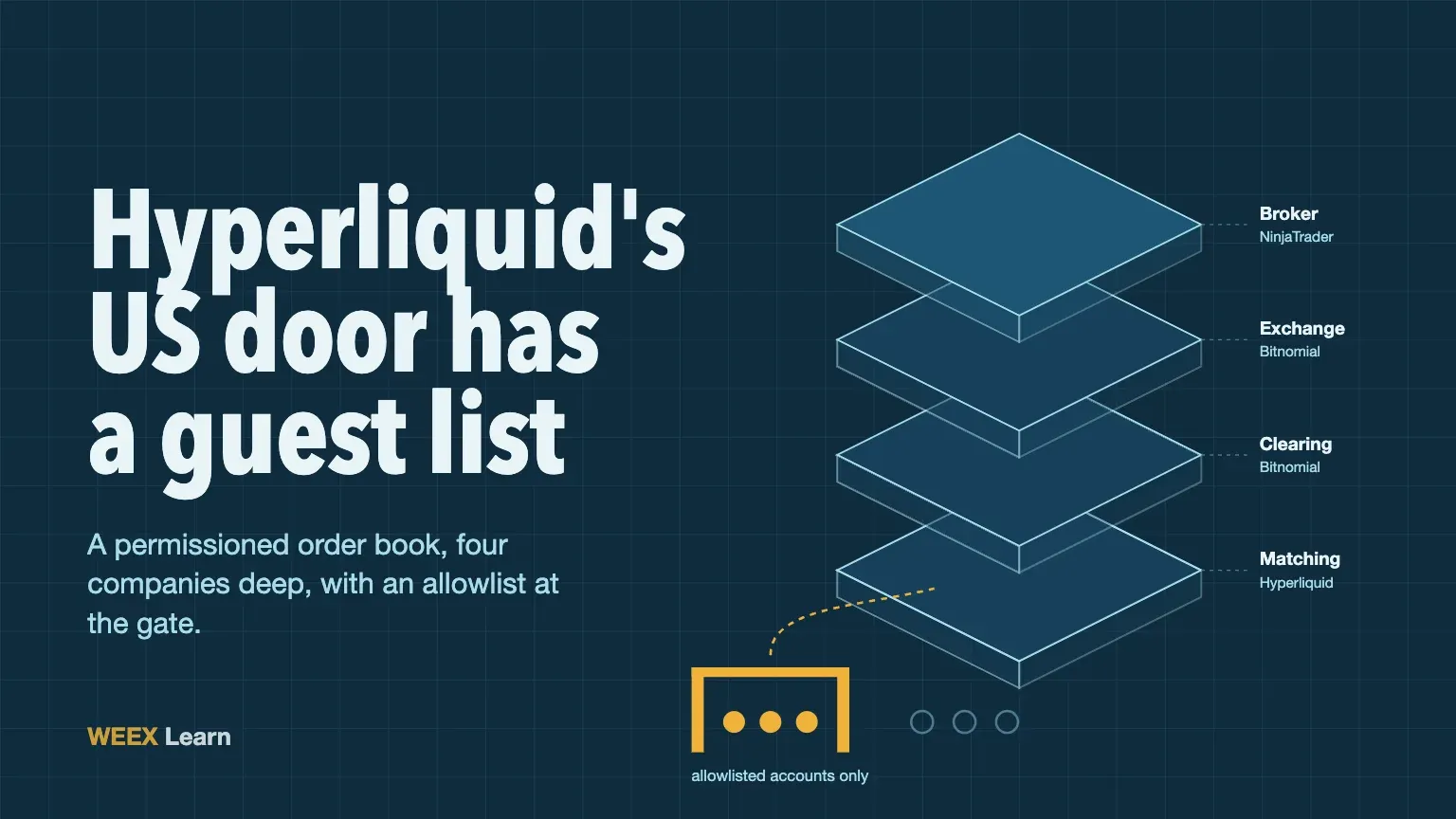
Hyperliquid US Entry: What Kraken's Payward Plan Actually Builds

How Do Stablecoin Issuers Make Money? The Business Behind a $1 Token

Robinhood RLUSD: What Ripple’s Partnership Means for XRP and the XRP Ledger
Why Unitree Stock Jumped: JPMorgan Upgrade, Physical AI Timelines and What Investors Should Check

SKHY Q3 Earnings: SK Hynix's 632% Profit Jump Is a Price Story

TSLA Barclays Upgrade: What the $450 Price Target Assumes

XRP After Ripple's OCC Charter: What the Bank Approval Changes

BTC Fights for $80K Before the Fed: Why Leverage Hasn't Flushed

AVGO and META Stock: What an $88B AI Financing Week Signals
Gold Price Back Above $4,000: Fed, Iran Risk and the Next Test
USDT Interest Rate 2026: Current APR and Earnings Calculator
Taiwan Crypto Regulations 2027: What Investors Need to Know

What Does the Kalshi–S&P Dow Jones Deal Mean? Event Contracts vs. Index Investing

Tokenized Stocks Explained: What to Check Before You Trade

CLS Stock After Q3 Earnings: Revenue Up 83%, 2027 Outlook and What Investors Should Check
Which WEEX Moves Cost You Auto Earn Interest? 9 Actions Checked
What Is Aster (ASTER) and How Does It Work?
What Is Lombard (BARD) and How Does It Work?
What Is Internet Computer (ICP) and How Does It Work?
What is Holoworld AI (HOLO) Coin
Binance Hack Explained: What Is Confirmed, What Is Disputed and What Users Should Do Now
Hot Wallet Security Explained: Lessons From the Binance Incident


