
What is Euler (EUL) and How Does It Work?

 Prefer us on Google

A significant challenge in decentralized finance (DeFi) is liquidity fragmentation across isolated lending and borrowing platforms. A solution addresses this issue by enabling permissionless creation of independent vaults. These vaults can leverage assets from any other vault within a broader ecosystem as collateral. This interconnectedness, facilitated by a unique cross-vault communication mechanism, provides enhanced flexibility for various participants. Lenders, borrowers, developers, and traders benefit from this modular design, fostering a potentially more efficient and dynamic financial environment. This system is known as Euler.
What is Euler Finance (EUL)?
Euler Finance is a decentralized, non-custodial protocol built on Ethereum that enables the permissionless lending and borrowing of a wide range of digital assets. It distinguishes itself from traditional DeFi lending platforms through its innovative modular architecture, which allows for the creation of isolated and risk-managed markets. Founded by Michael Bentley and a team of developers from Euler Labs, the project is on a path toward progressive decentralization, guided by its community and supported by the Euler Foundation for real-world operational needs. The protocol has undergone significant evolution, including a major security incident in 2023 that led to reinforced safeguards, and the subsequent launch of its more advanced and flexible V2 in 2024.

How Euler Works
Euler's core functionality is powered by two main components that work in tandem:
The Euler Vault Kit (EVK)
This is a developer toolkit that allows for the creation of customized, standalone lending vaults. Each vault operates as an independent market with its own risk parameters, interest rate model, and oracle for price feeds. The EVK leverages the ERC-4626 tokenized vault standard, ensuring that deposits are represented as shares and can be seamlessly integrated across the broader DeFi ecosystem. Developers can use this kit to build various types of markets, from simple collateral pools to complex, governed lending platforms.
The Ethereum Vault Connector (EVC)
This is the interoperability layer that unlocks Euler's most powerful feature: cross-vault composability. The EVC acts as a secure ledger that tracks users' debt and collateral positions across different vaults. It enables a user to deposit assets as collateral in one vault and then borrow from a completely separate vault, all without having to manually transfer funds. This system maintains risk isolation for each vault while providing users with unprecedented flexibility for complex financial strategies, all executable within a single transaction.
Vault Types
The protocol supports a diverse array of vaults to cater to different user needs and risk profiles:
- Collateral-Only Vaults: Designed for borrowers, these vaults accept deposits that can be used to secure loans but do not themselves generate yield from lending.
- Governed Vaults: These are actively managed markets where a DAO or a designated curator can adjust key parameters like collateral factors and interest rates to optimize for safety and efficiency.
- Ungoverned Vaults: Operating with immutable, pre-set rules, these vaults offer a trust-minimized environment for users who prefer predictable, non-custodial lending.
- Yield Aggregator Vaults: These are sophisticated vaults that automatically channel user deposits into various yield-generating strategies, both within Euler and externally, to maximize returns.
What is the EUL Coin?
The EUL token is the governance and utility token at the heart of the Euler ecosystem. Its primary functions are:
- Protocol Governance: EUL holders have the right to propose and vote on all major decisions concerning the protocol's development, treasury management, and key parameter changes.
- Economic Engine: EUL is integral to the protocol's fee mechanism. Accumulated fees are periodically auctioned off, with EUL as the bidding currency. The EUL used in these auctions is then sent to the DAO treasury, creating a sustainable economic loop.
- Incentivization: The protocol uses EUL tokens to reward users for participation, such as providing liquidity or engaging in specific borrowing activities, thereby encouraging growth and network security.
-- Price
How to Buy Euler (EUL)?
You can access EUL on WEEX. The project's rapid growth and significant trading volumes have made it available across multiple established exchanges, providing investors with multiple avenues for participation.
Currently, WEEX has launched both Spot and Futures trading for the EUL token. You can trade tokens on WEEX for ultra-low fees by following these steps:
- Open and log in to the WEEX App or official website.
- Search for "EUL" in the search bar and select either Spot or Futures trading.
- Choose your order type, enter the quantity and price, and complete your trade.
Conclusion
By introducing a modular and composable architecture, Euler Finance offers a next-generation framework for on-chain credit. Its system of interconnected yet independent vaults directly addresses the issue of liquidity fragmentation, providing lenders, borrowers, and developers with a more flexible and efficient platform. With its robust toolkit and cross-vault functionality, Euler is positioned as a foundational primitive for building a more dynamic and integrated DeFi lending landscape.
If you are looking to gain exposure to the EUL token, it is already accessible on the WEEX exchange. WEEX provides a secure and user-friendly platform for trading EUL, offering features like spot trading and derivatives to suit a variety of investment strategies. Just start trading EUL on WEEX now!
Further Reading
- What is Hajimi (HAJIMI) and How Does It Work?
- What Is Dogecoin and How Does It Work?
- What Is Ethereum and How Does It Work?
Disclaimer: The opinions expressed in this article are for informational purposes only. This article does not constitute an endorsement of any of the products and services discussed or investment, financial, or trading advice. Qualified professionals should be consulted prior to making financial decisions.
This content is provided for general informational purposes only and doesn't constitute financial, investment, legal, or tax advice. Any events, rewards, online promotions, or related information mentioned herein should not be considered a recommendation, solicitation, or invitation to purchase, sell, trade, or otherwise deal in any crypto assets. Crypto assets are highly volatile and may result in loss. The availability of WEEX services, products, and related events may vary by region. You are responsible for ensuring that your participation is in accordance with applicable local laws and regulations.
You may also like

How to Convert ETH to USDT on WEEX: Step-by-Step Guide
How to Convert USDT to BTC on WEEX: Step-by-Step Guide

How to Convert BTC to ETH on WEEX: Step-by-Step Guide
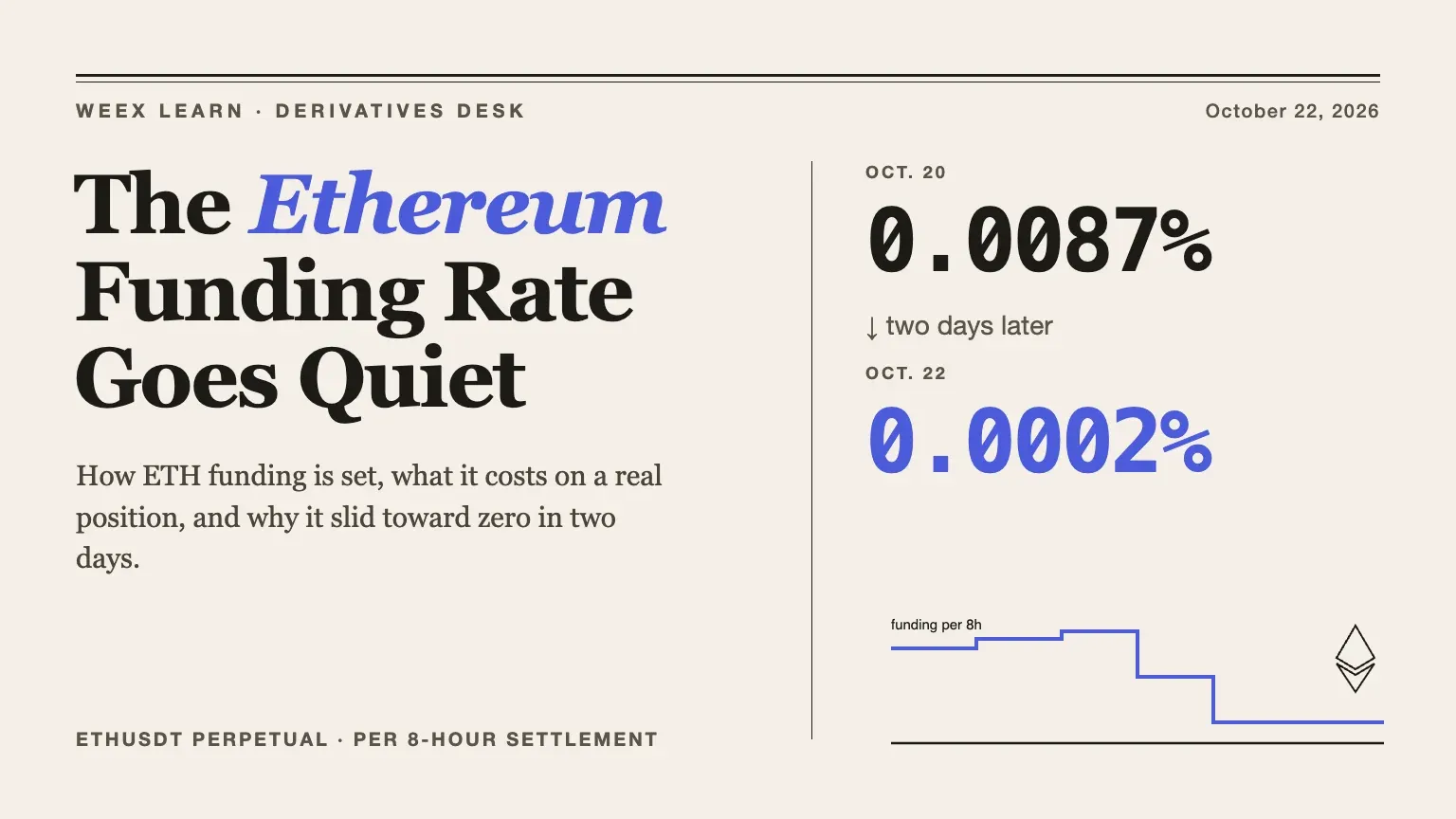
Ethereum Funding Rate: How It Works and Why It Dropped Near Zero
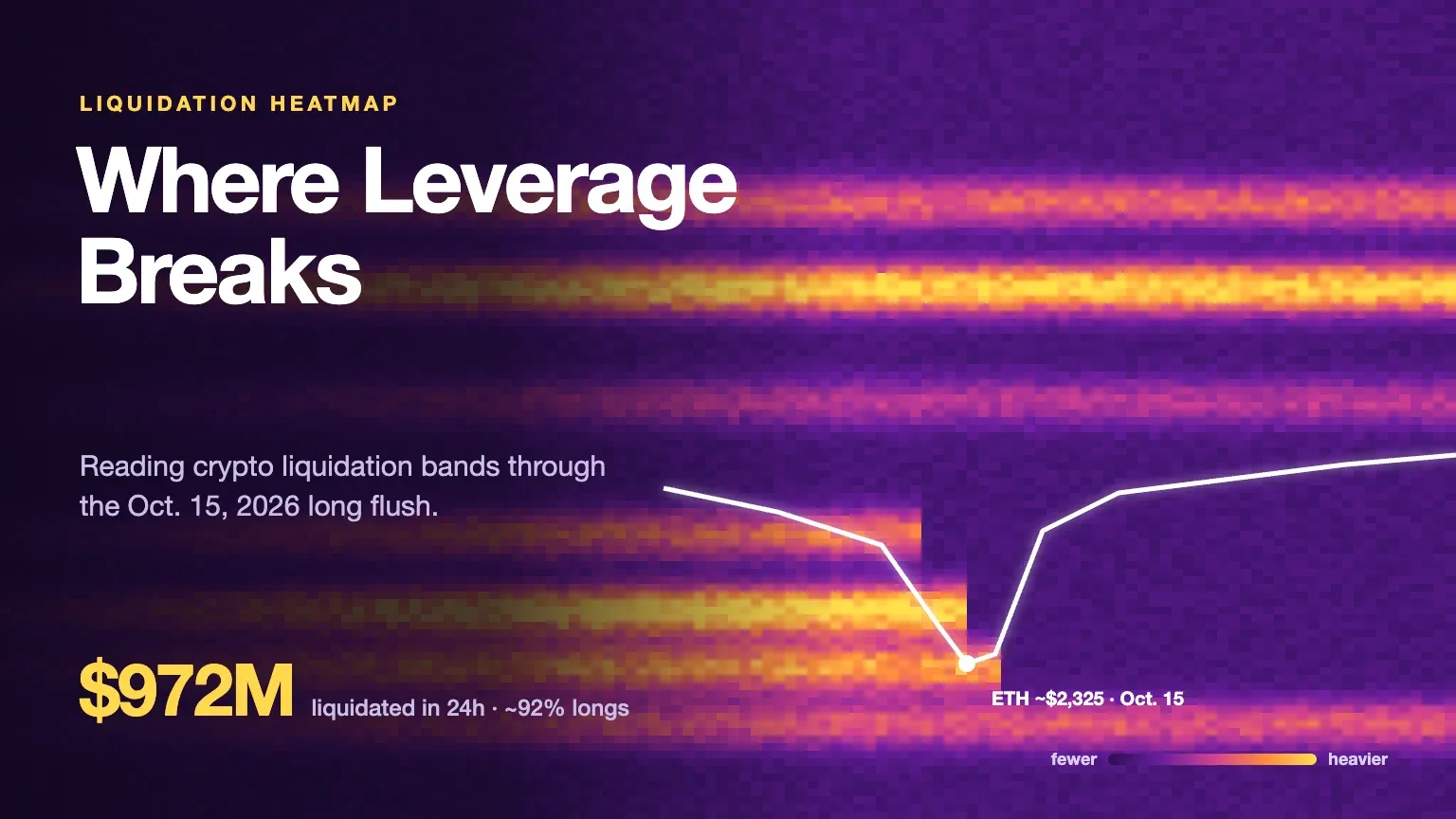
Crypto Liquidation Heatmap: Reading the $972M Oct. 15 Long Flush

Margin Trading Crypto: Cross vs Isolated and Liquidation Math
How to Convert BTC to USDT: A Step-by-Step WEEX Guide
xStocks Crypto Explained: What Tokenized Stocks Are, How They Work and What Holders Should Check

What Happened to Aergo (AERGO) Crypto? Token Migration and What Holders Should Do

ETH Funding Rate Today: 0.0087% per 8h as Ether Longs Re-Lever

What Is Blockchain and How Does It Work? One Transaction, Traced

Staking APR vs Inflation: How Much of Your Crypto Yield Is Real?

WEEX Convert Fees: What Zero-Fee Conversion Really Costs You

WEEX Convert Quote: How the 8-Second Price Lock Really Works

WEEX Convert Limits: Minimum and Maximum Amounts Explained

How to Check a WEEX Convert Order: History, Rate and Status

Bitcoin Price After Hot CPI: Why BTC Is Pinned Near $82,000

Limit Sell Order: How to Set a Take-Profit Price in Crypto

Best Crypto Podcasts for Beginners: A 4-Week Listening Plan

What Is Plume (PLUME)? Why the RWA Token Stays 93% Below Its High Even After the Layer 2 Rally

ETH Futures: Why Ether Is Falling Faster Than Bitcoin This Week
How to Buy Presale Crypto: Step by Step Guide for Beginners

Ethereum Glamsterdam Hits 200M Gas on Sepolia: What Changes After the Upgrade?

What Is Staking? 4 Myths to Clear Up Before You Stake Crypto

CAP Price Up 23%: Why Short Liquidations Don't Explain the Rally

Ethereum Glamsterdam Upgrade: Sepolia Date and ETH Price Impact

How to Earn Interest on USDT: What a 10% APR Really Pays in 2026

How to Buy Crypto With Apple Pay in 5 Steps: Why Your Bank May Decline the Payment

What Is Blockchain and How Does It Work? One Real Block Explained

Ethereum Glamsterdam Upgrade Countdown: Can ETH Price Break Out?
How to Convert ETH to USDT on WEEX: Step-by-Step Guide
How to Convert USDT to BTC on WEEX: Step-by-Step Guide
How to Convert BTC to ETH on WEEX: Step-by-Step Guide
Ethereum Funding Rate: How It Works and Why It Dropped Near Zero
Crypto Liquidation Heatmap: Reading the $972M Oct. 15 Long Flush
Margin Trading Crypto: Cross vs Isolated and Liquidation Math





