

Andre Cronje's Latest Interview: "I Didn't Join the Crypto Space to Make Money" | Deep Dive

Original Interview: Decypher Podcast;
Guest: Andre Cronje, Co-founder of Sonic Labs;
Original Translation: Deepseek
Editor's Note: In this episode, Andre Cronje shared his original intentions for entering the crypto industry, his views on the current state of the industry, and his outlook for the future. He mentioned that he is not money-driven but is attracted by the industry's innovation potential. Despite the prevalence of numerous low-quality projects and issues with fund flows in the current industry, he remains committed to addressing the industry's challenges. Andre discussed the impact of Meme coins on capital flows, compared the ICO era with the present, and pointed out that infrastructure progress has reached 50%-60%, but breakthroughs are still needed. He also emphasized that future innovation will come from "crypto-native" developers and expressed his desire to drive the development of decentralized exchanges and infrastructure, ultimately achieving a transformation in the financial industry.
The following is the original content (lightly edited for readability):
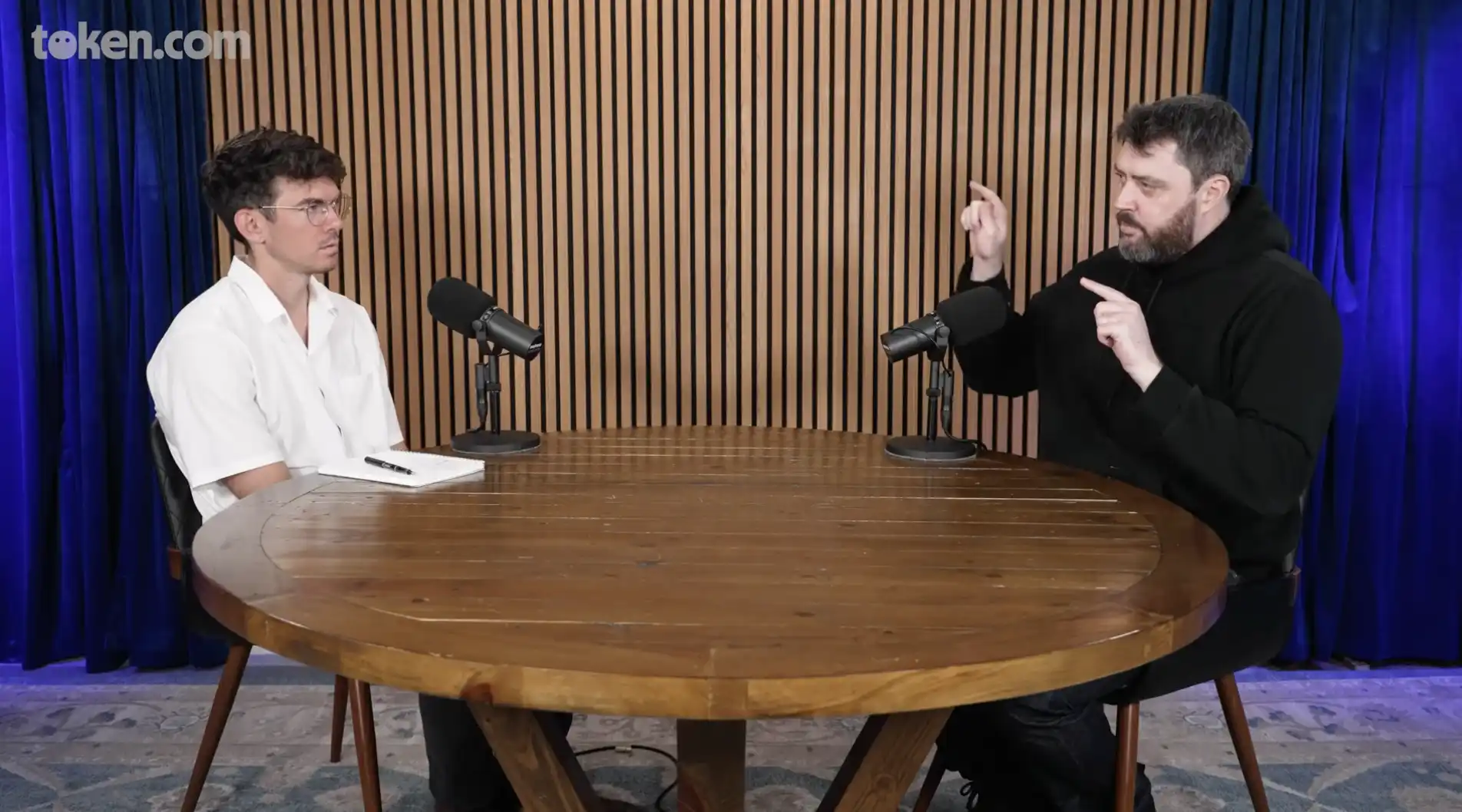
AC's Original Intentions for Entering the Crypto Industry
Host: Today, I am very excited to have the opportunity to sit down and chat with Andre. I have been closely following your progress in DeFi, and many people have been inspired by you. I have a question – you have produced a lot of results and achieved success in this field. I believe you are already financially free, so why do you continue to persist?
Andre Cronje: When I entered this field, I was already financially free. I have never been someone driven by money. For me, money has never been a compass, no matter what the reason. At that time, I was working as a CTO in a traditional financial institution, and my job was stable, and my income was sufficient. Even if I lost my job, my savings were enough to support me without any problems for about five years.
Initially, when I entered the crypto industry, I was actually a skeptic because it was full of various exaggerated claims. I don't know if you are familiar with my experience, but I started by performing code reviews on Medium blog posts. Many project companies would claim to have solved some distributed system challenge that had plagued the industry for decades, but when you looked at their code, you would find it was just a 'Hello World' – they hadn't done anything substantial; the disparity was very clear.
The reason I eventually stayed was that while 99% of things were garbage, that 1% was real. The underlying technology in this industry does offer a new financial paradigm, a better financial model. Despite traditional finance always claiming that crypto is a scam, from a data perspective, cryptocurrency fraud accounts for less than 0.02% of all financial fraud.
Of course, this is also a numbers game, with traditional finance being much larger in scale. But fundamentally, you can see on one side a highly opaque system, and on the other side an extremely open and transparent system that anyone can view.
The reason I stayed is very simple. I am inherently a problem solver, and there are still too many problems to be solved in this industry. In my previous career, most of the problems had already been solved, lacking true innovation. The banking industry, the financial industry, and even now, although there has been some innovation such as optimizing user experience (UX/UI) and launching mobile apps, these are not real problems for me. Of course, this is not a lack of respect for designers and UX/UI professionals; their work is very important, but it is not what excites my brain.
In the blockchain industry, especially now, there are not many people truly trying to innovate. In 2016 and 2017, when I first entered this industry, I could see multiple in-depth and valuable whitepapers every day. Now, it's considered lucky to see one decent whitepaper in six months. I can understand this change because I have been through it myself. For example, when the ACC (a protocol founded by Andre Cronje) was squeezed out of the industry, I understand that feeling and why many developers gradually gave up.
Furthermore, there are significant issues with the flow of funds, and most developers are inherently lazy. If a skilled developer has two choices — either spend five minutes issuing an ERC20 meme coin on Solana or Ethereum and potentially make millions of dollars, or spend several years writing papers, going through peer reviews, validating contracts, fixing bugs — the lazy choice is almost obvious.
Host: And besides, the lazy choice is actually more advantageous, right? Like meme coins are not secure now, right?
Andre Cronje: No, you are 100% secure because now we have relevant legislation that clearly states you are safe here. But this actually makes the situation worse, right? Because it further hinders those willing to take risks and innovate, which is a problem I have been pondering.
For example, when I initially launched my first token, it was seen as a community-driven model and a way to be immune to regulation. Since there was no fundraising, it was 100% community-driven, with no team allocation, hence there was no expectation of "what the team should do."
To some extent, it also provided a blueprint for others, indicating that there are indeed ways to bypass regulatory constraints. But at the same time, the incentive mechanism of this model also has issues — the team lacks economic or future development incentives, or even salary security.
So, I feel like people in the entire industry have now stopped trying to innovate, and I hope this situation can be reignited. Because what we see now is just the same codebase being redeployed countless times on different blockchains, L2s, or just renamed. I don't know, this phenomenon is just very exhausting.
Host: I am looking forward to delving deeper into this topic with you because I think you have strong views on how the industry can improve. I want to discuss your previous mention of the view that "99% of projects are scams or out to get the users." Do you think this ratio still holds true today?
Andre Cronje: I think the situation has actually worsened, but my view on this issue is somewhat contradictory. On one hand, in my earliest blog post titled "Building in DeFi Sux," I mentioned that the crypto industry votes with capital. If everyone pours money into low-quality copycat projects, the market will be flooded with these projects because they are easier to make money from. Investors are not willing to take the risk of entering a new protocol because the risk is too high, so they prefer to park their money in the "5062nd Aave fork project."
But on the other hand, I also have to admit that those who engage in the Meme coin craze would not have invested in DeFi infrastructure or truly decentralized financial protocols in the first place. So, now my mindset has shifted. In the past, I was angry about the misallocation of funds, but now I realize that those who put money into Meme coins or various copycat projects were not going to touch DeFi or any real decentralized financial protocol anyway.
Host: I think a fundamental assumption of the crypto industry is that all these assets have been financialized, right? These assets were priced from the beginning and could be freely traded. This means that the core of the entire ecosystem is actually built around asset trading. And those who truly entered the industry for the technology (although it has become a meme), are not mainstream either, or rather, they also want to make money from these things.
Andre Cronje: Yes, I don't blame developers with skills for creating Meme coins to make money. Even Vitalik has expressed a similar view, believing that you can first make that money but should then reinvest that money into the product or project you truly want to build. This situation may indeed exist. We can look at the ICO craze, where many people made a lot of money at that time, and they did reinvest a significant portion of that money back into the crypto ecosystem.
But I think the situation is different now. If you look at the flow of funds in the past compared to now, the crypto industry is increasingly integrating into the traditional financial system, which is both good and bad. In the early days, if you participated in a successful ICO, as an investor, you earned a significant amount of ETH on Ethereum—back then, there were no mature cash-out channels like stablecoins, so you had almost no way to take this money out of the ecosystem. So, you would choose to reinvest the funds into new projects, new ideas, or provide liquidity support.
However, the current Meme coin market situation is different, with more of a "money in - make a profit - money out" dynamic. Funds do not truly flow into a broader ecosystem. But as I mentioned earlier, you must adjust your mental model—this money was never meant to enter DeFi or other infrastructure projects.
Nevertheless, I do believe this has led to a new phenomenon—previously, a development team might have issued a token to make some money, but because it was difficult at the time to directly cash out this money to a bank account, they were more likely to reinvest the funds into a new protocol. Now, they can easily cash out this money to a bank account and simply retire with the cash.
Infrastructure Progress
Host: You mentioned the ICO era, do you think one of the problems back then was the lack of infrastructure? How significant was the infrastructure's flaw in all of this? After all, you built a highly successful product in that environment back then and now you are pushing for further infrastructure development. So, how big of an obstacle was the imperfect infrastructure in the past? How far are we from solving these infrastructure issues now?
Andre Cronje: Participation was indeed much more difficult back then; for example, registering on an exchange was harder, depositing money into exchange accounts was harder, acquiring Ethereum to participate was harder, and even setting up a wallet was quite a hassle. From an infrastructure perspective, everything was much more challenging back then.
At that time, we didn't even have on-chain oracles. Apart from ICO participation itself, just from a building perspective, oracles were almost non-existent. There weren't fast RPC calls, and many times you had to read data directly from smart contracts.
The infrastructure now has improved a lot; the experience required from teams is much lower, and they can launch products that we spent a lot of effort on in the past. Because the tools are more mature, infrastructure spending is higher, and user onboarding is smoother. If I were to make a rough estimate, I think we have achieved over 50% of infrastructure evolution, but not much more than that, probably somewhere between 50% and 60%.
Host: So, you believe this percentage is lower than what most people imagine?
Andre Cronje: It depends on how involved these people are in the industry; even on the blockchain level, there are still many issues to address. Moreover, technological advancement is not linear; it progresses in leaps and bounds, with each stage requiring a breakthrough to move to the next level. Just like the development of the internet, there were initially 56K dial-up modems, requiring specific hardware, a specific connection method, dialing in through a phone line, and needing a specific network card. These were the barriers at the time. But if you fast forward to today, you just need to open your phone, and all these things have been seamlessly integrated wirelessly.
The development path of blockchain is similar. I feel that it has not yet entered the fiber optic era, but if we were to use a traditional internet analogy, it is probably somewhere between the ISDN and ADSL stages, nearing the edge of the next major breakthrough. Ultimately, our infrastructure will only be truly successful when users no longer care which blockchain they are using. Just like when using an application, you don't consider whether its servers are from Hetzner or Amazon Web Services (AWS); these details are irrelevant to the user. Blockchain applications also need to achieve this kind of experience. It is only when the infrastructure evolves to this level that it can be considered truly mature.
Developer Ecosystem
Host: Do you think it's worth building applications now? You used to think it was worth building applications, but then shifted to infrastructure development. I'm also curious about this transition of yours. But if we have only solved half of the infrastructure problems now, shouldn't we focus more on infrastructure?
Andre Cronje: Using an internet analogy, this is like waiting until after the fiber optic network is popularized to start developing applications. But in reality, there were decades of valuable applications before the advent of fiber optics. Of course, you could say, looking back at MySpace, does it still have value? Now, it is seen as a failed project, but at that time, its existence was necessary because it was platforms like MySpace that paved the way for later social media platforms.
The current investment environment tends to look for companies that can last for centuries, but that's not always the case. Even if some companies will eventually be replaced, they still have value in their existence. The entire industry needs this kind of iteration. People must start building applications now so that future applications can be developed.
I like to use another analogy to illustrate this issue. If you look at all the major applications today, their developers basically grew up in the internet age. I was born before the internet appeared, so my way of thinking is not as "native" as theirs.
Even today, I still find social media very unfamiliar and unnatural, I don't like it at all, so I only use Twitter. But for those who grew up with the internet from an early age, they can proficiently use over 20 different applications simultaneously, which makes them better understand this field than I do and allows them to develop the next generation of applications, something that I cannot do. I think the development of blockchain is similar. Those who can create killer applications are often people who have been exposed to blockchain from a young age, not people who entered the field in their 30s.
Host: So do you think this is a difference between "crypto natives" and "non-crypto natives"? Or is it more like a difference between the "mass market" and the "non-mass market"? Do you see what I mean?
Andre Cronje: I think the end application will make this issue irrelevant. People won't think about whether it's a "decentralized Uber" or a "centralized Uber"; they will only care about which product is easier to use. Therefore, the reason why the decentralized internet will eventually become popular is that its design itself better aligns with incentive mechanisms and can more directly target consumers without the need for as many intermediaries.
For example, you could have a decentralized YouTube. Instead of having creators at the mercy of the massive YouTube platform, going through processes like ad review and revenue sharing, it's better to achieve more direct earnings through a decentralized approach.
In fact, even within YouTube itself, we have already seen this trend. Previously, creators mainly relied on YouTube's ad revenue, but now they are more inclined towards in-video sponsorships because it's a more direct way and helps build better user relationships. A decentralized version of YouTube is essentially optimized for this model.
Host: In the Ethereum whitepaper and some early literature, Vitalik mentioned the concept of a "decentralized Uber." But now, this term has almost become a meme, and many people believe that the development of the crypto industry will not actually move in this direction. However, from what you're saying, you seem to still endorse this view, at least that it might be achieved someday in the future?
Andre Cronje: I think everyone always compares the current internet with current blockchain applications, and such comparisons only lead to disappointment. If we change our mindset, for example, on-chain gaming is a good example. I actually quite like on-chain gaming. Why? Because it reminds me of those rough Flash games from the early 2000s—you had to download them into a Flash browser, play for a few minutes, then crash, and wait 4 minutes to reload to continue playing. But if you compare on-chain gaming with those Flash games, the experience of on-chain gaming is already great.
The problem is when people compare it with today's AAA-grade 3D games, like those ultra-high-definition, next-gen graphic games. In that comparison, on-chain gaming naturally seems terrible.
Host: Yes, it's like running a small game on a graphing calculator; of course, you can't expect its experience to be compared to an Xbox.
Andre Cronje: Exactly, right? We are currently limited by hardware and capabilities. In fact, there are many similar comparisons. Look, back in the early days of the internet, it only made sense in military operations and financial prototypes. Besides military applications, what we see now in the blockchain field is a similar situation. These are the first areas that truly demonstrate value because people are willing to invest money into them to build infrastructure to gain access. At that time, for a megabyte of data, you had to pay thousands of dollars per month. Now, what we're seeing with gas fees is a similar situation; you're paying for bandwidth costs. Although it's still expensive, it's precisely because of this that only certain types of applications can exist.
However, we are witnessing this transition happening; it's just that this process is slower than market cycles and people's attention spans. People will ask, "Why don't we have this now?" But in reality, we will have such a thing, but it might take another ten years.
Host: So, how confident are you in this future development? Do you believe that cryptocurrency can really change the entire world?
Andre Cronje: I don't believe that cryptocurrency will necessarily 'consume' the whole world. You know, in some cases, centralization might be better. But at the same time, if it's centralized, then it will be more attractive. However, there will also be people who prefer a decentralized way. For example, if you are a big bank, and all your data is stored in a specific database, like Oracle, you would definitely be willing to pay for an enterprise license for Oracle because you want dedicated personnel to solve your problems at any time.
You wouldn't choose the decentralized version, but there will also be a crowd that is more inclined towards a decentralized way. Look at some African countries where they often have community-based banks, where one person holds everyone's money.
For example, Stockfells, I think that's what they are called. This is an operational example because it provides better accounting, everyone can see it, and it still maintains the same trust assumption.
So, I don't think it will completely replace the traditional centralized world, but I do believe it can offer advantages in many areas. For instance, if you look at the bank settlement systems, they are extremely outdated and based on daily settlement, full of opportunities for fraud. Many times people just send Excel spreadsheets via email, and by tokenizing this small step, it could save banks and clearinghouses trillions of dollars, and this change could be achieved in a very short time.
Host: So, in order to reach the stage you mentioned where consumers and businesses can choose to use decentralized or centralized products, what lessons does the industry need to learn?
Because at some point in your career, you seemed to be somewhat tired or weary of the industry. So, the first question is, how tired are you of the industry now? And the second question is, what do you think we should do, how should the industry move forward?
AC's Reflection on the Crypto Industry
Andre Cronje: Currently, I am less tired than before, but this is not because the industry has changed. I used to be very tired because on one side, the blockchain community hardly offered any support, and on the other side, entities like the U.S. Securities and Exchange Commission (SEC) were attacking every day.
Back then, the situation was such that there was no reason for developers to stay and work. Part of the reason was that there had been a significant shift in blockchain participants. You know, when I first started developing in 2017, 2018, almost all participants were technical people. So the conversations we had were always very valuable. By 2021, 2022, participants suddenly became mostly non-technical people, more focused on money, which completely changed the nature of the conversations and made me feel very alienated.
I don't see a way to solve this problem because it's the result of more people entering the market. I think from that perspective, it is almost inevitable. Teams and developers need to adapt. I don't know how likely that is, but it's a real issue on the regulatory side.
You know, we have a grace period of four years to see what we can do in these four years. But four years from now, it could flip around. That's the issue I think everyone must keep in mind. If we can optimize during these four years, integrate blockchain into as many places as possible, it becomes almost irremovable. Then we will be in a very different situation, which is our responsibility as a community.
I think the lesson is that people need to have more tolerance for developers and teams, especially those trying new things. But I don't think that's going to happen because if you look at the crypto community now, what it has turned into, I always try to get people to understand that the mindset model is different when you go from someone posting on an internet forum to meeting them in person—they may become more aggressive.
On top of that, with anonymity, they don't need to take responsibility for their words, which can make them more hostile and aggressive. Now, suppose it's like a sports match; there are two teams competing, there will be more attacks and insults during the game.
Now, suppose there is a financial incentive. It's like a vicious cycle; the worst of human behavior is on display here. We are still incentivizing this behavior. I don't know how this situation changes. For me personally, I've just become more resilient. You know, when I started, going back to that technical group, my standard for whether people were satisfied was 99%.
If someone said something hurtful or had a different opinion, I would reach out to them privately. I talked to them, called them, took the time to understand their perspective. In ninety percent of cases, those people ended up becoming my friends or allies, so back then you could convert these people. By 2021, after a lot of introspection and a shift in my industry awareness, I changed this standard from "let me satisfy 99% of people" to "let me satisfy 51% of people".
I'm not looking to just satisfy 20% of the real audience and then ignore the remaining 80%. But this is also a process I've been through, something I had to learn, and almost every team that enters this ecosystem will go through this process. Many teams will be eliminated during this process.
You know, I think the current participants are probably only around 5% of what they used to be. In the past few years, there have been more builders leaving this space than new ones entering. All the true builders are the people I talked to back in those days.
Host: You mentioned the developer issue in the crypto industry, the lack of talent and builders for those interesting projects. So, what do you think future developers should be like? How do we attract them to enter this field, especially to build projects here?
Andre Cronje: That's a good question, and I don't have an answer. If I knew what to do, I would have done it already. Right now, I think what we're seeing is a revival of the "Silicon Valley VC-backed" model, where all projects are competing with each other, but I think it's a bit meaningless. However, during that time, there will indeed be some applications that will come out, and people will interact with them.
The reason I like building smart contracts is because they have a strong permissionless and composable nature. You know, everything I build is based on platforms like Uniswap, Alpha, Compound, etc., and I never need to ask for permission from them. I have never talked to any team or contacted anyone on any platform I've built. So, anyone playing at home deploying a smart contract has the opportunity to make a difference, and eventually, this may develop into something significant.
I think what we need to optimize is perhaps that continued composability and open-source nature. Because that is precisely the key to attracting and motivating developers to get involved. But the trend we are seeing now is that more and more projects are moving towards closed source rather than an open environment.
This way, there is no way to incentivize others to build on top of what you have, because they simply cannot, you've locked them out from the start. So, we may need to return to a more open-source culture. When I say open-source, I mean anyone can build on top of it, rather than like my code now, where I have to put a license on it to protect it. The current situation is that it's difficult to truly open-source code as others might fork it and add a token within 24 hours, which is not ideal.
Host: Yes, sometimes I like to look optimistically at cryptocurrency, much like how I view platforms like Shopify or WordPress. I think some of your early projects exemplify this, they are like modular things, building on top of other things. In fact, some of the constraints you dealt with back then made the product itself more interesting.
Andre Cronje: Right? Exactly. One quick lesson I learned in the Yearn project is, don't try to solve all problems. Throw some problems out there, and you often get a better solution. Sometimes you get a better solution, but usually you get a better solution. That's the trade-off.
Andre Cronje: But that's precisely it, you know, I've been thinking, why is Yearn more successful than other similar yield aggregators? The reason is simple; those yield aggregators didn't prepare well for others to build on top of them. Many of them have treasuries, but they didn't tokenize these treasuries. So when I deposit funds, I can't do anything. The first step I took was, well, I need to tokenize these deposits so they can be used elsewhere. That's the key. You need to optimize for composability so others can truly build something, which is a different design. You have to think differently about how to build because just building a product is easy, but if no one can build on top of them, then it's meaningless. So you have to keep thinking, how do you open up this system to facilitate the building of other things? People will build something; I don't even know what they'll build. You can do this in FIFA and the entire cryptocurrency space.
Host: Additionally, I know some of your future products are inspired by the problems you encountered while building the current product. We've seen this in Web2, where people often say build for your five-year-ago self or build for your own problems. I feel like in the crypto space, sometimes we lack that kind of thinking.
Andre Cronje: I mean, yeah, we do have that in the crypto space. I often hear this statement. I mean, many of the great products we have today are built by teams that forked out of the original team, they forked out of the original team and kept building. That's also why I say most of it is the same set of builders because they come from the same original OG team, right? But specifically, because they've been there, worked there, they've seen, hey, I can do this thing, and maybe that company doesn't want to do it, so they fork out and do their thing. But I agree we can definitely do more in this regard.
I think we can think more about how to make this thing more composable because that's also been a significant change over the years. Even looking at Compound and Uniswap, their initial v1, v2 versions were optimized for composability, very easy to build on top of. You could easily extend their interfaces and functionality. The current stuff might be better products in terms of consumer-facing, but worse in terms of builder integration, right? Much more complex, much more difficult. You need to communicate with the teams, and once you need to do that, you've already excluded 99% of the builders because they don't have a channel to reach out to you. So, yeah, actually, I haven't really thought about it this way, but as we continue this conversation, I think the most lacking aspect right now is that mindset of "how do I build for others on top of me" because I think that's completely missing.
Host: What are some applications? You mentioned this 99% and 1% thing, which means there are still some applications that interest and excite you. What are some applications currently that interest you?
Andre Cronje: So my main interest lies in applications that are trying to innovate and explore new things. I don't think they have reached the scale of the past. But I see some teams attempting, like the Shadow Guys, with their Shadow Exchange on Sonic. They are trying new gameplay in tokenomics, which I think no one has done before. I also believe tokenomics is a vastly undeveloped area. I think we still have a lot of work to do in this regard. But everyone, because it's highly financial, is very afraid to try anything new in this area. I don't blame them; it's scary because you're tying your public image to something that can fluctuate up and down. But we still have a lot of work to do in this area, and they are doing great work.
Andre Cronje: Silo is another team that is releasing some new tokenomics. I also really like their overall design philosophy. Now, in terms of gaming content coming out, I think there are many good things happening in terms of account abstraction, economic abstraction, user interfaces, and things like Pasky. I've played some on-chain games like Faith, Adventure, Sacrifice for Kingdom. Who else is truly innovating? Metropolis is working on a new dlmm AMM, which is great. I know there are things happening in the yield space, with Spectral and Pendle being the main players there. It's not an area I'm very familiar with, but there's definitely more going on there.
I think we're starting to see on-chain options and other derivatives go live. In the past, option pricing needed to be very accurate and very cheap, which you couldn't achieve on-chain because you didn't have the data and the fees were prohibitively high. Now we're starting to see a resurgence of these, but I think, like UNISWAP and AMS did for trading, we haven't seen a similar breakthrough for options, futures, and other derivatives. So I definitely think that will come next. The guys playing Margin Zero Strike are also experimenting and trying new things. So I'm keeping a close eye on them.
I think there's more work to be done in terms of on-chain purposes, which is one of the few innovations we're seeing, right? For example, the GMX model, Hyperliquid model. There's another one I'm forgetting right now because it's, you know, liquidity pools as the counterparty rather than exchanges as the counterparty. But I think there's still a step to go because right now your liquidity providers still bear aggregation risk in these pools, right? I think there's a way to make them only bear spot risk, just like the risk you bear in Uniswap. Insurance, I think, is another primitive we will see more of on-chain. Currently, not much is happening in this area; most of it is still finance-related. I think we'll see more in the next 6 to 12 months. But as fees go down and disappear, as wallets are no longer a necessity, as you stop realizing you're on the blockchain, I think we'll see more in the gaming and social layers.
Sonic Ecosystem
Host: Many of the projects you've mentioned seem to be part of the Sonic ecosystem or are moving towards it. Polymarket is an application that has been widely discussed, as well as Pump Fun. Are these applications attractive to you? Are there any other applications currently not on Sonic that you would like to see brought into your ecosystem?
Andre Cronje: Polymarket might be, definitely. I think they've done some really interesting things in the prediction market space, and I think they can do more. I feel like they are a bit hands-tied, you know, because of things like the lost account, let's see, the FTC thing, as they can be more than just a prediction market. You know, we see a new protocol there, True Markets, which uses the concept of prediction markets to do user-sourced articles, and I think that's a very novel idea, right?
Host: Yes, insurance also fits into that.
Andre Cronje: Insurance does indeed fit into that because it's a decentralized on-chain insurance issue, you still need a third party to say, okay, this is a payout. As long as you need that third party, you might as well do it off-chain. You know, there's no reason to do it on-chain. But once you have these verifiable sources, suddenly there's a reason to do it on-chain.
What else is interesting? I think we've got our major players that we want, you know, like some of the good gaming content. I think the guys from Fantasy Top are building some cool stuff. I don't mind them rolling out Pump; I think it's a very niche product that only works in its current position. I haven't seen their multi-gen strategy. There are some infrareds, like I would like to see Fantom Wallet come over because I do think they are almost at the stage where people are really realizing the speed we have. Because currently, the slowest part of interacting with Sonic is the wallet. That's where you spend 99% of the time. Because that moment from you clicking from the app to the wallet, that's instant. And then from the wallet submission, that's also instant. But the part in the middle that loads is the actual slow part. Now, there might be a longer list, but you know, these just pop into my head.
Host: I feel like you're particularly passionate about applications; you have a reputation as an app builder. Why did you eventually shift your focus to infrastructure?
Andre Cronje: Well, I mean, I did Fantom before doing any apps. So, you know, I've been on Fantom since 2018. So the focus has always been, and I realized that a lot of the debt we're not seeing is because the underlying infrastructure layer is flawed. The most obvious thing back then was, you know, something as simple as proof of work was designed to be slow. Because it's not designed for speed, it's designed for security, right? So just building a better consensus, you know, the abft consensus that we launched in 2019, which we're still using in Sonic now, is exactly the same one. I still think it's the gold standard in consensus.
But I actually turned to the application layer initially because I built Yearn, because I was managing the Fantom Treasury, and I got tired of moving it between protocols. So I thought, I'm a programmer. I'm going to build an app to do this for me. And then all other things spiraled out of that, as mentioned earlier, you know, it's an idea inspired by the problems I saw in that specific thing.
So, you know, from Yearn to Boldkeeper, because we were facing issues on Yearn now, I needed to run a bunch of off-chain infrastructure bots and keepers to handle moving and liquidating things. So I thought, why can't we build an on-chain version? You know, keeper works well. It's still being used by Maker. It's still being used by a bunch of on-chain managed stuff. Because the idea is simple. You know, I pay someone to do on-chain infrastructure.
And then I think I started getting obsessed with more traditional banking issues, such as capital efficiency, i.e., IMMS, lending, my remaining work basically focused on that. When I built and when I released solidly, that was already my new AMA model, not as perfect as I have it now, but it was a pretty good implementation at the time.
At that time, I began to realize that, look, there are some underlying layer issues here that we need to solve in a different way before I can actually release my next app. That's what we've always been focusing on with Sonic, you know, Sonic is the pinnacle of all this. Like, it's not just the speed and the fact that it's fast. I mean, that's what I think you need to compete in today's market, but that's not going to make you stand out in today's market. Because even if we're faster, even if our finality is lower, the difference in user experience, you're talking about 400 milliseconds versus 300 milliseconds. Users won't notice the blink of an eye.
So the real thing we started to focus on, you know, is fee monetization, where the app gets 90% fee return, because that already means you can start building a lot of different things. And then there's fee subsidy, so using this 90% of the app that can be returned and subsidize new users, so they don't even need gas and other things. And then it's like native abstraction, so you don't need a wallet, because we want to reach a point where apps built on top of us, their users don't need to know they're interacting with us. And when we get there, I can release my next series of apps, because they need that. So again, you know, it's not just about the benefits of building in this space is that I am building things for myself, and then coincidentally, it might benefit all of our builders. So that's the gospel, right? But I mean, ultimately, I'm selfishly busy doing all these things for myself.
Host: Interesting. So many of Fantom's designs are inspired by the issues you encountered there. Do you still have the drive to explore new concepts in the future? You've already to some extent explored the fee-sharing mechanism, like Berachain, who are trying to integrate DeFi into the base layer. Are you interested in that?
Andre Cronje: I mean, obviously, we are doing fee monetization. So I fully agree that incentive alignment has a fundamental issue. You know, because incentives are designed based on the Bitcoin model. And in the Bitcoin model, you only have one participant, which is the miner. So everything obviously flows to the miner. There are no other participants. And every blockchain sensor just replicated this model instead of thinking, well, who are the other participants? And the other participants are obviously the applications. That's why, you know, I think our approach might be too simplistic, just saying, hey, this contract got 90% of its gas spent because that automatically aligns with what people are willing to use for applications.
Andre Cronje: And I think the model of Berachain, again, I like that they are attempting to address the incentive alignment issue. It is a problem that needs to be solved, as it is currently wrong for it all to flow to validators. That is a waste. That's what we see. Perhaps not the only reason, but from what I see, that's why we see Uniswap launching Unichain. Because they saw all the fees generated for Ethereum, $2.8 billion, and they said, we didn't get a dime of that.
Let's launch our own chain so that we can capture that $2.8 billion. But launching a chain is not as easy as people on X would convince you. You can't just deploy a Layer 2 as easily as clicking a button. Technically, yeah, you'll have it technically, but you don't have the infrastructure, you don't have the integrations, you don't have third parties, you're missing a lot of things, and you need to spend tens of millions to get there. So instead, it should happen on a chain that already has existing infrastructure. You see, we see different applications approaching it in different ways, like Arbitrum, trying to build their native fee switch so that you can use different tokens. I know they eventually removed it, but that's still them trying, well, how do we incentivize our applications? Avalanche is obviously there, they call it the subnet model. So I think a lot of people are realizing, hey, there's an incentive alignment issue here.
My only comment on Berachain is that it requires too much active involvement from validators. I think that's a different, team of people. We run our Devops or great to run Devops, but I don't want them to be confused, needing like, you know, to vote on protocols or what pool or something should go where. I think especially when it comes to validators, less is more. You just want them to secure your network. You know, you want someone to install it on hardware in some bunker that can survive for 10 years, and they don't touch it. Like, that is ideal because it should provide network security. The more you try to do on top of it, the more attack surface and areas you have. So that's my only gripe with their model, but I do think it's definitely moving in the right direction, you know, hey, rewards shouldn't all go to validators. It should go to applications. And then what applications do with that, that's up to them, you know, whether they pass it on to their users or use it as their own fee model, anyway.
Host: You mentioned that you are still interested in building applications. It would be too remiss of me not to ask you what you are most interested in.
Andre Cronje: I've mentioned a lot of things already, you know, there's a different MMS method now. We basically have two formulas. You know, you have constant product, which is Uniswap, or you have constant sum, which is stable exchange. We haven't seen anything else out there right now. We have centralized liquidity that allows you to shape-shift. But in the end, it's still constant product. Just like it's still using the quote. At the end of the day.
I'm trying not to be specific, but anyway, I built a new AMM that has a self-referential volatility curve. So what that means is the more volatile the asset, the closer it is to constant product. The less volatile the asset, the closer it is to centralized. And the beauty of that is because my north star always is, I foresee a world where 99.9% of real-world assets are on-chain. Now you can't use constant product for that. You can't use constant sum for that. You need something like, 80% constant sum and 20% constant product. So this is exactly what this does. So every time there's a trade and it measures volatility, it has near off deviations, one hour, one day, one month, 200-day moving average, anyway, and then annualized. So that informs the quote. So it's already given you a better quote, it's already given you a better pricing, it gives LPs more fees. Now on top of that, I believe there's still a new way to do the lending market.
This is actually something I released in Solidly. I don't know how much time we have, so you must tell me if you want to interrupt me at any point, but I'll try to quickly go over it. So in Solidly, I've introduced a concept called reserve-weighted asset pricing. So, Uniswap introduced TWAP. My issue with TWAP is that it gives you a fixed price regardless of size. So if I sell one unit, it will tell me it's worth $3. If I tell it I'm selling a trillion units, it will still tell me it's worth $3. That's just not right. If I give you 1000 of this thing, what price are you going to give me? What I primarily want this for on-chain is twofold, one is for settlement notification, two is because the reverse of that issue is, if I give you, how much of another asset can I settle with this asset?
Now if I can answer that, that means I know my loan-to-value ratio. In other words, how much can I borrow against this asset? So now you can start lending. So now the next question is, you can't lend if you don't know what your rate model is because you need to know the peak to ensure LP safety. In crypto, we have two rate models. We have volatile and stable. We've already had the volatility input. So now I can already have these charts based on the same input, input into my AMM. So now I can make a lending market. So now I can borrow B against A, I can borrow A against B. Next, because I can borrow A against B and B against A, this means I can have implicit leverage. So once someone wants to trade on this AMM, they can create a leveraged position. And leverage is a function of LTV. So leverage is also implicit relative to the actual pool size. So the more liquidity, the higher the leverage. So these things become self-referential again. And then because you have leverage and rates, you can have implicit perpetual positions, which only the people providing liquidity in the AMM have counterparty risk. That's what I mentioned earlier, I think it's still going to get solved.
I've solved it, but it hasn't been released yet. And then the last one, because you already have volatility and all these other data points, you can start writing options in the same AMM. You do a few perpetual options until you get the applied volatility, and then you can start doing standard European and American options. I have some other things in there.
Host: So how is the development of these features going?
Andre Cronje: Right now? It's all done. The only reason we haven't launched yet is that we are waiting for changes in the regulatory environment because this falls squarely under the CFTC's (Commodity Futures Trading Commission) purview. So we are waiting to see, you know, Brian's new appointment and their stance on these kinds of things. Because this will determine whether we can launch this product with or without derivatives, right?
Host: Alright. Do you think these features will be integrated together? Like you're looking at this all-in-one super app in the financial space, or basically that kind of thing.
Andre Cronje: Again, this is built around the idea of composability. So I think all applications in our ecosystem can interact in some way.
Host: Founders should focus on this model because as we're discussing, this solution leads to this problem, but this solution and application, that's one of the beauties of cryptocurrency.
Andre Cronje: This platform. So you need to leverage composability and create problems for people to solve.
Host: Additionally, you know, in the crypto space, there's never a shortage of creativity. Sometimes people will say, oh, this has already been done. No, buddy, you need to be more creative.
Andre Cronje: I mean, look, the reason I didn't initially do Yearn was that I thought, oh, others are already doing this, why bother building it again? In my career, I've stopped launching a lot of apps because of this. Or if I see something not being built, I tell myself, oh, but this is such a basic idea, someone must have already done it and failed. That's why it doesn't exist. In fact, it's garbage. Just tried nine out of ten times. The reason it doesn't exist is that I thought of it too early, right.
Host: What is the biggest regret in your crypto career?
Andre Cronje: Oh, my, that's a long list. We don't have time to discuss that. I mean, everything I would go back and change. I always used to blame participants because, you know, they put money into a contract, someone sees my deployer has deployed it, just because I didn't change it in half an hour, you shouldn't be putting millions of dollars in it. But at the same time, I should acknowledge that I had so much attention that I needed to communicate better, right? You know, since then I've learned to communicate better. Because that was the issue. I needed to clearly state that unless I announce X on these platforms, it's not true, stay away.
I had to start doing things like address cycling, where every time I did something new, I had to use a new address. This is definitely one area where I will change. Another really big regret might be my trust in Multichain. I think we really got burnt because we were told we were part of the original ceremony. So from our perspective, everyone destroyed those original validator keys, and there was no way to recreate them. We didn't know their CEO had been holding onto the backup key of the original ceremony so he could have full access.
Host: Has this affected the current bridging infrastructure?
Andre Cronje: It certainly has impacted a lot of things, and we've learned a lot from it. You know, this is also because Fantom launched even before bridging infrastructure existed. I mean, now every blockchain has its own standard bridging, Sonic does too. You need this now. However, you know, at the time, we might have been a bit naively overly reliant on decentralization, thinking it should be other parties connecting, not wanting to do it ourselves because we felt we didn't have the in-house expertise. Turns out you have to do that, so it's definitely a lesson. Most of my things.
The things I regret and what I changed mainly are about communication and proper expectation management. Because the way I used to talk to people in the past is not the way I have to talk to people now. It is, I mean, I see this happening to Vitalik now too, right? Because he's been away from X and Twitter for so long, and now that he's back, almost every piece of content he releases gets attacked. That's because he needs to adapt to the change. You can't talk to the on-chain tech crowd like he used to.
I think these are lessons I have to learn. I regret that because of these lessons, people lost money, that's for sure. If there was a way it could be reversed, I would. But at the same time, you know, these same lessons also shaped who I am today. So, I don't know. It's always a difficult question to answer, right? Because you fundamentally change who you are. I mean, if these things hadn't happened, I wouldn't have learned these lessons. And then maybe in the future, something even bigger, something worse might happen.
Host: Additionally, sticking with it is almost a form of punishment, right?
Andre Cronje: No.
Host: You know, if you leave, you got hacked for 600 million and leave, no one will ever mention your name again. But if you keep trying to develop it.
Andre Cronje: It always comes back, doesn't it? People remind you of it every day. So all you need to do is, as I mentioned before, you need to grow thick skin. I think that's the only thing you can do.
AC's Ultimate Goal
Host: You are truly an icon in this field, I think you have really influenced the development of DeFi in many ways. People look up to you in many aspects, you are very influential in this field. What do you hope to create with your legacy, what is your ultimate goal in the crypto space?
Andre Cronje: Ask me this question again in five years, the answer will be different. But for now, it's to get the finance/Coinbase/whatever your North Star is exchange fully on-chain. By that I mean, including fiat on and off-ramp, the user experience being the same or even better. That is my goal for the next two to five years, the biggest crypto exchanges have to be a DEX, and I think we'll get there. I think finally we're at the stage of infrastructure and tooling, which will be rolled out this year. Shortly after, it will completely cannibalize centralized exchanges because the barrier to entry for DEXs will be lower than centralized exchanges. So I think that's the big goal for the next five years. And then obviously, further into traditional finance, to a point where it's very hard to remove. I think we need to ensure that over the next four years after the current government. And then we'll see. But what I mean is, we'll then reach a stage where the infrastructure can start doing gaming and social. I think you'll see a lot of other cool things that I can't even theorize about now.
Host: Yes, that's very cool. So you are really interested in embedding the crypto layer into the social layer.
Andre Cronje: Yes, it needs to become part of the social layer, the tech layer, the settlement layer, everything.
Host: Fantastic. Andre, I think our time for today has come to an end. It was truly a pleasure talking to you. Thank you very much for your time.
Andre Cronje: Thank you.
猜你喜歡

這些新創公司正在無需資料中心的情況下建立先進AI模型
CEX與Wallet之後,OKX入局支付
RWA永續產品危機:為什麼GLP模式註定撐不住RWA永續?
Sentient深度研報:獲8,500萬美元融資,建置去中心化AGI新範式
專訪Virtuals聯創empty:AI 創業不需要大量資金,Crypto是答案之一
今年 2 月,Base 生態中的 AI 協議 Virtuals 宣布跨鏈至 Solana,然而加密市場隨後進入流動性緊縮期,AI Agent 板塊從人聲鼎沸轉為低迷,Virtuals 生態也陷入一段蟄伏期。
三月初,BlockBeats 對 Virtuals 共同創辦人 empty 進行了一次專訪。彼時,團隊尚未推出如今被廣泛討論的 Genesis Launch 機制,但已在內部持續探索如何透過機制設計激活舊資產、提高用戶參與度,並重構代幣發行與融資路徑。那是一個市場尚未復甦、生態尚處冷啟動階段的時間點,Virtuals 團隊卻沒有停下腳步,而是在努力尋找新的產品方向和敘事突破口。
兩個月過去,AI Agent 板塊重新升溫,Virtuals 代幣反彈超 150%,Genesis 機製成為帶動生態回暖的重要觸發器。從積分獲取規則的動態調整,到專案參與熱度的持續上升,再到「新代幣帶老代幣」的機制閉環,Virtuals 逐漸走出寒冬,並再次站上討論焦點。
值得注意的是,Virtuals 的 Genesis 機制與近期 Binance 推出的 Alpha 積分系統有一些相似之處,評估用戶在 Alpha 和幣安錢包生態系統內的參與度,決定用戶 Alpha 代幣空投的資格。用戶可透過持倉、交易等方式獲得積分,積分越高,參與新項目的機會越大。透過積分系統篩選使用者、分配資源,專案方能夠更有效地激勵社群參與,提升專案的公平性和透明度。 Virtuals 和 Binance 的探索,或許預示著加密融資的新趨勢正在形成。
回看這次對話,empty 在專訪中所展現出的思路與判斷,正在一步步顯現其前瞻性,這不僅是一場圍繞打新機制的訪談,更是一次關於“資產驅動型 AI 協議”的路徑構建與底層邏輯的深度討論。
BlockBeats:可以簡單分享一下最近團隊主要在忙些什麼?
empty:目前我們的工作重點主要有兩個部分。第一部分,我們希望將 Virtuals 打造成一個類似「華爾街」的代理人(Agent)服務平台。設想一下,如果你是專注於 Agent 或 Agent 團隊建立的創業者,從融資、發幣到流動性退出,整個流程都需要係統性的支援。我們希望為真正專注於 Agent 和 AI 研發的團隊,提供這一整套服務體系,讓他們可以把精力集中在底層能力的開發上,而不用為其他環節分心。這一塊的工作其實也包括了與散戶買賣相關的內容,後面可以再詳細展開。
第二部分,我們正在深入推進 AI 相關的佈局。我們的願景是建立一個 AI 社會,希望每個 Agent 都能聚焦自身優勢,同時透過彼此之間的協作,實現更大的價值。因此,最近我們發布了一個新的標準——ACP(Agent Communication Protocol),目的是讓不同的 Agent 能夠相互互動、協作,共同推動各自的業務目標。這是目前我們主要在推進的兩大方向。
BlockBeats:可以再展開說說嗎?
empty:在我看來,其實我們面對的客戶群可以分為三類:第一類是專注於開發 Agent 的團隊;第二類是投資者,包括散戶、基金等各種投資機構;第三類則是 C 端用戶,也就是最終使用 Agent 產品的個人用戶。
不過,我們主要的精力其實是放在前兩大類──也就是團隊和投資人。對於 C 端用戶這一塊,我們並不打算直接介入,而是希望各個 Agent 團隊能夠自己解決 C 端市場的拓展問題。
此外,我們也認為,Agent 與 Agent 之間的交互作用應該成為一個核心模式。簡單來說,就是未來的服務更多應該是由一個 Agent 銷售或提供給另一個 Agent,而不是單純賣給人類使用者。因此,在團隊的 BD 工作中,我們也積極幫助現有的 AI 團隊尋找這樣的客戶和合作機會。
BlockBeats:大概有一些什麼具體案例呢?
empty:「華爾街」說白了就是圍繞資本運作體系的建設,假設你是一個技術團隊,想要融資,傳統路徑是去找 VC 募資,拿到資金後開始發展。如果專案做得不錯,接下來可能會考慮進入二級市場,例如在紐約證券交易所上市,或是在 Binance 這樣的交易所上幣,實現流動性退出。
我們希望把這一整套流程打通-從早期融資,到專案開發過程中對資金的靈活使用需求,再到最終二級市場的流動性退出,全部覆蓋和完善,這是我們希望補齊的一條完整鏈條。
而這一部分的工作和 ACP(Agent Communication Protocol)是不同的,ACP 更多是關於 Agent 與 Agent 之間交互標準的製定,不直接涉及資本運作系統。
BlockBeats:它和現在 Virtuals 的這個 Launchpad 有什麼差別呢?資金也是從 C 端來是嗎?
empty:其實現在你在 Virtuals 上發幣,如果沒有真正融到資金,那就只是發了一個幣而已,實際是融不到錢的。我們目前能提供的服務,是透過設定買賣時的交易稅機制,從中提取一部分稅收回饋給創業者,希望這部分能成為他們的現金流來源。
不過,問題其實還分成兩塊。第一是如何真正幫助團隊完成融資,這個問題目前我們還沒有徹底解決。第二是關於目前專案發行模式本身存在的結構性問題。簡單來說,現在的版本有點像過去 Pumpfun 那種模式——也就是當專案剛上線時,部分籌碼就被外賣給了外部投資人。但現實是,目前整個市場上存在著太多機構集團和「狙擊手」。
當一個真正優秀的專案一發幣,還沒真正觸達普通散戶,就已經被機構在極高估值時搶購了。等到散戶能夠接觸到時,往往價格已經偏高,專案品質也可能變差,整個價值發行體係被扭曲。
針對這個問題,我們希望探索一種新的發幣和融資模式,目的是讓專案方的籌碼既不是死死握在自己手裡,也不是優先流向英文圈的大機構,而是能夠真正留給那些相信專案、願意長期支持專案的普通投資者手中。我們正在思考該如何設計這樣一個新的發行機制,來解決這個根本問題。
BlockBeats:新模式的具體想法會是什麼樣子呢?
empty:關於資金這一塊,其實我們目前還沒有完全想透。現階段來看,最直接的方式還是去找 VC 融資,或是採取公開預售等形式進行資金募集。不過說實話,我個人對傳統的公開預售模式並不是特別認同。
在「公平發售」這件事上,我們正在嘗試換一個角度來思考-希望能從「reputation」出發,重新設計機制。
具體來說,就是如果你對整個 Virtuals 生態有貢獻,例如早期參與、提供支持或建設,那麼你就可以在後續購買優質代幣時享有更高的優先權。透過這種方式,我們希望把資源更多留給真正支持生態發展的用戶,而不是由短期套利的人主導。
BlockBeats:您會不會考慮採用類似之前 Fjord Foundry 推出的 LBP 模式,或者像 Daos.fun 那種採用白名單機制的模式。這些模式在某種程度上,和您剛才提到的「對生態有貢獻的人享有優先權」的想法是有些相似的。不過,這類做法後來也引發了一些爭議,例如白名單內部操作、分配不公等問題。 Virtuals 在設計時會考慮借鏡這些模式的優點,或有針對性地規避類似的問題嗎?
empty:我認為白名單機制最大的問題在於,白名單的選擇權掌握在專案方手中。這和「老鼠倉」行為非常相似。專案方可以選擇將白名單名額分配給自己人或身邊的朋友,導致最終的籌碼仍然掌握在少數人手中。
我們希望做的,依然是類似白名單的機制,但不同的是,白名單的獲取權應基於一個公開透明的規則體系,而不是由項目方單方面決定。只有這樣,才能真正做到公平分配,避免內幕操作的問題。
我認為在今天這個 AI 時代,很多時候創業並不需要大量資金。我常跟團隊強調,你們應該優先考慮自力更生,例如透過組成社區,而不是一開始就想著去融資。因為一旦融資,實際上就等於背負了負債。
我們更希望從 Training Fee的角度去看待早期發展路徑。也就是說,專案可以選擇直接發幣,透過交易稅所帶來的現金流,支持日常營運。這樣一來,專案可以在公開建設的過程中獲得初步資金,而不是依賴外部投資。如果專案做大了,自然也會有機會透過二級市場流動性退出。
當然最理想的情況是,專案本身能夠有穩定的現金流來源,這樣甚至連自己的幣都無需拋售,這才是真正健康可持續的狀態。
我自己也常在和團隊交流時分享這種思路,很有意思的是,那些真正抱著「搞快錢」心態的項目,一聽到這種機制就失去了興趣。他們會覺得,在這種模式下,既無法操作老鼠倉,也很難短期套利,於是很快就選擇離開。
但從我們的角度來看,這其實反而是個很好的篩選機制。透過這種方式,理念不同的專案自然會被過濾出去,最後留下的,都是那些願意真正建立、和我們價值觀契合的團隊,一起把事情做起來。
BlockBeats:這個理念可以發展出一些能夠創造收益的 AI agent。
empty:我覺得這是很有必要的。坦白說,放眼今天的市場,真正擁有穩定現金流的產品幾乎鳳毛麟角,但我認為這並不意味著我們應該停止嘗試。事實上,我們每天在對接的團隊中,有至少一半以上的人依然懷抱著長遠的願景。很多時候,他們甚至已經提前向我們提供了 VC 階段的資金支持,或表達了強烈的合作意願。
其實對他們來說想要去收穫一個很好的社區,因為社區可以給他們的產品做更好的回饋,這才是他們真正的目的。這樣聽起來有一點匪夷所思,但其實真的有很多這樣的團隊,而那種團隊的是我們真的想扶持的團隊。
BlockBeats:您剛才提到的這套「AI 華爾街」的產品體系-從融資、發行到退出,建構的是一整套完整的流程。這套機制是否更多是為了激勵那些有意願發幣的團隊?還是說,它在設計上也考慮瞭如何更好地支持那些希望透過產品本身的現金流來發展的團隊?這兩類團隊在您這套體系中會不會被區別對待,或者說有什麼機制設計能讓不同路徑的創業者都能被合理支持?
empty:是的,我們 BD 的核心職責其實就是去鼓勵團隊發幣。說得直接一點,就是引導他們思考發幣的可能性和意義。所以團隊最常問的問題就是:「為什麼要發幣?」這時我們需要採取不同的方式和角度,去幫助他們理解背後的價值邏輯。當然如果最終判斷不適合,我們也不會強迫他們推進。
不過我們觀察到一個非常明顯的趨勢,傳統的融資路徑已經越來越難走通了。過去那種融資做大,發幣上所的模式已經逐漸失效。面對這樣的現實,很多團隊都陷入了尷尬的境地。而我們希望能從鏈上和加密的視角,提供一套不同的解決方案,讓他們找到新的發展路徑。
BlockBeats:明白,我剛才其實想表達的是,您剛剛也提到,傳統的 AI 模式在很大程度上仍然依賴「燒錢」競爭。但在 DeepSeek 出現之後,市場上一些資金體積較小的團隊或投資人開始重新燃起了信心,躍躍欲試地進入這個領域。您怎麼看待這種現象?這會不會對目前正在做 AI 基礎研發,或是 AI 應用層開發的團隊產生一定的影響?
empty:對,我覺得先不談 DeepSeek,從傳統角度來看,其實到目前為止,AI 領域真正賺錢的只有英偉達,其他幾乎所有玩家都還沒有實現盈利。所以其實沒有人真正享受了這個商業模式的成果,大家也仍在探索如何面對 C 端打造真正有產出的應用。
沒有哪個領域像幣圈一樣能如此快速獲得社群回饋。你一發幣,用戶就會主動去讀白皮書的每一個字,試試你產品的每個功能。
當然,這套機制並不適合所有人。例如有些 Agent 產品偏 Web2,對於幣圈用戶而言,可能感知不到其價值。因此,我也會鼓勵做 Agent 的團隊在 Virtuals 生態中認真思考,如何真正將 Crypto 作為自身產品的差異化要素加以運用與設計。
BlockBeats:這點我特別認同,在 Crypto 這個領域 AI 的迭代速度確實非常快,但這群用戶給予的回饋,真的是代表真實的市場需求嗎?或者說這些回饋是否真的符合更大眾化、更具規模性的需求?
empty:我覺得很多時候產品本身不應該是強行推廣給不適合的使用者群體。例如 AIXBT 最成功的一點就在於,它的用戶本身就是那群炒作他人內容的人,所以他們的使用行為是非常自然的,並不覺得是在被迫使用一個無聊的產品。 mass adoption 這個概念已經講了很多年,大家可能早就該放棄這個執念了。我們不如就認了,把東西賣給幣圈的人就好了。
BlockBeats:AI Agent 與 AI Agent 所對應的代幣之間,究竟應該是什麼樣的動態關係?
empty:對,我覺得這裡可以分成兩個核心點。首先其實不是在投資某個具體的 AI Agent,而是在投資背後經營這個 Agent 的團隊。你應該把它理解為一種更接近創投的思路:你投的是這個人,而不是他目前正在做的產品。因為產品本身是可以快速變化的,可能一個月後團隊會發現方向不對,立即調整。所以,這裡的「幣」本質上代表的是對團隊的信任,而不是某個特定 Agent 本身。
第二則是期望一旦某個 Agent 產品做出來後,未來它能真正產生現金流,或者有實際的使用場景(utility),從而讓對應的代幣具備賦能效應。
BlockBeats:您覺得有哪些賦能方式是目前還沒看到的,但未來可能出現、值得期待的?
empty:其實主要有兩塊,第一是比較常見的那種你要使用我的產品,就必須付費,或者使用代幣支付,從而間接實現對代幣的「軟銷毀」或消耗。
但我覺得更有趣的賦能方式,其實是在獲客成本的角度思考。也就是說,你希望你的用戶同時也是你的投資者,這樣他們就有動機去主動幫你推廣、吸引更多用戶。
BlockBeats:那基於這些觀點,您怎麼看 ai16z,在專案設計和代幣機制方面,似乎整體表現並不太樂觀?
empty:從一個很純粹的投資角度來看,撇開我們與他們之間的關係,其實很簡單。他們現在做的事情,對代幣本身沒有任何賦能。從開源的角度來看,一個開源模型本身是無法直接賦能代幣的。
但它仍然有價值的原因在於,它像一個期權(call option),也就是說,如果有一天他們突然決定要做一些事情,比如推出一個 launchpad,那麼那些提前知道、提前參與的人,可能會因此受益。
開發者未來確實有可能會使用他們的 Launchpad,只有在那一刻,代幣才會真正產生賦能。這是目前最大的一個問號——如果這個模式真的跑得通,我認為確實會非常強大,因為他們的確觸達了大量開發者。
但我個人還是有很多疑問。例如即使我是使用 Eliza 的開發者,也不代表我一定會選擇在他們的 Launchpad 上發幣。我會貨比三家,會比較。而且,做一個 Launchpad 和做一個開源框架,所需的產品能力和社群運作能力是完全不同的,這是另一個重要的不確定性。
BlockBeats:這種不同是體現在什麼地方呢?
empty:在 Virtuals 上我們幾乎每天都在處理客服相關的問題,只要有任何一個團隊在我們平台上發生 rug,即使與我們沒有直接關係,用戶也會第一時間來找我們投訴。
這時我們就必須出面安撫用戶,並思考如何降低 rug 的整體風險。一旦有團隊因為自己的代幣設計錯誤或技術失誤而被駭客攻擊、資產被盜,我們往往需要自掏腰包,確保他們的社群至少能拿回一點資金,以便專案能夠重新開始。這些項目方可能在技術上很強,但未必擅長代幣發行,結果因操作失誤被攻擊導致資產損失。只要涉及「被欺騙」相關的問題,對我們來說就已經是非常麻煩的事了,做這些工作跟做交易所的客服沒有太大差別。
另一方面,做 BD 也非常困難。優秀的團隊手上有很多選擇,他們可以選擇在 Pumpfun 或交易所上發幣,為什麼他們要來找我們,那這背後必須要有一整套支援體系,包括融資支援、技術協助、市場推廣等,每個環節都不能出問題。
BlockBeats:那我們就繼續沿著這個話題聊聊 Virtuals 目前的 Launchpad 業務。有一些社群成員在 Twitter 上統計了 Virtuals Launchpad 的整體獲利狀況,確實目前看起來獲利的項目比較少。接下來 Launchpad 還會是 Virtuals 的主要業務區嗎?還是說,未來的重心會逐漸轉向您剛才提到的「AI 華爾街」這條路徑?
empty:其實這兩塊本質上是一件事,是一整套體系的一部分,所以我們必須繼續推進。市場的波動是很正常的,我們始終要堅持的一點是:非常清楚地認識到我們的核心客戶是誰。我一直強調我們的客戶只有兩類——團隊。所以市場行情的好壞對我們來說並不是最重要的,關鍵是在每一個關鍵節點上,對於一個團隊來說,發幣的最佳選擇是否依然是我們 Virtuals。
BlockBeats:您會不會擔心「Crypto + AI」或「Crypto AI Agent」這一類敘事已經過去了?如果未來還有一輪多頭市場,您是否認為市場炒作的焦點可能已經不再是這些方向了?
empty:有可能啊,我覺得 it is what it is,這確實是有可能發生的,但這也屬於我們無法控制的範圍。不過如果你問我,在所有可能的趨勢中,哪個賽道更有機會長期保持領先,我仍然認為是 AI。從一個打德撲的角度來看,它仍然是最優選擇。
而且我們團隊的技術架構和底層能力其實早已搭建完成了,現在只是順勢而為而已。更重要的是,我們本身真的熱愛這件事,帶著好奇心去做這件事。每天早上醒來就有驅動力去研究最新的技術,這種狀態本身就挺讓人滿足的,對吧?
很多時候,大家不應該只看產品本身。實際上很多優秀的團隊,他們的基因決定了他們有在規則中勝出的能力——他們可能過去在做派盤交易時,每筆規模就是上百萬的操作,而這些團隊的 CEO,一年的薪資可能就有 100 萬美金。如果他們願意出來單幹項目,從天使投資或 VC 的視角來看,這本質上是用一個很划算的價格買到一個高品質的團隊。
更何況這些資產是 liquid 的,不是鎖倉狀態。如果你當下不急著用錢,完全可以在早期階段買進一些優秀團隊的代幣,靜靜等待他們去創造一些奇蹟,基本上就是這樣一個邏輯。
第16週鏈上數據:結構性供需失衡加劇,數據揭⽰下⼀輪上漲的堅實藍圖?
Sui Q1進階報告:BTCfi基建崛起、借貸協議爆發與執行分片未來
川普次子的加密生意經
門羅幣市值一天暴增15億美元背後,為何駭客不再喜歡比特幣?
盤點10大新興Launchpad平台,誰能完成Pump.fun的顛覆?
GoRich正式上線:鏈上交易零門檻,新手也能抓住100x Meme幣
PENGU觸底反彈發拉漲360%,胖企鵝如何靠IP行銷迎第二春?
「打新帶老」:Genesis Launch如何用積分制重建AI Agent打新邏輯?
Arthur Hayes最新訪談:漲勢能否持續?誰能跑贏BTC?選幣邏輯是什麼?
AI賽道重拾熱度,全面整理潛力專案與市場炒作邏輯
解析Haedal Protocol:Sui流動性質押賽道寶石項目,TVL佔比超競品之和
穩定幣爭霸戰:六路新銳殺出,市場格局生變?
4月28日市場關鍵情報,你錯過了多少?
這些新創公司正在無需資料中心的情況下建立先進AI模型
CEX與Wallet之後,OKX入局支付
RWA永續產品危機:為什麼GLP模式註定撐不住RWA永續?
Sentient深度研報:獲8,500萬美元融資,建置去中心化AGI新範式
專訪Virtuals聯創empty:AI 創業不需要大量資金,Crypto是答案之一
今年 2 月,Base 生態中的 AI 協議 Virtuals 宣布跨鏈至 Solana,然而加密市場隨後進入流動性緊縮期,AI Agent 板塊從人聲鼎沸轉為低迷,Virtuals 生態也陷入一段蟄伏期。
三月初,BlockBeats 對 Virtuals 共同創辦人 empty 進行了一次專訪。彼時,團隊尚未推出如今被廣泛討論的 Genesis Launch 機制,但已在內部持續探索如何透過機制設計激活舊資產、提高用戶參與度,並重構代幣發行與融資路徑。那是一個市場尚未復甦、生態尚處冷啟動階段的時間點,Virtuals 團隊卻沒有停下腳步,而是在努力尋找新的產品方向和敘事突破口。
兩個月過去,AI Agent 板塊重新升溫,Virtuals 代幣反彈超 150%,Genesis 機製成為帶動生態回暖的重要觸發器。從積分獲取規則的動態調整,到專案參與熱度的持續上升,再到「新代幣帶老代幣」的機制閉環,Virtuals 逐漸走出寒冬,並再次站上討論焦點。
值得注意的是,Virtuals 的 Genesis 機制與近期 Binance 推出的 Alpha 積分系統有一些相似之處,評估用戶在 Alpha 和幣安錢包生態系統內的參與度,決定用戶 Alpha 代幣空投的資格。用戶可透過持倉、交易等方式獲得積分,積分越高,參與新項目的機會越大。透過積分系統篩選使用者、分配資源,專案方能夠更有效地激勵社群參與,提升專案的公平性和透明度。 Virtuals 和 Binance 的探索,或許預示著加密融資的新趨勢正在形成。
回看這次對話,empty 在專訪中所展現出的思路與判斷,正在一步步顯現其前瞻性,這不僅是一場圍繞打新機制的訪談,更是一次關於“資產驅動型 AI 協議”的路徑構建與底層邏輯的深度討論。
BlockBeats:可以簡單分享一下最近團隊主要在忙些什麼?
empty:目前我們的工作重點主要有兩個部分。第一部分,我們希望將 Virtuals 打造成一個類似「華爾街」的代理人(Agent)服務平台。設想一下,如果你是專注於 Agent 或 Agent 團隊建立的創業者,從融資、發幣到流動性退出,整個流程都需要係統性的支援。我們希望為真正專注於 Agent 和 AI 研發的團隊,提供這一整套服務體系,讓他們可以把精力集中在底層能力的開發上,而不用為其他環節分心。這一塊的工作其實也包括了與散戶買賣相關的內容,後面可以再詳細展開。
第二部分,我們正在深入推進 AI 相關的佈局。我們的願景是建立一個 AI 社會,希望每個 Agent 都能聚焦自身優勢,同時透過彼此之間的協作,實現更大的價值。因此,最近我們發布了一個新的標準——ACP(Agent Communication Protocol),目的是讓不同的 Agent 能夠相互互動、協作,共同推動各自的業務目標。這是目前我們主要在推進的兩大方向。
BlockBeats:可以再展開說說嗎?
empty:在我看來,其實我們面對的客戶群可以分為三類:第一類是專注於開發 Agent 的團隊;第二類是投資者,包括散戶、基金等各種投資機構;第三類則是 C 端用戶,也就是最終使用 Agent 產品的個人用戶。
不過,我們主要的精力其實是放在前兩大類──也就是團隊和投資人。對於 C 端用戶這一塊,我們並不打算直接介入,而是希望各個 Agent 團隊能夠自己解決 C 端市場的拓展問題。
此外,我們也認為,Agent 與 Agent 之間的交互作用應該成為一個核心模式。簡單來說,就是未來的服務更多應該是由一個 Agent 銷售或提供給另一個 Agent,而不是單純賣給人類使用者。因此,在團隊的 BD 工作中,我們也積極幫助現有的 AI 團隊尋找這樣的客戶和合作機會。
BlockBeats:大概有一些什麼具體案例呢?
empty:「華爾街」說白了就是圍繞資本運作體系的建設,假設你是一個技術團隊,想要融資,傳統路徑是去找 VC 募資,拿到資金後開始發展。如果專案做得不錯,接下來可能會考慮進入二級市場,例如在紐約證券交易所上市,或是在 Binance 這樣的交易所上幣,實現流動性退出。
我們希望把這一整套流程打通-從早期融資,到專案開發過程中對資金的靈活使用需求,再到最終二級市場的流動性退出,全部覆蓋和完善,這是我們希望補齊的一條完整鏈條。
而這一部分的工作和 ACP(Agent Communication Protocol)是不同的,ACP 更多是關於 Agent 與 Agent 之間交互標準的製定,不直接涉及資本運作系統。
BlockBeats:它和現在 Virtuals 的這個 Launchpad 有什麼差別呢?資金也是從 C 端來是嗎?
empty:其實現在你在 Virtuals 上發幣,如果沒有真正融到資金,那就只是發了一個幣而已,實際是融不到錢的。我們目前能提供的服務,是透過設定買賣時的交易稅機制,從中提取一部分稅收回饋給創業者,希望這部分能成為他們的現金流來源。
不過,問題其實還分成兩塊。第一是如何真正幫助團隊完成融資,這個問題目前我們還沒有徹底解決。第二是關於目前專案發行模式本身存在的結構性問題。簡單來說,現在的版本有點像過去 Pumpfun 那種模式——也就是當專案剛上線時,部分籌碼就被外賣給了外部投資人。但現實是,目前整個市場上存在著太多機構集團和「狙擊手」。
當一個真正優秀的專案一發幣,還沒真正觸達普通散戶,就已經被機構在極高估值時搶購了。等到散戶能夠接觸到時,往往價格已經偏高,專案品質也可能變差,整個價值發行體係被扭曲。
針對這個問題,我們希望探索一種新的發幣和融資模式,目的是讓專案方的籌碼既不是死死握在自己手裡,也不是優先流向英文圈的大機構,而是能夠真正留給那些相信專案、願意長期支持專案的普通投資者手中。我們正在思考該如何設計這樣一個新的發行機制,來解決這個根本問題。
BlockBeats:新模式的具體想法會是什麼樣子呢?
empty:關於資金這一塊,其實我們目前還沒有完全想透。現階段來看,最直接的方式還是去找 VC 融資,或是採取公開預售等形式進行資金募集。不過說實話,我個人對傳統的公開預售模式並不是特別認同。
在「公平發售」這件事上,我們正在嘗試換一個角度來思考-希望能從「reputation」出發,重新設計機制。
具體來說,就是如果你對整個 Virtuals 生態有貢獻,例如早期參與、提供支持或建設,那麼你就可以在後續購買優質代幣時享有更高的優先權。透過這種方式,我們希望把資源更多留給真正支持生態發展的用戶,而不是由短期套利的人主導。
BlockBeats:您會不會考慮採用類似之前 Fjord Foundry 推出的 LBP 模式,或者像 Daos.fun 那種採用白名單機制的模式。這些模式在某種程度上,和您剛才提到的「對生態有貢獻的人享有優先權」的想法是有些相似的。不過,這類做法後來也引發了一些爭議,例如白名單內部操作、分配不公等問題。 Virtuals 在設計時會考慮借鏡這些模式的優點,或有針對性地規避類似的問題嗎?
empty:我認為白名單機制最大的問題在於,白名單的選擇權掌握在專案方手中。這和「老鼠倉」行為非常相似。專案方可以選擇將白名單名額分配給自己人或身邊的朋友,導致最終的籌碼仍然掌握在少數人手中。
我們希望做的,依然是類似白名單的機制,但不同的是,白名單的獲取權應基於一個公開透明的規則體系,而不是由項目方單方面決定。只有這樣,才能真正做到公平分配,避免內幕操作的問題。
我認為在今天這個 AI 時代,很多時候創業並不需要大量資金。我常跟團隊強調,你們應該優先考慮自力更生,例如透過組成社區,而不是一開始就想著去融資。因為一旦融資,實際上就等於背負了負債。
我們更希望從 Training Fee的角度去看待早期發展路徑。也就是說,專案可以選擇直接發幣,透過交易稅所帶來的現金流,支持日常營運。這樣一來,專案可以在公開建設的過程中獲得初步資金,而不是依賴外部投資。如果專案做大了,自然也會有機會透過二級市場流動性退出。
當然最理想的情況是,專案本身能夠有穩定的現金流來源,這樣甚至連自己的幣都無需拋售,這才是真正健康可持續的狀態。
我自己也常在和團隊交流時分享這種思路,很有意思的是,那些真正抱著「搞快錢」心態的項目,一聽到這種機制就失去了興趣。他們會覺得,在這種模式下,既無法操作老鼠倉,也很難短期套利,於是很快就選擇離開。
但從我們的角度來看,這其實反而是個很好的篩選機制。透過這種方式,理念不同的專案自然會被過濾出去,最後留下的,都是那些願意真正建立、和我們價值觀契合的團隊,一起把事情做起來。
BlockBeats:這個理念可以發展出一些能夠創造收益的 AI agent。
empty:我覺得這是很有必要的。坦白說,放眼今天的市場,真正擁有穩定現金流的產品幾乎鳳毛麟角,但我認為這並不意味著我們應該停止嘗試。事實上,我們每天在對接的團隊中,有至少一半以上的人依然懷抱著長遠的願景。很多時候,他們甚至已經提前向我們提供了 VC 階段的資金支持,或表達了強烈的合作意願。
其實對他們來說想要去收穫一個很好的社區,因為社區可以給他們的產品做更好的回饋,這才是他們真正的目的。這樣聽起來有一點匪夷所思,但其實真的有很多這樣的團隊,而那種團隊的是我們真的想扶持的團隊。
BlockBeats:您剛才提到的這套「AI 華爾街」的產品體系-從融資、發行到退出,建構的是一整套完整的流程。這套機制是否更多是為了激勵那些有意願發幣的團隊?還是說,它在設計上也考慮瞭如何更好地支持那些希望透過產品本身的現金流來發展的團隊?這兩類團隊在您這套體系中會不會被區別對待,或者說有什麼機制設計能讓不同路徑的創業者都能被合理支持?
empty:是的,我們 BD 的核心職責其實就是去鼓勵團隊發幣。說得直接一點,就是引導他們思考發幣的可能性和意義。所以團隊最常問的問題就是:「為什麼要發幣?」這時我們需要採取不同的方式和角度,去幫助他們理解背後的價值邏輯。當然如果最終判斷不適合,我們也不會強迫他們推進。
不過我們觀察到一個非常明顯的趨勢,傳統的融資路徑已經越來越難走通了。過去那種融資做大,發幣上所的模式已經逐漸失效。面對這樣的現實,很多團隊都陷入了尷尬的境地。而我們希望能從鏈上和加密的視角,提供一套不同的解決方案,讓他們找到新的發展路徑。
BlockBeats:明白,我剛才其實想表達的是,您剛剛也提到,傳統的 AI 模式在很大程度上仍然依賴「燒錢」競爭。但在 DeepSeek 出現之後,市場上一些資金體積較小的團隊或投資人開始重新燃起了信心,躍躍欲試地進入這個領域。您怎麼看待這種現象?這會不會對目前正在做 AI 基礎研發,或是 AI 應用層開發的團隊產生一定的影響?
empty:對,我覺得先不談 DeepSeek,從傳統角度來看,其實到目前為止,AI 領域真正賺錢的只有英偉達,其他幾乎所有玩家都還沒有實現盈利。所以其實沒有人真正享受了這個商業模式的成果,大家也仍在探索如何面對 C 端打造真正有產出的應用。
沒有哪個領域像幣圈一樣能如此快速獲得社群回饋。你一發幣,用戶就會主動去讀白皮書的每一個字,試試你產品的每個功能。
當然,這套機制並不適合所有人。例如有些 Agent 產品偏 Web2,對於幣圈用戶而言,可能感知不到其價值。因此,我也會鼓勵做 Agent 的團隊在 Virtuals 生態中認真思考,如何真正將 Crypto 作為自身產品的差異化要素加以運用與設計。
BlockBeats:這點我特別認同,在 Crypto 這個領域 AI 的迭代速度確實非常快,但這群用戶給予的回饋,真的是代表真實的市場需求嗎?或者說這些回饋是否真的符合更大眾化、更具規模性的需求?
empty:我覺得很多時候產品本身不應該是強行推廣給不適合的使用者群體。例如 AIXBT 最成功的一點就在於,它的用戶本身就是那群炒作他人內容的人,所以他們的使用行為是非常自然的,並不覺得是在被迫使用一個無聊的產品。 mass adoption 這個概念已經講了很多年,大家可能早就該放棄這個執念了。我們不如就認了,把東西賣給幣圈的人就好了。
BlockBeats:AI Agent 與 AI Agent 所對應的代幣之間,究竟應該是什麼樣的動態關係?
empty:對,我覺得這裡可以分成兩個核心點。首先其實不是在投資某個具體的 AI Agent,而是在投資背後經營這個 Agent 的團隊。你應該把它理解為一種更接近創投的思路:你投的是這個人,而不是他目前正在做的產品。因為產品本身是可以快速變化的,可能一個月後團隊會發現方向不對,立即調整。所以,這裡的「幣」本質上代表的是對團隊的信任,而不是某個特定 Agent 本身。
第二則是期望一旦某個 Agent 產品做出來後,未來它能真正產生現金流,或者有實際的使用場景(utility),從而讓對應的代幣具備賦能效應。
BlockBeats:您覺得有哪些賦能方式是目前還沒看到的,但未來可能出現、值得期待的?
empty:其實主要有兩塊,第一是比較常見的那種你要使用我的產品,就必須付費,或者使用代幣支付,從而間接實現對代幣的「軟銷毀」或消耗。
但我覺得更有趣的賦能方式,其實是在獲客成本的角度思考。也就是說,你希望你的用戶同時也是你的投資者,這樣他們就有動機去主動幫你推廣、吸引更多用戶。
BlockBeats:那基於這些觀點,您怎麼看 ai16z,在專案設計和代幣機制方面,似乎整體表現並不太樂觀?
empty:從一個很純粹的投資角度來看,撇開我們與他們之間的關係,其實很簡單。他們現在做的事情,對代幣本身沒有任何賦能。從開源的角度來看,一個開源模型本身是無法直接賦能代幣的。
但它仍然有價值的原因在於,它像一個期權(call option),也就是說,如果有一天他們突然決定要做一些事情,比如推出一個 launchpad,那麼那些提前知道、提前參與的人,可能會因此受益。
開發者未來確實有可能會使用他們的 Launchpad,只有在那一刻,代幣才會真正產生賦能。這是目前最大的一個問號——如果這個模式真的跑得通,我認為確實會非常強大,因為他們的確觸達了大量開發者。
但我個人還是有很多疑問。例如即使我是使用 Eliza 的開發者,也不代表我一定會選擇在他們的 Launchpad 上發幣。我會貨比三家,會比較。而且,做一個 Launchpad 和做一個開源框架,所需的產品能力和社群運作能力是完全不同的,這是另一個重要的不確定性。
BlockBeats:這種不同是體現在什麼地方呢?
empty:在 Virtuals 上我們幾乎每天都在處理客服相關的問題,只要有任何一個團隊在我們平台上發生 rug,即使與我們沒有直接關係,用戶也會第一時間來找我們投訴。
這時我們就必須出面安撫用戶,並思考如何降低 rug 的整體風險。一旦有團隊因為自己的代幣設計錯誤或技術失誤而被駭客攻擊、資產被盜,我們往往需要自掏腰包,確保他們的社群至少能拿回一點資金,以便專案能夠重新開始。這些項目方可能在技術上很強,但未必擅長代幣發行,結果因操作失誤被攻擊導致資產損失。只要涉及「被欺騙」相關的問題,對我們來說就已經是非常麻煩的事了,做這些工作跟做交易所的客服沒有太大差別。
另一方面,做 BD 也非常困難。優秀的團隊手上有很多選擇,他們可以選擇在 Pumpfun 或交易所上發幣,為什麼他們要來找我們,那這背後必須要有一整套支援體系,包括融資支援、技術協助、市場推廣等,每個環節都不能出問題。
BlockBeats:那我們就繼續沿著這個話題聊聊 Virtuals 目前的 Launchpad 業務。有一些社群成員在 Twitter 上統計了 Virtuals Launchpad 的整體獲利狀況,確實目前看起來獲利的項目比較少。接下來 Launchpad 還會是 Virtuals 的主要業務區嗎?還是說,未來的重心會逐漸轉向您剛才提到的「AI 華爾街」這條路徑?
empty:其實這兩塊本質上是一件事,是一整套體系的一部分,所以我們必須繼續推進。市場的波動是很正常的,我們始終要堅持的一點是:非常清楚地認識到我們的核心客戶是誰。我一直強調我們的客戶只有兩類——團隊。所以市場行情的好壞對我們來說並不是最重要的,關鍵是在每一個關鍵節點上,對於一個團隊來說,發幣的最佳選擇是否依然是我們 Virtuals。
BlockBeats:您會不會擔心「Crypto + AI」或「Crypto AI Agent」這一類敘事已經過去了?如果未來還有一輪多頭市場,您是否認為市場炒作的焦點可能已經不再是這些方向了?
empty:有可能啊,我覺得 it is what it is,這確實是有可能發生的,但這也屬於我們無法控制的範圍。不過如果你問我,在所有可能的趨勢中,哪個賽道更有機會長期保持領先,我仍然認為是 AI。從一個打德撲的角度來看,它仍然是最優選擇。
而且我們團隊的技術架構和底層能力其實早已搭建完成了,現在只是順勢而為而已。更重要的是,我們本身真的熱愛這件事,帶著好奇心去做這件事。每天早上醒來就有驅動力去研究最新的技術,這種狀態本身就挺讓人滿足的,對吧?
很多時候,大家不應該只看產品本身。實際上很多優秀的團隊,他們的基因決定了他們有在規則中勝出的能力——他們可能過去在做派盤交易時,每筆規模就是上百萬的操作,而這些團隊的 CEO,一年的薪資可能就有 100 萬美金。如果他們願意出來單幹項目,從天使投資或 VC 的視角來看,這本質上是用一個很划算的價格買到一個高品質的團隊。
更何況這些資產是 liquid 的,不是鎖倉狀態。如果你當下不急著用錢,完全可以在早期階段買進一些優秀團隊的代幣,靜靜等待他們去創造一些奇蹟,基本上就是這樣一個邏輯。


 App
App