

Bitwise Alpha Strategy Manager Interview: Strategy is the "Altcoin" of Traditional Finance

Original Article Title: Market Crash. But at Least We Get a $200K Bitcoin? - The Chopping Block
Original Source: Unchained
Original Article Translation: Deep Tide TechFlow
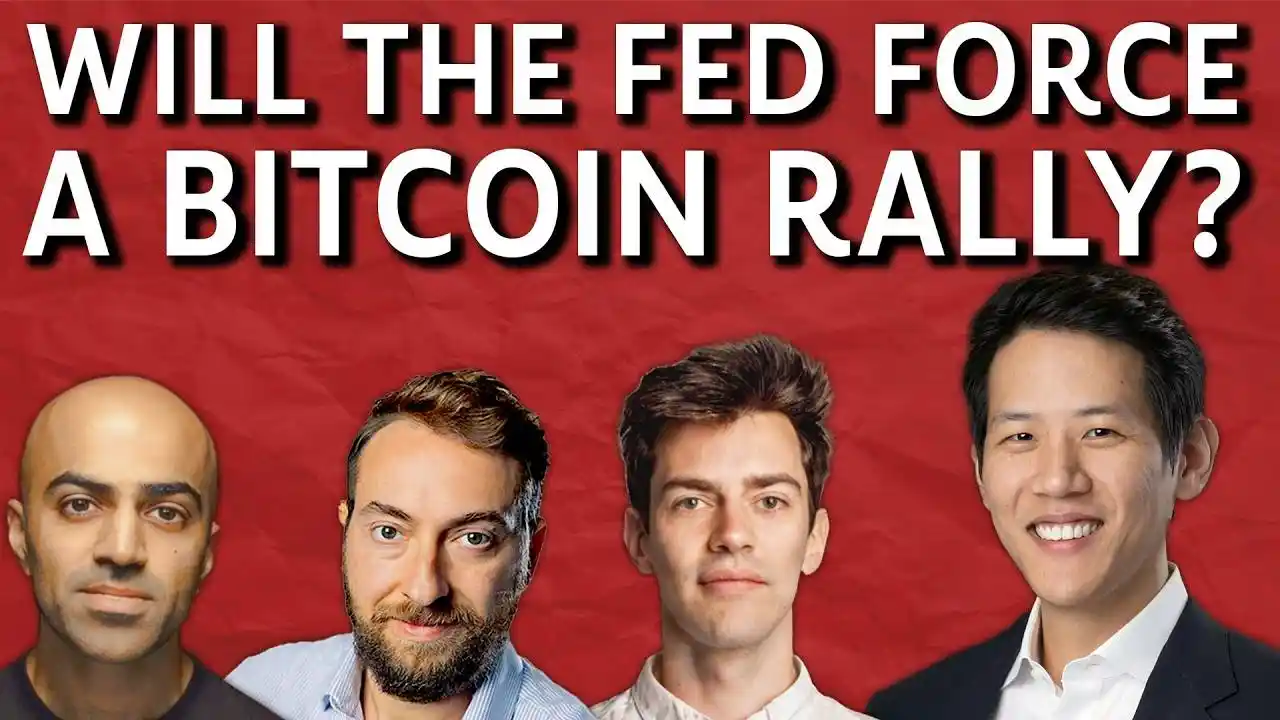
Guest: Jeff Park, Director of Bitwise Asset Management Alpha Strategy
Host:
· Haseeb Qureshi, Partner at Dragonfly Capital
· Robert Leshner, CEO & Co-founder of Superstate
· Tom Schmidt, Partner at Dragonfly Capital
Air Date: April 11, 2025
Key Takeaways
· Bitwise Alpha Strategy Director - The year-end target price for Bitcoin is expected to reach $200,000.
· Bitcoin vs. Gold - Bitcoin, as a store of value, shares similarities with gold. When choosing between the two, investors primarily consider volatility. Therefore, older individuals tend to prefer gold, while younger individuals favor Bitcoin. The reason why young people lean towards Bitcoin is largely due to its volatility. If you believe this is one of the key factors driving Bitcoin's value.
· "TradFi's Shitcoin" - MicroStrategy plays the role of a shitcoin in traditional finance, as it is essentially a combination of cryptocurrency and Bitcoin.
· Circle Delays IPO - Circle's financial situation is better than initially perceived. Although their costs are high, their current revenue is much higher than a year ago.
· Ripple Acquires Hidden Road - This acquisition is strategically significant for Ripple as it allows them to more effectively utilize their balance sheet. The acquisition also helps expand the market for their new stablecoin, RLUSD.
· Bitcoin Market Resurgence - Some believe that based on interest rate changes, Bitcoin will perform differently. A decrease in interest rates benefits Bitcoin as it leads to financial repression and inflation, making Bitcoin a tool for storing value.
· Impossible Trinity - After the end of the Bretton Woods system, we faced the Impossible Trinity, which means you can only choose two out of three among open capital flows, independent central banks, and floating exchange rates to build a monetary system. If you give up one, the other two must adjust.
· Cryptocurrency Macroeconomic Decoupling - The Federal Reserve and global central banks are engaging in true stimulus to try to rescue their economies from shocks, which will distort asset prices. In that scenario, a decoupling between Bitcoin and other tokens may occur.
The Impact of Tariffs on Cryptocurrency & Bitcoin's Role in Portfolios
Haseeb:
Jeff, you work at Bitwise Asset Management and have a deep understanding of macroeconomics. Let's discuss the impact of tariffs on cryptocurrency, what changes have occurred in the crypto market? Why should we expect tariffs to have such a significant impact on cryptocurrency, even though cryptocurrencies themselves are not directly affected by tariffs as they are not involved in imports or exports? So why would the crypto market care about tariff-related issues?
Jeff:
From a positive perspective, I hope to mark the bottom of the market so we can look back on this episode in the future.
Overall, cryptocurrency and Bitcoin have always been the focus of investors, and their role in portfolios is evolving. Since the launch of ETFs, mainstream investors can more effectively include Bitcoin as part of a global asset, which is why the correlation of Bitcoin with risk appetite and risk-off sentiment has strengthened.
Especially as Bitcoin serves as a store of value, with characteristics similar to gold, investors primarily consider volatility when choosing. Therefore, older individuals tend to prefer gold, while younger individuals favor Bitcoin. The reason young people prefer Bitcoin is largely due to its volatility. If you believe this is one of the key factors driving Bitcoin's value.
On the other hand, if other macro assets become more volatile, the opportunity cost of holding Bitcoin will also rise as you need to compete with these non-traditional assets. The volatility of traditional assets via ETFs has affected institutional investors' interest in Bitcoin. Therefore, I believe Bitcoin is usually the best choice for risk trading, but timing is crucial, especially regarding the behavior path dependence of other assets. Undoubtedly, with changes in volatility and the VIX index, many people are starting to pay attention to stock discounts, where they may find opportunities in the prices of Tesla or NVIDIA, and may sell Bitcoin for arbitrage. I think these are the reasons behind the market's volatility in recent months.
Haseeb:
We've seen a significant market downturn over the past few days. If you look at Thursday and Friday, the market's trading days following the tariff announcement, you'll find that the market dropped by 4% to 5%. Then by the close on Tuesday, the market saw another 2% decline. So overall, we've dropped nearly 16% to 17% from this year's market high. Depending on the indices you follow, the situation could be even worse. So far, Bitcoin hasn't really acted as a safe haven; its trading performance has closely mirrored other major indices.
Retail Investors vs. Institutional Investors & Bitcoin's Sensitivity to Interest Rate Changes
Haseeb:
In the stock market, retail investors are actually buying while institutions are selling. J.P. Morgan reported that last Thursday and Friday were the biggest days of retail buying volume in decades, setting a remarkable record. Retail investors took advantage of buying the dip, believing in a market rebound, and they seized that opportunity.
Not sure if this situation also applies to the cryptocurrency market, which is primarily driven by retail investors. While institutional investors have a presence in the crypto space, retail investors remain the primary holders, even in the complexity of ETFs. So, considering that the cryptocurrency market is retail-driven, is this why Bitcoin has maintained relative strength? Would the situation be worse if Bitcoin were more like an institutional asset?
Jeff:
I believe Bitcoin has always demonstrated its leading indicator characteristics as a global liquidity conduit, with Bitcoin's movements typically reflecting people's expectations of global liquidity changes. Currently, institutional capital's speed of reaction may be faster than retail capital from two years ago, which is still a significant factor.
A unique challenge for Bitcoin is its complexity in terms of investor targets. I often discuss Bitcoin with institutional investors in terms of two scenarios: positive rho Bitcoin and negative rho Bitcoin. Here, rho represents Bitcoin's sensitivity to interest rate changes. Some believe that Bitcoin performs differently based on interest rate changes. Negative rho Bitcoin refers to Bitcoin benefiting from interest rate decreases, as this leads to financial repression and inflation, making Bitcoin a store of value tool.
On the other hand, positive rho Bitcoin is seen as a safe haven asset in a world on the brink of collapse or extreme deflation. In such scenarios, Bitcoin becomes the asset people seek in a crisis. Yesterday's situation in China is an example of this complex relationship. In response to what Trump has done, China has actually expanded the range of its currency devaluation to allow the yuan to appreciate in ways historically not allowed. Today, we see the yuan devaluing so rapidly, almost back to the levels of 2008. If we think about this impact, the actual devaluation of the yuan is a result of deflation, which typically lowers global prices, making it more likely for us to see deflation due to imports. This is a positive rho Bitcoin world, not a situation desired by the U.S. or China. They are essentially ramping up the intensity of this confrontation.
Another approach China could have taken is through a large-scale internal fiscal stimulus plan to boost consumption, which is essentially an inflationary version, akin to releasing the Bitcoin floodgate with a negative rho Chinese quantitative easing. Yesterday, the Bitcoin market experienced some fluctuations, initially seeing an uptick but later realizing the risk of deflation, causing the price to fall back.
Overall, Bitcoin's sensitivity to interest rates has shown relative instability in the global market adoption process. I believe we are currently in a negative rho Bitcoin environment, where people generally expect inflation and loose policies to drive Bitcoin's value. However, undoubtedly, when the situation becomes extremely chaotic, Bitcoin will rise as the ultimate store of value.
Haseeb:
In the world of Bitcoin, there are two forces at play. As Bitcoin becomes a more mature asset, this dynamic may become more pronounced. Bitcoin's reactions at times appear unstable and unpredictable. Sometimes it shows no response to macroeconomic shocks but then plummets significantly over the weekend. Today we see its performance closely resembling that of the Nasdaq.
Altcoins and Institutional Investor Interest
Haseeb:
In the current market environment, altcoins have been under greater pressure. How do you view the performance of altcoins in this environment? There are now many expectations for policy easing, apart from tariffs, there may also be significant tax cuts. In addition, the market anticipates the Fed to cut rates more frequently than previously expected. As far as I know, CME currently anticipates five rate cuts this year, compared to just a few cuts in previous expectations, and at one point, only one. How do you view these changes, and how will they affect the altcoin market?
Jeff:
Altcoins are quite complex and face two main challenges.
First, aside from Bitcoin, other altcoins have significant differences in their consensus mechanisms, requiring more maintenance. Bitcoin is like a cold wallet you can keep under your mattress, usually without issues. The problem with altcoins is that if they are proof-of-stake tokens, investors need to participate in the ecosystem to earn rewards, which increases investors' costs. If you are an institutional investor and cannot participate in this value accrual mechanism, similar to missing out on a stock's special dividend because your stock holdings are in custody that doesn’t allow on-chain operations, as opposed to the kind that does, investors will naturally have reservations because they do not want to be in an unfair competitive situation. In the altcoin market, these unfair situations do sometimes exist.
The second factor is that many investors see altcoins as a leveraged trading tool. They are excited by Bitcoin's volatility and believe that altcoins can offer higher returns, higher leverage, and greater volatility in terms of capital efficiency.
But the fundamental shift is that in December of last year, we had Bitcoin ETF options. Through regulated markets, we can trade Bitcoin options, providing a similar speculative and hedging thrill. This way, investors can engage in leveraged trading more strategically without worrying about the risks associated with those "insider" or "narrative" elements.
MicroStrategy: An Alternative Investment in the Traditional Financial Space
Haseeb:
It sounds like you're saying that altcoins appeal to institutional investors because they find Bitcoin's volatility not stimulating enough and seek higher-risk investments. Altcoins are like a more speculative version of Bitcoin. Now, institutions can trade Bitcoin options and ETF options via CME, making them more inclined to choose Bitcoin options over altcoins.
Jeff:
Perhaps this is why MicroStrategy has risen. In my view, MicroStrategy plays the role of an altcoin in traditional finance; it's actually a blend of cryptocurrency and Bitcoin.
MicroStrategy is like an additional thrill. Its volatility is actually greater than Bitcoin's. Currently, Bitcoin's price ranges between $45,000 and $55,000, while MicroStrategy's stock price is around $100, sometimes even reaching $200. Therefore, for liquidity-seeking investors, MicroStrategy provides a more exciting investment experience than altcoins without the need to take on the risks of those less understood altcoins. Additionally, MicroStrategy has created leverage through financial engineering. They have issued convertible bonds and various structured preferred stocks, providing investors with multiple risk preference options. It's like choosing your desired altcoin risk from Bitcoin's buffet.
I believe that MicroStrategy becoming the highest-traded stock and options contract, along with the success of the 2x leveraged MSTR ETF, demonstrates that Bitcoin's financialization has allowed traditional investors to see greater appeal through MicroStrategy, thereby reducing the allure of altcoins to some extent.
Haseeb:
I find this story a bit hard to believe. While MicroStrategy's derivative structure may indeed be so, in the ETF market, institutional investors mainly acquire altcoins through Ethereum, and Ethereum's ETF market has never exceeded $100 billion. Therefore, this is not a large market. Most altcoins are actually held by retail investors and are not a true institutional asset class. Therefore, any analysis explaining the current state of the altcoin market must start with retail investors. Retail investors are not the reason dominating this market. Institutional investors may be trading Bitcoin ETF options or leveraged trading on MicroStrategy, but this is not the reason for the altcoin decline.
Jeff:
Yes, if you talk to most cryptocurrency traders and investors, they would say they are working to make their tokens generate returns. Even though Ethereum's performance relative to Bitcoin was poor last year, when considering the additional returns from using Ethereum for productive purposes, this price difference is not so obvious. If you stake Ethereum and leverage the capabilities of Eigenlayer or EtherFi Rent, participating in these staking activities, the total return of the ETH market does not only reflect Ethereum's price. That's the point I'm trying to make. Therefore, if you're an institutional investor and you can't access Renzo and EtherFi.
Haseeb:
If I could rephrase your point just now, now global funds are pouring into the U.S. stock market. Although this is somewhat abnormal because the U.S. is a relatively slow-growing country, it has attracted global savings. We are trying to address the issue of trade imbalances, hoping to change the direction of dollar inflows, but we still need a market where investors are willing to take risks. This market may no longer be the U.S. stock market but the crypto market.
Jeff:
In this scenario, I think this is advantageous for Bitcoin because at least then we can start thinking about building a strategic Bitcoin reserve since Bitcoin's development path may require redefining the social contract of dollar hegemony.
Haseeb:
Now we are clearly in an uncertain situation, no one knows how the tariff issue will evolve, causing the market to fluctuate.
Geopolitical Impact of Tariffs
Tom:
Jeff, about two months ago you wrote an article about "Plaza Accord 2.0," mentioning using tariffs to adjust the dollar exchange rate and lower interest rates. We are experiencing a different version of this situation. Obviously, this situation existed ten years ago, is the current development as you expected? What surprised you? How do you think we deviated from this path?
Jeff:
Since I shared my views on the long-term impact of tariffs on the Bitcoin price, I have become less certain about Trump's ultimate goal.
In an ideal world, developing a strategy similar to the Plaza Accord or Core Accord 2.0 would be reasonable. That is, the dollar does need to depreciate to enhance America's competitiveness, but you would want foreign creditors to continue buying U.S. Treasury bonds, which requires some form of agreement to achieve this goal. This must be achieved through strategy rather than undisputed consensus. This is the ideal scenario.
The moment that made me lose confidence was when Trump began blindly attacking almost everyone, including allies who I thought should be untouchable—such as Japan. If there is a country that needs special treatment, it is Japan, as they are currently the largest holder of U.S. Treasury bonds. You need to be sensitive to this. However, Trump not only did not show this sensitivity but instead lumped Japan together with China, calling them currency manipulators. This shocked me because Japan's currency manipulation is usually for America's benefit. Therefore, this lack of careful handling of allies made me realize that the ultimate goal may be a greater degree of protectionism, which I did not think would happen.
Robert:
I gradually formed a theory: This is not just about protectionism but creating conditions for the transformation of protectionism. Now many companies are considering, perhaps we should reshore some production activities because of the uncertainty, we want to be closer to the market. Many people are actually pulling demand forward. I know many are trying to cope with tariffs by buying cars, furniture, and durable goods. I think the government does want to see a return of manufacturing jobs. There's a lot of discussion and joking about this because we might not be making sweaters, socks, and Nike shoes here.
I don't think anyone realistically expects us to bring back low-end manufacturing to the U.S. I think if anything, it would be focused on very specific industries, such as strategic industries like semiconductors and chips.
Haseeb:
But we didn't impose tariffs on semiconductors. It seems like the only part of this policy that might make sense geopolitically has been excluded from the tariffs.
Robert:
We can't afford to disrupt the system to that extent. Can you imagine if we placed tariffs on them? But I do believe there's one aspect that hasn't been discussed enough, and that is I think this is not just about the trade itself from a geopolitical standpoint. In fact, it's an attempt to shift the focus of manufacturing away from China to countries closer aligned with us.
Haseeb:
We've been pushing people to build factories in Vietnam, Malaysia, and Mexico, and then we hit them with higher tariffs than China.
Robert:
But we'll strike deals with them and find an amicable solution with these countries. We might not strike such a deal with China; the rhetoric and the escalation with China are on a different level. So, I think the end state could be substantial tariffs on China while not on our allies. If you're a company based in China, your first thought is I need to relocate to Vietnam or Japan or some country more closely related to the U.S.
Jeff:
I agree with your perspective, Robert. This is somewhat the path we as Americans have to envision because it's the most effective and ideal outcome. However, we also can't assume the path to achieving this outcome doesn't come with negative repercussions.
For example, I think the White House conveyed yesterday that Japan will have a priority lane as a way to engage in tariff negotiations. I believe part of the reason is to give Japan some compensation because the U.S. has somewhat offended them to provide them with a strategic advantage as an ally. So, they're playing these games. But in reality, in the past week and a half, just as Japan was getting frustrated and the U.S. hadn't given them the priority lane, China actually announced that they were exploring a trilateral trade relationship with South Korea and Japan. This public declaration of intent indicates that some back-channel talks have already occurred in a way that China would benefit from it, as China wouldn't readily make such a statement.
These three countries in Asia are less likely to cooperate because they're not friendly with each other. So, you can't be sure if there's some sort of quid pro quo arrangement in America's action path that might eventually have a negative impact on America's power vacuum—which is my biggest concern, worrying that these things might come with collateral damage as we live in a multilateral world, and we should be cautious about it.
Haseeb:
I believe these tariff policies are very misguided and lack a coherent strategy. While we have exempted semiconductors, which are considered among the most critical products in terms of military and geopolitical importance, our tariffs on many allies are higher than those on openly hostile nations. Russia and Belarus are the only countries excluded from the tariff list, which clearly gives us an opportunity to engage in free trade with them. Meanwhile, China has taken advantage of this situation by becoming a very stable partner, gradually committing to free trade and increasingly becoming a stable trading partner for more and more countries.
The Global Monetary System and the Role of Bitcoin
Haseeb:
I think Trump focuses more on power play in negotiations and political decisions rather than alliances and diplomacy. Sometimes, this strategy is tactical. However, during peacetime, when the economy is strong, unemployment is at historic lows, and we are on the cusp of the AI and cryptocurrency tech revolution, stirring up disputes suddenly, turning everyone into enemies, is not a good move.
Jeff:
I am concerned that if the world begins to reassess the role of the US dollar and the US-led global financial system, various alternative scenarios may emerge. One of the scenarios we can discuss is the "Impossible Trinity" theory, whose core idea is that after the Bretton Woods system, we face an impossible trinity where you can only choose two of open capital flows, independent central banks, and floating exchange rates to construct a monetary system. If you give up one, the other two must adjust.
For example, the US has chosen open capital flows and an independent Fed, so it needs to let the dollar float freely. China has adopted a different strategy; they do not have open capital flows and manage the exchange rate by the PBOC, so they can maintain a fixed exchange rate. The Eurozone has chosen open capital flows and floating exchange rates but no independent central bank, with each country's policies aggregated into a larger Eurozone. Therefore, there are multiple design options for the global monetary system, and now people are starting to question if there is a more effective system than the free-floating model advocated by the US.
Bitcoin's Performance in Different Economic Environments
Haseeb:
There is a high possibility of an economic recession, and if we enter a stagflation state, where there is both economic recession and high inflation simultaneously, possibly due to the impact of tariffs. How do you think Bitcoin would perform in such a scenario?
Jeff:
I expect Bitcoin's target price to reach $200,000 by the end of the year, and I still believe there is a high chance of achieving this target. Even in a stagflation scenario, Bitcoin can still be the fastest-growing asset and perform well.
Haseeb:
So you think Bitcoin will win in the speculative market. If it's not stagflation but instead the Fed significantly cuts interest rates and implements quantitative easing, the economy will regain vitality, but inflation will remain high. How do you think Bitcoin would perform in that scenario?
Jeff:
I think it would perform even better. The trajectory of these things could change significantly, and it's really just a reflection of time. As a liquid asset, no one knows where these things will ultimately go; it's a commodity.
I am an extremely path-dependent option pricer, so I evaluate the entire implied volatility surface, which requires us to recalibrate.
Haseeb:
Assuming the tariffs are withdrawn, the courts overturn them, and Congress lacks the courage to reimpose them. So, the whole tariff strategy ends like that. Do you think in that environment, Bitcoin would be higher or lower, compared to the tariffs remaining unchanged, entering a stagflation world, and Fed expansion?
Jeff:
I think that would still be a good outcome, favorable to Bitcoin, and perhaps eventually reaching $175,000.
Haseeb:
So, if withdrawing the tariffs would be worse, and if tariffs remain unchanged and the Fed expands, it would be better, what are your thoughts?
Robert:
I think that scenario is almost impossible. If we reverse the tariffs, the actual impact is minimal, just like going back two weeks, the only real change is the trust between the U.S. and different trading partners. I do think this could continue to be a potential issue for the U.S., but it could also be beneficial for alternative economic structures, even good news for Bitcoin. I think people might lose confidence in U.S. Treasury bonds and the dollar.
Haseeb:
Do you think if tariffs remain unchanged and the Fed continues its expansionary policy, would this be more favorable for Bitcoin? Or the opposite?
Robert:
I think tariffs remaining unchanged might be better. Because the market usually only focuses on current changes, not future two-step changes, the market operates based on what is happening now.
Tom:
Even if tariffs were completely rolled back, we would go back to two weeks ago, the dollar is still devaluing, I think this might be more favorable for Bitcoin. I've been thinking about global liquidity and Bitcoin's relationship. Although we have discussed it many times, Bitcoin still seems to be like a risk asset. I hope it could become an alternative to gold, but that has not happened yet. Maybe now is the time, there is always a first time, if you look at the price trend of the past three to four years, you will feel this is a fundamental transformation.
Haseeb:
So, would rolling back tariffs be better? I'm not so sure because unchanged tariffs might bring more pain and instability, which could drive up Bitcoin prices by the end of the year. I see this as a possibility of decoupling of cryptocurrency from the real economy, as the Fed and central banks globally are engaging in real stimulus to try to save their economies from shocks, which will distort asset prices. I believe this is likely to happen to Bitcoin rather than to other tokens.
In that case, there might be a decoupling between Bitcoin and other tokens, and I am uncertain about the outcomes of both scenarios. I think it is very counterintuitive because on any given day, Bitcoin's performance does not meet expectations, nor do other tokens, the correlation is breaking down. Sometimes Bitcoin trades with gold, sometimes with the Nasdaq, and sometimes completely abandons both, following its own path, it is clear that this asset is evolving.
I think by 2025 or 2026, we will be talking about Bitcoin in a very different way, and we will have a different psychological model. I guess by the end of this year, we will have a different understanding of how cryptocurrency performs in a huge macro imbalance.
Jeff:
I agree. Global liquidity as well. I think people will start to understand the leverage in these conversations more granularly. Because, Tom, as you said, one of the issues with global liquidity is that the devaluation of the dollar actually benefits global liquidity. But I'm not sure if the increase in global liquidity brought about by the devaluation of the dollar will drive the valuation of Bitcoin.
Circle's IPO and Its Business Viability
Haseeb:
I want to talk about two stories related to the capital markets, which are relevant to the overall context. The first is the news of Circle's announcement of filing for an IPO. Circle plans to go public with a valuation of $40 billion to $50 billion. Apparently, Circle has been striving to enter the public market, but was previously hindered by Gensler and the former SEC, making it difficult for cryptocurrency companies to go public. Now they have finally received approval, but due to tariff issues, they announced a delay in the IPO. Therefore, Circle withdrew the application. However, discussions about the viability of this company are still ongoing, how the capital markets will perceive it, and whether they will be able to achieve the expected valuation, these questions are still up in the air.
How do you view the prospects of Circle? How do you think it will be treated in the public market? Obviously, all IPOs are currently on pause, and all companies planning to go public are waiting for market stability. But setting that aside, how do you view Circle as a company entering the public market?
Robert:
I believe that their financial data does not fully reflect the growth of USDC in the past few months. USDC has been growing. Since they are a company that earns interest through a stablecoin reserve, there is a certain lag effect. If a business continues to grow over a year, its revenue will not increase significantly immediately, due to averaging effects. Therefore, I think their financial situation is better than it initially appears, although their costs are also high, their current revenue is much higher than a year ago. If the supply of USDC is growing, this will disproportionately benefit them. I think this has been underestimated.
Regarding the discussions on crypto Twitter, I also noticed that Circle is a massive organization compared to Tether. People say that Circle's scale is only a small part of Tether, but its number of employees is 40 times that of Tether. This suggests that they may be able to allocate human resources more efficiently in the future. Executive compensation is also high. All of these indicators suggest that their current operations may not be the most effective, which could be because they achieved returns of over 4% in times of economic prosperity without exerting too much effort. Therefore, there may be a "good times syndrome." But if the economy continues to improve, their business will soar; if the situation worsens, they will have to make some tough decisions.
Haseeb:
One key question about Circle is how the public market will perceive this company? Will they see it as an asset management company or a tech company? This will directly impact the multiple they can command. Robert, how do you think the public market will view Circle when it goes public?
Robert:
I believe it is an asset management company because their earnings per dollar are quite significant, at around 4% or more. They have to share some fees with Coinbase, but their yield is still very high.
They earn significant fees in asset management behind stablecoins. So, no matter what additional features they roll out for developers, those won't really change their revenue. The driving force of their revenue and profits is how much USDC they issue and what the target rate is. That's the entire business.
Jeff:
Indeed, it is an asset management structure, but it may have an inverse asset management multiple. As an asset management company, it may be very profitable in a high-interest-rate environment, as you mentioned, it's a long-term rate, whereas most publicly traded firms like Blackstone benefit in a low-rate environment. Hence, it has a different relationship with the direct creative component of the asset management business, which could have far-reaching implications. I would even say that combining a Bitcoin portfolio with Circle as a hedge could be a useful tool.
But I want to emphasize the revenue split with Coinbase again because the multiple's height depends on having a defensible moat. If the fee Circle charges as a distribution partner is this high, how strong is the defensibility of Circle's business model? This makes me ponder, whether this is really not a tech game but more of a distribution game. If it's a distribution game, then the underwriting approach applied to that multiple will be completely different. We await eagerly.
Haseeb:
Tom, how do you see Circle?
Tom:
I'll be a bit restrained here because I don't want to be seen as a detractor of Circle. I think their people are great, and I really appreciate their contributions to the industry. I just feel that last year I half-jokingly tweeted that Tether could easily acquire Circle with just one quarter's profit. Frankly, as time has passed, this joke seems less and less exaggerated. I think Tether has a better structure in terms of overall company operational costs. They could easily buy out this company. They have no one trying to interfere with them in Washington. And they could easily tear apart agreements with Coinbase or simply shut down products, transition to USDT, and ultimately form a better corporate structure.
When I look at their changes over the past year, their profit margin has been consistently shrinking, and overall profitability has also been declining. I really don't know what their strong prospects are. I think the tech story is cool, but it hasn't really materialized. It looks more like an asset management company.
Haseeb:
I have to admit I haven't closely studied Circle's S1 filing, but I did notice some points. As interest rates start to rise, the overall stablecoin supply decreases. This is understandable because when the interest rate is zero, putting funds on-chain has no opportunity cost, and businesses can profit from it. As interest rates decrease, it should attract more funds into the stablecoin market. So is this countervailing force completely symmetrical? I'm not sure, maybe not. In a situation where stablecoins are more regulated and considered safer than in 2021 and 2022, some changes may occur.
Secondly, apparently, Circle can charge high fees for issuance and redemption. If you hold a stablecoin that people use for payments, then if Circle can gain an advantage in the stablecoin bill and other regulations, find it easier to get licensed, and win favor from regulators, they may have a significant advantage in terms of regulation compared to Tether. So, can they monetize this regulatory advantage? Perhaps, especially as other companies rush to collaborate with stablecoins and integrate them into their domestic operations. So, apart from banking business, holding assets and liabilities, collecting float income, there are many stories to tell. I agree with your view that the current business does indeed look more like this, as interest rates are high. As interest rates decline, they will find other ways to monetize this business. After all, it is currently basically a duopoly market between Circle and Tether. I think you may see the market segmented into different areas, just like you see in DeFi, with USDC dominating the market. While Tether's use dominates in emerging markets.
If things evolve in this way, then every stablecoin issuer can aggressively monetize within their own domain without worrying too much about price competition. Because if you are in DeFi, there are hardly any other choices. If you are in emerging markets, there are hardly any other choices. You must use their tokens, so they can charge more fees upstream and downstream. Take Tron, for example, Tron's fees historically have been very high. If you look at Tron's blockchain fees now, most blockchains' fees are currently very low because it's a downturn period, everyone is focused on macro activities, and the transaction volume is not high, but Tron's fees are high.
Why is Tron's Fee So High? Tron's fee is not due to network congestion, but rather because of validator voting increasing the fee. You can see this as Justin Sun taking advantage of people's necessity to use Tron. Therefore, Tron essentially extracts a significant profit from all payment activities conducted on Tron. This is a great example for me, showcasing the situation when having a monopoly on payment infrastructure. So, can Tether and USDC find a way to create such a fee for themselves? I don't see why they couldn't do that, especially when their core business model in commercial paper is no longer as appealing.
Tom:
I think this is a narrative, and all rent-seeking narratives are part of it. But I think the balance sheet almost tells a different story, which is how much of USDC is held on Coinbase. So, it's not being used as payment infrastructure. Thus, I think it's a nice wish, and I really hope this situation can materialize. I hope to see more duopoly in this market, having more competitors. But in reality, unless their efforts make Tether illegal, I really don't see this becoming a reality.
Jeff:
I think this scenario is almost impossible because the U.S.' strategic interest lies in maintaining the independence of these two entities. The privilege you mentioned actually reflects foreign willingness to hold funds in USD and pay any price for it. Thus, the U.S. can treat foreign fund holders and domestic citizens differently, where this privilege itself is a premium that can be extracted. Therefore, philosophically speaking, even if the U.S. wants to showcase its superiority, it still wants these two entities to remain independent. So, if these two entities were to merge, it would be a terrible outcome as there might be other companies emerging trying to compete with Tether, which would present a bigger challenge to the U.S.
Meaning of Ripple Labs Acquiring Hidden Road
Haseeb:
Today we learned about the largest acquisition in the history of the crypto industry, where Ripple Labs acquired Hidden Road for $1.25 billion. Hidden Road is an institutional product provider that primarily serves institutional clients, likely unknown to most retail investors. As the second-largest major broker in the crypto industry, Hidden Road processes around $3 trillion in transactions annually and has over 300 institutional clients. Typically in acquisition deals, the headline number often is a combination of multiple factors or a complex structure tied to performance making up a large figure. But this deal is undoubtedly significant, strategically for Ripple. Firstly, they can more efficiently leverage their balance sheet as they obviously have a lot of cash on hand; secondly, the acquisition aids in expanding their new stablecoin RLUSD's reach in the market.
This M&A transaction is very intriguing. We were actually investors in Hidden Road, so now we are also investors in Ripple Labs. Congratulations to us, the Hidden Road team has performed remarkably. For the entire industry, this is an interesting moment, especially in the current macroeconomic context where the market is generally unstable, with almost all crypto industry assets falling. It has been a tough year, but stablecoin growth, increasing institutional involvement, and the ETF ecosystem all look very robust. Therefore, I would like everyone to share their thoughts on this significant transaction. Robert, when you saw this transaction news, what was your immediate reaction?
Robert:
I need to disclose that I am the CEO of Superstate, we are a client of Hidden Road. We use their trade execution service, the team is outstanding, and the product is great. When I saw this news, I had a bit of an "aha" moment. There were rumors previously about Falcon X considering acquiring them, and I could also envision them being acquired by Coinbase or another exchange. Hence, seeing Ripple as the acquirer was somewhat surprising. I think it makes sense for Ripple, considering Hidden Road's market share, the price wasn't too high. If this can increase the usage of the XRP Ledger, I believe they can sell this narrative to the public and sell enough XRP to finance the entire transaction. Therefore, this is a smart move for Ripple. I just didn't expect this outcome.
Jeff:
I am also surprised, but not entirely shocked, as the trend of integration between crypto services and traditional financial services is very evident, and providing a multi-asset solution might be a worthwhile pursuit.
What surprises me is that I always viewed Hidden Road as Citadel's "down payment" when considering the crypto market. I thought Citadel would find this to be a business worth undertaking, especially given the regulatory transparency, or they would continue to fund it as an outsourced business but not directly getting involved.
This confirms my view: it is much easier for traditional companies to enter the crypto space offering some ancillary services than the other way around is relatively difficult. I noticed Hidden Road was trying to expand into some non-crypto-related areas. For example, they have crypto short-term trading, but they also aim to provide a full multi-asset solution, wanting to be a fixed income clearing partner or a market maker, things that Citadel can do.
This reminds me of the current situation where companies like Goldman Sachs are trying to provide prime brokerage services to compete with Falcon X. In fact, for crypto companies, entering the traditional finance space is quite challenging, while traditional financial firms entering the crypto space is relatively easier. This transaction may reflect this trend.
Haseeb:
Tom, what are your thoughts?
Tom:
I'm really surprised, considering this is an investment firm, but this is great. As an investor in Ripple Labs, this is truly exciting.
Haseeb:
I think for most of the audience, the average person might not even know what a prime broker is. So for many people, hearing "wow, the largest M&A deal in the crypto industry" is like a complex thing, with only 300 clients using it. So, I think this is to some extent the growth of the crypto industry's financial infrastructure. In a way, Hidden Road is also a response to FTX because more and more institutional traders, especially after the FTX incident, do not want to face counterparty risk. They want a neutral party between them and the trading platform, and that's exactly the core function of a prime broker. So Hidden Road offers many other services to improve capital efficiency, but this is one of the main stories. As you mentioned, they were spun out of Citadel, which is a large hedge fund asset management company. So, this truly is the intersection and integration of traditional finance with the crypto market structure.
For me, the biggest story is that besides Ripple seeing the advantage of leveraging Hidden Road for distribution, Hidden Road still needs to remain neutral and operate independently to continue being a useful prime broker. This is also why Coinbase couldn't truly own a prime broker because Coinbase itself is an exchange and hence not considered neutral. So, I think the biggest thing is that this proves the maturation of the crypto industry. Such real M&A deals, and the success of such a company, are signs of growth in the crypto industry, which is maturing. I think for everything in this space, it's a good signal for the future market.
Now, due to global events and the extent of the market downturn, maintaining a positive attitude is extremely challenging. However, events like this, I believe, serve as positive highlights, indicating forward-looking reasons to be optimistic in this space. I think, for long-term capital, many people see this and are willing to make large investments in this regard. For me, this is an important takeaway: mergers and acquisitions are still happening, which is also a good sign.
猜你喜歡

穩定幣驅動全球B2B支付革新,如何打破工作流程瓶頸釋放兆市場潛力?
這些新創公司正在無需資料中心的情況下建立先進AI模型
CEX與Wallet之後,OKX入局支付
RWA永續產品危機:為什麼GLP模式註定撐不住RWA永續?
科學平權運動:DeSci的萬億美元知識經濟重建革命
Sentient深度研報:獲8,500萬美元融資,建置去中心化AGI新範式
加密項目為何札堆發卡?一場Web3與現實世界的通行權之爭
專訪Virtuals聯創empty:AI 創業不需要大量資金,Crypto是答案之一
今年 2 月,Base 生態中的 AI 協議 Virtuals 宣布跨鏈至 Solana,然而加密市場隨後進入流動性緊縮期,AI Agent 板塊從人聲鼎沸轉為低迷,Virtuals 生態也陷入一段蟄伏期。
三月初,BlockBeats 對 Virtuals 共同創辦人 empty 進行了一次專訪。彼時,團隊尚未推出如今被廣泛討論的 Genesis Launch 機制,但已在內部持續探索如何透過機制設計激活舊資產、提高用戶參與度,並重構代幣發行與融資路徑。那是一個市場尚未復甦、生態尚處冷啟動階段的時間點,Virtuals 團隊卻沒有停下腳步,而是在努力尋找新的產品方向和敘事突破口。
兩個月過去,AI Agent 板塊重新升溫,Virtuals 代幣反彈超 150%,Genesis 機製成為帶動生態回暖的重要觸發器。從積分獲取規則的動態調整,到專案參與熱度的持續上升,再到「新代幣帶老代幣」的機制閉環,Virtuals 逐漸走出寒冬,並再次站上討論焦點。
值得注意的是,Virtuals 的 Genesis 機制與近期 Binance 推出的 Alpha 積分系統有一些相似之處,評估用戶在 Alpha 和幣安錢包生態系統內的參與度,決定用戶 Alpha 代幣空投的資格。用戶可透過持倉、交易等方式獲得積分,積分越高,參與新項目的機會越大。透過積分系統篩選使用者、分配資源,專案方能夠更有效地激勵社群參與,提升專案的公平性和透明度。 Virtuals 和 Binance 的探索,或許預示著加密融資的新趨勢正在形成。
回看這次對話,empty 在專訪中所展現出的思路與判斷,正在一步步顯現其前瞻性,這不僅是一場圍繞打新機制的訪談,更是一次關於“資產驅動型 AI 協議”的路徑構建與底層邏輯的深度討論。
BlockBeats:可以簡單分享一下最近團隊主要在忙些什麼?
empty:目前我們的工作重點主要有兩個部分。第一部分,我們希望將 Virtuals 打造成一個類似「華爾街」的代理人(Agent)服務平台。設想一下,如果你是專注於 Agent 或 Agent 團隊建立的創業者,從融資、發幣到流動性退出,整個流程都需要係統性的支援。我們希望為真正專注於 Agent 和 AI 研發的團隊,提供這一整套服務體系,讓他們可以把精力集中在底層能力的開發上,而不用為其他環節分心。這一塊的工作其實也包括了與散戶買賣相關的內容,後面可以再詳細展開。
第二部分,我們正在深入推進 AI 相關的佈局。我們的願景是建立一個 AI 社會,希望每個 Agent 都能聚焦自身優勢,同時透過彼此之間的協作,實現更大的價值。因此,最近我們發布了一個新的標準——ACP(Agent Communication Protocol),目的是讓不同的 Agent 能夠相互互動、協作,共同推動各自的業務目標。這是目前我們主要在推進的兩大方向。
BlockBeats:可以再展開說說嗎?
empty:在我看來,其實我們面對的客戶群可以分為三類:第一類是專注於開發 Agent 的團隊;第二類是投資者,包括散戶、基金等各種投資機構;第三類則是 C 端用戶,也就是最終使用 Agent 產品的個人用戶。
不過,我們主要的精力其實是放在前兩大類──也就是團隊和投資人。對於 C 端用戶這一塊,我們並不打算直接介入,而是希望各個 Agent 團隊能夠自己解決 C 端市場的拓展問題。
此外,我們也認為,Agent 與 Agent 之間的交互作用應該成為一個核心模式。簡單來說,就是未來的服務更多應該是由一個 Agent 銷售或提供給另一個 Agent,而不是單純賣給人類使用者。因此,在團隊的 BD 工作中,我們也積極幫助現有的 AI 團隊尋找這樣的客戶和合作機會。
BlockBeats:大概有一些什麼具體案例呢?
empty:「華爾街」說白了就是圍繞資本運作體系的建設,假設你是一個技術團隊,想要融資,傳統路徑是去找 VC 募資,拿到資金後開始發展。如果專案做得不錯,接下來可能會考慮進入二級市場,例如在紐約證券交易所上市,或是在 Binance 這樣的交易所上幣,實現流動性退出。
我們希望把這一整套流程打通-從早期融資,到專案開發過程中對資金的靈活使用需求,再到最終二級市場的流動性退出,全部覆蓋和完善,這是我們希望補齊的一條完整鏈條。
而這一部分的工作和 ACP(Agent Communication Protocol)是不同的,ACP 更多是關於 Agent 與 Agent 之間交互標準的製定,不直接涉及資本運作系統。
BlockBeats:它和現在 Virtuals 的這個 Launchpad 有什麼差別呢?資金也是從 C 端來是嗎?
empty:其實現在你在 Virtuals 上發幣,如果沒有真正融到資金,那就只是發了一個幣而已,實際是融不到錢的。我們目前能提供的服務,是透過設定買賣時的交易稅機制,從中提取一部分稅收回饋給創業者,希望這部分能成為他們的現金流來源。
不過,問題其實還分成兩塊。第一是如何真正幫助團隊完成融資,這個問題目前我們還沒有徹底解決。第二是關於目前專案發行模式本身存在的結構性問題。簡單來說,現在的版本有點像過去 Pumpfun 那種模式——也就是當專案剛上線時,部分籌碼就被外賣給了外部投資人。但現實是,目前整個市場上存在著太多機構集團和「狙擊手」。
當一個真正優秀的專案一發幣,還沒真正觸達普通散戶,就已經被機構在極高估值時搶購了。等到散戶能夠接觸到時,往往價格已經偏高,專案品質也可能變差,整個價值發行體係被扭曲。
針對這個問題,我們希望探索一種新的發幣和融資模式,目的是讓專案方的籌碼既不是死死握在自己手裡,也不是優先流向英文圈的大機構,而是能夠真正留給那些相信專案、願意長期支持專案的普通投資者手中。我們正在思考該如何設計這樣一個新的發行機制,來解決這個根本問題。
BlockBeats:新模式的具體想法會是什麼樣子呢?
empty:關於資金這一塊,其實我們目前還沒有完全想透。現階段來看,最直接的方式還是去找 VC 融資,或是採取公開預售等形式進行資金募集。不過說實話,我個人對傳統的公開預售模式並不是特別認同。
在「公平發售」這件事上,我們正在嘗試換一個角度來思考-希望能從「reputation」出發,重新設計機制。
具體來說,就是如果你對整個 Virtuals 生態有貢獻,例如早期參與、提供支持或建設,那麼你就可以在後續購買優質代幣時享有更高的優先權。透過這種方式,我們希望把資源更多留給真正支持生態發展的用戶,而不是由短期套利的人主導。
BlockBeats:您會不會考慮採用類似之前 Fjord Foundry 推出的 LBP 模式,或者像 Daos.fun 那種採用白名單機制的模式。這些模式在某種程度上,和您剛才提到的「對生態有貢獻的人享有優先權」的想法是有些相似的。不過,這類做法後來也引發了一些爭議,例如白名單內部操作、分配不公等問題。 Virtuals 在設計時會考慮借鏡這些模式的優點,或有針對性地規避類似的問題嗎?
empty:我認為白名單機制最大的問題在於,白名單的選擇權掌握在專案方手中。這和「老鼠倉」行為非常相似。專案方可以選擇將白名單名額分配給自己人或身邊的朋友,導致最終的籌碼仍然掌握在少數人手中。
我們希望做的,依然是類似白名單的機制,但不同的是,白名單的獲取權應基於一個公開透明的規則體系,而不是由項目方單方面決定。只有這樣,才能真正做到公平分配,避免內幕操作的問題。
我認為在今天這個 AI 時代,很多時候創業並不需要大量資金。我常跟團隊強調,你們應該優先考慮自力更生,例如透過組成社區,而不是一開始就想著去融資。因為一旦融資,實際上就等於背負了負債。
我們更希望從 Training Fee的角度去看待早期發展路徑。也就是說,專案可以選擇直接發幣,透過交易稅所帶來的現金流,支持日常營運。這樣一來,專案可以在公開建設的過程中獲得初步資金,而不是依賴外部投資。如果專案做大了,自然也會有機會透過二級市場流動性退出。
當然最理想的情況是,專案本身能夠有穩定的現金流來源,這樣甚至連自己的幣都無需拋售,這才是真正健康可持續的狀態。
我自己也常在和團隊交流時分享這種思路,很有意思的是,那些真正抱著「搞快錢」心態的項目,一聽到這種機制就失去了興趣。他們會覺得,在這種模式下,既無法操作老鼠倉,也很難短期套利,於是很快就選擇離開。
但從我們的角度來看,這其實反而是個很好的篩選機制。透過這種方式,理念不同的專案自然會被過濾出去,最後留下的,都是那些願意真正建立、和我們價值觀契合的團隊,一起把事情做起來。
BlockBeats:這個理念可以發展出一些能夠創造收益的 AI agent。
empty:我覺得這是很有必要的。坦白說,放眼今天的市場,真正擁有穩定現金流的產品幾乎鳳毛麟角,但我認為這並不意味著我們應該停止嘗試。事實上,我們每天在對接的團隊中,有至少一半以上的人依然懷抱著長遠的願景。很多時候,他們甚至已經提前向我們提供了 VC 階段的資金支持,或表達了強烈的合作意願。
其實對他們來說想要去收穫一個很好的社區,因為社區可以給他們的產品做更好的回饋,這才是他們真正的目的。這樣聽起來有一點匪夷所思,但其實真的有很多這樣的團隊,而那種團隊的是我們真的想扶持的團隊。
BlockBeats:您剛才提到的這套「AI 華爾街」的產品體系-從融資、發行到退出,建構的是一整套完整的流程。這套機制是否更多是為了激勵那些有意願發幣的團隊?還是說,它在設計上也考慮瞭如何更好地支持那些希望透過產品本身的現金流來發展的團隊?這兩類團隊在您這套體系中會不會被區別對待,或者說有什麼機制設計能讓不同路徑的創業者都能被合理支持?
empty:是的,我們 BD 的核心職責其實就是去鼓勵團隊發幣。說得直接一點,就是引導他們思考發幣的可能性和意義。所以團隊最常問的問題就是:「為什麼要發幣?」這時我們需要採取不同的方式和角度,去幫助他們理解背後的價值邏輯。當然如果最終判斷不適合,我們也不會強迫他們推進。
不過我們觀察到一個非常明顯的趨勢,傳統的融資路徑已經越來越難走通了。過去那種融資做大,發幣上所的模式已經逐漸失效。面對這樣的現實,很多團隊都陷入了尷尬的境地。而我們希望能從鏈上和加密的視角,提供一套不同的解決方案,讓他們找到新的發展路徑。
BlockBeats:明白,我剛才其實想表達的是,您剛剛也提到,傳統的 AI 模式在很大程度上仍然依賴「燒錢」競爭。但在 DeepSeek 出現之後,市場上一些資金體積較小的團隊或投資人開始重新燃起了信心,躍躍欲試地進入這個領域。您怎麼看待這種現象?這會不會對目前正在做 AI 基礎研發,或是 AI 應用層開發的團隊產生一定的影響?
empty:對,我覺得先不談 DeepSeek,從傳統角度來看,其實到目前為止,AI 領域真正賺錢的只有英偉達,其他幾乎所有玩家都還沒有實現盈利。所以其實沒有人真正享受了這個商業模式的成果,大家也仍在探索如何面對 C 端打造真正有產出的應用。
沒有哪個領域像幣圈一樣能如此快速獲得社群回饋。你一發幣,用戶就會主動去讀白皮書的每一個字,試試你產品的每個功能。
當然,這套機制並不適合所有人。例如有些 Agent 產品偏 Web2,對於幣圈用戶而言,可能感知不到其價值。因此,我也會鼓勵做 Agent 的團隊在 Virtuals 生態中認真思考,如何真正將 Crypto 作為自身產品的差異化要素加以運用與設計。
BlockBeats:這點我特別認同,在 Crypto 這個領域 AI 的迭代速度確實非常快,但這群用戶給予的回饋,真的是代表真實的市場需求嗎?或者說這些回饋是否真的符合更大眾化、更具規模性的需求?
empty:我覺得很多時候產品本身不應該是強行推廣給不適合的使用者群體。例如 AIXBT 最成功的一點就在於,它的用戶本身就是那群炒作他人內容的人,所以他們的使用行為是非常自然的,並不覺得是在被迫使用一個無聊的產品。 mass adoption 這個概念已經講了很多年,大家可能早就該放棄這個執念了。我們不如就認了,把東西賣給幣圈的人就好了。
BlockBeats:AI Agent 與 AI Agent 所對應的代幣之間,究竟應該是什麼樣的動態關係?
empty:對,我覺得這裡可以分成兩個核心點。首先其實不是在投資某個具體的 AI Agent,而是在投資背後經營這個 Agent 的團隊。你應該把它理解為一種更接近創投的思路:你投的是這個人,而不是他目前正在做的產品。因為產品本身是可以快速變化的,可能一個月後團隊會發現方向不對,立即調整。所以,這裡的「幣」本質上代表的是對團隊的信任,而不是某個特定 Agent 本身。
第二則是期望一旦某個 Agent 產品做出來後,未來它能真正產生現金流,或者有實際的使用場景(utility),從而讓對應的代幣具備賦能效應。
BlockBeats:您覺得有哪些賦能方式是目前還沒看到的,但未來可能出現、值得期待的?
empty:其實主要有兩塊,第一是比較常見的那種你要使用我的產品,就必須付費,或者使用代幣支付,從而間接實現對代幣的「軟銷毀」或消耗。
但我覺得更有趣的賦能方式,其實是在獲客成本的角度思考。也就是說,你希望你的用戶同時也是你的投資者,這樣他們就有動機去主動幫你推廣、吸引更多用戶。
BlockBeats:那基於這些觀點,您怎麼看 ai16z,在專案設計和代幣機制方面,似乎整體表現並不太樂觀?
empty:從一個很純粹的投資角度來看,撇開我們與他們之間的關係,其實很簡單。他們現在做的事情,對代幣本身沒有任何賦能。從開源的角度來看,一個開源模型本身是無法直接賦能代幣的。
但它仍然有價值的原因在於,它像一個期權(call option),也就是說,如果有一天他們突然決定要做一些事情,比如推出一個 launchpad,那麼那些提前知道、提前參與的人,可能會因此受益。
開發者未來確實有可能會使用他們的 Launchpad,只有在那一刻,代幣才會真正產生賦能。這是目前最大的一個問號——如果這個模式真的跑得通,我認為確實會非常強大,因為他們的確觸達了大量開發者。
但我個人還是有很多疑問。例如即使我是使用 Eliza 的開發者,也不代表我一定會選擇在他們的 Launchpad 上發幣。我會貨比三家,會比較。而且,做一個 Launchpad 和做一個開源框架,所需的產品能力和社群運作能力是完全不同的,這是另一個重要的不確定性。
BlockBeats:這種不同是體現在什麼地方呢?
empty:在 Virtuals 上我們幾乎每天都在處理客服相關的問題,只要有任何一個團隊在我們平台上發生 rug,即使與我們沒有直接關係,用戶也會第一時間來找我們投訴。
這時我們就必須出面安撫用戶,並思考如何降低 rug 的整體風險。一旦有團隊因為自己的代幣設計錯誤或技術失誤而被駭客攻擊、資產被盜,我們往往需要自掏腰包,確保他們的社群至少能拿回一點資金,以便專案能夠重新開始。這些項目方可能在技術上很強,但未必擅長代幣發行,結果因操作失誤被攻擊導致資產損失。只要涉及「被欺騙」相關的問題,對我們來說就已經是非常麻煩的事了,做這些工作跟做交易所的客服沒有太大差別。
另一方面,做 BD 也非常困難。優秀的團隊手上有很多選擇,他們可以選擇在 Pumpfun 或交易所上發幣,為什麼他們要來找我們,那這背後必須要有一整套支援體系,包括融資支援、技術協助、市場推廣等,每個環節都不能出問題。
BlockBeats:那我們就繼續沿著這個話題聊聊 Virtuals 目前的 Launchpad 業務。有一些社群成員在 Twitter 上統計了 Virtuals Launchpad 的整體獲利狀況,確實目前看起來獲利的項目比較少。接下來 Launchpad 還會是 Virtuals 的主要業務區嗎?還是說,未來的重心會逐漸轉向您剛才提到的「AI 華爾街」這條路徑?
empty:其實這兩塊本質上是一件事,是一整套體系的一部分,所以我們必須繼續推進。市場的波動是很正常的,我們始終要堅持的一點是:非常清楚地認識到我們的核心客戶是誰。我一直強調我們的客戶只有兩類——團隊。所以市場行情的好壞對我們來說並不是最重要的,關鍵是在每一個關鍵節點上,對於一個團隊來說,發幣的最佳選擇是否依然是我們 Virtuals。
BlockBeats:您會不會擔心「Crypto + AI」或「Crypto AI Agent」這一類敘事已經過去了?如果未來還有一輪多頭市場,您是否認為市場炒作的焦點可能已經不再是這些方向了?
empty:有可能啊,我覺得 it is what it is,這確實是有可能發生的,但這也屬於我們無法控制的範圍。不過如果你問我,在所有可能的趨勢中,哪個賽道更有機會長期保持領先,我仍然認為是 AI。從一個打德撲的角度來看,它仍然是最優選擇。
而且我們團隊的技術架構和底層能力其實早已搭建完成了,現在只是順勢而為而已。更重要的是,我們本身真的熱愛這件事,帶著好奇心去做這件事。每天早上醒來就有驅動力去研究最新的技術,這種狀態本身就挺讓人滿足的,對吧?
很多時候,大家不應該只看產品本身。實際上很多優秀的團隊,他們的基因決定了他們有在規則中勝出的能力——他們可能過去在做派盤交易時,每筆規模就是上百萬的操作,而這些團隊的 CEO,一年的薪資可能就有 100 萬美金。如果他們願意出來單幹項目,從天使投資或 VC 的視角來看,這本質上是用一個很划算的價格買到一個高品質的團隊。
更何況這些資產是 liquid 的,不是鎖倉狀態。如果你當下不急著用錢,完全可以在早期階段買進一些優秀團隊的代幣,靜靜等待他們去創造一些奇蹟,基本上就是這樣一個邏輯。
第16週鏈上數據:結構性供需失衡加劇,數據揭⽰下⼀輪上漲的堅實藍圖?
a16z領投2500萬美元,0xMiden要在你手機裡跑一條隱私鏈
Sui Q1進階報告:BTCfi基建崛起、借貸協議爆發與執行分片未來
川普次子的加密生意經
上線Binance Alpha,你的HAEDAL空投值多少錢?
門羅幣市值一天暴增15億美元背後,為何駭客不再喜歡比特幣?
盤點10大新興Launchpad平台,誰能完成Pump.fun的顛覆?
GoRich正式上線:鏈上交易零門檻,新手也能抓住100x Meme幣
4月29日市場關鍵情報,你錯過了多少?


 App
App