

IOSG In-Depth Report: Unveiling the Harsh Reality of Web3 Consumer App Survival Rate at Only 7%

Original Article Title: "IOSG Weekly Brief | Overview of Web3 Consumer Application Paradigm and Investment Theory #271"
Original Source: IOSG Ventures

During a recent period of time, Alliance DAO has gained significant influence due to its successful incubation of Pump.fun, Moonshot, and other Web3 consumer applications. This article first summarizes Alliance DAO's investment philosophy in the Web3 consumer track and presents its own observations on this track, outlining the current mainstream paradigms, challenges, and potential opportunities of Web3 consumer applications. Finally, it concludes with our thoughts on the investment theory of Web3 consumer applications.
Alliance DAO's Incubation of Web3 Consumer Track
Since its launch, the Alliance DAO Accelerator has co-incubated or externally invested in 28 Web3 consumer applications. They can be roughly divided into 7 major categories:
1. Lifestyle Category
Definition: Projects aimed at cultivating users' novel and healthy lifestyles through Web3;
Number: 3;
Specific Projects:
· StepN: A Web3 lifestyle application with the core innovation of Move to Earn, where users can purchase running shoe NFTs, track their exercise data, and receive token rewards.
· Sleepagotchi: A Web3 sleep monitoring and Sleep-to-Earn sleep aid game mobile application, a card gacha nurturing game where sleep earns tokens, and tokens are used for gacha draws.
· GM: Web3 AI Agent for health management, leveraging AI to enhance health and gain rewards.
2. Games Category:
Definition: Web3 games or GameFi;
Number: 10;
Specific Projects:
· Axie Infinity: Axie Infinity is a card game developed by Sky Mavis that allows players to breed, raise, battle, and trade Axie creatures.
· Genopets: Genopets is a Move-to-Earn NFT mobile game on Solana that makes adopting a positive lifestyle fun and rewarding. A Genopet is a player's digital pet, whose evolution and growth are closely tied to their own. As players explore, battle, and evolve, the steps they take each day power their journey in the Genoverse - earning cryptocurrency in the game.
· Nine Chronicles: Nine Chronicles is a decentralized card-based fighting RPG game.
· Chibi Clash: Chibi Clash is building a Web3 game world centered around its flagship auto-battler game. Inspired by gameplay from Hearthstone Battlegrounds and art style from MapleStory, Chibi Clash Auto Battler is an asynchronous PvP game where players can recruit, level up, and deploy troops to battle.
· Primodium: Primodium is building a fully on-chain, open-source, composable game where players aim to gain map control, research technology, and expand their factory.
· Starbots: Starbots is a robot combat NFT game where players can create fantasy robots to battle other opponents and collect NFT items and tokens.
· Legends of Venari: Legends of Venari is a blockchain game startup that has created an exploratory creature collection role-playing game. In Legends of Venari, players can trap, tame, and collect Venari creatures in a player-driven sandbox, vying for territory and rare resources.
· Force Prime: Force Prime is a full-chain strategy Web3 game platform that offers a multiplayer hero combat experience. Players can nurture and customize their own hero and battle against global players.
· Amihan: The first game from the game studio FARM FRENS, a TG casual farming mini-game.
· Wildcard: Wildcard is a Web3-based card collection game aimed at gamers, fans, and collectors.
3. Crypto Speculative Type:
Definition: A focus on products related to meeting users' Crypto speculation needs;
Quantity: 3;
Specific Projects:
· Pump Fun: Pump is a meme coin launch platform where users can release a token that can be traded immediately without providing liquidity.
· Moonshot: Moonshot is a platform for discovering, buying, and selling Meme coins, supporting users to make cash deposits using credit and debit cards, as well as cash out assets anytime via bank transfer.
· Candlestick: Candlestick is a crypto opportunity radar supported by actionable trading signals and predictions, providing abundant data on tokens with the highest price surges, biggest price drops, and highest trading volume.
4. SocialFi Category:
Definition: Tokenizing users' influence on social media platforms to create new speculative investment projects;
Quantity: 6
Specific Projects:
· fantasy.top: Fantasy is a SocialFi trading card game (TCG) where players can compete in an online game using trading cards of influencers in the crypto space on the Twitter platform, leveraging their social capital and research expertise for monetization.
· 0xPPL: A decentralized social network targeting native cryptocurrency users, aggregating users' content on Lens, Farcaster, and Twitter, and incorporating some Crypto functionalities.
· time.fun: time.fun is a time tokenization platform that allows time holders to connect with fans. As time holders provide more value to fans, their time value naturally increases due to market demand. Whenever someone trades their time, time holders can earn ETH from transaction fees and redemptions.
· fam.: Fam is a web3-native community hub for discovering, organizing, and enjoying activities of web3 families. fam. uses on-chain identity to allow users to easily find and connect with fellow holders no matter where they are.
· Tribe.run: Tribe is a Solana-based crypto social protocol. SocialFi, private groups, entry to groups requiring tokens, speculative, ability to host video or voice live streams, and more.
· EarlyFans: EarlyFans is a SocialFi product on the Blast L2, where creators can make a public commitment through EarlyFans and auction off that commitment. Fans can also actively initiate bribery and auction off bribery rights. If the creator refuses or expires, all funds are returned.
5. Creator Economy:
Definition: A Web3 content distribution platform that provides a new economic model for content creators (text, video, art, etc.);
Quantity: 2;
Specific Projects:
· Koop: Koop enables any creator, collector, or community to organize and fundraise through NFT art or collector passes. Funds from collector passes form a treasury (or bank) for each community to support their on-chain projects and tasks. The community can then directly manage their finances, leverage their members' unique skills, and manage their organization in an engaging and social way.
· CreatorDAO: CreatorDAO is a decentralized autonomous organization (DAO) focused on accelerating creators' careers and giving them shared access to capital, technology, and community. CreatorDAO provides guidance to creators, develops the professional tools needed for branding, and creates a community for investing in each other's success.
6. Financial Products:
Definition: Products aimed at reducing user costs associated with using and managing Crypto, such as deposits and withdrawals;
Quantity: 3;
Specific Projects:
· Hana Network: Hana Network is a super casual financial system with social network effects and has launched the fiat on/off-ramp solution Hana Gateway. Hana Network aims to achieve user-driven distribution through existing open social networks.
· P2P.me: A decentralized India-based fiat on/off-ramp platform, where the off-chain part enhances security through a reputation system and improves privacy through ZK.
· Offramp: Offramp is a decentralized fiat off-ramp protocol that enables anyone in the world to quickly onboard/offboard cryptocurrency, fully self-custody funds, without KYC, and with low fees.
7. Tooling:
Definition: A product that solves a real-world user problem, such as a Web3 map;
Quantity: 1;
Specific Project:
· proto: An Indian version of Google Maps, Proto is a user-generated, token-incentivized mapping platform designed to disrupt the geospatial data industry. Through decentralized data collection, Proto is able to provide high-quality real-time map data at a fraction of the cost of traditional methods. Proto's unique approach allows it to easily penetrate dense, complex areas, providing businesses with accurate and up-to-date data tailored to their needs.
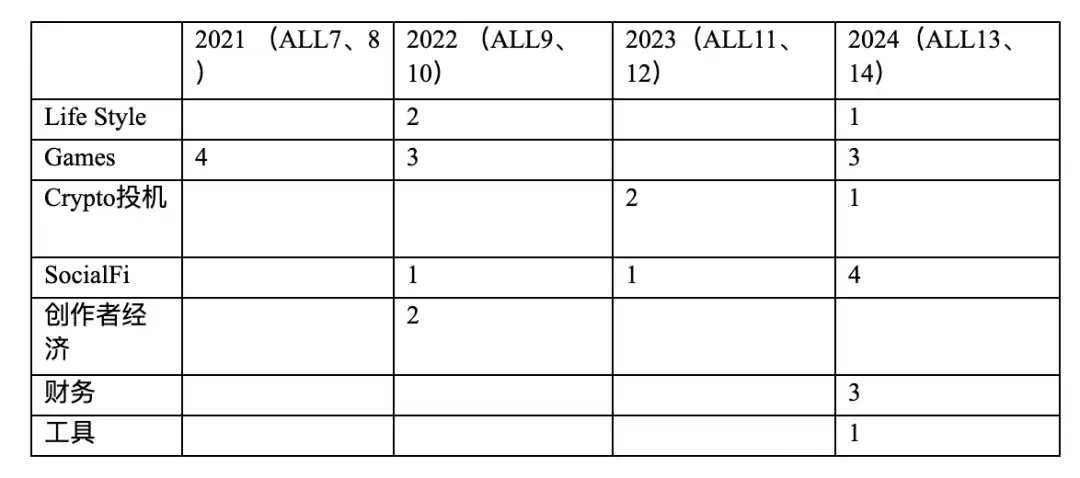
Looking at the development trend of investment preferences, Alliance DAO began investing in and incubating Consumer projects in 2021. From the first half of 2021 to the first half of 2023, its main investment and incubation focus was on Games and Creator Economy projects. Starting from the second half of 2023 until 2024, its preference shifted to Crypto Speculation, SocialFi, and Finance projects.
The author has tracked some of Alliance DAO's publicly released articles, podcasts, and other content, summarizing its investment philosophy regarding the Web3 consumer track as follows:
1. Firstly, it believes that the ecosystem's foundational tools are increasingly mature and that more application layer solutions are needed to bring genuine value capture to the ecosystem;
2. Founding teams should focus on Product-Market Fit (PMF). Usually, during the market validation process, teams face two main risks: product-side risk and market-side risk. Consumer projects have a higher market-side risk, so teams should consider avoiding premature token introduction to prevent distortion of PMF validation results.
3. The target users of Web3 consumer applications can be divided according to their acceptance of Web3. On the left are non-Web3 regular users, and on the right are Web3 Native users. For applications targeting left-side users, Web3 elements are mainly used to lower customer acquisition costs through "advertising tokens" to capture more market share. Right-side users need to focus on assetizing new targets, bringing additional investment and speculative demand, or addressing the unique needs of Web3-native users. Currently, the preference leans more towards the latter.
4. It's noted that the user profiles of the Solana ecosystem and EVM ecosystem are different, with the former being more conducive to the success of Consumer applications for four main reasons:
More vibrant community: Solana users are highly enthusiastic about participating in new projects, especially those with speculative potential, possibly due to the wealth effect; Stronger and more efficient ecosystem resource support: Solana ecosystem core members are more community-oriented, possess strong community mobilization capabilities, and respond more rapidly to new project support. Faster and lower-cost infrastructure: Aimed at creating an on-chain Nasdaq, with low transaction costs, high confirmation speeds, and due to the undiversified nature of core components and a focus on usability, the learning curve for new users is relatively low. Higher product competitive barriers: Due to the adoption of non-EVM technology stack choices, the cost of copying Solana DApps is higher.

What is a Web3 Consumer Application
A consumer application, also known in Chinese context as a To C (To Consumer) application, means that your target users are mostly ordinary consumers, not enterprise users. Open your App Store, and all the apps inside belong to this category. Web3 consumer applications refer to software applications with Web3 features aimed at consumers.
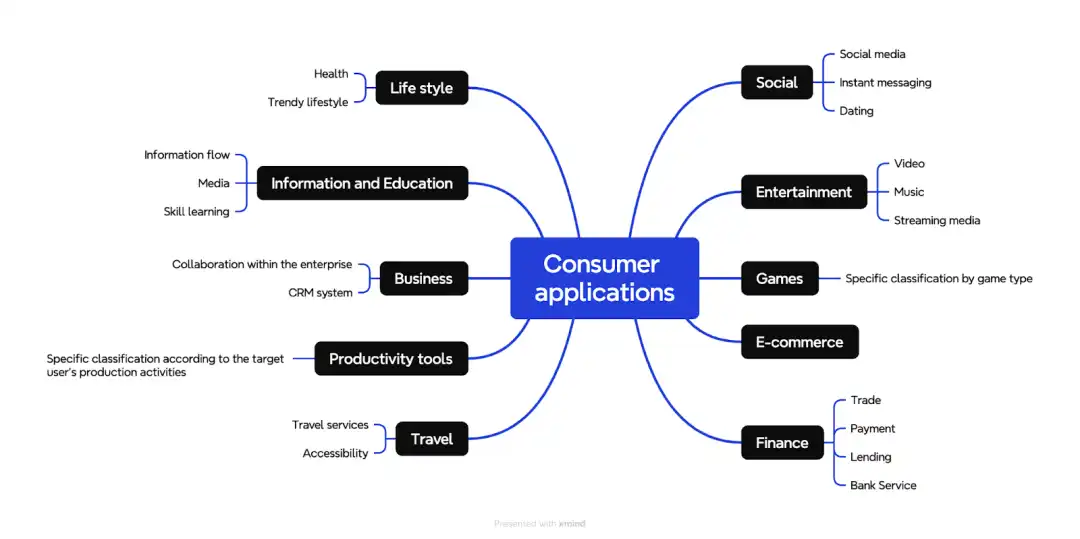
Generally, according to the categorization in most App Stores, we can roughly divide the entire consumer application field into the following 10 categories, each of which will have different subdivisions. Of course, as the market matures, many new products, in order to find their own unique selling points, will combine multiple features to some extent. However, we can still make a simple classification based on their core selling points.
Web3 Consumer Application Paradigms and Their Opportunities and Challenges
Based on an analysis of the investment concept of the Allinance DAO and his own observations, the author believes that there are three common paradigms of Web3 consumer applications:
1. Utilizing the technical characteristics of Web3 infrastructure to optimize certain issues existing in traditional consumer applications:
This is a common paradigm. We know that a large amount of investment in the Web3 industry revolves around infrastructure development. Application creators using this paradigm hope to leverage the technical features of Web3 infrastructure to enhance their product's competitive advantage or provide new services. The benefits brought by these technological innovation directions can usually be categorized into the following two types:
1. Ultimate Privacy Protection and Data Sovereignty:
· Opportunity: Privacy has always been the main theme of Web3 infrastructure innovation. From the initial asymmetric encryption algorithm for identity confirmation, it has gradually integrated numerous software and hardware technologies, such as ZK, FHE, to TEE, among others. Many tech bigwigs in Web3 seem to adhere to an extreme view, aiming to create a network environment that does not rely on third-party trust and provide users with the ability to interact with information or value.
This technological characteristic most directly benefits users by providing data sovereignty. Personal privacy information can be stored directly on locally trusted software and hardware devices, avoiding the leakage of privacy information. Many Web3 consumer applications optimized for this technological characteristic exist, and any project that claims to be a decentralized XX falls into this paradigm, such as decentralized social media platforms, decentralized AI large models, decentralized video websites, and so on.
· Challenge: After years of market validation, it can be said that using this as a core selling point has not shown a clear advantage in market competition. There are two reasons for this. Firstly, consumer users' emphasis on privacy is based on large-scale privacy breaches and infringement events. However, in most cases, such issues can be effectively mitigated through more comprehensive legislation and regulations. Therefore, if privacy protection is based on a more complex product experience or a higher cost of use, its competitiveness will be significantly inadequate.
Secondly, as we know, the business model of most current consumer applications is built on extracting value from big data, such as targeted marketing. Overemphasizing privacy protection will undermine the mainstream business model because user data will be scattered across a batch of data silos, posing a challenge for designing a sustainable business model. If the product ends up having to rely solely on so-called 'Tokenomics,' it will have to introduce unnecessary speculative attributes to the product. This, on the one hand, distracts the team's resources and energy to deal with the impact of these attributes on the product and, on the other hand, is detrimental to finding Product-Market Fit (PMF). This will be specifically analyzed in the following sections.
2. Low-Cost Global 24/7 Trusted Execution Environment:
Opportunity: The emergence of numerous L1 and L2 solutions has provided application developers with a new, globalized, 24/7 multi-party trusted program execution environment. Typically, traditional software service providers independently maintain their programs, such as running on their server clusters or in the cloud. This naturally incurs a trust cost in businesses involving multi-party collaboration, especially when the parties are evenly matched in strength or scale, or when the data involved is particularly sensitive and critical, resulting in a significant trust cost that usually translates into high development and user usage costs, such as in cross-border payment scenarios. The utilization of the execution environment brought by Web3 can effectively reduce the costs associated with these services. Stablecoins are a good example of such applications.
Challenge: From a cost reduction and efficiency improvement perspective, this is indeed a competitive advantage. However, exploring application scenarios for this is quite challenging. As mentioned earlier, the benefits of using this execution environment are only seen in a service involving multi-party collaboration, where relevant parties are independent and evenly matched in scale, and the data involved is particularly sensitive. This is a rather stringent condition. Currently, most of these application scenarios are concentrated in the financial services sector.
2. Utilizing Crypto Assets to Design New Marketing Strategies, User Loyalty Programs, or Business Models:
Similar to the first point, application developers adopting this paradigm also hope to introduce Web3 attributes to give their products a competitive advantage in a relatively mature, market-validated scenario. However, these application developers focus more on introducing crypto assets and leveraging the highly financial nature of crypto assets to design better marketing strategies, user loyalty programs, and business models.
We know that any investment target has two types of value, commodity value and financial value. The former is related to the target's use value in a particular real-world scenario, such as the livable attribute of real estate assets, while the latter is related to its trading value in the financial market. This trading value in the cryptocurrency field usually comes from the speculative scene brought about by high liquidity and volatility. Cryptocurrency is an asset class where the financial attribute far outweighs the commodity attribute.
And in the eyes of most such application developers, the introduction of cryptocurrency typically brings about three main benefits:
1. Reduce Customer Acquisition Costs through Token-based Marketing Activities like Airdrops:
· Opportunity: For most consumer applications, how to acquire customers at a low cost in the early stages of a project is a key issue. Tokens, with their high financial attribute and being assets created out of thin air, can significantly reduce the risk of early-stage projects. After all, compared to directly buying traffic with real money, gaining exposure, and using a zero-cost created Token for user acquisition is indeed a more cost-effective choice. From a certain perspective, these types of Tokens are similar to advertising Tokens. Many projects adopt this paradigm, such as most TON ecosystem projects and small games.
· Challenge: This customer acquisition method mainly faces two main issues. Firstly, the conversion cost of seed users acquired through this method is extremely high. We know that most users attracted by this method are mostly cryptocurrency speculators, so these users are not particularly focused on the project itself; they are more interested in the potential financial rewards and participate in it for that reason. Moreover, there are currently many professional airdrop hunters or airdrop farming studios, which poses a great challenge to converting them into actual product users later on. It might also lead to a misjudgment of Product-Market Fit (PMF), resulting in excessive investment in the wrong direction.
Secondly, with the widespread application of this type of model, the marginal benefits of acquiring customers through Airdrops are diminishing. This means that if you want to establish enough attractiveness among cryptocurrency speculators, the cost will gradually increase.
2. User Loyalty Programs Based on X to Earn:
· Opportunity: Retention and reactivation are another key concern for consumer applications. How to ensure that users continue to use your product requires a lot of effort and cost. Similar to marketing, using the financial attribute of Tokens to reduce the cost of retention and reactivation has also become the choice of most such projects. A representative model is X to Earn, where users are rewarded with Tokens based on pre-defined key user behaviors, thereby establishing a user loyalty program.
· Challenge: Relying on user motivation to earn rewards can shift the user's focus from the product's functionality to the yield, so if the potential yield decreases, user engagement will quickly diminish. This can be highly detrimental to consumer applications, especially those relying heavily on User-Generated Content (UGC). If the yield is based on the price of the project's issued token, it puts pressure on the project to manage its market value, especially during bear market phases, leading to high maintenance costs.
3. Leveraging Token's Financial Properties for Direct Liquidity:
· Opportunity: For traditional consumer applications, the most common business models are twofold: one is free of charge, leveraging the value of platform traffic after widespread adoption, and the other is paid usage, where users need to pay a fee to access certain Pro features. However, the former has a longer cycle, and the latter is more challenging. Therefore, Tokens bring forth a new business model, which is leveraging Token's financial properties for direct liquidity, meaning the project directly sells the token for cash-out.
· Challenge: It can be explicitly stated that this is an unsustainable business model. The reason being that once the project has passed the early-stage high-growth phase, due to the lack of incremental funding inflow, this zero-sum game model inevitably places the project's interests in opposition to user interests, accelerating user attrition. If not cashed out proactively, due to the lack of robust cash flow revenue, the project can only rely on fundraising to sustain team operations or business expansion, leading to a dependence on market conditions.
3. Fully Serving Web3-Native Users to Address this User Segment's Unique Pain Points:
The final paradigm refers to consumer applications that fully serve Web3-native users. These can generally be divided into two categories based on the innovation direction:
Creating new narratives around some of the untapped value elements for Web3-native users, engaging in monetization design and creating new asset categories:
· Opportunity: By providing new speculative targets for Web3-native users (e.g., the SocialFi track), the advantage lies in obtaining pricing power over a certain asset at the project's initial stage, thus gaining monopoly profits. In contrast, achieving this in traditional industries requires intense market competition and the establishment of strong competitive barriers.
· Challenge: Frankly speaking, this paradigm depends heavily on team resources, specifically on whether it is possible to obtain recognition and support from individuals or institutions within the Web3-native user base who possess strong influence or what is referred to as the "pricing power" of crypto assets. This brings about two main challenges: firstly, as the market evolves, the pricing power of crypto assets dynamically transfers between different groups, for example, from the original Crypto OGs to crypto VCs, then to CEX platforms, further to crypto Key Opinion Leaders (KOLs), and ultimately to traditional politicians, entrepreneurs, or celebrities.
Throughout this process, the ability to identify trends during each power transition, collaborate with the nouveau riche, and remain highly sensitive to team resources and market dynamics has become crucial. Secondly, in order to establish a partnership with these "price setters," it often requires significant costs and sacrifices because in this market, you are not competing against other rivals in a specific application track for a larger market share; instead, you are competing alongside all other crypto asset creators to win the favor of the "price setters," which is a fiercely competitive game.
By offering new tooling products that cater to the unmet needs of Web3-native users in the market participation process. Or, from a user experience perspective, providing better and more convenient products for this user segment:
· Opportunity: With the gradual adoption of cryptocurrencies, the overall user base of this segment will expand, creating opportunities for user segmentation. Furthermore, due to their focus on the genuine needs of a specific user group, these products often find it easier to achieve Product-Market Fit (PMF), thus establishing a more robust business model, such as some transaction-related data analysis platforms, Trading Bots, information platforms, etc.
· Challenge: As the focus returns to real user needs, although the development path of the product is more robust, the construction cycle is longer compared to other paradigm projects. Additionally, since such projects are demand-driven rather than narrative-driven, the PMF of the product is relatively easy to validate. In the early stages of the project, it is usually challenging to secure large amounts of funding. Therefore, maintaining patience and sticking to the original intentions amid the complexities of "coin issuance" or the wealth myth brought by overvalued financing is a very difficult task.

Reflections on the Investment Theory of Web3 Consumer Applications
Next, let's introduce our thoughts on the investment theory of Web3 consumer applications, which can be roughly divided into five core viewpoints:
1. How to surpass the speculative cycle is the primary consideration for Web3 consumer applications
As one of the most successful Web3 consumer applications in the previous cycle, the development path of Friend.Tech can provide us with great insights. According to Dune's data, Friend.Tech has currently accumulated a Protocol Fee of $24,313,188. The total number of users (Traders) has reached 918,888. For a Web3 application, this data performance is quite remarkable.
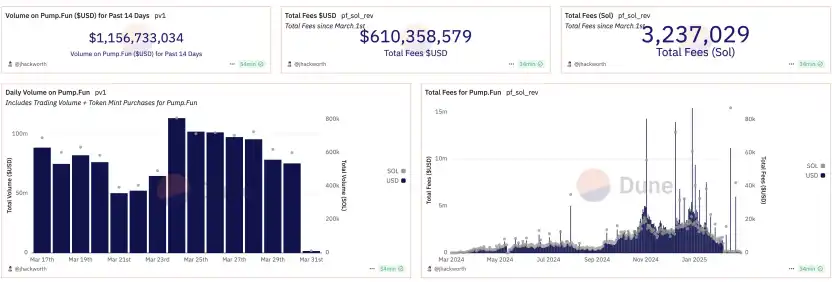
However, the development of this project has encountered significant challenges. The reasons behind this are multifaceted. First, in terms of product design, Friend.Tech introduced the Bonding Curve design, bringing a speculative element to the social application, which initially attracted a large number of users through a wealth effect. However, in the mid to long term, this approach also raised the barrier for user entry into the community, which contradicts the current practice of most Web3 projects or Key Opinion Leaders (KOLs) relying on organic traffic to build influence.
Furthermore, Friend.Tech excessively tied the token to the product's utility, leading to an oversaturation of Web3 speculative users in their product. This caused users to lose focus on the product's utility, ultimately resulting in the current situation.
Therefore, for most Web3 consumer applications, after accumulating a large number of users, it is essential to carefully consider how to find Product-Market Fit (PMF), maintain user engagement, help the project move beyond the speculative cycle, and build a sustainable business model. By effectively addressing these issues, Web3 consumer applications can achieve true Mass Adoption.
2. During the investment process, how to evaluate Web3 consumer applications?
Overall, the investment evaluation of Web3 consumer applications mainly focuses on two aspects. The first aspect is to assess their market potential through the analysis of the product's operational data. This can be broadly divided into two dimensions:
· User Data: For most consumer applications, user data is always crucial as a substantial user base is a prerequisite for consumer applications to explore their business model. Similar to evaluating most traditional Web2 consumer applications, we can use metrics such as active users, user growth rate, user retention rate, etc., to determine whether they have found PMF.
In addition, for different categories and stages of Web3 consumer applications, the focus will also vary. For example, in Web3 Social applications, user retention rate will be more critical. Investors generally start from a niche market. When they find an application with a high retention rate within a user base with unique characteristics, it indicates its investment value. However, it's essential to carefully examine the data to avoid mistaking bot users for PMF during the evaluation process.
· Conversion Data: In addition to user data, it is also necessary to assess potential business value through conversion data, such as Assets Under Management (AUM) and User spend. If a project has many users but a small AUM, or if the average spend per user is low, it indicates limited commercial value. Not all revenue data is the same, and revenue quality can also vary significantly. If the revenue structure is based on actual income, it indicates that users are paying for the product provided to them, rather than mining their tokens. This type of business model is more sustainable.
The second aspect is the evaluation of the team, focusing mainly on three aspects. First is the team's technical strength, which allows them to build product moats, thus forming the core of their competitive advantage. Second, the team needs to have a strong market sense and openness to timely identify market opportunities, understand which users' needs are not being met, and promptly adjust their business direction. Lastly, team resources are also essential, such as partnerships with other applications, collaborations with Key Opinion Leaders (KOLs), etc., which determine the success rate of the project's launch.
3. How to Define a Successful Web3 Consumer Application
From an investor's perspective, defining a successful Web3 consumer application is an intriguing question. Is the success of a Web3 consumer application revenue-driven or token price-driven? Overall, these two aspects are interconnected. Assuming a project cannot generate sustainable revenue, in the end, its issued tokens will not have much of a future. However, this evaluation criterion mainly depends on your investment horizon. If the overall investment horizon is short, then the assessment of token price is more critical, focusing on the tokenomics. On the other hand, for long-term value investment, the performance of revenue data and the sustainability of the revenue structure are more crucial.
4. The "App Factory Model" may be a more deterministic business strategy for Web3 Consumer Applications
Referring to the development of China's Web2 industry, ByteDance has developed many successful consumer applications. Their business strategy involves continuous trial and error, developing numerous different types of products, and letting the market choose a few successful directions to continue investing resources and expanding their business. For them, the key to this successful strategy is the accumulation of a large user base, reducing their trial and error costs. This experience can be applied to the Web3 industry.
Therefore, from this perspective, projects like Friend.Tech still have opportunities in this cycle. At least in the short term, they have shown attractiveness, attracting a large number of users and having decent revenue-generating capabilities. These aspects will help them become Web3 app factories, making their subsequent development worth watching.
5. What Characteristics Will the Next Successful Web3 Consumer Application Possess?
We believe that in the next cycle, successful Web3 consumer applications will appear in the following three paradigms. First, by relying on the fun nature of the product, they will initially attract adoption by crypto Key Opinion Leaders (KOLs) and then leverage the KOLs' influence to bring their fans onto the platform, helping the project achieve a cold start. A representative example of this paradigm is Kaito. The team, through their strong technical ability and innovative incentive mechanism, has gained significant mindshare in the crypto community, allowing them to have strong penetration in different communities. At the same time, they have precisely addressed how Web3 projects can effectively acquire users in the marketing process, accumulating a large number of B2C users and creating precise user profiles for each user through mindshare. This helps Web3 enterprises conduct precise marketing through the Kaito platform, making their business model more sustainable and breaking free from short-term speculative cycles.
The second paradigm is to start from the real needs of Web3 users, rely on product strength to win the market directly. By not introducing a Token too early, it will allow the project to escape the interference of speculative users during Product-Market Fit (PMF) process, building a higher user retention rate, as seen in projects like Polymarket, Chomp, etc.
The third paradigm is innovation in business models. At this point, Grass has given us great inspiration by utilizing users' idle computing resources to help them find sources of value capture in fields such as artificial intelligence and monetizing it through tokens. Although from a business model perspective, Grass leans more towards a B2B model, this "sharing economy" mindset can also be applied to the design of Web3 consumer applications.
6. Which categories of projects are more likely to become the first Web3 consumer applications to find PMF in the crypto industry
Currently, combining market trends and investor preferences, the next Web3 consumer applications most likely to find Product-Market Fit (PMF) may emerge from the following categories:
Firstly, Web3 social applications are still highly regarded by the market. We know that Web3 projects greatly value and rely on social media for marketing, and compared to traditional investors, cryptocurrency investors also prefer to use social media to gather information and form a value network. Therefore, the importance of Web3 social applications is self-evident. By exploring assetization or niche market demands, learning from friend.tech's experiences, introducing a more sustainable business model, and stronger user retention, will help Web3 social applications overcome excessive speculation, and find PMF.
Secondly, on-chain transaction tools applications also have great potential. With the continuous development of MEME, investors' attention to on-chain transactions is also increasing. The success of on-chain transaction tools such as OKX Wallet, GMGN proves the market's strong demand for this. As mainstream trading tools are widely adopted, the yield of homogenized trading strategies will decrease, thus, the customization needs of users will continue to rise. If these users can be provided with differentiated on-chain trading tools or investment strategies, the market potential for related products is also good.
Payment applications are also one of the categories worth looking forward to in the future. With the recent passage of legislation related to payment stablecoins, the regulatory pressure previously borne by payment applications has been relieved. Therefore, we have reason to believe that in the near future, Web3 payment applications will leverage the advantages brought by blockchain technology such as low cost and high settlement efficiency to build competitive barriers in cross-border payments, idle fund management, and other scenarios.
Lastly, the development of DeFi is also worth noting. Firstly, as one of the few scenarios that have currently found Product-Market Fit (PMF), DeFi has become an indispensable category within the Web3 industry. We can see from the success of Hyperliquid that users still have a demand for decentralization. With the continuous improvement of infrastructure, the performance limitations of previous decentralized applications will be overcome. In financial application scenarios that require high efficiency, such as high-frequency trading, DeFi will deliver performance comparable to CeFi products. Therefore, we have the opportunity to see more products similar to Hyperliquid that will challenge the existing CeFi system.
猜你喜歡

穩定幣驅動全球B2B支付革新,如何打破工作流程瓶頸釋放兆市場潛力?
這些新創公司正在無需資料中心的情況下建立先進AI模型
CEX與Wallet之後,OKX入局支付
RWA永續產品危機:為什麼GLP模式註定撐不住RWA永續?
科學平權運動:DeSci的萬億美元知識經濟重建革命
Sentient深度研報:獲8,500萬美元融資,建置去中心化AGI新範式
專訪Virtuals聯創empty:AI 創業不需要大量資金,Crypto是答案之一
今年 2 月,Base 生態中的 AI 協議 Virtuals 宣布跨鏈至 Solana,然而加密市場隨後進入流動性緊縮期,AI Agent 板塊從人聲鼎沸轉為低迷,Virtuals 生態也陷入一段蟄伏期。
三月初,BlockBeats 對 Virtuals 共同創辦人 empty 進行了一次專訪。彼時,團隊尚未推出如今被廣泛討論的 Genesis Launch 機制,但已在內部持續探索如何透過機制設計激活舊資產、提高用戶參與度,並重構代幣發行與融資路徑。那是一個市場尚未復甦、生態尚處冷啟動階段的時間點,Virtuals 團隊卻沒有停下腳步,而是在努力尋找新的產品方向和敘事突破口。
兩個月過去,AI Agent 板塊重新升溫,Virtuals 代幣反彈超 150%,Genesis 機製成為帶動生態回暖的重要觸發器。從積分獲取規則的動態調整,到專案參與熱度的持續上升,再到「新代幣帶老代幣」的機制閉環,Virtuals 逐漸走出寒冬,並再次站上討論焦點。
值得注意的是,Virtuals 的 Genesis 機制與近期 Binance 推出的 Alpha 積分系統有一些相似之處,評估用戶在 Alpha 和幣安錢包生態系統內的參與度,決定用戶 Alpha 代幣空投的資格。用戶可透過持倉、交易等方式獲得積分,積分越高,參與新項目的機會越大。透過積分系統篩選使用者、分配資源,專案方能夠更有效地激勵社群參與,提升專案的公平性和透明度。 Virtuals 和 Binance 的探索,或許預示著加密融資的新趨勢正在形成。
回看這次對話,empty 在專訪中所展現出的思路與判斷,正在一步步顯現其前瞻性,這不僅是一場圍繞打新機制的訪談,更是一次關於“資產驅動型 AI 協議”的路徑構建與底層邏輯的深度討論。
BlockBeats:可以簡單分享一下最近團隊主要在忙些什麼?
empty:目前我們的工作重點主要有兩個部分。第一部分,我們希望將 Virtuals 打造成一個類似「華爾街」的代理人(Agent)服務平台。設想一下,如果你是專注於 Agent 或 Agent 團隊建立的創業者,從融資、發幣到流動性退出,整個流程都需要係統性的支援。我們希望為真正專注於 Agent 和 AI 研發的團隊,提供這一整套服務體系,讓他們可以把精力集中在底層能力的開發上,而不用為其他環節分心。這一塊的工作其實也包括了與散戶買賣相關的內容,後面可以再詳細展開。
第二部分,我們正在深入推進 AI 相關的佈局。我們的願景是建立一個 AI 社會,希望每個 Agent 都能聚焦自身優勢,同時透過彼此之間的協作,實現更大的價值。因此,最近我們發布了一個新的標準——ACP(Agent Communication Protocol),目的是讓不同的 Agent 能夠相互互動、協作,共同推動各自的業務目標。這是目前我們主要在推進的兩大方向。
BlockBeats:可以再展開說說嗎?
empty:在我看來,其實我們面對的客戶群可以分為三類:第一類是專注於開發 Agent 的團隊;第二類是投資者,包括散戶、基金等各種投資機構;第三類則是 C 端用戶,也就是最終使用 Agent 產品的個人用戶。
不過,我們主要的精力其實是放在前兩大類──也就是團隊和投資人。對於 C 端用戶這一塊,我們並不打算直接介入,而是希望各個 Agent 團隊能夠自己解決 C 端市場的拓展問題。
此外,我們也認為,Agent 與 Agent 之間的交互作用應該成為一個核心模式。簡單來說,就是未來的服務更多應該是由一個 Agent 銷售或提供給另一個 Agent,而不是單純賣給人類使用者。因此,在團隊的 BD 工作中,我們也積極幫助現有的 AI 團隊尋找這樣的客戶和合作機會。
BlockBeats:大概有一些什麼具體案例呢?
empty:「華爾街」說白了就是圍繞資本運作體系的建設,假設你是一個技術團隊,想要融資,傳統路徑是去找 VC 募資,拿到資金後開始發展。如果專案做得不錯,接下來可能會考慮進入二級市場,例如在紐約證券交易所上市,或是在 Binance 這樣的交易所上幣,實現流動性退出。
我們希望把這一整套流程打通-從早期融資,到專案開發過程中對資金的靈活使用需求,再到最終二級市場的流動性退出,全部覆蓋和完善,這是我們希望補齊的一條完整鏈條。
而這一部分的工作和 ACP(Agent Communication Protocol)是不同的,ACP 更多是關於 Agent 與 Agent 之間交互標準的製定,不直接涉及資本運作系統。
BlockBeats:它和現在 Virtuals 的這個 Launchpad 有什麼差別呢?資金也是從 C 端來是嗎?
empty:其實現在你在 Virtuals 上發幣,如果沒有真正融到資金,那就只是發了一個幣而已,實際是融不到錢的。我們目前能提供的服務,是透過設定買賣時的交易稅機制,從中提取一部分稅收回饋給創業者,希望這部分能成為他們的現金流來源。
不過,問題其實還分成兩塊。第一是如何真正幫助團隊完成融資,這個問題目前我們還沒有徹底解決。第二是關於目前專案發行模式本身存在的結構性問題。簡單來說,現在的版本有點像過去 Pumpfun 那種模式——也就是當專案剛上線時,部分籌碼就被外賣給了外部投資人。但現實是,目前整個市場上存在著太多機構集團和「狙擊手」。
當一個真正優秀的專案一發幣,還沒真正觸達普通散戶,就已經被機構在極高估值時搶購了。等到散戶能夠接觸到時,往往價格已經偏高,專案品質也可能變差,整個價值發行體係被扭曲。
針對這個問題,我們希望探索一種新的發幣和融資模式,目的是讓專案方的籌碼既不是死死握在自己手裡,也不是優先流向英文圈的大機構,而是能夠真正留給那些相信專案、願意長期支持專案的普通投資者手中。我們正在思考該如何設計這樣一個新的發行機制,來解決這個根本問題。
BlockBeats:新模式的具體想法會是什麼樣子呢?
empty:關於資金這一塊,其實我們目前還沒有完全想透。現階段來看,最直接的方式還是去找 VC 融資,或是採取公開預售等形式進行資金募集。不過說實話,我個人對傳統的公開預售模式並不是特別認同。
在「公平發售」這件事上,我們正在嘗試換一個角度來思考-希望能從「reputation」出發,重新設計機制。
具體來說,就是如果你對整個 Virtuals 生態有貢獻,例如早期參與、提供支持或建設,那麼你就可以在後續購買優質代幣時享有更高的優先權。透過這種方式,我們希望把資源更多留給真正支持生態發展的用戶,而不是由短期套利的人主導。
BlockBeats:您會不會考慮採用類似之前 Fjord Foundry 推出的 LBP 模式,或者像 Daos.fun 那種採用白名單機制的模式。這些模式在某種程度上,和您剛才提到的「對生態有貢獻的人享有優先權」的想法是有些相似的。不過,這類做法後來也引發了一些爭議,例如白名單內部操作、分配不公等問題。 Virtuals 在設計時會考慮借鏡這些模式的優點,或有針對性地規避類似的問題嗎?
empty:我認為白名單機制最大的問題在於,白名單的選擇權掌握在專案方手中。這和「老鼠倉」行為非常相似。專案方可以選擇將白名單名額分配給自己人或身邊的朋友,導致最終的籌碼仍然掌握在少數人手中。
我們希望做的,依然是類似白名單的機制,但不同的是,白名單的獲取權應基於一個公開透明的規則體系,而不是由項目方單方面決定。只有這樣,才能真正做到公平分配,避免內幕操作的問題。
我認為在今天這個 AI 時代,很多時候創業並不需要大量資金。我常跟團隊強調,你們應該優先考慮自力更生,例如透過組成社區,而不是一開始就想著去融資。因為一旦融資,實際上就等於背負了負債。
我們更希望從 Training Fee的角度去看待早期發展路徑。也就是說,專案可以選擇直接發幣,透過交易稅所帶來的現金流,支持日常營運。這樣一來,專案可以在公開建設的過程中獲得初步資金,而不是依賴外部投資。如果專案做大了,自然也會有機會透過二級市場流動性退出。
當然最理想的情況是,專案本身能夠有穩定的現金流來源,這樣甚至連自己的幣都無需拋售,這才是真正健康可持續的狀態。
我自己也常在和團隊交流時分享這種思路,很有意思的是,那些真正抱著「搞快錢」心態的項目,一聽到這種機制就失去了興趣。他們會覺得,在這種模式下,既無法操作老鼠倉,也很難短期套利,於是很快就選擇離開。
但從我們的角度來看,這其實反而是個很好的篩選機制。透過這種方式,理念不同的專案自然會被過濾出去,最後留下的,都是那些願意真正建立、和我們價值觀契合的團隊,一起把事情做起來。
BlockBeats:這個理念可以發展出一些能夠創造收益的 AI agent。
empty:我覺得這是很有必要的。坦白說,放眼今天的市場,真正擁有穩定現金流的產品幾乎鳳毛麟角,但我認為這並不意味著我們應該停止嘗試。事實上,我們每天在對接的團隊中,有至少一半以上的人依然懷抱著長遠的願景。很多時候,他們甚至已經提前向我們提供了 VC 階段的資金支持,或表達了強烈的合作意願。
其實對他們來說想要去收穫一個很好的社區,因為社區可以給他們的產品做更好的回饋,這才是他們真正的目的。這樣聽起來有一點匪夷所思,但其實真的有很多這樣的團隊,而那種團隊的是我們真的想扶持的團隊。
BlockBeats:您剛才提到的這套「AI 華爾街」的產品體系-從融資、發行到退出,建構的是一整套完整的流程。這套機制是否更多是為了激勵那些有意願發幣的團隊?還是說,它在設計上也考慮瞭如何更好地支持那些希望透過產品本身的現金流來發展的團隊?這兩類團隊在您這套體系中會不會被區別對待,或者說有什麼機制設計能讓不同路徑的創業者都能被合理支持?
empty:是的,我們 BD 的核心職責其實就是去鼓勵團隊發幣。說得直接一點,就是引導他們思考發幣的可能性和意義。所以團隊最常問的問題就是:「為什麼要發幣?」這時我們需要採取不同的方式和角度,去幫助他們理解背後的價值邏輯。當然如果最終判斷不適合,我們也不會強迫他們推進。
不過我們觀察到一個非常明顯的趨勢,傳統的融資路徑已經越來越難走通了。過去那種融資做大,發幣上所的模式已經逐漸失效。面對這樣的現實,很多團隊都陷入了尷尬的境地。而我們希望能從鏈上和加密的視角,提供一套不同的解決方案,讓他們找到新的發展路徑。
BlockBeats:明白,我剛才其實想表達的是,您剛剛也提到,傳統的 AI 模式在很大程度上仍然依賴「燒錢」競爭。但在 DeepSeek 出現之後,市場上一些資金體積較小的團隊或投資人開始重新燃起了信心,躍躍欲試地進入這個領域。您怎麼看待這種現象?這會不會對目前正在做 AI 基礎研發,或是 AI 應用層開發的團隊產生一定的影響?
empty:對,我覺得先不談 DeepSeek,從傳統角度來看,其實到目前為止,AI 領域真正賺錢的只有英偉達,其他幾乎所有玩家都還沒有實現盈利。所以其實沒有人真正享受了這個商業模式的成果,大家也仍在探索如何面對 C 端打造真正有產出的應用。
沒有哪個領域像幣圈一樣能如此快速獲得社群回饋。你一發幣,用戶就會主動去讀白皮書的每一個字,試試你產品的每個功能。
當然,這套機制並不適合所有人。例如有些 Agent 產品偏 Web2,對於幣圈用戶而言,可能感知不到其價值。因此,我也會鼓勵做 Agent 的團隊在 Virtuals 生態中認真思考,如何真正將 Crypto 作為自身產品的差異化要素加以運用與設計。
BlockBeats:這點我特別認同,在 Crypto 這個領域 AI 的迭代速度確實非常快,但這群用戶給予的回饋,真的是代表真實的市場需求嗎?或者說這些回饋是否真的符合更大眾化、更具規模性的需求?
empty:我覺得很多時候產品本身不應該是強行推廣給不適合的使用者群體。例如 AIXBT 最成功的一點就在於,它的用戶本身就是那群炒作他人內容的人,所以他們的使用行為是非常自然的,並不覺得是在被迫使用一個無聊的產品。 mass adoption 這個概念已經講了很多年,大家可能早就該放棄這個執念了。我們不如就認了,把東西賣給幣圈的人就好了。
BlockBeats:AI Agent 與 AI Agent 所對應的代幣之間,究竟應該是什麼樣的動態關係?
empty:對,我覺得這裡可以分成兩個核心點。首先其實不是在投資某個具體的 AI Agent,而是在投資背後經營這個 Agent 的團隊。你應該把它理解為一種更接近創投的思路:你投的是這個人,而不是他目前正在做的產品。因為產品本身是可以快速變化的,可能一個月後團隊會發現方向不對,立即調整。所以,這裡的「幣」本質上代表的是對團隊的信任,而不是某個特定 Agent 本身。
第二則是期望一旦某個 Agent 產品做出來後,未來它能真正產生現金流,或者有實際的使用場景(utility),從而讓對應的代幣具備賦能效應。
BlockBeats:您覺得有哪些賦能方式是目前還沒看到的,但未來可能出現、值得期待的?
empty:其實主要有兩塊,第一是比較常見的那種你要使用我的產品,就必須付費,或者使用代幣支付,從而間接實現對代幣的「軟銷毀」或消耗。
但我覺得更有趣的賦能方式,其實是在獲客成本的角度思考。也就是說,你希望你的用戶同時也是你的投資者,這樣他們就有動機去主動幫你推廣、吸引更多用戶。
BlockBeats:那基於這些觀點,您怎麼看 ai16z,在專案設計和代幣機制方面,似乎整體表現並不太樂觀?
empty:從一個很純粹的投資角度來看,撇開我們與他們之間的關係,其實很簡單。他們現在做的事情,對代幣本身沒有任何賦能。從開源的角度來看,一個開源模型本身是無法直接賦能代幣的。
但它仍然有價值的原因在於,它像一個期權(call option),也就是說,如果有一天他們突然決定要做一些事情,比如推出一個 launchpad,那麼那些提前知道、提前參與的人,可能會因此受益。
開發者未來確實有可能會使用他們的 Launchpad,只有在那一刻,代幣才會真正產生賦能。這是目前最大的一個問號——如果這個模式真的跑得通,我認為確實會非常強大,因為他們的確觸達了大量開發者。
但我個人還是有很多疑問。例如即使我是使用 Eliza 的開發者,也不代表我一定會選擇在他們的 Launchpad 上發幣。我會貨比三家,會比較。而且,做一個 Launchpad 和做一個開源框架,所需的產品能力和社群運作能力是完全不同的,這是另一個重要的不確定性。
BlockBeats:這種不同是體現在什麼地方呢?
empty:在 Virtuals 上我們幾乎每天都在處理客服相關的問題,只要有任何一個團隊在我們平台上發生 rug,即使與我們沒有直接關係,用戶也會第一時間來找我們投訴。
這時我們就必須出面安撫用戶,並思考如何降低 rug 的整體風險。一旦有團隊因為自己的代幣設計錯誤或技術失誤而被駭客攻擊、資產被盜,我們往往需要自掏腰包,確保他們的社群至少能拿回一點資金,以便專案能夠重新開始。這些項目方可能在技術上很強,但未必擅長代幣發行,結果因操作失誤被攻擊導致資產損失。只要涉及「被欺騙」相關的問題,對我們來說就已經是非常麻煩的事了,做這些工作跟做交易所的客服沒有太大差別。
另一方面,做 BD 也非常困難。優秀的團隊手上有很多選擇,他們可以選擇在 Pumpfun 或交易所上發幣,為什麼他們要來找我們,那這背後必須要有一整套支援體系,包括融資支援、技術協助、市場推廣等,每個環節都不能出問題。
BlockBeats:那我們就繼續沿著這個話題聊聊 Virtuals 目前的 Launchpad 業務。有一些社群成員在 Twitter 上統計了 Virtuals Launchpad 的整體獲利狀況,確實目前看起來獲利的項目比較少。接下來 Launchpad 還會是 Virtuals 的主要業務區嗎?還是說,未來的重心會逐漸轉向您剛才提到的「AI 華爾街」這條路徑?
empty:其實這兩塊本質上是一件事,是一整套體系的一部分,所以我們必須繼續推進。市場的波動是很正常的,我們始終要堅持的一點是:非常清楚地認識到我們的核心客戶是誰。我一直強調我們的客戶只有兩類——團隊。所以市場行情的好壞對我們來說並不是最重要的,關鍵是在每一個關鍵節點上,對於一個團隊來說,發幣的最佳選擇是否依然是我們 Virtuals。
BlockBeats:您會不會擔心「Crypto + AI」或「Crypto AI Agent」這一類敘事已經過去了?如果未來還有一輪多頭市場,您是否認為市場炒作的焦點可能已經不再是這些方向了?
empty:有可能啊,我覺得 it is what it is,這確實是有可能發生的,但這也屬於我們無法控制的範圍。不過如果你問我,在所有可能的趨勢中,哪個賽道更有機會長期保持領先,我仍然認為是 AI。從一個打德撲的角度來看,它仍然是最優選擇。
而且我們團隊的技術架構和底層能力其實早已搭建完成了,現在只是順勢而為而已。更重要的是,我們本身真的熱愛這件事,帶著好奇心去做這件事。每天早上醒來就有驅動力去研究最新的技術,這種狀態本身就挺讓人滿足的,對吧?
很多時候,大家不應該只看產品本身。實際上很多優秀的團隊,他們的基因決定了他們有在規則中勝出的能力——他們可能過去在做派盤交易時,每筆規模就是上百萬的操作,而這些團隊的 CEO,一年的薪資可能就有 100 萬美金。如果他們願意出來單幹項目,從天使投資或 VC 的視角來看,這本質上是用一個很划算的價格買到一個高品質的團隊。
更何況這些資產是 liquid 的,不是鎖倉狀態。如果你當下不急著用錢,完全可以在早期階段買進一些優秀團隊的代幣,靜靜等待他們去創造一些奇蹟,基本上就是這樣一個邏輯。
第16週鏈上數據:結構性供需失衡加劇,數據揭⽰下⼀輪上漲的堅實藍圖?
a16z領投2500萬美元,0xMiden要在你手機裡跑一條隱私鏈
Sui Q1進階報告:BTCfi基建崛起、借貸協議爆發與執行分片未來
川普次子的加密生意經
門羅幣市值一天暴增15億美元背後,為何駭客不再喜歡比特幣?
盤點10大新興Launchpad平台,誰能完成Pump.fun的顛覆?
GoRich正式上線:鏈上交易零門檻,新手也能抓住100x Meme幣
4月29日市場關鍵情報,你錯過了多少?
PENGU觸底反彈發拉漲360%,胖企鵝如何靠IP行銷迎第二春?
「打新帶老」:Genesis Launch如何用積分制重建AI Agent打新邏輯?


 App
App