

VC Perspective: The Hyperliquid Event Exposes the Power Struggle Between CEX and DEX

Original Article Title: Exchange War Erupts: Hyperliquid vs. Binance & OKX - The Chopping Block
Original Source: Unchained
Original Translation: Deep Tide TechFlow
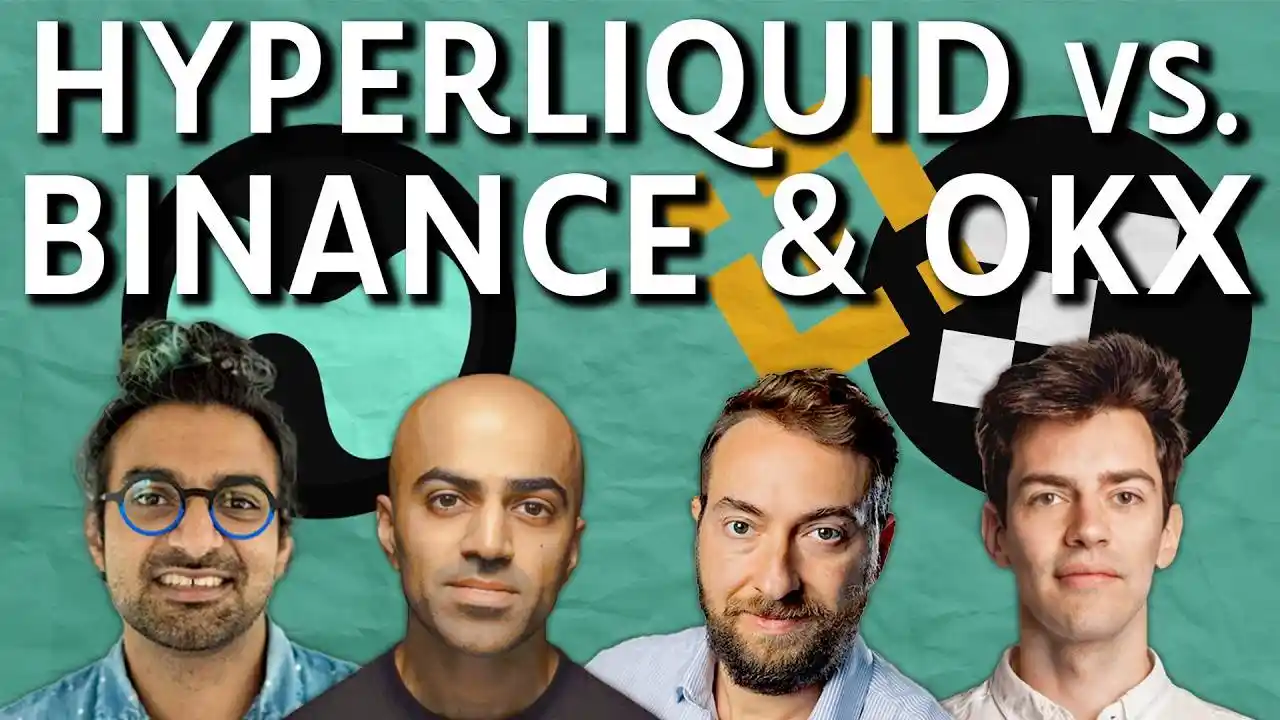
Guests:
· Haseeb Qureshi, Dragonfly Managing Partner
· Robert Leshner, Superstate CEO & Co-founder
· Tarun Chitra, Robot Ventures Managing Partner
· Tom Schmidt, Dragonfly General Partner
Key Highlights
The JELLYJELLY Crisis at Hyperliquid – How a highly anticipated DeFi project lost market trust due to using a false price oracle to rescue its treasury.
Escalation of Exchange Platform Competition – Binance and OKX listing JELLYJELLY perpetual contracts seen as a precise strike against Hyperliquid.
Is Decentralized Exchange Truly Decentralized? – The Hyperliquid incident exposed the issues of validator power centralization behind the performance of so-called "decentralization."
DNA On-Chain: Blockchain's 23andMe – Say Foundation proposes protecting genetic data through a token threshold; is this truly innovative for privacy protection, or a dystopian notion?
The Scam of Decentralized Science (DeSci) – Tarun once again critiques the DeSci concept and explains why the risk of putting genetic data on-chain is more severe than a meme coin.
Stablecoin Regulation Battle – The "Stable Act" and "Digital Asset Market Structure and Investor Protection Act" clash in Washington, but who will come out on top?
The Possibility of Stablecoins as Narrow Banks – The rise of cryptocurrency may force the Federal Reserve to accept a financial concept they have resisted for 20 years.
The Future Bet of HLP Deposits – The host makes a real-money bet on whether the deposit volume of Hyperliquid will recover or continue to decline after the Hyperliquid collapse.
Memecoin and Olympus's New Trends – Are the former "raiders" quietly earning profits from the broken vaults?
Tarun's Failure Leaderboard – Why is JELLYJELLY's failure worse than MobileCoin's, but at least it fits Hyperliquid's branding?
Hyperliquid Event Unfolding
Haseeb:
One of the biggest stories this week is the drama unfolding on Hyperliquid. For those unfamiliar, Hyperliquid is a new popular DEX, now the top DEX by overall trading volume. They conducted a large-scale airdrop, loved by crypto retail investors for the scale of the airdrop and fair launch.
In recent days, Hyperliquid has faced a large-scale attack centered around a memecoin—JellyJelly, a low-liquidity memecoin past its prime but listed by Hyperliquid as a trading pair. A trader opened an $8 million short position on JellyJelly, equivalent to 50% of Jelly's circulating market cap at the time, a massive short position. The trader then manipulated the spot price of Jelly, forcing their own liquidation.
So, why would a trader do this? Why force their own liquidation?
On Hyperliquid, when a position cannot be liquidated in the normal fashion, the HLP (Hyperliquid's crowdfunded market maker) takes over the position and tries to liquidate it in an orderly manner. HLP's presence is crucial to Hyperliquid's liquidity, always providing liquidity to traders. However, due to the massive size of this position, HLP was forced to short Jelly, but there were no takers in the market for this short position, ultimately leading to what's known as a "short squeeze."
This short squeeze is not just a prank by retail investors. In fact, the two major exchanges, OKX and Binance, were indirectly involved as well. When the market realized that Hyperliquid or its HLP was heavily shorting Jelly, OKX and Binance announced that they would list JellyJelly's futures trading within 24 hours.
Almost everyone believed this was a "war between exchanges." CZ and the CEO of OKX had already set their sights on Hyperliquid, seeing this as an opportunity to strike back.
Hyperliquid's validators voted to delist JellyJelly and, through manual adjustment of the oracle price, forcibly liquidated the position at a price below the market rate.
Haseeb:
This decision by Hyperliquid sparked widespread controversy. They argued that rather than making the platform or HLP holders bear the losses, it was better to artificially lock the price at a false low to safeguard the interests of HLP users. However, this action led to a significant drop in Hyperliquid's token price, plummeting from around $21 to $15, a nearly 25% decline in a single day.
This event raised two core questions:
· Firstly, was Hyperliquid's response in this situation reasonable? Does their mechanism design have fundamental flaws?
· Secondly, has this exposed that Hyperliquid's level of decentralization is not as high as it claims?
These questions have sparked intense discussions in the industry, with some centralized exchanges (such as Bitget) openly criticizing Hyperliquid's unfair practices. The competition among decentralized exchanges has also intensified, and the DeFi space seems to be at a critical turning point.
So, what are your thoughts on this HLP event?
Tarun:
I believe this event indeed exposed some flaws in the protocol design. Just like Automated Market Makers (AMMs), AMM mechanisms do not allow for order rejection. For example, both the initial Unicorn v2 and v3 lacked flexibility in this regard, where you couldn't choose to accept or reject specific orders. This issue also exists within Hyperliquid's liquidity pools.
The HLP mechanism of Hyperliquid differs from other platforms (such as GMX's GOP and Jupiter's JLP). The operation logic of HLP is that users deposit Ether (ETH), and the platform allocates these ETH to multiple assets for liquidity provision. For example, 1% of the ETH might be used to provide liquidity for JellyJelly, 90% for Ethereum, and the remaining portion for Bitcoin. This asset allocation is determined by an off-chain algorithm, and users need to trust Hyperliquid team's asset allocation ability.
Evidently, they made some mistakes in the mechanism design, such as not setting position limits and unclosed contract limits. If these limits were in place, the issue could have been mitigated without the need for emergency interventions. Hyperliquid has indicated that they will address these mechanisms, including increasing unclosed contract limits and concentration limits.
This is why I mentioned when describing this issue that liquidity pools that do not differentiate between order types have certain limitations. Under the current mechanism, HLP cannot selectively process orders, meaning it cannot reject certain orders and only accept specific types of orders. If HLP could differentiate positions subject to third-party forced liquidation, the market could price based on the actual value of these positions, and HLP would not have to incur unnecessary losses. However, the current design has HLP automatically trading with these positions, similar to how the Unicorn pool operates. Therefore, they lack sufficient restrictions in strategy design. These strategies are actually run off-chain by the Hyperliquid team and are not executed on-chain publicly transparently.
I am not sure what their code implementation looks like, as most of the code is not open source. Although I can run a node, I can only obtain binary files and cannot view the source code. Furthermore, many system settings are also not sufficiently transparent. This incident clearly demonstrates a significant flaw in their strategy limitations. I believe this is an issue they acknowledge needs to be prioritized for fixing. However, from a market perspective, it also highlights the value of having a more open strategy rather than being completely closed as it is now. Because as it stands, there is almost no transparency to the external operation of the HLP mechanism.
As a depositor in HLP, you actually do not know whether HLP has clear risk limits, such as automatically bearing the entire liquidity pool's position risk. You also cannot determine if they will intervene in the market by artificially adjusting oracle prices as they did in this incident. Although some related content is mentioned in the documentation, due to the unavailability of open-source code, users cannot verify the actual operation of these mechanisms. Even with closed-source code, there is a lack of other verifiable proof to confirm its behavior.
I believe that the mechanism provided by Hyperliquid ensures a difference in transparency compared to what users would expect in other protocols. In other protocols, users can clearly understand the operational logic of the strategy, although this transparency may require some trade-offs in efficiency and flexibility. The strategy of Hyperliquid, however, is not public, which indeed increases capital efficiency but also diminishes user trust. This trade-off is not entirely wrong, but evidently, in certain decisions, they have made less than ideal choices. However, these issues are understandable and can be rectified.
Controversy Over Market Rescue Decisions
Haseeb:
Is rescuing HLP depositors reasonable? Clearly, HLP may face significant losses in this event. Do you think this was a wrong decision?
Robert:
I believe it was a mistake, to be frank. Dealing with market issues after the platform's risk parameters spiral out of control is one thing, but liquidating in a way that benefits the HLP pool through intervention seems inappropriate. In the world of derivative markets, one party's profit usually signifies another party's loss. In this circumstance, the Hyperliquid team and validators seemed to have erroneously picked winners and losers.
HLP liquidity providers should bear the risk. If the liquidation is successful, they profit; if it fails, they accept the loss. However, this liquidation operation resulted in gains for HLP, meaning other market participants suffered losses. I consider this a violation of market fairness. If they insisted on intervening in the price, they should not have chosen a price that benefited themselves. What's even more perplexing is that the price they chose was even below the market price at the beginning of the event, clearly aiming to position themselves as winners.
Tom:
I agree. This behavior has also made the relationship between HLP as a product and the entire Hyperliquid platform delicate. HLP is just one of the liquidity pools; users can choose other pools and operate different off-chain strategies. HLP is positioned as the "official liquidity pool" of Hyperliquid, but theoretically, anyone can create a liquidity pool. Therefore, most people would not assume that HLP would receive any special treatment. However, this event made it feel like HLP was given some form of preferential treatment.
Some people have compared this event to the "loss socialization" or "automatic deleveraging" mechanism of traditional derivative trading platforms, but the two are not the same. In traditional mechanisms, when the market overall falls below the margin level, the trading platform will freeze positions and spread the losses to the insurance fund. However, in this event, HLP's loss state was only remedied through manual intervention, and Hyperliquid itself did not face default risk. This raises questions, why was HLP able to act as a trading platform's primary liquidity provider? If HLP's operation failed, why was it rescued?
Robert:
And it was rescued in a profitable way, which is just insane.
Tarun:
Indeed. What's even more ironic is that HLP's holders decided on the rescue price through a governance vote, indirectly bringing themselves profits.
Robert:
Can you elaborate on that? How did HLP holders participate in the Hyperliquid validation process?
Tom:
HLP holders can delegate their voting rights to a validator, but some validators require KYC, so the mechanism is a bit complex.
Tarun:
Validators control the oracle's price, thus determining the oracle's price adjustment through governance voting. In other words, HLP holders actually indirectly participated in voting through governance.
Haseeb:
Yes, this has received a lot of criticism. Because the Hyperliquid Foundation holds an absolute majority of the HYPE token's voting power, in this case, HYPE holders rapidly voted through delegation. However, this whole process took only two minutes, from the start of voting to the end, and the so-called voters had almost no real say.
Robert:
On whether the launch of contracts on other trading platforms will affect Hyperliquid, I am still somewhat confused. The contract market and the spot market are relatively independent trading venues. Even if there is increased demand for the JellyJelly contract on Binance, it may not directly change the Hyperliquid or spot market price because the spot price is controlled by an index, which also determines Hyperliquid's funding rate. So, what is the specific mechanism of this impact?
Haseeb:
First, if Binance wants to launch a spot market, they need to acquire actual spot inventory, which takes longer to accomplish. However, launching a futures market is faster than a spot market because a futures market doesn't require actual spot inventory. As long as there is sufficient demand, users can start trading futures without immediately impacting spot prices.
Robert:
For every long position, there is a corresponding short position, and every long has a short.
Haseeb:
Exactly. But structurally, launching a futures market is simpler. If you say, "Hey, I want to take these guys down as quickly as possible, and time is of the essence," then the fastest way is evidently through futures, not spot.
The purpose of launching the futures market is to get more people involved in the short squeeze. If Hyperliquid is experiencing a short squeeze, opening the futures market will exacerbate this trend.
Tarun:
This mainly depends on the dynamic change in the funding rate. In this event, the funding rate skyrocketed by 300% in a short period, causing the market to be extremely unstable.
OKX and Binance Joining
Haseeb:
The funding rate spiked by several hundred percentage points. This was a very intense short squeeze, so the market expects this matter to settle quickly. I speculate that Binance and OKX may delist the JellyJelly contract in one to two weeks because evidently, the market doesn't really have a demand for this product.
Tarun:
No one really needs JellyJelly.
Haseeb:
However, I find it interesting that the mechanism of this event may be hard to grasp, especially if you are not familiar with how the futures market, liquidity providers, and HLP operate. Let's simplify things first. The essence of the matter is that Hyperliquid found itself in a high-risk position, and Binance and OKX are attempting to further weaken Hyperliquid's position through market operations. More specifically, their goal is to force HLP, not Hyperliquid itself, into insolvency.
This behavior is very aggressive, isn't it? Some have compared this event to CZ's previous actions against FTX, but I don't think the two are similar. Because at that time, CZ had no reason to believe that selling FTT would directly lead to FTX's bankruptcy. If we look back at the Bitcoin hack incident, Binance and Bitget actually lent out Ether to help Bybit cover the shortfall and maintain its operations. Therefore, their behavior in that incident was completely different from how they are treating Hyperliquid now. I currently don't have a good theory to explain why Binance and OKX would take such a strategy.
Hyperliquid's behavior implicitly conveys a signal, that is, HLP has some kind of protection mechanism. If HLP incurs significant losses, Hyperliquid will proactively intervene to protect it. From the market's response, Hyperliquid's price is very sensitive to changes in HLP's situation, which has left me puzzled. I am curious about the connection between HLP and Hyperliquid's value. Perhaps I am missing some key points about the HLP economic model.
Tarun:
Indeed, HLP does not have a clear economic model. It is more like a pure liquidity provider, not closely related to Hyperliquid's core mechanism. But what I find strange is that I tend to view the HLP pool as a kind of debt instrument since it operates by raising funds from depositors.
Haseeb:
I think this is more like equity rather than debt.
Tarun:
No, HYPE is the equity. That's the confusing part.
Haseeb:
What I mean is, from a market operation perspective, HLP investors actually receive all the profits. So it's more like equity rather than debt.
Robert:
To some extent, that's true. Liquidity providers use the USDC deposited by users to trade in different markets.
Haseeb:
Moreover, the user ultimately receives all the benefits, so this is not like traditional debt.
Tom:
I believe the main reason for the HYPE token price drop is that this event has created uncertainty about the future of the trading platform. After all, if a trading platform has privileged liquidity providers who will never incur losses, why would anyone else trade on this platform? This is actually a problem that all trading platforms with internal market makers will face: how significant are these privileges?
Tarun:
There is a somewhat pessimistic view that most of HLP's liquidity actually comes from the Hyperliquid team itself. So they are not willing to incur this loss.
Another reason to see HLP as a debt instrument is that it receives funds from depositors and uses these funds for market-making activities across various markets. In a sense, it plays the role of a "local lender." Similarly, protocols like Jupiter and GLP are explicit lending protocols that charge fees in this manner. HLP, on the other hand, profits from fees and spreads. If HLP defaults, as in this case, depositors would have priority claims.
So I believe HLP is more like a debt holder, while HYPE is the true equity instrument. Because HYPE is the core asset that can control key mechanisms like the oracle, and this control is the essence of equity.
FTX Moment?
Haseeb:
Hyperliquid is more like a trading platform, and HLP is a tool the trading platform uses for market operations. HLP can be seen as equity in market operations, while HYPE is the equity of the trading platform itself.
Robert:
In fact, I think we should learn from the FTX event. Trading platforms and entities similar to hedge funds (such as teams conducting proprietary market-making within the trading platform) should be completely separated. This is the only way to avoid conflicts of interest, right?
Tarun:
It is worth mentioning that Hyperliquid's mechanism is quite different from FTX. On Hyperliquid, I can view every transaction of HYPE and HLP at any time and withdraw funds whenever I want. This transparency makes it easier to supervise. I agree with this point, and I do not think Hyperliquid's approach is fundamentally wrong.
Haseeb:
If a trading platform provides protection to a liquidity provider, explicitly stating that this provider will not face losses, then the trading platform and the liquidity provider are essentially tied together. It's as if the trading platform team itself is operating this liquidity provider. If you do not trust that team to operate the liquidity provider well, then do not invest in that liquidity provider's equity.
Tom:
But the question is, how did this situation come about? For example, "We have a fund pool that can be launched, and here is another liquidity provider to invest." At first glance, this seems like an open choice, but in reality, this is just a unique liquidity provider.
Tarun:
Indeed, this is a unique situation. If you look at other liquidity providers, such as Seafood, they are always losing money. I don't understand why people are still willing to fund them. His past record shows very severe losses.
His fund pool is indeed interesting. But my point is that there is already a problem of adverse selection in these fund pools. It wasn't until this event happened that people really realized the close connection between HLP and Hyperliquid, and now this connection has become even more evident.
Robert:
I think even before this event, they were not separate. The Hyperliquid team is operating a major liquidity provider, which is the platform's core liquidity provider. Although the economic benefits belong to the users, the owners of the trading platform effectively operate this main liquidity provider and also control the liquidation mechanism.
Haseeb:
True, the connection between Hyperliquid and the liquidation mechanism does indeed put them in a somewhat privileged position. However, on the other hand, this also forces them to take on high-risk positions that other liquidity providers may be unwilling to take.
Robert:
Similar to the Alameda situation, whether they like it or not, they had to take on all the bad positions on FTX, including some high-risk assets. This ultimately led to the collapse of the trading platform. While they were forced to take on these risks, it is also a form of responsibility to some extent.
Haseeb:
In theory, the rationale behind this arrangement is that even if the HLP's funds get liquidated to zero, Hyperliquid can still operate. That's the ideal design. If all mechanisms are mixed together, the overall system design becomes unreasonable.
Tarun:
Sensory-wise, I feel being taken down by MobileCoin is better than being taken down by JellyJelly. MobileCoin at least tried to be a real project, while JellyJelly seems more like a venture capitalist joke.
Haseeb:
Following this event, people might think that HLP and Hyperliquid are closely linked. This may lead to third-party market makers or liquidity providers reducing their activity on Hyperliquid because they realize they are not on the same competitive level as HLP.
Tarun:
To be fair, I've observed many market makers participating in reducing their involvement. This phenomenon is not new, but now they have more explicit reasons to reduce activity.
Haseeb:
On the other hand, you might see more capital flowing into HLP because people now realize the protocol may protect their investment.
Tarun:
We can use the DeFi AMA as a benchmark.
Haseeb:
Will it rise or fall? As of now, it has already dropped.
Tarun:
Yesterday's deposit amount was $1.85 million, three days ago it was $2.96 million, and on March 24th, it was $3 million. I think this is a good baseline time. It has now dropped to $1.85 million. I see two possibilities. One is as Haseeb mentioned, because it is seen as a product similar to insurance, funds will flow in; the other is that due to a decrease in confidence, transaction platform fees may decrease. I am not sure which one will prevail.
Robert:
I think the risk has increased. If the event is serious enough, the platform may intervene and close the market, setting a resolution price so that HLP does not suffer losses. We just saw this in the JellyJelly incident. This is indeed a protective measure, but it also exposes the vulnerability of Hyperliquid's mechanism to small assets. The possibility of such an attack recurring has increased by at least an order of magnitude.
Haseeb:
I totally disagree. But no one will try this again now.
Tom:
Of course, HLP's strategy on the trading platform is clearly evolving to reduce risk. So, this does not mean that these events are completely independent.
Robert:
But this is not an isolated incident either. Two weeks ago, there was a similar attack in the Bitcoin market, which was a very large asset. The exact attack parameters occurred two weeks ago.
The Future of 23andMe and SEI
Haseeb:
Let's talk about DeSci. Recently, there has been a major news in the DeSci field, the SEI protocol, which is a high-performance Layer 1 EVM chain, announced that they are making their boldest DeFi investment to date.
The SEI Foundation plans to acquire 23andMe, a recently bankrupt gene company. They have pledged to protect the genetic privacy of 15 million Americans and ensure the security of this data for future generations. They plan to migrate 23andMe's data to the SEI chain, return data ownership to users through blockchain encryption technology, allow users to decide how to monetize their data, and share the proceeds. This is not just about saving a company, but about building a future where users still have control over their most private data.
Tarun:
Does anyone on the SEI team truly understand privacy-preserving technology? I highly doubt it. If you were to tell me that there is an expert in privacy protection within this team, then I would find it more meaningful. But as it stands, this seems to be a team looking to spend a significant amount of blockchain funding, their approach even worse than those companies merely seeking acquisition.
Haseeb:
If they were to successfully achieve this goal, would you support it? Perhaps you could advise them and provide some professional insights.
Tarun:
If this were to happen, most other bidders at present are mostly computational biology companies, such as AI drug discovery firms. Their aim is to utilize 23andMe data for training AI models. This has sparked controversy because many users are concerned about the misuse of their data. For instance, I purchased 23andMe's service eight years ago when their privacy policy promised not to share data with third parties, but now that the company has gone bankrupt, this data could be used for drug development without my consent for such use. This concern is understandable. So, the core issues here are twofold: privacy protection and data monetization methods.
What people are mainly concerned about are the terms of service or privacy aspects, as well as the monetization aspect. One of the main goals of everyone attempting to acquire the company is purely monetization, such as these computational biology drug discovery companies. Then there are some trying to bid like nonprofit organizations, of course, along with participants from the DeFi world.
If blockchain can indeed bring about a breakthrough in data monetization, it might trigger a wave similar to the 2017 ICO craze, but I doubt it will fail again. If they can genuinely find a way that both protects privacy and enables data monetization, then that would be something to look forward to. However, from what I can see now, merely claiming to "let users own their data" is not enough because so far, I have not seen any successful examples. This reminds me of Tom's previous complaint, where people were lamenting that studios were not monetizing content through blockchain, but that's not the crux of the issue at all.
Tom:
Indeed. And I am curious how they will go about the acquisition, as far as I know, 23andMe still has $200 million in debt. Unless they have devised a very complex financing structure or attract investors with SEI tokens.
Tarun:
The issue is that most other bidders are large companies, and SEI's chances of winning seem low. However, emotionally, many people hope that the company can have a better outcome rather than being acquired by a bidder looking to monetize the data. If SEI could propose a plan that preserves the original terms of service and protects privacy, then I think they should give it a try. However, this also means they would need to rely on validator support, as they are essentially borrowing from the future earnings of validators.
Robert:
From a macro perspective, currently, this data is all stored in a bankrupt company's database. Generally speaking, migrating data to a blockchain may not be any more secure than the current way. In fact, it may increase the risk of data leaks. Of course, this depends on the security measures adopted, such as encryption technology, Zero-Knowledge Proof (ZK), etc. But overall, I don't think this will significantly improve privacy or security.
Haseeb:
Assuming, as Tarun said, the current situation is that a company has acquired this database and is handling the data arbitrarily. This is clearly not what we want to see, but theoretically, such risks do exist. I have always been skeptical of the concept of "data ownership." For example, some propose encrypting data and putting it on the blockchain, authorizing others to use the data through decryption keys. But I have never seen this approach truly solve the problem.
Tarun:
This is also my concern. If blockchain practitioners lack an understanding of privacy protection technology and try to address such issues, they often end up doing more harm than good. For example, they might exhaust all funds but inadvertently leak data due to operational mistakes. What's worse, this data may be used by certain countries to develop bioweapons.
I prefer teams that focus on fundamental encryption technologies to handle this, such as teams researching Zero-Knowledge Proof or Homomorphic Encryption. But even with these teams, they may not be adept at scaling the technology for commercial purposes.
Haseeb:
It's been three months since you declared war on DeSci, how's the progress?
Tarun:
To be honest, I've already given up. For example, projects like Bio Protocol have now almost disappeared without a trace. I think everyone has realized that most of these projects were scams.
My point of view is that the DeFi craze is essentially a better-packaged meme coin. It rebranded itself to attract those who are disgusted by traditional meme coins. These people are actually still trend-chasing speculators. The operation of DeFi is more like donating to a non-profit organization, but it lacks a mechanism to verify its charitable nature.
Stablecoin Legislation: Genius Act vs. Stable Act
Haseeb:
Now, Congress is pushing forward a new stablecoin bill. Previously, we mentioned the Genius Act proposed by Kirsten Gillibrand, and now there is a bill introduced in the House called the Stable Act by French Hill.
Robert:
These two names sound like a combination of 'stable' and 'genius,' a bit like 'stable genius,' don't you think? Perhaps that's where they drew inspiration from, as if referencing Trump's 'stable genius' remarks.
Haseeb:
The new bill is called the Stable Act. To more clearly contrast the Genius Act and the Stable Act, the main difference between them is as follows: The Genius Act is more industry-friendly. It allows banks and non-bank entities to issue stablecoins, with state regulatory agencies also being able to participate in regulation, not just federal agencies. It also supports interoperability and allows for interest payments in certain cases, overall encouraging stablecoin innovation and growth.
In contrast, the Stable Act is more stringent. It stipulates that only banks or approved bank subsidiaries can issue stablecoins, and they must be subject to direct oversight by the Federal Reserve. Additionally, it imposes more restrictions on the types of reserve assets, does not allow interest payments, and enforces a two-year moratorium on algorithmic stablecoins, although existing stablecoins will have a transition period.
Robert, you recently participated in lobbying activities in Washington DC regarding stablecoin legislation. How do you feel about the reception of this bill?
Robert:
I happened to be in Washington DC on Tuesday and Wednesday, where I met with about 15 members of Congress. Apparently, the most discussed topic was stablecoin legislation.
Robert:
I feel that both sides have shown great interest in enacting legislation favorable to the cryptocurrency industry, and there hasn't been much controversy. Stablecoin legislation is currently the most pressing issue because both sides recognize the need to establish a legal framework for stablecoin operations. This legislation is relatively straightforward, so it may become the first major cryptocurrency legislation. Although there are still some disagreements to be resolved between the House and the Senate, overall, I believe these differences will not be obstacles. After stablecoin legislation, there may be more discussions about market structure, but the current focus is primarily on stablecoins themselves.
At the same time, there have also been many discussions about the market changes that stablecoin legislation could trigger. Overall, the industry generally believes that this legislation will lay the foundation for the future market structure. While this goal may take some time to achieve, the current discussions and focus are almost entirely on stablecoin legislation itself.
It is worth noting that in my conversations with some crypto-friendly lawmakers, I sensed their strong support for stablecoin legislation. While this may carry some bias, overall, the reconciliation of differences between the House and the Senate is expected to proceed smoothly, and the prospects for legislative progress are very optimistic.
Will Stablecoins Become the "Trojan Horse" of the Crypto World?
Tarun:
I first heard about the concept of a "Narrow Bank" in 2009. At that time, many were discussing narrow bank legislation. Although this made me seem a bit old-fashioned, at that time, everyone was discussing this model: should there be a strictly limited bank that can only provide very basic types of returns.
Haseeb:
Could you explain what a Narrow Bank is?
Tarun:
The definition of a Narrow Bank has evolved over time, but the core idea is to simplify banks. Especially after the financial crisis, some proposed whether banks should be subject to stricter regulations, such as restricting their involvement in trading or other complex activities? Or, could a bank be created that only provides basic services, such as deposits and loans, without engaging in other complex business? Interestingly, many early fintech applications were somewhat like "pseudo narrow banks." They allowed users to deposit funds, but offered minimal return products. Users might indirectly purchase government bonds through these platforms or, like Square, provide bitcoin services, but these platforms themselves do not engage in complex investment activities, such as proprietary trading or bond portfolio investment.
In a sense, many of the stablecoin-related bills remind me of the concept of narrow banking. Stablecoins themselves do not yield interest, and the use of a banking license behind them makes it very interesting to me. The idea of narrow banking has been around for almost 20 years, and now it is finally being realized through blockchain technology. I feel like history is repeating itself, just at a very slow pace. After all, there was a period of nearly a decade in the U.S. where no new banks were established, and no new bank charters were issued.
Robert:
My understanding is that the core of narrow banking lies in depositing all funds at the Fed's discount window, maintaining 100% liquidity. This way, the bank does not need investment analysts or loan officers; all deposits are given to the Fed to earn interest, and then paid back to depositors after deducting a certain fee. In a sense, this is basically a branch of the Fed.
This model is a full-reserve bank, with 100% liquidity, eliminating liquidity risk. In theory, only a dozen or so employees would be needed to manage a large-scale banking system. But the reason people are against narrow banking is that it competes with existing commercial banks. Commercial banks expand the money supply through loans, while narrow banks only deposit funds at the Fed, reducing the liquidity of high-quality assets like mortgage loans.
Haseeb:
I believe the Fed rejects narrow banking because it weakens its direct ability to intervene in the money supply. Although mortgage loans can still be provided by private lenders, once the market fully shifts to private lending, the Fed will lose direct control over monetary supply expansion.
Robert:
From another perspective, the Fed may actually gain more intervention ability because the adjustment of overnight rates affects all market participants.
Haseeb:
If there still exists a reserve requirement, indeed. The reserve requirement is the second lever, a very powerful lever that can instantly change the money supply. Raising or lowering rates clearly has a lower bound, although technically you can go negative, the U.S. will not enter negative rates. But this is just a slower mechanism; getting into the market, now as a bank, you can use everything in reserve to invest, which is a faster change.
Robert:
This reminds me of the Genius Act. Tarun mentioned stablecoins being like narrow banks, but I don't think they are exactly the same.
Haseeb:
I believe he was referring to the Stable Act, especially because it does not allow for yield. Why is yield not allowed in the Stable Act? Probably because they don't want it to compete with commercial banks.
Robert:
Tarun's point may be that this restriction makes stablecoins more like narrow banks. However, the core of a narrow bank is that it allows for full interest-bearing deposits.
Haseeb:
So, if yield is not prohibited, you could create a narrow bank with a stablecoin. Therefore, under the Stable Act, you can't truly create a narrow bank that competes with commercial banks. But under the Genius Act, you could essentially have a stablecoin holding only treasury bonds and returning all treasury bond yields minus 20 basis points or other returns, which would ultimately be a very straightforward business model.
You could say this is the model of Tether; obviously, they do not pay out yield, but if they did, it would be an incredibly lucrative business model. It's very operationally efficient; they have around 90 employees managing over $100 billion in assets. So, it's a pretty nice business.
Haseeb:
I think this perspective makes a lot of sense. Stablecoins might be reintroducing the narrow bank concept in a more palatable way while also bringing geopolitical advantages. In contrast, narrow banks would only impact commercial banks without aiding in the internationalization of the dollar. The advantage of stablecoins is that, even if they compete with commercial banks, they can expand the overall market size of the dollar through internationalization. Narrow banks cannot do this because they are in a zero-sum game between commercial and narrow banks.
From a policy perspective, this is why stablecoins might be more favored. But I also agree with your point, Tarun, that when central bankers or bank executives look at this issue, they may lean towards allowing bank license holders to monopolize stablecoin issuance. This is actually a manifestation of "regulatory capture," restricting market participants to protect existing interests.
Robert:
What is your view on the final bill? Do you think it will be more like the Genius Act or more like the Stable Act, with fewer restrictions or stricter ones?
Robert:
I think that aside from the yield aspect, it will be less strict. I believe that the current commercial banking sector does not want to see yield on stablecoins.
Haseeb:
This reminds me of some strange phenomena in the banking industry. For example, in my Chase bank account, why can't my cash automatically move into a money market account to earn yield, and instead, I have to rely on my proactive actions? It would be great if the bank could do these operations automatically. However, the reality is that many people do not take proactive steps, leading to cash sitting idle. This phenomenon is actually quite common; although users can transfer funds to a money market account with the press of a button, many just don't do it. As a result, brokerages have made a good amount of money from this laziness.
Robert:
One of the main sources of income for brokerages is the interest spread.
Tom:
I heard that the FTC once investigated Citibank because they offered two almost identical savings products, but one had a lower interest rate. This demonstrates how banks profit from information asymmetry, while stablecoins, in some aspects, mitigate this issue.
Robert:
You can't easily lower the rate for new customers, but you can introduce a second product, with all existing customers still sitting on the unchanged rate.
Haseeb:
Ironically, if you consider this as a cash account, stablecoins, even if you don't earn a yield, such as with Tether or USDC, simply lending in the market can bring you quite a high return.
Tom:
The current market lending rate is between 5% to 6%. The advantage of a narrow bank is that users can freely choose their risk allocation, rather than the bank making decisions for you. For example, you can choose to invest in private lending or tokenized government bonds, rather than being bundled by the bank. If users are willing, they can operate by themselves.
Haseeb:
This does make sense indeed. If a stablecoin is truly siphoning deposits from the banking system, I suppose it might be because it allows users' cash to earn yield no matter how lazy it is.
猜你喜歡

穩定幣驅動全球B2B支付革新,如何打破工作流程瓶頸釋放兆市場潛力?
這些新創公司正在無需資料中心的情況下建立先進AI模型
CEX與Wallet之後,OKX入局支付
Sei生態再創里程碑,美國首支SEI ETF申請提交
RWA永續產品危機:為什麼GLP模式註定撐不住RWA永續?
科學平權運動:DeSci的萬億美元知識經濟重建革命
Sentient深度研報:獲8,500萬美元融資,建置去中心化AGI新範式
加密項目為何札堆發卡?一場Web3與現實世界的通行權之爭
專訪Virtuals聯創empty:AI 創業不需要大量資金,Crypto是答案之一
今年 2 月,Base 生態中的 AI 協議 Virtuals 宣布跨鏈至 Solana,然而加密市場隨後進入流動性緊縮期,AI Agent 板塊從人聲鼎沸轉為低迷,Virtuals 生態也陷入一段蟄伏期。
三月初,BlockBeats 對 Virtuals 共同創辦人 empty 進行了一次專訪。彼時,團隊尚未推出如今被廣泛討論的 Genesis Launch 機制,但已在內部持續探索如何透過機制設計激活舊資產、提高用戶參與度,並重構代幣發行與融資路徑。那是一個市場尚未復甦、生態尚處冷啟動階段的時間點,Virtuals 團隊卻沒有停下腳步,而是在努力尋找新的產品方向和敘事突破口。
兩個月過去,AI Agent 板塊重新升溫,Virtuals 代幣反彈超 150%,Genesis 機製成為帶動生態回暖的重要觸發器。從積分獲取規則的動態調整,到專案參與熱度的持續上升,再到「新代幣帶老代幣」的機制閉環,Virtuals 逐漸走出寒冬,並再次站上討論焦點。
值得注意的是,Virtuals 的 Genesis 機制與近期 Binance 推出的 Alpha 積分系統有一些相似之處,評估用戶在 Alpha 和幣安錢包生態系統內的參與度,決定用戶 Alpha 代幣空投的資格。用戶可透過持倉、交易等方式獲得積分,積分越高,參與新項目的機會越大。透過積分系統篩選使用者、分配資源,專案方能夠更有效地激勵社群參與,提升專案的公平性和透明度。 Virtuals 和 Binance 的探索,或許預示著加密融資的新趨勢正在形成。
回看這次對話,empty 在專訪中所展現出的思路與判斷,正在一步步顯現其前瞻性,這不僅是一場圍繞打新機制的訪談,更是一次關於“資產驅動型 AI 協議”的路徑構建與底層邏輯的深度討論。
BlockBeats:可以簡單分享一下最近團隊主要在忙些什麼?
empty:目前我們的工作重點主要有兩個部分。第一部分,我們希望將 Virtuals 打造成一個類似「華爾街」的代理人(Agent)服務平台。設想一下,如果你是專注於 Agent 或 Agent 團隊建立的創業者,從融資、發幣到流動性退出,整個流程都需要係統性的支援。我們希望為真正專注於 Agent 和 AI 研發的團隊,提供這一整套服務體系,讓他們可以把精力集中在底層能力的開發上,而不用為其他環節分心。這一塊的工作其實也包括了與散戶買賣相關的內容,後面可以再詳細展開。
第二部分,我們正在深入推進 AI 相關的佈局。我們的願景是建立一個 AI 社會,希望每個 Agent 都能聚焦自身優勢,同時透過彼此之間的協作,實現更大的價值。因此,最近我們發布了一個新的標準——ACP(Agent Communication Protocol),目的是讓不同的 Agent 能夠相互互動、協作,共同推動各自的業務目標。這是目前我們主要在推進的兩大方向。
BlockBeats:可以再展開說說嗎?
empty:在我看來,其實我們面對的客戶群可以分為三類:第一類是專注於開發 Agent 的團隊;第二類是投資者,包括散戶、基金等各種投資機構;第三類則是 C 端用戶,也就是最終使用 Agent 產品的個人用戶。
不過,我們主要的精力其實是放在前兩大類──也就是團隊和投資人。對於 C 端用戶這一塊,我們並不打算直接介入,而是希望各個 Agent 團隊能夠自己解決 C 端市場的拓展問題。
此外,我們也認為,Agent 與 Agent 之間的交互作用應該成為一個核心模式。簡單來說,就是未來的服務更多應該是由一個 Agent 銷售或提供給另一個 Agent,而不是單純賣給人類使用者。因此,在團隊的 BD 工作中,我們也積極幫助現有的 AI 團隊尋找這樣的客戶和合作機會。
BlockBeats:大概有一些什麼具體案例呢?
empty:「華爾街」說白了就是圍繞資本運作體系的建設,假設你是一個技術團隊,想要融資,傳統路徑是去找 VC 募資,拿到資金後開始發展。如果專案做得不錯,接下來可能會考慮進入二級市場,例如在紐約證券交易所上市,或是在 Binance 這樣的交易所上幣,實現流動性退出。
我們希望把這一整套流程打通-從早期融資,到專案開發過程中對資金的靈活使用需求,再到最終二級市場的流動性退出,全部覆蓋和完善,這是我們希望補齊的一條完整鏈條。
而這一部分的工作和 ACP(Agent Communication Protocol)是不同的,ACP 更多是關於 Agent 與 Agent 之間交互標準的製定,不直接涉及資本運作系統。
BlockBeats:它和現在 Virtuals 的這個 Launchpad 有什麼差別呢?資金也是從 C 端來是嗎?
empty:其實現在你在 Virtuals 上發幣,如果沒有真正融到資金,那就只是發了一個幣而已,實際是融不到錢的。我們目前能提供的服務,是透過設定買賣時的交易稅機制,從中提取一部分稅收回饋給創業者,希望這部分能成為他們的現金流來源。
不過,問題其實還分成兩塊。第一是如何真正幫助團隊完成融資,這個問題目前我們還沒有徹底解決。第二是關於目前專案發行模式本身存在的結構性問題。簡單來說,現在的版本有點像過去 Pumpfun 那種模式——也就是當專案剛上線時,部分籌碼就被外賣給了外部投資人。但現實是,目前整個市場上存在著太多機構集團和「狙擊手」。
當一個真正優秀的專案一發幣,還沒真正觸達普通散戶,就已經被機構在極高估值時搶購了。等到散戶能夠接觸到時,往往價格已經偏高,專案品質也可能變差,整個價值發行體係被扭曲。
針對這個問題,我們希望探索一種新的發幣和融資模式,目的是讓專案方的籌碼既不是死死握在自己手裡,也不是優先流向英文圈的大機構,而是能夠真正留給那些相信專案、願意長期支持專案的普通投資者手中。我們正在思考該如何設計這樣一個新的發行機制,來解決這個根本問題。
BlockBeats:新模式的具體想法會是什麼樣子呢?
empty:關於資金這一塊,其實我們目前還沒有完全想透。現階段來看,最直接的方式還是去找 VC 融資,或是採取公開預售等形式進行資金募集。不過說實話,我個人對傳統的公開預售模式並不是特別認同。
在「公平發售」這件事上,我們正在嘗試換一個角度來思考-希望能從「reputation」出發,重新設計機制。
具體來說,就是如果你對整個 Virtuals 生態有貢獻,例如早期參與、提供支持或建設,那麼你就可以在後續購買優質代幣時享有更高的優先權。透過這種方式,我們希望把資源更多留給真正支持生態發展的用戶,而不是由短期套利的人主導。
BlockBeats:您會不會考慮採用類似之前 Fjord Foundry 推出的 LBP 模式,或者像 Daos.fun 那種採用白名單機制的模式。這些模式在某種程度上,和您剛才提到的「對生態有貢獻的人享有優先權」的想法是有些相似的。不過,這類做法後來也引發了一些爭議,例如白名單內部操作、分配不公等問題。 Virtuals 在設計時會考慮借鏡這些模式的優點,或有針對性地規避類似的問題嗎?
empty:我認為白名單機制最大的問題在於,白名單的選擇權掌握在專案方手中。這和「老鼠倉」行為非常相似。專案方可以選擇將白名單名額分配給自己人或身邊的朋友,導致最終的籌碼仍然掌握在少數人手中。
我們希望做的,依然是類似白名單的機制,但不同的是,白名單的獲取權應基於一個公開透明的規則體系,而不是由項目方單方面決定。只有這樣,才能真正做到公平分配,避免內幕操作的問題。
我認為在今天這個 AI 時代,很多時候創業並不需要大量資金。我常跟團隊強調,你們應該優先考慮自力更生,例如透過組成社區,而不是一開始就想著去融資。因為一旦融資,實際上就等於背負了負債。
我們更希望從 Training Fee的角度去看待早期發展路徑。也就是說,專案可以選擇直接發幣,透過交易稅所帶來的現金流,支持日常營運。這樣一來,專案可以在公開建設的過程中獲得初步資金,而不是依賴外部投資。如果專案做大了,自然也會有機會透過二級市場流動性退出。
當然最理想的情況是,專案本身能夠有穩定的現金流來源,這樣甚至連自己的幣都無需拋售,這才是真正健康可持續的狀態。
我自己也常在和團隊交流時分享這種思路,很有意思的是,那些真正抱著「搞快錢」心態的項目,一聽到這種機制就失去了興趣。他們會覺得,在這種模式下,既無法操作老鼠倉,也很難短期套利,於是很快就選擇離開。
但從我們的角度來看,這其實反而是個很好的篩選機制。透過這種方式,理念不同的專案自然會被過濾出去,最後留下的,都是那些願意真正建立、和我們價值觀契合的團隊,一起把事情做起來。
BlockBeats:這個理念可以發展出一些能夠創造收益的 AI agent。
empty:我覺得這是很有必要的。坦白說,放眼今天的市場,真正擁有穩定現金流的產品幾乎鳳毛麟角,但我認為這並不意味著我們應該停止嘗試。事實上,我們每天在對接的團隊中,有至少一半以上的人依然懷抱著長遠的願景。很多時候,他們甚至已經提前向我們提供了 VC 階段的資金支持,或表達了強烈的合作意願。
其實對他們來說想要去收穫一個很好的社區,因為社區可以給他們的產品做更好的回饋,這才是他們真正的目的。這樣聽起來有一點匪夷所思,但其實真的有很多這樣的團隊,而那種團隊的是我們真的想扶持的團隊。
BlockBeats:您剛才提到的這套「AI 華爾街」的產品體系-從融資、發行到退出,建構的是一整套完整的流程。這套機制是否更多是為了激勵那些有意願發幣的團隊?還是說,它在設計上也考慮瞭如何更好地支持那些希望透過產品本身的現金流來發展的團隊?這兩類團隊在您這套體系中會不會被區別對待,或者說有什麼機制設計能讓不同路徑的創業者都能被合理支持?
empty:是的,我們 BD 的核心職責其實就是去鼓勵團隊發幣。說得直接一點,就是引導他們思考發幣的可能性和意義。所以團隊最常問的問題就是:「為什麼要發幣?」這時我們需要採取不同的方式和角度,去幫助他們理解背後的價值邏輯。當然如果最終判斷不適合,我們也不會強迫他們推進。
不過我們觀察到一個非常明顯的趨勢,傳統的融資路徑已經越來越難走通了。過去那種融資做大,發幣上所的模式已經逐漸失效。面對這樣的現實,很多團隊都陷入了尷尬的境地。而我們希望能從鏈上和加密的視角,提供一套不同的解決方案,讓他們找到新的發展路徑。
BlockBeats:明白,我剛才其實想表達的是,您剛剛也提到,傳統的 AI 模式在很大程度上仍然依賴「燒錢」競爭。但在 DeepSeek 出現之後,市場上一些資金體積較小的團隊或投資人開始重新燃起了信心,躍躍欲試地進入這個領域。您怎麼看待這種現象?這會不會對目前正在做 AI 基礎研發,或是 AI 應用層開發的團隊產生一定的影響?
empty:對,我覺得先不談 DeepSeek,從傳統角度來看,其實到目前為止,AI 領域真正賺錢的只有英偉達,其他幾乎所有玩家都還沒有實現盈利。所以其實沒有人真正享受了這個商業模式的成果,大家也仍在探索如何面對 C 端打造真正有產出的應用。
沒有哪個領域像幣圈一樣能如此快速獲得社群回饋。你一發幣,用戶就會主動去讀白皮書的每一個字,試試你產品的每個功能。
當然,這套機制並不適合所有人。例如有些 Agent 產品偏 Web2,對於幣圈用戶而言,可能感知不到其價值。因此,我也會鼓勵做 Agent 的團隊在 Virtuals 生態中認真思考,如何真正將 Crypto 作為自身產品的差異化要素加以運用與設計。
BlockBeats:這點我特別認同,在 Crypto 這個領域 AI 的迭代速度確實非常快,但這群用戶給予的回饋,真的是代表真實的市場需求嗎?或者說這些回饋是否真的符合更大眾化、更具規模性的需求?
empty:我覺得很多時候產品本身不應該是強行推廣給不適合的使用者群體。例如 AIXBT 最成功的一點就在於,它的用戶本身就是那群炒作他人內容的人,所以他們的使用行為是非常自然的,並不覺得是在被迫使用一個無聊的產品。 mass adoption 這個概念已經講了很多年,大家可能早就該放棄這個執念了。我們不如就認了,把東西賣給幣圈的人就好了。
BlockBeats:AI Agent 與 AI Agent 所對應的代幣之間,究竟應該是什麼樣的動態關係?
empty:對,我覺得這裡可以分成兩個核心點。首先其實不是在投資某個具體的 AI Agent,而是在投資背後經營這個 Agent 的團隊。你應該把它理解為一種更接近創投的思路:你投的是這個人,而不是他目前正在做的產品。因為產品本身是可以快速變化的,可能一個月後團隊會發現方向不對,立即調整。所以,這裡的「幣」本質上代表的是對團隊的信任,而不是某個特定 Agent 本身。
第二則是期望一旦某個 Agent 產品做出來後,未來它能真正產生現金流,或者有實際的使用場景(utility),從而讓對應的代幣具備賦能效應。
BlockBeats:您覺得有哪些賦能方式是目前還沒看到的,但未來可能出現、值得期待的?
empty:其實主要有兩塊,第一是比較常見的那種你要使用我的產品,就必須付費,或者使用代幣支付,從而間接實現對代幣的「軟銷毀」或消耗。
但我覺得更有趣的賦能方式,其實是在獲客成本的角度思考。也就是說,你希望你的用戶同時也是你的投資者,這樣他們就有動機去主動幫你推廣、吸引更多用戶。
BlockBeats:那基於這些觀點,您怎麼看 ai16z,在專案設計和代幣機制方面,似乎整體表現並不太樂觀?
empty:從一個很純粹的投資角度來看,撇開我們與他們之間的關係,其實很簡單。他們現在做的事情,對代幣本身沒有任何賦能。從開源的角度來看,一個開源模型本身是無法直接賦能代幣的。
但它仍然有價值的原因在於,它像一個期權(call option),也就是說,如果有一天他們突然決定要做一些事情,比如推出一個 launchpad,那麼那些提前知道、提前參與的人,可能會因此受益。
開發者未來確實有可能會使用他們的 Launchpad,只有在那一刻,代幣才會真正產生賦能。這是目前最大的一個問號——如果這個模式真的跑得通,我認為確實會非常強大,因為他們的確觸達了大量開發者。
但我個人還是有很多疑問。例如即使我是使用 Eliza 的開發者,也不代表我一定會選擇在他們的 Launchpad 上發幣。我會貨比三家,會比較。而且,做一個 Launchpad 和做一個開源框架,所需的產品能力和社群運作能力是完全不同的,這是另一個重要的不確定性。
BlockBeats:這種不同是體現在什麼地方呢?
empty:在 Virtuals 上我們幾乎每天都在處理客服相關的問題,只要有任何一個團隊在我們平台上發生 rug,即使與我們沒有直接關係,用戶也會第一時間來找我們投訴。
這時我們就必須出面安撫用戶,並思考如何降低 rug 的整體風險。一旦有團隊因為自己的代幣設計錯誤或技術失誤而被駭客攻擊、資產被盜,我們往往需要自掏腰包,確保他們的社群至少能拿回一點資金,以便專案能夠重新開始。這些項目方可能在技術上很強,但未必擅長代幣發行,結果因操作失誤被攻擊導致資產損失。只要涉及「被欺騙」相關的問題,對我們來說就已經是非常麻煩的事了,做這些工作跟做交易所的客服沒有太大差別。
另一方面,做 BD 也非常困難。優秀的團隊手上有很多選擇,他們可以選擇在 Pumpfun 或交易所上發幣,為什麼他們要來找我們,那這背後必須要有一整套支援體系,包括融資支援、技術協助、市場推廣等,每個環節都不能出問題。
BlockBeats:那我們就繼續沿著這個話題聊聊 Virtuals 目前的 Launchpad 業務。有一些社群成員在 Twitter 上統計了 Virtuals Launchpad 的整體獲利狀況,確實目前看起來獲利的項目比較少。接下來 Launchpad 還會是 Virtuals 的主要業務區嗎?還是說,未來的重心會逐漸轉向您剛才提到的「AI 華爾街」這條路徑?
empty:其實這兩塊本質上是一件事,是一整套體系的一部分,所以我們必須繼續推進。市場的波動是很正常的,我們始終要堅持的一點是:非常清楚地認識到我們的核心客戶是誰。我一直強調我們的客戶只有兩類——團隊。所以市場行情的好壞對我們來說並不是最重要的,關鍵是在每一個關鍵節點上,對於一個團隊來說,發幣的最佳選擇是否依然是我們 Virtuals。
BlockBeats:您會不會擔心「Crypto + AI」或「Crypto AI Agent」這一類敘事已經過去了?如果未來還有一輪多頭市場,您是否認為市場炒作的焦點可能已經不再是這些方向了?
empty:有可能啊,我覺得 it is what it is,這確實是有可能發生的,但這也屬於我們無法控制的範圍。不過如果你問我,在所有可能的趨勢中,哪個賽道更有機會長期保持領先,我仍然認為是 AI。從一個打德撲的角度來看,它仍然是最優選擇。
而且我們團隊的技術架構和底層能力其實早已搭建完成了,現在只是順勢而為而已。更重要的是,我們本身真的熱愛這件事,帶著好奇心去做這件事。每天早上醒來就有驅動力去研究最新的技術,這種狀態本身就挺讓人滿足的,對吧?
很多時候,大家不應該只看產品本身。實際上很多優秀的團隊,他們的基因決定了他們有在規則中勝出的能力——他們可能過去在做派盤交易時,每筆規模就是上百萬的操作,而這些團隊的 CEO,一年的薪資可能就有 100 萬美金。如果他們願意出來單幹項目,從天使投資或 VC 的視角來看,這本質上是用一個很划算的價格買到一個高品質的團隊。
更何況這些資產是 liquid 的,不是鎖倉狀態。如果你當下不急著用錢,完全可以在早期階段買進一些優秀團隊的代幣,靜靜等待他們去創造一些奇蹟,基本上就是這樣一個邏輯。
第16週鏈上數據:結構性供需失衡加劇,數據揭⽰下⼀輪上漲的堅實藍圖?
a16z領投2500萬美元,0xMiden要在你手機裡跑一條隱私鏈
Sui Q1進階報告:BTCfi基建崛起、借貸協議爆發與執行分片未來
川普次子的加密生意經
上線Binance Alpha,你的HAEDAL空投值多少錢?
盤點10大新興Launchpad平台,誰能完成Pump.fun的顛覆?
GoRich正式上線:鏈上交易零門檻,新手也能抓住100x Meme幣
4月29日市場關鍵情報,你錯過了多少?


 App
App