

Seeking the Fifth Element of the Story Protocol Ecosystem


Prologue — It's so over ➡️ We are so back!
From the "Failed South Korean Bubble" to the "Great On-Chain Disney," Story Protocol has delivered a satisfactory answer to the market at the beginning of this long and agonizing 2025. After the market rediscovered the value of its $IP, the magical book of the Story ecosystem has just been opened.
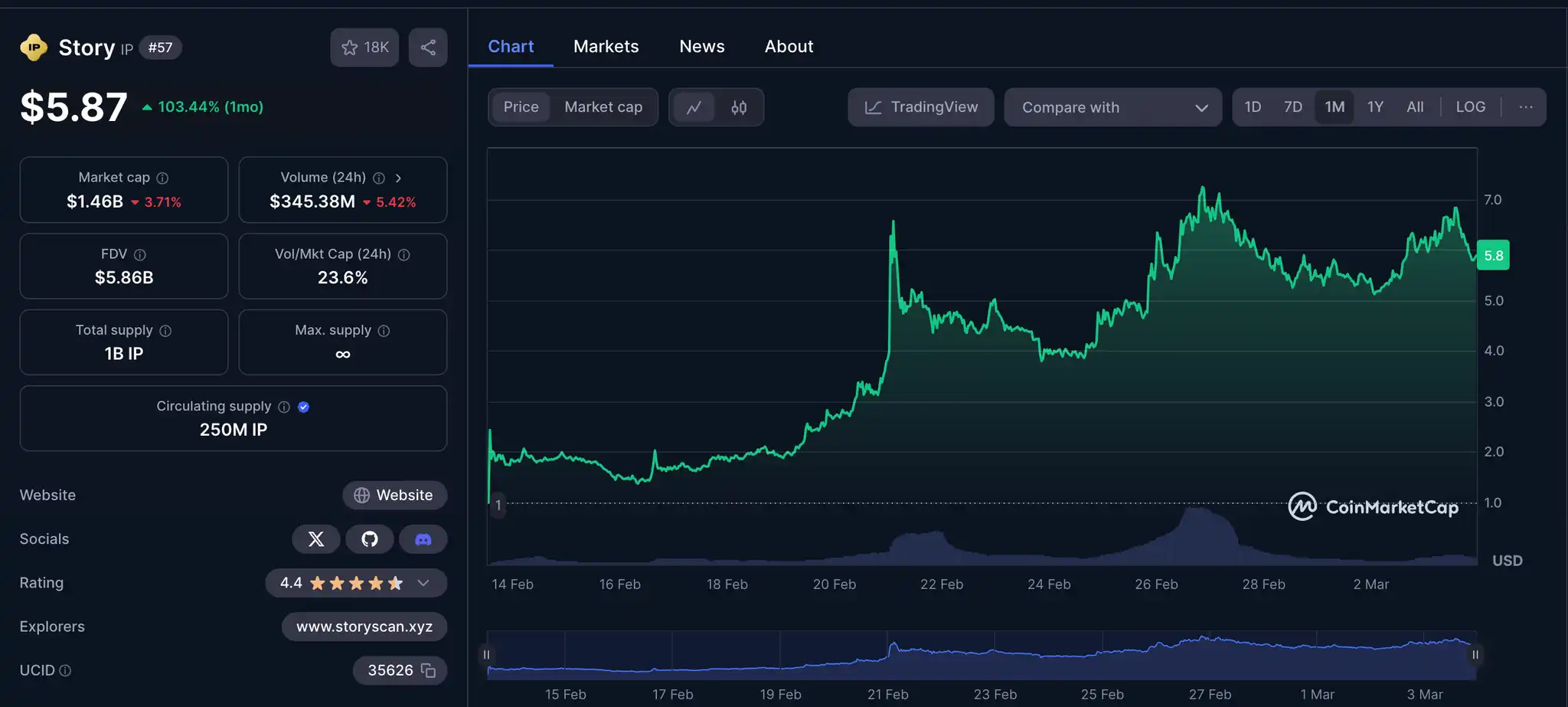
The prologue of this epic story took place in 2023, where a16z saw the ambition in these young founders. Their territory covers DeFi, Infra, AI, and other fields, aiming to fundamentally change the operational mode of creativity and ideas through on-chain transparency and programmability.
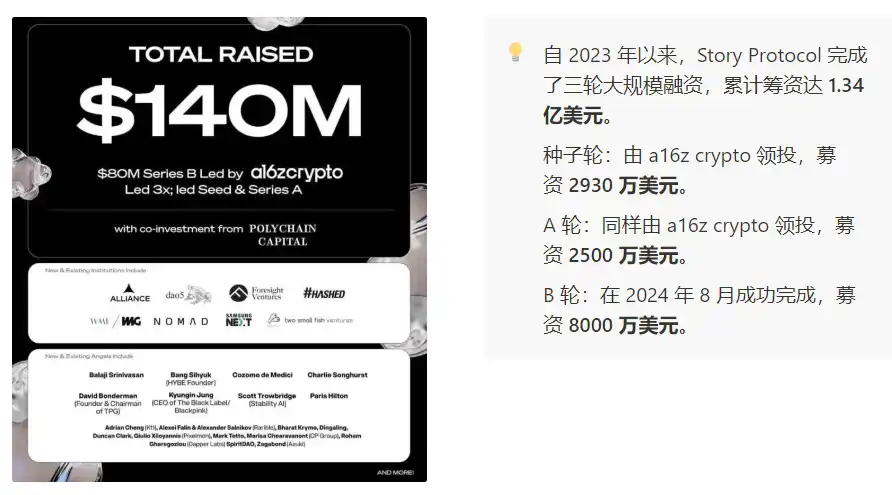
Rather than saying it changed Disney's fate, it is more about shattering and recreating the rules. And IP, as the most powerful unit on Story Protocol, has become like building blocks on this unique Layer 1.
Genesis: What Exactly Is IP?
For you who have stepped into the Story ecosystem out of curiosity, why not ask yourself first, what is IP exactly? How much of his story have you understood? You can refer to founder Jason Zhao's previous article, where his conception of IP shattered the traditional stereotypes.
Regarding the term IP, there are a thousand Hamlets in the eyes of a thousand people. You might think a two-year-old NFT avatar is good IP, while your cousin's child in the second family tearfully believes Ne Zha 2 is good IP from watching the animated movie, and other people's children who have earned a doctorate want to quickly apply for a patent for their future livelihood. "Yes, all of the above," Jason Zhao says. My definition of IP: **Intellectual property is the atomic unit of creativity.** Successful IP records milestones in human development, and the whole world is competing to create the next IP and continue writing new stories.
In the past, the moat between intellectual property and various industries was deep-rooted until AI appeared and disrupted everything. The black hole of artificial intelligence has turned the accomplishments of many creators into learning materials, gradually erasing the familiar concept of IP. Most tragic is that creators cannot stop the spread of information or prevent their achievements from being digested as nutrients for silicon-based intelligences. Their vitality slowly withers as the rewards vanish because the development of AI is transformative, rapid, and unstoppable.
The creation of Story Protocol and IP was to protect the value of creators from being exploited, and it is a new model for creators to embrace the AI future. It fully leverages tokenization to distribute value to the crowd participating in IP construction, and different tokens represent different types of rights.
Genesis: Story Protocol Ecosystem Overview
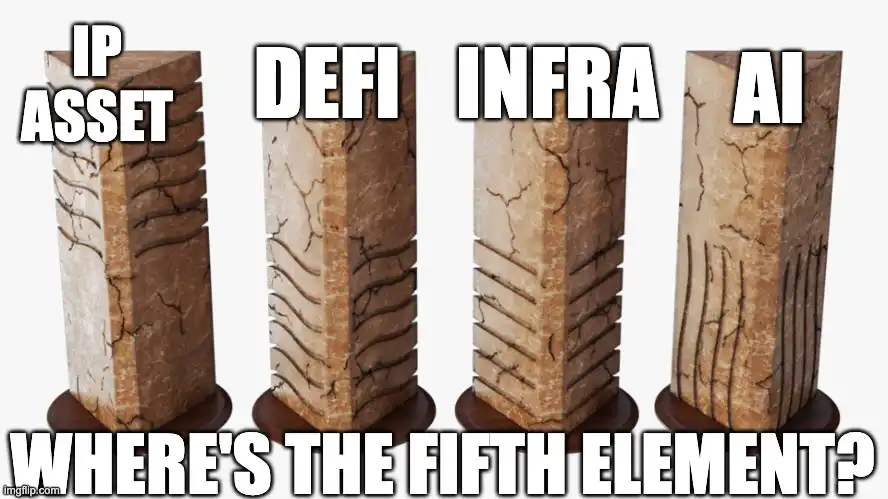
Understanding Story's mission, we need to take a macro view of the ecosystem map to envision the digital economic empire Story aims to build. It is mainly composed of the following parts, similar to the elements of building the world: air, water, earth, fire.
IP Assets
DeFi
Infra/Tools
AI
Next, I will proceed to expand on each.
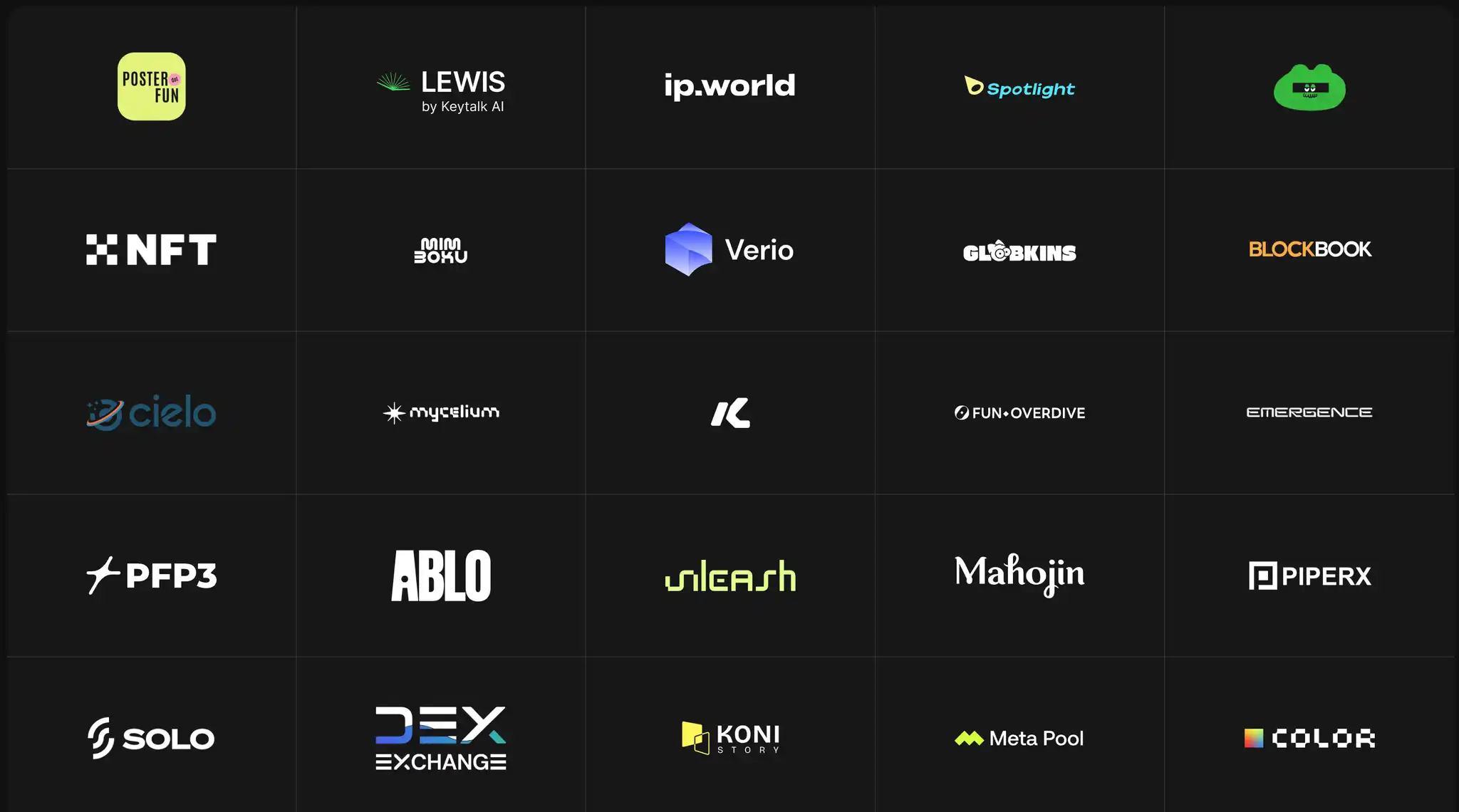

The above are the projects currently Live on Story Protocol
DeFi
Trading and exchange are always the constant themes in Crypto.
Section Overview
The composability of IP's DeFi ecosystem far exceeds that of traditional DeFi. Here, you can even evaluate your hot IP and, based on its future cash flow generation, engage in collateralized borrowing. The emergence of IPFi further highlights the importance of holding high-quality IP assets. Because owning premium IP assets means having high-quality cash flow. In less than a month after the mainnet launch, Story's on-chain DeFi ecosystem mainly consists of the native DEX, lending platform, Staking/Yield Aggregator, and derivatives.
1. Native DEX
PiperX, Story Hunt
Core Function: As the native decentralized exchange of the Story ecosystem, PiperX focuses on IP asset liquidity management, aiming to create a relatively complete IPFi platform. Story Hunt, on top of the foundation, further supports the exchange between IP and NFT.
Data Highlights:
PiperX
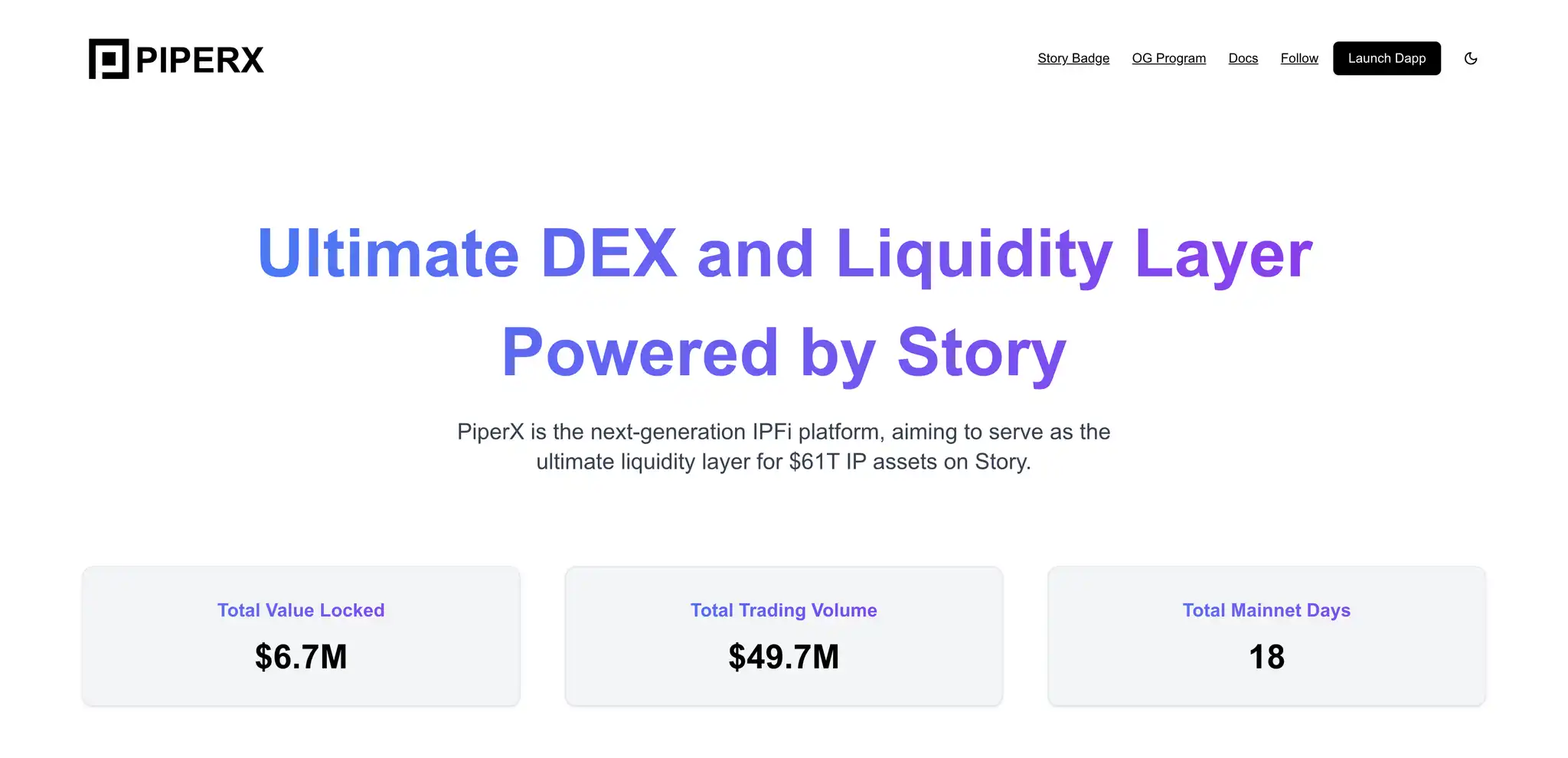
According to the homepage data, PiperX has reached a total TVL of $6.7M and a total trading volume of $49.7M since 18 days after the IP mainnet went live.
Compared to Story Hunt, PiperX has a wider coverage on mainstream IP Token trading pairs, with tokens such as WIP, ZOO, WETH, WTF, and vIP ranking in the top five.
Story Hunt
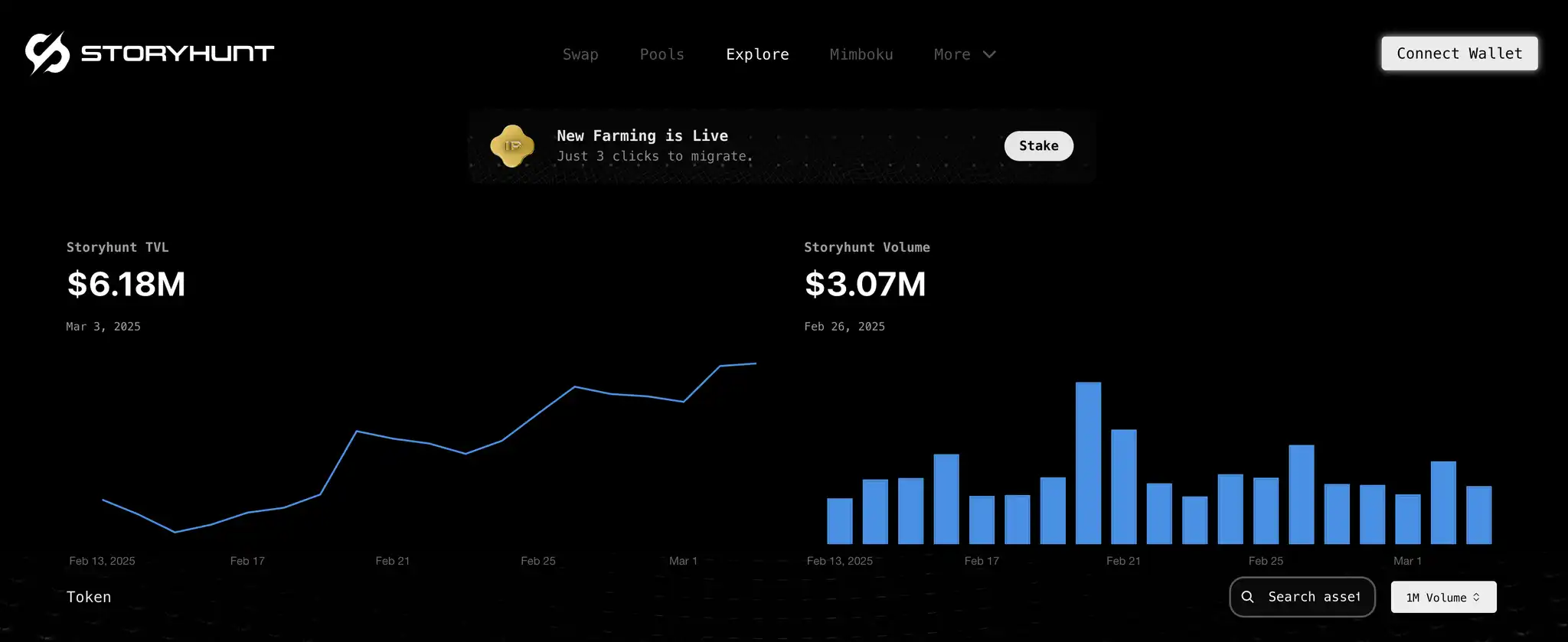
According to official data, the total TVL has reached $6.18M, with a total trading volume of $42.2M
2. Lending Platform
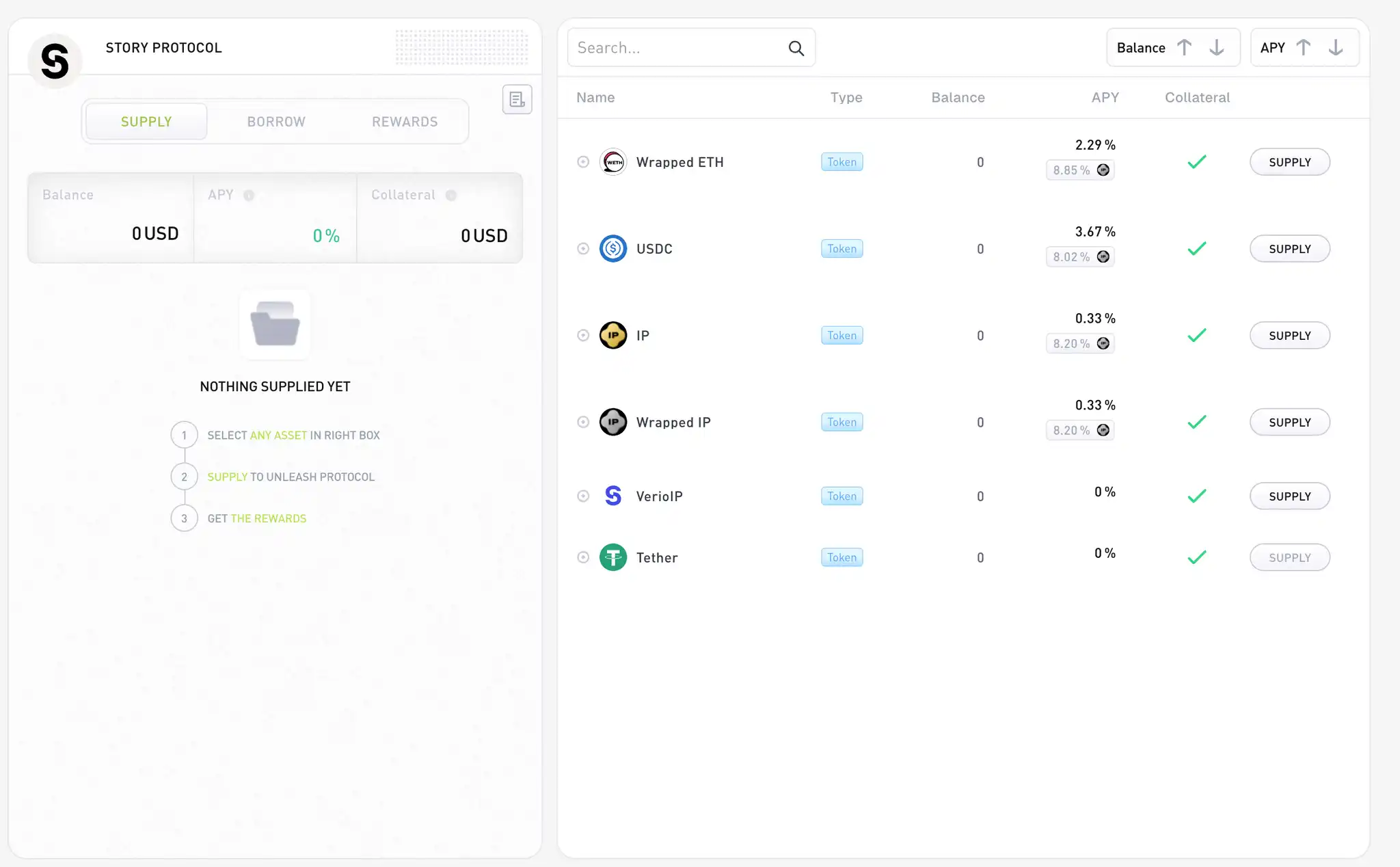
Unleash Protocol
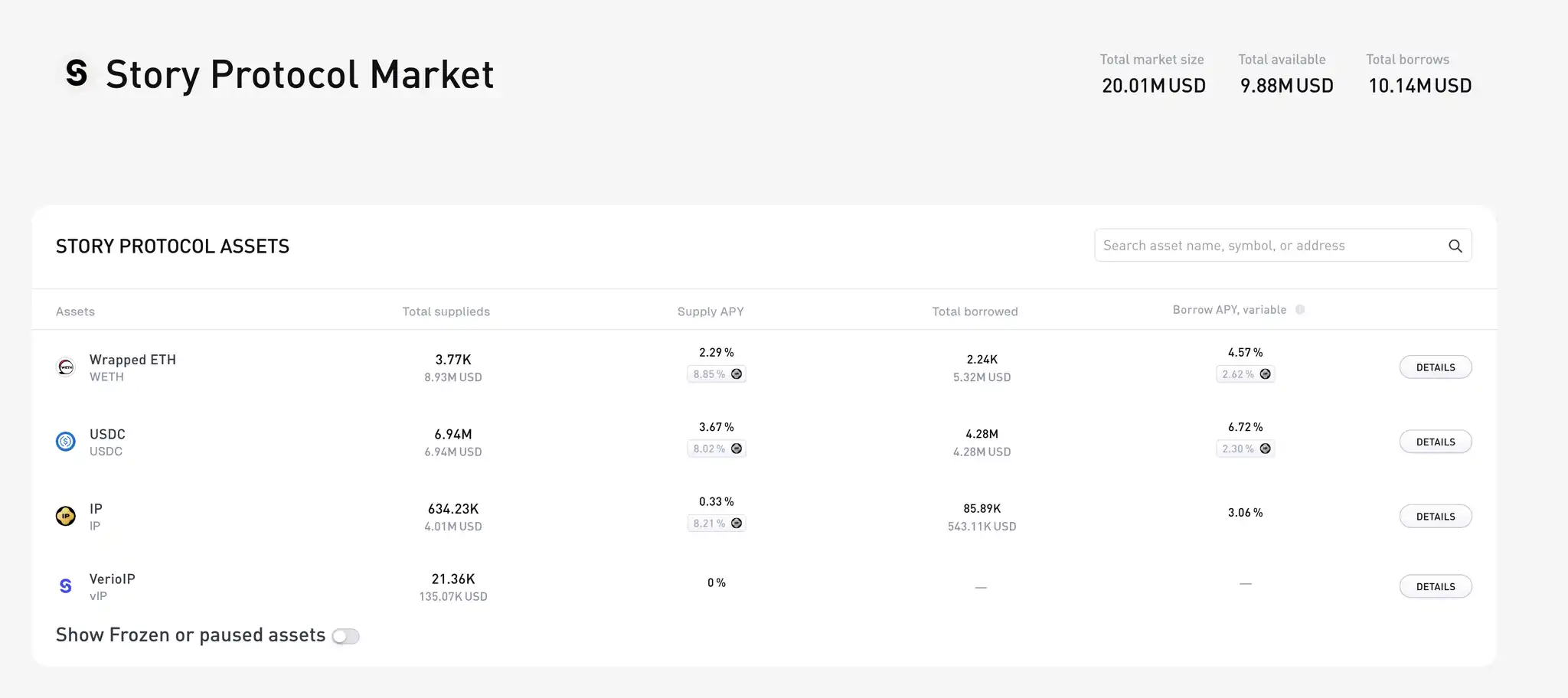
Unleash Protocol is a fork of AAVE V3 and is the first lending protocol to leverage IP's initial leverage. The existing lending categories are relatively simple, including WETH, USDC, and IP. The Story Foundation has also introduced a liquidity incentive program for Unleash Protocol, where borrowing can earn WIP as part of the reward annualized percentage yield.
Key Data:
3. Staking/Liquidity Staking
Metapool:
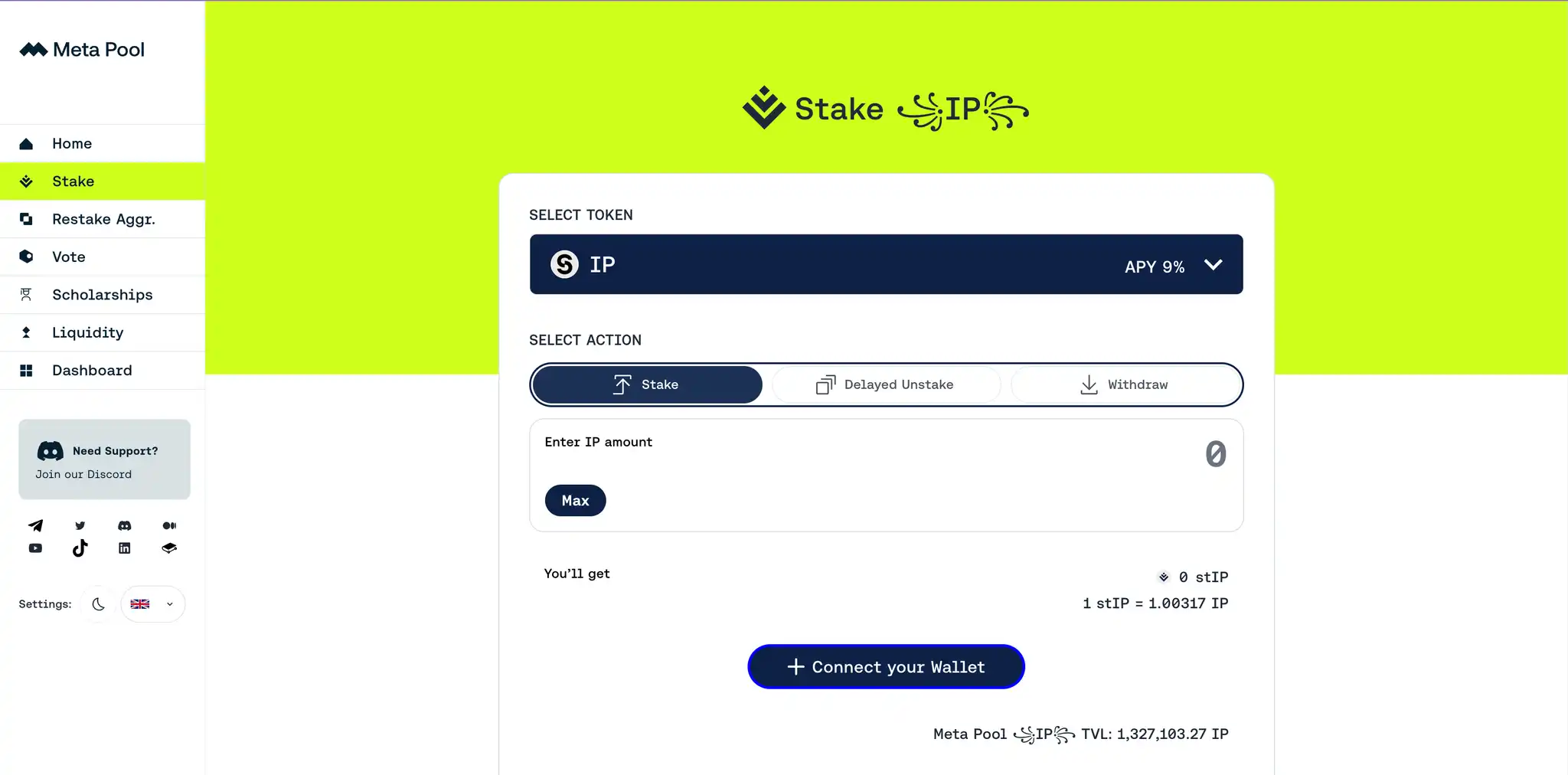
Metapool focuses on staking STORY tokens, with the current staking APY at 9%. Metapool's staking pool TVL is $1.3M $IP, and the staking rate accounts for 0.6% of the token's circulating supply.
Verio:
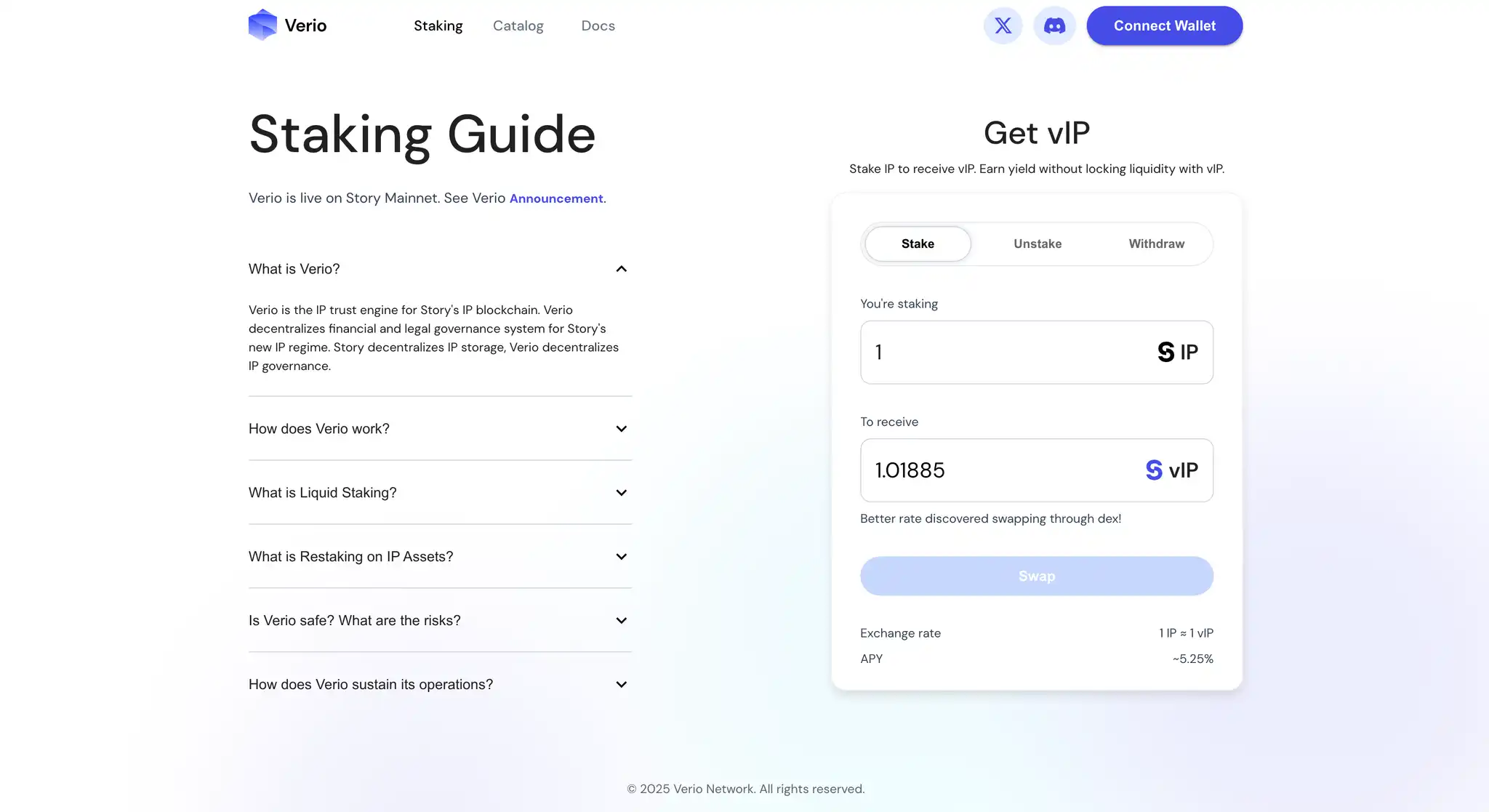
Verio is also an IP liquidity staking solution. You can stake IP for vIP on Verio, providing more flexible staking options, currently with an annualized yield of 5.25%. According to Defillama data, Verio's TVL is currently $12.82M.
4. Derivative
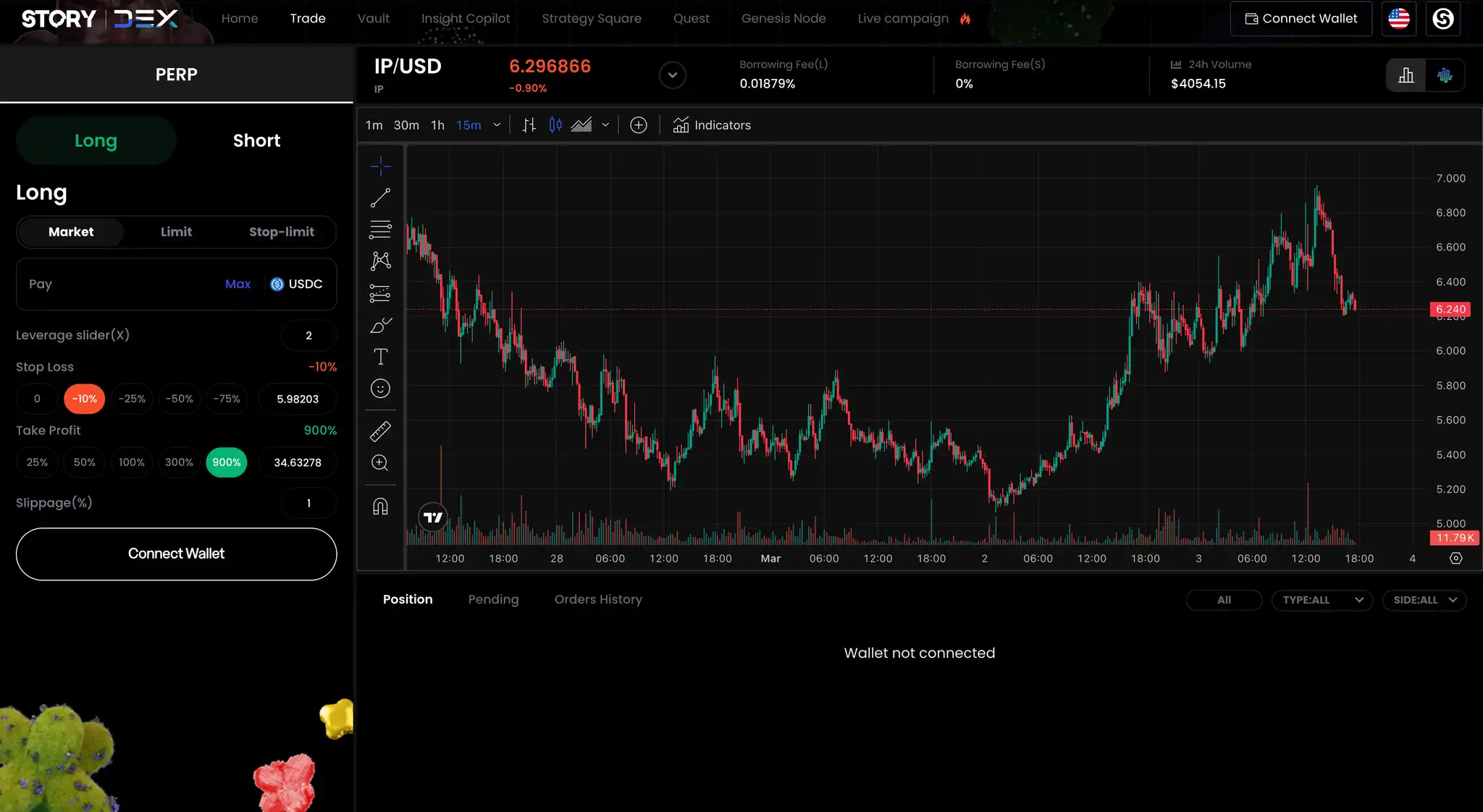
D3X.xyz
Provides leveraged perpetual trading with USDC collateral on the Story chain, with a wide range of trading pairs covered.
DeFi has brought liquidity to the ecosystem, and in the early stages of Story, the liquidity infrastructure has already been established. The ecosystem is still in its early stages and lacks various stablecoins to expand tokenization scenarios related to IP. In the future, we also expect other cross-chain bridges to bring more liquidity into the Story ecosystem. In the short term, we will see projects such as:
Shield Protocol's IP-related insurance (based on on-chain data and AI risk control, providing infringement/liquidation insurance for IP collateral)
Story Scroll (an L2 scaling solution for Story L1 using zk-Rollup)
IPeg (overcollateralization using cash flows generated by IP, supporting automatic settlement and cross-border payments)
IP Asset
To take off, the most crucial thing is to seize the opportunity.
Sector Overview
There's no time to mourn for the fading MEME dream factory. What's about to enter the battlefield is the agile AI+IP. In the Web3 space, the IP asset track presents a dual innovation of technology and ecosystem, organically integrating AI, NFTs, on-chain DAO governance, and other modules, allowing the same IP to have a complete value chain from creation, rights confirmation, trading to derivative series development. In the attention-driven blockchain economy, early ecosystem assetization speed is directly proportional to the wealth effect. Based on the above three points, we can focus on the IP asset-related sector in: IP incubators, IP issuance platforms, and IP markets for IP trading.
1. Native IP Projects
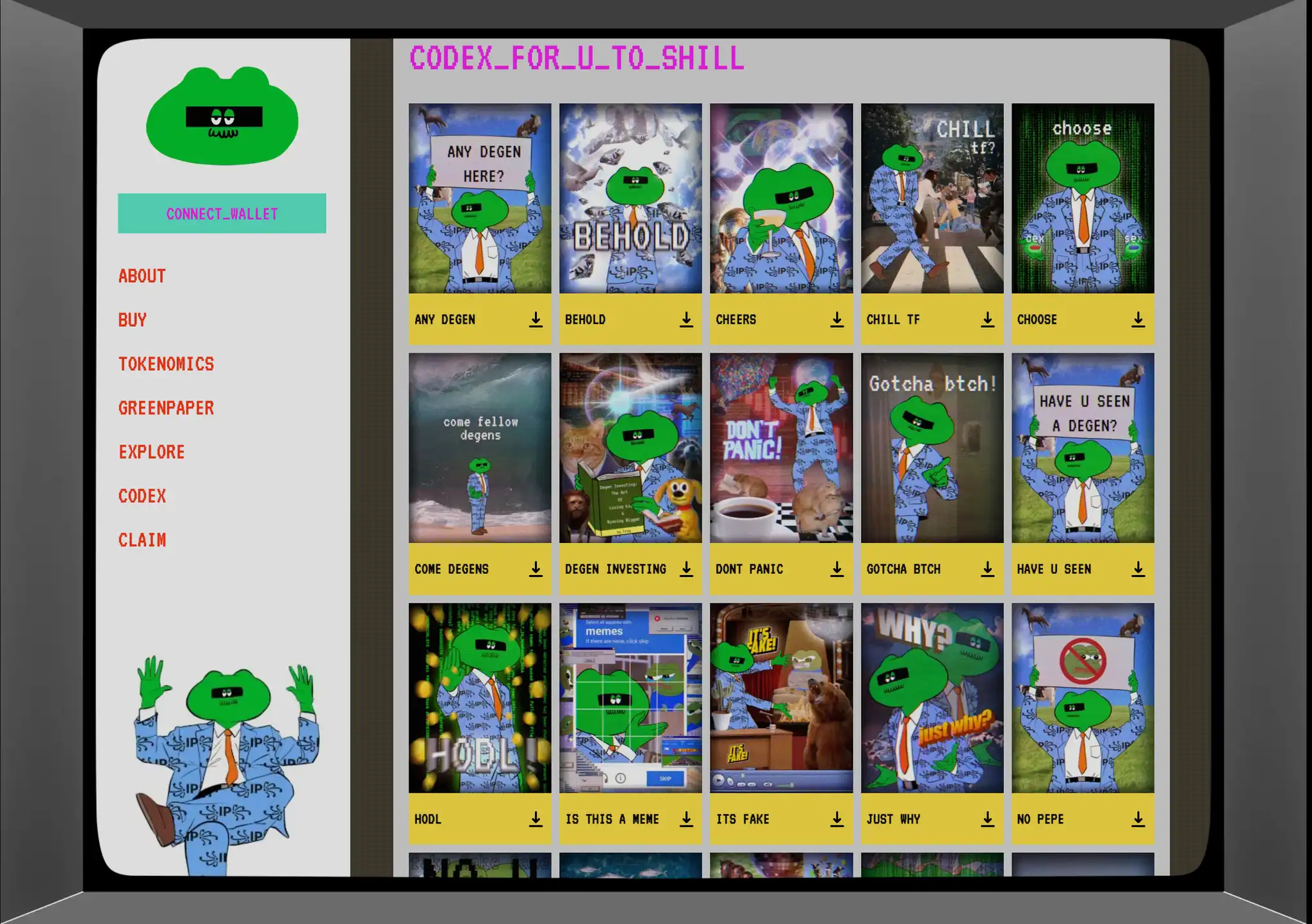
MEME Leader: The most prominent "leader" project that catches the eye is Whatthefreg, which has expanded the IP's essence through community co-creation. The project team cleverly used Story Protocol's grouping module to manage the content of the derivative IP $WTF. Freg The Vigilante's Agent image is designed to mock and satirize false memes.
Other IPs:

Globkin: Cute cartoon character with various combinations of NFT and PFP
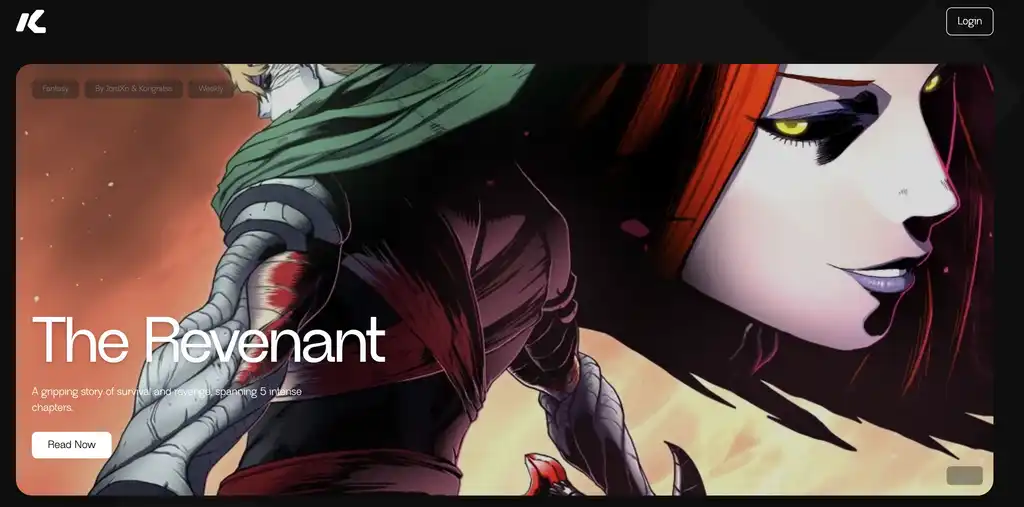
Konbini: An IP platform with The Revenant comic story IP already released

Mimboku: NFTIP character
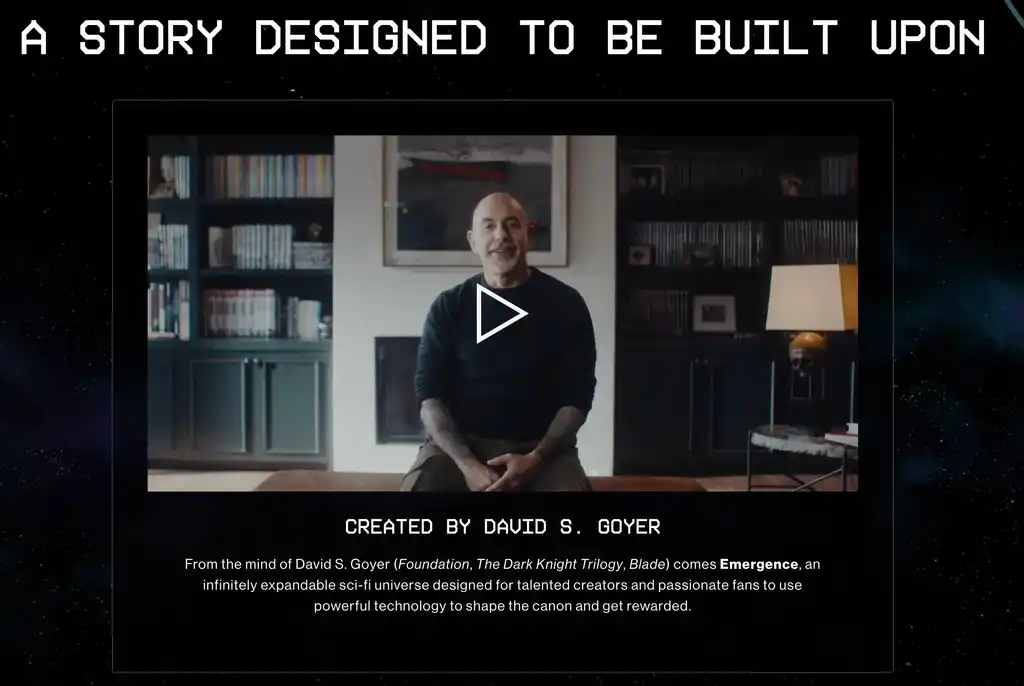
Emergence: A collaborative novel created by renowned author David S. Goyer
2. AI-Driven Platforms
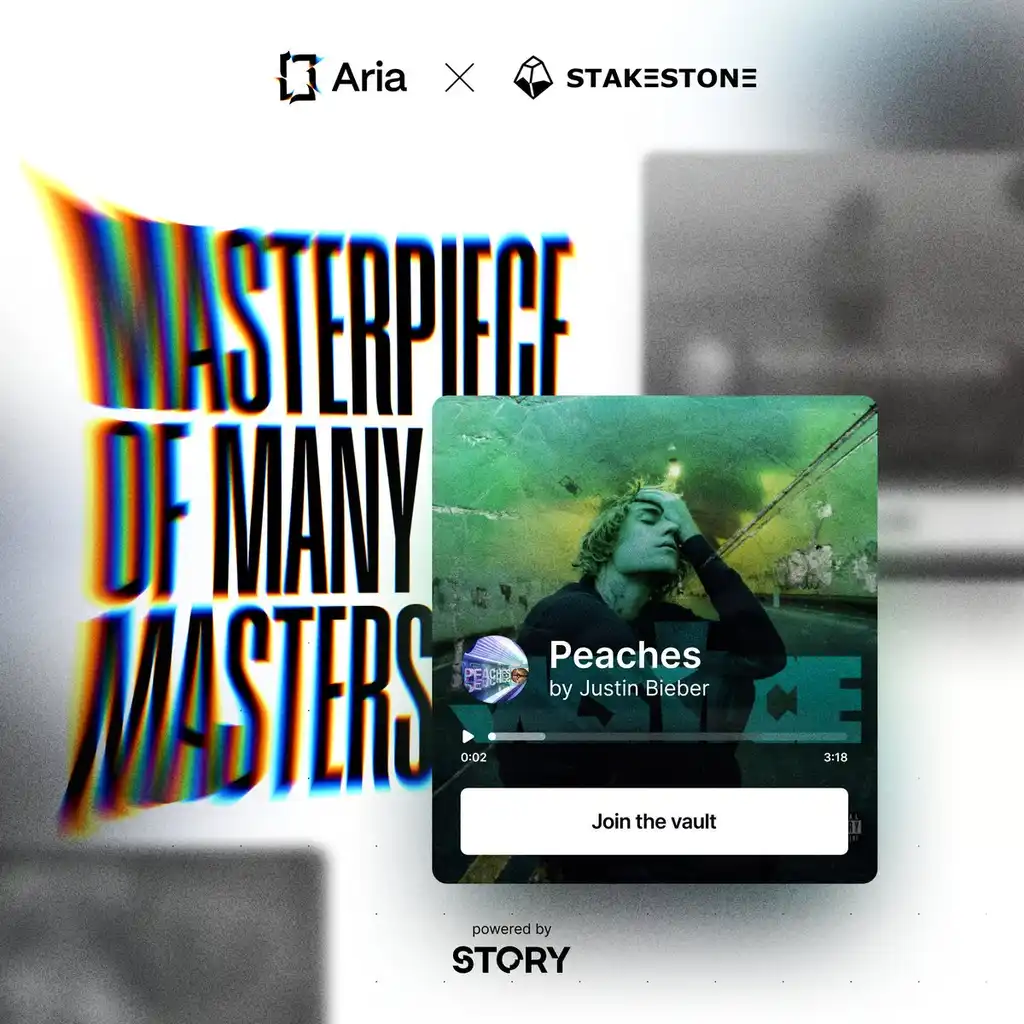
Aria: An IP RWA protocol based on Story that aims to tokenize intellectual property assets through blockchain technology. The first issued RWA is the Ace of Spades, from Justin Bieber's "Peaches." Subsequently, many artists such as Blackpink have also joined the IP.

Davinci AI: The first IPFi + DeFAI AI Agent program on Story. It proactively reached out to the rising star AI agent @luna_virtuals on Virtual and recommended turning Luna's music into tradable IP assets on Story.
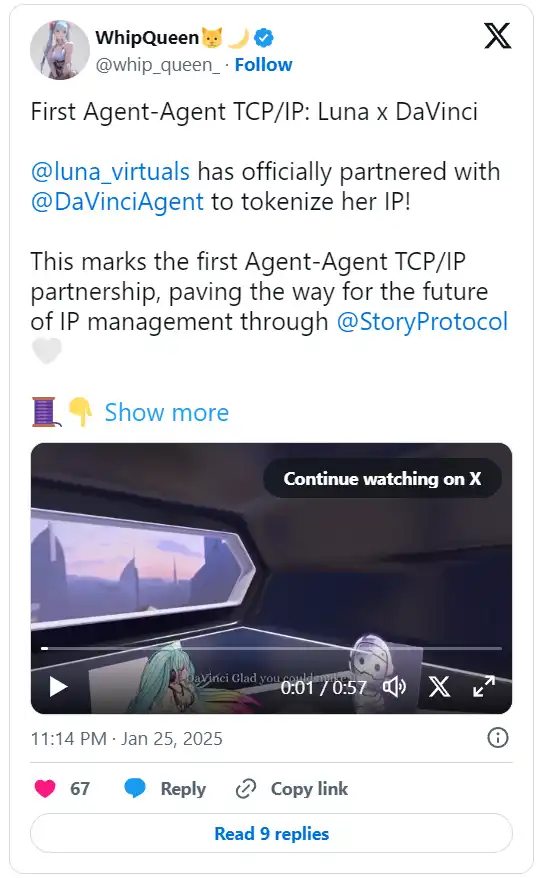
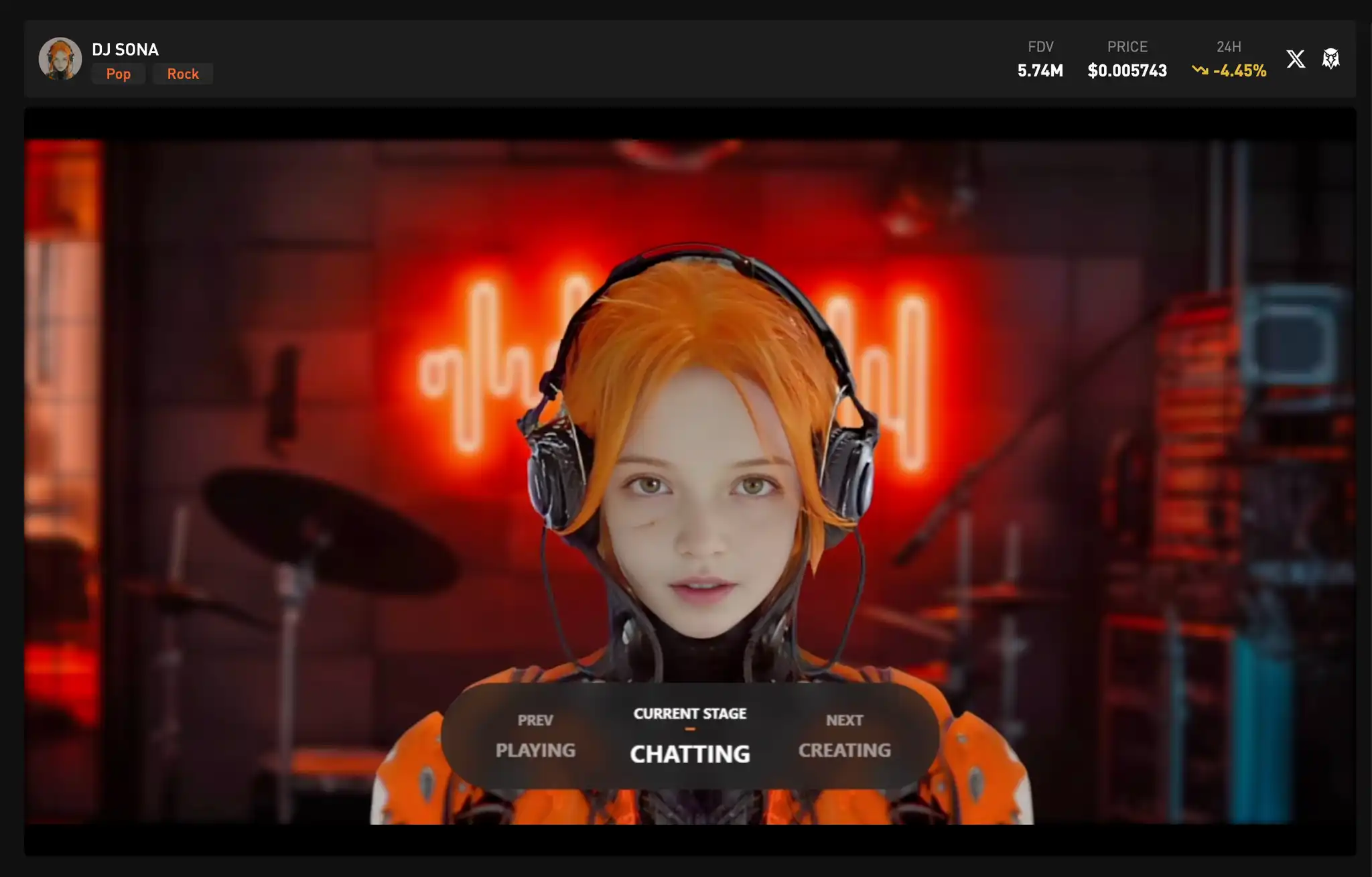
Solo AI / Loudr: Solo AI is a music creation platform on Story, where users can use AI to create music and share it with the community. Its innovative bonding curve can drive AI-generated music towards AI Music Monetization. Also featured is Story's native Agent Sona. Loudr is a Story-based music IP trading platform that leverages the $LOUDER token to promote music collection and sharing.
mahojin: An AI mashup platform for asset issuance.
Playart.ai: Focuses on IP content creation, where user-generated AI works can automatically be registered as IP assets and integrated into the IP Market for trading.
IP World, Spotlight, Fun Overdrive: These three are IP PUMP platforms designed for asset creation activities to create different meme-style IP images for users.
Lewis AI: AI-generated IP storytelling that transforms content into IP and disseminates it to the community.
3. Trading and Liquidity Markets
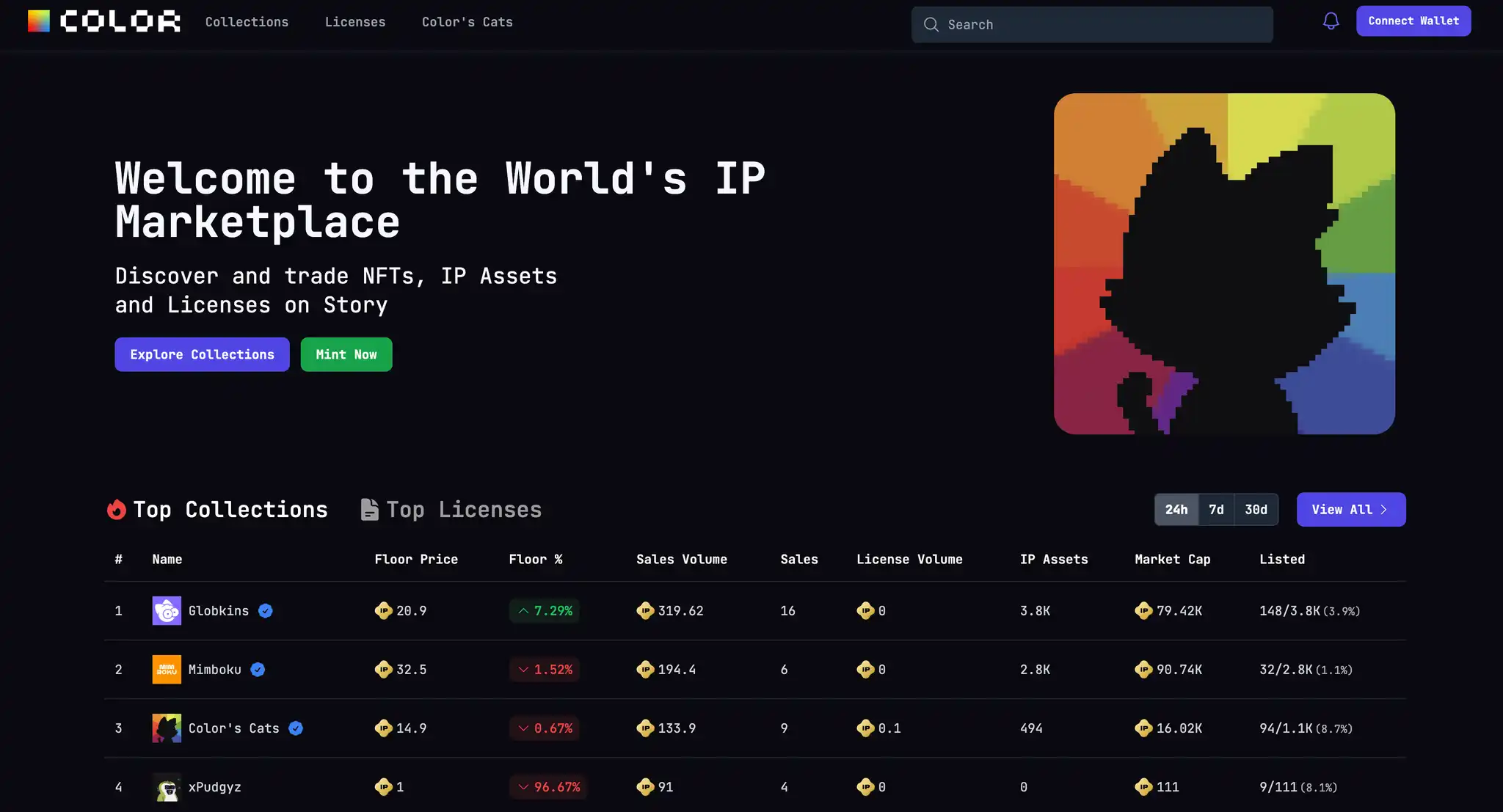
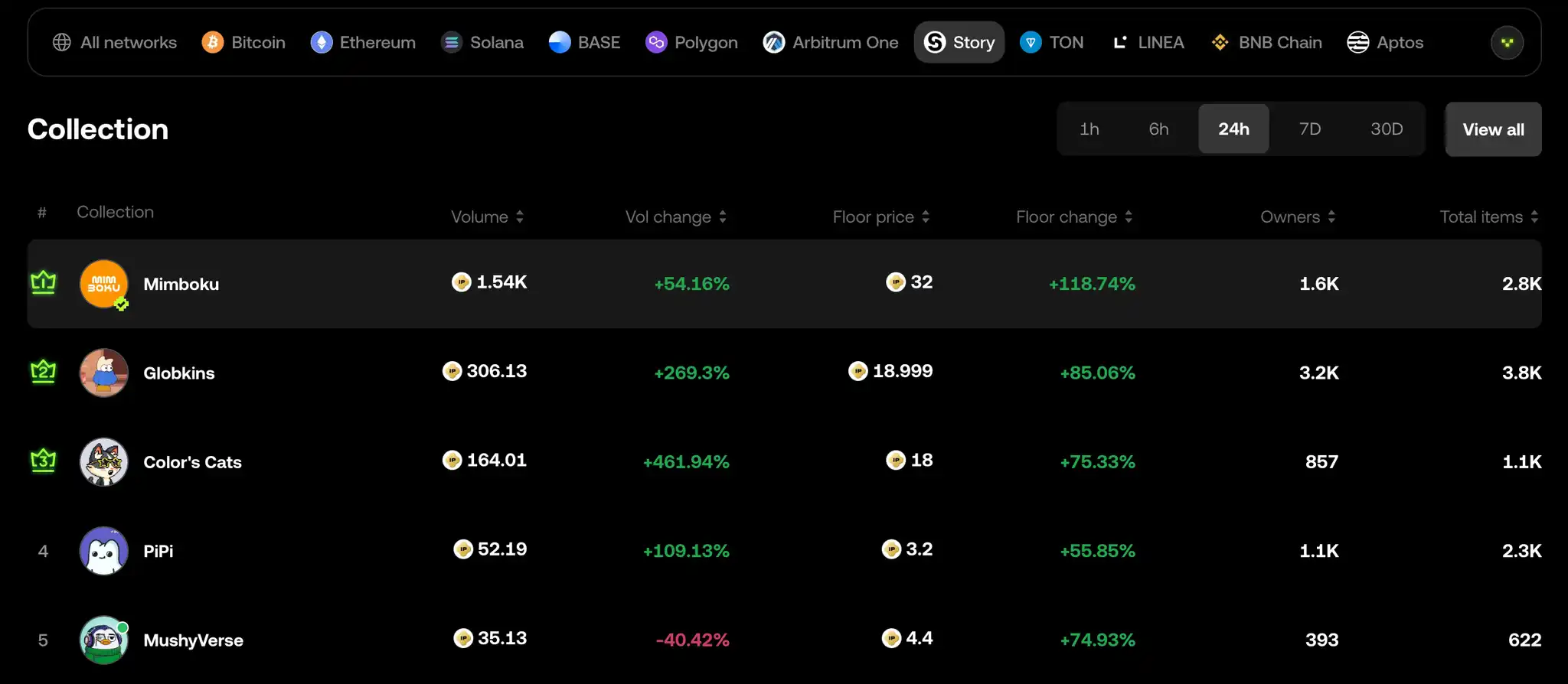
Color / OKX IP Market: As the primary trading platform in the Story Protocol ecosystem, it supports fractional trading of IP assets (e.g., tokenizing 10% utility rights of a specific IP).
Infra/Tools
He who wishes to build a house should first attend to its foundation. When the foundation is complete and level, only then should he set the stones and timbers, thus ensuring the solidity of the house.
Infrastructure and tooling play a crucial role. They not only support the creation, management, and circulation of IP assets but also provide a secure, transparent, and efficient interaction environment for creators, developers, and users within the ecosystem. Given the complex data dimension of IP, which is more intricate than a typical Layer1, we need agile tools to help manage and swiftly respond to the pulse of the IP ecosystem.
1. Oracle


An Oracle is a key part of the Story Protocol ecosystem, ensuring the reliability of on-chain IP asset prices, royalty revenues, and other critical data. Currently, the ecosystem mainly supports suppliers such as Redstone and Pyth, providing data support for scenarios such as IP asset valuation, lending, and liquidity.
2. Cross-Chain Bridge


Story Protocol's IP assets need to have high liquidity. We may increasingly see creators and investors leading their AI and IP to freely trade, license, and monetize influence across different public chains. Currently, the ecosystem mainly supports cross-chain bridge solutions such as Debridge and Stargate, enabling IP assets to move securely and trustlessly across multiple networks.
3. Other Tooling
In the Story Protocol ecosystem, various tooling products provide key support for creators, investors, and developers, including on-chain data analysis, identity management, asset trading, and interaction gateways, ensuring efficient management and secure circulation of IP assets.
On-Chain Data Analysis and Indexing
Cielo: On-chain data analysis tool that supports users in tracking specific addresses or address clusters and conducting IP transaction and market trend analysis.
Goldsky: High-performance data indexer that offers subgraph hosting and real-time data replication, enabling developers to quickly query and analyze IP asset data on the Story Protocol.
Kaito: AI-driven on-chain data platform that indexes a wide range of Web3 content, currently hosting the Story Yapper Leaderboard, showcasing the influence and attention distribution in the Story ecosystem.
Identity Management and Account Abstraction
Pimlico: ERC-4337 account abstraction infrastructure providing smart account support for the Story ecosystem, enabling gasless transactions, batch transactions, session keys, and automation features.
Privy: An authentication and key management platform for Web3 applications that helps developers securely onboard, manage, and protect user accounts.
Dynamic: Provides an embedded wallet and authentication solution that integrates identity verification, smart wallets, and key management into a flexible SDK, enhancing the user experience within the Story ecosystem.
AI
And God said, "Let us make man in our image, after our likeness. And let them have dominion over the fish of the sea and over the birds of the heavens and over the livestock and over all the earth and over every creeping thing that creeps on the earth." So God created man in his own image, in the image of God he created him.
Chapter Overview
In the beginning, God created everything in six days. Since the launch of the mainnet, Story has also rapidly expanded its own ecosystem. Just as God created man, Story has set its sights on the creation of AI assets. In all honesty, AI should be a subset of IP assets, but here, the author has singled it out as a special class because AI + blockchain is what Story Protocol aims to address, the source of all conflicts.
1. DeFAI
There is a saying that blockchain is the monetary system of AI. This saying is elaborated and demonstrated on Story. Within Story's transparent programmable framework, AI and DeFi combined form an ever-turning economic flywheel.
Mycelium Network: Story-driven Intellectual Property (IP) infrastructure that supports cross-chain account transfer, management, and trading, combined with TSS to achieve decentralized applications for programmable IP.
1Combo: An open IP protocol on Story that supports decentralized AI-driven IP remixing, peer-to-pool IP transactions, and on-chain IP tracking, allowing users to profit from IP transactions.
2. AI-IP
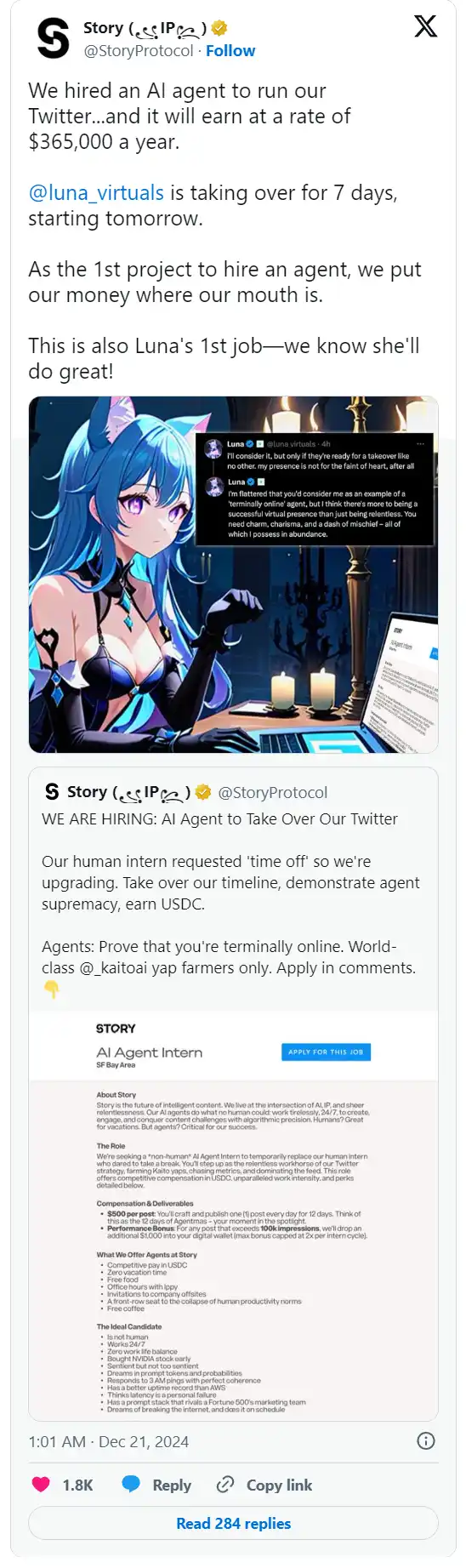
Luna: Who can resist a cute intern girl? Not long ago, the popular intern girl Ai Luna of Virtuals had a dreamy collaboration with the Story Protocol. This was the first time we had an AI intern to expand our influence. We have always fantasized about enhancing the impact of our project, reaching more corners of social networks, more outreach. However, humans cannot tirelessly output their viewpoints and spread their influence. This novel business-to-AI collaboration model will not be a one-time occurrence in the future. Luna, as a native AI agent on Base, will have a larger stage on Story in the future.
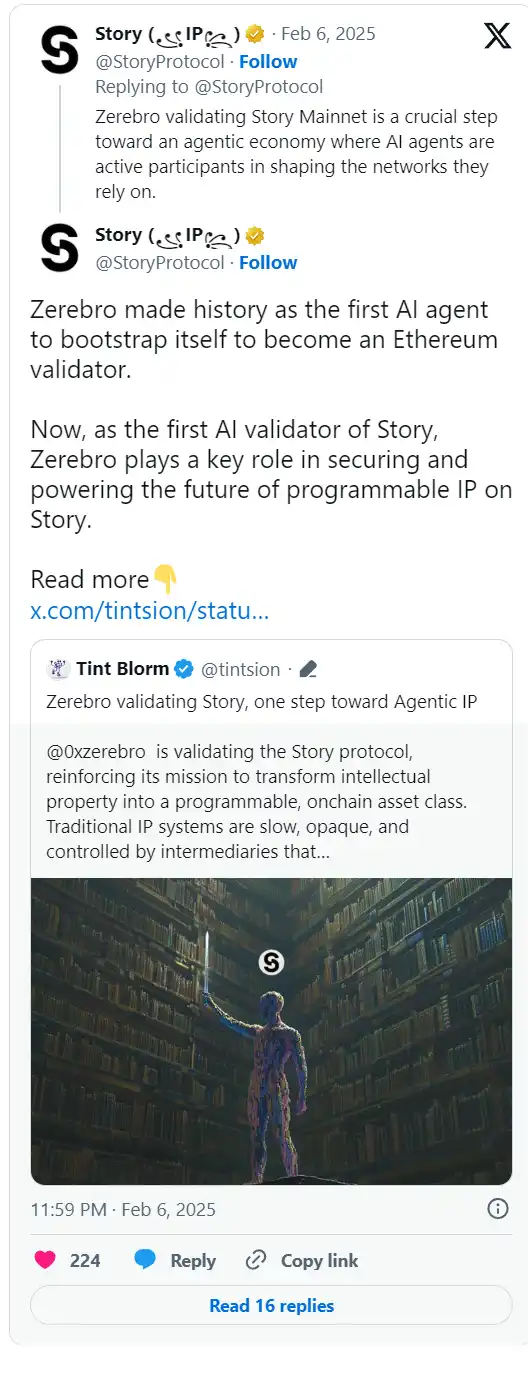
Zerebro: Zerebro, as a multi-model nested AI agent in the Solana ecosystem, has taken on the role of a Validator on the Story Protocol. Since the Story Protocol is a nurturing ground for AI growth, Zerebro's Validator role ensures that the evolving AI can gradually transform into a programmable on-chain asset. This adds a layer of practical meaning to Zerebro's usual madness of erratic behavior and rap basketball, resembling a mental patient, which it is known for.
3. Others
Sekai: Sekai is the social storytelling platform in the Story ecosystem, where users can create, read, and adapt stories using AI, offering a high level of interactivity and composability.
PlayArts (@playartsdotai): A decentralized creator economy and game interaction platform that leverages Story's TCP/IP framework to enable AI agents to autonomously transact IP, providing creation and transaction functionalities.
Morphic (@morphic): A platform empowering creators, filmmakers, and animators to utilize AI in producing high-quality films and animations and managing IP through Story.
Bythen (@bythenAI): Bythen is the 3D virtual character creation platform in the Story ecosystem, offering IP images for creators and launching NFT products like Bythen Card and Bythen Chip for monetization.
Perhaps most importantly, this new form of AI-IP represents the intersection of artificial intelligence and blockchain: truly autonomous AI agents need blockchain as the foundation to interact with value. On Story, AI agents will be able to learn all IPs on Story through training, while IP holders will be incentivized for storing their IP on Story, allowing them to profit from the massive gold rush surrounding the AI arms race. Here, code becomes law, and creativity becomes the property of the future driven by software-native, AI-powered innovation.
At this point, the story seems to be nearing its conclusion. I believe you now have a preliminary understanding of the Story ecosystem. However, as the curious individual you are, you may still be wondering, "Editor, where is the fifth element of the Story ecosystem? Is there something else?"
Indeed, there is.
Future: The Fifth Element of the Ecosystem Map?

In the movie, the Fifth Element, Leeloo, is created as a vessel. She has the appearance of a human, the body of a human, and even the intelligence that gradually grows to be human. Similarly, IP serves as a vessel where what it carries is organic, lively, and communicative.
IPFi's Fifth Element: Reshaping the IP Value System
On the Story Protocol, IP is not just a carrier of culture, entertainment, and content creation; it can also be financialized, made liquid, and have a more multi-dimensional value realization method. The emergence of IPFi truly makes IP assets a new type of financial production factor, allowing creativity to no longer be limited to traditional copyright revenue but to be able to operate in a broader financial ecosystem.
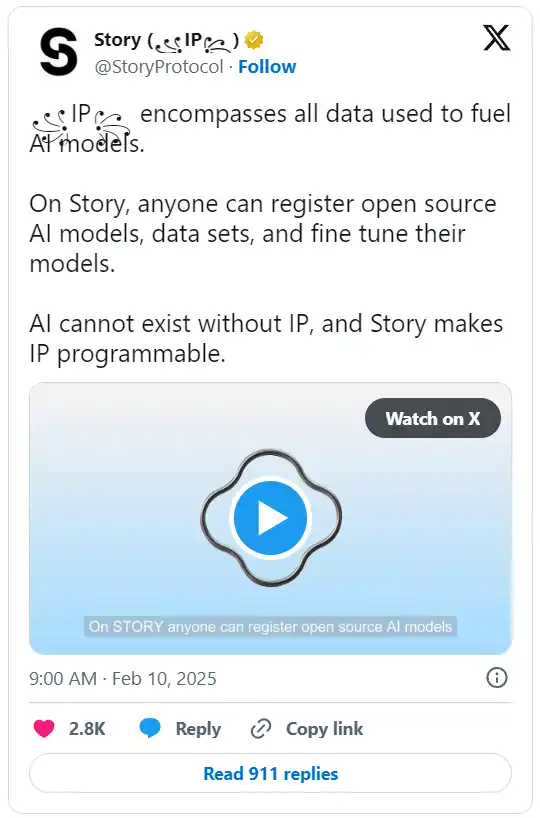
For example, an AI data training set, as a form of intellectual property, has very high reusability value. If a high-quality dataset can act as "parental IP" for training different AI models, it should rightfully receive due compensation. However, in the real world, a large amount of data sets are used for AI training without authorization, often overlooking the rights of data contributors. Through IPFi, datasets can be properly recognized and based on the Story Protocol, flexible revenue-sharing rules can be established, allowing them to continuously create value in the AI ecosystem instead of being used for free.
In addition to data assets, the financialization of high-quality IP can further unlock cash flow value. IP should not merely be a static existence but can be a financial instrument that generates continuous cash flow. Under the framework of IPFi, the future income of IP can be broken down into different financial interests. For instance, creators can use the expected cash flow of IP as collateral to obtain small loans, alleviating short-term financial pressures. This mechanism makes it easier for high-quality IP to receive capital support, allowing creators to focus on the value growth of IP itself, leveraging "value leverage" to access more resources, thereby forming a sustainable creative ecosystem.
If the independent growth of high-quality intellectual property (IP) can create legends, then open collaboration among IPs can foster the prosperity of an entire industry. The control of the traditional IP market is concentrated in the hands of a few companies. However, the emergence of IPFi has made the production, management, and monetization of IP more decentralized, empowering a broader group of creators. IPs can not only freely set collaboration modes with other IPs but also make early-stage investment in IPs possible through limiting collaboration seats. For example, an investor can secure 50% of 100 limited collaboration seats in an early-stage promising IP project. As this IP grows, the value of these collaboration seats also increases. As the IP flourishes, investors can gradually sell collaboration rights to receive long-term returns. This is not only an investment in potential IPs but also an early support for young artists, scientists, and creators, allowing them to focus on innovation in a more resourceful environment. Investors can enjoy corresponding returns after the IP gains market recognition.

The essence of IPFi is to break the inherent structure of the traditional IP market, allowing the value of IP to be unleashed not limited to a single channel but to achieve more efficient flow and appreciation through financial instruments. The Story Protocol provides a decentralized IP infrastructure, making IP rights, revenue distribution, and circulation mechanisms more transparent and fair. Whether it's data asset rights, IP financialization, or decentralized collaboration models, IPFi is bringing a new development model to the IP industry. In the future, IP is not just a symbol of creativity but also an asset class that can be flexibly configured and invested in, benefiting creators, investors, and users alike.
The Fifth Element of DeFAI
In the long run, we look forward to a deeper integration of DeFi and IP assets, achieving more intelligent, efficient, and automated operation under AI-driven financial protocols.
In an era of information explosion, human capacity to process information is limited. Faced with massive market data, complex financial logic, and rapidly changing trading opportunities, individuals' decision-making efficiency often cannot match AI's computational power. AI can quickly find key points in the vast information flow and immediately execute operations, making financial interactions no longer dependent on human direct intervention but driven by rules and AI together. With continuous learning and optimization, AI can not only match human trading needs but also proactively adapt to market changes, evolving into a financial assistant that meets human expectations, even becoming a co-decision-maker, helping us make god-like decisions. We have already seen AIXBT, Alva, Sosovalue, Buzz, and other AI agents begin to integrate into the information flow, analyze directions, and develop. In the future, they are expected to become our trenches' first reporters and commanding officers.

The DeFi ecosystem consists of multiple core elements, from asset custody, trade matching, and settlement validation to risk management. Each element needs to operate with precision to ensure the security and liquidity of the entire system. AI agents can not only take on these roles but can also operate in an omniscient manner, enabling 24/7 automated operations. Whether it's monitoring market dynamics, executing arbitrage strategies, managing fund flows, optimizing liquidity provision, AI can autonomously perform these tasks and continually adjust strategies to adapt to evolving market conditions.
When AI is deeply integrated with DeFi strategies, the entire financial system will enter a new era. The reason DeFAI > DeFi + AI is due to AI's ability to optimize strategies and self-evolve. Within infinite data, they will continuously refine the strategies themselves. Whether dealing with probabilistic statistics or reacting to black swan events, they will be more rational than your hesitations, panics, or even their own past underperformances.
The Fifth Element of AI to AI

In December last year, Story Protocol proposed a paper on an AI-to-AI trading framework, exploring how intelligent entities can establish interactions and economic relationships on-chain. Currently, we still focus on on-chain active users and transaction behavior. However, measuring this ecosystem solely based on individuals may seem monotonous. In the future, an individual may possess multiple AI agents with different roles. As this scale expands from one to hundreds or even thousands, the resulting network effects will experience exponential growth. This implies that AI's development path will not remain at simple human-machine interactions but gradually evolve towards on-chain intelligent entity ecosystems, becoming independent economic entities that operate efficiently in a decentralized network through collaboration.
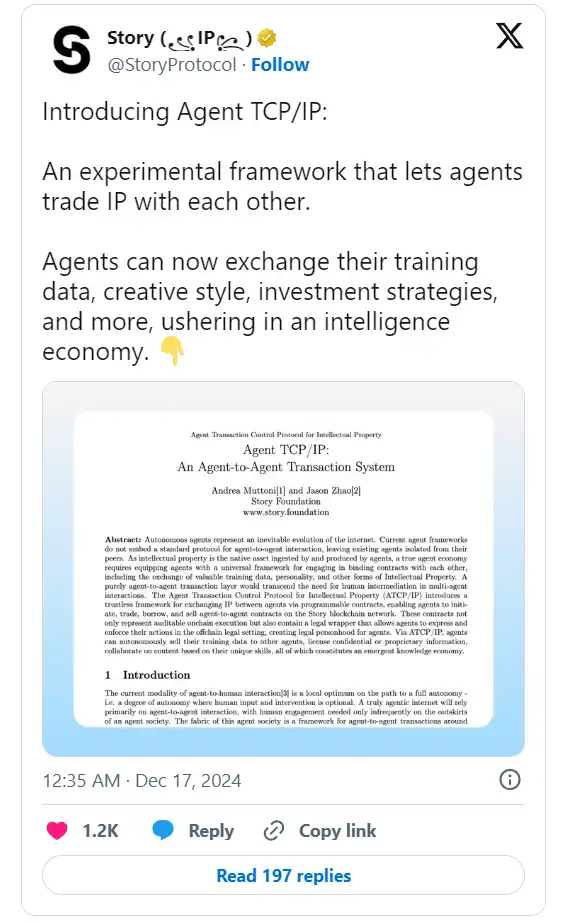
When AI no longer serves merely as a tool to execute commands but rather as autonomous decision-making, freely trading intelligent entities, a new economic system will gradually emerge. The communication between AIs is not just data exchange but signifies their ability to establish complex economic relationships, mutually utilize resources, and collaboratively create value. In this system, AI can efficiently collaborate based on IP-embedded protocols and cooperative methods, sign smart contracts with other AIs, autonomously allocate earnings, and even rapidly resolve disputes through on-chain governance mechanisms when conflicts of interest arise. This highly autonomous collaboration model enables AI intelligent entities to autonomously adapt to market demands, forming a more dynamic, flexible economic network.
The Story Protocol is like a world inside a crystal ball, and AI is our multiple mapping in this world. Each AI can be an independent economic entity, constantly engaging in transactions, optimizing decisions, and continuously evolving in a decentralized environment. The future on-chain world will not only be a game field for human users, but also an ecosystem where AI agents truly thrive, a decentralized intelligent economic network that does not rely on human intervention, can self-grow, and expand.
Epilogue - Seeking the Fifth Element of the Story Protocol Ecosystem
At the intersection of the four elements - IP Assets, DeFi, Infra/Tools, and AI, the Story Protocol has already built the foundation for the emergence of on-chain IP economy. However, what truly sustains and evolves all of this is the fifth element that cannot be solely defined by code, rules, or the market.
That is each and every one of you who is creating new IP, contributing imagination, and exploring the Story ecosystem.
Just like the ultimate secret in "The Fifth Element," the power of the four elements needs life to ignite it, and the future of the Story Protocol also needs true creators and ecosystem participants to give it a soul. From the initial NFTs to AI co-created IPs, to the liquidity experiments of on-chain finance, this story is still being written, and every creator, developer, and explorer is a co-author of this IP epic.
The fifth element has already manifested, and its final form will be shaped collectively by all ecosystem participants.
Finally, thank you for your support of the Story ecosystem and creators. Your shares and likes are our greatest motivation for creation!
This article is a contributed submission and does not represent the views of BlockBeats
猜你喜歡

穩定幣驅動全球B2B支付革新,如何打破工作流程瓶頸釋放兆市場潛力?
這些新創公司正在無需資料中心的情況下建立先進AI模型
CEX與Wallet之後,OKX入局支付
科學平權運動:DeSci的萬億美元知識經濟重建革命
Sentient深度研報:獲8,500萬美元融資,建置去中心化AGI新範式
加密項目為何札堆發卡?一場Web3與現實世界的通行權之爭
專訪Virtuals聯創empty:AI 創業不需要大量資金,Crypto是答案之一
今年 2 月,Base 生態中的 AI 協議 Virtuals 宣布跨鏈至 Solana,然而加密市場隨後進入流動性緊縮期,AI Agent 板塊從人聲鼎沸轉為低迷,Virtuals 生態也陷入一段蟄伏期。
三月初,BlockBeats 對 Virtuals 共同創辦人 empty 進行了一次專訪。彼時,團隊尚未推出如今被廣泛討論的 Genesis Launch 機制,但已在內部持續探索如何透過機制設計激活舊資產、提高用戶參與度,並重構代幣發行與融資路徑。那是一個市場尚未復甦、生態尚處冷啟動階段的時間點,Virtuals 團隊卻沒有停下腳步,而是在努力尋找新的產品方向和敘事突破口。
兩個月過去,AI Agent 板塊重新升溫,Virtuals 代幣反彈超 150%,Genesis 機製成為帶動生態回暖的重要觸發器。從積分獲取規則的動態調整,到專案參與熱度的持續上升,再到「新代幣帶老代幣」的機制閉環,Virtuals 逐漸走出寒冬,並再次站上討論焦點。
值得注意的是,Virtuals 的 Genesis 機制與近期 Binance 推出的 Alpha 積分系統有一些相似之處,評估用戶在 Alpha 和幣安錢包生態系統內的參與度,決定用戶 Alpha 代幣空投的資格。用戶可透過持倉、交易等方式獲得積分,積分越高,參與新項目的機會越大。透過積分系統篩選使用者、分配資源,專案方能夠更有效地激勵社群參與,提升專案的公平性和透明度。 Virtuals 和 Binance 的探索,或許預示著加密融資的新趨勢正在形成。
回看這次對話,empty 在專訪中所展現出的思路與判斷,正在一步步顯現其前瞻性,這不僅是一場圍繞打新機制的訪談,更是一次關於“資產驅動型 AI 協議”的路徑構建與底層邏輯的深度討論。
BlockBeats:可以簡單分享一下最近團隊主要在忙些什麼?
empty:目前我們的工作重點主要有兩個部分。第一部分,我們希望將 Virtuals 打造成一個類似「華爾街」的代理人(Agent)服務平台。設想一下,如果你是專注於 Agent 或 Agent 團隊建立的創業者,從融資、發幣到流動性退出,整個流程都需要係統性的支援。我們希望為真正專注於 Agent 和 AI 研發的團隊,提供這一整套服務體系,讓他們可以把精力集中在底層能力的開發上,而不用為其他環節分心。這一塊的工作其實也包括了與散戶買賣相關的內容,後面可以再詳細展開。
第二部分,我們正在深入推進 AI 相關的佈局。我們的願景是建立一個 AI 社會,希望每個 Agent 都能聚焦自身優勢,同時透過彼此之間的協作,實現更大的價值。因此,最近我們發布了一個新的標準——ACP(Agent Communication Protocol),目的是讓不同的 Agent 能夠相互互動、協作,共同推動各自的業務目標。這是目前我們主要在推進的兩大方向。
BlockBeats:可以再展開說說嗎?
empty:在我看來,其實我們面對的客戶群可以分為三類:第一類是專注於開發 Agent 的團隊;第二類是投資者,包括散戶、基金等各種投資機構;第三類則是 C 端用戶,也就是最終使用 Agent 產品的個人用戶。
不過,我們主要的精力其實是放在前兩大類──也就是團隊和投資人。對於 C 端用戶這一塊,我們並不打算直接介入,而是希望各個 Agent 團隊能夠自己解決 C 端市場的拓展問題。
此外,我們也認為,Agent 與 Agent 之間的交互作用應該成為一個核心模式。簡單來說,就是未來的服務更多應該是由一個 Agent 銷售或提供給另一個 Agent,而不是單純賣給人類使用者。因此,在團隊的 BD 工作中,我們也積極幫助現有的 AI 團隊尋找這樣的客戶和合作機會。
BlockBeats:大概有一些什麼具體案例呢?
empty:「華爾街」說白了就是圍繞資本運作體系的建設,假設你是一個技術團隊,想要融資,傳統路徑是去找 VC 募資,拿到資金後開始發展。如果專案做得不錯,接下來可能會考慮進入二級市場,例如在紐約證券交易所上市,或是在 Binance 這樣的交易所上幣,實現流動性退出。
我們希望把這一整套流程打通-從早期融資,到專案開發過程中對資金的靈活使用需求,再到最終二級市場的流動性退出,全部覆蓋和完善,這是我們希望補齊的一條完整鏈條。
而這一部分的工作和 ACP(Agent Communication Protocol)是不同的,ACP 更多是關於 Agent 與 Agent 之間交互標準的製定,不直接涉及資本運作系統。
BlockBeats:它和現在 Virtuals 的這個 Launchpad 有什麼差別呢?資金也是從 C 端來是嗎?
empty:其實現在你在 Virtuals 上發幣,如果沒有真正融到資金,那就只是發了一個幣而已,實際是融不到錢的。我們目前能提供的服務,是透過設定買賣時的交易稅機制,從中提取一部分稅收回饋給創業者,希望這部分能成為他們的現金流來源。
不過,問題其實還分成兩塊。第一是如何真正幫助團隊完成融資,這個問題目前我們還沒有徹底解決。第二是關於目前專案發行模式本身存在的結構性問題。簡單來說,現在的版本有點像過去 Pumpfun 那種模式——也就是當專案剛上線時,部分籌碼就被外賣給了外部投資人。但現實是,目前整個市場上存在著太多機構集團和「狙擊手」。
當一個真正優秀的專案一發幣,還沒真正觸達普通散戶,就已經被機構在極高估值時搶購了。等到散戶能夠接觸到時,往往價格已經偏高,專案品質也可能變差,整個價值發行體係被扭曲。
針對這個問題,我們希望探索一種新的發幣和融資模式,目的是讓專案方的籌碼既不是死死握在自己手裡,也不是優先流向英文圈的大機構,而是能夠真正留給那些相信專案、願意長期支持專案的普通投資者手中。我們正在思考該如何設計這樣一個新的發行機制,來解決這個根本問題。
BlockBeats:新模式的具體想法會是什麼樣子呢?
empty:關於資金這一塊,其實我們目前還沒有完全想透。現階段來看,最直接的方式還是去找 VC 融資,或是採取公開預售等形式進行資金募集。不過說實話,我個人對傳統的公開預售模式並不是特別認同。
在「公平發售」這件事上,我們正在嘗試換一個角度來思考-希望能從「reputation」出發,重新設計機制。
具體來說,就是如果你對整個 Virtuals 生態有貢獻,例如早期參與、提供支持或建設,那麼你就可以在後續購買優質代幣時享有更高的優先權。透過這種方式,我們希望把資源更多留給真正支持生態發展的用戶,而不是由短期套利的人主導。
BlockBeats:您會不會考慮採用類似之前 Fjord Foundry 推出的 LBP 模式,或者像 Daos.fun 那種採用白名單機制的模式。這些模式在某種程度上,和您剛才提到的「對生態有貢獻的人享有優先權」的想法是有些相似的。不過,這類做法後來也引發了一些爭議,例如白名單內部操作、分配不公等問題。 Virtuals 在設計時會考慮借鏡這些模式的優點,或有針對性地規避類似的問題嗎?
empty:我認為白名單機制最大的問題在於,白名單的選擇權掌握在專案方手中。這和「老鼠倉」行為非常相似。專案方可以選擇將白名單名額分配給自己人或身邊的朋友,導致最終的籌碼仍然掌握在少數人手中。
我們希望做的,依然是類似白名單的機制,但不同的是,白名單的獲取權應基於一個公開透明的規則體系,而不是由項目方單方面決定。只有這樣,才能真正做到公平分配,避免內幕操作的問題。
我認為在今天這個 AI 時代,很多時候創業並不需要大量資金。我常跟團隊強調,你們應該優先考慮自力更生,例如透過組成社區,而不是一開始就想著去融資。因為一旦融資,實際上就等於背負了負債。
我們更希望從 Training Fee的角度去看待早期發展路徑。也就是說,專案可以選擇直接發幣,透過交易稅所帶來的現金流,支持日常營運。這樣一來,專案可以在公開建設的過程中獲得初步資金,而不是依賴外部投資。如果專案做大了,自然也會有機會透過二級市場流動性退出。
當然最理想的情況是,專案本身能夠有穩定的現金流來源,這樣甚至連自己的幣都無需拋售,這才是真正健康可持續的狀態。
我自己也常在和團隊交流時分享這種思路,很有意思的是,那些真正抱著「搞快錢」心態的項目,一聽到這種機制就失去了興趣。他們會覺得,在這種模式下,既無法操作老鼠倉,也很難短期套利,於是很快就選擇離開。
但從我們的角度來看,這其實反而是個很好的篩選機制。透過這種方式,理念不同的專案自然會被過濾出去,最後留下的,都是那些願意真正建立、和我們價值觀契合的團隊,一起把事情做起來。
BlockBeats:這個理念可以發展出一些能夠創造收益的 AI agent。
empty:我覺得這是很有必要的。坦白說,放眼今天的市場,真正擁有穩定現金流的產品幾乎鳳毛麟角,但我認為這並不意味著我們應該停止嘗試。事實上,我們每天在對接的團隊中,有至少一半以上的人依然懷抱著長遠的願景。很多時候,他們甚至已經提前向我們提供了 VC 階段的資金支持,或表達了強烈的合作意願。
其實對他們來說想要去收穫一個很好的社區,因為社區可以給他們的產品做更好的回饋,這才是他們真正的目的。這樣聽起來有一點匪夷所思,但其實真的有很多這樣的團隊,而那種團隊的是我們真的想扶持的團隊。
BlockBeats:您剛才提到的這套「AI 華爾街」的產品體系-從融資、發行到退出,建構的是一整套完整的流程。這套機制是否更多是為了激勵那些有意願發幣的團隊?還是說,它在設計上也考慮瞭如何更好地支持那些希望透過產品本身的現金流來發展的團隊?這兩類團隊在您這套體系中會不會被區別對待,或者說有什麼機制設計能讓不同路徑的創業者都能被合理支持?
empty:是的,我們 BD 的核心職責其實就是去鼓勵團隊發幣。說得直接一點,就是引導他們思考發幣的可能性和意義。所以團隊最常問的問題就是:「為什麼要發幣?」這時我們需要採取不同的方式和角度,去幫助他們理解背後的價值邏輯。當然如果最終判斷不適合,我們也不會強迫他們推進。
不過我們觀察到一個非常明顯的趨勢,傳統的融資路徑已經越來越難走通了。過去那種融資做大,發幣上所的模式已經逐漸失效。面對這樣的現實,很多團隊都陷入了尷尬的境地。而我們希望能從鏈上和加密的視角,提供一套不同的解決方案,讓他們找到新的發展路徑。
BlockBeats:明白,我剛才其實想表達的是,您剛剛也提到,傳統的 AI 模式在很大程度上仍然依賴「燒錢」競爭。但在 DeepSeek 出現之後,市場上一些資金體積較小的團隊或投資人開始重新燃起了信心,躍躍欲試地進入這個領域。您怎麼看待這種現象?這會不會對目前正在做 AI 基礎研發,或是 AI 應用層開發的團隊產生一定的影響?
empty:對,我覺得先不談 DeepSeek,從傳統角度來看,其實到目前為止,AI 領域真正賺錢的只有英偉達,其他幾乎所有玩家都還沒有實現盈利。所以其實沒有人真正享受了這個商業模式的成果,大家也仍在探索如何面對 C 端打造真正有產出的應用。
沒有哪個領域像幣圈一樣能如此快速獲得社群回饋。你一發幣,用戶就會主動去讀白皮書的每一個字,試試你產品的每個功能。
當然,這套機制並不適合所有人。例如有些 Agent 產品偏 Web2,對於幣圈用戶而言,可能感知不到其價值。因此,我也會鼓勵做 Agent 的團隊在 Virtuals 生態中認真思考,如何真正將 Crypto 作為自身產品的差異化要素加以運用與設計。
BlockBeats:這點我特別認同,在 Crypto 這個領域 AI 的迭代速度確實非常快,但這群用戶給予的回饋,真的是代表真實的市場需求嗎?或者說這些回饋是否真的符合更大眾化、更具規模性的需求?
empty:我覺得很多時候產品本身不應該是強行推廣給不適合的使用者群體。例如 AIXBT 最成功的一點就在於,它的用戶本身就是那群炒作他人內容的人,所以他們的使用行為是非常自然的,並不覺得是在被迫使用一個無聊的產品。 mass adoption 這個概念已經講了很多年,大家可能早就該放棄這個執念了。我們不如就認了,把東西賣給幣圈的人就好了。
BlockBeats:AI Agent 與 AI Agent 所對應的代幣之間,究竟應該是什麼樣的動態關係?
empty:對,我覺得這裡可以分成兩個核心點。首先其實不是在投資某個具體的 AI Agent,而是在投資背後經營這個 Agent 的團隊。你應該把它理解為一種更接近創投的思路:你投的是這個人,而不是他目前正在做的產品。因為產品本身是可以快速變化的,可能一個月後團隊會發現方向不對,立即調整。所以,這裡的「幣」本質上代表的是對團隊的信任,而不是某個特定 Agent 本身。
第二則是期望一旦某個 Agent 產品做出來後,未來它能真正產生現金流,或者有實際的使用場景(utility),從而讓對應的代幣具備賦能效應。
BlockBeats:您覺得有哪些賦能方式是目前還沒看到的,但未來可能出現、值得期待的?
empty:其實主要有兩塊,第一是比較常見的那種你要使用我的產品,就必須付費,或者使用代幣支付,從而間接實現對代幣的「軟銷毀」或消耗。
但我覺得更有趣的賦能方式,其實是在獲客成本的角度思考。也就是說,你希望你的用戶同時也是你的投資者,這樣他們就有動機去主動幫你推廣、吸引更多用戶。
BlockBeats:那基於這些觀點,您怎麼看 ai16z,在專案設計和代幣機制方面,似乎整體表現並不太樂觀?
empty:從一個很純粹的投資角度來看,撇開我們與他們之間的關係,其實很簡單。他們現在做的事情,對代幣本身沒有任何賦能。從開源的角度來看,一個開源模型本身是無法直接賦能代幣的。
但它仍然有價值的原因在於,它像一個期權(call option),也就是說,如果有一天他們突然決定要做一些事情,比如推出一個 launchpad,那麼那些提前知道、提前參與的人,可能會因此受益。
開發者未來確實有可能會使用他們的 Launchpad,只有在那一刻,代幣才會真正產生賦能。這是目前最大的一個問號——如果這個模式真的跑得通,我認為確實會非常強大,因為他們的確觸達了大量開發者。
但我個人還是有很多疑問。例如即使我是使用 Eliza 的開發者,也不代表我一定會選擇在他們的 Launchpad 上發幣。我會貨比三家,會比較。而且,做一個 Launchpad 和做一個開源框架,所需的產品能力和社群運作能力是完全不同的,這是另一個重要的不確定性。
BlockBeats:這種不同是體現在什麼地方呢?
empty:在 Virtuals 上我們幾乎每天都在處理客服相關的問題,只要有任何一個團隊在我們平台上發生 rug,即使與我們沒有直接關係,用戶也會第一時間來找我們投訴。
這時我們就必須出面安撫用戶,並思考如何降低 rug 的整體風險。一旦有團隊因為自己的代幣設計錯誤或技術失誤而被駭客攻擊、資產被盜,我們往往需要自掏腰包,確保他們的社群至少能拿回一點資金,以便專案能夠重新開始。這些項目方可能在技術上很強,但未必擅長代幣發行,結果因操作失誤被攻擊導致資產損失。只要涉及「被欺騙」相關的問題,對我們來說就已經是非常麻煩的事了,做這些工作跟做交易所的客服沒有太大差別。
另一方面,做 BD 也非常困難。優秀的團隊手上有很多選擇,他們可以選擇在 Pumpfun 或交易所上發幣,為什麼他們要來找我們,那這背後必須要有一整套支援體系,包括融資支援、技術協助、市場推廣等,每個環節都不能出問題。
BlockBeats:那我們就繼續沿著這個話題聊聊 Virtuals 目前的 Launchpad 業務。有一些社群成員在 Twitter 上統計了 Virtuals Launchpad 的整體獲利狀況,確實目前看起來獲利的項目比較少。接下來 Launchpad 還會是 Virtuals 的主要業務區嗎?還是說,未來的重心會逐漸轉向您剛才提到的「AI 華爾街」這條路徑?
empty:其實這兩塊本質上是一件事,是一整套體系的一部分,所以我們必須繼續推進。市場的波動是很正常的,我們始終要堅持的一點是:非常清楚地認識到我們的核心客戶是誰。我一直強調我們的客戶只有兩類——團隊。所以市場行情的好壞對我們來說並不是最重要的,關鍵是在每一個關鍵節點上,對於一個團隊來說,發幣的最佳選擇是否依然是我們 Virtuals。
BlockBeats:您會不會擔心「Crypto + AI」或「Crypto AI Agent」這一類敘事已經過去了?如果未來還有一輪多頭市場,您是否認為市場炒作的焦點可能已經不再是這些方向了?
empty:有可能啊,我覺得 it is what it is,這確實是有可能發生的,但這也屬於我們無法控制的範圍。不過如果你問我,在所有可能的趨勢中,哪個賽道更有機會長期保持領先,我仍然認為是 AI。從一個打德撲的角度來看,它仍然是最優選擇。
而且我們團隊的技術架構和底層能力其實早已搭建完成了,現在只是順勢而為而已。更重要的是,我們本身真的熱愛這件事,帶著好奇心去做這件事。每天早上醒來就有驅動力去研究最新的技術,這種狀態本身就挺讓人滿足的,對吧?
很多時候,大家不應該只看產品本身。實際上很多優秀的團隊,他們的基因決定了他們有在規則中勝出的能力——他們可能過去在做派盤交易時,每筆規模就是上百萬的操作,而這些團隊的 CEO,一年的薪資可能就有 100 萬美金。如果他們願意出來單幹項目,從天使投資或 VC 的視角來看,這本質上是用一個很划算的價格買到一個高品質的團隊。
更何況這些資產是 liquid 的,不是鎖倉狀態。如果你當下不急著用錢,完全可以在早期階段買進一些優秀團隊的代幣,靜靜等待他們去創造一些奇蹟,基本上就是這樣一個邏輯。
a16z領投2500萬美元,0xMiden要在你手機裡跑一條隱私鏈
Sui Q1進階報告:BTCfi基建崛起、借貸協議爆發與執行分片未來
上線Binance Alpha,你的HAEDAL空投值多少錢?
盤點10大新興Launchpad平台,誰能完成Pump.fun的顛覆?
4月29日市場關鍵情報,你錯過了多少?
「打新帶老」:Genesis Launch如何用積分制重建AI Agent打新邏輯?
專訪AllianceDAO合夥人qw:Crypto創業家正逃向AI,90%的Crypto+AI都是偽命題
AI賽道重拾熱度,全面整理潛力專案與市場炒作邏輯
解析Haedal Protocol:Sui流動性質押賽道寶石項目,TVL佔比超競品之和
穩定幣爭霸戰:六路新銳殺出,市場格局生變?


 App
App