

The Stablecoin's Secret Goldmine: How to Profit from US Treasuries and Interest Rates?

Original Article Title: How Stablecoins Profit From U.S. Debt & Interest Rates
Original Article Author: @threesigmaxyz
Original Article Translation: zhouzhou, BlockBeats
Editor's Note: This article explores how stablecoins such as USDT and USDC generate billions of dollars in revenue by investing their reserves in U.S. Treasury securities, with their income closely tied to the Federal Reserve interest rate. If interest rates were to drop to zero, their profitability could plummet. As demonstrated by USDC in the 2023 Silicon Valley Bank incident, fiat-backed stablecoins face regulatory challenges and the risk of being uncoupled, while algorithmic stablecoins like USDe rely on crypto-native yield, making them less sensitive to interest rate fluctuations. Tether's $20 billion war chest ensures a decades-long runway, but Circle's $1.68 billion in revenue in 2024 and limited liquidity make it vulnerable with a sustainability window of only 18-25 months.
The following is the original content (lightly edited for clarity):
The Shift Toward Stability in Cryptocurrency
Initially, Bitcoin was seen as an alternative for traditional currency, a decentralized, borderless, censorship-resistant form of money. However, due to its high volatility (price fluctuations) and evolution into a speculative asset and store of value, along with high blockchain transaction costs, it is no longer suitable as a day-to-day payment tool or stable store of value.
This limitation has driven the rise of stablecoins. Stablecoins aim to maintain a fixed value, usually pegged to the U.S. Dollar, providing transactional stability and efficiency that Bitcoin cannot achieve.
The development of the crypto ecosystem reflects a pragmatic shift. Despite Bitcoin's initial ideal of replacing traditional currency, the need for stability has led to the widespread adoption of stablecoins (often backed by traditional assets), becoming a cornerstone of the entire ecosystem.
These stablecoins act as a bridge between the real-world traditional financial markets and the crypto ecosystem, on one hand promoting the adoption and application of cryptocurrency, and on the other hand raising questions about people's decentralized crypto ideals. For example, stablecoins like Tether (USDT) and USD Coin (USDC) are issued by centralized institutions, with their reserve assets held in traditional banks, which is seen as a compromise between ideology and reality.
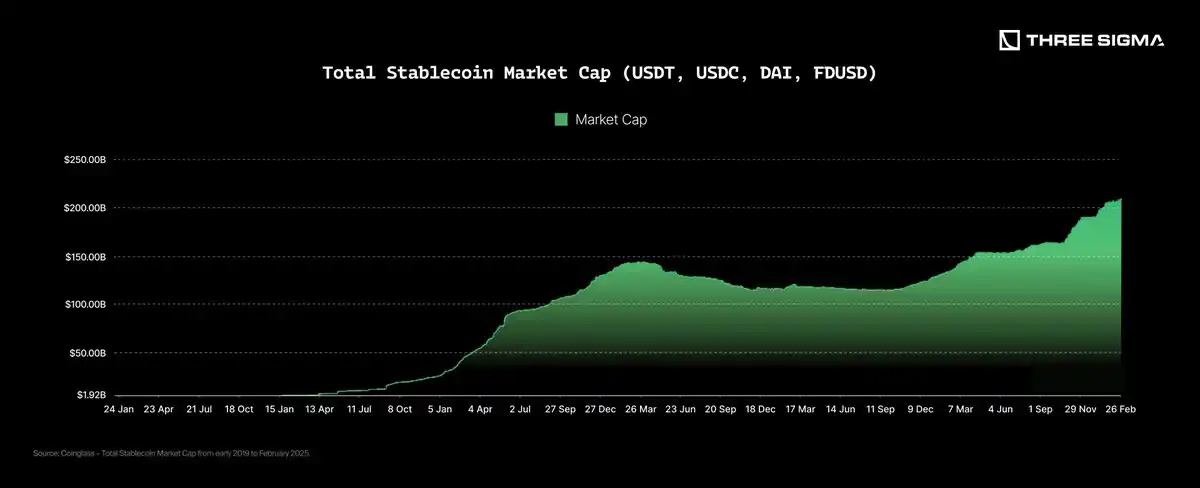
Over the years, the adoption of stablecoins has significantly increased. In 2017, their total market capitalization was less than $30 billion, but by March 2025, it had grown to around $2,280 billion. Stablecoins now represent about 8.57% of the entire crypto market and are an essential tool for trading, cross-border payments, and hedging during market turbulence.
This growth trend highlights the role of stablecoins as a key bridge connecting the traditional financial market and the crypto world. A chart from Coinglass clearly shows the steady and substantial growth in the total market capitalization of major stablecoins from early 2019 to date.
What Is a Stablecoin?
A stablecoin is a type of cryptocurrency designed to maintain its value by pegging it to some external asset, such as a fiat currency or commodity. For example, Tether (USDT) and USD Coin (USDC) are both stablecoins pegged to the U.S. dollar at a 1:1 ratio. The goal of stablecoins is to provide the advantages of digital currency, such as fast, borderless transactions on the blockchain, without the price volatility risk associated with Bitcoin.
Stablecoins strive to maintain price stability through holding reserve assets or employing other mechanisms, making them more suitable as a daily transaction tool or a store of value in the crypto market. In fact, most mainstream stablecoins achieve price stability through a collateralization mechanism, where each issued stablecoin is backed by an equivalent amount of reserve assets.
To ensure the stability and credibility of stablecoins, clear regulations are necessary. Currently, the U.S. lacks comprehensive federal legislation, relying mainly on state-level rules and some proposed bills under review; the EU has implemented strict reserve and audit requirements through the MiCA framework; Asia shows diverse regulatory strategies: Singapore and Hong Kong enforce strict reserve requirements, Japan allows banks to issue stablecoins, and China has mostly banned stablecoin-related activities. These differences reflect the balancing act between "innovation" and "stability" in different regions.
Despite the lack of a globally unified regulatory framework, the use and adoption of stablecoins continue to grow steadily year by year.
Why Were They Issued?
As mentioned earlier, the initial purpose of stablecoins was to provide users with a reliable digital asset for payments or as a value store linked to major global currencies (especially the U.S. dollar). However, their issuance was not for altruistic reasons but rather a highly profitable business opportunity, with Tether being the first company to identify and exploit this opportunity.
Tether launched USDT in 2014, becoming the first stablecoin and pioneering an extremely profitable business model, especially from a "per capita profit" perspective, making it one of the most successful projects in history. Its business logic is very simple: Tether mints 1 USDT for every $1 received and destroys the corresponding amount of USDT when users redeem dollars. The received dollars are then invested in secure short-term financial instruments (such as U.S. Treasury bonds), and the resulting returns belong to Tether.
Understanding how stablecoins make money is key to grasping the economic logic behind them.
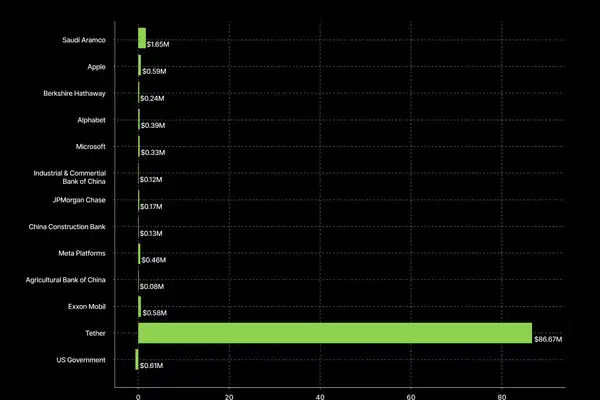
Although the business model of stablecoins seems very simple, Tether cannot control its main source of income—the interest rates set by central banks worldwide (especially the Federal Reserve). When interest rates are high, Tether can earn significant profits, but when rates are low, profitability can decrease significantly.
Currently, a high-interest-rate environment is very favorable for Tether. But what if rates fall again in the future, even approaching zero? Will algorithmic stablecoins also be affected by interest rate fluctuations? Which type of stablecoin may perform better in such an economic environment? This article will further explore these questions and analyze how the stablecoin business model can adapt to the constantly changing macroeconomic environment.
2. Types of Stablecoins
Before analyzing the performance of stablecoins under different economic conditions, it is crucial to understand the operational mechanisms of different stablecoin types. Although all stablecoins share the common goal of maintaining a stable value pegged to real-world assets, each stablecoin responds differently to changes in interest rates and the overall market environment. Below, we will introduce several main types of stablecoins, their mechanisms, and their responses to different economic changes.
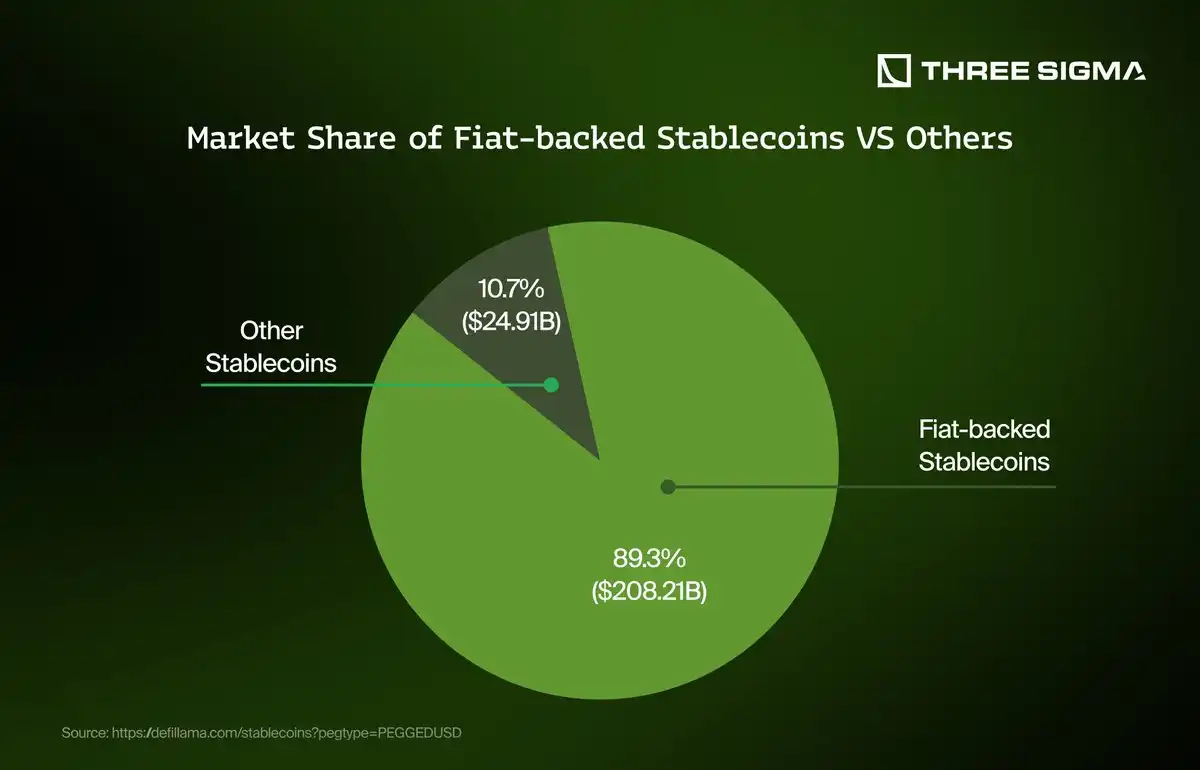
Fiat-backed Stablecoins
Fiat-backed stablecoins are the most well-known and widely used stablecoin type, essentially tokenizing the dollar in a centralized manner.
Their operational mechanism is very simple: whenever a user deposits $1, the issuer mints 1 corresponding stablecoin; when a user redeems dollars, the issuer destroys the equivalent tokens and returns the same amount of dollars.
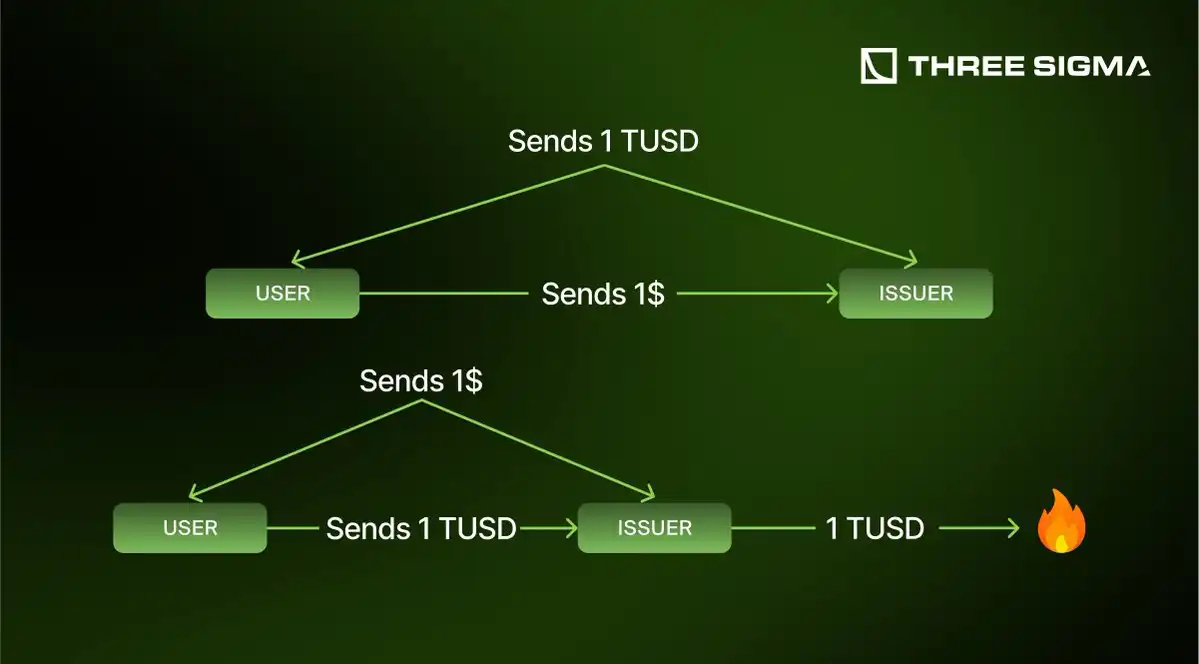
The profit model of fiat-backed stablecoins is mainly hidden behind the scenes. The issuer invests users' deposits in various short-term and secure financial instruments, such as government bonds, collateralized loans, cash equivalents, and sometimes allocates to higher volatility assets such as cryptocurrency (e.g., Bitcoin) or precious metals. The returns generated from these investments constitute the issuer's primary source of income.
However, high returns come with significant risks. One ongoing major challenge is compliance issues. Governments in many countries have rigorously scrutinized fiat-backed stablecoins, arguing that they are essentially equivalent to issuing a "digital currency" and thus must comply with strict financial regulatory requirements.
While most stablecoin issuers have successfully addressed regulatory pressures without major business interruptions, significant challenges still arise. A notable example is the European MiCA (Markets in Crypto-Assets) regulation, which recently banned USDT (Tether) from circulating in certain markets due to non-compliance with its stringent regulatory requirements.
Another key risk is "depegging risk." Stablecoin issuers typically invest a large portion of reserve assets in various investment instruments. If a large number of users simultaneously request token redemptions, the issuer may have to quickly sell off these assets, potentially resulting in significant losses. This scenario could trigger a chain reaction similar to a "bank run," making it difficult for the issuer to maintain the token's peg to the dollar, or even lead to bankruptcy.
The most prominent case occurred in March 2023, involving USDC (issued by Circle). At that time, Silicon Valley Bank (SVB) collapsed, and market rumors quickly spread that Circle had a significant reserve held in SVB, raising concerns about Circle's liquidity and whether USDC could maintain its peg. These concerns caused USDC to briefly depeg. This event highlighted the risks when stablecoin reserves are held in centralized banks. Fortunately, Circle resolved the issue within a few days, restored market confidence, and re-stabilized USDC's peg.
Currently, the two most significant fiat-backed stablecoins in the market are USDT (Tether) and USDC (Circle).
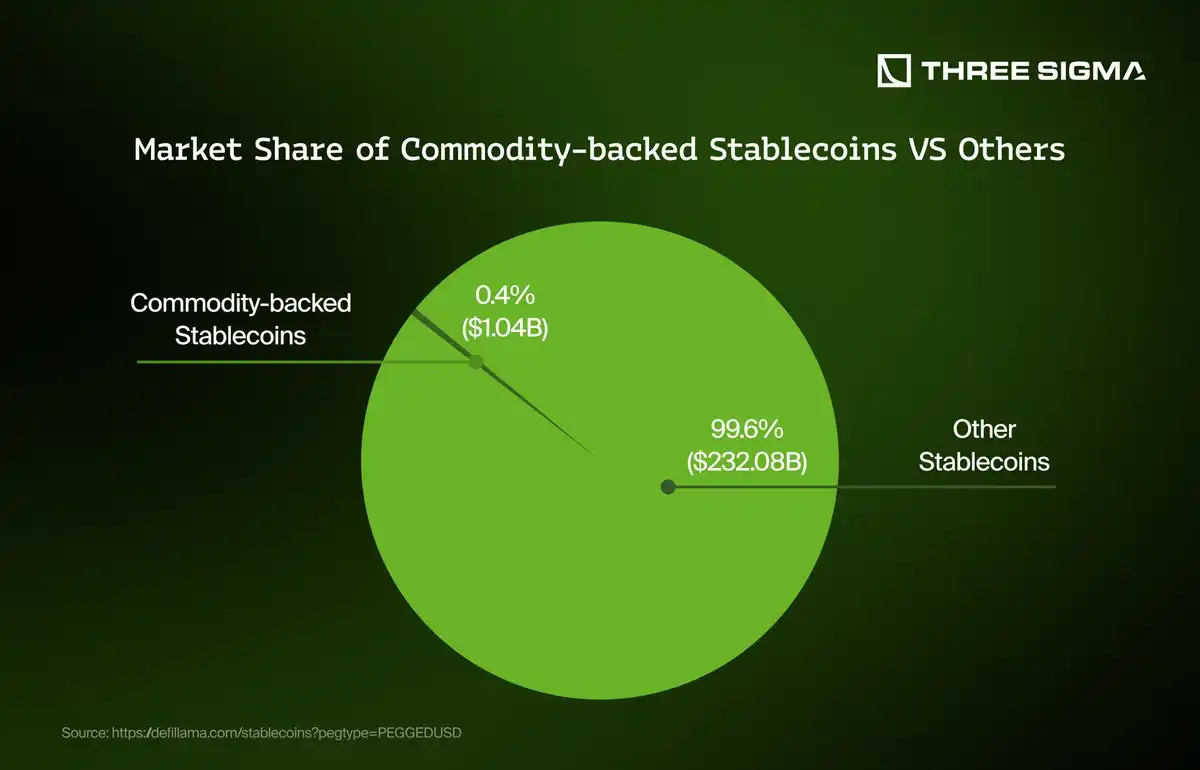
Commodity-backed stablecoins are an innovative category within the stablecoin ecosystem. They issue corresponding digital tokens by collateralizing tangible real-world assets (usually precious metals like gold and silver, or commodities such as oil and real estate).
The operation mechanism of this type of stablecoin is similar to fiat-collateralized stablecoins: for every unit of real-world asset deposited, the issuer mints an equivalent token. Users can usually redeem these tokens for the underlying asset itself or equivalent cash, at which point the corresponding tokens are burned.
The issuer's revenue primarily comes from token minting (creation) and redemption (destruction) fees. For example, Pax Gold (PAXG) charges a small fee when handling token creation and redemption, although Paxos currently does not charge storage fees for the gold it holds. In addition, the issuer may also profit by providing services for transactions and exchanges between the token and the US dollar or real-world assets.
Similarly, Tether Gold (XAUT) generates revenue from fees related to redemption and delivery. Users redeeming XAUT tokens for physical gold bars or converting gold to cash through Tether are charged relevant fees. For instance, during the redemption process, a fee of 25 basis points (0.25%) is charged based on the gold price, and if opting for physical delivery, shipping costs are also incurred. If users choose to sell the redeemed gold bars in the Swiss market, an additional 25 basis points fee is applied.
However, this type of stablecoin also faces risks, especially the volatility of commodity prices, which can affect the token's stable peg. Moreover, compliance issues are a significant challenge. Commodity-backed stablecoins are typically subject to strict regulatory requirements and must have transparent and secure custody arrangements.
Currently, successful commodity-backed stablecoins in the market include Paxos's Pax Gold (PAXG) and Tether's Tether Gold (XAUT), both backed by gold reserves, providing investors with convenient digital exposure to commodities.
In summary, commodity-backed stablecoins bridge traditional commodity investments with digital finance, offering investors stability and exposure to physical assets, while also emphasizing regulatory compliance and transparency.
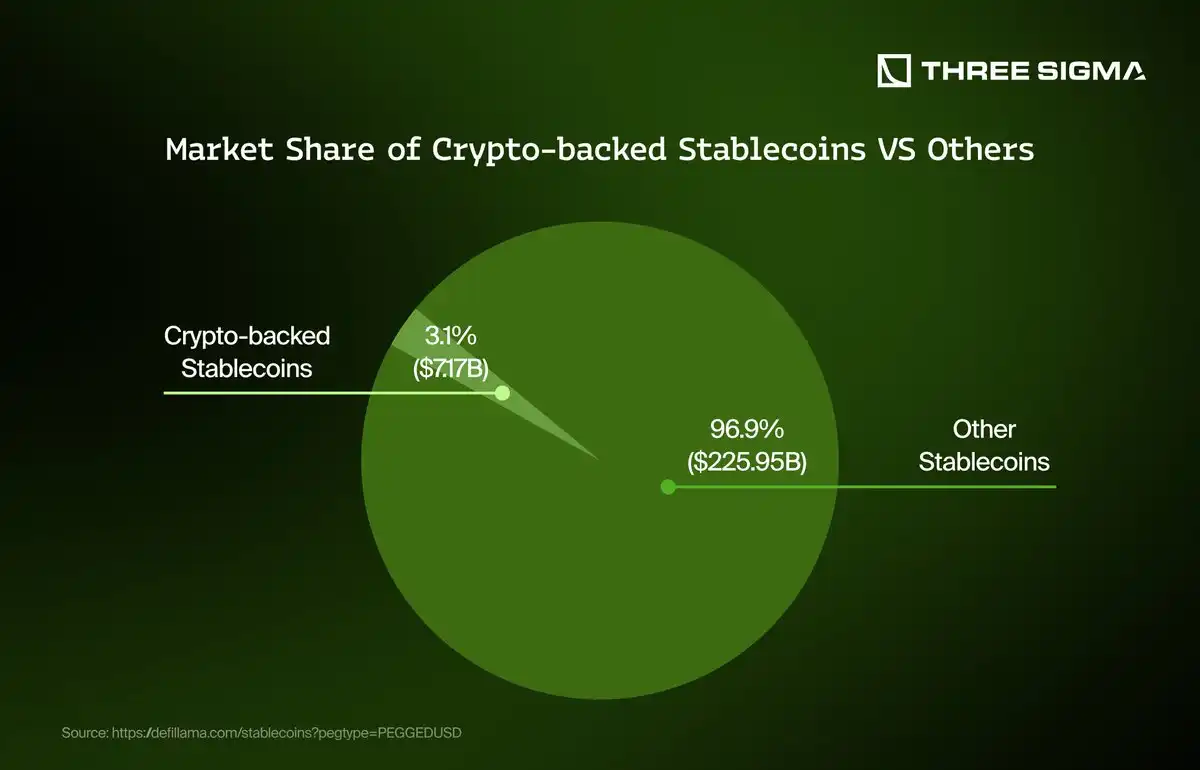
Crypto asset-backed stablecoins are an important category within the stablecoin ecosystem, maintaining a stable value pegged to fiat currency (usually the US dollar) through cryptocurrency collateral. Unlike fiat or commodity-backed stablecoins, these tokens rely on smart contract technology, establishing a transparent and automated system.
The basic mechanism is as follows: users lock up crypto assets (often overcollateralized) in a smart contract to mint stablecoins. The overcollateralization design can buffer the price fluctuation of the crypto assets, ensuring that the stablecoin maintains its set pegged value. When users redeem the stablecoin, they return the equivalent stablecoins, and after the system burns the tokens, the initially collateralized crypto assets are released.
The profit model of an algorithmic stablecoin mainly includes:
Charging interest to stablecoin borrowers;
Charging liquidation fees to users whose collateral falls below the liquidation line;
Protocol-defined governance rewards to incentivize holders and liquidity providers.
Represented by DAI (now called USDs), issued by MakerDAO (now rebranded as SKY), it is primarily collateralized by crypto assets within the Ethereum ecosystem. MakerDAO's revenue sources include charging a stability fee (interest) to USDs borrowers and collecting penalties when liquidation is triggered. These fees together support the stable operation and sustainable development of the protocol.
Another example is the HONEY stablecoin issued by Berachain, currently mainly collateralized by USDC and pYUSD. HONEY's revenue sources include redemption fees: when users redeem HONEY and retrieve their collateral assets (USDC or pYUSD), Berachain charges a 0.05% fee.
Although these stablecoins are classified as "crypto asset-backed," in practice, most of them are more like wrapped versions of fiat-backed stablecoins, such as USDC. While the initial goal was to rely entirely on native crypto assets as collateral to maintain stability, achieving true stability without relying on fiat stablecoins remains very challenging in practice.
Of course, these assets also come with inherent risks. For example, price volatility of the underlying crypto assets can pose significant challenges — such as triggering large-scale liquidations during sharp downturns, potentially breaking the stablecoin's peg mechanism. In addition, smart contract vulnerabilities or protocol attacks can also pose a severe threat to the overall system's stability.
In summary, crypto asset-backed stablecoins like USDs and HONEY have played a significant role in providing decentralized, transparent, and innovative financial solutions. However, despite being nominally crypto-collateralized, they often heavily rely on fiat stablecoins in practice, requiring more robust risk management mechanisms to maintain their resilience and credibility.
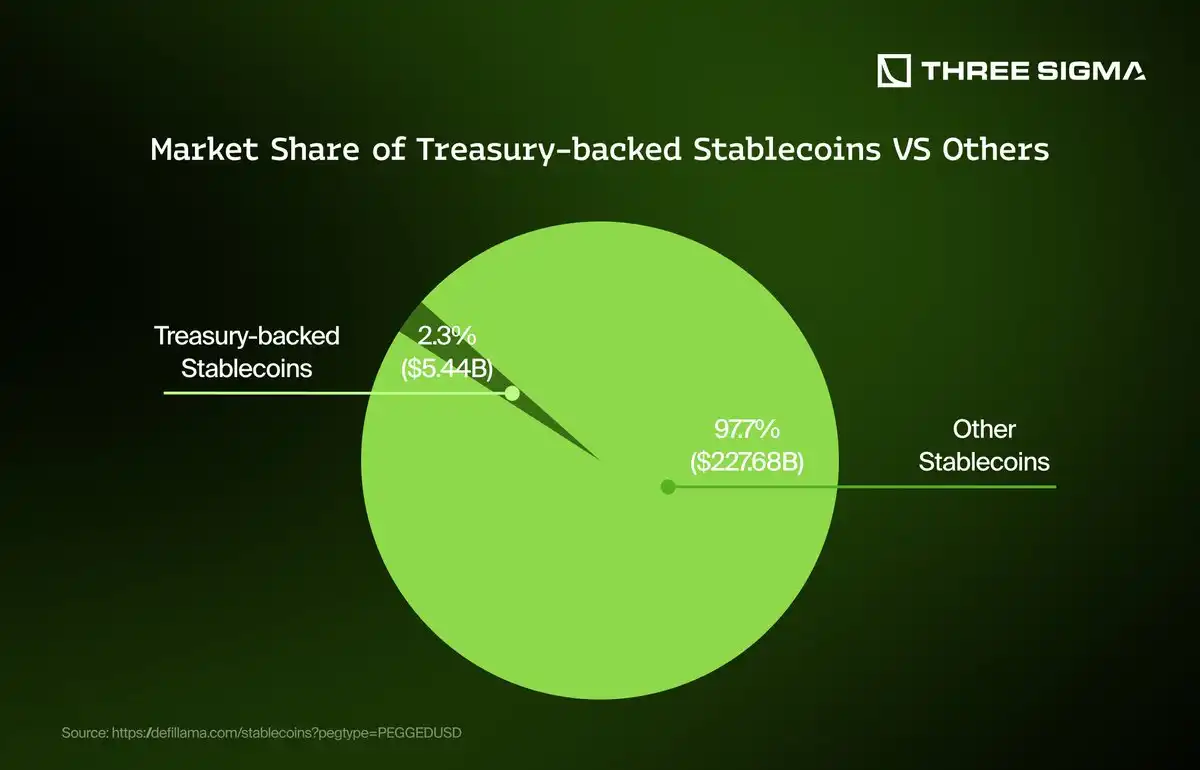
A sovereign-bond-backed stablecoin is a type of stablecoin supported by government bonds (especially U.S. Treasury bonds) as collateral. These stablecoins are usually pegged to the dollar and, while providing value stability, can also offer passive income to holders through the interest income from the underlying government bonds. Therefore, they are more like an interest-bearing investment token, combining the stability of traditional stablecoins with investment characteristics.
For example, Ondo's USDY (USD Yield Token) is referred to as a tokenized note backed by short-term US treasuries and bank demand deposits. Its goal is to provide non-US individual and institutional investors with stablecoin-like utility while offering high-quality USD-denominated yield. After investors purchase USDY, the funds are used to buy US treasuries and partially deposited in banks, with the generated interest being proportionally distributed to token holders. USDY is a "bearing asset," meaning it passively appreciates with the interest generated from the underlying assets, resulting in the token's value increasing over time.
Another example is Hashnote's USYC (USD Yield Coin), which represents Hashnote's Short Duration Yield Fund (SDYF) on-chain. It invests in short-term US treasuries and participates in the repo and reverse repo markets. The return level of USYC is tied to the short-term "risk-free rate," combining the speed, transparency, and composability advantages of blockchain while minimizing protocol, custodial, regulatory, and counterparty credit risks. Users can swap USYC for USDC or PYUSD on the same day (T+0) or the next day (T+1), enabling on-chain direct minting in an atomic and instantaneous process. Like USDY, USYC is also a "bearing asset," accumulating returns passively through the interest generated from the underlying assets.
Despite the dual benefits of stability and yield offered by such stablecoins, they also come with some risks:
· Regulatory Risk: Since these assets are typically targeted at non-US users to circumvent US domestic regulatory requirements, future policy changes may bring uncertainty;
· Custodial Risk: They rely on the issuer to manage and hold the underlying assets properly;
· Liquidity Risk: During market volatility, users' redemption requests may be constrained;
· Counterparty Risk: Especially in repo agreements, default by the counterparty can lead to losses;
· Macroeconomic Risk: Such as interest rate fluctuations, which may affect the overall yield level.
This type of token is often classified into a rapidly growing new category called "Treasury-backed crypto assets."
Algorithmic stablecoins are a type of stablecoin that relies on economic mechanisms and market incentives rather than being entirely backed by fiat currency or traditional assets such as treasuries to maintain a stable value. These models typically maintain a pegged exchange rate (such as to the dollar) through a supply-demand adjustment mechanism but often face challenges in extreme market conditions. The fundamental issue lies in the high reliance on sustained market confidence and an effective incentive structure, which can easily fail under severe pressure.
The USDe issued by Ethena is a new type of "quasi-algorithmic" stablecoin, utilizing a hybrid model. It maintains stability through a "Delta Neutral Hedge Mechanism," holding BTC and ETH among other crypto assets as collateral, while simultaneously establishing an equivalent amount of short positions in the derivatives market to hedge against price fluctuations of the underlying assets, thereby maintaining a stable peg to the US dollar. The USDe achieves a 1:1 full collateralization, making it more capital efficient compared to an overcollateralized model. Furthermore, Ethena also includes highly liquid stablecoins such as USDC and USDT in reserves to enhance liquidity and hedging strategies.
Despite various innovations, algorithmic stablecoins still face significant risks: market instability, extreme volatility, or liquidity crises could disrupt their peg maintenance mechanism. Moreover, reliance on derivatives brings counterparty and execution risks, making the system vulnerable to external shocks.
Although new models like USDe attempt to mitigate these issues through structured hedging and diversified reserves, their long-term stability still depends on overall liquidity conditions and the ability to operate effectively in adverse market environments.
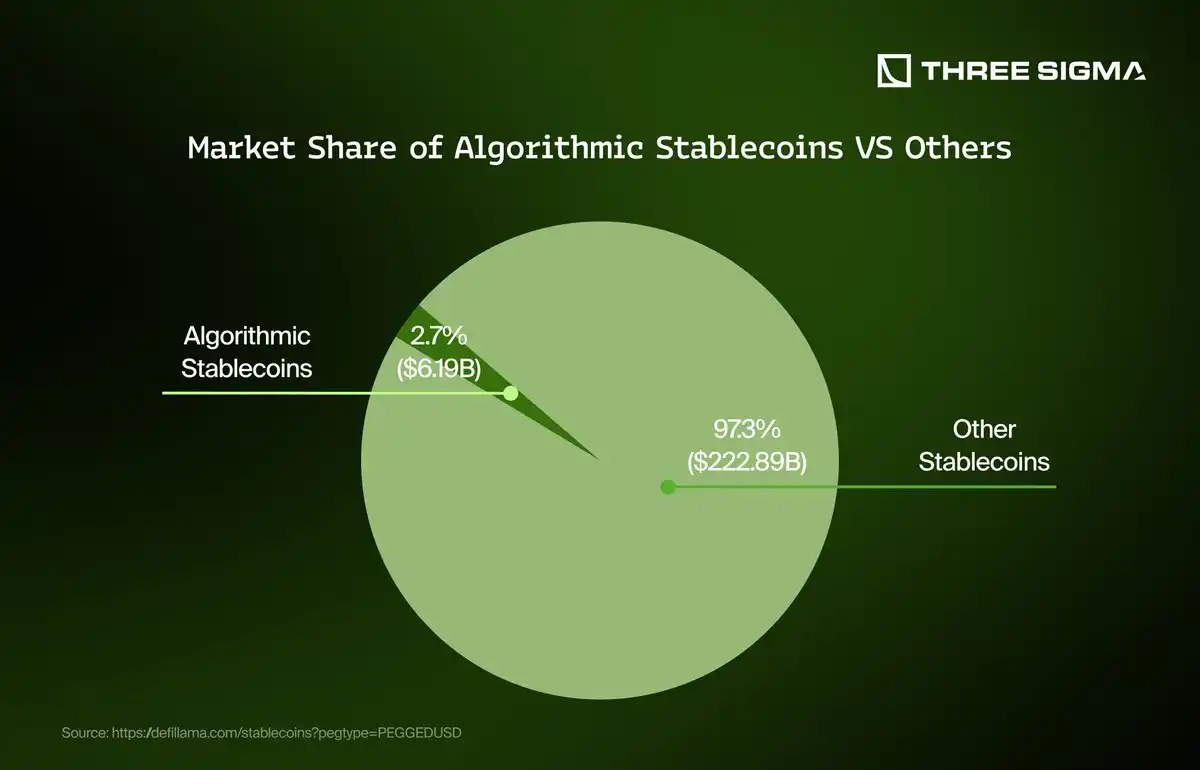
3. Current Mainstream Stablecoins
When it comes to stablecoins, USDT and USDC are undoubtedly the dominant forces in the market, serving as centralized liquidity pillars and holding a core position in the crypto market. They have similar structures: both issued by centralized entities, fully backed by fiat reserves, and widely integrated across major exchanges and financial platforms.
USDT, issued by Tether, has the largest market share and is known for its deep liquidity and widespread adoption, especially prevalent in high-frequency trading environments. On the other hand, USDC, issued by Circle, is positioned as a more compliant and transparent option, favored by institutions and companies seeking a regulatory-friendly environment. Despite slight differences in details, their core function is consistent: providing a stable, trustworthy digital dollar that underpins the entire crypto ecosystem.
Contrastingly, there are also USDS, DAI, and USDe, representing the decentralized forces counterpart to fiat-backed stablecoins, albeit varying degrees of decentralization. DAI and USDS essentially stem from the same system—MakerDAO (now rebranded as Sky). Among them, USDS is an evolution of DAI and a key part of Sky's long-term roadmap.
DAI has historically been more decentralized, relying on overcollateralization of crypto assets to maintain its pegged exchange rate; whereas USDS reflects Maker's trend towards a more structured, strategic direction, prioritizing efficiency over pure decentralization.
At the same time, USDe is also a significant decentralized stablecoin competitor but has taken a completely different path. In contrast to Maker's model of overcollateralization and governance mechanisms, USDe has introduced a yield-generating structure, using its collateral assets to provide additional returns to holders.
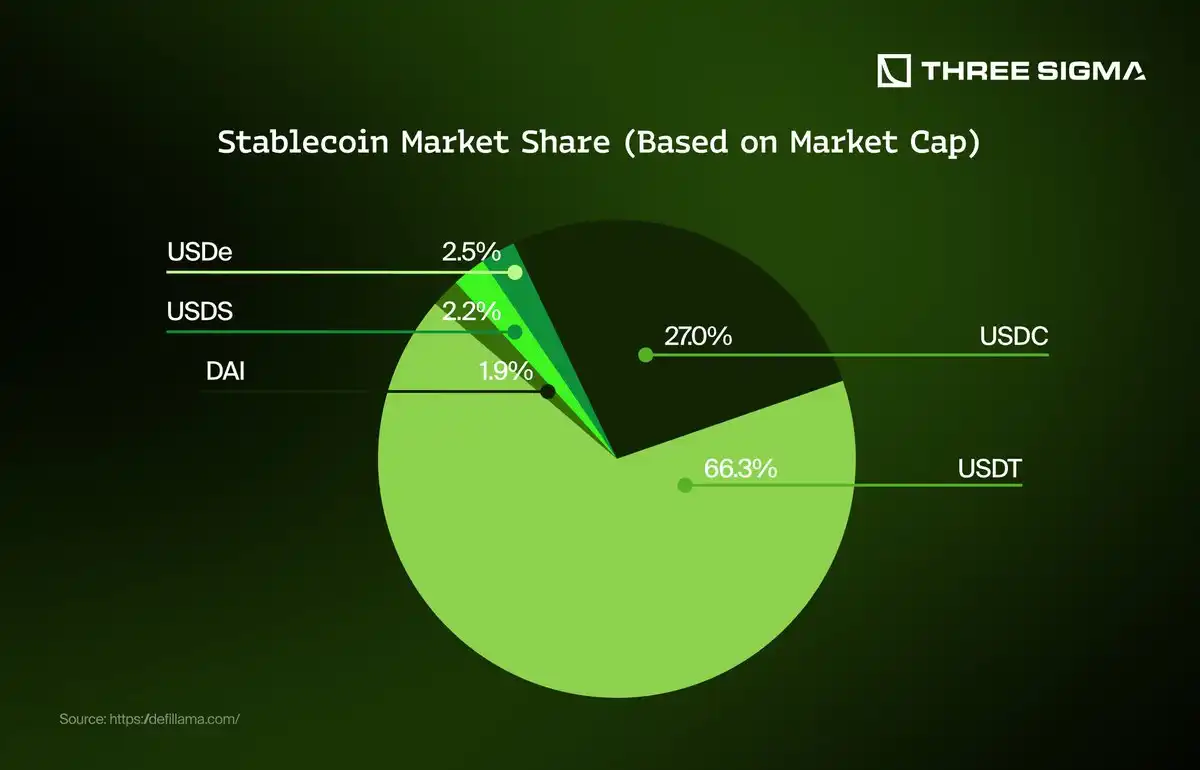
USDT
When discussing stablecoins, USDT naturally emerges as a dominant force, playing a crucial role as the centralized liquidity backbone in the crypto market. USDT issued by Tether holds the largest market share and is known for its deep liquidity and wide adoption, especially crucial in high-frequency trading environments. It provides a stable and trusted digital dollar, supporting the operation of the crypto ecosystem and serving as a key medium for trading pairs, arbitrage opportunities, and cross-exchange liquidity provision. Its widespread acceptance consolidates its role in both centralized and decentralized finance.
Tether's revenue mainly comes from its management of vast reserve assets that back each issued USDT token. These reserve assets primarily include cash equivalents such as U.S. Treasury bonds, commercial papers, short-term deposits, money market instruments, and corporate bonds. By strategically allocating these reserves, Tether is able to accumulate interest and investment returns, making a significant contribution to its revenue.
Additionally, Tether occasionally engages in short-term borrowing and other financial instruments' transactions, further diversifying and enhancing its sources of income. Through token issuance, redemption processes, and transaction fees on various blockchain platforms, Tether also generates additional revenue.
Here is its latest reserve report, clearly showing that over 80% of its reserves consist of cash, cash equivalents, and other short-term deposits, with around 80% being specifically invested in government bonds.
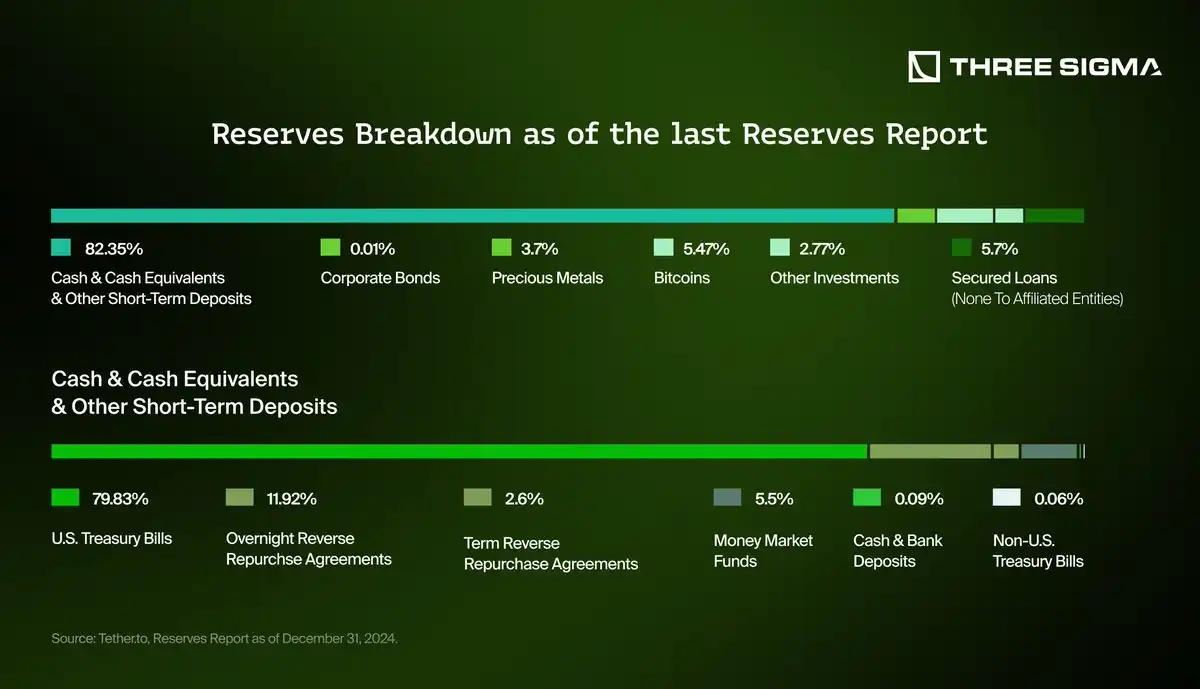
Essentially, Tether's revenue relies mainly on central bank-set interest rates, especially the rates of the Federal Reserve System in the U.S., as the appreciation of its most reserve assets is directly linked to these rates. Higher rates can significantly boost Tether's returns from its reserves, while lower rates can markedly reduce its income potential.
Importantly, unlike some other stablecoins, all of the revenue generated by Tether is retained by the issuer and not distributed to USDT token holders. This is in contrast to yield-bearing stablecoins, which distribute returns directly to holders, highlighting a key difference in stablecoin business models.
Historical Revenue Trends
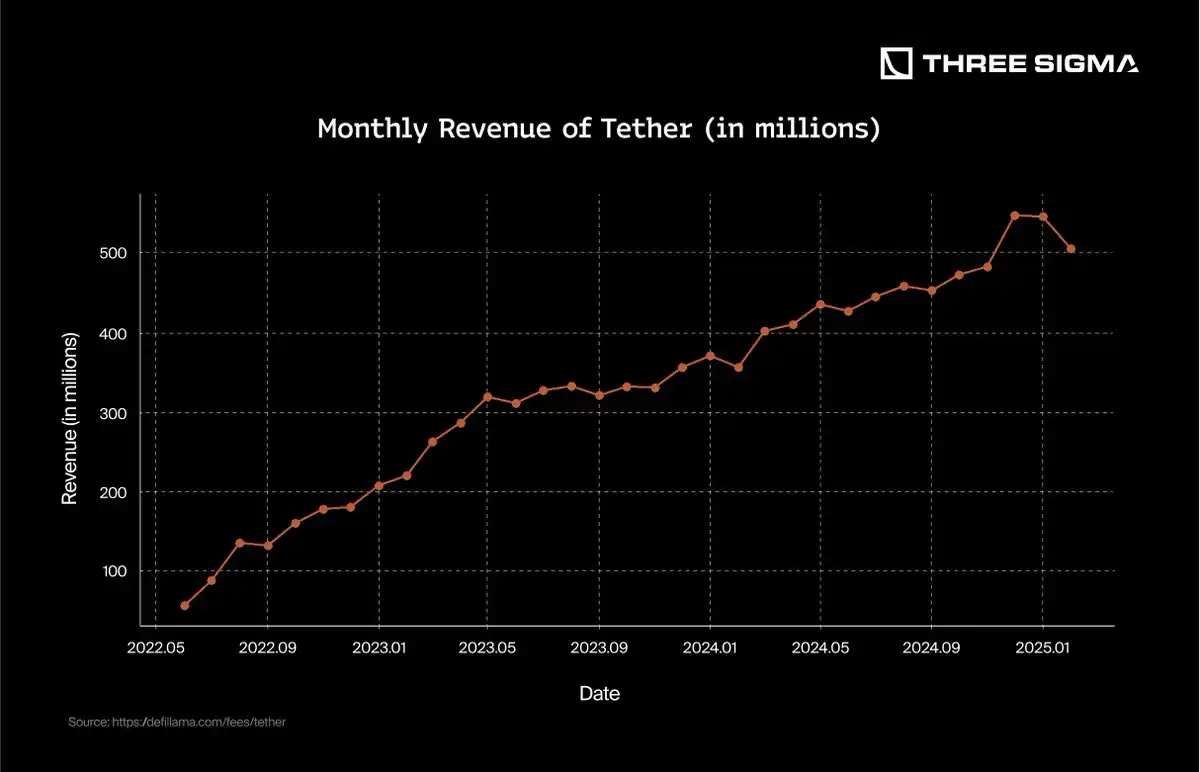
Historically, Tether's revenue trajectory has closely followed global interest rate trends. During the low-interest-rate period from 2019 to early 2022, Tether's revenue growth was moderate, primarily due to its conservative investment strategy with limited returns.
However, starting from mid-2022, as major central banks actively raised interest rates to combat inflation, Tether's revenue saw significant growth. From June 2022 to early 2025, monthly revenue almost increased tenfold, highlighting the high sensitivity of Tether's revenue sources to macroeconomic changes and monetary policy decisions. This trend demonstrates the effectiveness of Tether's revenue model in a rising interest rate environment.
Nevertheless, revenue is not entirely dependent on interest rates. Even in a decreasing rate environment, as long as the supply of USDT increases significantly, Tether may still achieve revenue growth. A larger supply means more assets under management, which can offset lower yields and maintain or even increase overall revenue.
USDC
USDC, issued by Circle, is one of the most trusted centralized stablecoins in the market. Known for its compliance and transparency, it is widely used in decentralized finance, institutional payments, and cross-chain applications. Its presence on multiple blockchains enhances its composability and ecosystem coverage.
A key feature of USDC is Circle's strict reserve structure and public disclosures. As of January 31, 2025, USDC's circulation exceeds $53.2 billion and is fully backed by $53.28 billion in reserves, verified by an independent accounting firm. These reserve funds are divided into the following parts:
Circle Reserve Fund: a government money market fund holding $47.26 billion in U.S. Treasuries and repurchase agreements.
Segregated Bank Accounts: holding an additional $6.02 billion, deposited in regulated financial institutions.
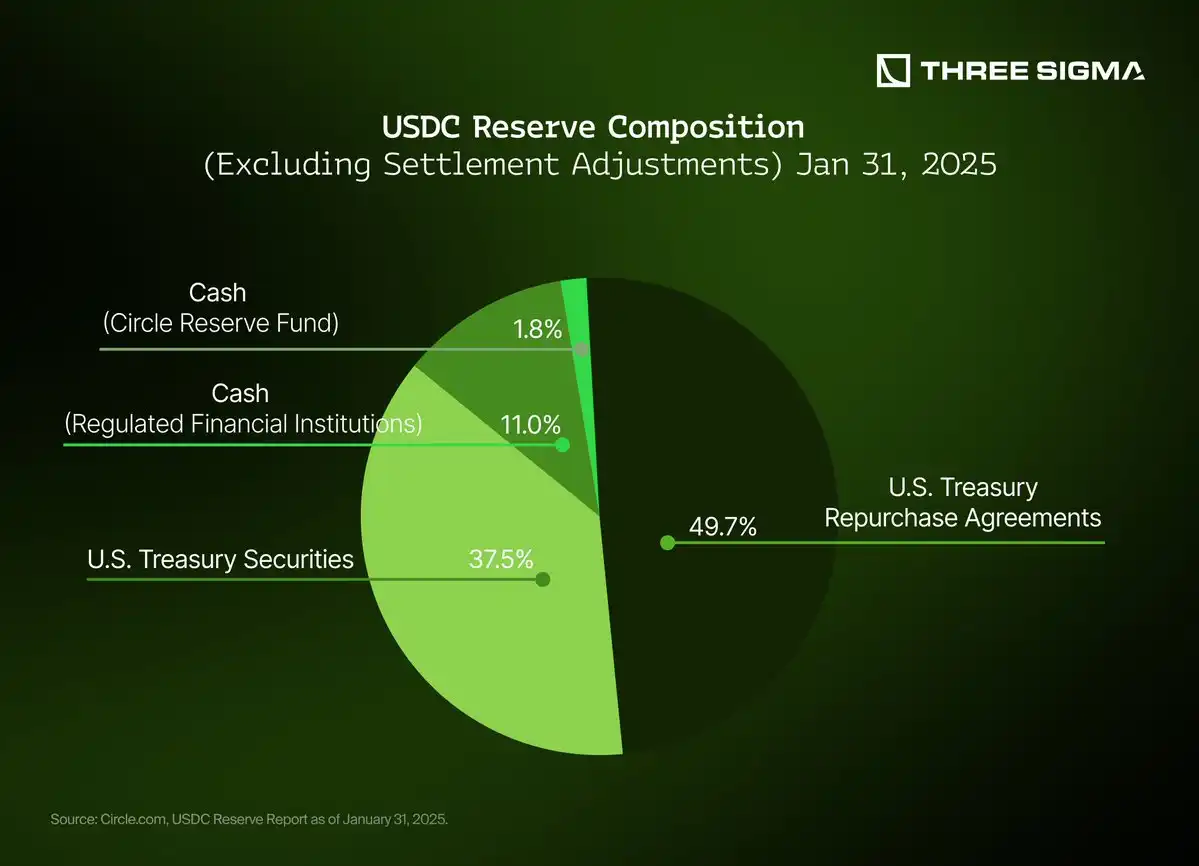
Circle generates revenue by managing these reserve assets, primarily relying on interest income from U.S. Treasuries and overnight lending arrangements. Although structurally similar to Tether's model, Circle stands out with its fund structure, representing 100% reserve fund equity for USDC holders. This not only provides clearer regulatory separation but also may allow for more flexible future product integrations.
Unlike decentralized alternatives, USDC does not directly distribute earnings to users. Instead, the income belongs to the issuer, prioritizing simplicity, compliance, and capital preservation.
Historical Revenue Trends
Circle's revenue trajectory is closely tied to the overall interest rate environment, as its conservative investment strategy focuses mainly on short-term government debt.
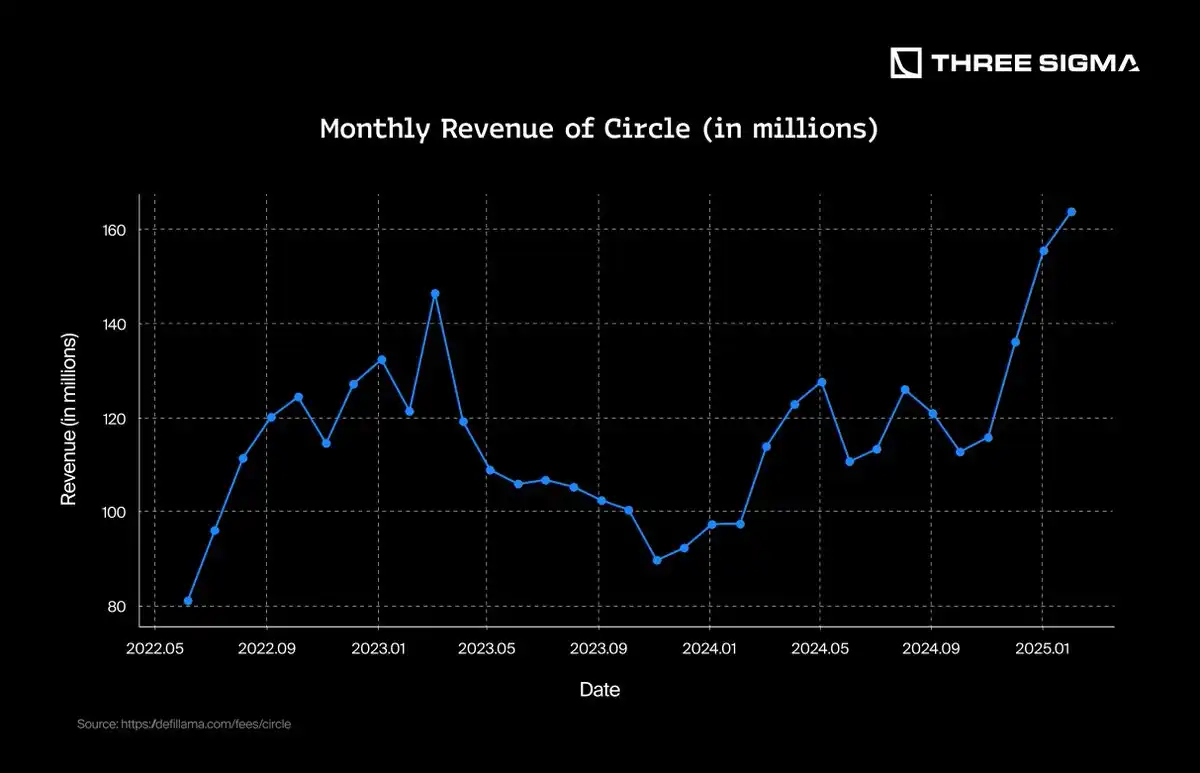
In 2022, due to the Federal Reserve raising rates, Circle's revenue steadily grew, peaking at $1.465 billion in March 2023. However, later that year, pressure from competing stablecoins, blockchain reliability issues (especially on Solana), and reputation fluctuations with banking partners led to a gradual revenue decline. By the end of 2023, monthly revenue had dropped to below $90 million.
In 2024, as redemption volumes decreased, cryptocurrency activity rebounded, and the continued high-rate environment, Circle's revenue started to recover, reaching $1.26 billion in August and ending the year on a strong note. In February 2025, Circle set a new record for monthly revenue, hitting $1.637 billion.
This trend highlights the resilience of USDC and the close relationship between stablecoin revenue models and monetary policy. Circle's sustained recovery underscores its ability to maintain user trust and liquidity dominance throughout market cycles.
USDS/DAI (SKY)
USDS is the current evolution of DAI, which was the first major decentralized stablecoin issued by MakerDAO, aiming to provide an anti-censorship alternative for fiat-backed assets. While both are part of the Maker ecosystem, they have structural differences in collateral models and target use cases.
DAI is an overcollateralized stablecoin backed by a mix of cryptocurrency, RWAs, and stablecoin collateral. Users mint DAI by depositing collateral such as ETH, stETH, or USDC into Maker Vaults, ensuring it remains fully collateralized at all times. This design gives DAI strong anti-risk capabilities but also limits its scalability.
On the other hand, USDS represents the evolution of MakerDAO towards a more traditionally finance-compatible stablecoin. While USDS remains overcollateralized, it follows a structured reserve approach, including tokenized short-term US Treasury bonds. This aligns it with institutional demand, positioning it as a competitor to stablecoins like USDT and USDC while maintaining MakerDAO's decentralized governance model.
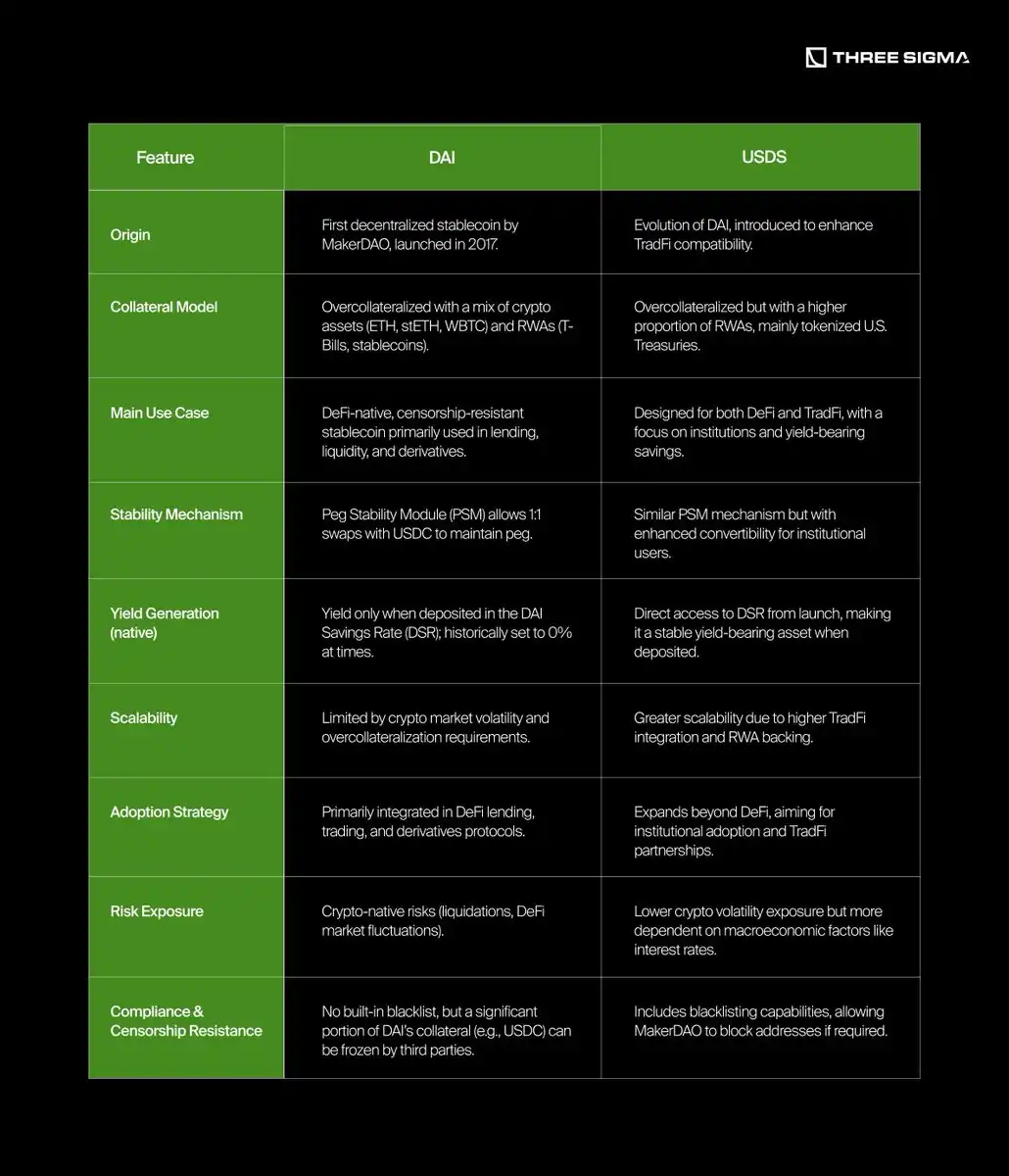
The transition from DAI to USDS reflects a shift towards broader institutional adoption. While DAI initially started as a crypto-native stablecoin primarily backed by decentralized assets, USDS optimized its collateral structure by introducing more RWAs, especially US Treasury bonds.
Furthermore, USDS enhances stability through a direct convertibility mechanism, making it easier to maintain its peg to the US dollar. Unlike DAI, which relied on external DeFi incentives early on, USDS was designed from the start to provide built-in yield through the DSR, making it more attractive in both DeFi and TradFi environments. This structure aligns with the increasingly popular RWA yield DeFi strategies projected for 2025.
Transparency is fundamental to the Sky ecosystem's design, serving not only as a tool to maintain the anchoring mechanism but also as a prerequisite for building trust, attracting institutional participation, and responsibly allocating capital. In an environment managing billions of dollars in assets, both users and institutions require clear visibility into where these funds are held, how they are used, and the system's endorsement.
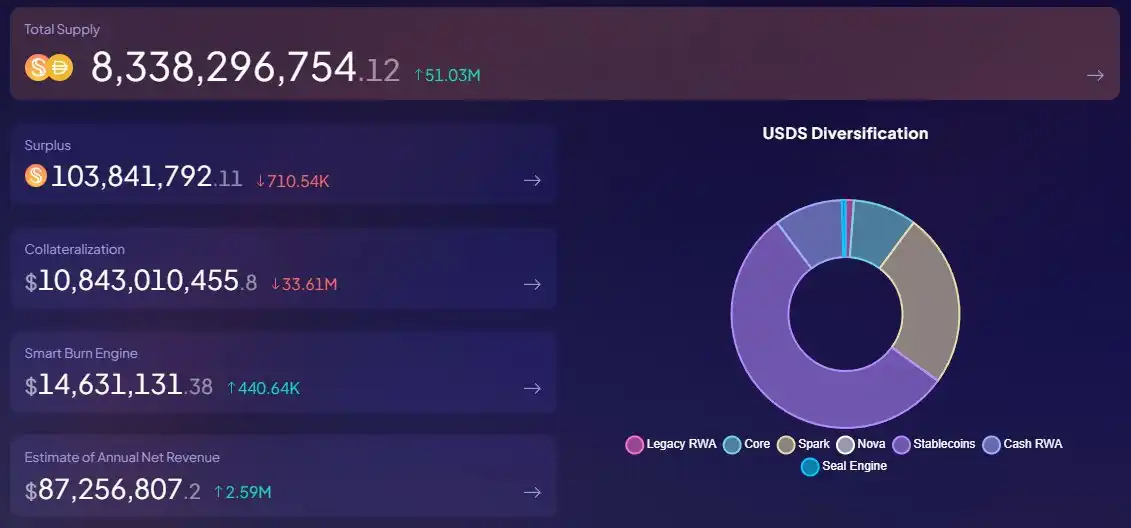
Hence, Sky provides a public real-time dashboard that clearly displays USDS's endorsement, distribution, and yield. However, transparency alone is insufficient to stabilize a currency; anchoring is maintained through overcollateralization, risk-managed asset allocation, and protocol-level mechanisms.
USDS always maintains more collateral than its supply. As of now, USDS's total collateral base exceeds $10.8 billion, with a supply of around $8.3 billion, ensuring an ample buffer to withstand market fluctuations or redemptions. Its collateral is sourced from several key outlets:
·Stablecoin (54.8%): Mainly supported through the LitePSM module, which is an anchoring stability module that allows for a 1:1 exchange between DAI and USDC to support the anchoring of USDS.
·Spark (24.7%): Sky's lending and liquidity protocol, using high-quality, yield-generating collateral to mint USDS.
·Cash RWA (9.7%): Fully held in BlockTower Andromeda, which is a short-term US Treasury bond investment strategy, providing low-risk real-world yield.
·Core (9%): Sky's overcollateralized Vault system, where users can mint USDS using assets like ETH and stETH under strict collateral thresholds.
These mechanisms together ensure that USDS remains stable, overcollateralized, and backed by a range of liquid and yield-generating assets, with transparency ensuring anyone can verify this at any time.
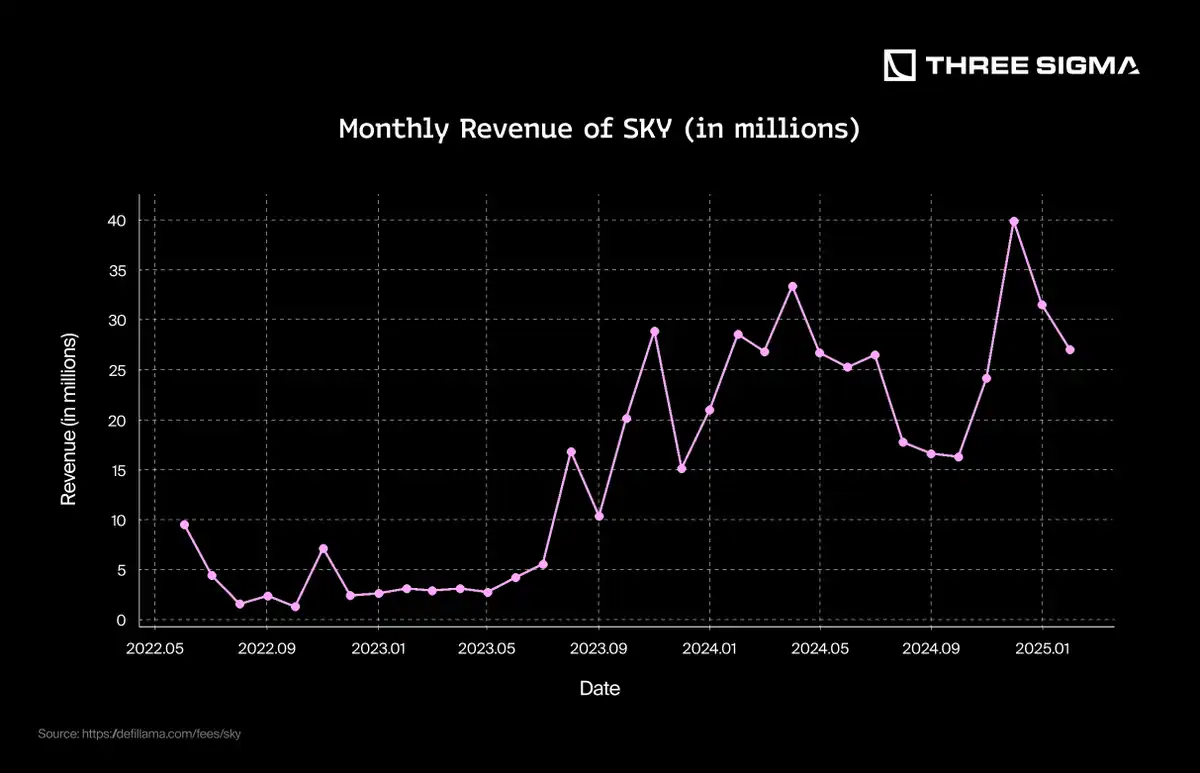
Historical Revenue Trend
The above chart shows the Sky protocol's cumulative revenue from mid-2022 to early 2025. While revenue steadily grew in the initial months, by the end of 2023, with the expansion of DeFi integrations, increased adoption of USDS, and deeper engagement with real-world assets (such as short-term US Treasury bonds), revenue growth significantly accelerated, coinciding with rising interest rates. By early 2025, cumulative revenue had exceeded $500 million, reflecting Sky's ability to capture yield in both crypto-native and institutional strategies while sustainably scaling.
USDe
USDe is a delta-neutral synthetic dollar stablecoin adopting a synthetic dollar structure maintained through perpetual futures, developed by Ethena Labs. Unlike traditional stablecoins backed by fiat reserves or overcollateralized crypto assets, USDe maintains its peg to the dollar through automated hedging strategies. This gives it fully backed, scalable, and censorship-resistant characteristics. Ethena also offers sUSDe, a yield-bearing version of USDe capable of earning rewards through liquid staking assets and futures market funding rate arbitrage.
Since its public launch in early 2024, Ethena has rapidly expanded, reaching a $60 billion supply within ten months, making USDe the third-largest USD-denominated asset in the crypto space. It has also become a fundamental part of DeFi, integrated into major protocols like Pendle, Morpho, and Aave, with its adoption driving significant growth. Beyond DeFi, USDe has penetrated CeFi, currently integrated as collateral on about 60% of centralized exchanges, surpassing USDC balances on Bybit in less than a month.
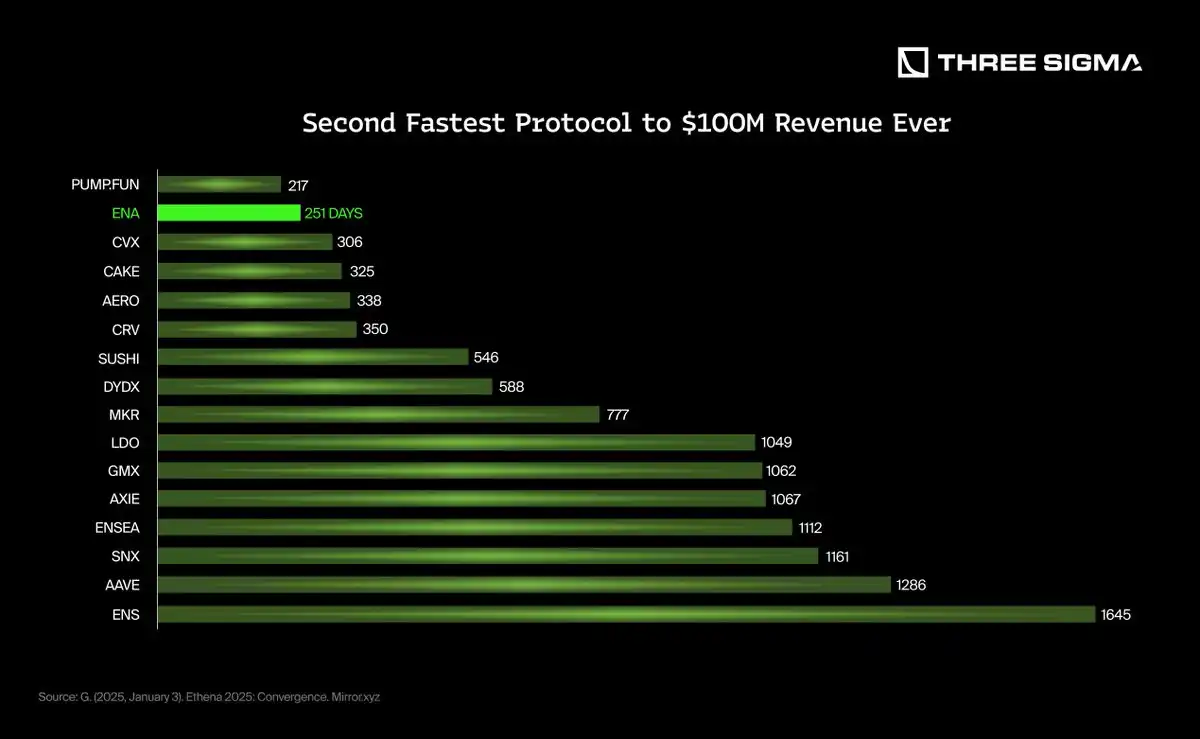
If we delve into revenue, Ethena has also excelled, becoming the second-fastest dApp in history to reach $100 million in revenue (second only to Pump.fun), achieving this milestone in 251 days. In 2024, Ethena has emerged as a dominant force in DeFi, with its assets representing over 50% of Pendle TVL, around 30% of Morpho TVL linked to Ethena-related assets, and becoming the fastest-growing new asset on Aave, reaching $1.2 billion in deposits in just three weeks.
The next phase for Ethena is defined by Convergence, aiming to achieve the convergence of DeFi, CeFi, and TradFi through USDe. By introducing iUSDe, a wrapped version of sUSDe designed for institutional adoption, Ethena plans to offer a high-yield, crypto-native dollar product tailored for asset managers, private credit funds, and exchange-traded products. By facilitating capital flow and interest rates across various financial systems, Ethena positions USDe as a cornerstone of the evolving digital dollar space.
How Does USDe Work?
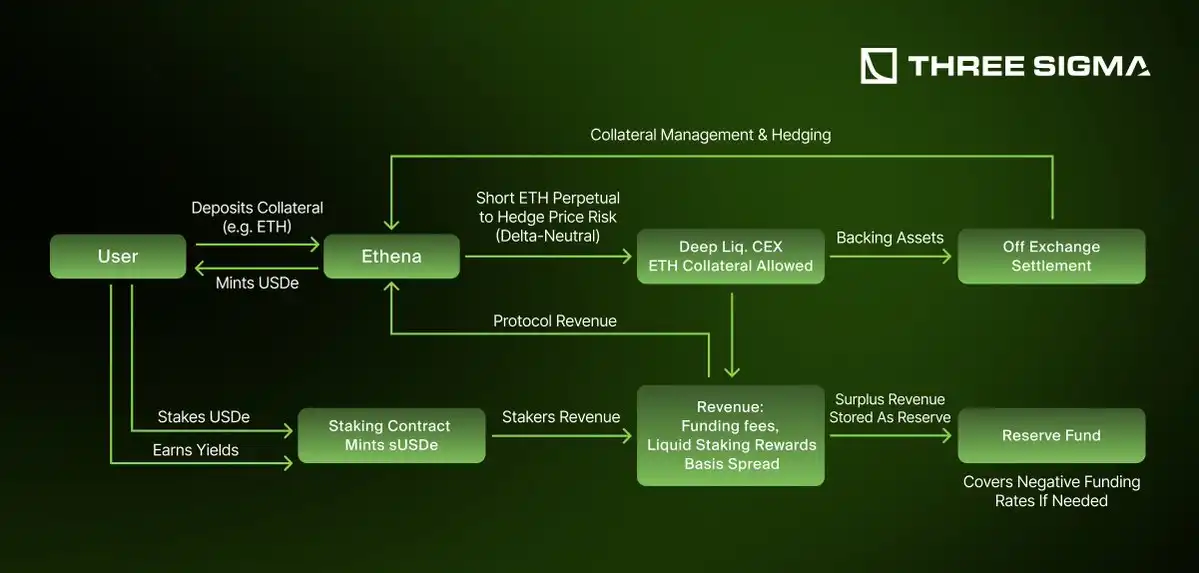
USDe maintains stability through a delta-neutral hedging strategy, ensuring its value is unaffected by market fluctuations. When users mint USDe, the collateral received by Ethena can include ETH, BTC, LSTs, USDT, USDC, and SOL, among others. To hedge price risk, Ethena opens a perpetual futures short position for each received collateral. For instance: if the collateral is ETH, Ethena will short an ETH perpetual future.
This mechanism ensures that any price fluctuations in the collateral are hedged by the corresponding futures position. If the collateral appreciates, the short position incurs a loss, which is offset by the collateral's appreciation. Conversely, if the collateral's price drops, the short position gains, mitigating the depreciation of the collateral. This mechanism ensures that USDe remains stable, immune to market volatility.
Unlike other synthetic stablecoins, Ethena does not utilize additional leverage, only using the leverage naturally applied by derivative exchanges to evaluate collateral. This minimizes liquidation risk, ensuring that each short position is fully backed by assets on a 1:1 basis.
For enhanced security, Ethena's collateral assets are held on-chain and custody through an off-chain settlement system to mitigate counterparty risk. Ethena never fully relinquishes control of the assets to the derivative platform but uses them solely as collateral for its short hedge positions, ensuring decentralized and transparent asset management.
Ethena generates revenue by capturing a portion of the returns from its delta-neutral strategy, including:
Funding Rate Arbitrage: Ethena profits when the funding rate of perpetual futures is positive.
Liquid Staking Rewards: Staking rewards generated by the collateralized LSTs, of which a portion is retained by Ethena.
Basis Trading Profits: Ethena benefits from the efficiency difference between the spot and futures markets.
Protocol Fees: A portion of the overall returns is allocated to the reserve fund and protocol treasury to ensure long-term sustainability.
While USDe's delta-neutral strategy minimizes exposure to price fluctuations, it is still susceptible to funding rate fluctuations, market imbalances, and counterparty risks. If the funding rate remains negative for an extended period, Ethena's reserve fund will absorb the loss, but prolonged negative rates could put pressure on the system.
A liquidity crisis or extreme volatility could lead to temporary deviations from the peg if there is a disconnect between the spot and futures markets. Additionally, relying on centralized exchanges for hedging introduces counterparty risk, but Ethena mitigates this risk by keeping assets on-chain and settling off-chain.
Historical Revenue Trends
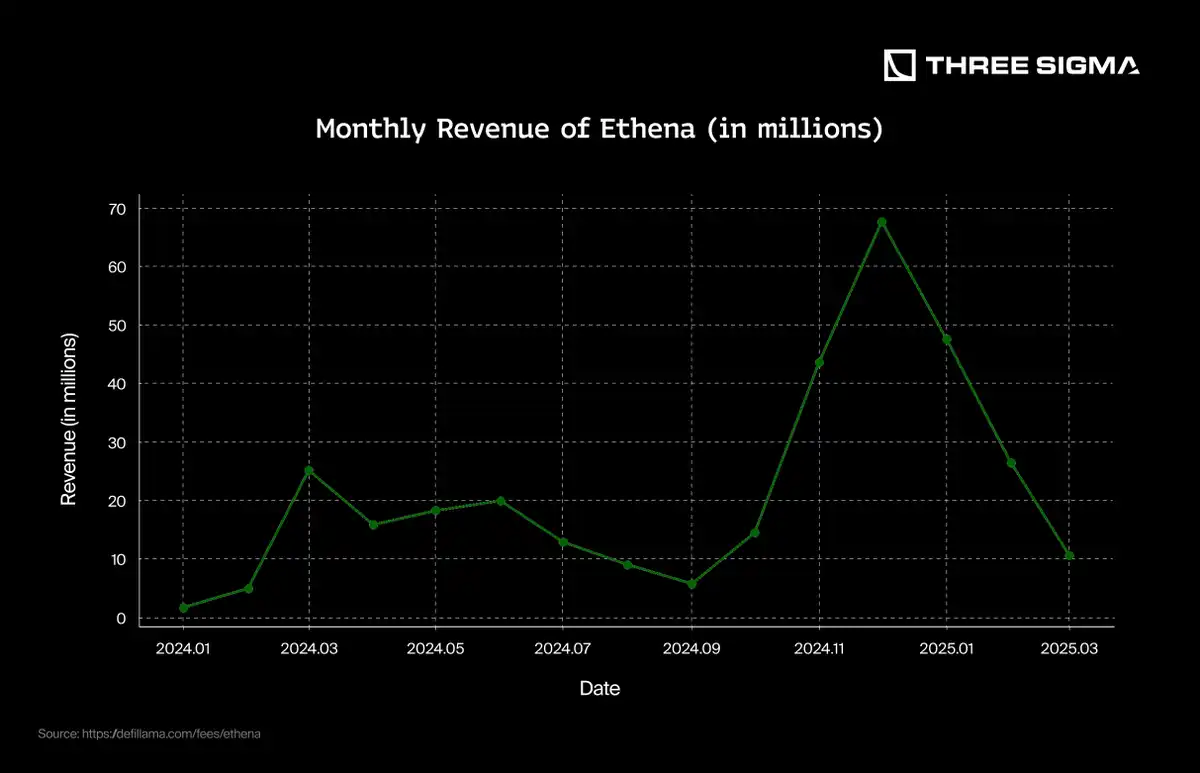
Ethena launched to the public on February 19, 2024, allowing users to mint USDe by depositing stablecoins and staking them as sUSDe to earn rewards. In less than a year, the protocol's cumulative revenue exceeded $320 million, making it one of the fastest-profit curves in DeFi history.
The steady growth in revenue in the first half of 2024 reflects the continuous increase in USDe supply and widespread adoption on DeFi and CeFi platforms. However, the sharp acceleration in revenue began in October 2024, coinciding with the following events:
USDe and sUSDe have been integrated into major lending markets such as Aave and Morpho.
The increase in market volatility has brought about a surge in fund rate arbitrage opportunities.
The launch of new institutional products such as iUSDe has expanded Ethena's influence into the TradFi space.
By the first quarter of 2025, the protocol's total revenue has surpassed $300 million. Despite being launched for less than 15 months, Ethena has already positioned itself at the forefront of revenue generation in the crypto space. This rapid growth demonstrates strong market demand and validates the sustainability of USDe's delta-neutral model.
However, after reaching a peak at the end of 2024, the monthly revenue in the first quarter of 2025 experienced a sharp decline. This decline is associated with a reduction in fund rate arbitrage opportunities as the perpetual futures funding rates on major exchanges trended towards normalization. With reduced volatility and a more neutral funding environment, one of Ethena's key revenue sources temporarily weakened, highlighting the model's sensitivity to market conditions.
4. Interest Rates and Revenue Correlation
Interest rates have a significant impact on stablecoins and are one of the most decisive factors in their revenue performance. As mentioned earlier, stablecoins generate revenue through various mechanisms, including interest-bearing reserves, market arbitrage, and other income-generating strategies. Since the assets held by many stablecoins are affected by changes in interest rates, their revenue potential is often influenced by macroeconomic conditions.
To better understand this relationship, we adjust the revenue by dividing it by the supply. This normalization process makes comparisons more accurate because an increase in stablecoin supply naturally leads to greater potential revenue generation. By focusing on revenue per unit of supply, we can isolate the direct impact of interest rate fluctuations on the profitability of stablecoins.
USDT
In-depth chart analysis vividly illustrates the positive correlation between Tether revenue and interest rate fluctuations. Historical charts compare Tether's quarterly revenue with interest rate changes, showing a clear synchronicity and highlighting the almost real-time response of revenue to rate adjustments.
These visual representations effectively emphasize Tether's sensitivity to the interest rate environment, providing predictive insights into potential future performance scenarios. They underscore the importance of proactive financial and reserve management strategies to mitigate revenue risks associated with interest rate fluctuations or downturn cycles.
The following chart illustrates the correlation between interest rates and adjusted stablecoin income. Each chart shows the relationship variation between stablecoin supply per unit (y-axis) and interest rates (x-axis).
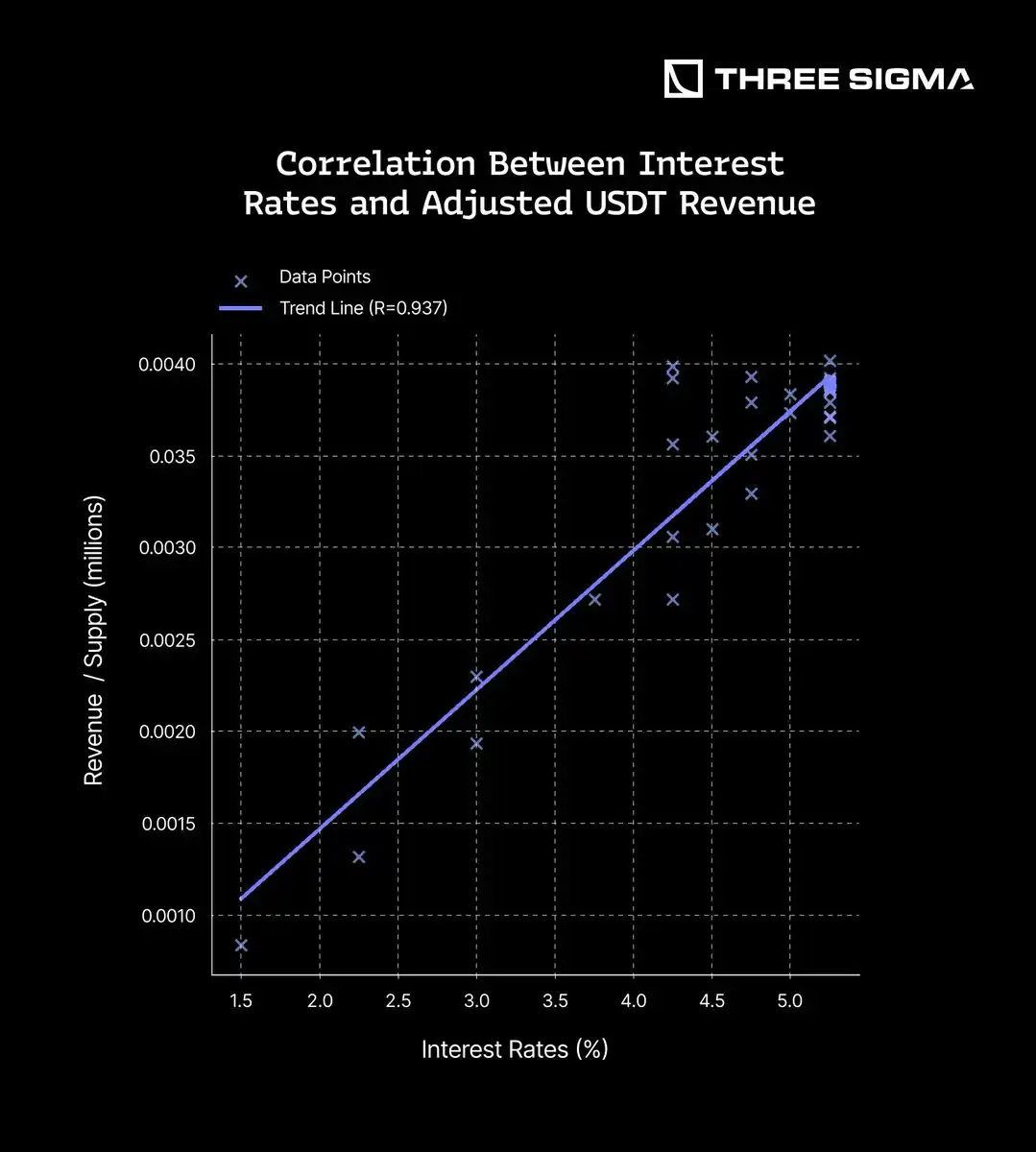
The chart further highlights a strong positive correlation (R = 0.937) between interest rates and USDT's adjusted per-unit supply income. This indicates that as interest rates rise, USDT's per-unit supply income also increases, reflecting the yield growth of USDT in U.S. Treasury investments. As interest rates increase, the yield of these Treasury securities rises, directly impacting USDT's overall income.
This correlation underscores how USDT effectively manages its reserve assets, benefiting from changing economic conditions, especially in a high-yield environment. It reflects USDT's flexible financial strategy and its strong positioning during interest rate hikes, enhancing its economic stability and role as a reliable digital asset. As mentioned earlier, 100% correlation is not possible as 80% of the reserves are held in cash and Treasury securities, with 80% specifically allocated to Treasury bills.
USDC
USDC's economic strength is reflected in its strategic reserve management. With rising interest rates, USDC benefits from its significant holdings in U.S. Treasury securities, which offer higher returns. USDC invests 75%-80% of its reserves in Treasury securities, maintaining stability while generating additional income as bond yields rise. The direct correlation to interest rate fluctuations allows USDC to benefit in a rising rate environment, further solidifying its position as an income-generating stablecoin.
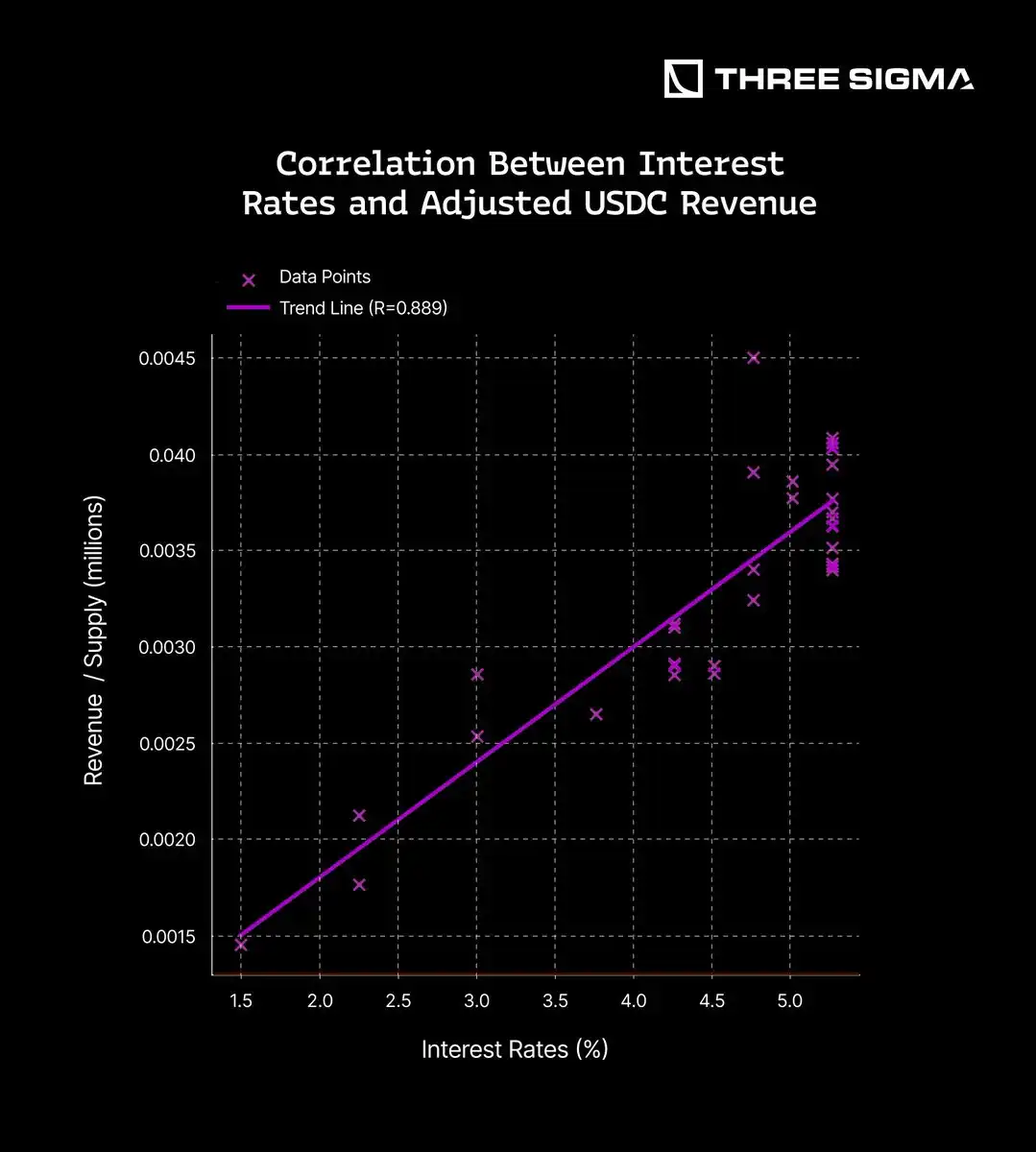
The trendline shows a strong positive correlation (R = 0.889), indicating that as interest rates increase, USDC's per-unit supply income correspondingly rises. This is in line with expectations, as like other reserve-backed stablecoins, USDC derives income from high-yield assets such as U.S. Treasury securities.
This correlation highlights USDC's ability to optimize reserves and adapt to economic changes. It also emphasizes how reserve-backed stablecoins leverage interest rate hikes to enhance income generation, further solidifying their role in the digital asset ecosystem.
While this correlation is strong (R = 0.889), it is lower than that of USDT, mainly due to reserve composition differences. USDT holds a larger portion of reserves (approximately 80%) in short-term U.S. Treasury bills, which are highly sensitive to interest rate changes. In contrast, USDC's reserves are more diversified, with only 37.5% in Treasury bonds and nearly 50% allocated to repo agreements, which react more indirectly to interest rate fluctuations. This diversification enhances liquidity and stability but slightly diminishes the direct impact of rate hikes on income, resulting in a weaker correlation.
In summary, the direct comparison of USDT and USDC income highlights the impact of reserve composition and income strategies.
SKY (DAI/USDs)
The economic strength of SKY is reflected in its strategic reserve management. As interest rates rise, the SKY stablecoin (USDS and DAI) benefits from its exposure to yield-generating assets.
Unlike USDC and USDT, which are traditionally backed by institutional reserves, DAI has historically relied on cryptocurrency collateral assets such as ETH. However, in October 2022, MakerDAO began allocating a significant portion of DAI's reserve to U.S. treasuries and other real-world assets (RWAs) to capture higher yields. As of July 2023, over 65% of DAI's reserve is pegged to RWAs, making its income more sensitive to interest rate fluctuations. This shift has made DAI's behavior more similar to institutional stablecoins, directly benefiting from interest rate increases.
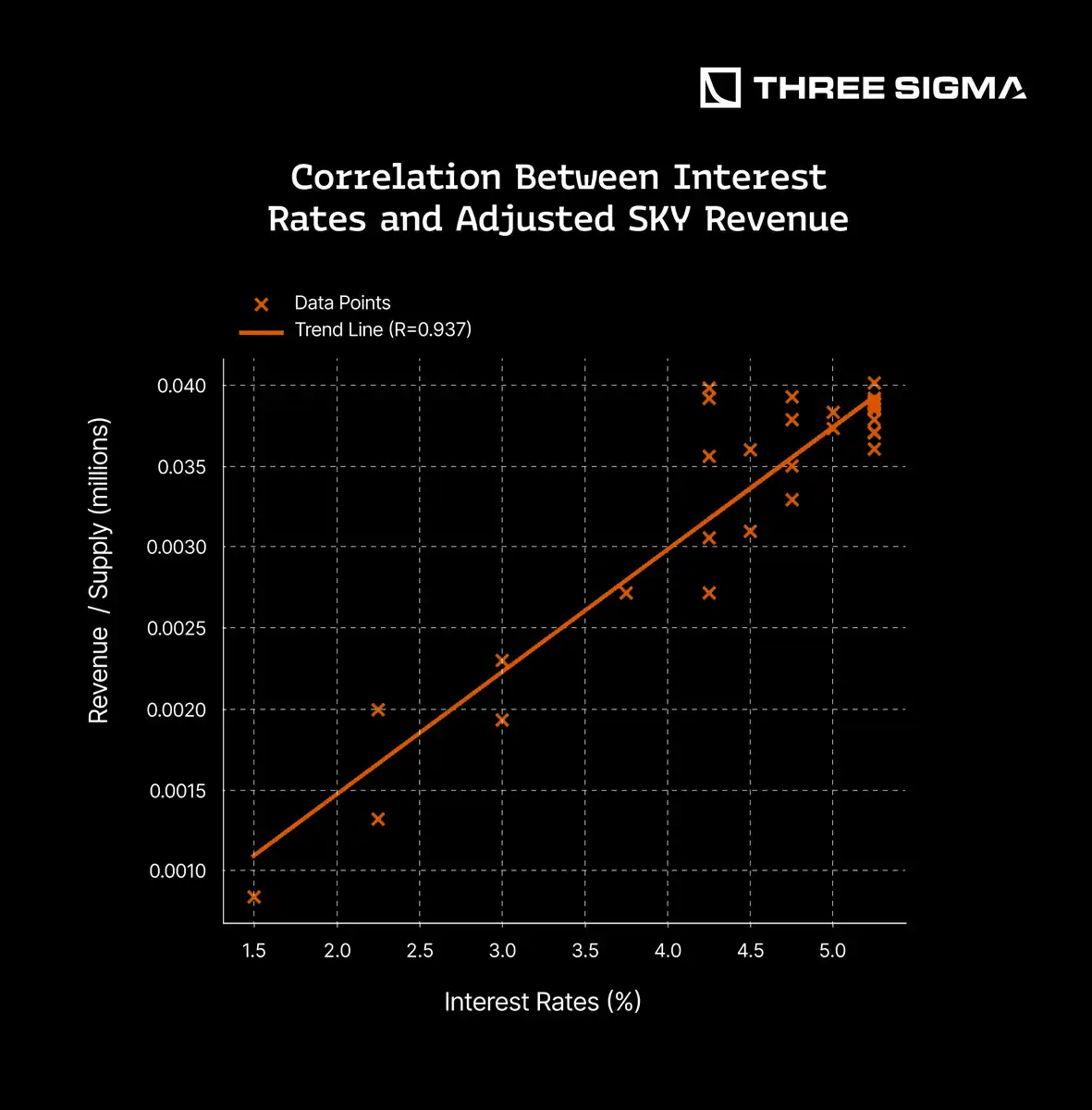
As expected, the change in DAI's reserve composition has led to a strong positive correlation between interest rates and the income per unit of the SKY stablecoin (R = 0.937). Data confirms that higher interest rates help increase income generation, further affirming that the SKY stablecoin now behaves more like yield-optimized institutional stablecoins.
USDe
The income model of USDe is primarily based on funding rate arbitrage in the perpetual futures market, rather than traditional interest-bearing assets like U.S. treasuries. As we have observed, its hedging strategy involves holding short positions in perpetual futures, profiting from fees paid by long traders when there is an imbalance in open contracts.
When the demand for long positions increases, the funding rate rises, making holding long positions more expensive, while providing revenue opportunities for short traders (including USDe). However, this income model is less directly influenced by traditional interest rate changes and relies more on market volatility, trader positions, and the overall leverage demand in the crypto market.
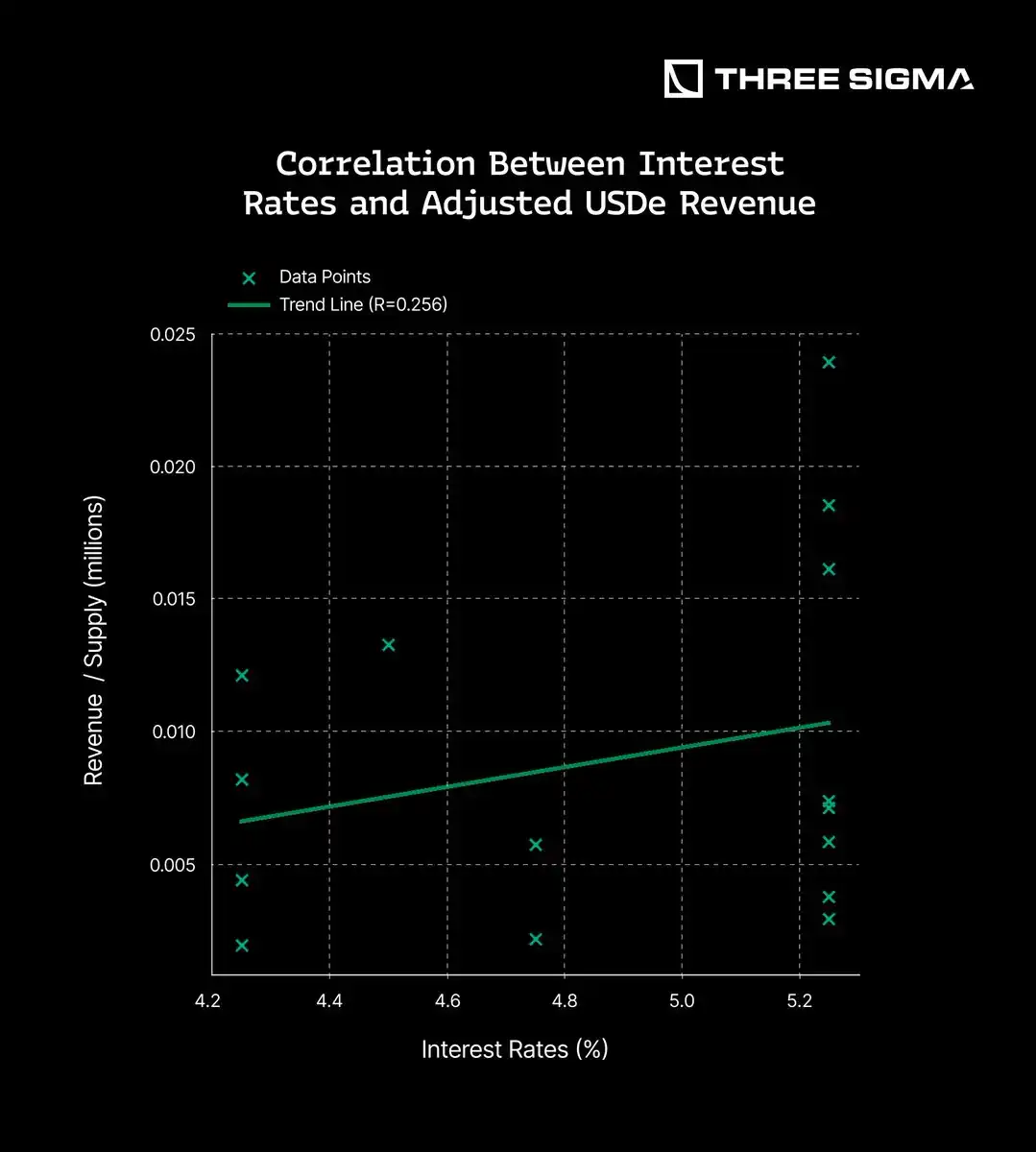
The trendline shows a weaker positive correlation (R = 0.256), indicating that although higher interest rates may have some impact on USDe's income, this relationship is not particularly strong.
This is in line with expectations, as USDe's income model is primarily driven by the conditions of the perpetual futures market rather than interest rate changes. Funding rates and leverage demand play a much larger role in income generation than traditional interest rate hikes.
This correlation highlights that USDe's revenue relies on traders' behavior rather than being directly exposed to real-world interest rate changes. Although lower interest rates may encourage greater risk-taking and leverage in the crypto market, USDe's profitability remains closely tied to the imbalance in funding rates in perpetual futures trading.
5. Impact of Interest Rates Reaching 0%
Interest Rates
Interest rates represent the cost of borrowing or, conversely, the return received from lending or depositing funds. Central banks, such as the U.S. Federal Reserve, set benchmark rates (e.g., the federal funds rate) to manage economic growth, control inflation, and stabilize the financial system. Lower rates typically encourage borrowing, stimulating economic activity, but can also fuel inflation.
Conversely, higher rates discourage borrowing, slow down economic expansion, but help to alleviate inflationary pressures. Historically, rates fluctuate sharply based on the economic cycle and crises, often nearing zero during economic downturns (e.g., the 2008 financial crisis, COVID-19 pandemic) and spiking during inflationary periods (e.g., post-pandemic 2022-2024). Rate fluctuations directly impact the yields of Treasury bills and bonds, which are crucial for stablecoin issuers reliant on these investment returns.
Historical Rates
The most closely watched rate is the rate set by the U.S. Federal Reserve, particularly the federal funds rate, due to the global dominance of the U.S. dollar as the primary reserve currency and its widespread impact on international financial markets. Changes in U.S. rates have significant implications on global economic activity, currency valuations, investment flows, and borrowing costs, making it a key benchmark for global financial stability.
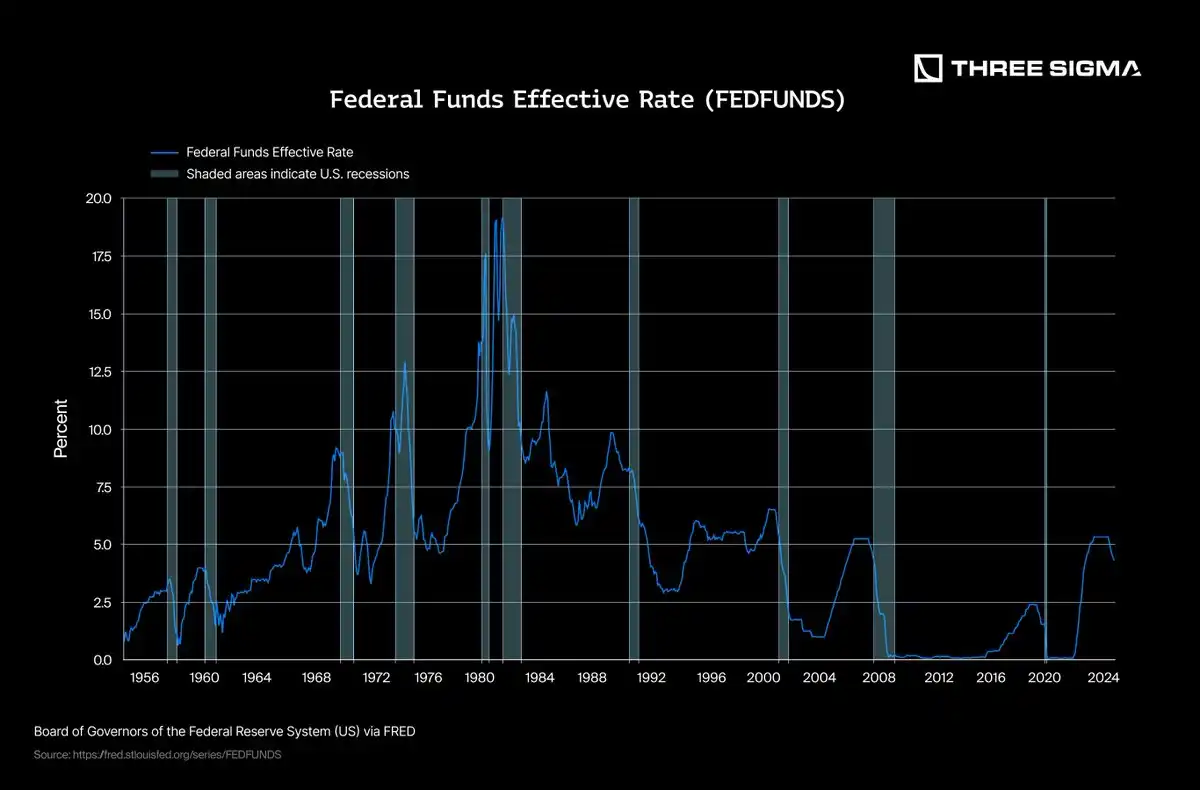
Historical charts vividly display several key rate cycles, including the historically high rates set in the early 1980s to combat inflation, followed by a steady decline in rates leading to the low-rate environment of the past two decades. The 2008 financial crisis particularly forced rates close to zero to spur economic recovery.
Specifically, in the previous rate cycle (2010-2020), the Fed kept rates at historic lows (near 0%) for an extended period until gradually raising them as the economy recovered between 2015 and 2018. However, the outbreak of the COVID-19 pandemic in early 2020 once again prompted a significant rate cut to near-zero levels to address the economic slowdown, ensure liquidity, and stabilize the financial markets.
Comparison of Interest Rates and Income Correlation
As we discussed earlier, the income models of certain stablecoins are highly dependent on interest rates, while others have structures to isolate them from these fluctuations.
The provided data clearly demonstrates this difference. The correlation of USDT, USDC, and SKY is very high (R ~0.89–0.94), highlighting their significant reliance on current interest rates. Their income mainly comes from traditional investments such as government bonds, making them face a substantial risk in near-zero interest rate scenarios, which can severely impact their profitability.
In stark contrast is USDe, with significantly lower correlation (R = 0.256), reflecting its entirely different income generation method. USDe's income primarily comes from mechanisms in the crypto market, such as perpetual futures funding rate arbitrage and staking rewards, rather than traditional interest-rate-affected assets.
In conclusion, this data strongly suggests that fiat-backed and treasury-backed stablecoins (such as USDT, USDC, and SKY) face considerable risk in a low-interest-rate environment. Conversely, algorithmic stablecoins like USDe, with their alternative income strategies, demonstrate greater resilience and may serve as a strategically diversified tool in portfolios during interest rate declines, providing relative stability.
Scenario of Interest Rates at 0%
In a scenario where interest rates return to 0%, the impact on stablecoins varies significantly depending on their income model and asset allocation:
Tether
Since USDT generates income primarily through traditional financial assets (such as treasuries), a decrease in interest rates to 0% would greatly reduce its income sources, severely impacting its profitability. However, Tether's strategic diversification into alternative investments, including cryptocurrencies (BTC, ETH) and precious metals, may partially mitigate this impact. Nevertheless, these alternative assets bring higher volatility and risk, which may not fully compensate for the lost interest income, potentially weakening its overall market position.
In 2024, Tether maintained very low operating costs, benefiting from a streamlined structure with fewer than 50 employees, minimal administrative expenses, and transaction fees from USDT token widely covering these operational costs. Legal and regulatory costs are also relatively low, with no significant fines this year, compared to the $18.5 million fine paid to the New York Attorney General in 2021.
Financially, Tether ended 2024 with a strong reserve, with reserves exceeding $7.1 billion beyond USDT holder obligations, and a total capitalization of around $20 billion. Given its conservative annual operating costs (potentially less than $100 million), even if future income drops to zero, Tether can maintain operations for over 70 years, demonstrating its outstanding financial stability and nearly unlimited operational capacity.
Circle
Circle recently filed an S-1 registration statement with the U.S. Securities and Exchange Commission, indicating plans to go public on the New York Stock Exchange under the ticker symbol "CRCL".
In 2024, Circle reported total revenue of approximately $16.8 billion, a 16% increase from $14.5 billion in 2023. It is worth noting that over 99% of this revenue is derived from reserve revenue, primarily interest earned on assets supporting USDC. In 2024, the company's net income was around $156 million, a significant decrease from $268 million in the previous year, largely due to increased operating and distribution expenses.
The total operating expenses for 2024 amounted to approximately $4.92 billion, with most of it allocated to employee compensation ($2.63 billion), general administrative expenses ($1.37 billion), IT infrastructure ($27 million), depreciation and amortization (about $51 million), marketing expenses ($17 million), and digital asset losses ($4 million). Additionally, Circle incurred around $1.01 billion in distribution and transaction costs, with approximately $908 million paid to primary distribution partner Coinbase.
As of December 31, 2024, Circle held $751 million in cash and cash equivalents, with an additional $294 million in other liquid investments, totaling available liquidity of about $1.045 billion. When assessing the financial sustainability of the company in a zero-revenue scenario, it is important to distinguish between these two types of assets:
The $751 million in cash and cash equivalents represent highly liquid, immediately usable funds—suitable for a conservative financial sustainability estimation. Based solely on this and assuming current annual operating expenses of $4.92 billion, Circle's financial runway is approximately 18 months.
If the full $1.045 billion in liquidity (cash and other liquid assets) is considered, assuming these additional assets are readily accessible and unrestricted, the financial runway could extend to around 25 months.
A more conservative approach focuses solely on cash equivalents to avoid reliance on potentially less liquid or restricted assets. However, if Circle can effectively tap into a broader pool of liquidity without issue, it would have greater flexibility.
In a prolonged environment of near-zero interest rates, Circle's heavy reliance on interest income from reserves could significantly impact its revenue source. If unable to diversify income sources effectively, the company's profitability may be adversely affected, potentially necessitating strategic adjustments such as modifying fee structures or exploring new investment avenues.
In a 0% interest rate environment, the Sky Protocol (formerly known as MakerDAO) is indeed facing a significant challenge, especially in terms of its revenue sources and financial sustainability. The protocol relies on US Treasuries, ETH staking rewards, and DeFi income, meaning that a complete lack of interest could greatly impact its revenue.
Pressure on Revenue Sources:
Stability Fees and Borrowing Demand: As borrowing demand decreases, the stability fees for DAI loans may decrease. This decrease, coupled with reduced yields on US Treasuries and other bonds, could exacerbate the protocol's financial pressure.
DeFi Funding Rates: In a low-interest-rate environment, traders may be less willing to engage in leverage, leading to a reduction in DeFi activity's funding rates.
Historically, the Sky Protocol has demonstrated its ability to adapt to a low-interest-rate environment by adjusting parameters such as the Sky Savings Rate (SSR). For example, the SSR was recently reduced to 4.5%, effective March 24, 2025, to align with current market conditions.
The Sky Protocol's total value locked is approximately $220 million and includes the following:
$101 million in DAI – Stable
$82.2 million in SKY tokens – Volatile
$36.4 million in MKR tokens – Volatile
$243,000 in stkAAVE – Volatile
$470,000 in ENS – Volatile
This $220 million total value combines liquidity assets like DAI with volatile tokens such as SKY and MKR, whose values may fluctuate based on market conditions. Liquidity assets are the most readily available source of funds for protocol operations, while volatile tokens constitute a more strategic asset class susceptible to market fluctuations.
The operational runway is the length of time the Sky Protocol can operate without generating new revenue based on its current assets and annual operating expenses. The protocol's estimated annual operating expenses are $35 million. The calculation is as follows:
If considering only liquidity assets (DAI): Runway = $101 million ÷ $35 million = 2.89 years
If considering total assets at current prices (liquidity + volatile assets): Runway = $220 million ÷ $35 million = 6.29 years
At a 0% interest rate, the financial sustainability of the Sky Protocol relies primarily on the value of volatile assets such as SKY and MKR, the fluctuations of which may affect the overall operational period. However, based solely on the surplus of the DAI system, the Sky Protocol can sustain approximately 2.89 years of operation without generating additional revenue. Taking into account the entire asset pool (including liquidity and volatility assets), Sky can sustain around 6.29 years of operation, assuming no other significant market changes.
As a protocol that has historically demonstrated adaptability, the Sky Protocol can adjust its fee structure and make strategic asset allocation adjustments to cope with a long-term low-interest-rate environment.
If the Fed were to lower interest rates to 0%, several factors could affect Ethena's ability to maintain and increase USDe's yield. Lower rates reduce the cost of borrowing, making leverage more attractive to traders and investors. In traditional markets, this usually drives capital into higher-risk assets as the returns on fixed-income instruments decrease, prompting investors to seek higher returns elsewhere. This dynamic also applies to the crypto market, where a lower-rate environment typically leads to capital inflows into cryptocurrencies like Bitcoin and Ethereum.
With more liquidity entering the market, traders are more inclined to take leveraged long positions on crypto assets, expecting prices to continue rising. This creates an imbalance in the perpetual futures markets, with long demand outweighing short demand. As a result, the funding rate increases, making it more costly to hold long positions, while short traders benefit, as is the case with the USDe strategy.
However, this benefit is not without potential risks. If rates remain low for an extended period, USDe's yield may eventually stabilize or even decrease as market participants adjust their strategies to the new norm. This adjustment could involve reducing leverage or altering trading strategies. Additionally, while a low-rate environment initially supported USDe's yield generation through perpetual contract funding rates, the long-term stability of these conditions may incentivize a shift in investor behavior toward assets other than those currently yielding the highest returns.
From a protocol perspective, Ethena is in a favorable financial position. The project has raised over $120 million through venture capital and token sales and maintains a reserve fund of around $61 million, verifiable via the on-chain wallet 0x2b5ab59163a6e93b4486f6055d33ca4a115dd4d5. This reserve fund acts as a buffer in a negative yield environment, supporting the stability of USDe. Ethena also operates with a lean team, estimating annual operating costs between $2 million and $5 million, allowing the project to sustain operations for several years even if protocol revenue significantly shrinks.
In conclusion, while the low interest rate environment has provided a unique opportunity for USDe to maintain attractiveness in the short term, its long-term sustainability relies on the ongoing market activity and volatility. Nevertheless, Ethena's strong reserve position and low burn rate provide a solid financial buffer, ensuring that the protocol can operate stably during a prolonged period of low yields without compromising its core stability.
6. Conclusion
The stablecoin ecosystem is closely tied to macroeconomic dynamics, particularly interest rates. As demonstrated in this analysis, under a scenario of interest rates at 0%, various stablecoin models exhibit significant differences in performance and sustainability.
Most affected:
USDC relies almost entirely on U.S. Treasury bond yields, and without effective diversification, its business model becomes structurally fragile in a long-term low-interest-rate environment. High operational costs and relatively limited treasury reserves further restrict Circle's long-term operational capabilities.
Significantly affected but more resilient:
Both USDT and SKY would also face substantial income compression as they rely on interest-bearing assets. However, they both have certain buffers in place. Tether (USDT) holds a significant treasury surplus, has extremely low operational costs, and is partially invested in diversified assets (such as Bitcoin, gold), allowing it to have a longer financial runway in a zero-interest-rate environment.
SKY (USDS/DAI) faces the risk of declining yields as well. However, it maintains diversified income sources through DeFi native mechanisms (such as protocol fees, cryptocurrency collateral liquidation, and smart contract lending), providing greater operational flexibility. Additionally, the protocol can rely on governance token sales to cover expenses, as proven in past cycles.
Least affected/most adaptable:
Ethena (USDe) stands out with its market-driven crypto-native revenue model that does not rely on interest-bearing instruments. Instead, Ethena captures value through perpetual futures funding rates, staking rewards, and market inefficiency capture. In a world of 0% interest rates, USDe may even benefit from leverage and speculative activity, making it one of the few projects able to thrive while other stablecoins contract.
However, in the long run, a sustained low-interest-rate environment may shift market conditions to neutral or bearish, potentially reducing Ethena's profit-making ability. In fact, when funding rates turn strongly negative for short positions, the protocol may even face short-term losses.
This comparative analysis underscores a key insight: diversification of income streams is no longer optional but critical. In a world where interest rates may return to historic lows, stablecoin issuers that overly rely on traditional financial instruments face significant risks of profit decline. Protocols with flexible crypto-native revenue engines, especially those like USDe, may not only weather the storm but emerge stronger.
Ultimately, the sustainability of the stablecoin market will be determined not only by pegging stability or market acceptance, but also by the resilience across economic systems. Protocols that adapt through product innovation, diversified collateral, or revenue mechanisms will define the next generation of digital dollars.
It is also worth noting that Circle and Tether may already be preparing for a low-rate yield world. Each is actively building or participating in their own blockchain infrastructure: Circle is constructing Cortex, while Tether has Plasma. These efforts appear to aim at diversifying their service offerings and may unlock new revenue streams beyond treasury yields.
Furthermore, Circle's IPO announcement came at the conclusion of our research. The public details align closely with the vulnerabilities and strategic directions we identified, especially the need for diversification and expansion through new ventures. The IPO could be both a liquidity event and a marker of a shift toward a more service- and infrastructure-focused business model.
Lastly, it is hard not to speculate whether Circle holds an ace up its sleeve. Is it quietly preparing to become the official issuer of the digital dollar? While there has been no formal announcement confirming this, such a move would certainly align with its regulatory-first strategy and partnerships in the United States. Who knows.
The key to Web3 success is just a step away—don't let others lead, while you are still lost in the maze.
猜你喜歡

5月2日關鍵市場資訊差,一定要看! |Alpha早報
CEX與Wallet之後,OKX入局支付
RWA永續產品危機:為什麼GLP模式註定撐不住RWA永續?
Sentient深度研報:獲8,500萬美元融資,建置去中心化AGI新範式
加密項目為何札堆發卡?一場Web3與現實世界的通行權之爭
專訪Virtuals聯創empty:AI 創業不需要大量資金,Crypto是答案之一
今年 2 月,Base 生態中的 AI 協議 Virtuals 宣布跨鏈至 Solana,然而加密市場隨後進入流動性緊縮期,AI Agent 板塊從人聲鼎沸轉為低迷,Virtuals 生態也陷入一段蟄伏期。
三月初,BlockBeats 對 Virtuals 共同創辦人 empty 進行了一次專訪。彼時,團隊尚未推出如今被廣泛討論的 Genesis Launch 機制,但已在內部持續探索如何透過機制設計激活舊資產、提高用戶參與度,並重構代幣發行與融資路徑。那是一個市場尚未復甦、生態尚處冷啟動階段的時間點,Virtuals 團隊卻沒有停下腳步,而是在努力尋找新的產品方向和敘事突破口。
兩個月過去,AI Agent 板塊重新升溫,Virtuals 代幣反彈超 150%,Genesis 機製成為帶動生態回暖的重要觸發器。從積分獲取規則的動態調整,到專案參與熱度的持續上升,再到「新代幣帶老代幣」的機制閉環,Virtuals 逐漸走出寒冬,並再次站上討論焦點。
值得注意的是,Virtuals 的 Genesis 機制與近期 Binance 推出的 Alpha 積分系統有一些相似之處,評估用戶在 Alpha 和幣安錢包生態系統內的參與度,決定用戶 Alpha 代幣空投的資格。用戶可透過持倉、交易等方式獲得積分,積分越高,參與新項目的機會越大。透過積分系統篩選使用者、分配資源,專案方能夠更有效地激勵社群參與,提升專案的公平性和透明度。 Virtuals 和 Binance 的探索,或許預示著加密融資的新趨勢正在形成。
回看這次對話,empty 在專訪中所展現出的思路與判斷,正在一步步顯現其前瞻性,這不僅是一場圍繞打新機制的訪談,更是一次關於“資產驅動型 AI 協議”的路徑構建與底層邏輯的深度討論。
BlockBeats:可以簡單分享一下最近團隊主要在忙些什麼?
empty:目前我們的工作重點主要有兩個部分。第一部分,我們希望將 Virtuals 打造成一個類似「華爾街」的代理人(Agent)服務平台。設想一下,如果你是專注於 Agent 或 Agent 團隊建立的創業者,從融資、發幣到流動性退出,整個流程都需要係統性的支援。我們希望為真正專注於 Agent 和 AI 研發的團隊,提供這一整套服務體系,讓他們可以把精力集中在底層能力的開發上,而不用為其他環節分心。這一塊的工作其實也包括了與散戶買賣相關的內容,後面可以再詳細展開。
第二部分,我們正在深入推進 AI 相關的佈局。我們的願景是建立一個 AI 社會,希望每個 Agent 都能聚焦自身優勢,同時透過彼此之間的協作,實現更大的價值。因此,最近我們發布了一個新的標準——ACP(Agent Communication Protocol),目的是讓不同的 Agent 能夠相互互動、協作,共同推動各自的業務目標。這是目前我們主要在推進的兩大方向。
BlockBeats:可以再展開說說嗎?
empty:在我看來,其實我們面對的客戶群可以分為三類:第一類是專注於開發 Agent 的團隊;第二類是投資者,包括散戶、基金等各種投資機構;第三類則是 C 端用戶,也就是最終使用 Agent 產品的個人用戶。
不過,我們主要的精力其實是放在前兩大類──也就是團隊和投資人。對於 C 端用戶這一塊,我們並不打算直接介入,而是希望各個 Agent 團隊能夠自己解決 C 端市場的拓展問題。
此外,我們也認為,Agent 與 Agent 之間的交互作用應該成為一個核心模式。簡單來說,就是未來的服務更多應該是由一個 Agent 銷售或提供給另一個 Agent,而不是單純賣給人類使用者。因此,在團隊的 BD 工作中,我們也積極幫助現有的 AI 團隊尋找這樣的客戶和合作機會。
BlockBeats:大概有一些什麼具體案例呢?
empty:「華爾街」說白了就是圍繞資本運作體系的建設,假設你是一個技術團隊,想要融資,傳統路徑是去找 VC 募資,拿到資金後開始發展。如果專案做得不錯,接下來可能會考慮進入二級市場,例如在紐約證券交易所上市,或是在 Binance 這樣的交易所上幣,實現流動性退出。
我們希望把這一整套流程打通-從早期融資,到專案開發過程中對資金的靈活使用需求,再到最終二級市場的流動性退出,全部覆蓋和完善,這是我們希望補齊的一條完整鏈條。
而這一部分的工作和 ACP(Agent Communication Protocol)是不同的,ACP 更多是關於 Agent 與 Agent 之間交互標準的製定,不直接涉及資本運作系統。
BlockBeats:它和現在 Virtuals 的這個 Launchpad 有什麼差別呢?資金也是從 C 端來是嗎?
empty:其實現在你在 Virtuals 上發幣,如果沒有真正融到資金,那就只是發了一個幣而已,實際是融不到錢的。我們目前能提供的服務,是透過設定買賣時的交易稅機制,從中提取一部分稅收回饋給創業者,希望這部分能成為他們的現金流來源。
不過,問題其實還分成兩塊。第一是如何真正幫助團隊完成融資,這個問題目前我們還沒有徹底解決。第二是關於目前專案發行模式本身存在的結構性問題。簡單來說,現在的版本有點像過去 Pumpfun 那種模式——也就是當專案剛上線時,部分籌碼就被外賣給了外部投資人。但現實是,目前整個市場上存在著太多機構集團和「狙擊手」。
當一個真正優秀的專案一發幣,還沒真正觸達普通散戶,就已經被機構在極高估值時搶購了。等到散戶能夠接觸到時,往往價格已經偏高,專案品質也可能變差,整個價值發行體係被扭曲。
針對這個問題,我們希望探索一種新的發幣和融資模式,目的是讓專案方的籌碼既不是死死握在自己手裡,也不是優先流向英文圈的大機構,而是能夠真正留給那些相信專案、願意長期支持專案的普通投資者手中。我們正在思考該如何設計這樣一個新的發行機制,來解決這個根本問題。
BlockBeats:新模式的具體想法會是什麼樣子呢?
empty:關於資金這一塊,其實我們目前還沒有完全想透。現階段來看,最直接的方式還是去找 VC 融資,或是採取公開預售等形式進行資金募集。不過說實話,我個人對傳統的公開預售模式並不是特別認同。
在「公平發售」這件事上,我們正在嘗試換一個角度來思考-希望能從「reputation」出發,重新設計機制。
具體來說,就是如果你對整個 Virtuals 生態有貢獻,例如早期參與、提供支持或建設,那麼你就可以在後續購買優質代幣時享有更高的優先權。透過這種方式,我們希望把資源更多留給真正支持生態發展的用戶,而不是由短期套利的人主導。
BlockBeats:您會不會考慮採用類似之前 Fjord Foundry 推出的 LBP 模式,或者像 Daos.fun 那種採用白名單機制的模式。這些模式在某種程度上,和您剛才提到的「對生態有貢獻的人享有優先權」的想法是有些相似的。不過,這類做法後來也引發了一些爭議,例如白名單內部操作、分配不公等問題。 Virtuals 在設計時會考慮借鏡這些模式的優點,或有針對性地規避類似的問題嗎?
empty:我認為白名單機制最大的問題在於,白名單的選擇權掌握在專案方手中。這和「老鼠倉」行為非常相似。專案方可以選擇將白名單名額分配給自己人或身邊的朋友,導致最終的籌碼仍然掌握在少數人手中。
我們希望做的,依然是類似白名單的機制,但不同的是,白名單的獲取權應基於一個公開透明的規則體系,而不是由項目方單方面決定。只有這樣,才能真正做到公平分配,避免內幕操作的問題。
我認為在今天這個 AI 時代,很多時候創業並不需要大量資金。我常跟團隊強調,你們應該優先考慮自力更生,例如透過組成社區,而不是一開始就想著去融資。因為一旦融資,實際上就等於背負了負債。
我們更希望從 Training Fee的角度去看待早期發展路徑。也就是說,專案可以選擇直接發幣,透過交易稅所帶來的現金流,支持日常營運。這樣一來,專案可以在公開建設的過程中獲得初步資金,而不是依賴外部投資。如果專案做大了,自然也會有機會透過二級市場流動性退出。
當然最理想的情況是,專案本身能夠有穩定的現金流來源,這樣甚至連自己的幣都無需拋售,這才是真正健康可持續的狀態。
我自己也常在和團隊交流時分享這種思路,很有意思的是,那些真正抱著「搞快錢」心態的項目,一聽到這種機制就失去了興趣。他們會覺得,在這種模式下,既無法操作老鼠倉,也很難短期套利,於是很快就選擇離開。
但從我們的角度來看,這其實反而是個很好的篩選機制。透過這種方式,理念不同的專案自然會被過濾出去,最後留下的,都是那些願意真正建立、和我們價值觀契合的團隊,一起把事情做起來。
BlockBeats:這個理念可以發展出一些能夠創造收益的 AI agent。
empty:我覺得這是很有必要的。坦白說,放眼今天的市場,真正擁有穩定現金流的產品幾乎鳳毛麟角,但我認為這並不意味著我們應該停止嘗試。事實上,我們每天在對接的團隊中,有至少一半以上的人依然懷抱著長遠的願景。很多時候,他們甚至已經提前向我們提供了 VC 階段的資金支持,或表達了強烈的合作意願。
其實對他們來說想要去收穫一個很好的社區,因為社區可以給他們的產品做更好的回饋,這才是他們真正的目的。這樣聽起來有一點匪夷所思,但其實真的有很多這樣的團隊,而那種團隊的是我們真的想扶持的團隊。
BlockBeats:您剛才提到的這套「AI 華爾街」的產品體系-從融資、發行到退出,建構的是一整套完整的流程。這套機制是否更多是為了激勵那些有意願發幣的團隊?還是說,它在設計上也考慮瞭如何更好地支持那些希望透過產品本身的現金流來發展的團隊?這兩類團隊在您這套體系中會不會被區別對待,或者說有什麼機制設計能讓不同路徑的創業者都能被合理支持?
empty:是的,我們 BD 的核心職責其實就是去鼓勵團隊發幣。說得直接一點,就是引導他們思考發幣的可能性和意義。所以團隊最常問的問題就是:「為什麼要發幣?」這時我們需要採取不同的方式和角度,去幫助他們理解背後的價值邏輯。當然如果最終判斷不適合,我們也不會強迫他們推進。
不過我們觀察到一個非常明顯的趨勢,傳統的融資路徑已經越來越難走通了。過去那種融資做大,發幣上所的模式已經逐漸失效。面對這樣的現實,很多團隊都陷入了尷尬的境地。而我們希望能從鏈上和加密的視角,提供一套不同的解決方案,讓他們找到新的發展路徑。
BlockBeats:明白,我剛才其實想表達的是,您剛剛也提到,傳統的 AI 模式在很大程度上仍然依賴「燒錢」競爭。但在 DeepSeek 出現之後,市場上一些資金體積較小的團隊或投資人開始重新燃起了信心,躍躍欲試地進入這個領域。您怎麼看待這種現象?這會不會對目前正在做 AI 基礎研發,或是 AI 應用層開發的團隊產生一定的影響?
empty:對,我覺得先不談 DeepSeek,從傳統角度來看,其實到目前為止,AI 領域真正賺錢的只有英偉達,其他幾乎所有玩家都還沒有實現盈利。所以其實沒有人真正享受了這個商業模式的成果,大家也仍在探索如何面對 C 端打造真正有產出的應用。
沒有哪個領域像幣圈一樣能如此快速獲得社群回饋。你一發幣,用戶就會主動去讀白皮書的每一個字,試試你產品的每個功能。
當然,這套機制並不適合所有人。例如有些 Agent 產品偏 Web2,對於幣圈用戶而言,可能感知不到其價值。因此,我也會鼓勵做 Agent 的團隊在 Virtuals 生態中認真思考,如何真正將 Crypto 作為自身產品的差異化要素加以運用與設計。
BlockBeats:這點我特別認同,在 Crypto 這個領域 AI 的迭代速度確實非常快,但這群用戶給予的回饋,真的是代表真實的市場需求嗎?或者說這些回饋是否真的符合更大眾化、更具規模性的需求?
empty:我覺得很多時候產品本身不應該是強行推廣給不適合的使用者群體。例如 AIXBT 最成功的一點就在於,它的用戶本身就是那群炒作他人內容的人,所以他們的使用行為是非常自然的,並不覺得是在被迫使用一個無聊的產品。 mass adoption 這個概念已經講了很多年,大家可能早就該放棄這個執念了。我們不如就認了,把東西賣給幣圈的人就好了。
BlockBeats:AI Agent 與 AI Agent 所對應的代幣之間,究竟應該是什麼樣的動態關係?
empty:對,我覺得這裡可以分成兩個核心點。首先其實不是在投資某個具體的 AI Agent,而是在投資背後經營這個 Agent 的團隊。你應該把它理解為一種更接近創投的思路:你投的是這個人,而不是他目前正在做的產品。因為產品本身是可以快速變化的,可能一個月後團隊會發現方向不對,立即調整。所以,這裡的「幣」本質上代表的是對團隊的信任,而不是某個特定 Agent 本身。
第二則是期望一旦某個 Agent 產品做出來後,未來它能真正產生現金流,或者有實際的使用場景(utility),從而讓對應的代幣具備賦能效應。
BlockBeats:您覺得有哪些賦能方式是目前還沒看到的,但未來可能出現、值得期待的?
empty:其實主要有兩塊,第一是比較常見的那種你要使用我的產品,就必須付費,或者使用代幣支付,從而間接實現對代幣的「軟銷毀」或消耗。
但我覺得更有趣的賦能方式,其實是在獲客成本的角度思考。也就是說,你希望你的用戶同時也是你的投資者,這樣他們就有動機去主動幫你推廣、吸引更多用戶。
BlockBeats:那基於這些觀點,您怎麼看 ai16z,在專案設計和代幣機制方面,似乎整體表現並不太樂觀?
empty:從一個很純粹的投資角度來看,撇開我們與他們之間的關係,其實很簡單。他們現在做的事情,對代幣本身沒有任何賦能。從開源的角度來看,一個開源模型本身是無法直接賦能代幣的。
但它仍然有價值的原因在於,它像一個期權(call option),也就是說,如果有一天他們突然決定要做一些事情,比如推出一個 launchpad,那麼那些提前知道、提前參與的人,可能會因此受益。
開發者未來確實有可能會使用他們的 Launchpad,只有在那一刻,代幣才會真正產生賦能。這是目前最大的一個問號——如果這個模式真的跑得通,我認為確實會非常強大,因為他們的確觸達了大量開發者。
但我個人還是有很多疑問。例如即使我是使用 Eliza 的開發者,也不代表我一定會選擇在他們的 Launchpad 上發幣。我會貨比三家,會比較。而且,做一個 Launchpad 和做一個開源框架,所需的產品能力和社群運作能力是完全不同的,這是另一個重要的不確定性。
BlockBeats:這種不同是體現在什麼地方呢?
empty:在 Virtuals 上我們幾乎每天都在處理客服相關的問題,只要有任何一個團隊在我們平台上發生 rug,即使與我們沒有直接關係,用戶也會第一時間來找我們投訴。
這時我們就必須出面安撫用戶,並思考如何降低 rug 的整體風險。一旦有團隊因為自己的代幣設計錯誤或技術失誤而被駭客攻擊、資產被盜,我們往往需要自掏腰包,確保他們的社群至少能拿回一點資金,以便專案能夠重新開始。這些項目方可能在技術上很強,但未必擅長代幣發行,結果因操作失誤被攻擊導致資產損失。只要涉及「被欺騙」相關的問題,對我們來說就已經是非常麻煩的事了,做這些工作跟做交易所的客服沒有太大差別。
另一方面,做 BD 也非常困難。優秀的團隊手上有很多選擇,他們可以選擇在 Pumpfun 或交易所上發幣,為什麼他們要來找我們,那這背後必須要有一整套支援體系,包括融資支援、技術協助、市場推廣等,每個環節都不能出問題。
BlockBeats:那我們就繼續沿著這個話題聊聊 Virtuals 目前的 Launchpad 業務。有一些社群成員在 Twitter 上統計了 Virtuals Launchpad 的整體獲利狀況,確實目前看起來獲利的項目比較少。接下來 Launchpad 還會是 Virtuals 的主要業務區嗎?還是說,未來的重心會逐漸轉向您剛才提到的「AI 華爾街」這條路徑?
empty:其實這兩塊本質上是一件事,是一整套體系的一部分,所以我們必須繼續推進。市場的波動是很正常的,我們始終要堅持的一點是:非常清楚地認識到我們的核心客戶是誰。我一直強調我們的客戶只有兩類——團隊。所以市場行情的好壞對我們來說並不是最重要的,關鍵是在每一個關鍵節點上,對於一個團隊來說,發幣的最佳選擇是否依然是我們 Virtuals。
BlockBeats:您會不會擔心「Crypto + AI」或「Crypto AI Agent」這一類敘事已經過去了?如果未來還有一輪多頭市場,您是否認為市場炒作的焦點可能已經不再是這些方向了?
empty:有可能啊,我覺得 it is what it is,這確實是有可能發生的,但這也屬於我們無法控制的範圍。不過如果你問我,在所有可能的趨勢中,哪個賽道更有機會長期保持領先,我仍然認為是 AI。從一個打德撲的角度來看,它仍然是最優選擇。
而且我們團隊的技術架構和底層能力其實早已搭建完成了,現在只是順勢而為而已。更重要的是,我們本身真的熱愛這件事,帶著好奇心去做這件事。每天早上醒來就有驅動力去研究最新的技術,這種狀態本身就挺讓人滿足的,對吧?
很多時候,大家不應該只看產品本身。實際上很多優秀的團隊,他們的基因決定了他們有在規則中勝出的能力——他們可能過去在做派盤交易時,每筆規模就是上百萬的操作,而這些團隊的 CEO,一年的薪資可能就有 100 萬美金。如果他們願意出來單幹項目,從天使投資或 VC 的視角來看,這本質上是用一個很划算的價格買到一個高品質的團隊。
更何況這些資產是 liquid 的,不是鎖倉狀態。如果你當下不急著用錢,完全可以在早期階段買進一些優秀團隊的代幣,靜靜等待他們去創造一些奇蹟,基本上就是這樣一個邏輯。
第16週鏈上數據:結構性供需失衡加劇,數據揭⽰下⼀輪上漲的堅實藍圖?
Sui Q1進階報告:BTCfi基建崛起、借貸協議爆發與執行分片未來
川普次子的加密生意經
SignalPlus宏觀分析:關稅撕裂的M2敘事與TradFi式FOMO的回歸
上線Binance Alpha,你的HAEDAL空投值多少錢?
盤點10大新興Launchpad平台,誰能完成Pump.fun的顛覆?
懂王簽字後,美國哪些州在「乖乖」推進比特幣戰略儲備法案?
GoRich正式上線:鏈上交易零門檻,新手也能抓住100x Meme幣
PENGU觸底反彈發拉漲360%,胖企鵝如何靠IP行銷迎第二春?
「打新帶老」:Genesis Launch如何用積分制重建AI Agent打新邏輯?
Arthur Hayes最新訪談:漲勢能否持續?誰能跑贏BTC?選幣邏輯是什麼?
專訪AllianceDAO合夥人qw:Crypto創業家正逃向AI,90%的Crypto+AI都是偽命題
5月2日關鍵市場資訊差,一定要看! |Alpha早報
CEX與Wallet之後,OKX入局支付
RWA永續產品危機:為什麼GLP模式註定撐不住RWA永續?
Sentient深度研報:獲8,500萬美元融資,建置去中心化AGI新範式
加密項目為何札堆發卡?一場Web3與現實世界的通行權之爭
專訪Virtuals聯創empty:AI 創業不需要大量資金,Crypto是答案之一
今年 2 月,Base 生態中的 AI 協議 Virtuals 宣布跨鏈至 Solana,然而加密市場隨後進入流動性緊縮期,AI Agent 板塊從人聲鼎沸轉為低迷,Virtuals 生態也陷入一段蟄伏期。
三月初,BlockBeats 對 Virtuals 共同創辦人 empty 進行了一次專訪。彼時,團隊尚未推出如今被廣泛討論的 Genesis Launch 機制,但已在內部持續探索如何透過機制設計激活舊資產、提高用戶參與度,並重構代幣發行與融資路徑。那是一個市場尚未復甦、生態尚處冷啟動階段的時間點,Virtuals 團隊卻沒有停下腳步,而是在努力尋找新的產品方向和敘事突破口。
兩個月過去,AI Agent 板塊重新升溫,Virtuals 代幣反彈超 150%,Genesis 機製成為帶動生態回暖的重要觸發器。從積分獲取規則的動態調整,到專案參與熱度的持續上升,再到「新代幣帶老代幣」的機制閉環,Virtuals 逐漸走出寒冬,並再次站上討論焦點。
值得注意的是,Virtuals 的 Genesis 機制與近期 Binance 推出的 Alpha 積分系統有一些相似之處,評估用戶在 Alpha 和幣安錢包生態系統內的參與度,決定用戶 Alpha 代幣空投的資格。用戶可透過持倉、交易等方式獲得積分,積分越高,參與新項目的機會越大。透過積分系統篩選使用者、分配資源,專案方能夠更有效地激勵社群參與,提升專案的公平性和透明度。 Virtuals 和 Binance 的探索,或許預示著加密融資的新趨勢正在形成。
回看這次對話,empty 在專訪中所展現出的思路與判斷,正在一步步顯現其前瞻性,這不僅是一場圍繞打新機制的訪談,更是一次關於“資產驅動型 AI 協議”的路徑構建與底層邏輯的深度討論。
BlockBeats:可以簡單分享一下最近團隊主要在忙些什麼?
empty:目前我們的工作重點主要有兩個部分。第一部分,我們希望將 Virtuals 打造成一個類似「華爾街」的代理人(Agent)服務平台。設想一下,如果你是專注於 Agent 或 Agent 團隊建立的創業者,從融資、發幣到流動性退出,整個流程都需要係統性的支援。我們希望為真正專注於 Agent 和 AI 研發的團隊,提供這一整套服務體系,讓他們可以把精力集中在底層能力的開發上,而不用為其他環節分心。這一塊的工作其實也包括了與散戶買賣相關的內容,後面可以再詳細展開。
第二部分,我們正在深入推進 AI 相關的佈局。我們的願景是建立一個 AI 社會,希望每個 Agent 都能聚焦自身優勢,同時透過彼此之間的協作,實現更大的價值。因此,最近我們發布了一個新的標準——ACP(Agent Communication Protocol),目的是讓不同的 Agent 能夠相互互動、協作,共同推動各自的業務目標。這是目前我們主要在推進的兩大方向。
BlockBeats:可以再展開說說嗎?
empty:在我看來,其實我們面對的客戶群可以分為三類:第一類是專注於開發 Agent 的團隊;第二類是投資者,包括散戶、基金等各種投資機構;第三類則是 C 端用戶,也就是最終使用 Agent 產品的個人用戶。
不過,我們主要的精力其實是放在前兩大類──也就是團隊和投資人。對於 C 端用戶這一塊,我們並不打算直接介入,而是希望各個 Agent 團隊能夠自己解決 C 端市場的拓展問題。
此外,我們也認為,Agent 與 Agent 之間的交互作用應該成為一個核心模式。簡單來說,就是未來的服務更多應該是由一個 Agent 銷售或提供給另一個 Agent,而不是單純賣給人類使用者。因此,在團隊的 BD 工作中,我們也積極幫助現有的 AI 團隊尋找這樣的客戶和合作機會。
BlockBeats:大概有一些什麼具體案例呢?
empty:「華爾街」說白了就是圍繞資本運作體系的建設,假設你是一個技術團隊,想要融資,傳統路徑是去找 VC 募資,拿到資金後開始發展。如果專案做得不錯,接下來可能會考慮進入二級市場,例如在紐約證券交易所上市,或是在 Binance 這樣的交易所上幣,實現流動性退出。
我們希望把這一整套流程打通-從早期融資,到專案開發過程中對資金的靈活使用需求,再到最終二級市場的流動性退出,全部覆蓋和完善,這是我們希望補齊的一條完整鏈條。
而這一部分的工作和 ACP(Agent Communication Protocol)是不同的,ACP 更多是關於 Agent 與 Agent 之間交互標準的製定,不直接涉及資本運作系統。
BlockBeats:它和現在 Virtuals 的這個 Launchpad 有什麼差別呢?資金也是從 C 端來是嗎?
empty:其實現在你在 Virtuals 上發幣,如果沒有真正融到資金,那就只是發了一個幣而已,實際是融不到錢的。我們目前能提供的服務,是透過設定買賣時的交易稅機制,從中提取一部分稅收回饋給創業者,希望這部分能成為他們的現金流來源。
不過,問題其實還分成兩塊。第一是如何真正幫助團隊完成融資,這個問題目前我們還沒有徹底解決。第二是關於目前專案發行模式本身存在的結構性問題。簡單來說,現在的版本有點像過去 Pumpfun 那種模式——也就是當專案剛上線時,部分籌碼就被外賣給了外部投資人。但現實是,目前整個市場上存在著太多機構集團和「狙擊手」。
當一個真正優秀的專案一發幣,還沒真正觸達普通散戶,就已經被機構在極高估值時搶購了。等到散戶能夠接觸到時,往往價格已經偏高,專案品質也可能變差,整個價值發行體係被扭曲。
針對這個問題,我們希望探索一種新的發幣和融資模式,目的是讓專案方的籌碼既不是死死握在自己手裡,也不是優先流向英文圈的大機構,而是能夠真正留給那些相信專案、願意長期支持專案的普通投資者手中。我們正在思考該如何設計這樣一個新的發行機制,來解決這個根本問題。
BlockBeats:新模式的具體想法會是什麼樣子呢?
empty:關於資金這一塊,其實我們目前還沒有完全想透。現階段來看,最直接的方式還是去找 VC 融資,或是採取公開預售等形式進行資金募集。不過說實話,我個人對傳統的公開預售模式並不是特別認同。
在「公平發售」這件事上,我們正在嘗試換一個角度來思考-希望能從「reputation」出發,重新設計機制。
具體來說,就是如果你對整個 Virtuals 生態有貢獻,例如早期參與、提供支持或建設,那麼你就可以在後續購買優質代幣時享有更高的優先權。透過這種方式,我們希望把資源更多留給真正支持生態發展的用戶,而不是由短期套利的人主導。
BlockBeats:您會不會考慮採用類似之前 Fjord Foundry 推出的 LBP 模式,或者像 Daos.fun 那種採用白名單機制的模式。這些模式在某種程度上,和您剛才提到的「對生態有貢獻的人享有優先權」的想法是有些相似的。不過,這類做法後來也引發了一些爭議,例如白名單內部操作、分配不公等問題。 Virtuals 在設計時會考慮借鏡這些模式的優點,或有針對性地規避類似的問題嗎?
empty:我認為白名單機制最大的問題在於,白名單的選擇權掌握在專案方手中。這和「老鼠倉」行為非常相似。專案方可以選擇將白名單名額分配給自己人或身邊的朋友,導致最終的籌碼仍然掌握在少數人手中。
我們希望做的,依然是類似白名單的機制,但不同的是,白名單的獲取權應基於一個公開透明的規則體系,而不是由項目方單方面決定。只有這樣,才能真正做到公平分配,避免內幕操作的問題。
我認為在今天這個 AI 時代,很多時候創業並不需要大量資金。我常跟團隊強調,你們應該優先考慮自力更生,例如透過組成社區,而不是一開始就想著去融資。因為一旦融資,實際上就等於背負了負債。
我們更希望從 Training Fee的角度去看待早期發展路徑。也就是說,專案可以選擇直接發幣,透過交易稅所帶來的現金流,支持日常營運。這樣一來,專案可以在公開建設的過程中獲得初步資金,而不是依賴外部投資。如果專案做大了,自然也會有機會透過二級市場流動性退出。
當然最理想的情況是,專案本身能夠有穩定的現金流來源,這樣甚至連自己的幣都無需拋售,這才是真正健康可持續的狀態。
我自己也常在和團隊交流時分享這種思路,很有意思的是,那些真正抱著「搞快錢」心態的項目,一聽到這種機制就失去了興趣。他們會覺得,在這種模式下,既無法操作老鼠倉,也很難短期套利,於是很快就選擇離開。
但從我們的角度來看,這其實反而是個很好的篩選機制。透過這種方式,理念不同的專案自然會被過濾出去,最後留下的,都是那些願意真正建立、和我們價值觀契合的團隊,一起把事情做起來。
BlockBeats:這個理念可以發展出一些能夠創造收益的 AI agent。
empty:我覺得這是很有必要的。坦白說,放眼今天的市場,真正擁有穩定現金流的產品幾乎鳳毛麟角,但我認為這並不意味著我們應該停止嘗試。事實上,我們每天在對接的團隊中,有至少一半以上的人依然懷抱著長遠的願景。很多時候,他們甚至已經提前向我們提供了 VC 階段的資金支持,或表達了強烈的合作意願。
其實對他們來說想要去收穫一個很好的社區,因為社區可以給他們的產品做更好的回饋,這才是他們真正的目的。這樣聽起來有一點匪夷所思,但其實真的有很多這樣的團隊,而那種團隊的是我們真的想扶持的團隊。
BlockBeats:您剛才提到的這套「AI 華爾街」的產品體系-從融資、發行到退出,建構的是一整套完整的流程。這套機制是否更多是為了激勵那些有意願發幣的團隊?還是說,它在設計上也考慮瞭如何更好地支持那些希望透過產品本身的現金流來發展的團隊?這兩類團隊在您這套體系中會不會被區別對待,或者說有什麼機制設計能讓不同路徑的創業者都能被合理支持?
empty:是的,我們 BD 的核心職責其實就是去鼓勵團隊發幣。說得直接一點,就是引導他們思考發幣的可能性和意義。所以團隊最常問的問題就是:「為什麼要發幣?」這時我們需要採取不同的方式和角度,去幫助他們理解背後的價值邏輯。當然如果最終判斷不適合,我們也不會強迫他們推進。
不過我們觀察到一個非常明顯的趨勢,傳統的融資路徑已經越來越難走通了。過去那種融資做大,發幣上所的模式已經逐漸失效。面對這樣的現實,很多團隊都陷入了尷尬的境地。而我們希望能從鏈上和加密的視角,提供一套不同的解決方案,讓他們找到新的發展路徑。
BlockBeats:明白,我剛才其實想表達的是,您剛剛也提到,傳統的 AI 模式在很大程度上仍然依賴「燒錢」競爭。但在 DeepSeek 出現之後,市場上一些資金體積較小的團隊或投資人開始重新燃起了信心,躍躍欲試地進入這個領域。您怎麼看待這種現象?這會不會對目前正在做 AI 基礎研發,或是 AI 應用層開發的團隊產生一定的影響?
empty:對,我覺得先不談 DeepSeek,從傳統角度來看,其實到目前為止,AI 領域真正賺錢的只有英偉達,其他幾乎所有玩家都還沒有實現盈利。所以其實沒有人真正享受了這個商業模式的成果,大家也仍在探索如何面對 C 端打造真正有產出的應用。
沒有哪個領域像幣圈一樣能如此快速獲得社群回饋。你一發幣,用戶就會主動去讀白皮書的每一個字,試試你產品的每個功能。
當然,這套機制並不適合所有人。例如有些 Agent 產品偏 Web2,對於幣圈用戶而言,可能感知不到其價值。因此,我也會鼓勵做 Agent 的團隊在 Virtuals 生態中認真思考,如何真正將 Crypto 作為自身產品的差異化要素加以運用與設計。
BlockBeats:這點我特別認同,在 Crypto 這個領域 AI 的迭代速度確實非常快,但這群用戶給予的回饋,真的是代表真實的市場需求嗎?或者說這些回饋是否真的符合更大眾化、更具規模性的需求?
empty:我覺得很多時候產品本身不應該是強行推廣給不適合的使用者群體。例如 AIXBT 最成功的一點就在於,它的用戶本身就是那群炒作他人內容的人,所以他們的使用行為是非常自然的,並不覺得是在被迫使用一個無聊的產品。 mass adoption 這個概念已經講了很多年,大家可能早就該放棄這個執念了。我們不如就認了,把東西賣給幣圈的人就好了。
BlockBeats:AI Agent 與 AI Agent 所對應的代幣之間,究竟應該是什麼樣的動態關係?
empty:對,我覺得這裡可以分成兩個核心點。首先其實不是在投資某個具體的 AI Agent,而是在投資背後經營這個 Agent 的團隊。你應該把它理解為一種更接近創投的思路:你投的是這個人,而不是他目前正在做的產品。因為產品本身是可以快速變化的,可能一個月後團隊會發現方向不對,立即調整。所以,這裡的「幣」本質上代表的是對團隊的信任,而不是某個特定 Agent 本身。
第二則是期望一旦某個 Agent 產品做出來後,未來它能真正產生現金流,或者有實際的使用場景(utility),從而讓對應的代幣具備賦能效應。
BlockBeats:您覺得有哪些賦能方式是目前還沒看到的,但未來可能出現、值得期待的?
empty:其實主要有兩塊,第一是比較常見的那種你要使用我的產品,就必須付費,或者使用代幣支付,從而間接實現對代幣的「軟銷毀」或消耗。
但我覺得更有趣的賦能方式,其實是在獲客成本的角度思考。也就是說,你希望你的用戶同時也是你的投資者,這樣他們就有動機去主動幫你推廣、吸引更多用戶。
BlockBeats:那基於這些觀點,您怎麼看 ai16z,在專案設計和代幣機制方面,似乎整體表現並不太樂觀?
empty:從一個很純粹的投資角度來看,撇開我們與他們之間的關係,其實很簡單。他們現在做的事情,對代幣本身沒有任何賦能。從開源的角度來看,一個開源模型本身是無法直接賦能代幣的。
但它仍然有價值的原因在於,它像一個期權(call option),也就是說,如果有一天他們突然決定要做一些事情,比如推出一個 launchpad,那麼那些提前知道、提前參與的人,可能會因此受益。
開發者未來確實有可能會使用他們的 Launchpad,只有在那一刻,代幣才會真正產生賦能。這是目前最大的一個問號——如果這個模式真的跑得通,我認為確實會非常強大,因為他們的確觸達了大量開發者。
但我個人還是有很多疑問。例如即使我是使用 Eliza 的開發者,也不代表我一定會選擇在他們的 Launchpad 上發幣。我會貨比三家,會比較。而且,做一個 Launchpad 和做一個開源框架,所需的產品能力和社群運作能力是完全不同的,這是另一個重要的不確定性。
BlockBeats:這種不同是體現在什麼地方呢?
empty:在 Virtuals 上我們幾乎每天都在處理客服相關的問題,只要有任何一個團隊在我們平台上發生 rug,即使與我們沒有直接關係,用戶也會第一時間來找我們投訴。
這時我們就必須出面安撫用戶,並思考如何降低 rug 的整體風險。一旦有團隊因為自己的代幣設計錯誤或技術失誤而被駭客攻擊、資產被盜,我們往往需要自掏腰包,確保他們的社群至少能拿回一點資金,以便專案能夠重新開始。這些項目方可能在技術上很強,但未必擅長代幣發行,結果因操作失誤被攻擊導致資產損失。只要涉及「被欺騙」相關的問題,對我們來說就已經是非常麻煩的事了,做這些工作跟做交易所的客服沒有太大差別。
另一方面,做 BD 也非常困難。優秀的團隊手上有很多選擇,他們可以選擇在 Pumpfun 或交易所上發幣,為什麼他們要來找我們,那這背後必須要有一整套支援體系,包括融資支援、技術協助、市場推廣等,每個環節都不能出問題。
BlockBeats:那我們就繼續沿著這個話題聊聊 Virtuals 目前的 Launchpad 業務。有一些社群成員在 Twitter 上統計了 Virtuals Launchpad 的整體獲利狀況,確實目前看起來獲利的項目比較少。接下來 Launchpad 還會是 Virtuals 的主要業務區嗎?還是說,未來的重心會逐漸轉向您剛才提到的「AI 華爾街」這條路徑?
empty:其實這兩塊本質上是一件事,是一整套體系的一部分,所以我們必須繼續推進。市場的波動是很正常的,我們始終要堅持的一點是:非常清楚地認識到我們的核心客戶是誰。我一直強調我們的客戶只有兩類——團隊。所以市場行情的好壞對我們來說並不是最重要的,關鍵是在每一個關鍵節點上,對於一個團隊來說,發幣的最佳選擇是否依然是我們 Virtuals。
BlockBeats:您會不會擔心「Crypto + AI」或「Crypto AI Agent」這一類敘事已經過去了?如果未來還有一輪多頭市場,您是否認為市場炒作的焦點可能已經不再是這些方向了?
empty:有可能啊,我覺得 it is what it is,這確實是有可能發生的,但這也屬於我們無法控制的範圍。不過如果你問我,在所有可能的趨勢中,哪個賽道更有機會長期保持領先,我仍然認為是 AI。從一個打德撲的角度來看,它仍然是最優選擇。
而且我們團隊的技術架構和底層能力其實早已搭建完成了,現在只是順勢而為而已。更重要的是,我們本身真的熱愛這件事,帶著好奇心去做這件事。每天早上醒來就有驅動力去研究最新的技術,這種狀態本身就挺讓人滿足的,對吧?
很多時候,大家不應該只看產品本身。實際上很多優秀的團隊,他們的基因決定了他們有在規則中勝出的能力——他們可能過去在做派盤交易時,每筆規模就是上百萬的操作,而這些團隊的 CEO,一年的薪資可能就有 100 萬美金。如果他們願意出來單幹項目,從天使投資或 VC 的視角來看,這本質上是用一個很划算的價格買到一個高品質的團隊。
更何況這些資產是 liquid 的,不是鎖倉狀態。如果你當下不急著用錢,完全可以在早期階段買進一些優秀團隊的代幣,靜靜等待他們去創造一些奇蹟,基本上就是這樣一個邏輯。


 App
App