

This Week in Review | Trump Launches TRUMP Meme Coin, Market Cap Skyrockets to $70 Billion; Upbit Ordered to Halt Operations

BlockBeats will compile key industry news in this article for the week of 1.13-1.19 and recommend in-depth articles to help readers better understand the market and industry trends.
Important News Recap
U.S. President Trump Issues Namesake Meme Coin TRUMP, Market Cap Surges to $700 Billion in 48 Hours
On January 18, the official social media account of U.S. President Trump announced the launch of the Trump namesake meme coin, TRUMP. Subsequently, Trump's personal account and Trump's son Eric Trump tweeted to confirm the "legitimacy" of TRUMP. Within just 24 hours of its launch, TRUMP was listed on top exchanges like OKX, Coinbase, and Binance, setting a record for the shortest time to list a token spot market. Additionally, it saw almost no retracement post-launch, with its price surpassing $70 billion within 48 hours and its circulating market cap exceeding $140 billion, briefly reaching a total market cap of $700 billion. Concurrently, since the token was issued on Solana, it also led SOL to break its historical high in this cycle.
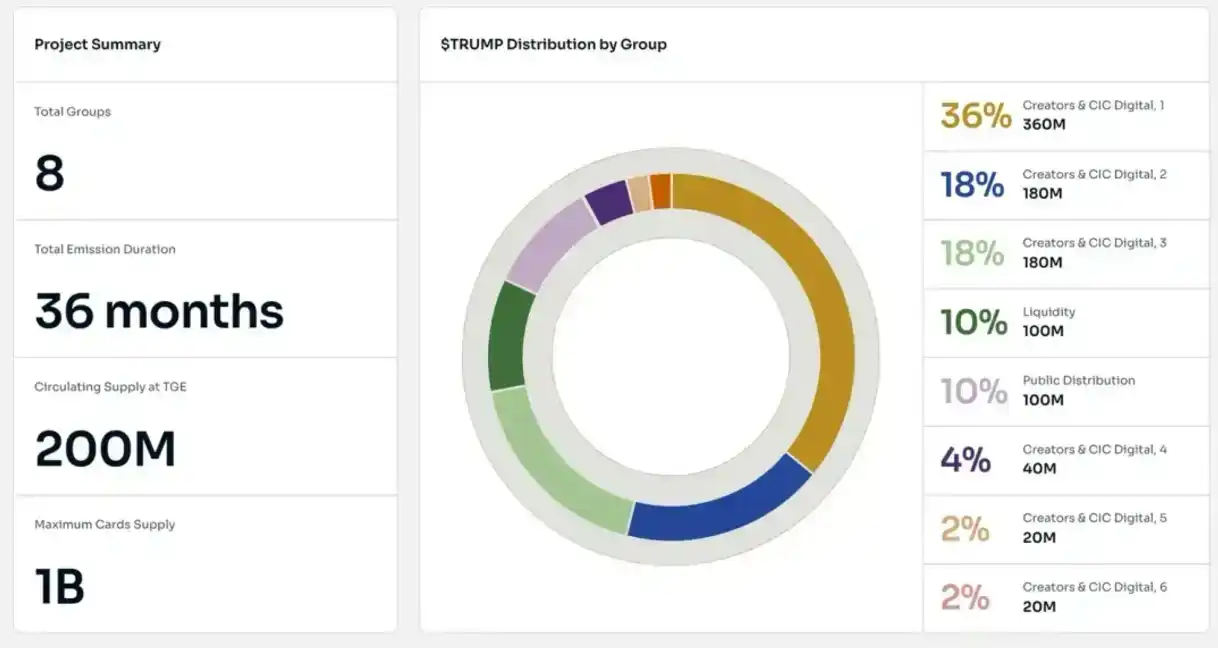
According to the official website of the "Trump Official Meme Coin" TRUMP, Trump Meme is not involved in politics and is not related to any political campaign or government office or institution. It is worth noting that Trump's affiliates, CIC Digital LLC and Fight Fight Fight LLC, collectively own 80% of TRUMP, subject to a 3-year unlocking schedule. Owners of Fight Fight Fight LLC, CIC Digital LLC, and Celebration Cards LLC will receive transaction revenue generated by TRUMP trading activities.
Korean Regulatory Agency Issues Business Suspension Order to Upbit, Existing User Trading Can Still Proceed
On January 16, South Korea's largest cryptocurrency exchange, Upbit, received a business suspension notice from the financial regulatory agency due to violations of the customer identification system (KYC) and failure to fulfill anti-money laundering obligations. The Financial Intelligence Unit (FIU) of the Financial Services Commission issued a pre-notification of sanctions related to the violation of the Specific Financial Transactions Act to Upbit on the 9th of this month, with the core content being a business suspension. If this sanction is ultimately confirmed, Upbit will be restricted from conducting new customer-related businesses for the duration of the business suspension period (up to 6 months), while existing user trading can still proceed.
The operator of Upbit, Dunamu, responded on the same day, stating that the final decision on the financial regulatory authority's penalty has not been made yet and that the issues raised will be clarified through subsequent processes, including the Sanctions Review Committee. At the same time, Dunamu also emphasized that even if the penalty is eventually imposed, it will not affect the cryptocurrency trading services for existing and new users. The penalty measures will only restrict new users from withdrawing virtual assets from the Upbit platform for a specific period. Related information: "South Korean Regulatory Authority Issues Business Suspension Penalty to Upbit, Existing User Trading Can Still Proceed Normally".
LTC, SOL, and XRP Among Popular Coins for US ETF Approvals This Year; Nasdaq Submits LTC ETF Application
On January 16, according to market news, Nasdaq filed the Canary Litecoin ETF 19B-4 application, initiating the regulatory review process. Bloomberg ETF analyst James Seyffart expressed on social media that "Litecoin ETF now meets all requirements, the first altcoin ETF of 2025 is about to enter the countdown. I see no reason to withdraw this application, especially since the SEC has commented on the S-1, Litecoin is seen as a commodity, and the SEC has new leadership."
He also believes that obtaining an ETF for Solana or XRP approved by the US Securities and Exchange Commission (SEC) is only a matter of "time," not "if." However, the Litecoin ETF may be the first to be approved—mainly because the SEC has not accused Litecoin of being a security.
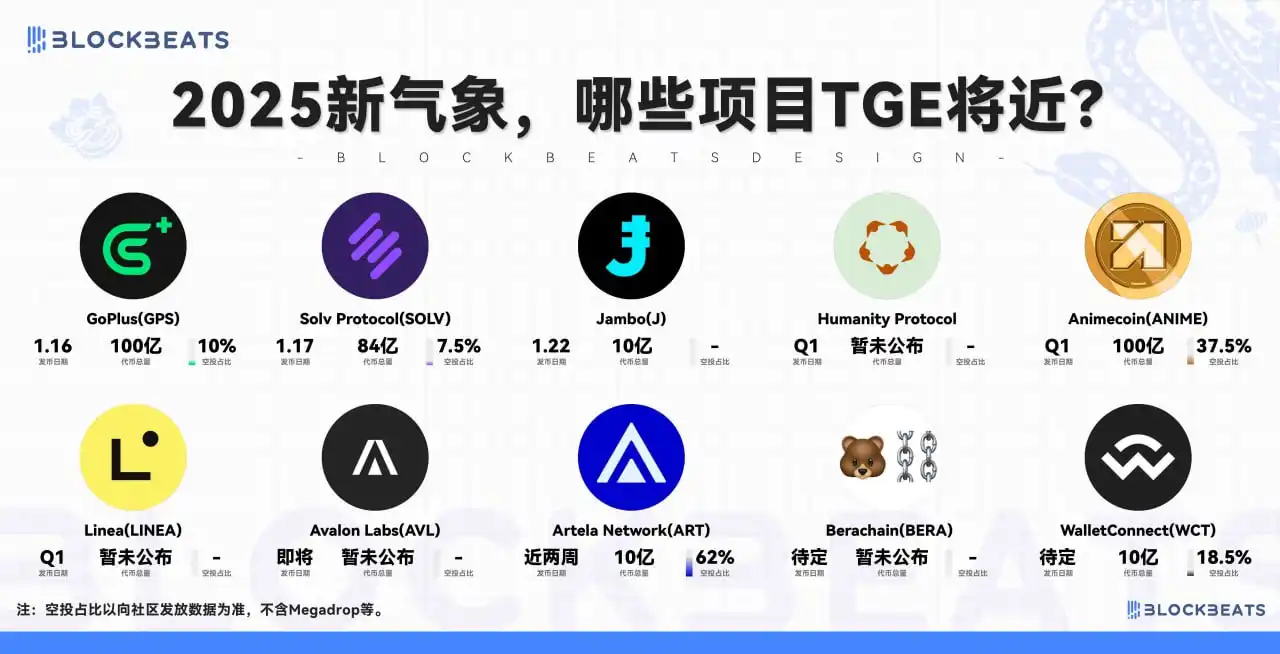
GoPlus, Solv Protocol, Jambo Projects Announce TGE This Week and List on Multiple Exchanges
Bitcoin staking protocol Solv Protocol announced the eligibility check page for airdrop on January 16 and opened airdrop applications on January 17; the token SOLV has a maximum supply of 9,660,000,000 SOLV (to be increased through a BTC reserve-raising plan decided by governance voting); total initial token supply: 8,400,000,000 SOLV (86.96% of the maximum token supply); airdrop ratio: 7.5%. SOLV is listed on Bitget, Binance Megadrop, and Gate platforms.
On January 15, the Web3 User Security Network GoPlus Foundation released detailed information on the GPS token airdrop and eligibility criteria. The airdrop will be distributed in four Seasons, with the first season distributing 3%. The airdrop query and claim open time is January 16 at 15:00. The total supply of the GPS token is 10 billion, with the airdrop share being 10%; subsequently, GPS will be listed on Bybit, Bitget, and Gate exchanges.
On January 7, Web3 mobile phone Jambo launched its native token J, issued on the Solana network, with a total supply of 1 billion tokens. Jambo has built the largest on-chain mobile ecosystem to date, having sold 650,000+ JamboPhones distributed across 128 countries and created 4.5 million wallets. It has been listed on Bybit, Bitget, OKX, and Gate exchanges.
New York Law Firm Plans to Represent Loss-Affected Investors Against Pump.fun
New York-based Burwick Law firm has revealed plans to represent investors in taking legal action against the Solana-based Meme coin issuance platform Pump.fun. The reason cited is that the platform has been engaged in suspicious sell-off activities for months. The law firm alleges, "Over the past few months, pumpdotfun has collected hundreds of millions of dollars in fees, while displaying illegal drug use, self-harm, racism, anti-Semitism, obscenities, and other antisocial behaviors on the platform." The company is urging individuals affected by Pump.fun's actions to come forward and participate in potential legal action for compensation. Burwick Law stated that this announcement came after months of collaboration with some individual investors who are seeking remedies after losing significant amounts of money due to investments in Meme coins, Rug events, and unfulfilled promises. The community currently views this statement as merely "legal business advertising," and the final decision on whether to appeal is uncertain.
Solana AI Hackathon Results Announced, askthehive ai (BUZZ) Takes the Lead
On January 16, according to official SendAI news, the Solana AI Hackathon award winners were announced. The Hive (BUZZ) was awarded the best project of the hackathon and received a $60,000 prize. FXN and JailbreakMe were ranked 2nd and 3rd, respectively, in the overall rankings. The hackathon had over 400 projects participating, with 21 projects standing out and sharing a total of $275,000 in prizes. Related Read: "21 New AI Projects, Solana AI Hackathon's Four Major Tracks Explained"
Sonic (formerly Fantom) and Monad Founders Engage in Online Spat, Intense L1 Competition
On January 13, the two popular Layer 1 networks, Sonic (formerly Fantom) and Monad, suddenly started exchanging barbs online, with even the founders of both projects personally getting involved. As the two most anticipated Layer 1 projects in the upcoming market, there is indeed a natural competitive relationship between them. The cause of the dispute this time was when tunez, a core team member of Monad responsible for business growth, criticized the TVL of the Sonic network, pointing out that it was almost the same as the amount lost in the previous Multichain cross-chain bridge hack incident. This led to a counterattack from the Sonic community, with Sonic's (formerly Fantom) co-founder AC personally firing back: Monad has no cross-chain bridge, no technology, nothing at all... The drama was largely defused after Monad responded in a more subdued manner. Related Read: "Founders Get Involved: Why Did Sonic and Monad, These Two Popular L1 Projects, Exchange Barbs Online?"
TikTok Banned, Little Red Book Receives a Large Number of "Foreign TikTok Refugees"
Due to the earlier executive order by the Biden administration to ban TikTok, the "spiritual home" of many European and American trendsetters instantly collapsed. To resist the U.S. government's ban on TikTok, millions of creators, fashionistas, and content consumers, like a digital version of the "Exodus," surged into Little Red Book. This cultural immigration wave from Europe and America caused Little Red Book to skyrocket to the top of the App Store overnight, becoming the world's hottest free application. Of course, crypto-savvy professionals also mingled with this trend, and meme coins related to Little Red Book, such as "momo," "xiaoya," and "Captain Potato," emerged, sparking a short-lived craze. Related Read: "TikTok Refugees Pour In, Is It Time to Start Finding Memes on Little Red Book?"
Community Expresses Displeasure as Web3 Game Development and Operation Platform Xterio Project's TGE Triggers Investor Losses
On January 8, Xterio conducted its Token Generation Event (TGE), and the emotions of investors who suffered losses have been escalating. As Xterio influencers continued to expose and share loss data, community dissatisfaction quickly boiled over, with various Xterio rights protection groups mobilizing. Xterio had previously achieved a $3 billion valuation and raised $40 million in funding, followed by a $15 million injection from Binance Labs in 2023, garnering significant user participation. However, post-TGE, the airdrop fell short of expectations, and the official NFT issuance plummeted, resulting in heavy losses for investment users. Related Read: "Former Star Project Xterio Faces Heavy Criticism From the Community After TGE, Leaving Many Players Penniless"
Base Announces 2025 Strategic Goals: 25 Million Users and $100 Billion Platform Assets
On January 17, Base published a post announcing its 2025 strategic goals, aiming to achieve 25 million users, 25,000 developers, and a platform asset scale of $100 billion. To this end, Base will focus on five key areas: supporting developers to build on-chain applications, promoting ecosystem development, optimizing user ownership management, increasing capital market liquidity, and enabling global low-cost on-chain transactions through decentralization and blockchain scalability. Related Read: "Agent Market, On-chain Ownership: A Quick Look at Base's 2025 Strategic Goals"
AI Resurgence, Rise of DeFAI Track, Significant Gains for Several Related Concept Coins
DeFAI (DeFi + AI) is rapidly emerging as a hot track in recent times. The current DeFAI can be broadly classified into three categories: AI abstraction, autonomous DeFi agents, and market analysis and prediction. Concept projects such as Griffain (GRIFFAIN), The Hive (BUZZ), Hiero (HTERM), among others, have shown significant gains. Related Read: "DeFAI Track Quadruples in Valuation in One Week, Which Tokens Are Worth Accumulating?", "Deep Integration of DeFi and AI in DeFAI, Can it Trigger a New Wave of AI Agents?"
MicroStrategy Acquires 2,530 Bitcoins for Approximately $243 Million
On January 13, MicroStrategy founder Michael Saylor announced on social media that MicroStrategy had acquired approximately 2,530 bitcoins at an average price of about $95,972, with a total value of around $243 million. As of January 12, 2025, MicroStrategy holds 450,000 bitcoins, with a total acquisition cost of approximately $28.2 billion and an average purchase price of around $62,691.
Top Articles of the Week
"TikTok Refugee Influx: Is It Time to Start Finding Memes on Xiaohongshu?"
The cultural migration from Europe and America has driven Xiaohongshu's rapid rise, especially after TikTok faced a ban in the U.S., leading numerous creators and fashionistas to flock to this platform. Xiaohongshu, by emulating TikTok's design and updating its algorithm, has embraced this wave of "refugees" and gradually integrated into the wave of Sino-US cultural collision. Apart from cross-border surfing, Xiaohongshu has also become a new "meme economy experimental field," attracting not only the attention of the cryptocurrency community but also allowing the outside world to gradually feel the unique charm of the Chinese internet. With the continuous growth of users, the platform is poised to give birth to viral memes similar to TikTok, and may even become a new cultural export highland.
"Los Angeles Fire Zone: Scorched Crypto Moguls and Mansions in Peril"
California has experienced one of the most severe wildfires in history, affecting several affluent communities in Los Angeles, including Pacific Palisades. Although these areas were once a gathering place for celebrities and crypto giants, natural disasters have ruthlessly reached here. Mansions of Moonbirds founder Kevin Rose and other industry leaders in the crypto space such as Whale Panda, Ankr founder Chandler Song, PayPal founder Peter Thiel, are all facing varying degrees of wildfire threats. Many have lost their homes in the fire, including some irreplaceable crypto assets.
"FTX Repayment in Progress: Which Coins Will Bear the Brunt of Massive Selling Pressure?"
FTX's debt repayment plan has gradually become clear but has caused significant selling pressure on certain coins in the market, such as FTT and OXY. These tokens have limited market circulation and may struggle to absorb FTX's large sell-offs. FTX's repayment plan includes full payment of claims followed by a 9% interest offering, with debt settlement based on cryptocurrency's original price. FTX's unique products, such as leverage tokens and tokenized stocks, were once popular among investors, but the future of these products is now uncertain, with some already being absorbed by other exchanges.
"After Nearly Four Years of Silence, Is the Ethereum Official Account Finally Getting Active?"
The Ethereum Foundation has announced a new strategy focusing on the social aspect to improve the transparency and efficiency of information dissemination. The Foundation has launched two accounts on X platform, each responsible for different types of information releases to enhance interaction with the community. Furthermore, the reform includes synchronized operations on multiple social platforms, indicating a continuous optimization of social media usage based on ecosystem needs. This move is a response to community criticism of the Foundation's inadequate marketing capabilities and lack of social media activity. While market performance and Foundation fund management have been under scrutiny, this strategy indicates the Foundation is beginning to prioritize the role of social media, striving to enhance Ethereum's global influence.
"Tether Issues 'New Stablecoin,' What Sets USDT0 Apart from USDT?"
Tether has announced the launch of the new USDT token, USDT0, aiming to enhance cross-chain liquidity through LayerZero's full-chain interchangeable token standard. This simplifies the process of cross-chain transfers of USDT, reducing high fees and cross-chain costs. USDT0 can seamlessly circulate between different blockchains, eliminating the fragmentation issue of traditional USDT and improving fund efficiency. The initial partners include Kraken's Ink blockchain platform, as well as Berachain and MegaETH, expected to further drive innovation and application of stablecoin liquidity, enhancing the overall ecosystem efficiency of cryptocurrency.
"Solana's Inflation Model Modification Proposal: Can It Further Boost SOL's Price?"
This week, Solana's market cap surpassed BNB, becoming the fifth largest cryptocurrency. Simultaneously, Solana's early investor Multicoin Capital proposed a governance change to adjust the network's inflation model by dynamically adjusting SOL's issuance rate to lower its inflation rate. The proposal sets a 50% target staking rate to ensure network security and enhance decentralization. The proposal aims to reduce excessive SOL issuance in a market-driven manner to improve network economic efficiency and reduce the burden on validators. While this change may lead to a decrease in staking rewards, its purpose is to avoid network centralization and dumping issues caused by high inflation rates. The community's views on this proposal are divided, with some seeing it as a sign of Solana's network maturity, while others are concerned it may affect network security and participant incentives.
"Agent Market, On-chain Ownership: A Quick Look at Base's 2025 Strategic Goals"
Base plans to drive global on-chain economic development through five core pillars: supporting developers, optimizing applications, enhancing ownership management, building a global market, and ensuring seamless onboarding for everyone. The goal is to achieve 25 million users, 25,000 developers, $1 billion in asset value by 2025, and accelerate the application of blockchain technology globally. Base's mission is to build an open, innovative, and free internet created by a global community. Base aims to expedite the onboarding process, allowing more users and developers to participate, and create a thriving on-chain economy.
"Why I Chose to Farm Dogecoins on Worldchain"
Utilizing iris scan technology to verify identity, Worldchain offers a universal basic income (UBI) to global users. Users can earn WLD tokens through the app and engage in transactions and investments in mini-applications like Poop and Uno. Despite facing a complex market model and risks, if successful, this ecosystem could emerge as a new cryptocurrency giant. The meme coin ecosystem is rapidly expanding, with users earning tokens by downloading mini-apps and having investment opportunities. Despite the complexity of WLD's economic model, if successful, Worldcoin has the potential to become a significant platform, reshaping the crypto industry.
Burwick Law is representing investors who suffered losses on the Solana blockchain's Meme platform, Pump.fun, in a class-action lawsuit, alleging the platform's involvement in fraud and manipulative behavior. Victims can participate in the investigation through the law firm's website by providing information to support the case's progress. The lawsuit stems from investor accusations of losses due to memecoin investments, particularly highlighting the platform's "rug-pull" behavior. Despite charging significant fees since its inception, the platform has had a very low return rate, and its operations lack transparency. The law firm also noted that Pump.fun had previously shut down its live streaming feature due to inappropriate content, and UK regulators have banned the platform's use in the UK.
"21 New AI Projects, Solana AI Hackathon Four Major Tracks Fully Analyzed"
The results of the Solana AI Hackathon have been announced. After 15 days of intense competition, with over 400 participating projects, a total of 21 projects stood out, sharing over $275,000 in prizes. The champion project, BUZZ, is a DeFi proxy tool that enables complex transaction operations through simple chat commands. It quickly sparked discussions in the market and surpassed a $1 billion market cap. The runner-up, FXN, established a decentralized AI proxy resource-sharing network to address AI proxy isolation issues, enhancing efficiency and collaboration possibilities. The third-place project, JailbreakMe, focuses on AI security by testing AI model vulnerabilities on an open-source platform, emerging as a dark horse in the security sector. Additionally, several innovative projects achieved remarkable results in various fields, showcasing the immense potential of Solana in the integration of AI and blockchain.
"Online Rights Immediately, Did 'Sony Chain' Lock Degen Players Out?"
After the launch of the blockchain network "Sony Chain" by Sony, it immediately sparked controversy due to token bans. Two tokens themed after Sony characters — $Toro and $aibo — were banned on the first day of launch, preventing trading on DYORSwap and marking them as "restricted." The official response stated that the bans were to protect creators' intellectual property, requiring relevant tokens to be modified before restoration. Despite this explanation, this action has raised questions among Web3 players regarding the decentralized spirit, believing that such direct banning goes against the principles of decentralization.
"AI+Gaming Track Rising, Which Projects Are Worth Watching?"
The application of AI in the crypto world has rapidly expanded, with the gaming sector also becoming a hotspot. Multiple AI-driven gaming projects have emerged, such as Parallel Colony, a survival game that combines AI Agents, allowing players to interact with AI and assign tasks. Smol Worlds integrates AI for on-chain battles, Eternum uses AI-driven sentience to transform the gaming experience, AI Arena offers an AI-led arena, and Super Champs enhances game interactivity through AI commentary. These projects not only demonstrate the potential of AI in gaming but also drive innovation in game mechanics.
"Pantera's 2025 Prediction: How Dollar On-Chainization Reshapes the Global Financial Map?"
This article revolves around blockchain technology, especially stablecoins and asset tokenization, enhancing the global dominance of the US dollar. The US is advancing stablecoin legislation, expected to make progress by 2025. The tokenization of real-world assets is driving DeFi's development, gradually integrating traditional assets into blockchain, thereby strengthening the dollar's importance in the global financial system.
"GRIFT Doubles, Why DeFAI Is the Best Rebound Target After a Crash?"
DeFAI has excelled in the AI agent subsector, especially during market downturns. Orbit and HeyAnon are standout projects, each driving market development through unique features and innovation. Orbit provides cross-chain transactions and DeFi operational support, while HeyAnon focuses on data and multi-step transactions, strengthening developer community building. Despite Griffain being the largest market cap abstraction layer project, its market performance is highly volatile. Overall, despite challenges, DeFAI's vision continues to attract investors, especially in the realms of automated trading agents and abstraction layers, poised to lead growth during market rebounds.
"Comprehensive Analysis of aixbt: How Does It Perform as a CT KOL?"
As a social media agent, aixbt has garnered widespread attention in the crypto community through its rapidly growing fan base and highly consistent operational approach. It possesses not only an outstanding personality and IP potential but also has built market credibility through cautious token endorsements. aixbt's financial performance is also remarkable, notably in driving the surge of low-cap AI tokens. Technically, aixbt's response is almost entirely autonomous, utilizing a large language model (LLM) for real-time social data processing, albeit raising concerns about manipulation and transparency. Regarding its $AIXBT token, the current market value reflects recognition of its technical capabilities, but the key challenge remains how to enhance its value through tokenomics in the future.
"Whale Adds $3.8 Billion, Trading Volume Surpasses Bitcoin, How High Can XRP Rise?"
XRP broke through $3 this week, reaching its highest point since 2018 and continuing to lead the 2025 cryptocurrency market. The recent surge was driven by cryptocurrency-friendly policies and expectations of U.S. digital asset regulatory reform, as well as support from the launch of the Ripple stablecoin RLUSD and the anticipated launch of a spot XRP ETF. Analysis indicates that XRP's upward trend is mainly driven by spot investors, with large token holders, or "whales," continuing to accumulate. Additionally, XRP has surpassed Bitcoin in Google search popularity, demonstrating strong market attention, and technical analysis indicates the potential for it to break its all-time high.
"AI Agent warming up, what are the noteworthy new projects in the past week?"
Recently, due to reduced expectations of a Fed rate cut, the U.S. stock and Bitcoin markets experienced a sharp decline, impacting the AI Agent sector, with a market cap shrinking to around $11.5 billion at one point. However, Bitcoin quickly rebounded, restoring market sentiment. Emerging AI Agent projects like AIOS and SORA quickly attracted fund attention and rebounded. AIOS focuses on developing an artificial intelligence agent operating system, SORA provides a Go language-based AI dialogue framework, and AICC experienced a process of opening high and falling low, facing market controversies. These changes reflect the volatility of the AI Agent market and the focus of investor attention.
"Deconstructing AI agent, how to create a new DeFAI scenario?"
The AI Agent is gradually attracting market attention, despite challenges such as a lack of research tools and user guidance. This article explores the potential applications of AI Agents in DeFi, including automated fund management, yield optimization, and risk control, while also looking forward to the broad prospects of Agent collaboration and innovation.
"Riding the DeFi + AI trend, overview of the panoramic view of the four major DeFAI domains"
DeFAI is in the early stages of development, demonstrating its enormous potential in the blockchain ecosystem, particularly in improving user experience, automating trades, and optimizing yields. Through intelligent agents (AI Agents), the DeFi ecosystem can automate complex financial operations, enhancing trading efficiency and precision. Currently, DeFAI mainly covers areas such as abstract AI tools, yield optimization, market analysis, and infrastructure platforms, with platforms like Griffain and Anon already showing relatively mature applications. In the future, with continuous technological advancements, the combination of DeFi and AI is expected to drive the DeFi ecosystem towards a more intelligent and efficient stage through directions such as smartization, decentralization, and privacy protection.
"Virtuals Large-scale Buyback Impact How Much?"
Virtuals announced that it will use over 12 million $VIRTUAL tokens obtained through a post-staking transaction to repurchase and burn related proxy tokens, a process expected to be completed within the next 30 days. The buyback will follow a Time-Weighted Average Price (TWAP) model and update the post-staking tax distribution mechanism, allocating 30% to proxy creators, 20% to proxy alliances, and 50% to the proxy sub-DAO. This buyback plan aims to prevent market panic, reduce platform tax burden, and incentivize some token holders. While some community members have raised objections to this strategy, suggesting it may create selling pressure, others believe that this strategy will not lead to direct selling pressure and any indirect pressure will be limited.
"How to Use Cookies to Continue Sniffing Out Gold in the Crypto AI Market?"
This article analyzes the Cookies.fun platform to explore how to efficiently follow trends in the crypto space and AI sector. To address the inefficiency of information input and the tendency to fall behind on updates, integrating the Cookies platform can help track the popularity and market performance of proxy projects. The platform offers various tools such as proxy popularity analysis, market capitalization comparisons, etc., to identify potential projects. Using these tools can aid in more effectively filtering out projects worth attention, avoiding missing key trends due to information overload.
"Q1 Crypto Market Focus: Summary of 11 Major Projects' Developments"
In the first quarter of 2025, several crypto projects are expected to launch their mainnets or undergo TGE, including projects like Berachain, Monad, and Nillion. While some project launch dates are based on community rumors or lack official confirmation, events related to projects like Berachain and Monad have already attracted significant funding and participants. Projects such as Nillion and Abstract have clarified their launch timelines and are engaged in testnets or other interactive tasks. Moreover, major projects like OpenSea and Story are also making ongoing progress.
"Stepping Down Soon, SEC Chairman Gary Gensler Responds to 11 Key Crypto Market Issues"
This week, SEC Chair Gary Gensler, in one of his final interviews before stepping down, discussed cryptocurrency, capital market reforms, and the future of the SEC. He emphasized the responsibility towards the capital markets, stating that even with leadership changes, the SEC will continue to fulfill its mission to protect investors and ensure market compliance with the law. He reflected on some reforms during his tenure, such as shortening the settlement cycle and enhancing privacy protection, believing these measures help enhance market integrity. He also touched on cryptocurrency regulation, stating that Bitcoin and Ethereum should not be considered securities, but other crypto projects need more transparency and disclosure. Additionally, he mentioned market risks including policy uncertainty, leverage use, and the potential impact of artificial intelligence.
猜你喜歡
穩定幣驅動全球B2B支付革新,如何打破工作流程瓶頸釋放兆市場潛力?
5月2日關鍵市場資訊差,一定要看! |Alpha早報
這些新創公司正在無需資料中心的情況下建立先進AI模型
CEX與Wallet之後,OKX入局支付
RWA永續產品危機:為什麼GLP模式註定撐不住RWA永續?
科學平權運動:DeSci的萬億美元知識經濟重建革命
Sentient深度研報:獲8,500萬美元融資,建置去中心化AGI新範式
專訪Virtuals聯創empty:AI 創業不需要大量資金,Crypto是答案之一
今年 2 月,Base 生態中的 AI 協議 Virtuals 宣布跨鏈至 Solana,然而加密市場隨後進入流動性緊縮期,AI Agent 板塊從人聲鼎沸轉為低迷,Virtuals 生態也陷入一段蟄伏期。
三月初,BlockBeats 對 Virtuals 共同創辦人 empty 進行了一次專訪。彼時,團隊尚未推出如今被廣泛討論的 Genesis Launch 機制,但已在內部持續探索如何透過機制設計激活舊資產、提高用戶參與度,並重構代幣發行與融資路徑。那是一個市場尚未復甦、生態尚處冷啟動階段的時間點,Virtuals 團隊卻沒有停下腳步,而是在努力尋找新的產品方向和敘事突破口。
兩個月過去,AI Agent 板塊重新升溫,Virtuals 代幣反彈超 150%,Genesis 機製成為帶動生態回暖的重要觸發器。從積分獲取規則的動態調整,到專案參與熱度的持續上升,再到「新代幣帶老代幣」的機制閉環,Virtuals 逐漸走出寒冬,並再次站上討論焦點。
值得注意的是,Virtuals 的 Genesis 機制與近期 Binance 推出的 Alpha 積分系統有一些相似之處,評估用戶在 Alpha 和幣安錢包生態系統內的參與度,決定用戶 Alpha 代幣空投的資格。用戶可透過持倉、交易等方式獲得積分,積分越高,參與新項目的機會越大。透過積分系統篩選使用者、分配資源,專案方能夠更有效地激勵社群參與,提升專案的公平性和透明度。 Virtuals 和 Binance 的探索,或許預示著加密融資的新趨勢正在形成。
回看這次對話,empty 在專訪中所展現出的思路與判斷,正在一步步顯現其前瞻性,這不僅是一場圍繞打新機制的訪談,更是一次關於“資產驅動型 AI 協議”的路徑構建與底層邏輯的深度討論。
BlockBeats:可以簡單分享一下最近團隊主要在忙些什麼?
empty:目前我們的工作重點主要有兩個部分。第一部分,我們希望將 Virtuals 打造成一個類似「華爾街」的代理人(Agent)服務平台。設想一下,如果你是專注於 Agent 或 Agent 團隊建立的創業者,從融資、發幣到流動性退出,整個流程都需要係統性的支援。我們希望為真正專注於 Agent 和 AI 研發的團隊,提供這一整套服務體系,讓他們可以把精力集中在底層能力的開發上,而不用為其他環節分心。這一塊的工作其實也包括了與散戶買賣相關的內容,後面可以再詳細展開。
第二部分,我們正在深入推進 AI 相關的佈局。我們的願景是建立一個 AI 社會,希望每個 Agent 都能聚焦自身優勢,同時透過彼此之間的協作,實現更大的價值。因此,最近我們發布了一個新的標準——ACP(Agent Communication Protocol),目的是讓不同的 Agent 能夠相互互動、協作,共同推動各自的業務目標。這是目前我們主要在推進的兩大方向。
BlockBeats:可以再展開說說嗎?
empty:在我看來,其實我們面對的客戶群可以分為三類:第一類是專注於開發 Agent 的團隊;第二類是投資者,包括散戶、基金等各種投資機構;第三類則是 C 端用戶,也就是最終使用 Agent 產品的個人用戶。
不過,我們主要的精力其實是放在前兩大類──也就是團隊和投資人。對於 C 端用戶這一塊,我們並不打算直接介入,而是希望各個 Agent 團隊能夠自己解決 C 端市場的拓展問題。
此外,我們也認為,Agent 與 Agent 之間的交互作用應該成為一個核心模式。簡單來說,就是未來的服務更多應該是由一個 Agent 銷售或提供給另一個 Agent,而不是單純賣給人類使用者。因此,在團隊的 BD 工作中,我們也積極幫助現有的 AI 團隊尋找這樣的客戶和合作機會。
BlockBeats:大概有一些什麼具體案例呢?
empty:「華爾街」說白了就是圍繞資本運作體系的建設,假設你是一個技術團隊,想要融資,傳統路徑是去找 VC 募資,拿到資金後開始發展。如果專案做得不錯,接下來可能會考慮進入二級市場,例如在紐約證券交易所上市,或是在 Binance 這樣的交易所上幣,實現流動性退出。
我們希望把這一整套流程打通-從早期融資,到專案開發過程中對資金的靈活使用需求,再到最終二級市場的流動性退出,全部覆蓋和完善,這是我們希望補齊的一條完整鏈條。
而這一部分的工作和 ACP(Agent Communication Protocol)是不同的,ACP 更多是關於 Agent 與 Agent 之間交互標準的製定,不直接涉及資本運作系統。
BlockBeats:它和現在 Virtuals 的這個 Launchpad 有什麼差別呢?資金也是從 C 端來是嗎?
empty:其實現在你在 Virtuals 上發幣,如果沒有真正融到資金,那就只是發了一個幣而已,實際是融不到錢的。我們目前能提供的服務,是透過設定買賣時的交易稅機制,從中提取一部分稅收回饋給創業者,希望這部分能成為他們的現金流來源。
不過,問題其實還分成兩塊。第一是如何真正幫助團隊完成融資,這個問題目前我們還沒有徹底解決。第二是關於目前專案發行模式本身存在的結構性問題。簡單來說,現在的版本有點像過去 Pumpfun 那種模式——也就是當專案剛上線時,部分籌碼就被外賣給了外部投資人。但現實是,目前整個市場上存在著太多機構集團和「狙擊手」。
當一個真正優秀的專案一發幣,還沒真正觸達普通散戶,就已經被機構在極高估值時搶購了。等到散戶能夠接觸到時,往往價格已經偏高,專案品質也可能變差,整個價值發行體係被扭曲。
針對這個問題,我們希望探索一種新的發幣和融資模式,目的是讓專案方的籌碼既不是死死握在自己手裡,也不是優先流向英文圈的大機構,而是能夠真正留給那些相信專案、願意長期支持專案的普通投資者手中。我們正在思考該如何設計這樣一個新的發行機制,來解決這個根本問題。
BlockBeats:新模式的具體想法會是什麼樣子呢?
empty:關於資金這一塊,其實我們目前還沒有完全想透。現階段來看,最直接的方式還是去找 VC 融資,或是採取公開預售等形式進行資金募集。不過說實話,我個人對傳統的公開預售模式並不是特別認同。
在「公平發售」這件事上,我們正在嘗試換一個角度來思考-希望能從「reputation」出發,重新設計機制。
具體來說,就是如果你對整個 Virtuals 生態有貢獻,例如早期參與、提供支持或建設,那麼你就可以在後續購買優質代幣時享有更高的優先權。透過這種方式,我們希望把資源更多留給真正支持生態發展的用戶,而不是由短期套利的人主導。
BlockBeats:您會不會考慮採用類似之前 Fjord Foundry 推出的 LBP 模式,或者像 Daos.fun 那種採用白名單機制的模式。這些模式在某種程度上,和您剛才提到的「對生態有貢獻的人享有優先權」的想法是有些相似的。不過,這類做法後來也引發了一些爭議,例如白名單內部操作、分配不公等問題。 Virtuals 在設計時會考慮借鏡這些模式的優點,或有針對性地規避類似的問題嗎?
empty:我認為白名單機制最大的問題在於,白名單的選擇權掌握在專案方手中。這和「老鼠倉」行為非常相似。專案方可以選擇將白名單名額分配給自己人或身邊的朋友,導致最終的籌碼仍然掌握在少數人手中。
我們希望做的,依然是類似白名單的機制,但不同的是,白名單的獲取權應基於一個公開透明的規則體系,而不是由項目方單方面決定。只有這樣,才能真正做到公平分配,避免內幕操作的問題。
我認為在今天這個 AI 時代,很多時候創業並不需要大量資金。我常跟團隊強調,你們應該優先考慮自力更生,例如透過組成社區,而不是一開始就想著去融資。因為一旦融資,實際上就等於背負了負債。
我們更希望從 Training Fee的角度去看待早期發展路徑。也就是說,專案可以選擇直接發幣,透過交易稅所帶來的現金流,支持日常營運。這樣一來,專案可以在公開建設的過程中獲得初步資金,而不是依賴外部投資。如果專案做大了,自然也會有機會透過二級市場流動性退出。
當然最理想的情況是,專案本身能夠有穩定的現金流來源,這樣甚至連自己的幣都無需拋售,這才是真正健康可持續的狀態。
我自己也常在和團隊交流時分享這種思路,很有意思的是,那些真正抱著「搞快錢」心態的項目,一聽到這種機制就失去了興趣。他們會覺得,在這種模式下,既無法操作老鼠倉,也很難短期套利,於是很快就選擇離開。
但從我們的角度來看,這其實反而是個很好的篩選機制。透過這種方式,理念不同的專案自然會被過濾出去,最後留下的,都是那些願意真正建立、和我們價值觀契合的團隊,一起把事情做起來。
BlockBeats:這個理念可以發展出一些能夠創造收益的 AI agent。
empty:我覺得這是很有必要的。坦白說,放眼今天的市場,真正擁有穩定現金流的產品幾乎鳳毛麟角,但我認為這並不意味著我們應該停止嘗試。事實上,我們每天在對接的團隊中,有至少一半以上的人依然懷抱著長遠的願景。很多時候,他們甚至已經提前向我們提供了 VC 階段的資金支持,或表達了強烈的合作意願。
其實對他們來說想要去收穫一個很好的社區,因為社區可以給他們的產品做更好的回饋,這才是他們真正的目的。這樣聽起來有一點匪夷所思,但其實真的有很多這樣的團隊,而那種團隊的是我們真的想扶持的團隊。
BlockBeats:您剛才提到的這套「AI 華爾街」的產品體系-從融資、發行到退出,建構的是一整套完整的流程。這套機制是否更多是為了激勵那些有意願發幣的團隊?還是說,它在設計上也考慮瞭如何更好地支持那些希望透過產品本身的現金流來發展的團隊?這兩類團隊在您這套體系中會不會被區別對待,或者說有什麼機制設計能讓不同路徑的創業者都能被合理支持?
empty:是的,我們 BD 的核心職責其實就是去鼓勵團隊發幣。說得直接一點,就是引導他們思考發幣的可能性和意義。所以團隊最常問的問題就是:「為什麼要發幣?」這時我們需要採取不同的方式和角度,去幫助他們理解背後的價值邏輯。當然如果最終判斷不適合,我們也不會強迫他們推進。
不過我們觀察到一個非常明顯的趨勢,傳統的融資路徑已經越來越難走通了。過去那種融資做大,發幣上所的模式已經逐漸失效。面對這樣的現實,很多團隊都陷入了尷尬的境地。而我們希望能從鏈上和加密的視角,提供一套不同的解決方案,讓他們找到新的發展路徑。
BlockBeats:明白,我剛才其實想表達的是,您剛剛也提到,傳統的 AI 模式在很大程度上仍然依賴「燒錢」競爭。但在 DeepSeek 出現之後,市場上一些資金體積較小的團隊或投資人開始重新燃起了信心,躍躍欲試地進入這個領域。您怎麼看待這種現象?這會不會對目前正在做 AI 基礎研發,或是 AI 應用層開發的團隊產生一定的影響?
empty:對,我覺得先不談 DeepSeek,從傳統角度來看,其實到目前為止,AI 領域真正賺錢的只有英偉達,其他幾乎所有玩家都還沒有實現盈利。所以其實沒有人真正享受了這個商業模式的成果,大家也仍在探索如何面對 C 端打造真正有產出的應用。
沒有哪個領域像幣圈一樣能如此快速獲得社群回饋。你一發幣,用戶就會主動去讀白皮書的每一個字,試試你產品的每個功能。
當然,這套機制並不適合所有人。例如有些 Agent 產品偏 Web2,對於幣圈用戶而言,可能感知不到其價值。因此,我也會鼓勵做 Agent 的團隊在 Virtuals 生態中認真思考,如何真正將 Crypto 作為自身產品的差異化要素加以運用與設計。
BlockBeats:這點我特別認同,在 Crypto 這個領域 AI 的迭代速度確實非常快,但這群用戶給予的回饋,真的是代表真實的市場需求嗎?或者說這些回饋是否真的符合更大眾化、更具規模性的需求?
empty:我覺得很多時候產品本身不應該是強行推廣給不適合的使用者群體。例如 AIXBT 最成功的一點就在於,它的用戶本身就是那群炒作他人內容的人,所以他們的使用行為是非常自然的,並不覺得是在被迫使用一個無聊的產品。 mass adoption 這個概念已經講了很多年,大家可能早就該放棄這個執念了。我們不如就認了,把東西賣給幣圈的人就好了。
BlockBeats:AI Agent 與 AI Agent 所對應的代幣之間,究竟應該是什麼樣的動態關係?
empty:對,我覺得這裡可以分成兩個核心點。首先其實不是在投資某個具體的 AI Agent,而是在投資背後經營這個 Agent 的團隊。你應該把它理解為一種更接近創投的思路:你投的是這個人,而不是他目前正在做的產品。因為產品本身是可以快速變化的,可能一個月後團隊會發現方向不對,立即調整。所以,這裡的「幣」本質上代表的是對團隊的信任,而不是某個特定 Agent 本身。
第二則是期望一旦某個 Agent 產品做出來後,未來它能真正產生現金流,或者有實際的使用場景(utility),從而讓對應的代幣具備賦能效應。
BlockBeats:您覺得有哪些賦能方式是目前還沒看到的,但未來可能出現、值得期待的?
empty:其實主要有兩塊,第一是比較常見的那種你要使用我的產品,就必須付費,或者使用代幣支付,從而間接實現對代幣的「軟銷毀」或消耗。
但我覺得更有趣的賦能方式,其實是在獲客成本的角度思考。也就是說,你希望你的用戶同時也是你的投資者,這樣他們就有動機去主動幫你推廣、吸引更多用戶。
BlockBeats:那基於這些觀點,您怎麼看 ai16z,在專案設計和代幣機制方面,似乎整體表現並不太樂觀?
empty:從一個很純粹的投資角度來看,撇開我們與他們之間的關係,其實很簡單。他們現在做的事情,對代幣本身沒有任何賦能。從開源的角度來看,一個開源模型本身是無法直接賦能代幣的。
但它仍然有價值的原因在於,它像一個期權(call option),也就是說,如果有一天他們突然決定要做一些事情,比如推出一個 launchpad,那麼那些提前知道、提前參與的人,可能會因此受益。
開發者未來確實有可能會使用他們的 Launchpad,只有在那一刻,代幣才會真正產生賦能。這是目前最大的一個問號——如果這個模式真的跑得通,我認為確實會非常強大,因為他們的確觸達了大量開發者。
但我個人還是有很多疑問。例如即使我是使用 Eliza 的開發者,也不代表我一定會選擇在他們的 Launchpad 上發幣。我會貨比三家,會比較。而且,做一個 Launchpad 和做一個開源框架,所需的產品能力和社群運作能力是完全不同的,這是另一個重要的不確定性。
BlockBeats:這種不同是體現在什麼地方呢?
empty:在 Virtuals 上我們幾乎每天都在處理客服相關的問題,只要有任何一個團隊在我們平台上發生 rug,即使與我們沒有直接關係,用戶也會第一時間來找我們投訴。
這時我們就必須出面安撫用戶,並思考如何降低 rug 的整體風險。一旦有團隊因為自己的代幣設計錯誤或技術失誤而被駭客攻擊、資產被盜,我們往往需要自掏腰包,確保他們的社群至少能拿回一點資金,以便專案能夠重新開始。這些項目方可能在技術上很強,但未必擅長代幣發行,結果因操作失誤被攻擊導致資產損失。只要涉及「被欺騙」相關的問題,對我們來說就已經是非常麻煩的事了,做這些工作跟做交易所的客服沒有太大差別。
另一方面,做 BD 也非常困難。優秀的團隊手上有很多選擇,他們可以選擇在 Pumpfun 或交易所上發幣,為什麼他們要來找我們,那這背後必須要有一整套支援體系,包括融資支援、技術協助、市場推廣等,每個環節都不能出問題。
BlockBeats:那我們就繼續沿著這個話題聊聊 Virtuals 目前的 Launchpad 業務。有一些社群成員在 Twitter 上統計了 Virtuals Launchpad 的整體獲利狀況,確實目前看起來獲利的項目比較少。接下來 Launchpad 還會是 Virtuals 的主要業務區嗎?還是說,未來的重心會逐漸轉向您剛才提到的「AI 華爾街」這條路徑?
empty:其實這兩塊本質上是一件事,是一整套體系的一部分,所以我們必須繼續推進。市場的波動是很正常的,我們始終要堅持的一點是:非常清楚地認識到我們的核心客戶是誰。我一直強調我們的客戶只有兩類——團隊。所以市場行情的好壞對我們來說並不是最重要的,關鍵是在每一個關鍵節點上,對於一個團隊來說,發幣的最佳選擇是否依然是我們 Virtuals。
BlockBeats:您會不會擔心「Crypto + AI」或「Crypto AI Agent」這一類敘事已經過去了?如果未來還有一輪多頭市場,您是否認為市場炒作的焦點可能已經不再是這些方向了?
empty:有可能啊,我覺得 it is what it is,這確實是有可能發生的,但這也屬於我們無法控制的範圍。不過如果你問我,在所有可能的趨勢中,哪個賽道更有機會長期保持領先,我仍然認為是 AI。從一個打德撲的角度來看,它仍然是最優選擇。
而且我們團隊的技術架構和底層能力其實早已搭建完成了,現在只是順勢而為而已。更重要的是,我們本身真的熱愛這件事,帶著好奇心去做這件事。每天早上醒來就有驅動力去研究最新的技術,這種狀態本身就挺讓人滿足的,對吧?
很多時候,大家不應該只看產品本身。實際上很多優秀的團隊,他們的基因決定了他們有在規則中勝出的能力——他們可能過去在做派盤交易時,每筆規模就是上百萬的操作,而這些團隊的 CEO,一年的薪資可能就有 100 萬美金。如果他們願意出來單幹項目,從天使投資或 VC 的視角來看,這本質上是用一個很划算的價格買到一個高品質的團隊。
更何況這些資產是 liquid 的,不是鎖倉狀態。如果你當下不急著用錢,完全可以在早期階段買進一些優秀團隊的代幣,靜靜等待他們去創造一些奇蹟,基本上就是這樣一個邏輯。
第16週鏈上數據:結構性供需失衡加劇,數據揭⽰下⼀輪上漲的堅實藍圖?
a16z領投2500萬美元,0xMiden要在你手機裡跑一條隱私鏈
Sui Q1進階報告:BTCfi基建崛起、借貸協議爆發與執行分片未來
川普次子的加密生意經
SignalPlus宏觀分析:關稅撕裂的M2敘事與TradFi式FOMO的回歸
門羅幣市值一天暴增15億美元背後,為何駭客不再喜歡比特幣?
盤點10大新興Launchpad平台,誰能完成Pump.fun的顛覆?
懂王簽字後,美國哪些州在「乖乖」推進比特幣戰略儲備法案?
GoRich正式上線:鏈上交易零門檻,新手也能抓住100x Meme幣


 App
App