

DeFi's Comeback Secret Weapon: Buyback, Fee Switch, and Dividend Future Vision

Original Article Title: DeFi's Growing Focus on Token Value Accrual
Original Article Author: @ManoppoMarco, primitivecrypto Investor
Original Article Translation: zhouzhou, BlockBeats
Editor's Note: DeFi protocols are accelerating the accumulation of value for token holders, with protocols such as Aave, Ethena, Hyperliquid, and Jupiter implementing buyback plans, fee switches, and new incentive structures. Ethena plans to enable a fee switch to share revenue with stakers and is currently achieving key milestones. Other protocols are also enhancing token value through buybacks, fee distribution, and governance optimization.
The following is the original content (reorganized for better readability):
If you've spent 8-9 figures on growth but haven't seen at least linear revenue growth, buybacks may not be a bad thing. DeFi protocols are facing increasing pressure to distribute some of the revenue to token holders. Major projects like Aave, Ethena, and Hyperliquid are exploring how to introduce a value accrual mechanism for their native tokens.
The key driving force behind this trend? Donald Trump's election, which has brought a more favorable regulatory environment for DeFi. Here are the latest updates on the tokenomics of Aave, Athena, Jupiter, and Hyperliquid, including their buyback plans and fee adjustments.
AAVE
Aave has just introduced a significant tokenomics reform focusing on buybacks, fee distribution, and providing better incentives for token holders. According to Marc Zeller, founder of the Aave Chan Initiative (ACI), this is one of the most important proposals in Aave's history.
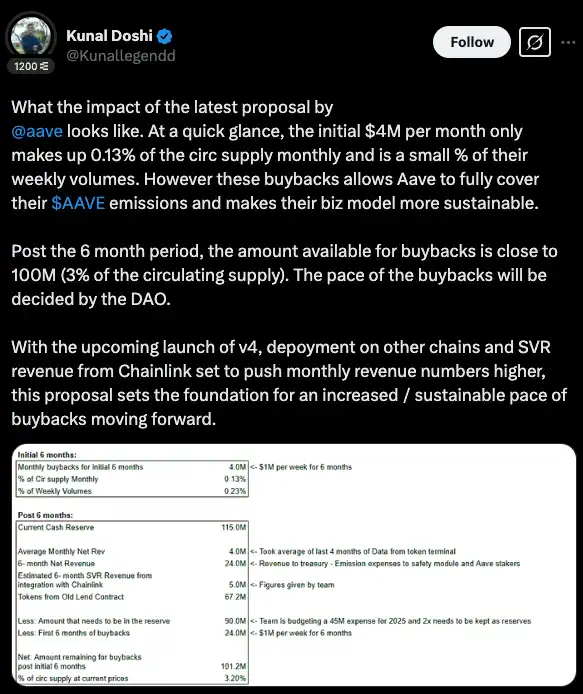
Buyback & Fee Adjustment
Aave has launched a six-month buyback plan, committing $1 million weekly (approximately $4 million monthly) to cover AAVE token emissions and enhance protocol sustainability. After six months, the buyback treasury could reach $100 million (roughly 3% of the circulating supply), and the specific deployment pace will be determined by the DAO.
What is the goal? To control token emissions while enhancing Aave's treasury strength.
New Financial & Governance Initiatives
Aave is establishing the Aave Financial Committee (AFC), dedicated to treasury fund management and liquidity strategy. Additionally, Aave is completing the transition from the LEND token, reclaiming 320,000 AAVE tokens (approximately $65 million) for future use.
Umbrella: Aave's New Risk Management System:
Aave spends $27 million annually on liquidity costs, so the Umbrella system has been introduced to optimize capital efficiency and reduce risk. This system will be integrated across multiple blockchains, including Ethereum, Avalanche, Arbitrum, Gnosis, and Base.
Anti-GHO: A New Incentive Mechanism for Stablecoin Holders:
Anti-GHO, as a brand-new incentive mechanism, will replace the old discount model for GHO holders. Held tokens can be burned at a 1:1 ratio to offset GHO debt or converted to StkGHO, aligning the incentive mechanism directly with Aave's revenue. This mechanism is still in development and may be introduced as part of a future "Aavenomics Part Two" update.
What's Next?
With the release of Aave v4, more on-chain deployments, and additional income from Chainlink SVR, this update sets the foundation for a larger-scale, more sustainable buyback in the future.
Jupiter
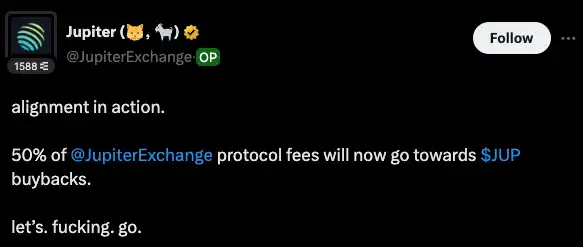
Since February 17, 2025, Jupiter has started allocating 50% of protocol fees to buy back and lock up JUP tokens for three years. This initiative aims to reduce circulating supply, enhance long-term stability, and promote user participation in the Solana ecosystem. In February of this year, Jupiter completed its first buyback, purchasing 48,800 JUP tokens for $3.33 million. Currently, Jupiter's Litterbox Trust buyback program has accumulated repurchases of over 10 million JUP tokens (approximately $6 million).
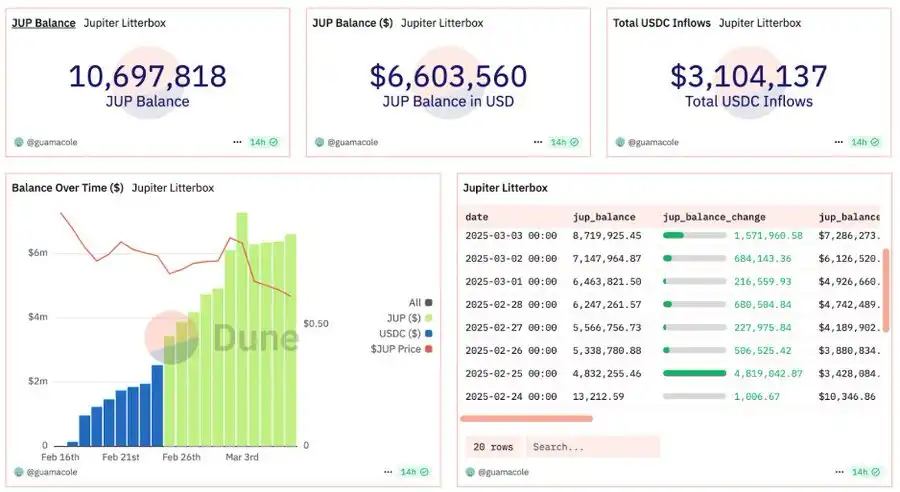
What's Next?
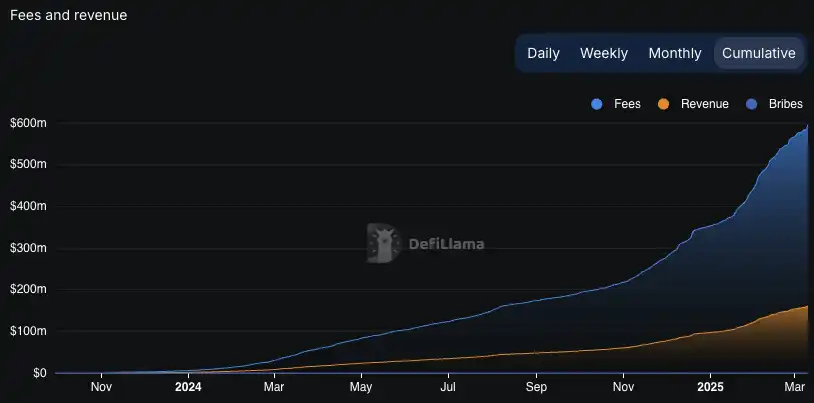
On an annual basis, Jupiter's $3.33 million buyback size is equivalent to an annual buyback amount exceeding $35 million. If we take a more aggressive estimate, with Jupiter's 2024 revenue projected at $102 million, this implies that the buyback size could exceed $50 million.
Hyperliquid
Token Distribution
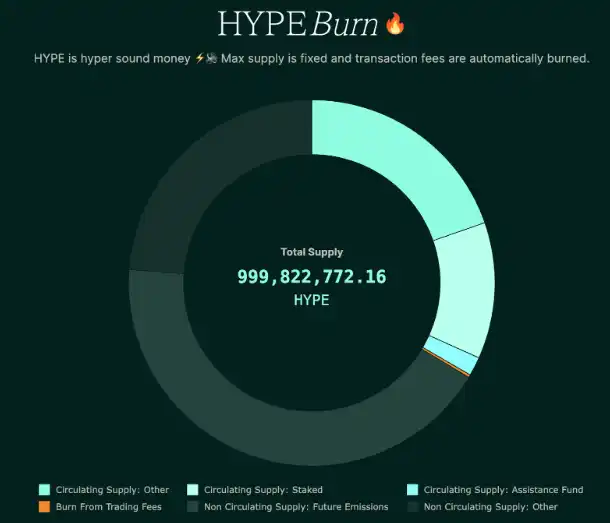
Hyperliquid's native token HYPE has a total supply of 1 billion, with no fundraising and no investor allocation. The specific distribution is as follows:
· 31.0%: Airdropped to early users (fully circulating)
· 38.888%: Reserved for future emission and community rewards
· 23.8%: Team allocation, locked for 1 year, with most unlocking in 2027-2028
· 6.0%: Hyper Foundation
· 0.3%: Community grants
· 0.012%: HIP-2
The team-to-community token ratio is 3:7, with the largest non-team holder being the Assistance Fund (AF), holding 1.16% of the total supply, accounting for 3.74% of the circulating supply.
Revenue Model & Buyback Mechanism
Hyperliquid's main sources of revenue include transaction fees (spot + derivatives) and HIP-1 auction fees. As Hyperliquid L1 currently does not charge Gas fees, Gas-related revenue is not included for now.
Revenue Distribution
· 46% of perpetual contract trading fees allocated to HLP holders (supply-side rewards)
· 54% used to buy back HYPE via the Assistance Fund (AF)
In addition, HIP-1 auction fees and the spot trading fees (USDC portion) are currently all used for HYPE token buybacks.
Dual Deflation Mechanism
· Buyback: AF uses a portion of revenue to buy back HYPE tokens, which are not burned but held by the AF
·Burn:
1. All HYPE-denominated spot trading fees (such as the HYPE-USDC pair) will be directly burned
2. After the HyperEVM mainnet launch, all Gas fees will also be paid in HYPE and burned
Buyback Impact & Staking Mechanism
Based on publicly available Hyperliquid transaction fee data, estimated as of March 2025, AF will initiate a buyback using 54% of perpetual contract revenue, expecting to repurchase approximately 2.5 million HYPE tokens monthly, worth around $35 million. HYPE staking was launched on December 30, 2024, utilizing a PoS reward mechanism (similar to Ethereum), with a current annual return rate of about 2.5%. Currently, 30 million HYPE tokens have been staked (excluding the 3 billion tokens held by the team/foundation).

Future Outlook
Hyperliquid may introduce a fee-sharing model to allocate a portion of on-chain transaction fees directly to HYPE holders to create a more sustainable incentive system. However, some believe that the current model can generate a stronger flywheel effect in market fluctuations.
Hyperliquid's revenue mainly comes from transaction fees and HIP-1 auction fees and may also expand to include revenue sources such as HyperEVM transactions in the future. Currently, apart from being used for buybacks and incentives, a portion of the transaction fees can also:
· Be distributed based on holdings or staking amounts to HYPE holders.
· Reward long-term stakers to drive deeper community participation.
· Be deposited into a community treasury for governance-determined purposes.
Possible Distribution Models:
· Direct Fee Sharing:
A portion of the transaction fees converted to USDC or HYPE, regularly distributed to token holders (similar to dividends).
· Staking Enhancement Rewards:
Only users staking HYPE will receive a share to incentivize long-term holding.
·Hybrid Mode:
Combining Fee Sharing + HYPE Buyback, balancing price support with holding incentives.
Ethena
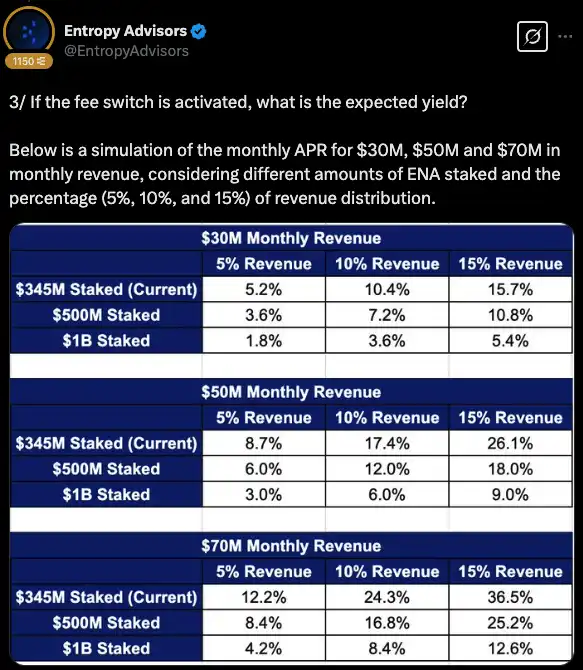
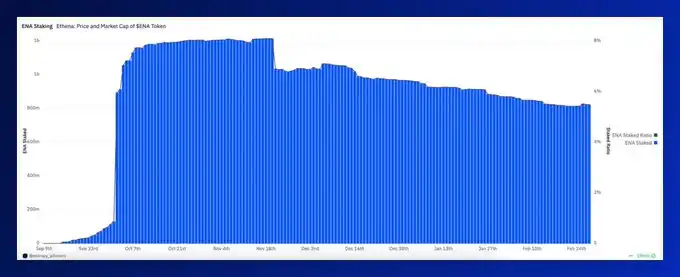
Ethena Labs has now entered the top five DeFi protocols by TVL, with annual revenue exceeding 300 million USD. As the protocol grows, Wintermute's fee-sharing proposal has been approved by the Ethena Risk Committee. Currently, 824 million ENA tokens (worth 324 million USD) are staked, accounting for 5.5% of the total supply, but stakers can only receive governance rewards and unclaimed ENA airdrops, without benefiting from Ethena's generated revenue sharing.
Ethena Fee Switch and Future Plans:
The activation of the fee switch will provide stakers with a direct revenue-sharing opportunity and enhance DAO governance effectiveness through alignment with ENA holders' incentives. Ethena's revenue primarily comes from perpetual contract market funding rates. Currently, 100% of the revenue is distributed to USDe stakers and the reserve fund. In the past three months, the average monthly revenue has been 50 million USD.
Preparation before Enabling Fee Switch: The Risk Committee has set five key metrics to ensure Ethena is in a stable position before sharing revenue.
Current Metrics Progress:
·USDe Supply Target: 6B – Target gap is now only 9%.
·Cumulative Revenue: 250M+ – Reached 330 million USD in January, exceeding the target.
·Exchange Integration: Binance/OKX – No schedule yet, but Binance currently holds 4 million USDe.
·Reserve Fund Share ≥ 1% of USDe Supply – A 61 million USD reserve supports 6.1 billion USDe.
·sUSDe vs. sUSDS APY Spread ≥ 5% – Due to market downturn, the spread has narrowed, but it may widen again in the future.
Future Outlook
Ethena is nearing its target, but the fee switch will remain paused until all metrics are met. During this time, the team will focus on USDe supply growth, ensuring more exchange integrations, and monitoring the market situation.
Once all conditions are met, ENA stakers will be able to start enjoying revenue sharing.
Summary
Key DeFi protocols are accelerating the transition towards token holder value accrual, with Aave, Ethena, Hyperliquid, and Jupiter implementing buyback programs, fee switches, and new incentive structures to make their tokens more valuable beyond speculation.
This trend reflects the industry's overall shift towards sustainable tokenomics, with projects placing more emphasis on real revenue distribution rather than inflationary incentives.
Aave leverages its deep reserves to support buybacks and governance improvements, Ethena is committed to providing direct revenue sharing to stakers, Hyperliquid optimizes its buyback and fee distribution model, and Jupiter locks up buyback tokens to stabilize the supply.
With the gradual improvement of the regulatory environment and the maturation of DeFi, protocols that succeed in aligning with community incentives will experience significant growth.
猜你喜歡
CEX與Wallet之後,OKX入局支付
科學平權運動:DeSci的萬億美元知識經濟重建革命
Sentient深度研報:獲8,500萬美元融資,建置去中心化AGI新範式
加密項目為何札堆發卡?一場Web3與現實世界的通行權之爭
上線Binance Alpha,你的HAEDAL空投值多少錢?
盤點10大新興Launchpad平台,誰能完成Pump.fun的顛覆?
AI賽道重拾熱度,全面整理潛力專案與市場炒作邏輯
解析Haedal Protocol:Sui流動性質押賽道寶石項目,TVL佔比超競品之和
穩定幣爭霸戰:六路新銳殺出,市場格局生變?
以太坊基金會「三文宣言」:從核心願景到放權改革,Vitalik重申使命
比特幣只是序章:兆資管巨頭Hamilton Lane揭秘代幣化如何吞噬傳統金融?
深入挖掘杜拜的加密夢:幻覺、資本與去中心化帝國
這是VC的冬天,卻也是KOL Agency的春天
從Cantor到Securitize,幣圈買下華盛頓
WLFI持倉代幣解析:川普家族的加密投資獲利了嗎?
RTFKT「圖片遺失」事件之後Nike遭500萬美元集體訴訟,NFT的未來將何去何從?
4 月 24 日,有人發現曾經的頂級藍籌 NFT 工作室 RTFKT 旗下項目 CloneX 的圖片數據在各大交易平台上都無法顯示,取而代之的是一條標語“此內容已被限制,以這種方式使用 Cloudflare 的基礎服務違反了服務條款”,此事在社區引起熱議。
而在一天之後的 4 月 25 日其母公司 Nike 便被起訴,以澳大利亞居民 Jagdeep Cheema 為首的 RTFKT NFT 購買者在紐約布魯克林聯邦法院提起的一項擬議集體訴訟中表示,在 Nike 突然關閉了這些業務後給他們帶來了重大損失。曾經被 Nike 收購的最強 NFT 潮流 IP 專案為何淪落至此呢?
這個名字因為與人造物的英文“artifact”發音相似而來,同時這個名字也代表著其品牌理念。一開始只是一個以打造「元宇宙的 Nike」為目標的數位運動品牌,而當時隨著越來越多的傳統品牌選擇與 NFT 項目合作,adidas 與 BAYC、PUNKSComic 的聯動也驅使了 RTFKT 和村上隆聯合發行了 CloneX。
而正是這個契機讓加密圈更熟悉這個品牌,而後真正的 Nike 也收購了這個「元宇宙的 Nike」。高達 40 個以上的聯名項目獨霸榜首,從村上隆到 Jeff Staple,從 RIMOWA 到 Nike,幾乎是最炙手可熱的加密圈中的最頂級潮流 IP 之一,
RRTFKT Studio
RTFKT 聯創 Benoit Pagotto 曾經在接受采訪時談到 RTFKT 與傳統行業巨頭相比有哪些優勢時說道:“我們有他們沒有的資源,也就是我們有他們沒有的文化——加密文化。他們不可能會花大量時間、每一天都去學習這些知識。”而加密 KOL 對此諷刺道,Clone 每一天都去學習這些知識。” Cloudflare「儲存小圖片」和手排的荷蘭拍賺到了 1 億美元的銷售額。
而正當以為在 4 年後這個諷刺得到了應驗,無數 Holder 盯著 OpenSea 和 Blur 上可能自己高的“Yhby Clonep.”曾提到的加密文化,即使專案方「Rug」了,只要「Token」還在就有社區自治的可能性。而連圖片本身都消失後,這套邏輯似乎再難自洽。
這場風暴中幾乎是只有一個團隊成員站了出來承擔責任,Samuel Cardillo 宣稱自 4 月初以來,團隊就將 NFT 都去中心化,因此並未選擇與 Cloudflare 而搞錯,超過了!萬美元的合約的到期日,原定 4 月 30 日到期的合約被提前了好幾天。
而事情發生的當下雖然 RTFKT 被高強度“FUD”,但 Samuel 高強度的對線網友以及解決問題的態度贏得了社區的尊重,被稱為“最後一個站著的人”,與之形成鮮明對比的是許諾已久在 X 上發文的
在 RTFKT“丟失圖像”的後一日 Nike 便被提起集體訴訟,事實上在 Crypto 世界“被 Rug”已經屢見不鮮了,但能夠追回屬於自己的資產的卻寥寥無路,而這次集體訴訟主要有幾兩個指控,一號未揭露相關監管風險,違反了美國的證券法。雖然關於 NFT 是否能判定為證券目前還不明朗,但類似關於 NFT 的消費者獲得賠償的案例在此前確有發生。
此前奧尼爾與其兒子邁爾斯·奧尼爾“Myles O'Neal”共同創立並推廣了基於 Solana 區塊鏈的 Astrals NFT 項目,包含 10,000 個 3D 頭像 NFT 設計 Damien Guien。計畫承諾打造一個虛擬世界「Astralverse」,用戶可透過 NFT 進行社交、遊戲等活動,而歐尼爾以「DJ Diesel」的身份在社群以及社群媒體上推廣計畫。
就如同許多 NFT 專案一樣,Astrals 在 FTX 崩盤後價值暴跌。直至 2023 年 5 月,投資者 Daniel Harper 等人提起集體訴訟,指控奧尼爾推廣未註冊證券“Astrals NFT”違反美國證券法,原告稱奧尼爾的明星效應誘導投資。 2024 年 8 月,佛羅裡達聯邦法官 Federico Moreno 裁定,原告合理指控 Astrals NFT 為證券,且奧尼爾作為賣方透過推廣行為吸引投資。 11 月,歐尼爾同意支付 1,100 萬美元和解金,結束訴訟,其中 290 萬美元用於律師費用,其餘賠償 2022 年 5 月至 2024 年 1 月 15 日購買 Astrals NFT 的投資者。
但一些專業人士認為,與奧尼爾「個人」這類項目方不同。因為 NFT 的法律地位仍不明,此次 Nike 的案例可能並不會由違反證券法作為突破口,也可能不會有 500 萬美元的賠償,但無論如何 Nike 公司很有可能會「付點錢」平息眾怒。
儲存 NFT 資料最糟糕的選擇是在 Cloudflare 或亞馬遜這類中心化的伺服器上。如果一個 NFT 專案的元資料和媒體檔案儲存在一個伺服器上,而創建者停止維護該伺服器,那麼該資料將永遠消失,最終使 NFT 成為白板。因此大部分的 NFT 項目會兼顧圖片品質和營運成本選擇 IPFS 和上文中提到的 Arweave。
大部分的項目方最常用的是 IPFS“InterPlanetary File System”,這是一種基於內容尋址的去中心化儲存協議,IPFS 透過檔案本身產生的雜湊值作為唯一,使用者只需憑藉此一串串連內容,即可任意符號。這種方式讓資料不再依賴單一伺服器,天生具備抗審查、抗故障的特性,像水流一樣在全球節點間自由流動。但缺點也很明顯 IPFS 並不自動保證文件的持久存儲,內容是否存在,取決於是否有節點持續保存。因此,許多專案方需要主動「Pin 釘住」文件,或藉助專業服務,確保資料長期可用。
而 RTFKT 團隊宣稱透過 ArDrive 將圖片資料上傳到 Arweave,這是一個去中心化的檔案儲存網絡,和 IPFS 相比它可以保證檔案儲存的持久性。用戶支付一次性費用來支付 200 年「或更久」的儲存成本。 Arweave 網路中的礦工被激勵使用 AR 代幣來複製和儲存其他礦工很少儲存的資料副本。這確保了檔案不會隨著時間的推移而遺失,不需要原始上傳者的持續維護。
Arweave 在 BlockWeave 的結構中儲存數據,每個新的資料區塊都與前一個區塊相連。礦工必須證明他們有機會接觸到這些隨機選擇的歷史區塊,從而挖出新的區塊並獲得獎勵,這確保了較早的區塊被保留下來。
使用 IPFS 或 Arweave 比依靠中心化儲存要好得多,但它仍然需要指向鏈下。將 NFT 元資料和媒體儲存在與 NFT 相同的鏈上是最抗脆弱的方法,但在鏈上儲存資料的成本很高,因此保持元資料在鏈上而媒體資料在鏈下的 NFT 專案方是比較流行的趨勢,但是對加密文化來說,純鏈上的 NFT 社群是必缺的,他們的社群往往也更加強大。
像 Nouns 和 Loot 這樣的 NFT 項目在 SVG 上的以太坊圖像上很早就實現了以太坊圖像。以 Nouns 為例,專案使用自訂的遊程編碼「RLE」對每個影像部分進行無損壓縮,並將壓縮資料直接儲存在鏈上,透過這種方式無需依賴外部指標「如 IPFS 等」。隨後,這些壓縮資料被解碼為中間格式,並透過鏈上批次字串拼接產生 SVG 矩形集合,最終構成完整的 SVG 影像,再進行 base64 編碼。
儘管相當複雜,並且此類 SVG 的圖像上傳 Azuki 或 CloneX 這類高精度的 NFT 比較不現實,但這並不影響“鏈上”NFT 的魅力,他們往往超過了 NFT 本身,而是代表了某種文化或者社區力量,像是 Nouns DAO 致力於構建身份、社區
而 Loot 的創始人 Dom Hofmann 曾是 Vine 的聯創,他的一個副業中是創建一個基於文本的冒險遊戲,它也叫 Loot。而開發過程中他編寫了一個隨機物品產生器,一個可以返回各種武器、盔甲和配件名稱的軟體,這便是 Loot 的誕生。
在 Loot 專案中,影像以 SVG 格式直接嵌入智能合約,透過 tokenURI 返回,且可以根據鏈上資料動態變化,同樣實現了完全鏈上、動態生成的特性。
他的呈現模式也許十分十分簡單,僅是文字和簡單的圖形,但他背後的意義卻更有深度。 Dom 曾經被問道,為建立一個世界,誰會無償做出多少貢獻呢?他回答「歸根結底,這些只是清單上的項目。這只是人們如何看待它、如何賦予它價值。而價值不一定是一個用美元計量的金額,它可以是許多東西。」如他所說 Loot 概念影響到了 NFT 與 Crypto Game,現在還在活躍的 Smol 背後的 Treasure DAO 便是從這個概念應運而生的。
在此次 RTFKT 事件發生時,社區內出現最多的聲音便是,這件事利好 Ordinals。 Ordinals 被認為不同於大部分以太坊的 NFT,是完全上鍊的。
比特幣上的 Ordinals 協定透過 Taproot 腳本路徑,將圖像、文字等資料直接寫入交易中,將資料「銘刻 Inscription」進「聰 Satoshi」裡,並透過對 Satoshi 單位進行編號,使每一個 Satoshi 都具備獨一無二的身份。透過這種方式讓 Ordinals 的資料完全儲存在比特幣區塊鏈上,不過這同時也帶來了高昂的儲存成本和資料大小受限的問題。
也因為儲存成本的高昂以及儲存資料受限,BTC 的 NFT 生態更加獨具一格,相比於以太坊功能性或 DAO 組織的模式,BTCNFT 中的「生存者」,是依靠更深度的「文化」傳承。不管是前陣子以 0.2 BTC 的超高髮售價發行的 Taproot Wizard 背後傳承的自 2013 年的比特幣社區廣告《Magic Internet Money Wizard》,還是 NodeMonkes 作為第一個原始 10K 比特幣 NFT。
延伸閱讀:《一文解析比特幣 memeNFT,光頭巫師 Taproot Wizard 在致敬和表達什麼? 》
在這個時代還在堅持做 NFT 的專案方幾乎寥寥無幾,而也沒有人知道下個時代 NFT 會變成何種形式。他會是「證券」?所有權證明?亦或獨立的 AI Agent?有別於 Memecoin,只需要合約在鏈上可供交易社群便能「肆意發展」。對非同質化貨幣來說,無論他僅僅是一張圖片 IP 還是功能性「收據」,元資料的所有權都無比重要。這次的事件是個警鐘,不論對專案方或參與者而言皆是如此。
本週回顧 | 川普將為TRUMP持有者舉辦晚宴;馬斯克與美國財政部長在白宮爆發激烈爭吵


 App
App