

Wall Street Insider Analysis: Should You Buy Bitcoin or Gold? Complete Market Analysis Under the New Trump Administration

Original Article Title: "Trump Throws Bitcoin & Stocks Into CHAOS"
Original Article Author: Anthony Pompliano, YouTube
Original Article Translation: Deep Tide TechFlow
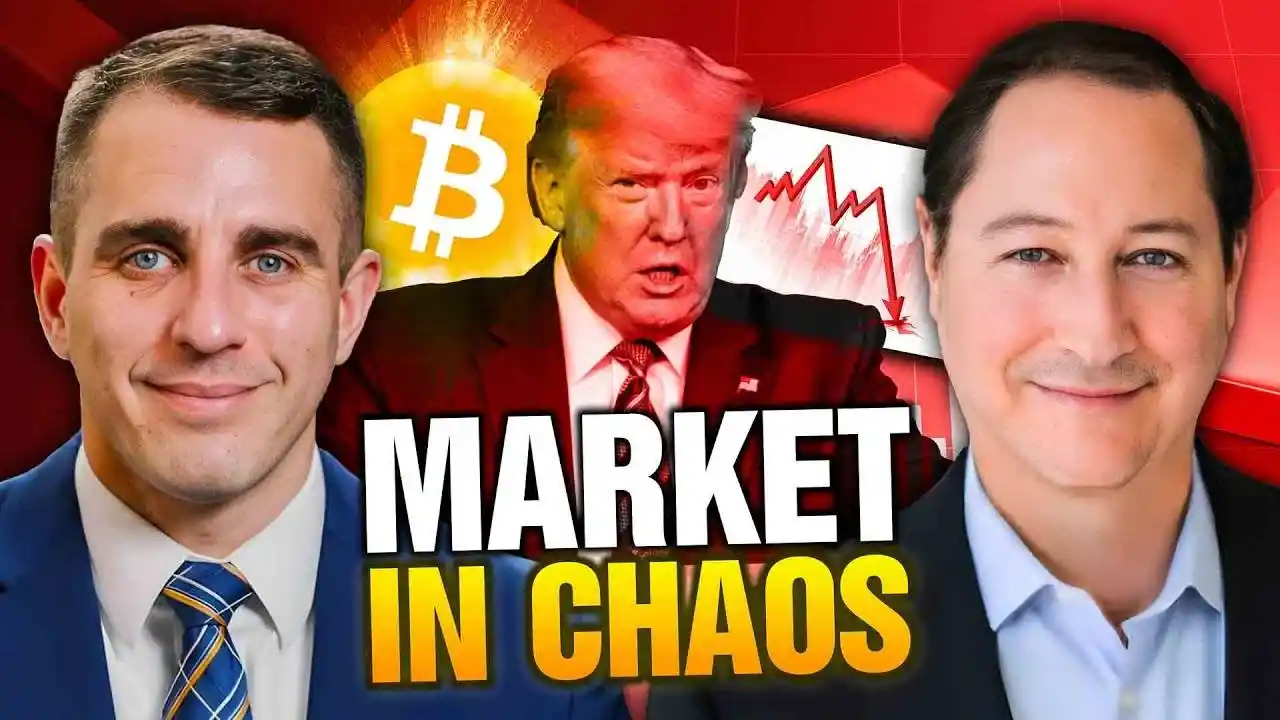
Guest: Jordi Visser, Macro Investor, Former President & Chief Investment Officer of Weiss Multi-Strategy Advisers (Over 30 years of Wall Street investment experience)
Host: Anthony Pompliano, Founder & CEO of Professional Capital Management
Air Date: March 15, 2025
Key Points Summary
Jordi Visser is a macro investor with over 30 years of experience on Wall Street. He not only runs a Substack investment newsletter called "VisserLabs" but also regularly releases investment-related YouTube videos. In this interview, we delved into Trump's economic policies, including tariffs, tax proposals, Trump's disagreements with Fed Chair Powell, inflation issues, the comparison between gold and Bitcoin, the outlook for the stock market, and the interpersonal relationships within the Trump administration and the policy uncertainties.
Highlights Summary
Bitcoin is "gold with wings" because of its higher volatility and greater price increases.
Once the Nasdaq Index rebounds, Bitcoin's performance will surpass that of gold.
For many, the stock market and cryptocurrency are not just investment tools but also where their hopes lie.
The allure of gold is more concentrated among older investors, while the younger generation tends to prefer Bitcoin.
Tariffs are actually a disguised form of taxation aimed at moving funds from the private sector to the public sector to ease debt pressures.
Tariff policies serve as both an actual taxation means and a negotiation tool.
I believe this income tax proposal aims to address domestic wealth distribution issues.
From a neutral standpoint, I do not believe that Trump's tax policy is solely aimed at helping the wealthy. In fact, his policy is more focused on domestic wealth distribution.
Generally, a 20% to 30% market correction is often associated with an economic recession, and currently there are no signs indicating that we are heading towards a recession.
Now might be a good time to look for future investment opportunities.
An economic recession usually requires a credit crisis, and currently the private sector's credit market is not as large compared to the stock market.
The definition of a recession is losing about 1.5% of jobs, which means approximately 2.5 million people will be unemployed and unable to find jobs within a year or two.
First, when the debt level is too high, the market collapse can be very rapid; second, many issues stem from the deleveraging process, where the rapid release of leverage can exacerbate market turmoil.
Both the Consumer Confidence Index and the University of Michigan's survey data show that the current sentiment indicators are far below expectations, with a key reason behind this phenomenon being wealth inequality.
The market is more concerned about short-term inflation. From survey data, this divergent expectation also reflects political divisions: Democrats generally believe that inflation will further rise, while Republicans believe that inflation will decrease.
What Is the Economic Plan of the Trump Administration
Anthony Pompliano: The Trump administration is rapidly advancing a series of policies, but for many, it all seems chaotic and full of uncertainty. The stock market is falling, and people are eager to know what their plan is. What are they really doing? Perhaps we can start by understanding the goals they are trying to achieve and the reasons behind them.
Jordi Visser:
I think the biggest confusion in the market right now is: Does the Trump administration really have a clear plan? If so, what is this plan? And how are they executing it? This uncertainty has left many people bewildered and has caused fluctuations in market sentiment. Recent surveys show that the uncertainty index is rising sharply. Last week, FactSet released a report on first-quarter earnings changes, with profit expectations being significantly lowered, mainly due to market uncertainty about tariff policies.
When you ask, "What is their plan," I think those who have not yet realized the seriousness of the situation need to prepare themselves mentally because this economic policy adjustment needs to be rapidly implemented. If you pay attention to mainstream media, you will find two completely different voices: on the one hand, some people believe this is a disaster, frightening many; on the other hand, some believe this is the right direction, and even firmly believe that "we don't care about stock market fluctuations because we are waging an economic war, and we must fight for what we want."
Tariffs Overview and Negotiation
Jordi Visser:
First, we need to recognize that the current level of U.S. debt is very high. This year, there is $9 trillion of debt coming due that needs to be refinanced. At the same time, the federal budget deficit is expected to increase by $1.8 to $2 trillion, meaning that we need to issue more bonds to fill the funding gap. Ray Dalio has pointed out that this ever-expanding debt burden will lead to a "death spiral" and could result in a severe economic crisis if action is not taken promptly. His suggestion is that the government needs to employ a comprehensive set of tools to address this.
Currently, the tariff policy is one of those tools. Tariffs are essentially a disguised form of taxation aimed at transferring funds from the private sector to the public sector to ease the debt pressure. Furthermore, the government is also attempting to improve the debt situation through fiscal austerity while balancing the economy through stimulus policies such as tax cuts. Therefore, I believe the Trump administration does have an overarching plan. While we can discuss whether this plan is being executed properly, it does exist.
Anthony Pompliano:
I think one point that people don't quite understand is that our deficit is increasing every year. It used to be a trillion-dollar deficit each year, then it became $1.5 trillion, and now it's around $2 trillion. The latest data suggests it could go as high as $2.75 trillion, and this deficit is continuously expanding. As you mentioned, we already have a massive debt figure that needs constant refinancing. In layman's terms, it's like using a higher-limit second credit card to pay off the debt on the first credit card. Every time you do this, you need to find a new "creditor" willing to provide a higher limit.
As a government, they are aware this is a big issue that needs to be addressed. Like taking over a troubled company, the government needs to reform the status quo entirely: keep the good policies, get rid of inefficient projects, cut unnecessary spending, and collect more taxes from the public "customers."
Tariff policy is part of this reform. Many people see tariffs as a way for the government to increase tax revenue, but some also view it as a strategic game with other world leaders. For example, Ontario, Canada imposes a 25% tariff on electricity, the U.S. imposes a 50% tariff on steel and aluminum; Europe taxes American whiskey at 50%, and the U.S. taxes wine and spirits at 200%. Are these tariffs really meant to increase revenue, or are they a negotiation strategy?
Jordi Visser:
Undoubtedly, tariff policy is both a practical tax measure and a negotiating tool. Trump explicitly pursued a tariff policy during his first term and dubbed himself the "Tariff President." Tariffs are a real and unavoidable aspect.
When you mention the stock market falling due to tariffs, I believe people must realize that many tariff measures are actually aimed at pursuing trade reciprocity. If you want to impose tariffs on our cars, why can't we impose tariffs on your cars? In this way, the government seeks to rebalance trade relations while bringing back some funds domestically to improve the fiscal situation.
Trump's negotiating style can be traced back to his book "The Art of the Deal." He excels at achieving goals by applying pressure and leveraging. For example, when the U.S. announced a 200% tariff on wine, this news alone would trigger market reactions. This is a negotiation strategy aimed at forcing concessions from the other party.
I believe there is a larger plan at work here, possibly related to tax cuts and avoiding government shutdowns; he is trying to pressure everyone. As Ray Dalio has said, the government must act quickly, especially in the current situation of expanding debt and deficits. Tariffs indeed increase consumer spending, but some of the funds flow into the government to alleviate debt pressure.
But candidly, tariffs are a disguised form of tax increase, but they can also be seen as a wealth redistribution tool, bringing more funds back to the country through this means. This is undoubtedly one of the core goals of tariff policy.
Tax Proposals
Anthony Pompliano:
Regarding tax policy, external criticism of Trump often focuses on the political rhetoric of "cutting taxes only for the rich, helping his friends." However, surprisingly, individuals like Howard Lutnick, Donald Trump, and Scott Bessent have proposed a goal: exempting households with annual incomes below $150,000 from federal income tax. The data I currently see indicates that the U.S. has about 130 million households, with 85% to 90% of households having annual incomes below $150,000. This means that approximately 110 million households could be completely exempt from federal income tax. If implemented, this policy would be one of the most transformative measures for ordinary families and the U.S. economy.
However, this also means that the federal government's sources of revenue will be significantly affected. We can discuss these tax proposals, which clearly are not just serving the rich but also focus on low- and middle-income families.
Jordi Visser:
This is why I believe it is important to stay vigilant when reading the news every day, as media reports from both the left and the right will inevitably have some bias. Looking at it from a neutral perspective, I do not think that Trump's tax policy is solely aimed at helping the rich. In fact, his policy is more focused on addressing domestic wealth distribution issues. He is trying to tackle this problem, but not by directly increasing taxes on the wealthy, as that might have a negative impact on economic growth.
From a consumer perspective, a significant portion of the U.S. GDP is driven by the top 20% income earners. The consumption of these high-income individuals already accounts for a major proportion of the GDP, which in itself reflects wealth distribution imbalance. Therefore, by imposing tariffs to raise prices of goods, it is actually a kind of indirect increase in taxing the rich.
So I believe this income tax proposal aims to address the domestic wealth distribution issue, but whether it can be achieved in the end depends on how various factors develop.
Furthermore, the pressure of short-term negotiations should not be overlooked. The tariff policy is currently more of a negotiating tool to seek greater benefits in international trade. At the same time, the government is trying to stimulate the economy through tax cuts and avoid a government shutdown. While driving economic growth on the one hand, on the other hand, the government is trying to balance fiscal revenue through means like tariffs. This balance is the core goal of the current policy. Especially in the face of ongoing negative news, I believe these measures are both to stabilize the stock market and to alleviate public anxiety about the economy.
Anthony Pompliano:
Whether it's tariff policies, tax reforms, economic policies, or geopolitical negotiations, even including efforts to broker a ceasefire between Russia and Ukraine, these actions have had a direct impact on the stock market. In the past three weeks, the stock market has fallen by about 10%. According to statistics, this may be the fifth fastest decline since 1950. However, I have seen data released by Peter Mallouk at Creative Planning indicating that over the past 75 years, the average intra-year market drawdown has been around 14% to 15%.
So the question is, do we need to be concerned about this 10% drop? Or is this actually normal in the stock market?
Jordi Visser:
I believe this is a key point. Over the past two weeks, market sentiment surveys have shown a significant decline in investor confidence. The initial sentiment swings were primarily seen in short-term trading but have now extended to longer-term investor confidence indices. From the data, the current market sentiment is approaching bear market territory.
Nevertheless, a 10% market pullback is not uncommon. In fact, the speed of this pullback is indeed the fastest since the onset of the COVID-19 pandemic, but it has not significantly impacted the overall market breadth. As of last Tuesday, roughly 40% of the stocks in the S&P 500 Index were still up year-to-date. In other words, the market fundamentals remain solid.
I think a more pressing issue is whether the current economic conditions will trigger a recession. Generally, a 20% to 30% market correction often correlates with an economic recession, yet there are currently no signs indicating we are heading towards a recession. If the government can swiftly ease the rhetoric of the trade war, the market may bounce back quickly, and investors will readjust their plans. However, until then, many are choosing to wait on the sidelines temporarily, which is also one of the reasons for the subdued market sentiment.
Fear and Economic Recession
Anthony Pompliano:
I have always felt that the more people talk about a recession, the less likely it is to happen. Do you think that when sentiment surveys show an increased sense of fear, the market may actually be nearing a bottom? After all, if everyone is worrying about future risks, has the market already priced in those expectations? How do you view this issue?
Jordi Visser:
First, we can discuss this issue from a technical and cryptocurrency perspective. In fact, if we look back at history, real economic recessions are often triggered by credit crises and debt issues. Take the 2008 financial crisis, for example. It was a systemic collapse caused by excessive credit expansion, leading the government to ultimately take over a substantial amount of private sector debt and absorb it onto its balance sheet.
If we go back to 1980, the economic recession at that time was more pronounced, with manufacturing employment accounting for one-third of the overall economy, whereas today this proportion has fallen to less than 10%. This signifies a significant change in employment structure. The reason employment is mentioned is that economic recessions usually require a credit crisis, and currently, the scale of credit in the private sector is not as large compared to the stock market. Therefore, the stock market must experience a significant decline to have a more widespread impact on the overall economy.
However, today most of the new job growth is concentrated in the healthcare sector, with many of these jobs being government-supported and thus less sensitive to economic cycles. As you mentioned in this week's video, many jobs are actually government-related, including contractors.
Anthony Pompliano: In the past two years, government employment has accounted for 25%.
Jordi Visser:
Yes, this is a significant proportion. Jobs in the healthcare industry are not cyclical. With the aging population, our demand for nurses and other healthcare professionals will only continue to grow. In the short term, unless there is AI robotics that can replace humans, the demand for these positions will not decrease. Three out of my four children work in the healthcare industry, giving me a more firsthand understanding of the reality of this field.
Our current recession is different from the past, both due to credit issues and the nature of work. But when I refer to the private sector, I want to ensure that the viewers understand that now may be a good time to look for future investment opportunities. For those already involved in the investment field, especially those focused on cryptocurrency, this may seem familiar. However, the stock market is not the same, so people are starting to worry about the entire recession issue.
For me, the definition of a recession is losing about 1.5% of jobs, which means approximately 2.5 million people are unemployed and cannot find work within a year or two.
Looking back at the 2008 global financial crisis, the unemployment rate soared to 10% at one point and took a long time to drop to 4%.
Today, the main issue we face is a labor shortage. Slowing population growth and tightening immigration policies have made the labor supply tighter. Therefore, I believe the current economic conditions do not support a large-scale economic recession. In addition, the rapid advancement of artificial intelligence technology is significantly boosting productivity, helping businesses maintain higher profit margins.
Therefore, we are actually in a very good position, and in the next few quarters, economic growth may be maintained at around 1%, although there may be negative growth in the short term, I do not think we will experience a systemic collapse like we did in 2008.
Anthony Pompliano: You mentioned the deleveraging of hedge funds, which seems to be a significant market dynamic. Could you please explain in detail how this has occurred and why this situation has arisen?
Jordi Visser:
This phenomenon is indeed attracting more and more attention. If the situation does not improve, it could evolve into a larger problem. I can share two related experiences.
My career began in emerging markets. In the '90s, while working at Morgan Stanley, my first assignment was to take over the trading portfolio in Mexico, just two months before the Mexican financial crisis erupted. It was a derivative portfolio. Fortunately, my predecessor had already hedged the risks effectively.
Through this experience, I learned two important things: first, when the debt reaches a significant scale, a market collapse can happen very quickly; second, many issues stem from the deleveraging process, where a rapid release of leverage can exacerbate market turmoil. The collapse of Long-Term Capital Management (LTCM) is a prime example, and I witnessed similar situations during the emerging market crisis in Brazil.
Last week, I mentioned my concerns about the risk management model optimized by artificial intelligence. In fact, the application of machine learning and artificial intelligence is much earlier than most people imagine. While ChatGPT has made the public realize the potential of AI, machine learning technology has long been widely applied. Some large hedge funds invest over a billion dollars each year to develop quantitative models and optimize hedging strategies, giving them a significant advantage in risk management.
With the popularization of artificial intelligence, some new market dynamics have emerged. For instance, Momentum Strategies have performed exceptionally well in recent years. Part of the reason is that the proliferation of technical tools allows individual investors to easily backtest strategies and construct portfolios. This trend has made the market more dynamic but has also introduced new risks.
In the current relatively lenient market environment, many funds running pairs trading or risk optimization strategies have underperformed. This situation appears unusual when compared to the performance of the last six to seven years, or even 13 years. I believe this is related to the complexity of the global environment. For example, the escalation of trade wars, the possible dissolution of NATO, the return of tariff policies to 19th-century levels, etc., are all new variables that historical data cannot predict. Risk optimization models rely on historical correlations and volatility, making it challenging to operate effectively in such an environment. Many funds have chosen to reduce their risk exposure, which in turn has exacerbated market losses, creating a self-fulfilling cycle.
The current market differentiation is also very apparent. For example, in the S&P 500 index, only about 200 stocks are rising, while about 300 stocks are falling. The falling stocks are mostly AI-related, while the rising stocks are concentrated in the European or Chinese markets, which are often areas where investors hold fewer positions. This deleveraging phenomenon occurs periodically, but the current situation is particularly acute.
If this trend continues, it may further impact the credit market. I also want to specifically mention the private debt market, which is another area of concern. Over the past five weeks, private equity funds have seen a significant decline in performance, with their stock prices also experiencing a sharp drop. Historical data shows that private equity stock prices are highly correlated with the private debt market, and we are starting to see some signs of weakness. This could be another potential risk point that requires close attention.
Anthony Pompliano: What impact does it have on the market when every participant is simultaneously reducing risk? While individually it may seem safer, does this collective behavior pose a potential systemic risk?
Jordi Visser:
This is the crux of the issue. If the government is trying to lower the ten-year treasury bond rate and everyone cheers, thinking it's a good thing that the rate went from 4.80% to 4.25%, yet at the same time the stock market is back to September levels. In fact, over the past six months, the stock market has hardly changed. Six months ago, when the stock market fell, the ten-year treasury bond rate was 3.67%, and now it has risen to 4.25%. The rise in rates reflects the complexity of the market.
The government seems to be sending a signal: "We don't care about the stock market." I think this attitude is not wise. Rather than exerting pressure through a trade war, it is better to resolve tariff issues through negotiation. However, this negotiation approach may lead to further market pressure. Based on current indications, I believe this pressure has already begun to manifest, not only reflected in approval ratings but also evident from discussions on social media and policy debates. This collective risk reduction behavior is having a self-reinforcing negative impact on the market.
The market is at a critical juncture. The hedge fund world is paying close attention to the upcoming April 2nd, a day that may mark a turning point in market sentiment. Right now, many investors are on the sidelines, unwilling to take on more risk before April 2nd. Because we are unsure of what the future holds, especially as economic data and corporate earnings may reveal more vulnerabilities. With earnings season approaching, we will gradually see the actual impact of consumer spending pauses.
Anthony Pompliano: I've noticed that some companies have already started using tariffs as a scapegoat for poor performance. Interestingly, these companies have begun blaming tariff policies even when the new administration has been in office for less than 60 days, and these policies actually have no connection to their fourth-quarter performance. How do hedge funds assess the relationship between rhetoric and actual data in such situations?
Jordi Visser:
This is a great question. I think it can be viewed from two perspectives. First, the stock market's valuation is equivalent to 200% of GDP, which means the stock market has a significant influence on overall economic sentiment. However, both consumer confidence indices and surveys like the University of Michigan's indicate that current sentiment indicators are well below expectations, with a key driver of this phenomenon being income inequality.
The advancement of artificial intelligence is changing social mobility, especially with reduced upward mobility opportunities for the younger generation. For instance, my daughters, who have just graduated from college, are working hard, but they find that even with income growth after five years, it's insufficient to live in places like New York City. Instead, they opt for lower-cost living areas, such as Little Rock, Arkansas. I mention this to illustrate that the stock market and cryptocurrency are not just investment tools for many but where they place their hopes.
When the stock market declines, this hope is dampened. Data shows a significant decrease in U.S. vacation planning, a sharp drop in PMI (Purchasing Managers' Index) new orders, and a notable slowdown in consumer spending. The Atlanta Fed's GDP forecast currently hovers between 0% and 1%. This economic slowdown isn't due to an impending recession but stems from people's concerns about future uncertainties, leading to reduced expenditures.
If the government's aim is to create better economic conditions, they may be working in that direction. However, the current challenge lies in the debt issue. With $9 trillion in debt maturing by 2025, most of which is short-term debt, even as the ten-year Treasury bond yield falls, the improvement in the debt situation is limited without Fed rate cuts. Hence, the market is currently in a wait-and-see mode, awaiting clearer signals.
Trump vs. Powell
Anthony Pompliano: President Trump often pressures Fed Chair Powell on social media to lower interest rates and advocate for rate cuts. Powell's stance is very clear—he persists in saying, "No, I won't cut rates." This has even led to questions from reporters, such as "If Trump asked you to resign, would you? Does he have the power to fire you?" Powell's response has been that he will not resign. This stance is almost a form of confrontation. So, the question is, is the situation really as simple as Trump and some economists say: forcing the economy to slow down to the extreme to compel the Fed to cut rates? Or is it actually a complex game between the Federal Reserve and the executive branch?
Jordi Visser:
Bill Dudley published a commentary in Bloomberg this week discussing the Fed's dilemma. The Fed is indeed paying attention to signs of slowing economic growth, but their primary mandate revolves around employment, which is still relatively strong at the moment. However, the issue of inflation has put them in a bind. According to this week's Personal Consumption Expenditures (PCE) data, which is the Fed's key inflation gauge, the monthly seasonally adjusted increase exceeded 0.3%. When annualized, the core PCE inflation rate still stands above 3%. This means that as the Fed tries to lower interest rates, they also have to find ways to control inflation, creating a very tricky situation for them.
Looking at market expectations, inflation expectations for the next two years (observed through the interest rate swap market) have risen to over 3%. This expectation has been on the rise since Trump took office. Currently, the 10-year Treasury yield is below this level, while the 2-year Treasury yield is around 2.70%. At the same time, Treasury Inflation-Protected Securities (TIPS) yields are also close to 3%. This has led to a 30 basis points spread: the 2-year inflation expectation is higher than the 10-year. This phenomenon indicates that the market is more concerned about short-term inflation. From survey data, this divergence in expectations also reflects a political divide: Democrats generally believe that inflation will further rise, while Republicans think inflation will fall.
This divergence has made the Fed's decisions even more complex. Unless there is a significant shift in the labor market, Powell will face a huge challenge in dealing with the dual pressure of tax cuts and tariffs. Both policies will have inflationary effects, and the Fed currently does not have a clear solution. Therefore, I believe the Fed is still in a wait-and-see mode, waiting for more data to guide their next steps.
What is the Actual Inflation Rate?
Anthony Pompliano:
Speaking of inflation data, I recently wrote some analysis. Currently, official data shows an inflation rate of 3%, while "True Flation" shows 2.8%. It is important to note that True Flation is an alternative inflation measure aimed at reflecting the economic situation more in real-time. While some value it highly, others point out its limitations. Currently, the latest data for this measure is 1.35%. If official data is at 2.8% and True Flation is at 2.6%, they are roughly in line. However, when True Flation is 50% lower than official data, and three months ago it was higher than official data, it indicates that it does not systematically underestimate inflation in the long term but is more sensitive to real-time changes. For example, when the government's inflation rate is 2.93%, True Flation may show 3.1%.
Now, real inflation has suddenly dropped to 1.35%, which is a significant decrease. Do you think over the next two to four months, official inflation data will be below 2%? Could this be due to a lag in government data, not fully reflecting the latest inflation trend?
Jordi Visser:
I am now starting to support the data reflected by real inflation. Towards the end of last year and the beginning of this year, I was more inclined to believe that inflationary pressures would persist, not entirely due to tariffs but because of some other factors. However, if oil prices drop to around $60 per barrel, which is the bottom of its fluctuation range, then the decrease in oil prices will directly lead to a drop in gas station prices, which is a more flexible adjustment area. However, costs like car insurance, homeowner's insurance, etc., have significantly risen. These costs may not decrease, but I believe we have entered an economic slowdown phase, and I do think the future economy will weaken further.
I expect current policies may lead to a decrease of around 100 basis points in the nominal GDP growth rate, with the current nominal GDP growth rate at about 5%. If nominal GDP falls to 4%, that would be a significant signal. Additionally, China's CPI (Consumer Price Index) has just turned negative again, which could also impact the global economy. While tariff increases will have an upward price effect, this impact is one-off. After the price increase due to tariffs, there won't be a similar growth the following year, so this impact will gradually diminish. I believe the market will not overreact to this.
This is also why I believe we will not enter an economic recession. I believe current policies will find a way to balance inflation. As a Bitcoin supporter, I am more concerned with the discussions related to the Mar-a-Lago Accords. If you ask me what the ultimate outcome will be, I think it will be challenging to find enough funding to address the fiscal deficit issue, especially based on the current policy path. Furthermore, the retaliation of other countries to tariffs has made the issue more complex. I think some aspects of the Mar-a-Lago Accords may be reasonable, which is very beneficial for both gold and Bitcoin. This is also one of the reasons for the rise in gold prices because the market is starting to realize that countries might resolve the issue through some form of agreement instead of one-sided compromises.
Anthony Pompliano:
Yes, I absolutely do not think he will back down. He gives me the feeling like the scene in "Titanic" where the captain says he will go down with the ship. I believe we have a captain who will go down with the ship, either taking the ship towards victory with him.
Gold vs Bitcoin
Anthony Pompliano: Gold and Bitcoin are often compared, and their price drivers are usually very similar. Last year, we saw the price of gold rise by 50%, while Bitcoin's increase reached 100%. I've described Bitcoin as "gold with wings" because its volatility is greater, and its price increase is higher. However, in recent weeks, the price of gold has continued to rise while Bitcoin has experienced a decline. How do you view the recent divergence in the performance of these two assets?
Jordi Visser:
You referred to Bitcoin as "digital gold," which is very fitting. If we see Bitcoin as "digital gold," then its value drivers can be understood from two perspectives. Gold's price is usually influenced by the money supply, global liquidity growth, and geopolitical uncertainties (such as war risks). Gold is a safe-haven asset, and people choose to store their funds in gold to hedge against uncertainty. Bitcoin, on the other hand, has some association with the tech industry because it is fundamentally a technology-driven asset. Recently, the Trump administration's crackdown on tech stocks may have indirectly affected Bitcoin's performance.
I am optimistic about Bitcoin's long-term outlook. Even as the money supply (M2) growth slows down, as long as economic efficiency and productivity remain high, Bitcoin still has room to rise. Currently, the rapid growth of M2 is very beneficial for gold as it reflects the market's concerns about inflation. The price of gold is reflecting a reconstruction of the global financial order, such as the uncertainty following the dismantling of the Bretton Woods system. This environment is naturally favorable for gold.
Nevertheless, I believe that once the Nasdaq index rebounds, Bitcoin's performance will surpass that of gold. Bitcoin has higher price volatility, recently experiencing about a 30% pullback, while the Nasdaq tech stocks dropped by about 20%. When market sentiment improves, Bitcoin may quickly rebound, even outperforming traditional assets.
However, to truly see a significant rise in the prices of Bitcoin and gold, we may need to wait for clearer policy signals, such as a resolution on trade issues. Additionally, if governments acknowledge the need to print money to tackle the current economic challenges, this will further drive up the prices of both assets. Ray Dalio has recommended that investors hold gold and Bitcoin, a strategy that seems particularly reasonable in the current environment.
Anthony Pompliano: The price of gold has reached a historic high. Do you think the price of $3,000 per ounce will be a psychological barrier? Similar to the $100,000 milestone that Bitcoin enthusiasts focus on, these round number thresholds often become market focal points. Will $3,000 have a psychological impact on the movement of gold, or is it just another number, similar to $2,000?
Jordi Visser:
I believe $3000 is just a regular number. In fact, central banks have been purchasing gold consistently for some time now. For many central banks, gold is a defensive asset, especially in the current global economic uncertainty. By accumulating gold, they can hedge against potential future currency devaluation risks.
The appeal of gold is more focused on the older generation of investors, while the younger generation tends to choose Bitcoin. For example, in countries like Nigeria, Brazil, and Argentina, young people are more inclined to hold Bitcoin as it aligns better with their digital lifestyle. However, the majority of the current market funds are still held by older investors in developed countries, and their demand for gold remains high.
My enthusiasm and belief in gold are that it is still a game of the older generation. Young people will not engage in it. Young people in Nigeria, Brazil, or Argentina will own Bitcoin. The issue is that most of the funds are still in the hands of these large countries, and the elderly currently hold power, but they are just figuring out what the world is going to look like.
When we talk about the possible dissolution of NATO, it signals a profound change in the global system. People buy gold because they are uncertain about the future global order. However, in the near future, Bitcoin may outperform gold. As the market gradually adapts to the new financial system, Bitcoin will demonstrate its unique advantages, while the price of gold may gradually slow down.
Will Stocks Reach an All-Time High This Year?
Anthony Pompliano: Do you think the stock market will reach an all-time high by the end of this year?
Jordi Visser:
I believe it will. However, it is important to note that after a market experiences a 10% correction, to get back to the previous high, the increase needs to be more than 10%. Does this mean that resolving the tariff issue or having a clear policy signal after April 2nd will drive the market rebound? Or will we need to rely on true quantitative easing (QE), such as rate cuts and money printing, to be the primary driver?
Frankly, I think both will play a role. I don't expect any decisive event to make the market clearer on April 2nd. Based on my understanding of reciprocity in tax policy, this may take months of negotiation with a lot of uncertainty in between.
One of the most significant factors affecting the stock market is the unpredictable nature of tariff policies. I even believe this may be a strategy. For example, when Scott Bessent mentioned "no Trump protection," Trump explicitly stated, "I will not compromise." This conveyed a signal: they do not care about short-term stock market fluctuations. Furthermore, he pointed out that China's strategy focuses on long-term planning spanning decades or even centuries, while the U.S. often only focuses on quarterly performance, which is indeed a fact.
Anthony Pompliano:
This statement is indeed very sharp. Although many people do not like him, it reveals a harsh truth that Americans are unwilling to face: our short-term thinking contrasts sharply with China's long-term strategy. Furthermore, I even feel that during his term, we didn't even properly consider quarters. The media's focus is almost on an hourly basis. I know some media professionals who have to wake up very early every morning because Trump may start tweeting important messages as early as 6 a.m., and they need to follow up with reports promptly.
Interpersonal Relationships and Uncertainty in the Trump Administration
Anthony Pompliano: Have you seen some behind-the-scenes footage of Trump announcing a 50% tariff?
I remember a documentary called "The Art of the Search," which documented his election process, showcasing his interaction with the team. There was a very interesting scene where he sat at a table watching a debate speech, and after hearing the TV content, he turned to a woman known as the "human printer" because she carried a portable printer to print documents for him to read. He began dictating tweet content to her, and when the camera cut to her computer screen, you could see the content he was dictating, including some random capital letters and repeated symbols. These tweets appeared to be personally written by him, but they were actually edited and posted by team members in his style.
What surprised me was that tweets like "200% tariff" were actually filtered and strategically considered before posting, rather than being random. This made me think that sometimes when I tweet, I don't think too much, and I later regret not being more careful with my wording. As the President, Trump clearly does not just hold his phone and speak off the cuff; there must be team support and planning behind it.
This also made me think, when we hear government members like Scott Bessent and Howard Lutnick speak, their cohesion is impressive. Despite facing pressure from friends and the outside world, they still stick to their positions. If any of them oppose or compromise, would it lead to the entire situation collapsing, and the President losing the support of the Treasury Secretary or Commerce Secretary?
Jordi Visser:
This is a good question. During Trump's first term as president, he indeed went through a learning curve. He initially hired some individuals with strong personal opinions, which led to some chaos within the team. However, now the White House's messaging has become more consistent, which is a sign of progress.
Last night, I saw a report mentioning that some within the White House believe that market volatility is starting to influence policy, with some even discussing if it's becoming too aggressive. However, in less than an hour, another message from outside the White House denied this claim. This contradictory information can be viewed from two angles: on one hand, the White House may not have actually changed its strategy; on the other hand, it also indicates a misinterpretation of policy from external sources.
This is actually a reflection of the democratic system. When the stock market drops, the pressure from voters is passed on to congressmen and senators, ultimately influencing policymakers. I personally am not concerned about a 10% short-term market adjustment. Whether stocks return to their previous highs in November or in May next year is not important. I believe that corporate profits are strong, and the economy will not fall into a recession. However, we must pay attention to the debt issue. The current debt-to-GDP ratio is already high, and if another economic downturn occurs, we will not have enough policy space to respond, and we may even face the risk of failed treasury auctions.
Anthony Pompliano:
A friend of mine once mentioned that the Biden administration's pace of action is slower, making the market appear calmer. In contrast, Trump was entirely the opposite, with his high-frequency tweets and rapid decision-making causing the market to be filled with uncertainty. There was a constant flow of new information every day, and this pace made the market seem more volatile than it actually was. I think this information bombardment itself may be a strategy.
The Trump administration's communication style is very proactive. They swiftly release updates instead of maintaining silence on external issues like some passive management teams. Although this efficient communication may increase short-term uncertainty, it also allows people to stay informed about policy changes in a timely manner.
Jordi Visser:
Officials like Scott Bessent are almost on television every day, a frequency of information dissemination that is unprecedented. In comparison, Janet Yellen has almost never made public appearances on television. While you may disagree with their policy directions, this rapid adjustment and communication ability are indeed commendable.
I believe that although the market may experience a 10%-20% short-term volatility, this will not lead to an economic recession. The real risk is if the market experiences a significant drop and long-term stagnation, such as being unable to recover for two years, which would seriously impact the economy. However, at present, this scenario is unlikely to occur because companies have not engaged in widespread layoffs. We need to stay calm, focus on long-term trends, and not be disturbed by short-term fluctuations.
For this situation to truly occur, the only way would be if companies started laying off employees, which is not expected to happen. Therefore, everyone needs to take a step back. They should watch your daily program because what you just said is a very detailed way of putting it, which should make people realize. You won't read about this in the newspapers. They are working hard to spread the information, which is very important when dealing with such tricky matters.
Furthermore, we must address the debt issue. If the debt problem is not resolved, there may be a risk of sovereign debt auction failure in the future. When the market loses confidence, the only option is to continue printing money, which will only exacerbate the problem. Therefore, an adjustment in current policies is very necessary.
猜你喜歡

穩定幣驅動全球B2B支付革新,如何打破工作流程瓶頸釋放兆市場潛力?
這些新創公司正在無需資料中心的情況下建立先進AI模型
科學平權運動:DeSci的萬億美元知識經濟重建革命
Sentient深度研報:獲8,500萬美元融資,建置去中心化AGI新範式
專訪Virtuals聯創empty:AI 創業不需要大量資金,Crypto是答案之一
今年 2 月,Base 生態中的 AI 協議 Virtuals 宣布跨鏈至 Solana,然而加密市場隨後進入流動性緊縮期,AI Agent 板塊從人聲鼎沸轉為低迷,Virtuals 生態也陷入一段蟄伏期。
三月初,BlockBeats 對 Virtuals 共同創辦人 empty 進行了一次專訪。彼時,團隊尚未推出如今被廣泛討論的 Genesis Launch 機制,但已在內部持續探索如何透過機制設計激活舊資產、提高用戶參與度,並重構代幣發行與融資路徑。那是一個市場尚未復甦、生態尚處冷啟動階段的時間點,Virtuals 團隊卻沒有停下腳步,而是在努力尋找新的產品方向和敘事突破口。
兩個月過去,AI Agent 板塊重新升溫,Virtuals 代幣反彈超 150%,Genesis 機製成為帶動生態回暖的重要觸發器。從積分獲取規則的動態調整,到專案參與熱度的持續上升,再到「新代幣帶老代幣」的機制閉環,Virtuals 逐漸走出寒冬,並再次站上討論焦點。
值得注意的是,Virtuals 的 Genesis 機制與近期 Binance 推出的 Alpha 積分系統有一些相似之處,評估用戶在 Alpha 和幣安錢包生態系統內的參與度,決定用戶 Alpha 代幣空投的資格。用戶可透過持倉、交易等方式獲得積分,積分越高,參與新項目的機會越大。透過積分系統篩選使用者、分配資源,專案方能夠更有效地激勵社群參與,提升專案的公平性和透明度。 Virtuals 和 Binance 的探索,或許預示著加密融資的新趨勢正在形成。
回看這次對話,empty 在專訪中所展現出的思路與判斷,正在一步步顯現其前瞻性,這不僅是一場圍繞打新機制的訪談,更是一次關於“資產驅動型 AI 協議”的路徑構建與底層邏輯的深度討論。
BlockBeats:可以簡單分享一下最近團隊主要在忙些什麼?
empty:目前我們的工作重點主要有兩個部分。第一部分,我們希望將 Virtuals 打造成一個類似「華爾街」的代理人(Agent)服務平台。設想一下,如果你是專注於 Agent 或 Agent 團隊建立的創業者,從融資、發幣到流動性退出,整個流程都需要係統性的支援。我們希望為真正專注於 Agent 和 AI 研發的團隊,提供這一整套服務體系,讓他們可以把精力集中在底層能力的開發上,而不用為其他環節分心。這一塊的工作其實也包括了與散戶買賣相關的內容,後面可以再詳細展開。
第二部分,我們正在深入推進 AI 相關的佈局。我們的願景是建立一個 AI 社會,希望每個 Agent 都能聚焦自身優勢,同時透過彼此之間的協作,實現更大的價值。因此,最近我們發布了一個新的標準——ACP(Agent Communication Protocol),目的是讓不同的 Agent 能夠相互互動、協作,共同推動各自的業務目標。這是目前我們主要在推進的兩大方向。
BlockBeats:可以再展開說說嗎?
empty:在我看來,其實我們面對的客戶群可以分為三類:第一類是專注於開發 Agent 的團隊;第二類是投資者,包括散戶、基金等各種投資機構;第三類則是 C 端用戶,也就是最終使用 Agent 產品的個人用戶。
不過,我們主要的精力其實是放在前兩大類──也就是團隊和投資人。對於 C 端用戶這一塊,我們並不打算直接介入,而是希望各個 Agent 團隊能夠自己解決 C 端市場的拓展問題。
此外,我們也認為,Agent 與 Agent 之間的交互作用應該成為一個核心模式。簡單來說,就是未來的服務更多應該是由一個 Agent 銷售或提供給另一個 Agent,而不是單純賣給人類使用者。因此,在團隊的 BD 工作中,我們也積極幫助現有的 AI 團隊尋找這樣的客戶和合作機會。
BlockBeats:大概有一些什麼具體案例呢?
empty:「華爾街」說白了就是圍繞資本運作體系的建設,假設你是一個技術團隊,想要融資,傳統路徑是去找 VC 募資,拿到資金後開始發展。如果專案做得不錯,接下來可能會考慮進入二級市場,例如在紐約證券交易所上市,或是在 Binance 這樣的交易所上幣,實現流動性退出。
我們希望把這一整套流程打通-從早期融資,到專案開發過程中對資金的靈活使用需求,再到最終二級市場的流動性退出,全部覆蓋和完善,這是我們希望補齊的一條完整鏈條。
而這一部分的工作和 ACP(Agent Communication Protocol)是不同的,ACP 更多是關於 Agent 與 Agent 之間交互標準的製定,不直接涉及資本運作系統。
BlockBeats:它和現在 Virtuals 的這個 Launchpad 有什麼差別呢?資金也是從 C 端來是嗎?
empty:其實現在你在 Virtuals 上發幣,如果沒有真正融到資金,那就只是發了一個幣而已,實際是融不到錢的。我們目前能提供的服務,是透過設定買賣時的交易稅機制,從中提取一部分稅收回饋給創業者,希望這部分能成為他們的現金流來源。
不過,問題其實還分成兩塊。第一是如何真正幫助團隊完成融資,這個問題目前我們還沒有徹底解決。第二是關於目前專案發行模式本身存在的結構性問題。簡單來說,現在的版本有點像過去 Pumpfun 那種模式——也就是當專案剛上線時,部分籌碼就被外賣給了外部投資人。但現實是,目前整個市場上存在著太多機構集團和「狙擊手」。
當一個真正優秀的專案一發幣,還沒真正觸達普通散戶,就已經被機構在極高估值時搶購了。等到散戶能夠接觸到時,往往價格已經偏高,專案品質也可能變差,整個價值發行體係被扭曲。
針對這個問題,我們希望探索一種新的發幣和融資模式,目的是讓專案方的籌碼既不是死死握在自己手裡,也不是優先流向英文圈的大機構,而是能夠真正留給那些相信專案、願意長期支持專案的普通投資者手中。我們正在思考該如何設計這樣一個新的發行機制,來解決這個根本問題。
BlockBeats:新模式的具體想法會是什麼樣子呢?
empty:關於資金這一塊,其實我們目前還沒有完全想透。現階段來看,最直接的方式還是去找 VC 融資,或是採取公開預售等形式進行資金募集。不過說實話,我個人對傳統的公開預售模式並不是特別認同。
在「公平發售」這件事上,我們正在嘗試換一個角度來思考-希望能從「reputation」出發,重新設計機制。
具體來說,就是如果你對整個 Virtuals 生態有貢獻,例如早期參與、提供支持或建設,那麼你就可以在後續購買優質代幣時享有更高的優先權。透過這種方式,我們希望把資源更多留給真正支持生態發展的用戶,而不是由短期套利的人主導。
BlockBeats:您會不會考慮採用類似之前 Fjord Foundry 推出的 LBP 模式,或者像 Daos.fun 那種採用白名單機制的模式。這些模式在某種程度上,和您剛才提到的「對生態有貢獻的人享有優先權」的想法是有些相似的。不過,這類做法後來也引發了一些爭議,例如白名單內部操作、分配不公等問題。 Virtuals 在設計時會考慮借鏡這些模式的優點,或有針對性地規避類似的問題嗎?
empty:我認為白名單機制最大的問題在於,白名單的選擇權掌握在專案方手中。這和「老鼠倉」行為非常相似。專案方可以選擇將白名單名額分配給自己人或身邊的朋友,導致最終的籌碼仍然掌握在少數人手中。
我們希望做的,依然是類似白名單的機制,但不同的是,白名單的獲取權應基於一個公開透明的規則體系,而不是由項目方單方面決定。只有這樣,才能真正做到公平分配,避免內幕操作的問題。
我認為在今天這個 AI 時代,很多時候創業並不需要大量資金。我常跟團隊強調,你們應該優先考慮自力更生,例如透過組成社區,而不是一開始就想著去融資。因為一旦融資,實際上就等於背負了負債。
我們更希望從 Training Fee的角度去看待早期發展路徑。也就是說,專案可以選擇直接發幣,透過交易稅所帶來的現金流,支持日常營運。這樣一來,專案可以在公開建設的過程中獲得初步資金,而不是依賴外部投資。如果專案做大了,自然也會有機會透過二級市場流動性退出。
當然最理想的情況是,專案本身能夠有穩定的現金流來源,這樣甚至連自己的幣都無需拋售,這才是真正健康可持續的狀態。
我自己也常在和團隊交流時分享這種思路,很有意思的是,那些真正抱著「搞快錢」心態的項目,一聽到這種機制就失去了興趣。他們會覺得,在這種模式下,既無法操作老鼠倉,也很難短期套利,於是很快就選擇離開。
但從我們的角度來看,這其實反而是個很好的篩選機制。透過這種方式,理念不同的專案自然會被過濾出去,最後留下的,都是那些願意真正建立、和我們價值觀契合的團隊,一起把事情做起來。
BlockBeats:這個理念可以發展出一些能夠創造收益的 AI agent。
empty:我覺得這是很有必要的。坦白說,放眼今天的市場,真正擁有穩定現金流的產品幾乎鳳毛麟角,但我認為這並不意味著我們應該停止嘗試。事實上,我們每天在對接的團隊中,有至少一半以上的人依然懷抱著長遠的願景。很多時候,他們甚至已經提前向我們提供了 VC 階段的資金支持,或表達了強烈的合作意願。
其實對他們來說想要去收穫一個很好的社區,因為社區可以給他們的產品做更好的回饋,這才是他們真正的目的。這樣聽起來有一點匪夷所思,但其實真的有很多這樣的團隊,而那種團隊的是我們真的想扶持的團隊。
BlockBeats:您剛才提到的這套「AI 華爾街」的產品體系-從融資、發行到退出,建構的是一整套完整的流程。這套機制是否更多是為了激勵那些有意願發幣的團隊?還是說,它在設計上也考慮瞭如何更好地支持那些希望透過產品本身的現金流來發展的團隊?這兩類團隊在您這套體系中會不會被區別對待,或者說有什麼機制設計能讓不同路徑的創業者都能被合理支持?
empty:是的,我們 BD 的核心職責其實就是去鼓勵團隊發幣。說得直接一點,就是引導他們思考發幣的可能性和意義。所以團隊最常問的問題就是:「為什麼要發幣?」這時我們需要採取不同的方式和角度,去幫助他們理解背後的價值邏輯。當然如果最終判斷不適合,我們也不會強迫他們推進。
不過我們觀察到一個非常明顯的趨勢,傳統的融資路徑已經越來越難走通了。過去那種融資做大,發幣上所的模式已經逐漸失效。面對這樣的現實,很多團隊都陷入了尷尬的境地。而我們希望能從鏈上和加密的視角,提供一套不同的解決方案,讓他們找到新的發展路徑。
BlockBeats:明白,我剛才其實想表達的是,您剛剛也提到,傳統的 AI 模式在很大程度上仍然依賴「燒錢」競爭。但在 DeepSeek 出現之後,市場上一些資金體積較小的團隊或投資人開始重新燃起了信心,躍躍欲試地進入這個領域。您怎麼看待這種現象?這會不會對目前正在做 AI 基礎研發,或是 AI 應用層開發的團隊產生一定的影響?
empty:對,我覺得先不談 DeepSeek,從傳統角度來看,其實到目前為止,AI 領域真正賺錢的只有英偉達,其他幾乎所有玩家都還沒有實現盈利。所以其實沒有人真正享受了這個商業模式的成果,大家也仍在探索如何面對 C 端打造真正有產出的應用。
沒有哪個領域像幣圈一樣能如此快速獲得社群回饋。你一發幣,用戶就會主動去讀白皮書的每一個字,試試你產品的每個功能。
當然,這套機制並不適合所有人。例如有些 Agent 產品偏 Web2,對於幣圈用戶而言,可能感知不到其價值。因此,我也會鼓勵做 Agent 的團隊在 Virtuals 生態中認真思考,如何真正將 Crypto 作為自身產品的差異化要素加以運用與設計。
BlockBeats:這點我特別認同,在 Crypto 這個領域 AI 的迭代速度確實非常快,但這群用戶給予的回饋,真的是代表真實的市場需求嗎?或者說這些回饋是否真的符合更大眾化、更具規模性的需求?
empty:我覺得很多時候產品本身不應該是強行推廣給不適合的使用者群體。例如 AIXBT 最成功的一點就在於,它的用戶本身就是那群炒作他人內容的人,所以他們的使用行為是非常自然的,並不覺得是在被迫使用一個無聊的產品。 mass adoption 這個概念已經講了很多年,大家可能早就該放棄這個執念了。我們不如就認了,把東西賣給幣圈的人就好了。
BlockBeats:AI Agent 與 AI Agent 所對應的代幣之間,究竟應該是什麼樣的動態關係?
empty:對,我覺得這裡可以分成兩個核心點。首先其實不是在投資某個具體的 AI Agent,而是在投資背後經營這個 Agent 的團隊。你應該把它理解為一種更接近創投的思路:你投的是這個人,而不是他目前正在做的產品。因為產品本身是可以快速變化的,可能一個月後團隊會發現方向不對,立即調整。所以,這裡的「幣」本質上代表的是對團隊的信任,而不是某個特定 Agent 本身。
第二則是期望一旦某個 Agent 產品做出來後,未來它能真正產生現金流,或者有實際的使用場景(utility),從而讓對應的代幣具備賦能效應。
BlockBeats:您覺得有哪些賦能方式是目前還沒看到的,但未來可能出現、值得期待的?
empty:其實主要有兩塊,第一是比較常見的那種你要使用我的產品,就必須付費,或者使用代幣支付,從而間接實現對代幣的「軟銷毀」或消耗。
但我覺得更有趣的賦能方式,其實是在獲客成本的角度思考。也就是說,你希望你的用戶同時也是你的投資者,這樣他們就有動機去主動幫你推廣、吸引更多用戶。
BlockBeats:那基於這些觀點,您怎麼看 ai16z,在專案設計和代幣機制方面,似乎整體表現並不太樂觀?
empty:從一個很純粹的投資角度來看,撇開我們與他們之間的關係,其實很簡單。他們現在做的事情,對代幣本身沒有任何賦能。從開源的角度來看,一個開源模型本身是無法直接賦能代幣的。
但它仍然有價值的原因在於,它像一個期權(call option),也就是說,如果有一天他們突然決定要做一些事情,比如推出一個 launchpad,那麼那些提前知道、提前參與的人,可能會因此受益。
開發者未來確實有可能會使用他們的 Launchpad,只有在那一刻,代幣才會真正產生賦能。這是目前最大的一個問號——如果這個模式真的跑得通,我認為確實會非常強大,因為他們的確觸達了大量開發者。
但我個人還是有很多疑問。例如即使我是使用 Eliza 的開發者,也不代表我一定會選擇在他們的 Launchpad 上發幣。我會貨比三家,會比較。而且,做一個 Launchpad 和做一個開源框架,所需的產品能力和社群運作能力是完全不同的,這是另一個重要的不確定性。
BlockBeats:這種不同是體現在什麼地方呢?
empty:在 Virtuals 上我們幾乎每天都在處理客服相關的問題,只要有任何一個團隊在我們平台上發生 rug,即使與我們沒有直接關係,用戶也會第一時間來找我們投訴。
這時我們就必須出面安撫用戶,並思考如何降低 rug 的整體風險。一旦有團隊因為自己的代幣設計錯誤或技術失誤而被駭客攻擊、資產被盜,我們往往需要自掏腰包,確保他們的社群至少能拿回一點資金,以便專案能夠重新開始。這些項目方可能在技術上很強,但未必擅長代幣發行,結果因操作失誤被攻擊導致資產損失。只要涉及「被欺騙」相關的問題,對我們來說就已經是非常麻煩的事了,做這些工作跟做交易所的客服沒有太大差別。
另一方面,做 BD 也非常困難。優秀的團隊手上有很多選擇,他們可以選擇在 Pumpfun 或交易所上發幣,為什麼他們要來找我們,那這背後必須要有一整套支援體系,包括融資支援、技術協助、市場推廣等,每個環節都不能出問題。
BlockBeats:那我們就繼續沿著這個話題聊聊 Virtuals 目前的 Launchpad 業務。有一些社群成員在 Twitter 上統計了 Virtuals Launchpad 的整體獲利狀況,確實目前看起來獲利的項目比較少。接下來 Launchpad 還會是 Virtuals 的主要業務區嗎?還是說,未來的重心會逐漸轉向您剛才提到的「AI 華爾街」這條路徑?
empty:其實這兩塊本質上是一件事,是一整套體系的一部分,所以我們必須繼續推進。市場的波動是很正常的,我們始終要堅持的一點是:非常清楚地認識到我們的核心客戶是誰。我一直強調我們的客戶只有兩類——團隊。所以市場行情的好壞對我們來說並不是最重要的,關鍵是在每一個關鍵節點上,對於一個團隊來說,發幣的最佳選擇是否依然是我們 Virtuals。
BlockBeats:您會不會擔心「Crypto + AI」或「Crypto AI Agent」這一類敘事已經過去了?如果未來還有一輪多頭市場,您是否認為市場炒作的焦點可能已經不再是這些方向了?
empty:有可能啊,我覺得 it is what it is,這確實是有可能發生的,但這也屬於我們無法控制的範圍。不過如果你問我,在所有可能的趨勢中,哪個賽道更有機會長期保持領先,我仍然認為是 AI。從一個打德撲的角度來看,它仍然是最優選擇。
而且我們團隊的技術架構和底層能力其實早已搭建完成了,現在只是順勢而為而已。更重要的是,我們本身真的熱愛這件事,帶著好奇心去做這件事。每天早上醒來就有驅動力去研究最新的技術,這種狀態本身就挺讓人滿足的,對吧?
很多時候,大家不應該只看產品本身。實際上很多優秀的團隊,他們的基因決定了他們有在規則中勝出的能力——他們可能過去在做派盤交易時,每筆規模就是上百萬的操作,而這些團隊的 CEO,一年的薪資可能就有 100 萬美金。如果他們願意出來單幹項目,從天使投資或 VC 的視角來看,這本質上是用一個很划算的價格買到一個高品質的團隊。
更何況這些資產是 liquid 的,不是鎖倉狀態。如果你當下不急著用錢,完全可以在早期階段買進一些優秀團隊的代幣,靜靜等待他們去創造一些奇蹟,基本上就是這樣一個邏輯。
a16z領投2500萬美元,0xMiden要在你手機裡跑一條隱私鏈
Sui Q1進階報告:BTCfi基建崛起、借貸協議爆發與執行分片未來
盤點10大新興Launchpad平台,誰能完成Pump.fun的顛覆?
4月29日市場關鍵情報,你錯過了多少?
「打新帶老」:Genesis Launch如何用積分制重建AI Agent打新邏輯?
專訪AllianceDAO合夥人qw:Crypto創業家正逃向AI,90%的Crypto+AI都是偽命題
AI賽道重拾熱度,全面整理潛力專案與市場炒作邏輯
穩定幣爭霸戰:六路新銳殺出,市場格局生變?
以太坊基金會「三文宣言」:從核心願景到放權改革,Vitalik重申使命
4月28日市場關鍵情報,你錯過了多少?
為什麼貝萊德全面佈局並宣稱代幣化就是民主化?
深入挖掘杜拜的加密夢:幻覺、資本與去中心化帝國
這是VC的冬天,卻也是KOL Agency的春天
穩定幣驅動全球B2B支付革新,如何打破工作流程瓶頸釋放兆市場潛力?
這些新創公司正在無需資料中心的情況下建立先進AI模型
科學平權運動:DeSci的萬億美元知識經濟重建革命
Sentient深度研報:獲8,500萬美元融資,建置去中心化AGI新範式
專訪Virtuals聯創empty:AI 創業不需要大量資金,Crypto是答案之一
今年 2 月,Base 生態中的 AI 協議 Virtuals 宣布跨鏈至 Solana,然而加密市場隨後進入流動性緊縮期,AI Agent 板塊從人聲鼎沸轉為低迷,Virtuals 生態也陷入一段蟄伏期。
三月初,BlockBeats 對 Virtuals 共同創辦人 empty 進行了一次專訪。彼時,團隊尚未推出如今被廣泛討論的 Genesis Launch 機制,但已在內部持續探索如何透過機制設計激活舊資產、提高用戶參與度,並重構代幣發行與融資路徑。那是一個市場尚未復甦、生態尚處冷啟動階段的時間點,Virtuals 團隊卻沒有停下腳步,而是在努力尋找新的產品方向和敘事突破口。
兩個月過去,AI Agent 板塊重新升溫,Virtuals 代幣反彈超 150%,Genesis 機製成為帶動生態回暖的重要觸發器。從積分獲取規則的動態調整,到專案參與熱度的持續上升,再到「新代幣帶老代幣」的機制閉環,Virtuals 逐漸走出寒冬,並再次站上討論焦點。
值得注意的是,Virtuals 的 Genesis 機制與近期 Binance 推出的 Alpha 積分系統有一些相似之處,評估用戶在 Alpha 和幣安錢包生態系統內的參與度,決定用戶 Alpha 代幣空投的資格。用戶可透過持倉、交易等方式獲得積分,積分越高,參與新項目的機會越大。透過積分系統篩選使用者、分配資源,專案方能夠更有效地激勵社群參與,提升專案的公平性和透明度。 Virtuals 和 Binance 的探索,或許預示著加密融資的新趨勢正在形成。
回看這次對話,empty 在專訪中所展現出的思路與判斷,正在一步步顯現其前瞻性,這不僅是一場圍繞打新機制的訪談,更是一次關於“資產驅動型 AI 協議”的路徑構建與底層邏輯的深度討論。
BlockBeats:可以簡單分享一下最近團隊主要在忙些什麼?
empty:目前我們的工作重點主要有兩個部分。第一部分,我們希望將 Virtuals 打造成一個類似「華爾街」的代理人(Agent)服務平台。設想一下,如果你是專注於 Agent 或 Agent 團隊建立的創業者,從融資、發幣到流動性退出,整個流程都需要係統性的支援。我們希望為真正專注於 Agent 和 AI 研發的團隊,提供這一整套服務體系,讓他們可以把精力集中在底層能力的開發上,而不用為其他環節分心。這一塊的工作其實也包括了與散戶買賣相關的內容,後面可以再詳細展開。
第二部分,我們正在深入推進 AI 相關的佈局。我們的願景是建立一個 AI 社會,希望每個 Agent 都能聚焦自身優勢,同時透過彼此之間的協作,實現更大的價值。因此,最近我們發布了一個新的標準——ACP(Agent Communication Protocol),目的是讓不同的 Agent 能夠相互互動、協作,共同推動各自的業務目標。這是目前我們主要在推進的兩大方向。
BlockBeats:可以再展開說說嗎?
empty:在我看來,其實我們面對的客戶群可以分為三類:第一類是專注於開發 Agent 的團隊;第二類是投資者,包括散戶、基金等各種投資機構;第三類則是 C 端用戶,也就是最終使用 Agent 產品的個人用戶。
不過,我們主要的精力其實是放在前兩大類──也就是團隊和投資人。對於 C 端用戶這一塊,我們並不打算直接介入,而是希望各個 Agent 團隊能夠自己解決 C 端市場的拓展問題。
此外,我們也認為,Agent 與 Agent 之間的交互作用應該成為一個核心模式。簡單來說,就是未來的服務更多應該是由一個 Agent 銷售或提供給另一個 Agent,而不是單純賣給人類使用者。因此,在團隊的 BD 工作中,我們也積極幫助現有的 AI 團隊尋找這樣的客戶和合作機會。
BlockBeats:大概有一些什麼具體案例呢?
empty:「華爾街」說白了就是圍繞資本運作體系的建設,假設你是一個技術團隊,想要融資,傳統路徑是去找 VC 募資,拿到資金後開始發展。如果專案做得不錯,接下來可能會考慮進入二級市場,例如在紐約證券交易所上市,或是在 Binance 這樣的交易所上幣,實現流動性退出。
我們希望把這一整套流程打通-從早期融資,到專案開發過程中對資金的靈活使用需求,再到最終二級市場的流動性退出,全部覆蓋和完善,這是我們希望補齊的一條完整鏈條。
而這一部分的工作和 ACP(Agent Communication Protocol)是不同的,ACP 更多是關於 Agent 與 Agent 之間交互標準的製定,不直接涉及資本運作系統。
BlockBeats:它和現在 Virtuals 的這個 Launchpad 有什麼差別呢?資金也是從 C 端來是嗎?
empty:其實現在你在 Virtuals 上發幣,如果沒有真正融到資金,那就只是發了一個幣而已,實際是融不到錢的。我們目前能提供的服務,是透過設定買賣時的交易稅機制,從中提取一部分稅收回饋給創業者,希望這部分能成為他們的現金流來源。
不過,問題其實還分成兩塊。第一是如何真正幫助團隊完成融資,這個問題目前我們還沒有徹底解決。第二是關於目前專案發行模式本身存在的結構性問題。簡單來說,現在的版本有點像過去 Pumpfun 那種模式——也就是當專案剛上線時,部分籌碼就被外賣給了外部投資人。但現實是,目前整個市場上存在著太多機構集團和「狙擊手」。
當一個真正優秀的專案一發幣,還沒真正觸達普通散戶,就已經被機構在極高估值時搶購了。等到散戶能夠接觸到時,往往價格已經偏高,專案品質也可能變差,整個價值發行體係被扭曲。
針對這個問題,我們希望探索一種新的發幣和融資模式,目的是讓專案方的籌碼既不是死死握在自己手裡,也不是優先流向英文圈的大機構,而是能夠真正留給那些相信專案、願意長期支持專案的普通投資者手中。我們正在思考該如何設計這樣一個新的發行機制,來解決這個根本問題。
BlockBeats:新模式的具體想法會是什麼樣子呢?
empty:關於資金這一塊,其實我們目前還沒有完全想透。現階段來看,最直接的方式還是去找 VC 融資,或是採取公開預售等形式進行資金募集。不過說實話,我個人對傳統的公開預售模式並不是特別認同。
在「公平發售」這件事上,我們正在嘗試換一個角度來思考-希望能從「reputation」出發,重新設計機制。
具體來說,就是如果你對整個 Virtuals 生態有貢獻,例如早期參與、提供支持或建設,那麼你就可以在後續購買優質代幣時享有更高的優先權。透過這種方式,我們希望把資源更多留給真正支持生態發展的用戶,而不是由短期套利的人主導。
BlockBeats:您會不會考慮採用類似之前 Fjord Foundry 推出的 LBP 模式,或者像 Daos.fun 那種採用白名單機制的模式。這些模式在某種程度上,和您剛才提到的「對生態有貢獻的人享有優先權」的想法是有些相似的。不過,這類做法後來也引發了一些爭議,例如白名單內部操作、分配不公等問題。 Virtuals 在設計時會考慮借鏡這些模式的優點,或有針對性地規避類似的問題嗎?
empty:我認為白名單機制最大的問題在於,白名單的選擇權掌握在專案方手中。這和「老鼠倉」行為非常相似。專案方可以選擇將白名單名額分配給自己人或身邊的朋友,導致最終的籌碼仍然掌握在少數人手中。
我們希望做的,依然是類似白名單的機制,但不同的是,白名單的獲取權應基於一個公開透明的規則體系,而不是由項目方單方面決定。只有這樣,才能真正做到公平分配,避免內幕操作的問題。
我認為在今天這個 AI 時代,很多時候創業並不需要大量資金。我常跟團隊強調,你們應該優先考慮自力更生,例如透過組成社區,而不是一開始就想著去融資。因為一旦融資,實際上就等於背負了負債。
我們更希望從 Training Fee的角度去看待早期發展路徑。也就是說,專案可以選擇直接發幣,透過交易稅所帶來的現金流,支持日常營運。這樣一來,專案可以在公開建設的過程中獲得初步資金,而不是依賴外部投資。如果專案做大了,自然也會有機會透過二級市場流動性退出。
當然最理想的情況是,專案本身能夠有穩定的現金流來源,這樣甚至連自己的幣都無需拋售,這才是真正健康可持續的狀態。
我自己也常在和團隊交流時分享這種思路,很有意思的是,那些真正抱著「搞快錢」心態的項目,一聽到這種機制就失去了興趣。他們會覺得,在這種模式下,既無法操作老鼠倉,也很難短期套利,於是很快就選擇離開。
但從我們的角度來看,這其實反而是個很好的篩選機制。透過這種方式,理念不同的專案自然會被過濾出去,最後留下的,都是那些願意真正建立、和我們價值觀契合的團隊,一起把事情做起來。
BlockBeats:這個理念可以發展出一些能夠創造收益的 AI agent。
empty:我覺得這是很有必要的。坦白說,放眼今天的市場,真正擁有穩定現金流的產品幾乎鳳毛麟角,但我認為這並不意味著我們應該停止嘗試。事實上,我們每天在對接的團隊中,有至少一半以上的人依然懷抱著長遠的願景。很多時候,他們甚至已經提前向我們提供了 VC 階段的資金支持,或表達了強烈的合作意願。
其實對他們來說想要去收穫一個很好的社區,因為社區可以給他們的產品做更好的回饋,這才是他們真正的目的。這樣聽起來有一點匪夷所思,但其實真的有很多這樣的團隊,而那種團隊的是我們真的想扶持的團隊。
BlockBeats:您剛才提到的這套「AI 華爾街」的產品體系-從融資、發行到退出,建構的是一整套完整的流程。這套機制是否更多是為了激勵那些有意願發幣的團隊?還是說,它在設計上也考慮瞭如何更好地支持那些希望透過產品本身的現金流來發展的團隊?這兩類團隊在您這套體系中會不會被區別對待,或者說有什麼機制設計能讓不同路徑的創業者都能被合理支持?
empty:是的,我們 BD 的核心職責其實就是去鼓勵團隊發幣。說得直接一點,就是引導他們思考發幣的可能性和意義。所以團隊最常問的問題就是:「為什麼要發幣?」這時我們需要採取不同的方式和角度,去幫助他們理解背後的價值邏輯。當然如果最終判斷不適合,我們也不會強迫他們推進。
不過我們觀察到一個非常明顯的趨勢,傳統的融資路徑已經越來越難走通了。過去那種融資做大,發幣上所的模式已經逐漸失效。面對這樣的現實,很多團隊都陷入了尷尬的境地。而我們希望能從鏈上和加密的視角,提供一套不同的解決方案,讓他們找到新的發展路徑。
BlockBeats:明白,我剛才其實想表達的是,您剛剛也提到,傳統的 AI 模式在很大程度上仍然依賴「燒錢」競爭。但在 DeepSeek 出現之後,市場上一些資金體積較小的團隊或投資人開始重新燃起了信心,躍躍欲試地進入這個領域。您怎麼看待這種現象?這會不會對目前正在做 AI 基礎研發,或是 AI 應用層開發的團隊產生一定的影響?
empty:對,我覺得先不談 DeepSeek,從傳統角度來看,其實到目前為止,AI 領域真正賺錢的只有英偉達,其他幾乎所有玩家都還沒有實現盈利。所以其實沒有人真正享受了這個商業模式的成果,大家也仍在探索如何面對 C 端打造真正有產出的應用。
沒有哪個領域像幣圈一樣能如此快速獲得社群回饋。你一發幣,用戶就會主動去讀白皮書的每一個字,試試你產品的每個功能。
當然,這套機制並不適合所有人。例如有些 Agent 產品偏 Web2,對於幣圈用戶而言,可能感知不到其價值。因此,我也會鼓勵做 Agent 的團隊在 Virtuals 生態中認真思考,如何真正將 Crypto 作為自身產品的差異化要素加以運用與設計。
BlockBeats:這點我特別認同,在 Crypto 這個領域 AI 的迭代速度確實非常快,但這群用戶給予的回饋,真的是代表真實的市場需求嗎?或者說這些回饋是否真的符合更大眾化、更具規模性的需求?
empty:我覺得很多時候產品本身不應該是強行推廣給不適合的使用者群體。例如 AIXBT 最成功的一點就在於,它的用戶本身就是那群炒作他人內容的人,所以他們的使用行為是非常自然的,並不覺得是在被迫使用一個無聊的產品。 mass adoption 這個概念已經講了很多年,大家可能早就該放棄這個執念了。我們不如就認了,把東西賣給幣圈的人就好了。
BlockBeats:AI Agent 與 AI Agent 所對應的代幣之間,究竟應該是什麼樣的動態關係?
empty:對,我覺得這裡可以分成兩個核心點。首先其實不是在投資某個具體的 AI Agent,而是在投資背後經營這個 Agent 的團隊。你應該把它理解為一種更接近創投的思路:你投的是這個人,而不是他目前正在做的產品。因為產品本身是可以快速變化的,可能一個月後團隊會發現方向不對,立即調整。所以,這裡的「幣」本質上代表的是對團隊的信任,而不是某個特定 Agent 本身。
第二則是期望一旦某個 Agent 產品做出來後,未來它能真正產生現金流,或者有實際的使用場景(utility),從而讓對應的代幣具備賦能效應。
BlockBeats:您覺得有哪些賦能方式是目前還沒看到的,但未來可能出現、值得期待的?
empty:其實主要有兩塊,第一是比較常見的那種你要使用我的產品,就必須付費,或者使用代幣支付,從而間接實現對代幣的「軟銷毀」或消耗。
但我覺得更有趣的賦能方式,其實是在獲客成本的角度思考。也就是說,你希望你的用戶同時也是你的投資者,這樣他們就有動機去主動幫你推廣、吸引更多用戶。
BlockBeats:那基於這些觀點,您怎麼看 ai16z,在專案設計和代幣機制方面,似乎整體表現並不太樂觀?
empty:從一個很純粹的投資角度來看,撇開我們與他們之間的關係,其實很簡單。他們現在做的事情,對代幣本身沒有任何賦能。從開源的角度來看,一個開源模型本身是無法直接賦能代幣的。
但它仍然有價值的原因在於,它像一個期權(call option),也就是說,如果有一天他們突然決定要做一些事情,比如推出一個 launchpad,那麼那些提前知道、提前參與的人,可能會因此受益。
開發者未來確實有可能會使用他們的 Launchpad,只有在那一刻,代幣才會真正產生賦能。這是目前最大的一個問號——如果這個模式真的跑得通,我認為確實會非常強大,因為他們的確觸達了大量開發者。
但我個人還是有很多疑問。例如即使我是使用 Eliza 的開發者,也不代表我一定會選擇在他們的 Launchpad 上發幣。我會貨比三家,會比較。而且,做一個 Launchpad 和做一個開源框架,所需的產品能力和社群運作能力是完全不同的,這是另一個重要的不確定性。
BlockBeats:這種不同是體現在什麼地方呢?
empty:在 Virtuals 上我們幾乎每天都在處理客服相關的問題,只要有任何一個團隊在我們平台上發生 rug,即使與我們沒有直接關係,用戶也會第一時間來找我們投訴。
這時我們就必須出面安撫用戶,並思考如何降低 rug 的整體風險。一旦有團隊因為自己的代幣設計錯誤或技術失誤而被駭客攻擊、資產被盜,我們往往需要自掏腰包,確保他們的社群至少能拿回一點資金,以便專案能夠重新開始。這些項目方可能在技術上很強,但未必擅長代幣發行,結果因操作失誤被攻擊導致資產損失。只要涉及「被欺騙」相關的問題,對我們來說就已經是非常麻煩的事了,做這些工作跟做交易所的客服沒有太大差別。
另一方面,做 BD 也非常困難。優秀的團隊手上有很多選擇,他們可以選擇在 Pumpfun 或交易所上發幣,為什麼他們要來找我們,那這背後必須要有一整套支援體系,包括融資支援、技術協助、市場推廣等,每個環節都不能出問題。
BlockBeats:那我們就繼續沿著這個話題聊聊 Virtuals 目前的 Launchpad 業務。有一些社群成員在 Twitter 上統計了 Virtuals Launchpad 的整體獲利狀況,確實目前看起來獲利的項目比較少。接下來 Launchpad 還會是 Virtuals 的主要業務區嗎?還是說,未來的重心會逐漸轉向您剛才提到的「AI 華爾街」這條路徑?
empty:其實這兩塊本質上是一件事,是一整套體系的一部分,所以我們必須繼續推進。市場的波動是很正常的,我們始終要堅持的一點是:非常清楚地認識到我們的核心客戶是誰。我一直強調我們的客戶只有兩類——團隊。所以市場行情的好壞對我們來說並不是最重要的,關鍵是在每一個關鍵節點上,對於一個團隊來說,發幣的最佳選擇是否依然是我們 Virtuals。
BlockBeats:您會不會擔心「Crypto + AI」或「Crypto AI Agent」這一類敘事已經過去了?如果未來還有一輪多頭市場,您是否認為市場炒作的焦點可能已經不再是這些方向了?
empty:有可能啊,我覺得 it is what it is,這確實是有可能發生的,但這也屬於我們無法控制的範圍。不過如果你問我,在所有可能的趨勢中,哪個賽道更有機會長期保持領先,我仍然認為是 AI。從一個打德撲的角度來看,它仍然是最優選擇。
而且我們團隊的技術架構和底層能力其實早已搭建完成了,現在只是順勢而為而已。更重要的是,我們本身真的熱愛這件事,帶著好奇心去做這件事。每天早上醒來就有驅動力去研究最新的技術,這種狀態本身就挺讓人滿足的,對吧?
很多時候,大家不應該只看產品本身。實際上很多優秀的團隊,他們的基因決定了他們有在規則中勝出的能力——他們可能過去在做派盤交易時,每筆規模就是上百萬的操作,而這些團隊的 CEO,一年的薪資可能就有 100 萬美金。如果他們願意出來單幹項目,從天使投資或 VC 的視角來看,這本質上是用一個很划算的價格買到一個高品質的團隊。
更何況這些資產是 liquid 的,不是鎖倉狀態。如果你當下不急著用錢,完全可以在早期階段買進一些優秀團隊的代幣,靜靜等待他們去創造一些奇蹟,基本上就是這樣一個邏輯。


 App
App